Cost Guides
How Much Does Garage Door Insulation Save on AC Bills in Irvine
Key Takeaways
- An insulated garage door saves most Irvine homes about $10 to $30 per summer month and $80 to $200 per year on AC bills.
- Insulated doors keep garages 10 to 20 degrees cooler on hot afternoons, easing the load on rooms that share walls with the garage.
- Aim for an R-12 to R-18 door for Irvine's long cooling season; going higher rarely pays back the extra cost.
- West and south-facing garages in areas like Turtle Rock and Quail Hill gain the most heat and benefit most from insulation.
- Weather seals and bottom gaskets stop air leaks that panel insulation alone cannot, and they are a strong budget option.
- Costs range from $60 to $200 for DIY kits, $250 to $500 for professional retrofits, and $1,200 to $2,800 for a new insulated door.
- Many Irvine HOAs in Woodbury, Northwood, and Portola Springs require approved door colors and styles before installation.
- Urgent Garage Doors offers on-site assessments, insulated door installs, seal upgrades, and HOA-compliant choices across Irvine.
In This Article
It usually starts with the mailbox. An Irvine homeowner in Woodbridge opens their Southern California Edison bill after a stretch of 95-degree afternoons and stares at a number that makes no sense. The thermostat never moved, the family was barely home, yet the bill jumped by sixty dollars. The garage is often the quiet culprit behind that spike.
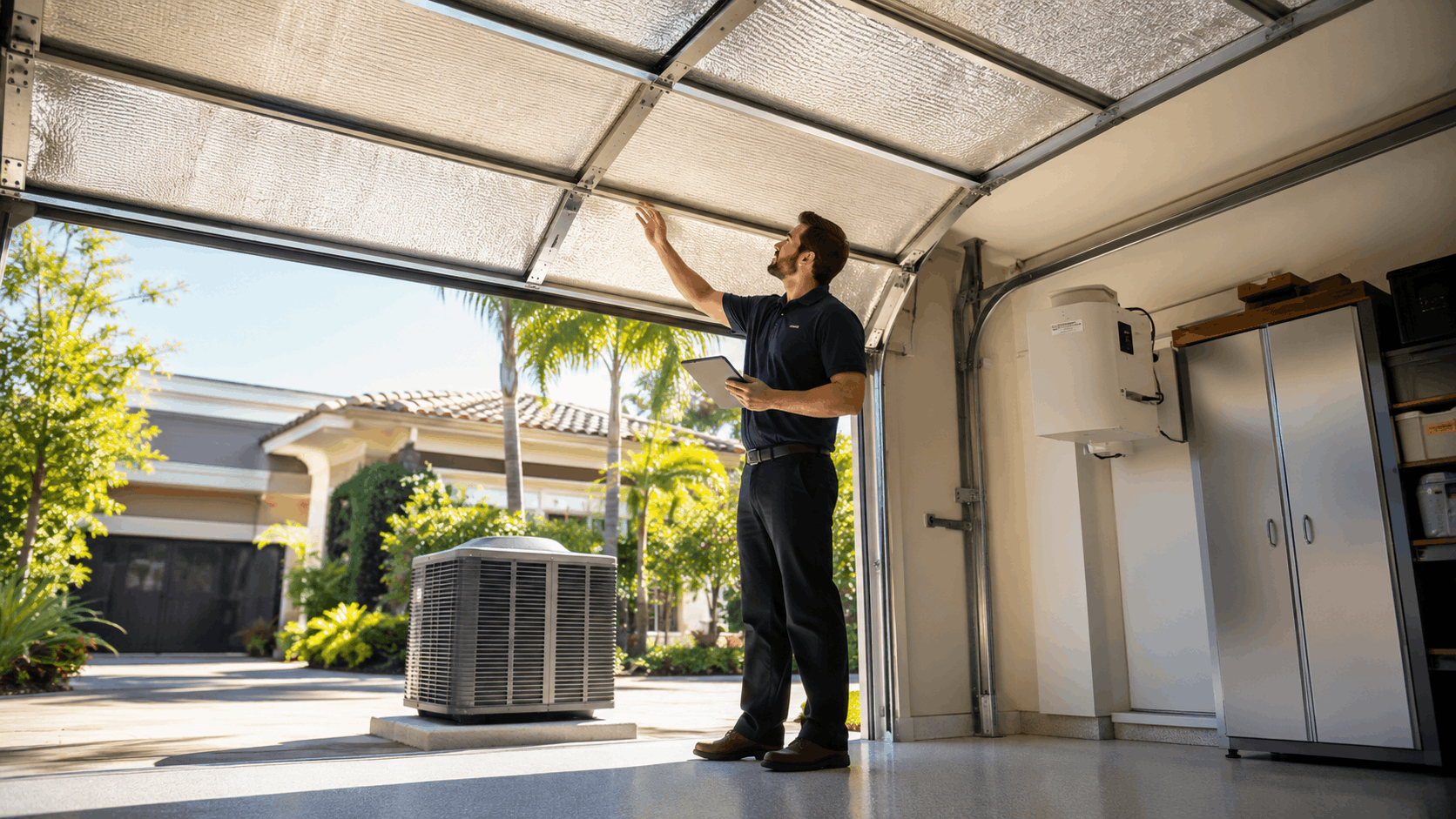
A thin metal garage door can turn an attached garage into an oven by mid-afternoon. That heat does not stay put. It seeps through shared walls and ceilings into bedrooms and bonus rooms, forcing the AC to run longer and harder than it should.
Why an Uninsulated Garage Door Drives Up AC Bills in Irvine
Most people think of the garage as a separate, disposable space. In reality, an attached garage shares a thermal boundary with the rooms you pay to cool. When that boundary leaks heat, your air conditioner pays the price every single afternoon.
The garage door is usually the weakest part of that boundary. A bare steel panel offers almost no resistance to heat. The table below shows roughly how different door types compare in a typical Irvine summer.
| Door Type | Approximate R-Value | Garage Temp on a 95F Day | Effect on AC Bills |
|---|---|---|---|
| Single-layer steel (no insulation) | R-0 to R-2 | 110F to 120F | Highest cooling load |
| DIY foam kit added | R-4 to R-8 | 100F to 108F | Moderate improvement |
| Polystyrene insulated door | R-9 to R-12 | 92F to 100F | Strong reduction |
| Polyurethane insulated door | R-14 to R-18 | 85F to 95F | Greatest reduction |
How Heat Moves Through Single-Layer Steel Doors
A single-layer steel door is basically a sheet of metal facing the street. When the afternoon sun hits it, the metal heats up fast and starts radiating that warmth straight into the garage. There is no buffer to slow it down, so heat transfer happens almost in real time.
By two or three in the afternoon, that radiant heat has turned the garage into a heat reservoir. The door panel itself can climb well above 120 degrees on the surface. Anything stored near the door, from paint cans to bicycle tires, soaks up that warmth too.
This is the core problem with an uninsulated garage door. It does not just let heat in once - it keeps re-radiating that heat for hours, even after the sun moves off the door. The garage stays hot long into the evening, and that lingering warmth is what drives up AC bills.
Garages Attached to Living Space and Shared Walls
Most Irvine homes built from the 1970s onward have attached garages. That design is convenient, but it means the garage shares walls and often a ceiling with living space. A bedroom, office, or upstairs bonus room frequently sits right against the hot garage.
Heat always moves toward cooler areas, so a 110-degree garage pushes warmth through those shared walls into rooms you are actively cooling. The AC then has to fight heat coming from two directions, the outside and the garage. Homeowners often notice one room that never feels as cool as the rest of the house.
That stubborn warm room is usually the one sitting above or beside the garage. Reducing the garage temperature takes direct pressure off that shared wall. The cooling system gets a break, and the uneven temperatures even out.
Irvine's Inland Heat and Long Cooling Season
Irvine sits far enough inland that it misses much of the coastal cooling that places like Newport Beach enjoy. Neighborhoods like Woodbridge and Northwood can run noticeably warmer than the coast on the same afternoon. The Irvine climate brings long warm stretches that start in late spring and often run past October.
That extended cooling season is what makes garage insulation pay off here. A home in a cooler coastal town might only run heavy AC for a few weeks. An Irvine home can run its system hard for five or six months straight.
The longer the cooling season, the more days an insulated door is quietly saving money. Every hot afternoon from May through October adds to the total. That is why local payback math looks better in Irvine than in many other parts of the country.
How West-Facing Garages Take the Worst of It
Sun exposure changes everything. A west-facing garage door catches the full force of the late afternoon sun, which is the hottest part of the day. Homes along streets in Turtle Rock and Quail Hill with west or south-facing garages consistently gain the most heat.
That afternoon sun lines up perfectly with peak electricity rates and peak AC demand. So a west-facing garage is heating up exactly when cooling costs the most. We see this pattern constantly when we visit homes for assessments in Turtle Rock garage door service calls.
If a garage faces north or east, insulation still helps but the urgency is lower. A west-facing garage with a bare steel door is the clearest case for an upgrade. Those are the homes where owners feel the difference within days.
Get Your Free Quote
Tell us about your garage door and we'll get back to you fast.
Real Savings Numbers: What Irvine Homeowners Can Expect
Numbers matter more than promises, so let us talk dollars. The honest answer is that garage door insulation rarely transforms your entire bill on its own. It chips away at the cooling load in a steady, predictable way that adds up over a long summer.
The AC savings depend heavily on your home, your door direction, and how much you run the air conditioning. Here is what we typically see across Irvine homes after a garage door insulation upgrade.
Typical Monthly and Yearly Savings Ranges
For most Irvine homes with an attached garage, insulating the garage door saves roughly 10 to 30 dollars per summer month. The low end applies to a smaller home with a north-facing garage and decent existing insulation. The high end shows up in larger homes with west-facing garages and rooms directly above the garage.
Across a full cooling season that runs May through October, monthly savings stack into yearly savings of around 80 to 200 dollars. That range is not life-changing on its own, but it is real and recurring. The same door keeps saving year after year with no extra effort.
What drives the spread between homes is mostly square footage, door orientation, and how aggressively the family cools the house. A household that keeps the thermostat at 72 will save more than one that runs at 78. The bigger the cooling habit, the bigger the payoff from a cooler garage.
How SCE Tiered Rates Affect Your Savings
Southern California Edison uses tiered pricing and time-of-use rates that reward cutting power during peak hours. Under time-of-use plans, electricity costs the most in the late afternoon and early evening. That is the exact window when a hot garage is making your AC work hardest.
So every kilowatt-hour you avoid during those peak hours saves more than the same kilowatt-hour at midnight. An insulated garage door reduces afternoon heat gain right when rates are highest. That timing multiplies the value of the savings.
Homeowners can review their current rate plan on the Southern California Edison website to see their peak pricing windows. Pairing an insulated door with a smart thermostat habit stretches the savings further. The two upgrades work in the same direction.
Garage Temperature Drops You Can Actually Feel
The clearest sign that insulation is working is the garage temperature itself. A well-insulated door commonly keeps a garage 10 to 20 degrees cooler on a hot afternoon. That temperature difference is large enough to feel the moment you step inside.
A garage that used to hit 115 degrees might top out near 95 after an upgrade. That cooler garage no longer dumps as much heat into the rooms above and beside it. The AC stops fighting a hidden heat source all afternoon.
Homeowners often tell us the upstairs room over the garage finally cools down evenly. That comfort improvement is just as meaningful as the dollar savings for many families. It turns a wasted, sweltering space into something usable again.
Why Savings Vary by Home Age and Layout
Home age changes the math more than most people expect. Older homes near University Park were built with thinner attic and wall insulation by today's standards. In those houses, the garage door is one part of a leakier overall envelope, so insulating it helps but the home still loses heat elsewhere.
Newer builds in the Great Park area come with tighter construction and better wall insulation. In those homes, the garage door is often the biggest remaining weak spot. Upgrading it can produce a sharper, more noticeable drop in cooling cost.
Home layout also matters. A two-story home with bedrooms directly over the garage sees a bigger benefit than a single-story home with the garage tucked off to the side. We weigh both age and layout when we estimate realistic savings during an on-site visit.
Need Help in Irvine?
Urgent Garage Doors serves Irvine and all of Orange County.
Understanding R-Value: The Number That Decides Your Savings
If you shop for an insulated garage door, you will see R-value listed everywhere. It is the single number that tells you how much heat a door blocks. Getting comfortable with what it means makes the whole decision easier.
Higher R-value means more heat resistance, which means lower bills in a hot climate. But the relationship is not perfectly linear, and there is a smart range for Irvine. Here is how to read the number and pick the right level.
What R-Value Means in Simple Terms
R-value is a measure of thermal resistance, or how well a material slows the flow of heat. A higher R-value blocks more heat, and a lower one lets more through. A bare steel door sits near R-0 to R-2, which is why it heats a garage so fast.
Think of R-value like the thickness of a blanket. A thin sheet does almost nothing on a cold night, while a thick comforter keeps you warm. Garage door insulation works the same way against summer heat.
When you compare doors, the R-value gives you an apples-to-apples way to judge them. Two doors might look identical from the street but perform very differently. The insulation rating tells you which one will actually keep your garage cooler.
Recommended R-Values for Irvine Garages
For an attached garage in Irvine's climate, we generally recommend a door in the R-12 to R-18 range. That band gives strong heat resistance without paying for performance you will never use. It hits the sweet spot for our long, warm cooling season.
An attached garage that shares walls with living space justifies the higher end of that range. A detached garage or a workshop you rarely cool can do fine closer to R-10. The closer the garage is to your bedrooms, the more the extra R-value matters.
We walk through this exact recommendation with homeowners when discussing an insulated steel garage door installation. Matching the R-value to the home avoids both under-buying and over-buying. The goal is the best comfort and savings for the money.
Polystyrene vs Polyurethane Insulated Doors
Two insulation types dominate the market. Polystyrene uses rigid foam panels slotted into the door, typically landing around R-9 to R-12. It costs less and performs well for many homes, though the panels do not fully bond to the steel.
Polyurethane is foamed-in-place insulation that expands and bonds tightly to the door skin, reaching R-14 to R-18. That bond adds rigidity and creates a more complete thermal seal with fewer gaps. In peak summer heat, polyurethane doors hold their cool noticeably longer.
Polyurethane also tends to be more durable and quieter because the foam stiffens the whole panel. For a west-facing garage taking the brunt of afternoon sun, the upgrade to polyurethane is usually worth it. For a shaded north-facing garage, polystyrene often does the job.
Why More R-Value Is Not Always Worth the Cost
There is a point of diminishing returns with R-value. Going from R-2 to R-12 produces a huge, obvious drop in heat gain. Going from R-16 to R-20 produces a much smaller change you may never notice on your bill.
Each step up in insulation rating costs more, but the savings per step shrink. Past about R-18 in our climate, the extra cost rarely earns its money back through energy savings. The cost versus benefit balance tips the wrong way.
That is why we steer most Irvine homeowners toward the R-12 to R-18 window rather than the absolute top spec. Spending the difference on quality weather seals often returns more comfort than chasing the highest number. Smart spending beats maximum spending here.
Insulation Options: Kits vs Insulated Doors
Once you understand R-value, the next choice is how to get there. Irvine homeowners generally pick between adding insulation to an existing door or replacing the door entirely. Each path has a place depending on budget and the condition of the current door.
The table below lays out the main options side by side so the tradeoffs are clear.
| Option | Typical Cost | R-Value Gain | Best For |
|---|---|---|---|
| DIY foam/reflective kit | $60 to $200 | R-4 to R-8 | Newer flat-panel doors, tight budgets |
| Pro insulation retrofit | $250 to $500 | R-6 to R-10 | Doors in good shape worth keeping |
| Factory-insulated door | $1,200 to $2,800 | R-12 to R-18 | Old, dented, or single-layer doors |
| Weather seal package | $120 to $350 | Stops air leaks | Any door, pairs with all options |
DIY Insulation Kits and Their Limits
DIY kits use foam board panels or a reflective barrier that you cut and press into each door section. A basic kit runs 60 to 200 dollars at most hardware stores. For a handy homeowner, installation takes an afternoon.
These kits help, but they have real limits. They add weight that can throw off the door balance and strain the springs and opener. On older raised-panel doors, the foam board often will not sit flush, leaving gaps that cut the effectiveness.
A DIY kit also does nothing for the seams and edges where most air actually leaks. It improves the panel R-value but not the overall seal. For a quick, low-cost bump on a newer flat door, a kit is reasonable, but it is not the same as an insulated door.
Factory-Insulated Replacement Doors
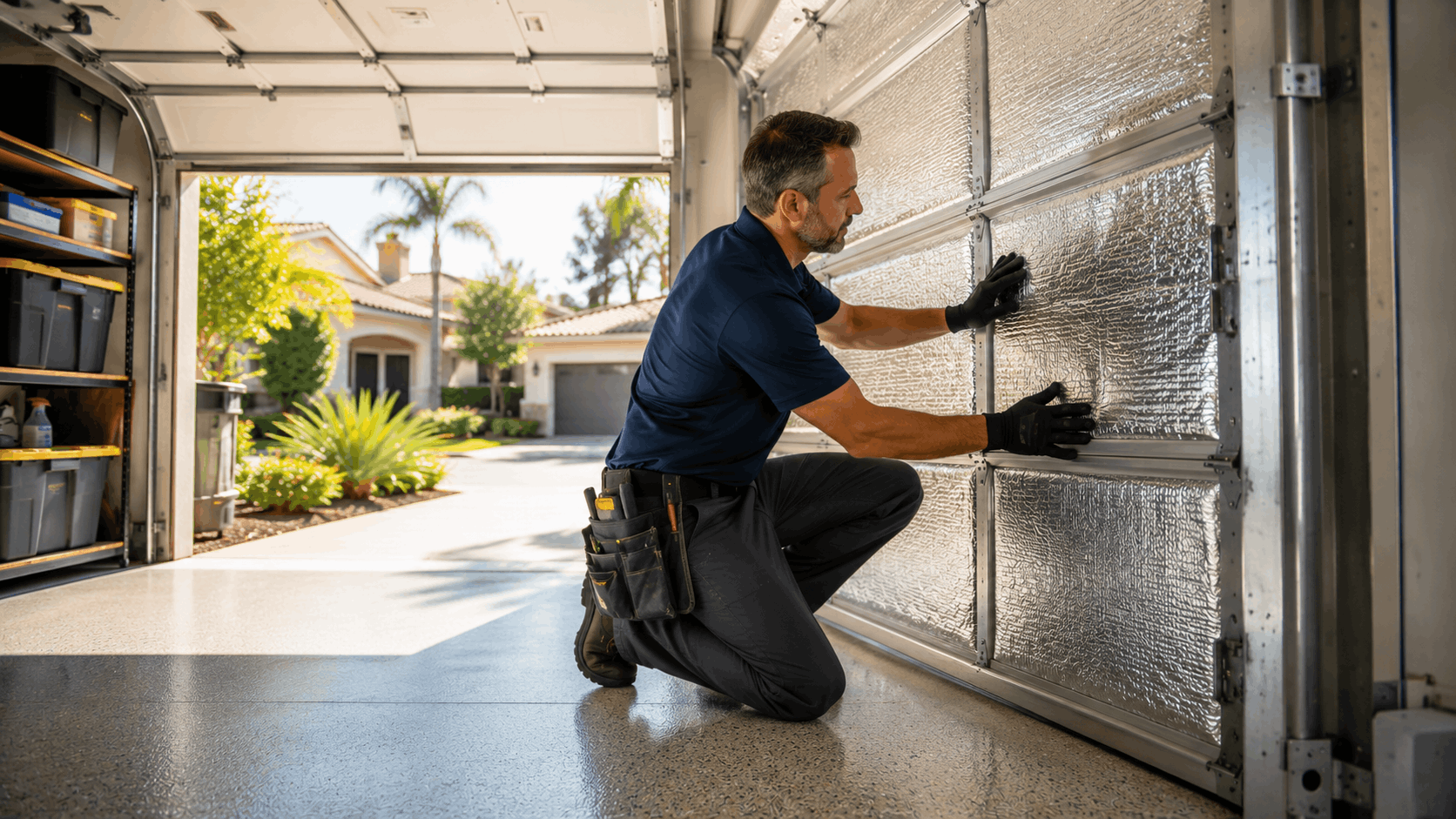
A factory-insulated replacement door is built as a sealed sandwich panel, with insulation pressed between two steel skins. That construction delivers the most consistent savings and the tightest seal. There are no gaps from foam board that did not quite fit.
Because the insulation is engineered into the door, the balance and weight are designed correctly from the start. The springs and opener are matched to the door, so nothing is strained. The door operates smoothly and quietly.
This is the option we recommend for any home with an old, dented, or single-layer door. A full sectional garage door replacement upgrades insulation, appearance, and reliability in one move. It is the cleanest path to lasting savings.
Weather Seals and Bottom Gaskets That Add Up
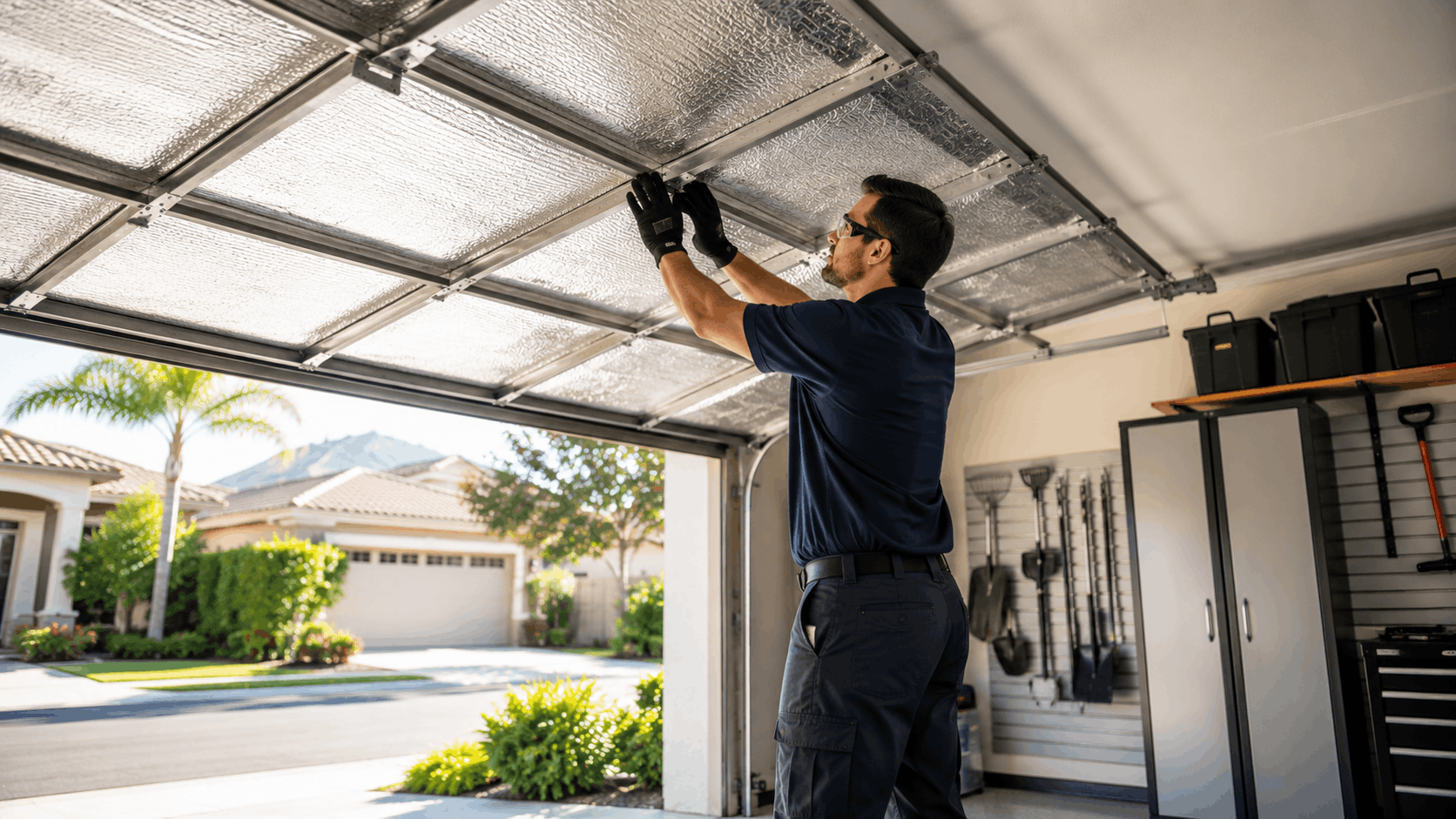
Insulation in the panels only solves half the problem. Hot air sneaks in around the edges of the door, under the bottom, and along the sides. New weather seals close those gaps that panel insulation alone misses.
A fresh bottom gasket presses against the garage floor and blocks the hot draft that rolls in under an old door. Side weatherstripping and a threshold seal stop air from leaking around the frame. Together these small parts make a surprising difference.
We often handle this through a weatherseal and insulation retrofit that pairs nicely with any door. On a tight budget, fresh seals plus a modest kit can deliver most of the comfort for a fraction of the cost. Sealing the leaks is one of the best dollar-for-dollar moves available.
Which Option Fits Different Irvine Homes
The right option depends on the home. A condo or smaller home near Westpark with a newer flat-panel door is a fine candidate for a kit plus fresh seals. The door is already decent, so a light upgrade does the trick.
Larger homes in Shady Canyon often have two or three garage bays, sometimes with west-facing exposure. Those homes usually justify factory-insulated doors on every bay for both savings and appearance. The investment matches the size of the cooling load.
Most homes fall in the middle. If the current door is solid, a retrofit and seal package makes sense. If it is old, single-layer, or damaged, a full insulated replacement is the smarter long-term spend.
What Garage Door Insulation Costs in Irvine
Budget drives most decisions, so here are honest local numbers. Costs vary with door size, material, and how much labor the job needs. We always tie the cost back to the payback period so homeowners can see the value clearly.
The following ranges reflect what Irvine homeowners typically pay, not lowball teaser prices.
Price Ranges for Kits and Professional Work
A DIY kit costs roughly 60 to 200 dollars depending on the door size and material. Professionally installed insulation on an existing door runs about 250 to 500 dollars, which covers labor and a proper balance check. That professional touch avoids the spring strain that DIY kits sometimes cause.
A new factory-insulated door typically runs 1,200 to 2,800 dollars installed for a standard single or double door. Higher-end polyurethane doors and custom styles land at the top of that range. Adding a fresh weather seal package costs another 120 to 350 dollars.
Two-story homes with rooms over the garage often see the strongest case for the full door investment. Smaller or single-story homes may get most of the benefit from the lower-cost options. We help match the spend to the realistic savings.
How Long Until the Door Pays for Itself
The payback period is simple arithmetic. A 200-dollar kit that saves 100 dollars a year pays for itself in about two years. After that, the savings are pure money back in your pocket every summer.
A full insulated door is a bigger upfront cost, so its energy payback alone stretches longer, often eight to fifteen years on cooling savings. That said, a new door also adds value, comfort, quieter operation, and avoids future repair bills on an aging door. The return on investment is broader than energy alone.
For most homeowners, the energy savings are a bonus on top of getting a better, more reliable door. If your old door is failing anyway, the insulation upgrade costs almost nothing extra over a basic replacement. That is the best-case payback scenario.
Rebates and Energy Programs Worth Checking
Before buying, it is worth checking for energy rebates. Southern California Edison runs efficiency programs that sometimes include incentives for envelope improvements. Availability changes year to year, so it pays to look at current offers.
Homeowners can also review federal energy guidance on the U.S. Department of Energy Energy Saver site for insulation tips and any active tax credits. Some upgrades qualify for credits that lower the net cost. Stacking a rebate on top of energy savings shortens the payback.
We stay aware of which programs apply to garage upgrades and point homeowners in the right direction. Even a modest rebate can tip a borderline decision. It never hurts to ask before signing off on a job.
Hidden Costs HOAs May Add
Many Irvine neighborhoods sit within HOA communities that enforce approved door colors and styles. That can limit your product choices and occasionally raise the price toward a specific approved model. It is a real factor in a planned city like Irvine.
Communities in Woodbury, Northwood, and Portola Springs commonly require submitting the door style for approval before installation. Skipping that step can lead to fines or a forced redo. The approval process also adds a little time to the project.
We are familiar with these HOA rules and approved styles across Irvine. We help homeowners choose a door that meets both their savings goals and the community guidelines. That avoids surprises and keeps the project on track.
Need Help in Irvine?
Urgent Garage Doors serves Irvine and all of Orange County.
Beyond AC Bills: Other Benefits of an Insulated Door
Energy savings get the headlines, but they are only part of the story. An insulated door changes how the garage looks, sounds, and feels every day. Those extras often matter as much to families as the lower bill.
Here is what else homeowners gain when they upgrade.
A Quieter, More Usable Garage
Insulated doors are noticeably quieter than thin single-layer doors. The added mass and foam dampen the rattle and vibration that bare steel doors make. Opening and closing feels solid instead of clattery.
That noise reduction works both ways. Insulated doors also cut street noise from busy roads like Culver Drive and Jeffrey Road. The garage becomes a calmer space, which matters if rooms above it are bedrooms.
A cooler, quieter garage also becomes a better workspace. Homeowners who use the garage as a gym, workshop, or hobby area get real use out of it again. It stops being a place you avoid in the afternoon.
Stronger Doors That Resist Dents
Multi-layer construction adds rigidity that a single sheet of steel cannot match. The insulation core stiffens the whole panel, improving dent resistance. A basketball or a backed-up car bumper is far less likely to leave a mark.
That door strength also helps the door hold its shape over years of daily cycling. Single-layer doors can flex and warp over time, especially in heat. A sandwich-panel door stays flat and true.
Better rigidity means smoother travel along the tracks and less wear on the rollers and hardware. Pairing a sturdy door with a quiet roller hardware upgrade makes the whole system run better. The door simply lasts longer.
Protecting Items Stored in the Garage
Steadier garage temperatures protect whatever you store out there. Paint, adhesives, and household chemicals degrade faster in extreme heat. A garage that stays near 90 instead of 115 is far gentler on them.
Electronics, tools, and stored belongings also fare better with temperature stability. Heat cycling is hard on batteries, plastics, and finishes. Many families store overflow items in the garage, and those items last longer in a cooler space.
If you keep a second refrigerator or freezer in the garage, the benefit compounds. That appliance works much less hard in a cooler garage, which adds even more energy savings. The insulation quietly protects both your stuff and that extra fridge.
A Boost to Curb Appeal and Resale
The garage door is one of the largest visible features of an Irvine home. A modern insulated door instantly updates the look of the front elevation. It often makes the whole house look newer and better maintained.
In competitive Irvine neighborhoods, that curb appeal helps at resale. Buyers notice a clean, modern door and read it as a sign of a cared-for home. An energy-efficient door is also a selling point on the listing.
Real estate research consistently ranks garage door replacement among the strongest projects for recovering cost at sale. Combine the resale value with years of energy savings, and the upgrade earns its keep twice. It works for you while you live there and again when you sell.
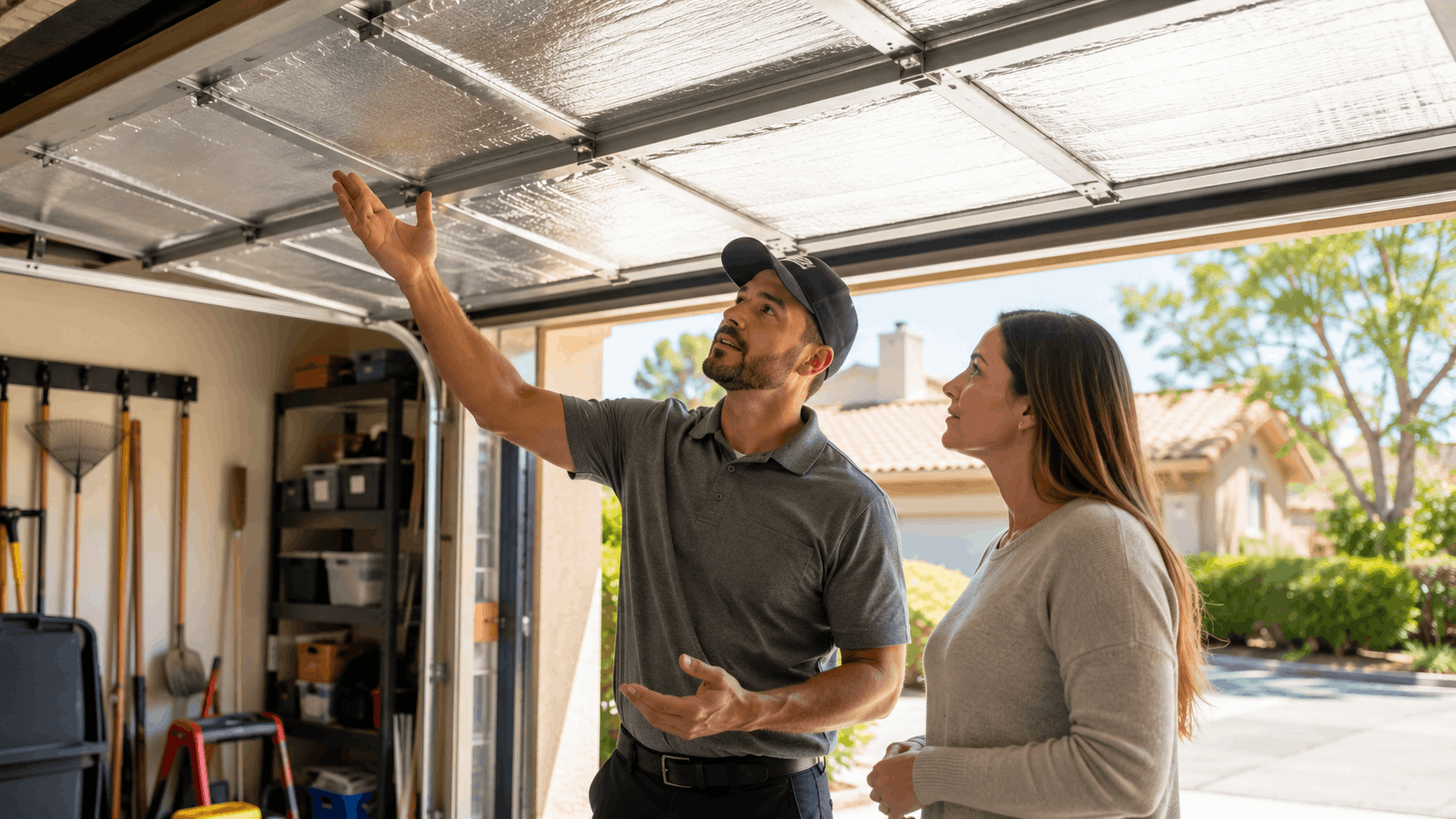
How Urgent Garage Doors Helps Irvine Homeowners Save
We have spent years working on garage doors across Irvine, from the older streets of University Park to the newest builds near the Great Park. That local experience shapes how we approach every insulation project. We treat it as solving a comfort and cost problem, not selling a product.
Here is how our team at Urgent Garage Doors helps homeowners across Irvine actually lower their cooling load.
On-Site Garage Energy Assessments
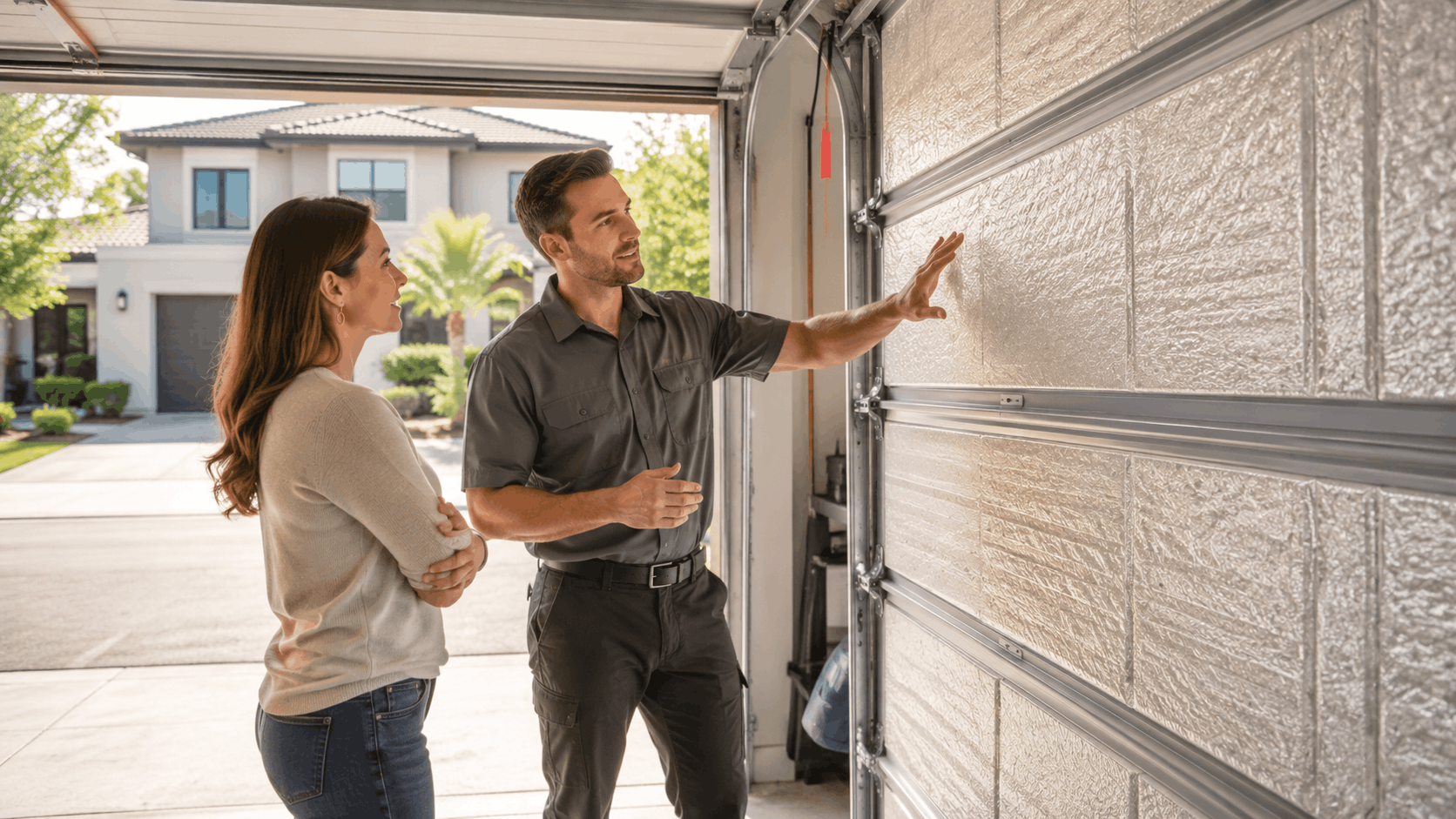
Every good upgrade starts with an honest energy assessment. We come to the home and check the door condition, the panel type, the seals, and any gaps around the frame. We also note the door's direction and whether rooms sit above or beside the garage.
That door inspection tells us where the heat is really getting in. Sometimes the panels are fine and the real problem is failed seals. Other times the door is single-layer and a replacement is the clear answer.
We give a straight recommendation based on what we find, not a one-size pitch. If a kit and fresh seals will do the job, we say so. The goal is the right fix for that specific home.
Insulated Door Installation and Seal Upgrades
When a new door makes sense, we handle the full installation across Irvine. That includes sizing the springs and opener to the new insulated door so it stays balanced and smooth. A properly balanced door protects the opener and lasts longer.
For homes keeping their existing door, we install replacement weather seals, bottom gaskets, and threshold seals. Those seal upgrades stop the air leaks that panel insulation alone cannot reach. We often pair them with a retrofit for the best result on a budget.
If a door is old and the springs are worn, we can address both at once. Our spring and cable repair service makes sure the hardware matches the heavier insulated panel. Everything works together as one system.
Working Within Irvine HOA Guidelines
Irvine's HOA communities have specific rules, and we know them well. We help homeowners pick HOA-approved styles and colors in communities like Northwood and Woodbury. That keeps the project compliant from the start.
We can guide you on what to submit for approval and which models commonly pass review. That saves the back-and-forth that delays many projects. It also avoids the risk of installing a door that the HOA later rejects.
Because we work in these neighborhoods regularly, we recognize the door styles that fit each community's look. Homeowners get a door that saves energy and satisfies the architectural guidelines. Both boxes get checked.
Fast Local Service Across Irvine Neighborhoods
We provide fast local service across every part of Irvine. From Turtle Rock and Quail Hill to Portola Springs and the Great Park area, our crews know the local home styles. That familiarity speeds up every visit.
Because we are based right here and serve the wider Irvine area, our response times stay short. There is no waiting days for an out-of-town company. We get out to assess and quote quickly.
Whether the job is a quick seal swap or a full insulated door, we handle it with crews who do this work every day. That experience shows in the quality and the cleanup. Homeowners get a smooth project from start to finish.
Need Help in Irvine?
Urgent Garage Doors serves Irvine and all of Orange County.
Final Thoughts
An insulated garage door will not single-handedly cut your SCE bill in half, but it does deliver steady, real savings every summer in Irvine. Most homeowners see 10 to 30 dollars a month and a garage that runs 10 to 20 degrees cooler. Add the quieter operation, stronger door, and curb appeal, and the upgrade earns its place.
The right move depends on your door, your home's layout, and your HOA. Whether you need fresh seals, a retrofit, or a full insulated door, our team can show you the smartest path. Call Urgent Garage Doors today or reach out for a consultation and a no-pressure assessment.
Frequently Asked Questions
How much does garage door insulation really save on AC bills in Irvine?
Most Irvine homes save about 10 to 30 dollars per summer month, or roughly 80 to 200 dollars a year, on AC savings. The exact figure depends on your home size, door direction, and thermostat habits. West-facing garages with rooms above them save the most. Combined with SCE peak-rate timing, the cooling reduction during hot afternoons stretches those dollars even further across the long season.
Does insulating my garage door cool the rest of my house?
It helps the rooms that touch the garage the most. An attached garage shares walls and ceilings with bedrooms and bonus rooms, so a cooler garage pushes less heat into those spaces. Many homeowners notice the stubborn warm room over the garage finally evens out. The whole house benefits a little, but the rooms sharing a boundary with the garage feel the biggest improvement in comfort and house cooling.
Is a DIY insulation kit as good as an insulated door?
A DIY kit helps, but it does not match a factory-insulated door. Kits add R-4 to R-8 and can leave gaps on raised-panel doors, plus they add weight that may strain the springs. A factory insulated door reaches R-12 to R-18 with a sealed sandwich panel, no gaps, and balanced hardware. Kits suit tight budgets and newer flat doors, while replacement doors deliver the most consistent savings and durability.
What R-value should an Irvine garage door have?
For an attached garage in Irvine's warm, long cooling season, we recommend R-12 to R-18. That range blocks the most afternoon heat without paying for performance you will never use. Garages sharing walls with bedrooms justify the higher end, while detached or shaded garages can do fine near R-10. Going above R-18 rarely earns the extra cost back through energy savings in our local climate.
How much does an insulated garage door cost in Irvine?
DIY kits run about 60 to 200 dollars, and professional insulation on an existing door costs roughly 250 to 500 dollars. A new factory-insulated door typically runs 1,200 to 2,800 dollars installed, with premium polyurethane and custom styles at the top. A fresh weather seal package adds 120 to 350 dollars. Final insulated door price depends on size, material, and any HOA-required style.
How long until the savings pay for the upgrade?
A low-cost kit that saves around 100 dollars a year often pays back in about two years. A full insulated door has a longer energy-only payback, commonly eight to fifteen years. But a new door also adds resale value, comfort, quieter operation, and avoids future repairs on an aging door. If your old door is failing anyway, the insulation upgrade costs almost nothing extra.
Will my Irvine HOA allow a new garage door?
Usually yes, as long as the color and style match the community's approved list. Many Irvine HOAs in Woodbury, Northwood, and Portola Springs require submitting the door style for approval before installation. Skipping approval can lead to fines or a forced redo. We know these guidelines and help homeowners pick a door that satisfies both energy goals and the architectural rules.
Do weather seals matter as much as panel insulation?
They matter more than many people expect. Panel insulation blocks heat through the door face, but hot air still leaks around the edges, sides, and bottom. New bottom gaskets, side weatherstripping, and threshold seals close those air leaks that insulation alone cannot reach. On a budget, fresh seals paired with a modest kit deliver a large share of the comfort and savings.
Does garage door insulation help in winter too?
Yes. The same insulation that blocks summer heat also keeps the garage warmer on cool Irvine nights. It slows heat loss through the door, so the garage and any rooms above it stay more comfortable. While Irvine winters are mild, an insulated door reduces the chill that creeps into adjoining bedrooms and helps the heating system work a little less.
Can Urgent Garage Doors insulate my existing door?
In many cases, yes. If your existing door is in good shape, we can add a retrofit insulation layer and upgrade the weather seals to cut heat gain. If the door is old, single-layer, or damaged, we will recommend a factory-insulated replacement instead. The best first step is a quick on-site assessment. Contact us to schedule one and get a straight recommendation.
Frequently Asked Questions
- How much does garage door insulation really save on AC bills in Irvine?
- Most Irvine homes save about 10 to 30 dollars per summer month, or roughly 80 to 200 dollars a year, on AC savings. The exact figure depends on your home size, door direction, and thermostat habits. West-facing garages with rooms above them save the most. Combined with SCE peak-rate timing, the cooling reduction during hot afternoons stretches those dollars even further across the long season.
- Does insulating my garage door cool the rest of my house?
- It helps the rooms that touch the garage the most. An attached garage shares walls and ceilings with bedrooms and bonus rooms, so a cooler garage pushes less heat into those spaces. Many homeowners notice the stubborn warm room over the garage finally evens out. The whole house benefits a little, but the rooms sharing a boundary with the garage feel the biggest improvement in comfort and house cooling.
- Is a DIY insulation kit as good as an insulated door?
- A DIY kit helps, but it does not match a factory-insulated door. Kits add R-4 to R-8 and can leave gaps on raised-panel doors, plus they add weight that may strain the springs. A factory insulated door reaches R-12 to R-18 with a sealed sandwich panel, no gaps, and balanced hardware. Kits suit tight budgets and newer flat doors, while replacement doors deliver the most consistent savings and durability.
- What R-value should an Irvine garage door have?
- For an attached garage in Irvine's warm, long cooling season, we recommend R-12 to R-18. That range blocks the most afternoon heat without paying for performance you will never use. Garages sharing walls with bedrooms justify the higher end, while detached or shaded garages can do fine near R-10. Going above R-18 rarely earns the extra cost back through energy savings in our local climate.
- How much does an insulated garage door cost in Irvine?
- DIY kits run about 60 to 200 dollars, and professional insulation on an existing door costs roughly 250 to 500 dollars. A new factory-insulated door typically runs 1,200 to 2,800 dollars installed, with premium polyurethane and custom styles at the top. A fresh weather seal package adds 120 to 350 dollars. Final insulated door price depends on size, material, and any HOA-required style.
- How long until the savings pay for the upgrade?
- A low-cost kit that saves around 100 dollars a year often pays back in about two years. A full insulated door has a longer energy-only payback, commonly eight to fifteen years. But a new door also adds resale value, comfort, quieter operation, and avoids future repairs on an aging door. If your old door is failing anyway, the insulation upgrade costs almost nothing extra.
- Will my Irvine HOA allow a new garage door?
- Usually yes, as long as the color and style match the community's approved list. Many Irvine HOAs in Woodbury, Northwood, and Portola Springs require submitting the door style for approval before installation. Skipping approval can lead to fines or a forced redo. We know these guidelines and help homeowners pick a door that satisfies both energy goals and the architectural rules.
- Do weather seals matter as much as panel insulation?
- They matter more than many people expect. Panel insulation blocks heat through the door face, but hot air still leaks around the edges, sides, and bottom. New bottom gaskets, side weatherstripping, and threshold seals close those air leaks that insulation alone cannot reach. On a budget, fresh seals paired with a modest kit deliver a large share of the comfort and savings.
- Does garage door insulation help in winter too?
- Yes. The same insulation that blocks summer heat also keeps the garage warmer on cool Irvine nights. It slows heat loss through the door, so the garage and any rooms above it stay more comfortable. While Irvine winters are mild, an insulated door reduces the chill that creeps into adjoining bedrooms and helps the heating system work a little less.
- Can Urgent Garage Doors insulate my existing door?
- In many cases, yes. If your existing door is in good shape, we can add a retrofit insulation layer and upgrade the weather seals to cut heat gain. If the door is old, single-layer, or damaged, we will recommend a factory-insulated replacement instead. The best first step is a quick on-site assessment. Contact us to schedule one and get a straight recommendation.
U
Licensed garage door repair professionals serving Irvine and Orange County.
Licensed in California · License #1055150
Why trust Urgent Garage Doors?
Founded in 2017, Urgent Garage Doors is a licensed and insured garage door services serving Irvine and Orange County. All content is reviewed by our licensed technicians.

Need Help in Irvine?
Urgent Garage Doors serves Irvine and all of Orange County.
Related Articles
Cost Guides
Garage Door Panel Replacement vs Full Door Replacement in Orange County
Should you replace one damaged garage door panel or the entire door? This guide covers costs, timelines, HOA rules, and local Orange County factors to help you decide.
Cost Guides
Northpark Irvine Garage Door Service: 1990s-Era Spring Replacement Costs
What 1990s-era garage door springs cost to replace in Northpark Irvine, why they fail, warning signs to watch for, and how to choose an honest local service.
Tips & Advice
Turtle Rock Irvine Garage Door Repair: Why HOA Approval Affects Color and Style
Learn why Turtle Rock Irvine garage door repair often involves HOA approval, how color and style rules work, and how to stay compliant before you fix or replace your door.