Door Balancing Service Explained: What Tension Adjustment Fixes and the Half-Open Test
Key Takeaways
- A balanced garage door stays put at any height and lifts with light effort because the springs, not the opener motor, carry its weight.
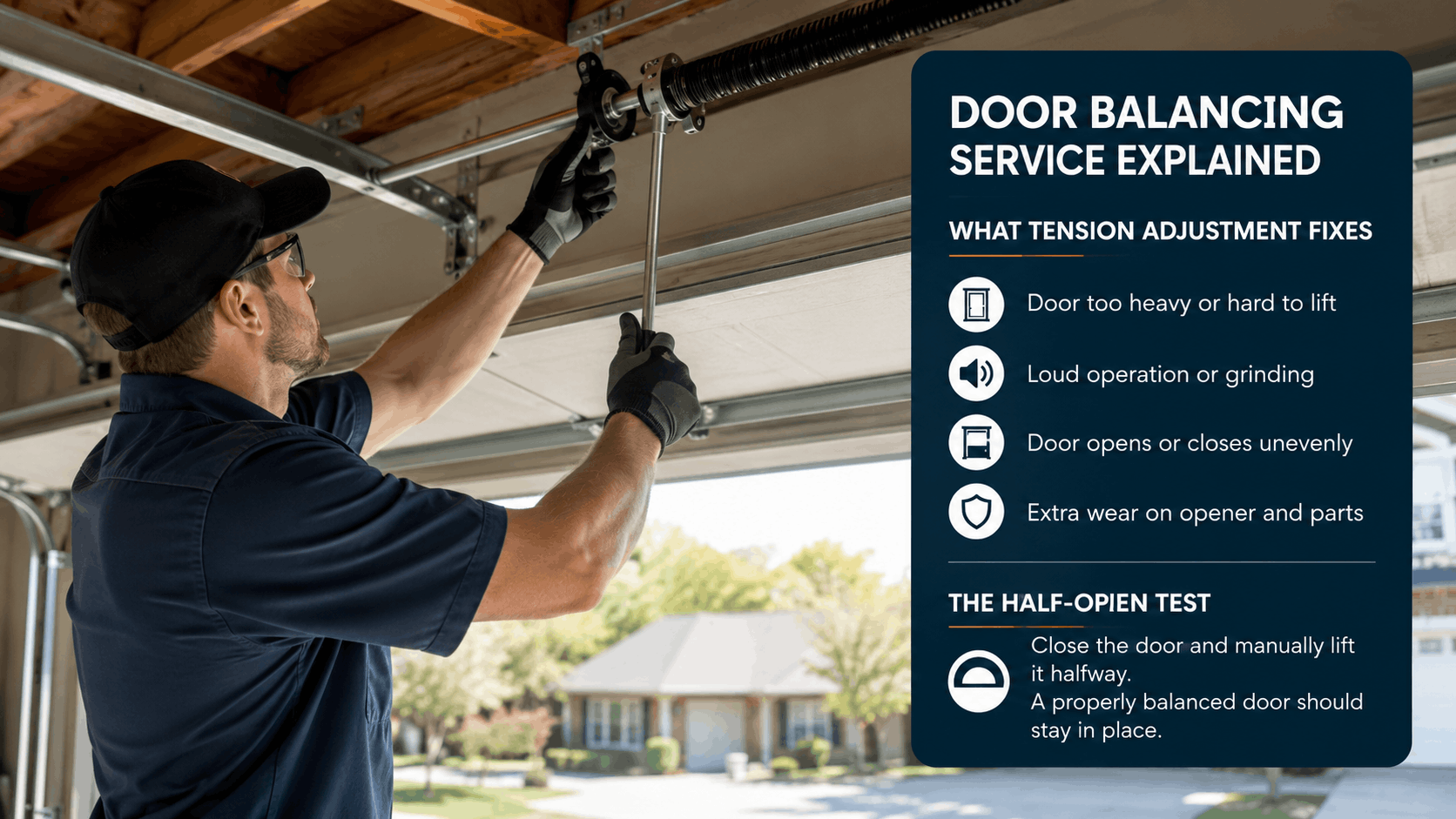
- The half-open test is a safe two-minute check: disconnect the opener, lift the door to waist height, and watch if it holds, rises, or drops.
- Tension adjustment fixes slamming doors, straining openers, and crooked movement, but it cannot repair broken springs, worn cables, or bent tracks.
- Common signs of imbalance include a door that slams shut, will not stay open, feels heavy by hand, or makes the opener grind and strain.
- Irvine's coastal marine layer, heavy insulated doors in newer communities, and high daily use all speed up spring wear and loss of balance.
- A balancing visit typically costs $95 to $180, while spring replacement runs $200 to $550 depending on the door and spring type.
- Never adjust torsion springs yourself - the stored energy can cause serious injury, so leave all spring tension work to trained technicians.
- Regular balancing protects the opener and hardware from early failure, making it low-cost insurance against expensive repairs down the road.
In This Article
A homeowner in Woodbridge grabs the garage door handle, lifts, and the whole thing crashes back down the second they let go. Another family near University Park hits the opener button and hears the motor grind and strain like it is about to give out. These are two versions of the same problem, and it comes down to balance.
A garage door that will not stay put, slams shut, or feels like it weighs a ton is telling you something. The springs that hold up all that weight have drifted out of tune. That is where door balancing service comes in, and it is one of the most misunderstood repairs in the whole trade.
What Door Balancing Actually Means?
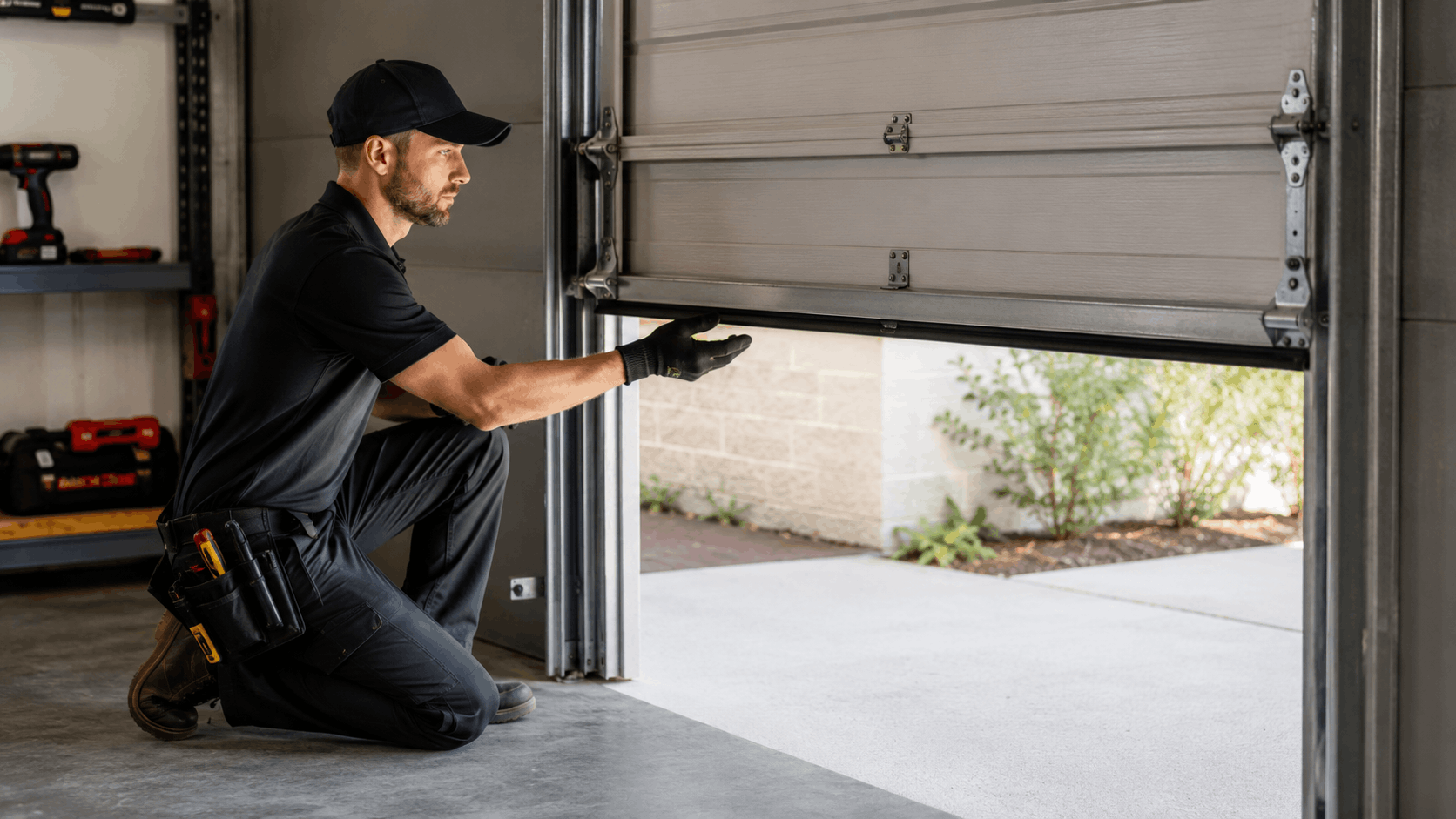
Door balancing is the process of setting spring tension so the door's weight is fully supported no matter where it sits in the track. A well-balanced door does not want to fall or fly up. It just stays where you leave it.
Garage door balance matters for both manual doors and automatic ones. Even if you never touch your door by hand, the opener depends on that balance to do its job without wearing out. When spring tension is right, everything works the way it should.
When balance is off, the whole system fights itself. The door gets heavy, the motor works harder, and small parts wear out sooner than they ever should. Getting the balance right is the foundation for a quiet, reliable door.
The Job Springs Do, Not the Opener
Most people think the opener motor lifts the garage door. It does not. The springs carry the weight, and the opener just guides the door up and down along the track. A typical residential door weighs between 130 and 350 pounds, and no small motor could lift that on its own for long.
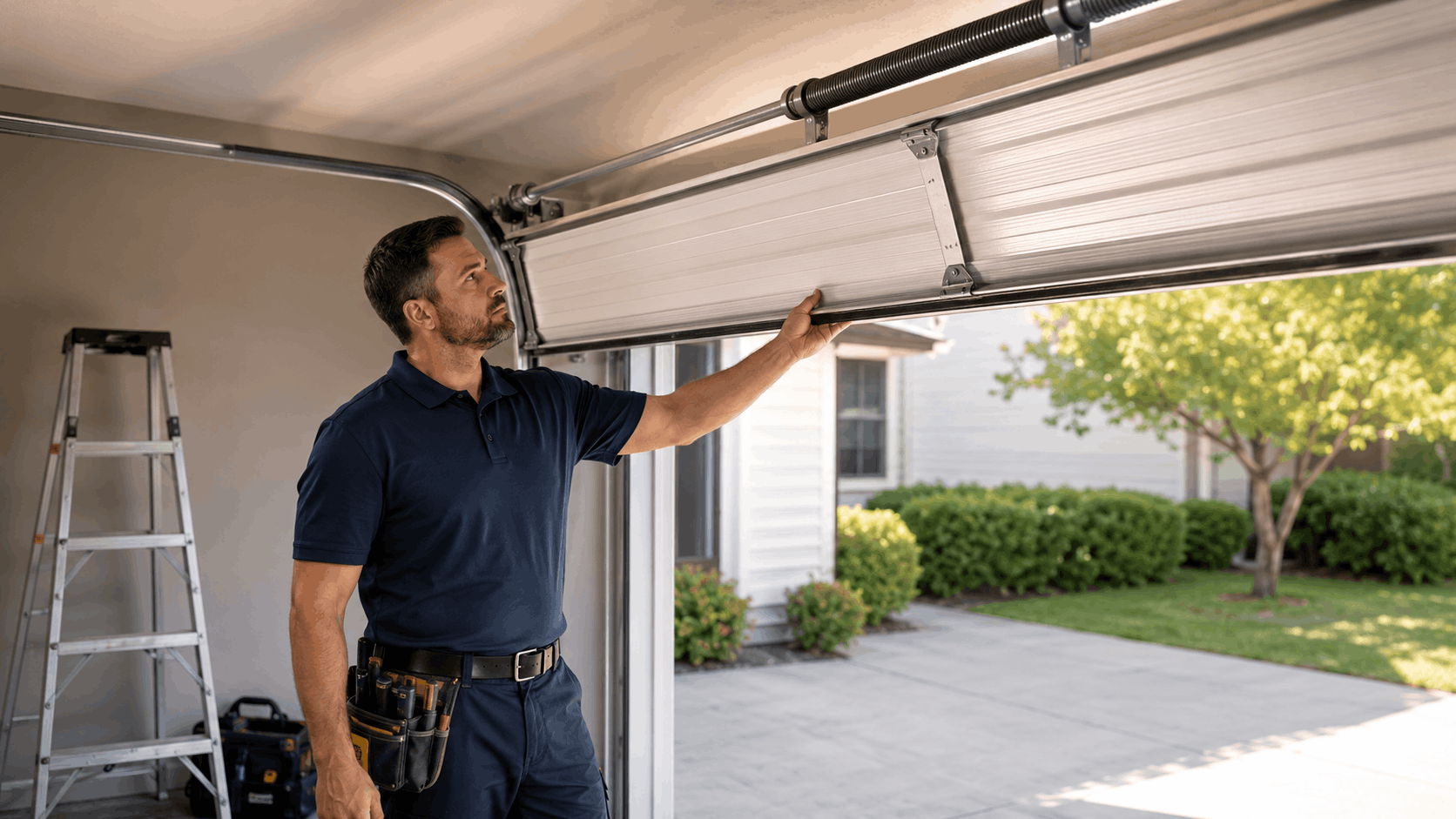
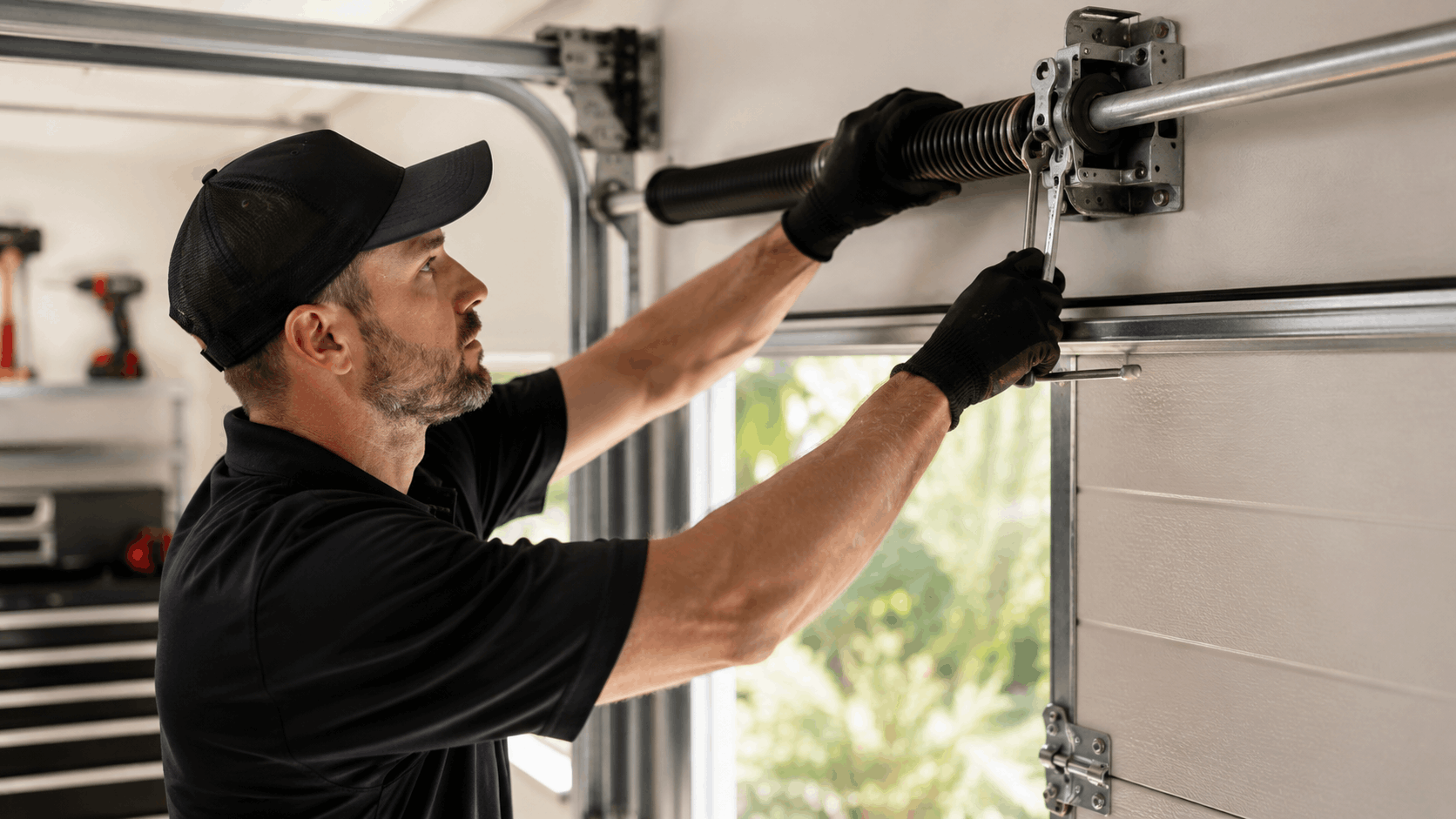
There are two main spring systems. Torsion springs mount on a metal bar above the door opening and wind up to store energy. Extension springs run along the horizontal tracks on each side and stretch to hold the load. Both do the same job in different ways.
The confusion happens because the opener is the part you interact with. You press a button and the door moves, so it seems like the motor is doing all the work. In reality, the opener motor is only strong enough to move a door that the springs have already balanced.
When we explain this to homeowners, the light bulb goes on. If your opener suddenly seems weak, the problem is almost never the motor. It is the springs losing their pull. Our spring and cable repair team sees this pattern nearly every day.
How a Balanced Door Feels and Behaves
A balanced door is easy to spot once you know what to look for. Lift it by hand and it rises with light effort, almost like it is helping you. There is no straining, no fighting, and no sudden jerk.
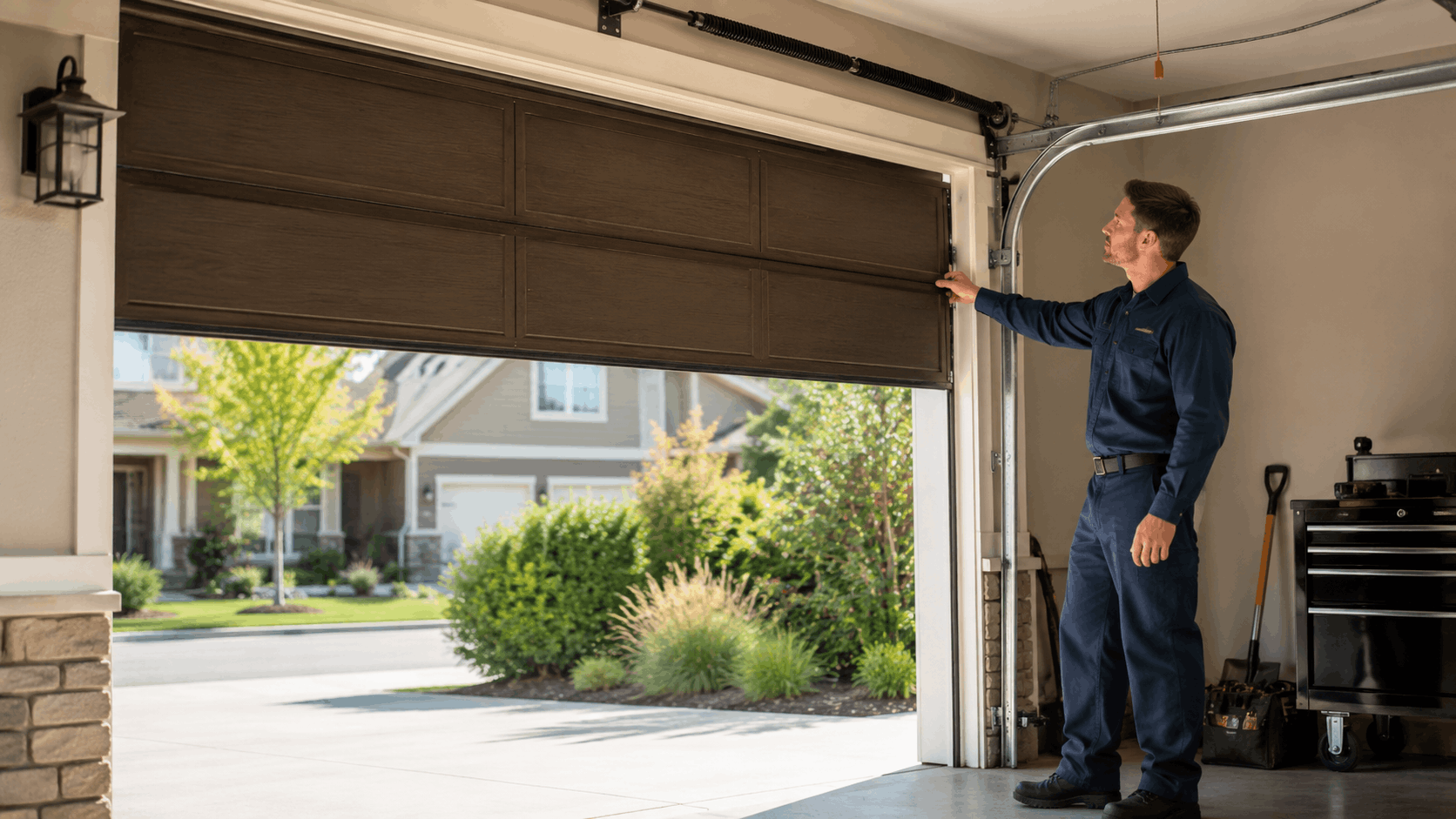
Stop the door halfway and let go. A balanced door holds that position without drifting up or sliding down. It behaves like a well-oiled window sash that stays wherever you set it.
Smooth operation is the other sign. The door glides through its travel with no shuddering, no pausing, and no crooked movement. Both sides move together at the same speed.
Manual lift is the honest test. If you can raise the door with two fingers and it stays put at any height, the balance is right. That is exactly the feel we aim for on every job.
Why Balance Slips Over Time
Springs are built to a cycle count, which is the number of times they can open and close before they wear out. Most standard springs are rated for around 10,000 cycles. A busy household can use that up much sooner than a quiet one.
Every cycle stretches and relaxes the metal a tiny bit. Over thousands of openings, the spring loses some of its stored energy. That gradual spring wear means the door slowly gets heavier and harder for the springs to hold.
Weather plays a part too. Temperature swings make metal expand and contract, and moisture speeds up corrosion. Both of these quietly chip away at spring performance year after year.
The loss of balance is usually so gradual that homeowners do not notice until the door slams or the opener strains. By then the springs have often been out of tune for months. Catching it early with a quick test saves a lot of trouble.
Get Your Free Quote
Tell us about your garage door and we'll get back to you within 30 to 60 minutes.
The Signs Your Irvine Garage Door Needs Balancing
When our neighbors call, they rarely say "my door is out of balance." They use their own words, and those words tell us a lot. Learning to read these signs helps you catch a problem before it strands your car in the garage.
Here is a quick reference of the symptoms we hear most often and what they usually mean:
| What Homeowners Say | Likely Cause | Urgency |
|---|---|---|
| "The door slams shut fast" | Low spring tension | High |
| "It won't stay open" | Springs losing pull | Medium |
| "The opener grinds and strains" | Heavy door, weak springs | High |
| "It moves crooked or jerky" | Uneven side-to-side tension | Medium |
| "It feels super heavy by hand" | Worn or failing springs | High |
The Door Slams Down or Drops Fast
A door that crashes down when you close it is one of the clearest warning signs. When you release a properly balanced door, it should drift down slowly and gently. A door that drops fast has low spring tension.
This happens because the springs are no longer holding enough of the door's weight. Gravity takes over and the door falls harder than it should. That falling door is not just annoying, it is dangerous.
A heavy door slamming down can crush anything in its path, from a pet to a child's hand. It also puts brutal stress on the cables, brackets, and bottom panel. Each slam makes the next failure more likely.
If your door slams shut, stop using it and switch to manual mode until it is checked. This is one of the situations where our emergency repair team gets calls at all hours across Irvine.
The Opener Strains or the Door Feels Heavy
When springs weaken, the opener has to pick up the slack. You will hear the motor grinding, laboring, and struggling to lift the door. Travel gets slow, and sometimes the door stops partway and reverses.
A heavy door is the manual version of the same problem. Pull the release cord, try to lift it by hand, and it feels like you are hauling a barbell. That weight should be carried by the springs, not your back.
Motor grinding is a sound you should never ignore. It means the opener is working past its design limit every single time. That extra strain shortens the life of the gears and the motor.
We often replace openers that failed years early simply because they were fighting an unbalanced door. Fixing the balance first protects the motor. Our opener troubleshooting service always starts by checking spring tension.
Uneven Movement and Jerking
Some doors do not slam or strain, they just move wrong. They shudder, pause, or travel crooked as if one side is dragging. This usually points to mismatched tension from side to side.
Most doors have two springs or two cables, one for each side. When one loses tension sooner than the other, the door pulls unevenly. One corner lifts ahead of the other, and the door racks in the track.
Jerky door movement stresses the rollers and can eventually pull the door off track. A crooked door also grinds against the track edges, wearing out parts sooner. You may hear popping or scraping as it moves.
If your door looks lopsided as it opens, that is a balance issue that needs attention. Left alone, uneven springs often lead to an off-track door repair that costs far more than a simple adjustment.
Wear We See in Older Woodbridge and University Park Homes
Some of Irvine's most established neighborhoods have doors running on their original hardware. In Woodbridge, we see homes from the 1970s and 1980s where the springs have never been replaced. That is well past their cycle life.
University Park is another area where aging garage hardware shows up on our calls. Original springs, rusted cables, and tired rollers all lose balance around the same time. When one part goes, the others are usually close behind.
These older doors were often built before modern insulation, so they are lighter, but decades of use still wear the springs flat. The tension simply is not there anymore. A balancing check tells us whether an adjustment will hold or whether new springs are the smarter move.
We know these neighborhoods well and understand how their doors age. If your home has original hardware, it is worth a look before winter arrives. A quick inspection now beats a broken spring on a busy morning.
Need Help in Irvine?
Urgent Garage Doors serves Irvine and all of Orange County.
The Half-Open Test: How the Pros Check Balance
The half-open test is the simplest way to check garage door balance, and it is the first thing our technicians do on any balance call. It requires no tools and takes about two minutes. Best of all, a homeowner can safely do the observation part.
This manual door test tells you whether the springs are carrying the door correctly. The door itself gives you the answer by how it behaves. Here is how it works step by step.
Step One: Disconnect the Opener Safely
Before you test balance, you have to take the opener out of the picture. Every automatic door has a red release cord hanging from the opener rail. Pulling it switches the door to manual mode.
Make sure the door is fully closed before you pull the cord. If you disconnect while the door is open, a heavy unbalanced door can drop suddenly. That is a real hazard, so always start from the closed position.
Once you pull the manual release, the door disconnects from the opener carriage. Now you can move it by hand and see how the springs behave on their own. This is the only way to test true balance.
Keep hands and fingers clear of the track sections and hinges the whole time. Do not let kids or pets stand near the door while you test. Safety comes first on every step.
Step Two: Lift the Door Halfway and Let Go
With the opener disconnected, lift the door slowly to roughly waist or chest height. This is the half-open position, and it is the sweet spot for reading balance. Lift smoothly and do not force anything.
Once the door is at that height, gently let go and step back. Watch what happens over the next few seconds. This is the hold test, and the door's reaction is the whole point.
Pay attention to any door drift. Does it stay steady, creep upward, or slide back down? Each reaction points to a different balance condition, which we break down next.
If the door feels dangerously heavy while you are lifting it, stop right there. A door that is very hard to raise by hand may have a badly worn or broken spring. In that case, set it down carefully and call for help.
Reading the Results: What Each Reaction Tells You
If the door holds steady at the half-open position, congratulations, the balance is good. The springs are carrying the weight correctly. This is exactly what we want to see after a tension adjustment.
If the door creeps up on its own, the springs have too much tension. This is less common but still a problem, because an over-sprung door can slam open and strain the opener on the way down. It needs tension reduced.
If the door drifts down, the springs have lost tension and are too weak. This is a common result we find, and it explains slamming doors and straining openers. The fix is adding the right amount of tension back.
A door that slides down fast or drops hard is badly out of balance. That balance reading means the springs are near the end of their life. At that point, adjustment may only be a short-term patch.
When to Stop and Call a Technician
The half-open test is safe for homeowners because it only involves lifting and watching. The danger begins when you try to fix the problem yourself. Garage door springs hold enormous stored energy.
A torsion spring under tension can release with enough force to break bones or worse if it slips during an adjustment. This is not a scare tactic, it is simple physics. Trained techs use special winding bars and follow strict steps for a reason.
Stop testing and call for professional help if the door is extremely heavy, if you see a gap or break in a spring, or if a cable looks frayed. These are signs of a system that could fail suddenly. Do not gamble with it.
Our team responds quickly across Irvine, so there is no reason to risk it. If your half-open test showed trouble, reach out to us through our contact page and we will take it from there. We would rather come out than see anyone get hurt.
What Tension Adjustment Actually Fixes
A proper tension adjustment resets the springs so they carry the door's full weight again. This is the heart of door balancing service. When done right, it changes how the whole door performs.
It is worth being clear about what tension adjustment can and cannot do. It solves balance problems, but it is not a cure for every part that has failed. Here is the honest breakdown.
Stopping the Drop and the Slam
The most satisfying fix is stopping a door that slams shut. When we add the right amount of tension, the springs take back the weight they should be holding. The door then closes slowly and gently instead of crashing down.
Added tension also means the door holds position wherever you stop it. No more falling door, no more racing to catch it before it hits the ground. It behaves like it did when it was new.
This fix protects everything below the door too. Cables stop taking sudden shock loads, and the bottom panel no longer slams against the concrete. Gentle closing extends the life of the whole system.
For homeowners with kids or pets, this is often the most welcome change. A door that closes softly is a safer door. That peace is worth the service call on its own.
Taking Strain Off the Opener
When springs carry the load, the opener barely has to work. Correct tension means the motor moves a balanced door with almost no effort. That directly extends opener lifespan.
An opener fighting a heavy door runs hot and wears its gears down fast. We have seen motors fail in three or four years when they should last fifteen. Reduced strain from proper balance is real motor protection.
Think of it like driving with the parking brake on. The car moves, but the engine and brakes suffer. Balancing releases that brake so the opener can coast through its job.
If you recently replaced an opener that died young, balance was probably the hidden cause. Getting the springs right first is the smart way to protect your next one. Our maintenance service checks both together.
Fixing Side-to-Side Imbalance
When one side of the door pulls harder than the other, we adjust tension so both sides match. Even tension makes the door lift level and track straight. The crooked, jerky movement disappears.
On a two-spring system, we tune each spring so the balanced pull is equal. On single-spring doors, we check that cables are seated evenly on both drums. The goal is the same either way.
Straight tracking protects the rollers and the track itself. A door that runs level does not grind against the edges or rack in the frame. That keeps the door quiet and prevents off-track failures.
Fixing side-to-side imbalance is precise work that shows immediately. The door that used to shudder now glides. It is one of the clearest before-and-after results we deliver.
What Tension Alone Cannot Solve
Tension adjustment is powerful, but it is not magic. If the springs are broken, no adjustment will help. A broken spring must be replaced, and our torsion spring replacement service handles that safely.
Worn cables are another limit. Frayed or stretched cables cannot be tuned back to safe condition, they need cable repair or replacement. Adjusting tension on bad cables is unsafe.
Bent tracks also fall outside what tension can fix. If the door is rubbing because the track is damaged, the metal has to be straightened or replaced. Tension will not correct a physical bend.
We always inspect the full system before we adjust anything. That way we tell you honestly whether a simple tuning will hold or whether a part needs replacing. Setting the right expectation is part of doing the job well.
Why Irvine's Climate and Homes Affect Door Balance
Garage doors do not go out of balance the same way everywhere. Local conditions shape how fast springs wear and how often doors need attention. Irvine has a few factors that stand out.
Between the coastal air, the mix of home ages, and busy family schedules, our doors face real challenges. Knowing these helps you plan your garage door maintenance around them.
Coastal Air and Metal Fatigue
Irvine sits close enough to the coast that the marine layer drifts inland most mornings. That moist air carries salt and humidity that settle on metal parts. Over time, it speeds up spring corrosion.
Corroded springs lose strength and fail sooner than dry-climate springs. The coastal moisture also stiffens hinges and rollers, adding drag to the door's movement. That extra drag throws off balance.
Homes closer to the coast in areas like Turtle Rock and the western edge of the city tend to see this more. Rust forms quietly on the springs where you rarely look. By the time you spot it, damage is done.
Regular lubrication slows this down, but it does not stop it completely. That is why we recommend more frequent checks for homes near the marine influence. A little prevention goes a long way against salt air.
Heavy Insulated Doors in Newer Communities
The newer Irvine communities have raised the bar on garage doors. In Great Park and Portola Springs, many homes came with heavy insulated doors. Those doors look great and quiet the garage, but they weigh more.
A heavier door demands precise tension. Even a small error in spring setup shows up fast on an insulated steel door. The margin for getting it wrong is smaller than on an old lightweight door.
When these doors go out of balance, the symptoms are pronounced. The opener strains hard and the door drops fast because there is so much weight involved. Precision matters more on these builds.
We size and tune springs specifically for the weight of each insulated door. If you own one of these newer homes, standard spring settings often are not enough. It takes the right spring for the load.
HOA Standards and Matching Hardware
Many Irvine communities have HOA rules about how garage doors look. Northwood is one area where door style and color have to match neighborhood standards. That affects your repair choices.
When a door or panel needs replacing, the HOA may require a specific model or finish. Those approved doors sometimes weigh differently than the original, which changes the spring math. We factor that in.
Matching hardware also matters for a clean look and proper function. We help homeowners pick springs and parts that meet both the weight needs and the community rules. It keeps you compliant and keeps the door working.
If your HOA has strict standards, let us know up front. We have worked within many Irvine associations and know how to keep repairs approved. That saves you a headache with the board.
High-Cycle Use in Two-Car Households
Most Irvine families run two cars and open the garage several times a day. School runs, commutes, errands, and evening activities add up fast. Some doors cycle six or eight times a day or more.
At that rate, a standard 10,000-cycle spring wears out in three or four years. Daily use is the single biggest driver of spring wear we see. Busy households simply burn through springs sooner.
For high-use homes, we often recommend high-cycle springs rated for 20,000 cycles or more. They cost a bit more up front but last far longer. That math works out well for active families.
If your garage is the main entry to your home, you are likely a high-cycle household. A spring upgrade can double the time between replacements. It is one of the best values we offer busy families.
Need Help in Irvine?
Urgent Garage Doors serves Irvine and all of Orange County.
Our Door Balancing Service Process
When you call us for balancing, you get more than a quick spring twist. We follow a full process so the fix lasts and nothing gets missed. Here is what to expect when our team arrives.
Every job starts with finding the real cause, not just treating the symptom. That approach saves you from repeat calls and surprise failures.
Full Inspection of Springs, Cables, and Tracks
Before we touch any tension, we walk the whole system. We check the springs for wear, rust, and gaps that signal a break waiting to happen. A tired spring gets flagged before it strands you.
Next comes the cable check. We look for fraying, stretching, and proper seating on the drums. A bad cable makes balance impossible and creates a safety risk, so it has to be right first.
Then we look at track alignment. We check that the tracks are straight, level, and free of dents or bends. A crooked track will throw off even perfectly tuned springs.
This inspection tells us whether balancing alone will fix your door or whether a part needs replacing. We share what we find in plain language. You get the full picture before any work begins.
Precise Tension Adjustment and Retesting
Once the system checks out, we adjust the springs in measured turns. Every quarter turn changes the door's balance, so we work carefully and precisely. This is skilled work with the right winding bars.
After each adjustment, we run the half-open test again. We lift the door, let go, and watch how it holds. If it drifts at all, we fine-tune until it stays perfectly still.
This retest loop is what separates a rushed job from a lasting one. We do not stop at close enough. Balance confirmation means the door holds at any height with light effort.
We also test the full travel, opening and closing several times. The door should move smoothly and level from top to bottom. Only then do we call the balance done.
Lubrication and Hardware Tightening
A balanced door runs even better with fresh lubrication. We apply the right lubricant to the springs, rollers, hinges, and bearings. That cuts friction and keeps the balance stable longer.
We also tighten the hardware that loosens over time. Bolts on brackets, hinges, and track supports work loose from vibration. Snugging them up removes rattles and keeps parts aligned.
These finishing steps make a big difference in how the door sounds. A properly lubed and tightened door operates quietly. Many homeowners are surprised how much quieter their door becomes.
If your door has been noisy for a while, ask about our quiet roller hardware upgrade. Paired with balancing, it turns a loud door into a smooth one. It is a popular add-on.
Fast Response Across Irvine
We cover the whole city and reach most homes the same day. From the shops near the Irvine Spectrum to the quiet streets of Turtle Rock, our trucks are usually nearby. A stuck door does not wait, and neither do we.
Same-day service matters most when your car is trapped or the door will not close. We keep common springs and parts stocked so many repairs finish in one visit. No waiting days for a fix.
Our technicians know Irvine's neighborhoods and the door styles common in each one. That local knowledge speeds up diagnosis and repair. We show up ready for what your home is likely to have.
If you need help fast, our same-day repair team is a phone call away. We serve every corner of the city. Reach out and we will get you scheduled quickly.
Cost, Timing, and When to Repair vs Replace
Homeowners always want to know two things: what will it cost and how long will it take. We believe in clear, honest ranges so you can plan. Here is the real picture for the Irvine area.
The table below gives typical ranges. Your exact cost depends on your door, spring type, and what the inspection finds.
| Service | Typical Cost Range | Time Needed |
|---|---|---|
| Balancing and tension adjustment | $95 - $180 | 30 - 60 minutes |
| Single torsion spring replacement | $200 - $350 | 1 - 2 hours |
| Two-spring replacement | $350 - $550 | 1.5 - 2 hours |
| High-cycle spring upgrade | $400 - $650 | 1.5 - 2 hours |
| Cable replacement (pair) | $150 - $300 | 1 - 1.5 hours |
Typical Cost of a Balancing Visit
A straight balancing and tension adjustment usually runs between $95 and $180 in the Irvine area. That covers the inspection, the tuning, and the retest. It is one of the most affordable garage door services there is.
If the springs are worn out, the balancing price rolls into a spring replacement instead. A single spring runs $200 to $350, and a pair runs $350 to $550. Those prices include labor and quality springs.
The service fee is easy to justify when you consider what it protects. A cheap adjustment can save a costly opener or cable failure. We always quote the full cost before starting.
Prices vary with door size, weight, and spring type. Heavy insulated doors and high-cycle springs sit at the upper end. We give you the exact number after the inspection, with no surprises.
How Long the Job Takes
A standard balancing adjustment takes about 30 to 60 minutes from start to finish. That includes the inspection and the retesting loop. Most homeowners are surprised how quick it is.
A spring replacement takes longer, usually one to two hours depending on the setup. Two-spring systems and high-cycle upgrades sit at the longer end. We work efficiently without cutting corners.
Because we stock common parts on our trucks, most repairs finish same-day in a single visit. There is rarely a need for a second trip. That keeps your day on track.
If we find bigger issues like bent tracks or multiple failed parts, we tell you the added time up front. You always know the schedule before we begin. No open-ended jobs.
When Adjustment Is Enough vs New Springs
The adjust vs replace decision comes down to spring age, cycle count, and visible wear. If your springs are under five years old and look clean, a tune-up usually holds. That is the ideal case.
If the springs are older than seven years or show rust, gaps, or stretching, adjustment is only a short-term fix. Those springs are near the end of their life. New springs are the smarter spend.
We also weigh how much the door is used. A high-cycle household wears springs sooner, so we lean toward replacement sooner. It avoids repeat visits.
Our job is to give you the honest call, not the expensive one. If an adjustment will genuinely hold, we say so. If it will not, we explain why new springs make sense. You decide with full information.
How Balancing Saves Money Long Term
Regular balancing is cheap insurance against expensive failures. A balanced door keeps the opener from burning out years early. Replacing an opener costs far more than a tune-up.
Balanced doors also protect cables, rollers, and panels from shock damage. When the door closes gently, those parts last longer. You spend less on repairs over the door's life.
The long-term savings add up fast for busy households. A yearly balance check often prevents the big-ticket surprises. It is the same logic as changing your car's oil.
We fold balancing into our preventive maintenance plan so it never gets forgotten. Steady upkeep beats emergency repairs every time. It keeps your door working and your budget steady.
Need Help in Irvine?
Urgent Garage Doors serves Irvine and all of Orange County.
Keeping Your Door Balanced Between Service Visits
You do not have to wait for a technician to keep an eye on balance. A few simple habits help your door stay tuned longer. Here is what we tell our neighbors to do at home.
These steps are safe, quick, and make a real difference. They also help you catch small problems early.
Run the Half-Open Test Every Few Months
Make the half-open test part of your routine every three or four months. It takes two minutes and tells you exactly where your balance stands. Set a reminder so it does not slip your mind.
Disconnect the opener, lift the door to waist height, and watch whether it holds. If it stays put, you are good. If it drifts up or down, it is time to schedule a check.
This self-check catches balance problems while they are still small. Early detection means a cheap adjustment instead of a bigger repair. It is the easiest habit you can build.
Remember to reconnect the opener afterward by running it once. The carriage will re-latch to the door automatically. Then you are back to normal operation.
Listen and Watch for Early Warning Signs
Your ears are a great diagnostic tool. New sounds like grinding, popping, or squealing mean something is changing. Do not tune them out.
Watch for slow movement or a door that hesitates partway. Jerky or crooked travel is another warning sign. These often show up before a door fully fails.
Catching these signs early lets us fix small issues before they strand your car. A door that suddenly sounds different deserves a look. Trust your instincts on it.
Keep a mental note of how your door normally sounds and moves. When it changes, that is your cue to act. Early attention saves money and hassle.
Keep Moving Parts Clean and Lubricated
A little lubrication goes a long way. Every few months, wipe the tracks clean and apply a garage-door lubricant to the rollers, hinges, and springs. Skip grease on the tracks themselves, since that attracts grime.
Clean tracks let the rollers move freely, which reduces stress on the springs. Less friction means the balance holds longer. It is a five-minute job with big payoff.
Use a proper garage door lubricant, not WD-40, which is a cleaner more than a lubricant. A silicone or lithium-based product works best. The right product lasts far longer.
For guidance on safe garage upkeep, the U.S. Consumer Product Safety Commission offers solid safety information. Regular care keeps the moving parts happy. Your door will thank you with quiet, smooth operation.
What Homeowners Should Never Adjust Themselves
Here is the firm line: never try to adjust or replace torsion springs yourself. They hold enough stored energy to cause serious injury. This is not a DIY project.
A torsion spring under load can whip a winding bar out of your hands with brutal force. People have lost fingers and suffered head injuries doing this. The danger is very real.
The same goes for cables under tension and any spring that looks broken. Leave all of that to trained techs with the right tools. The International Door Association and industry safety guidance from OSHA both stress professional handling for a reason.
Lubrication, cleaning, and the half-open test are all safe for you. Anything involving spring tension is our job. Call us and stay safe.
Final Thoughts
A balanced garage door is quiet, safe, and easy on your opener. When the springs carry the weight the way they should, the door stays put, closes gently, and moves smoothly. That is the goal of every balancing job we do.
The half-open test gives you a simple way to check balance yourself, and the warning signs are easy to spot once you know them. If your door slams, strains, or feels heavy, the springs are asking for attention. Catching it early keeps a cheap adjustment from turning into a costly repair.
Our team at Urgent Garage Doors serves every Irvine neighborhood, from Woodbridge and University Park to Great Park, Portola Springs, and Turtle Rock. If your door is out of balance, call us or reach out through our contact page for a fast, honest visit. We are ready to get your door back to working the way it should.
Frequently Asked Questions
- What is garage door balancing?
- Garage door balancing is the process of adjusting spring tension so the door's full weight is supported at every point in its travel. When balanced, the door lifts with light effort and stays put wherever you stop it. The springs do the heavy lifting, not the opener. Balancing keeps the door moving smoothly and protects both the motor and the hardware from early wear.
- How do I know if my garage door is out of balance?
- The top signs are a door that slams shut, will not stay open, feels heavy by hand, or makes the opener strain and grind. Crooked or jerky movement points to uneven tension too. The quickest way to check is the half-open test. Disconnect the opener, lift the door to waist height, and see if it holds. If it drifts up or down, the balance is off.
- What is the half-open test and can I do it myself?
- The half-open test checks balance by lifting the door to waist or chest height with the opener disconnected, then letting go. A balanced door holds steady. If it rises or falls, the springs need adjusting. The lifting and watching part is safe for homeowners. The fix is not, since it involves spring tension. Do the test, but leave any spring work to our trained technicians.
- What does tension adjustment fix?
- A tension adjustment fixes doors that slam shut, will not stay open, or feel heavy to lift. It restores the springs' pull so the door holds position and closes gently. It also takes strain off the opener, which extends motor life, and it corrects side-to-side imbalance for straight, smooth travel. It cannot fix broken springs, worn cables, or bent tracks, which need replacement instead.
- How much does door balancing cost in Irvine?
- A standard balancing and tension adjustment in Irvine usually runs $95 to $180, including inspection and retesting. If the springs are worn out, a replacement costs more, from $200 to $350 for a single spring and $350 to $550 for a pair. Heavy insulated doors and high-cycle springs sit at the upper end. We give you an exact quote after inspecting your door.
- How often should a garage door be balanced?
- We recommend checking balance with the half-open test every three or four months, and a professional balance check once a year. Busy Irvine households that open the door many times daily may need it sooner. Homes near the coast, where marine layer moisture speeds spring corrosion, also benefit from more frequent checks. Regular attention keeps small issues from becoming costly repairs.
- Can I adjust the springs myself?
- No. Torsion and extension springs hold enormous stored energy and can cause serious injury if they slip during adjustment. People have lost fingers and suffered head injuries attempting this. Trained technicians use special winding bars and follow strict safety steps. You can safely lubricate parts, clean tracks, and run the half-open test, but leave all spring tension work to professionals. It is not worth the risk.
- Will balancing help my opener last longer?
- Yes, significantly. The opener is not built to lift the door's full weight, only to guide a door the springs already balance. When balance is off, the motor strains and its gears wear out fast, sometimes failing in just a few years. Correct tension lets the springs carry the load, so the opener works with little effort. That reduced strain can add many years to its life.
- Do you offer same-day balancing service in Irvine?
- Yes. Our team reaches most Irvine homes the same day, from the Irvine Spectrum area to Turtle Rock, Woodbridge, Great Park, and Portola Springs. We stock common springs and parts on our trucks, so many jobs finish in one visit. If your door is stuck or unsafe, call us and we will get you on the schedule quickly. Fast response is what we do.
- Is balancing the same as spring replacement?
- No, they are different. Balancing adjusts the tension on your existing springs so they carry the door correctly. Spring replacement installs brand-new springs when the old ones are worn out, rusted, or broken. If your springs still have life left, an adjustment is enough. If they are past their cycle life, new springs are the better long-term fix. We inspect first and recommend the right one. Ready to get your door balanced and running quietly again? Call Urgent Garage Doors or reach out through our contact page today for fast, same-day service anywhere in Irvine.
Licensed garage door repair professionals serving Irvine and Orange County.
Licensed in California · License #1055150
Why trust Urgent Garage Doors?
Founded in 2017, Urgent Garage Doors is a licensed and insured garage door services serving Irvine and Orange County. All content is reviewed by our licensed technicians.

Need Help in Irvine?
Urgent Garage Doors serves Irvine and all of Orange County.
Related Articles
Garage Door Replacement in Woodbridge and Turtle Rock Irvine: Village Standards and HOA Approvals
A local guide to garage door replacement in Woodbridge and Turtle Rock Irvine, covering village standards, HOA approvals, city permits, door choices, and real cost ranges.

Garage Door Safety Sensors: How to Test and Fix Alignment in Your OC Home
Learn how to test and fix garage door safety sensor alignment issues in your Orange County home with this comprehensive guide covering troubleshooting, maintenance, and repair.
Ladera Ranch Garage Door Service: HOA-Approved Replacement Options
A local guide to HOA-approved garage door replacement in Ladera Ranch, covering village rules, the approval process, materials, costs, and matching your village style.