Garage Door Failure Modes in Earthquake Country: What Actually Breaks First
Key Takeaways
- Track and roller alignment usually fails first during shaking, often before springs or motors.
- Even minor tremors near the San Joaquin Hills and Newport-Inglewood faults can knock rollers off track.
- Misaligned doors wear out springs and cables sooner, leading to sudden snaps and crooked doors.
- Power surges during quakes can damage opener logic boards, so battery backups help.
- Hillside homes in Turtle Rock and Quail Hill see more frame shifting from soil settling.
- Reinforced brackets, extra fasteners, and a manual release reduce damage during the next event.
- Never force a jammed door or touch a loaded spring after a quake; call for help instead.
- Annual inspections plus a check after any felt shaking keep your door safe and working.
In This Article
A homeowner in Woodbridge called us last spring after a small tremor rolled through Irvine on a quiet Sunday morning. Nothing fell off the walls. No cracked windows. But when she hit the button to leave for brunch, her garage door groaned, climbed a few inches, then jammed sideways and stopped cold.
That story plays out more than you might think. Even shaking too mild to rattle dishes can knock a garage door out of line. The door is one of the largest moving parts of any house, and it sits in a frame that flexes when the ground moves.
This article walks through what actually breaks first, in the order it tends to happen. We cover tracks and rollers, springs and cables, openers and motors, panels and hinges, and even foundation shifts. Living in earthquake country changes how these doors wear out, and knowing the weak points helps Irvine homeowners act sooner and spend smarter.
Why Earthquake Country Is Hard on Garage Doors?
Most garage doors fail from slow, steady wear. A spring cycles thousands of times. A roller grinds down a little each year. Earthquakes work differently. They hit the whole system at once with a sharp, sideways shove.
That sudden seismic stress is the problem. A door designed to move up and down does not handle side-to-side jolts well. When the ground shakes, the garage door movement gets thrown off in directions it was never built for.
Here is why Irvine earthquakes matter even when they feel small:
- Faults near Irvine produce frequent low-magnitude shaking, not just rare big quakes.
- Garage openings are wide and unsupported, so they flex more than solid walls.
- Repeated small shakes loosen hardware over months, adding up to a sudden failure.
- Heavy doors carry momentum, so even a brief jolt stresses tracks and brackets.
A door that survived a quake without obvious damage can still be quietly weakened. That is why we tell folks to inspect after any felt shaking, not just the big ones.
How Shaking Travels Through a Garage Frame
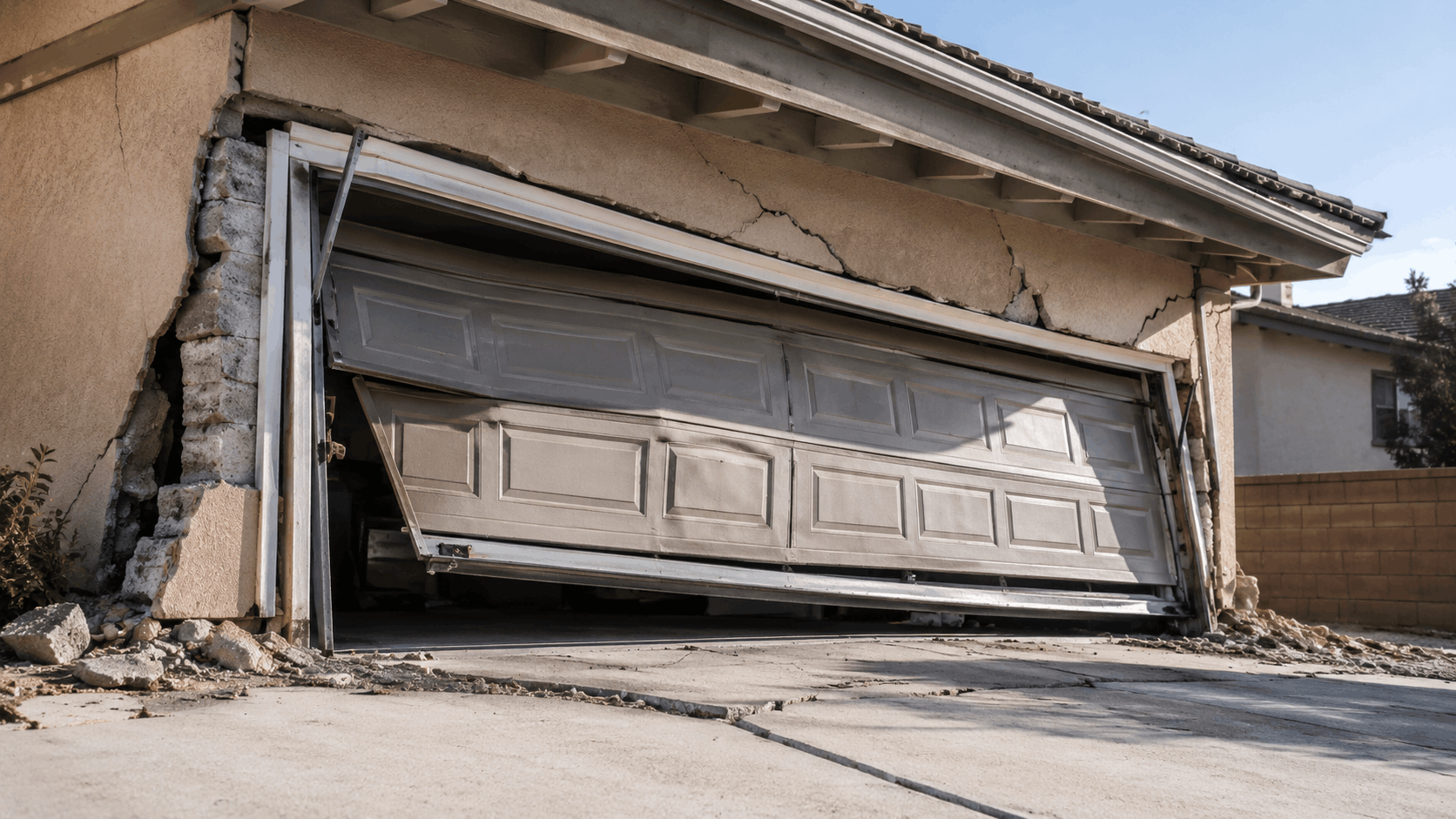
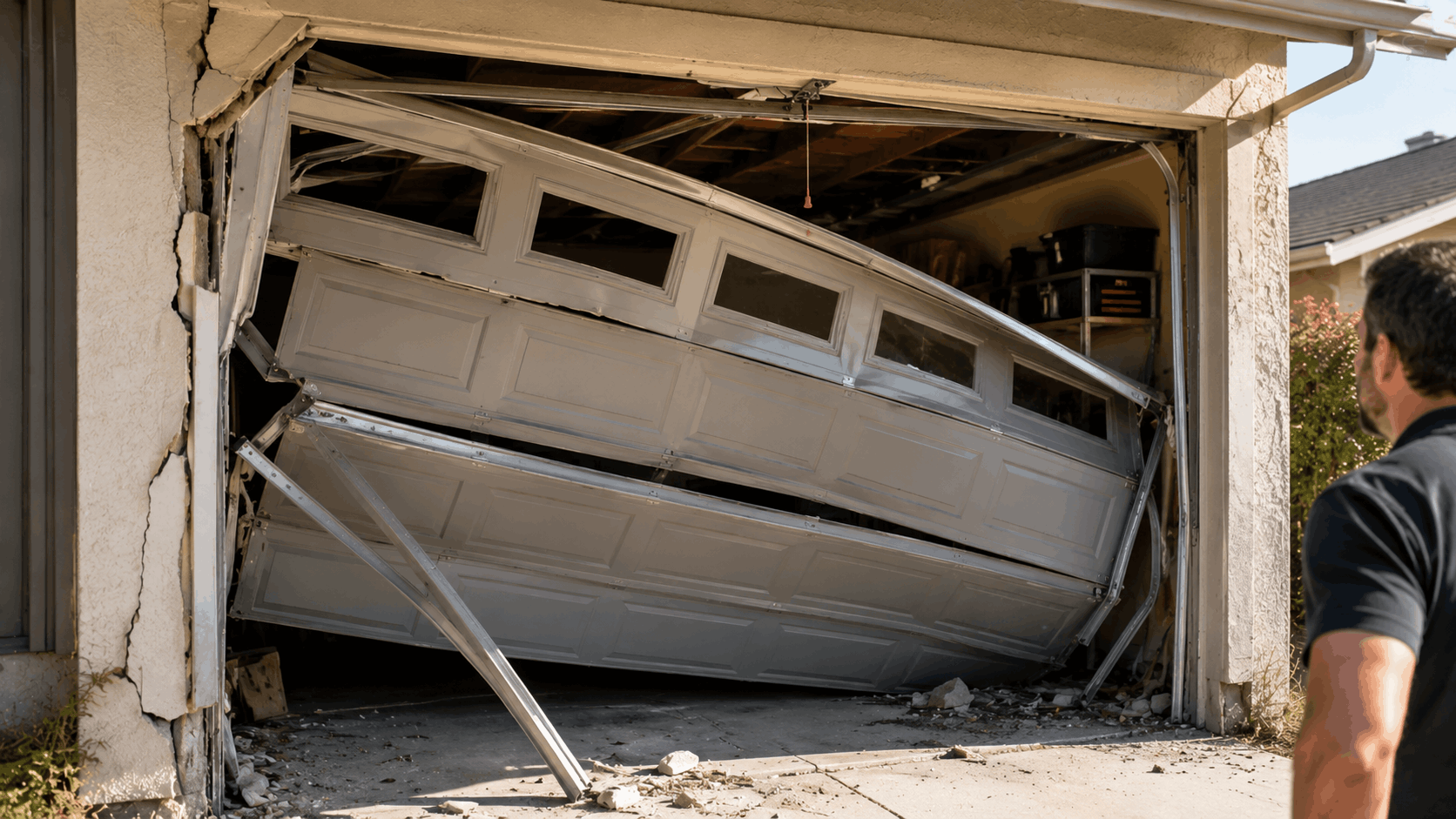
When the ground moves, the energy travels up through the foundation and into the wood frame around your garage door. The opening twists in a motion called frame racking. Picture a square pushed into a slight diamond shape.
That twist throws off track alignment in an instant. The vertical tracks that guide the rollers are bolted to that frame. When the frame racks, the tracks move with it.
The whole opening flexes for a few seconds, then mostly springs back. But the tracks and brackets often do not return to exactly where they started. That small shift is enough to make a door bind.
Local Fault Lines and Irvine Neighborhoods at Risk
Irvine sits near several active fault systems. The San Joaquin Hills fault runs beneath much of southern Orange County and can produce strong shaking. The Newport-Inglewood fault zone to the west adds more risk for coastal-side neighborhoods.
Soil conditions change how each area feels the same quake. Homes on firm rock shake less than homes on loose or filled soil. The USGS Earthquake Hazards Program maps these differences across the region.
In our experience, Woodbridge and parts of Northwood on softer soils feel longer, rolling motion. Turtle Rock homes on slopes deal with a different kind of stress as the ground settles unevenly. Each pattern hits garage doors in its own way.
Older Homes vs Newer Builds in the Area
Construction age matters a lot. Older homes near Northwood and University Park were built before some of today's seismic framing standards. Their garage openings often have lighter bracing and older hardware.
Newer construction in Great Park and Portola Springs benefits from updated building codes. The framing is stiffer, and the door hardware tends to be heavier gauge. Those homes usually shrug off small tremors better.
That does not mean new homes are safe from damage. It just means older garages need closer attention and more frequent checks. We see far more post-quake calls from the older pockets of Irvine.
Get Your Free Quote
Tell us about your garage door and we'll get back to you within 30 to 60 minutes.
The First Thing to Break: Track and Roller Alignment
If something breaks during a quake, it is almost always the tracks and rollers first. They sit right where the frame racks the hardest. A sudden jolt shifts them before a spring ever feels the strain.
Track misalignment shows up fast. The door starts to bind, grind, or hang crooked. Sometimes a homeowner does not notice until the next time they open the door.
The garage door rollers are the small wheels that ride inside the tracks. When the track moves, the rollers fight to stay in their path. Here is what we typically find on a post-quake service call.
| Symptom | Likely Cause | What You Hear or See |
|---|---|---|
| Door binds halfway | Bent or shifted track | Grinding, slowing, then stopping |
| Door hangs crooked | Roller off track | One side higher than the other |
| Loud scraping | Loose track brackets | Metal-on-metal noise |
| Door reverses on its own | Binding plus opener strain | Door starts up then drops back |
When you see any of these, stop using the door. Forcing it makes the damage worse. Our off track garage door repair team handles these calls across Irvine daily.
Bent Tracks and Loose Brackets
The tracks attach to the frame with lag bolts and brackets. Shaking loosens those lag bolts a little at a time. After a strong jolt, a bracket can pull partly free.
Once a bracket loosens, the track bends or bows outward. A bent track means the rollers no longer ride smoothly. The door starts to bind at the same spot every time.
Homeowners usually describe a grinding or scraping sound. Some say the door "catches" at the same height. Those are classic signs of loose brackets and a bent track that needs realignment.
Rollers Jumping the Track
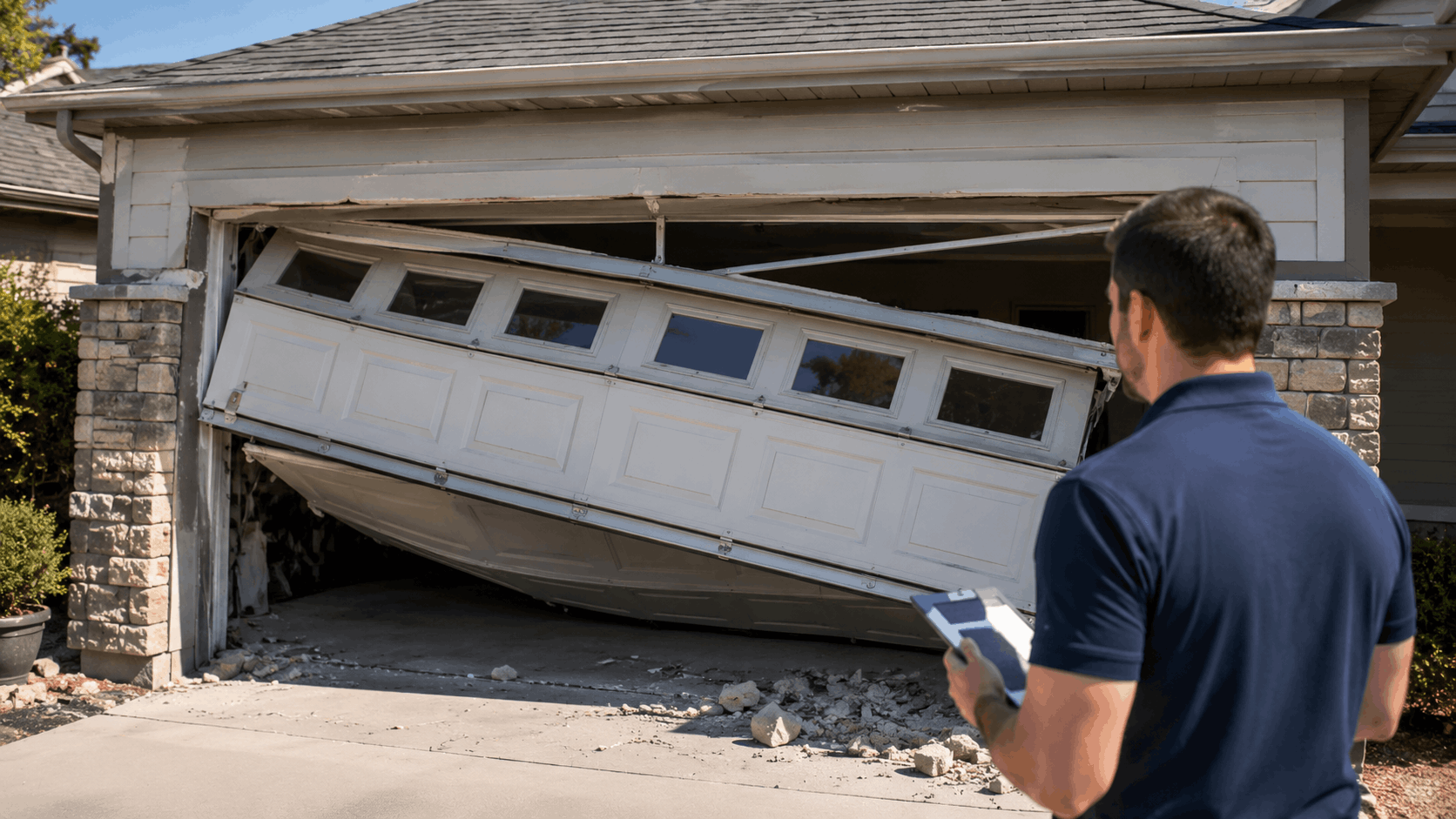
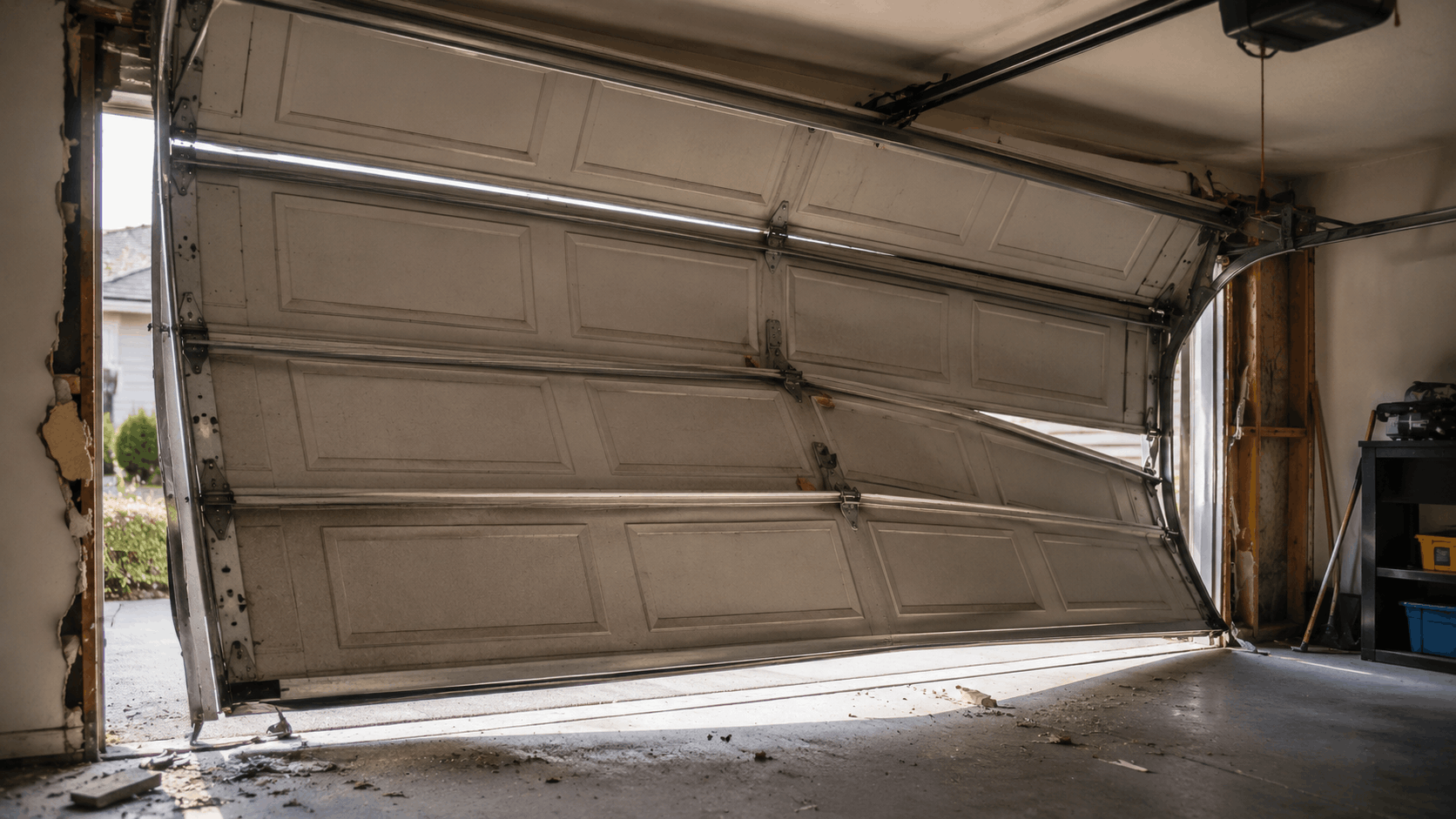
A roller off track is a very common call our team gets after any felt shaking in Irvine. The jolt pops one or more rollers out of the channel. The door then hangs at an angle.
This often happens at the curve where the track turns from vertical to horizontal. That bend is the weakest point. A sudden movement lifts the roller right out of the path.
A door binding like this puts huge strain on everything else. Do not run the opener again. The motor and cables take the punishment next if you keep trying.
How to Spot Misalignment Early
You can do a quick visual inspection without tools. Stand inside and look at the gap between the door edge and the track on both sides. The track gap should look even top to bottom.
If one side shows a wide gap and the other side is tight, the door has shifted. Watch the door travel slowly and look for any wobble or pause. Listen for new grinding noises.
Run your eyes down each vertical track for bows or kinks. A straight track should look like a clean line. Any bend is a sign to call before the next use.
Need Help in Irvine?
Urgent Garage Doors serves Irvine and all of Orange County.
Spring System Failures Under Stress
Springs do the heavy lifting. They counterbalance the weight of the door so the opener only nudges it. When a door is already misaligned from shaking, the springs work harder than they should.
That extra load speeds up spring failure. A spring that had two years of life left might snap weeks after a quake knocked the door out of line. The damage from shaking and the spring break are connected.
Two main types matter here. Torsion springs sit above the door on a bar. Extension springs run along the tracks. Both fail sooner on a stressed door, and our spring and cable repair crew sees both after seismic events.
Torsion Springs and Sudden Snaps
A torsion spring snap sounds like a gunshot inside the garage. People often think something fell or a pipe burst. The spring stores a lot of energy, and when it lets go, it releases all at once.
Misaligned doors cause uneven spring wear. When the door binds, the spring fights extra resistance every cycle. That added stress wears the metal and brings the break sooner.
After a snap, the door becomes very heavy and may not open at all. Do not try to lift it by hand. A torsion spring replacement needs trained hands and the right tools.
Cable Slippage and Drum Damage
Lift cables wind around drums at the top corners of the door. A sudden movement during shaking can cause cable slippage off the drum. Once a cable comes off, that side of the door drops.
The door then hangs crooked, with one corner lower than the other. The drum can also get nicked or worn where the cable jumped. That damage keeps the cable from seating right even after a repair attempt.
A crooked door is a warning sign you should not ignore. The remaining cable and spring carry the full load alone. Our garage door cable repair service resets the cables and checks the drums.
When a Repair Becomes a Replacement
Sometimes a single spring break is a clean fix. We replace the spring, check the balance, and the door works fine. A single torsion spring replacement often runs around 250 to 450 dollars depending on the door.
Other times the whole system is worn or the door took broader damage. If both springs are old, replacing both makes sense. If the hardware is dated, a full system upgrade saves money over repeated repairs.
As a rough guide for the repair versus replace choice: a spring replacement cost under 500 dollars usually beats patching. But once you pass that with cables, drums, and rollers added, a door balancing and tension adjustment with new parts may be the better call.
Opener and Motor Problems After a Quake
The opener is the electronic brain and muscle of the system. It does not love sudden jolts or power problems. Earthquakes deliver both at the same time.
A garage door opener can fail two ways during a quake. The electronics can get fried by a power surge. Or the motor can burn out trying to move a door that is binding.
Either way, the result is a door that will not respond. Motor failure leaves you stuck, often during the exact moment you want to leave. Our opener repair and troubleshooting team diagnoses both causes.
Power Surges and Logic Board Damage
Quakes often disrupt the power grid. When power flickers or comes back hard, a surge can hit your opener. That surge can fry the logic board, which is the small circuit board that controls everything.
Southern California Edison outages are common during and after seismic events in Irvine. The come-back surge does the real damage, not the outage itself. A surge protector on the opener outlet helps a lot.
If the opener has no lights, no response, and no clicking, suspect the logic board. The Ready.gov earthquake guide recommends unplugging sensitive electronics when shaking starts if you can do so safely.
Strained Motors From Binding Doors
A binding door is the enemy of any motor. When the door sticks from track damage, the opener keeps pushing. That motor strain builds heat fast.
Run a binding door a few times and the motor can overheat or burn out. We see this when homeowners keep hitting the button after a quake, hoping the door will free itself. It rarely does.
If the door labors, slows, or stops partway, stop pressing the button. Get the alignment fixed first. Saving the motor is cheaper than replacing it.
Safety Sensor Misalignment
Every modern opener has two safety sensors near the floor, one on each side. These photo eyes shoot an invisible beam across the opening. Shaking knocks them out of line easily.
When the photo eye pair loses alignment, the door refuses to close or reverses partway down. The opener thinks something is blocking the path. That is the system working as designed, just confused by a bumped sensor.
Often a gentle nudge back into line and a wipe of the lens fixes it. If the brackets bent, you may need a safety sensor alignment repair to set them right.
Panel, Hinge, and Hardware Damage
The door itself takes a beating during shaking too. Panels, hinges, and fasteners all flex when the frame racks. Some damage shows right away, and some shows up months later.
The door panels are the large flat sections that make up the door face. The hinges connect those panels and let the door bend around the track curve. Both are stress points during a quake.
Hardware damage often gets missed because it looks minor. A loose bolt here, a worn hinge there. Over time those small problems combine into a door that rattles, sags, or sticks.
Cracked and Buckled Panels
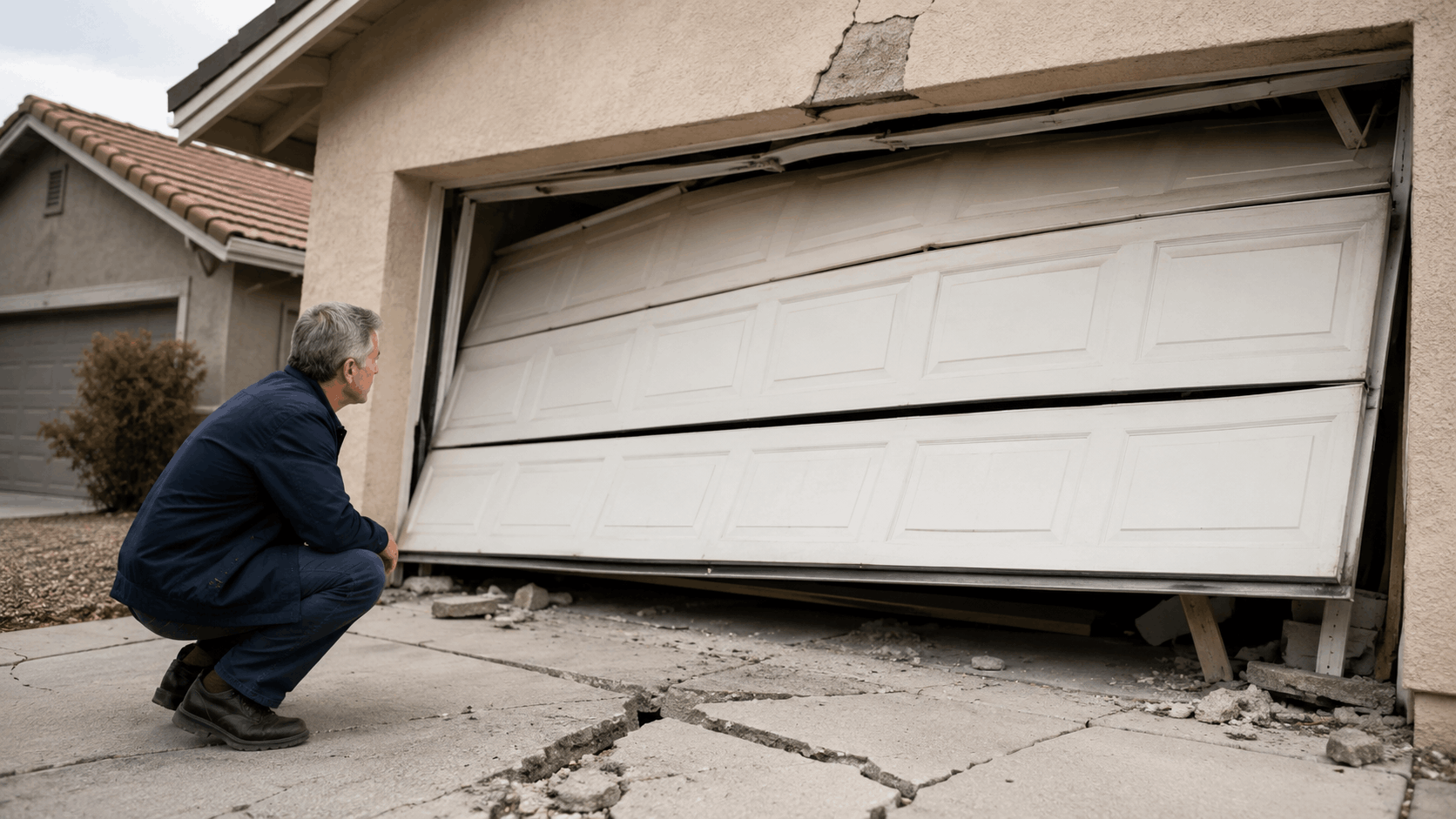
When the frame racks, the door twists with it. Steel panels can buckle and aluminum or composite panels can crack. A cracked panel weakens the whole door and lets in weather.
Buckling shows as a wavy or dented look across a section. Sometimes the paint cracks along the bend even before the metal does. Either way the panel no longer holds its shape.
A single bad panel can sometimes be swapped without replacing the whole door. Our panel replacement service matches the section and restores the door's strength.
Worn Hinges and Loose Fasteners
Hinges and bolts loosen from repeated movement, not just one big event. Every small Irvine tremor wiggles them a tiny bit. Months later you have worn hinges and loose fasteners across the door.
You might hear new rattling or clunking as the door moves. The door may shift side to side more than it should. Those sounds mean it is time to tighten and inspect.
Replacing worn hinges and snugging fasteners is quick and cheap. Catching it early prevents bigger panel and track problems down the road. A quiet roller and hardware upgrade can replace tired parts all at once.
Need Help in Irvine?
Urgent Garage Doors serves Irvine and all of Orange County.
Frame and Foundation Shifts That Affect the Door
Sometimes the door is fine but the structure around it moved. A foundation shift pulls the whole opening out of square. The door then cannot fit the way it used to.
Frame settling happens slowly in some Irvine soil zones and quickly during a quake. Either way the door is the first thing that reveals it. A door that suddenly sticks on one side often points to the structure, not the hardware.
This is the deeper kind of problem. It can mean a garage door tech alone is not enough. Knowing the difference saves time and money.
Soil Settling in Hillside Communities
Homes on slopes deal with more frame shifting after movement. Turtle Rock and Quail Hill have many hillside lots. The ground there can settle unevenly when shaking loosens the soil.
Hillside settling tilts the foundation slightly. That tilt travels up into the garage frame. The door opening goes out of square even if nothing on the door broke.
We see this pattern often on the older hillside streets. The door worked fine for years, then a quake nudged the slope. Suddenly the door drags on one corner.
Out-of-Square Openings and What They Mean
An out of square opening means the frame is no longer a clean rectangle. The simplest test is a sticking door that catches on one side only. The other side moves freely.
You can also measure the diagonals of the opening corner to corner. If the two measurements differ by more than a quarter inch, the opening has shifted. A level held against the track tells the same story.
An out-of-square frame stresses the rollers and tracks constantly. The door fights the misshapen opening every cycle. That wears parts out fast until the frame is addressed.
When Structural Help Is Needed
A garage door tech can realign tracks and adjust the door to a mild shift. But if the foundation itself moved, you need a structural repair contractor first. Fixing the door before the frame just leads to the same problem again.
For major shifts, the Irvine building department can advise on permits and inspections. They can tell you when a foundation issue needs a licensed structural engineer. The our team is happy to point you in the right direction after assessing the door side.
The rule of thumb: cracks in the slab or walls, sticking that gets worse, and doors that drift out of level all point to structure. Call a contractor for those. Call us for the door once the frame is sound.
How to Quake-Proof Your Garage Door Before the Next One
The best time to prepare is before the ground moves. A little earthquake preparation now saves a big repair bill later. Most upgrades are simple and affordable.
Garage door reinforcement focuses on keeping parts in place during shaking. Stronger brackets, extra fasteners, and a working manual release make the biggest difference. Backup power keeps you moving during outages.
Here is a quick look at the upgrades we recommend and what they do.
| Upgrade | What It Does | Rough Cost |
|---|---|---|
| Reinforced brackets | Keeps tracks bolted tight during shaking | 75 to 200 dollars |
| Extra fasteners and lag bolts | Stops hardware from loosening | 50 to 120 dollars |
| Battery backup opener | Door works during power outages | 200 to 400 dollars |
| Manual release check | Lets you open the door by hand safely | Often part of an inspection |
| Annual inspection | Catches loose and worn parts early | Affordable, sometimes free with service |
Pairing these with a maintenance and upgrades visit covers most of your risk.
Reinforcing Tracks and Hardware
Standard track brackets do an okay job in calm conditions. Reinforced brackets with extra anchor points hold far better when the frame racks. They keep the tracks from bowing out during a jolt.
Adding more fasteners spreads the load across the frame. A track held by four solid bolts moves less than one held by two loose ones. A hardware upgrade is cheap insurance against a common failure.
We also check that lag bolts hit solid framing, not just drywall or trim. Anchoring into a stud or header is what keeps everything put. Our track repair and realignment service includes this hardware review.
Adding Manual Release and Backup Power
When the power goes out, your opener stops working. A battery backup keeps the door running for several cycles. That matters if you need to leave fast after a quake.
Every opener also has a manual release, the red cord hanging from the rail. Pulling it lets you lift the door by hand. We show every customer how to use it safely and when not to.
Practice the manual release on a calm day, not during an emergency. Make sure the door is balanced first so it does not slam down. A garage door opener installation with battery backup covers both needs.
Scheduling a Pre-Quake Inspection in Irvine
A seismic-readiness inspection looks for the weak spots before they fail. Our team checks track anchoring, spring condition, cable wear, hinge tightness, and sensor alignment. We also test the manual release and door balance.
We work this around your schedule across every Irvine neighborhood. Whether you are in Woodbridge, Northwood, or Portola Springs, we know the local soil and home styles. That context helps us spot risks early.
Booking is simple through our preventive maintenance plan or a one-time visit. Catching loose hardware now beats a jammed door later. Reach out and we will set a time.
Need Help in Irvine?
Urgent Garage Doors serves Irvine and all of Orange County.
What to Do Right After a Quake Damages Your Door
The shaking stops and your door looks wrong. Maybe it hangs crooked or will not move. Post-quake safety comes first, repairs second.
Stay calm and resist the urge to force the door. A damaged garage door holds stored energy in its springs and cables. Rushing can cause serious injury.
Follow a few simple steps to stay safe and protect your home. Then call for an emergency garage door repair from a trained crew.
Safety First: What Not to Touch
Never touch a torsion spring, cable, or drum yourself. These parts hold tremendous force even on a still door. A loaded spring can break a hand or worse.
Do not force a jammed door, by hand or with the opener. Forcing it can drop the door or snap a strained part. Spring safety is the number one reason to wait for a pro.
If the door is partly open and stuck, keep people and cars clear of the path. Treat it like it could move at any moment. Then step back and call.
Securing a Door That Won't Close
A door stuck open leaves your home exposed. If it is safe to reach, lock the manual slide bolts on the track to hold it in place. Do not stand under the door to do this.
For a crooked or off-track door, do not try to pop the rollers back yourself. Block the area so the door cannot crash down. A temporary fix is about safety, not a real repair.
If you cannot secure it safely, leave it and wait for help. Your safety beats a secured garage every time. We can secure and repair it when we arrive.
Calling for Emergency Repair in Irvine
We offer same-day service across Irvine and nearby cities. After a quake we get a rush of calls, so reaching out early helps. Our crews cover Woodbridge, Turtle Rock, Northwood, Great Park, and beyond.
Typical response times run within a few hours for urgent cases on a normal day. After a widespread event we triage by safety, getting to stuck and exposed doors first. Our 24/7 emergency garage door repair line stays open.
Have your address and a quick description of the damage ready when you call. That helps us bring the right parts the first time. Our same-day garage door repair team will get you back to normal.
Final Thoughts
Garage doors fail in a predictable order during earthquakes. Tracks and rollers go first, then springs and cables, then openers, panels, and finally the frame itself. Knowing that order helps you react fast and avoid making damage worse.
The smartest move is to prepare before the next tremor. Reinforced hardware, a battery backup, and a yearly inspection cover most of the risk. After any felt shaking, inspect before you use the door.
Our team works Irvine streets every day and knows how each neighborhood feels a quake. If your door is acting up or you want it checked before the next one, contact us or call to set up a visit. We are here when you need us.
Frequently Asked Questions
- What part of a garage door breaks first in an earthquake?
- Track and roller alignment almost always fails first. The frame around the opening twists during shaking, which shoves the tracks out of place and pops rollers free. Springs tend to fail next, often because the misaligned door makes them work harder than they should. Openers, panels, and the frame come after that. Tracks and rollers are simply the most exposed to the sideways motion.
- Can a small tremor really damage my garage door?
- Yes, even shaking too mild to rattle dishes can cause trouble. A small jolt can knock a roller off the track or loosen the lag bolts holding a bracket. Repeated minor tremors add up over months and slowly loosen hardware across the whole door. That is why we tell Irvine homeowners to do a quick visual check after any felt shaking, not just the large quakes.
- How do I know if my garage door is out of alignment?
- Look for uneven gaps between the door edge and the track on each side. A door that sticks or catches on one side but not the other is a strong sign. Listen for new grinding, scraping, or clunking sounds as it moves. A door that hangs crooked, with one corner lower than the other, points to a cable or roller problem that needs prompt attention.
- Is it safe to use my garage door after a quake?
- Inspect it before you press the button. If the door binds, hangs crooked, or moves unevenly, do not use it. Forcing a damaged door can burn out the motor, snap a strained spring, or drop the door. Check the tracks, rollers, and gaps first. If anything looks off, leave it alone and call for a professional inspection before running it again.
- How much does earthquake-related garage door repair cost?
- Costs vary by what failed. Roller and track realignment often runs 100 to 300 dollars. A single torsion spring replacement is usually 250 to 450 dollars. Cable repairs land around 150 to 350 dollars. Opener repairs range from a simple sensor fix near 100 dollars to a full unit replacement around 400 to 600 dollars. We give an exact quote after seeing the damage.
- Should I get a battery backup for my opener?
- Yes, especially in Irvine where quakes often disrupt the power grid. Southern California Edison outages can leave your door dead right when you need to leave. A battery backup keeps the opener running for several cycles during an outage. It costs roughly 200 to 400 dollars installed and gives you a working door when the lights go out.
- Will homeowners insurance cover quake damage to my door?
- Standard homeowners policies usually exclude earthquake damage. You typically need a separate earthquake rider or policy to cover it. Coverage and deductibles vary widely, so check your specific policy before you assume anything. Call your insurance agent and ask directly about garage and structural damage. We can provide a detailed repair estimate to help support any claim you file.
- How often should I have my garage door inspected in earthquake country?
- We recommend a professional inspection at least once a year. On top of that, do a quick visual check after any tremor you actually feel. Annual visits catch loose hardware, worn springs, and bent tracks before they turn into a stuck door. In active fault areas like Irvine, that extra post-shaking check is well worth the few minutes it takes.
- Can older Irvine homes be retrofitted for better protection?
- Absolutely. Older garages near Northwood and University Park often have lighter bracing and aging hardware. We can add reinforced brackets, extra lag bolts anchored into solid framing, and updated rollers and hinges. A battery backup and a balance adjustment round it out. These upgrades are affordable and make a real difference in how the door holds up during the next event.
- Do you offer emergency service after an earthquake?
- Yes, we provide same-day emergency response across Irvine and nearby neighborhoods. After a widespread event we prioritize doors that are stuck open or exposed for safety. Our 24/7 line stays open, and our crews cover Woodbridge, Turtle Rock, Great Park, and beyond. Call with your address and a quick description of the damage so we can bring the right parts and get you back to normal.
Licensed garage door repair professionals serving Irvine and Orange County.
Licensed in California · License #1055150
Why trust Urgent Garage Doors?
Founded in 2017, Urgent Garage Doors is a licensed and insured garage door services serving Irvine and Orange County. All content is reviewed by our licensed technicians.

Need Help in Irvine?
Urgent Garage Doors serves Irvine and all of Orange County.
Related Articles

Garage Door Emergency: What to Do in the First 5 Minutes
Door stuck? Spring broke? You're trapped? Follow these steps in the first 5 minutes. Then call Urgent Garage Doors for 24/7 Emergency Garage Door Repair across Orange County.
Garage Door Panel Replacement vs Full Door Replacement in Orange County
Should you replace one damaged garage door panel or the entire door? This guide covers costs, timelines, HOA rules, and local Orange County factors to help you decide.

Why Anaheim Hills Homes Need Heavy-Duty Garage Door Springs
Discover why Anaheim Hills homes require heavy-duty garage door springs due to extreme temperatures, heavy insulated doors, and unique climate challenges that cause standard springs to fail prematurely.