Glass Garage Door Glazing Options: Frosted, Tinted, and Mirrored Privacy Choices for OC Streets
Key Takeaways
- Frosted glass gives the strongest all-hours privacy while keeping the garage bright with diffused daylight.
- Tinted glass cuts heat and glare best, making it ideal for west-facing garages in Portola Springs and near the Great Park.
- Mirrored glass offers excellent daytime privacy for high-traffic streets like Culver and Jamboree but loses privacy at night with lights on.
- Full glass door upgrades typically run about 2,500 to 5,500 dollars installed depending on size, frame, and glass quality.
- Many Irvine villages like Woodbury and Cypress Village require HOA approval, and reflective glass faces the most glare scrutiny.
- Tempered and laminated safety glass keep glass doors safe if they break, and aluminum powder-coated frames resist coastal corrosion.
- Clean coated glass with a soft microfiber cloth and ammonia-free cleaner to avoid scratching tint and reflective layers.
- A single cracked or fogged panel can often be replaced without a full door swap, and our team offers same-day repair across Irvine.
In This Article
A homeowner in Woodbridge calls us with the same worry we hear almost every week. They fell in love with the sleek, modern glass garage door look on a neighbor's house, but they cannot shake the thought of every dog walker and passing car seeing straight into their garage. That gym setup, the bikes, the storage bins - all on display to the whole street.
It is a fair concern, and it comes up on nearly every glass door quote we write across Irvine. The good news is that clear glass is only one option. Frosted, tinted, and mirrored glazing each solve the privacy puzzle in a different way, and each fits certain homes and streets better than others.
Why Glass Garage Doors Are Popular on Orange County Streets?
Drive through almost any newer Irvine neighborhood and you will spot them. The full-view garage door with slim aluminum frames and glass panels has become a frequently requested upgrade we install. A glass garage door signals a clean, current design that fits how Orange County homes look today.
But that same glass that gives a home its modern edge also raises questions homeowners never thought about with old steel doors. Privacy, heat, glare, and glare on neighbors all come up once people picture the door on their actual street.
The Modern Look Homeowners Ask For in Turtle Rock and Woodbridge
Contemporary and Spanish-modern homes have taken over large parts of Orange County, and the garage door is a big part of that look. In neighborhoods like Turtle Rock, we see clean-lined homes where a flat glass door pulls the whole front elevation together. The door stops being an afterthought and becomes a design feature.
Over in Woodbridge, older homes are getting facelifts, and swapping a dated raised-panel door for glass is one of the quickest ways to modernize. The curb appeal jump is real. Homes that read as tired suddenly look fresh and current.
Buyers notice this too. A well-chosen glass door often photographs beautifully in listings and helps a home stand out on a crowded block. That resale angle is one reason so many owners are willing to invest in the upgrade.
We usually walk homeowners through frame color, glass type, and panel layout together, because those three choices decide whether the door looks custom or generic. Getting the mix right for the home's style is where a modern glass garage door earns its keep.
How Natural Light Changes a Garage Workspace
More people use their garages for something other than parking now. Home gyms, offices, workshops, and hobby spaces are everywhere across Irvine. A solid steel door leaves those spaces dark and cave-like.
Glass panels flood the space with natural light. A homeowner working out at 6 a.m. or wrenching on a project after work gets real daylight instead of harsh overhead bulbs. That daylight makes the space feel bigger and far more usable.
We hear the same feedback again and again after installs. People start spending more time in a garage workspace once it feels bright and open. A converted gym or studio simply works better with light coming through the door.
The catch is that clear glass sends light both ways. The same panels that brighten the inside also let anyone outside see everything. That is where the privacy question starts.
The Privacy Problem With Clear Glass on Busy Streets
Clear glass hides nothing. During the day and especially at night with lights on, a clear door puts the entire garage interior on display. Bikes, tools, boxes, and cars all become visible to anyone passing by.
This matters most on corner lots and homes along busier collector streets. Foot traffic and slow-moving cars get a long, clear look at what is inside. For many homeowners, that is both a privacy issue and a security one.
We often see this concern peak on corner lots in family neighborhoods where kids, delivery drivers, and dog walkers pass constantly. Owners do not want their stored valuables advertised. A clear door can feel like a fishbowl.
The fix is not giving up on glass. It is choosing a glazing type that keeps the light while cutting the view. That is exactly what frosted, tinted, and mirrored options are built to do.
How OC Sun Exposure Factors Into Glass Choices
Inland Irvine gets strong sun, and the afternoon heat is no joke. Areas away from the coast bake in the late-day sun, and a west-facing garage door takes the full hit. Sun exposure changes which glass makes sense.
Clear glass lets heat and glare pour straight through. A garage that faces west can turn into an oven by 4 p.m. in summer. That heat then radiates into the house through the shared wall.
Glare is the other problem. Low afternoon sun bouncing off or through a door can be blinding for people inside a garage gym or office. It also washes out screens and work surfaces.
For homes with heavy sun exposure, tinted or coated glass often wins out over frosted or clear. The right choice balances the light people want with the heat and glare they do not. We factor orientation into every recommendation we make.
Get Your Free Quote
Tell us about your garage door and we'll get back to you within 30 to 60 minutes.
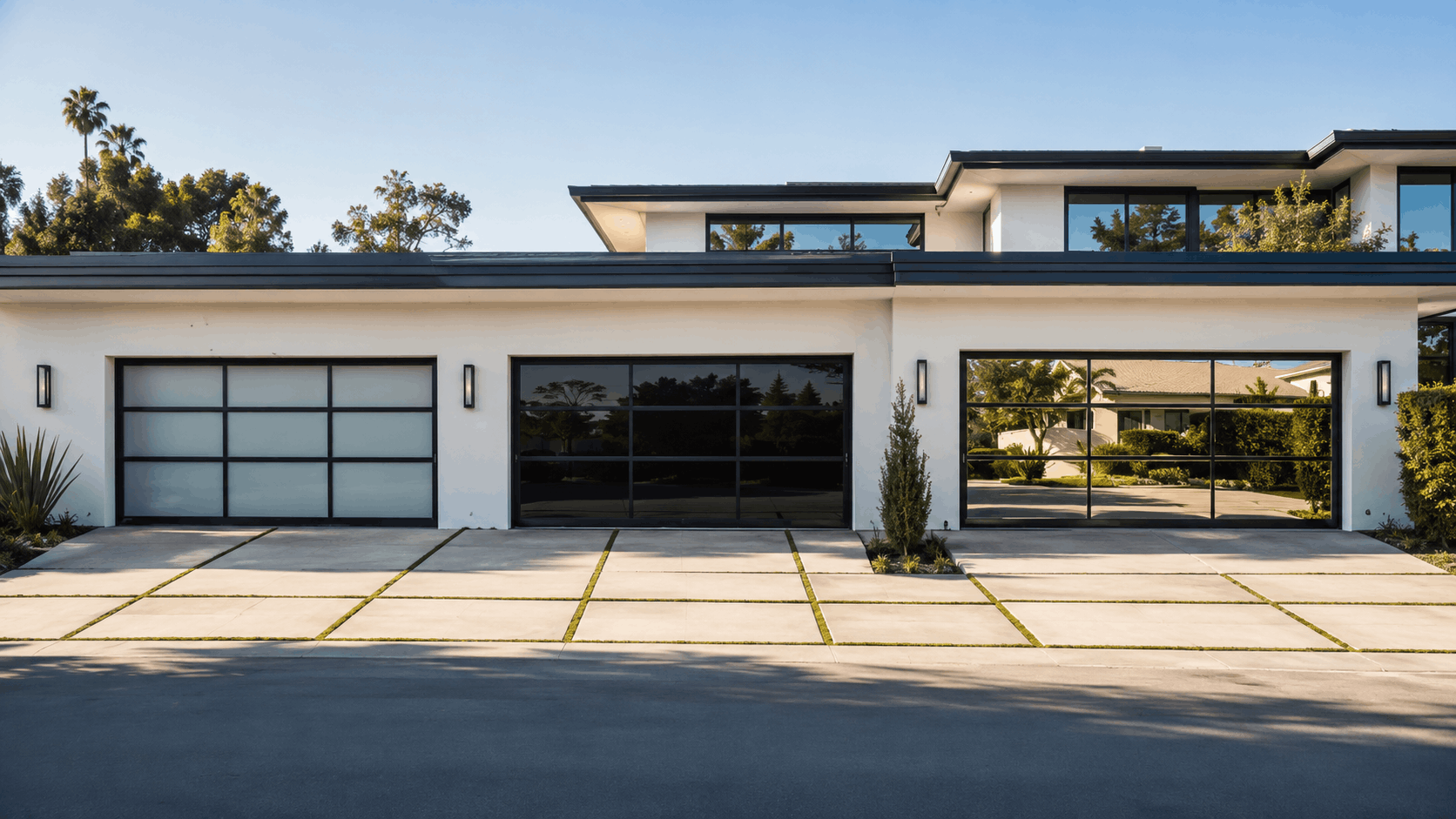
Frosted Glass: Soft Privacy Without Losing Light
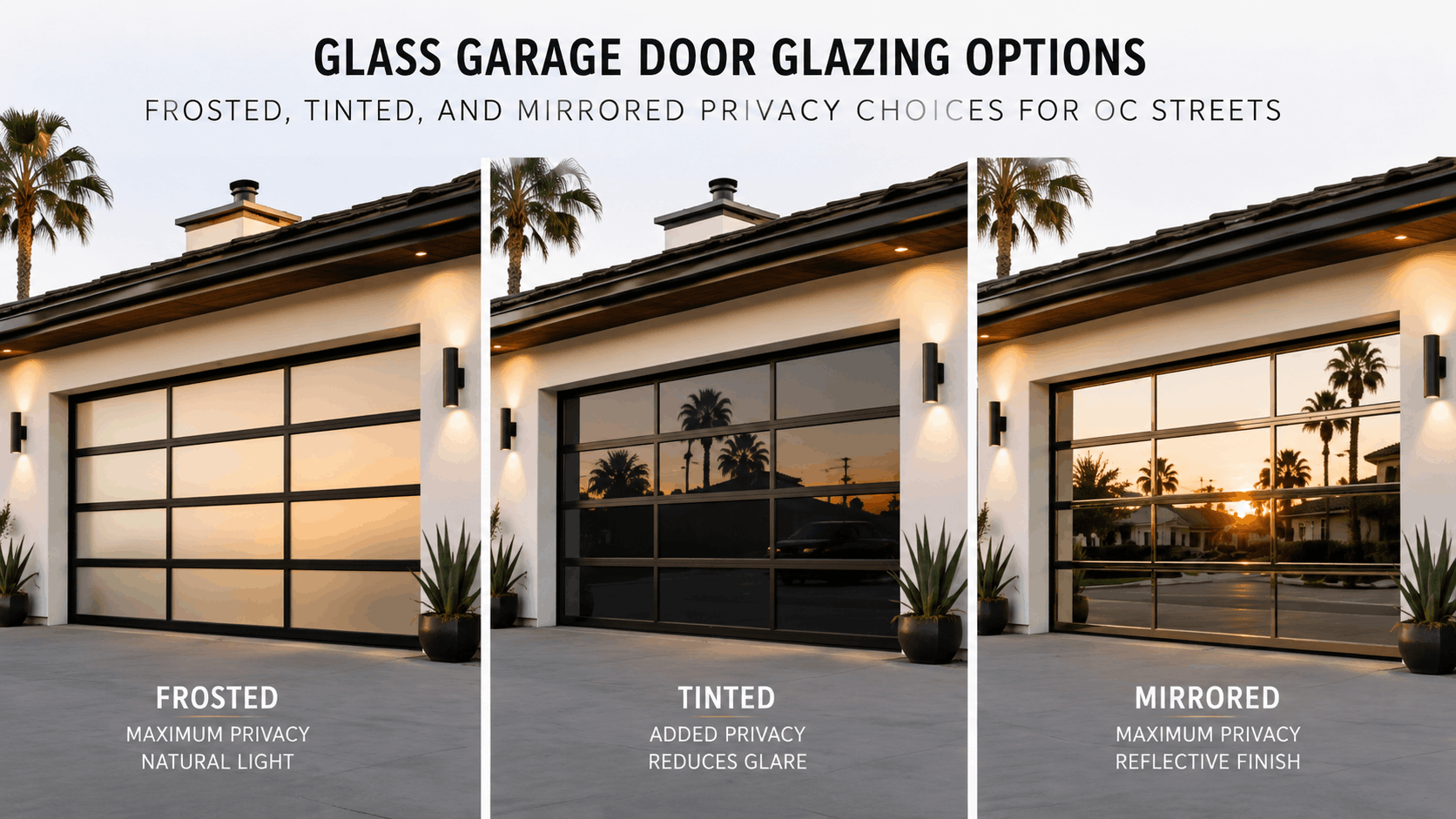
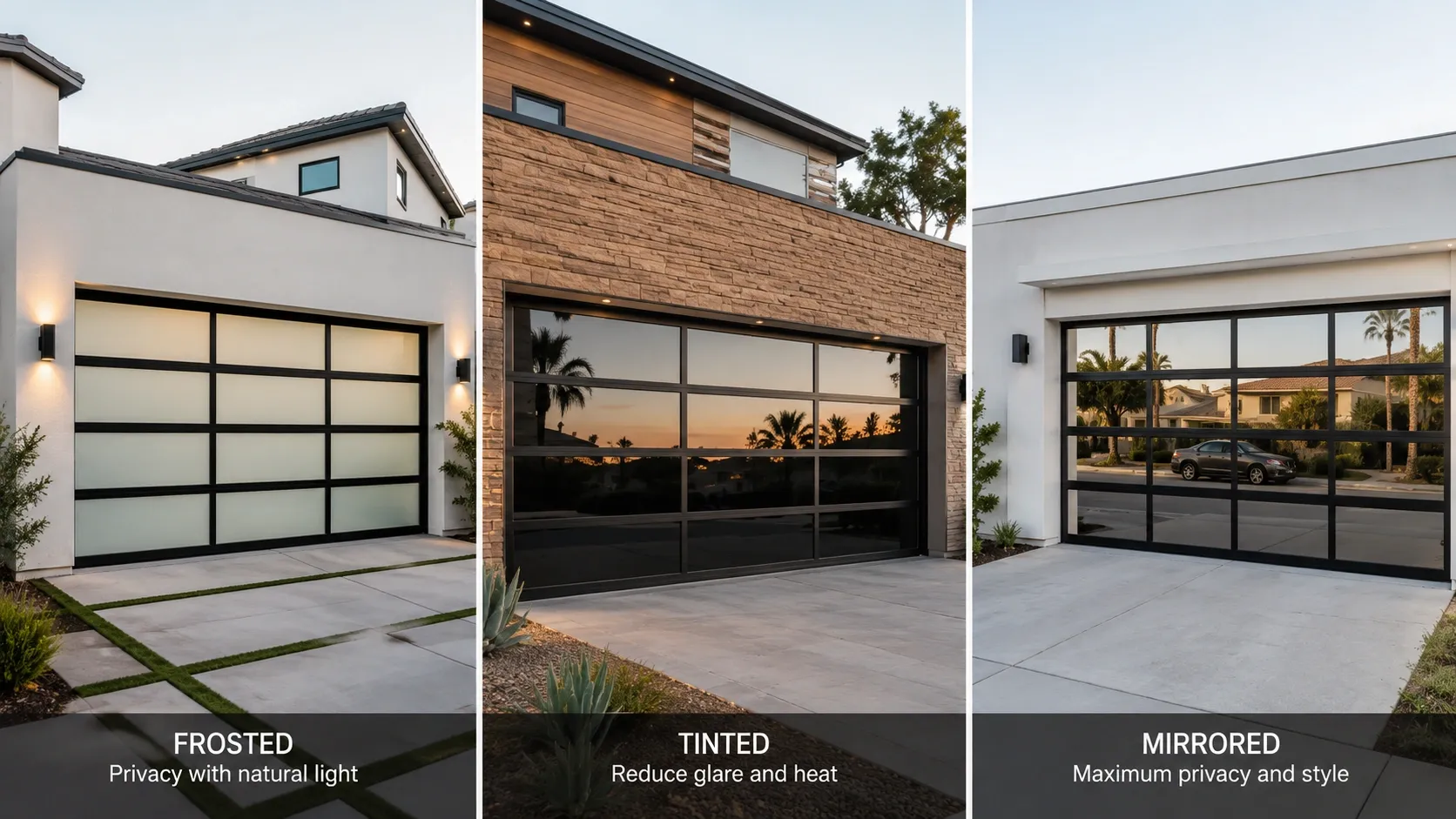
Frosted glass is our frequently requested privacy option, and for good reason. It gives homeowners the bright, modern glass look while blocking the view completely. People outside see a soft glow, not the contents of the garage.
Obscured glazing like this hits the sweet spot for anyone who wants daylight and total visual privacy at the same time, day and night. It is the choice we point most owners toward when privacy is their top concern.
| Feature | Frosted Glass Performance |
|---|---|
| Daytime privacy | Excellent |
| Nighttime privacy | Very good |
| Light let through | High (diffused) |
| Heat control | Low to moderate |
| Best for | Modern and transitional homes |
How Frosted and Acid-Etched Glass Blocks the View
Frosted glass is made by roughening one surface of the glass so light scatters instead of passing straight through. Acid-etched glass uses a chemical process to create a smooth, even frost that looks refined and consistent. Both methods break up the light and hide what is behind the panel.
The science is simple. When light hits a rough or etched surface, it diffuses in many directions. That diffusion is what turns a clear image into a soft, obscure blur.
The result is that shapes and details vanish. Someone standing at the curb sees a bright, even panel with no clear view of anything inside. Movement might register as a faint shadow, but that is all.
This is why frosted glass works so well for privacy. It does not depend on lighting conditions the way tinted or mirrored glass does. The obscuring effect holds up in daylight and after dark.
Light Transmission Levels and What They Mean
Clear glass lets through around 80 to 90 percent of visible light. Frosted and acid-etched panels still pass a lot of that light, often in the 70 to 80 percent range, but they spread it out. The space stays bright without a direct line of sight.
That translucent quality is what homeowners love. A garage gym stays well lit, but no one gets a clear window into it. The light comes in soft and diffused rather than in harsh direct beams.
Different frost densities change the numbers. A heavier frost blocks more view but drops light transmission slightly. A lighter frost keeps more brightness while still hiding details.
We help homeowners pick a density that matches their goals. Someone who mostly wants daylight leans lighter. Someone focused on total privacy leans heavier. Either way, the space stays far brighter than it would with a solid door.
Best Home Styles for Frosted Glazing in Irvine
Frosted glass pairs beautifully with modern homes, and Irvine has plenty of them. The clean, milky panels suit the flat lines and neutral palettes common in newer builds. It reads as intentional and current.
In Northwood, we see frosted doors work well on transitional homes that blend traditional shapes with modern touches. The soft glass softens a facade without clashing with brick or stucco. It fits without shouting.
Quail Hill is another spot where frosted glazing lands well. The modern homes there often have strong architectural lines that a frosted door complements rather than competes with. The look feels custom and considered.
We usually recommend matching the frame color to the home's trim or accent tones. A dark frame with frosted glass gives a crisp, contemporary contrast. A lighter frame keeps things airy and subtle.
Cleaning and Maintaining Frosted Panels
One quiet benefit of frosted glass is how well it hides everyday grime. Fingerprints, dust, and light water spots barely show against the textured surface. Owners spend less time chasing smudges than they would on clear glass.
For cleaning, a soft microfiber cloth and a mild glass cleaner handle most jobs. We tell homeowners to avoid abrasive pads that could scratch the etched or coated side. Gentle is the rule.
Acid-etched surfaces should be wiped in the direction of any texture and dried to prevent streaking. A quick rinse and dry after a dusty Santa Ana wind event keeps the panels looking clean. It takes only a few minutes.
Overall, frosted panels are low maintenance. Their forgiving nature is part of why so many families choose them. If you ever notice damage, our team handles frosted panel replacement quickly.
Need Help in Irvine?
Urgent Garage Doors serves Irvine and all of Orange County.
Tinted Glass: Cutting Glare and Adding Screening
Tinted glass is the pick for homeowners who want some privacy plus real help with heat and glare. It darkens the glass so the interior is harder to see during the day while still letting owners look out. On sunny OC streets, that combination is hard to beat.
Tint does more than screen the view. It cuts glare, reduces heat gain, and protects stored items from fading. For a west-facing garage, that adds up fast.
| Feature | Tinted Glass Performance |
|---|---|
| Daytime privacy | Good |
| Nighttime privacy | Low (with lights on) |
| Glare control | Excellent |
| Heat reduction | Good to excellent |
| Best for | West-facing, sun-heavy garages |
How Tint Shades Affect Privacy Day and Night
Tint works by darkening the glass, which makes the brighter side hard to see into. During the day, the outside is brighter than the garage, so people outside see mostly reflection and shadow. The interior stays screened.
At night, that flips. Once interior lights come on, the garage becomes the brighter side. Now someone outside can see in more easily, and daytime privacy largely disappears after dark.
Darker tint shades improve daytime privacy but never fully solve the nighttime issue on their own. Homeowners who need round-the-clock privacy usually pair tint with another solution or lean toward frosted glass instead. We are always upfront about this trade-off.
For many families, that is fine. If the garage is only lit while someone is actively using it, the exposure window is short. Understanding this helps owners set the right expectation before install.
Bronze, Gray, and Green Tint Color Choices
Tint comes in several colors, and each pairs differently with a home's exterior. Bronze tint gives a warm, classic look that flatters tan and earth-toned stucco. It is a popular match for Spanish-influenced homes.
Gray tint reads as neutral and modern. It works with cool color palettes, dark trim, and gray stone finishes seen on contemporary builds. It is a safe, versatile choice.
Green tint is less common but blends well with landscaping-heavy fronts and certain stone accents. It adds a subtle, natural undertone. The right pick depends on the home's exterior finish and stone.
We bring samples so homeowners can hold the tint against their actual siding and trim. Color reads very differently in the driveway than it does on a screen. Seeing it in place prevents regret.
Heat and Energy Benefits for Garages That Face West
West-facing garages take the brunt of afternoon sun, and we see this constantly in newer villages. Homes in Portola Springs and around the Great Park often deal with intense late-day heat pouring through the door. Tint blocks a meaningful share of that solar heat.
Less heat coming in means a cooler garage and less load on the adjacent rooms. For a converted office or gym, that comfort difference is huge in July and August. The space stays usable during peak heat.
Tint also improves energy efficiency in an indirect way. A cooler garage means the shared wall does not radiate as much heat into the living space. The AC works a little less hard.
Pairing tinted glass with proper weatherseal and insulation multiplies the benefit. The glass handles the sun while the seals hold the conditioned air. Together they make a big difference on hot streets.
Combining Tint With Low-E Coatings
Low-E coatings are thin, nearly invisible layers that reflect heat while letting light through. Adding a Low-E coating to tinted glass pushes the heat and comfort performance even higher. The two work well as a team.
The comfort gain is noticeable. A Low-E tinted door keeps summer heat out and helps hold warmth on cool winter mornings. The garage stays more stable year round.
Low-E coatings also block a large share of UV rays. That UV protection matters for anything stored in the garage that can fade, like gear, upholstery, or paint. Belongings last longer out of the harsh light.
We often recommend this combination for garages doing double duty as living or work space. The upfront cost is higher, but the day-to-day comfort and UV protection pay off. It is a smart pick for sun-heavy lots.
Mirrored Glass: Maximum Daytime Privacy and Reflective Style
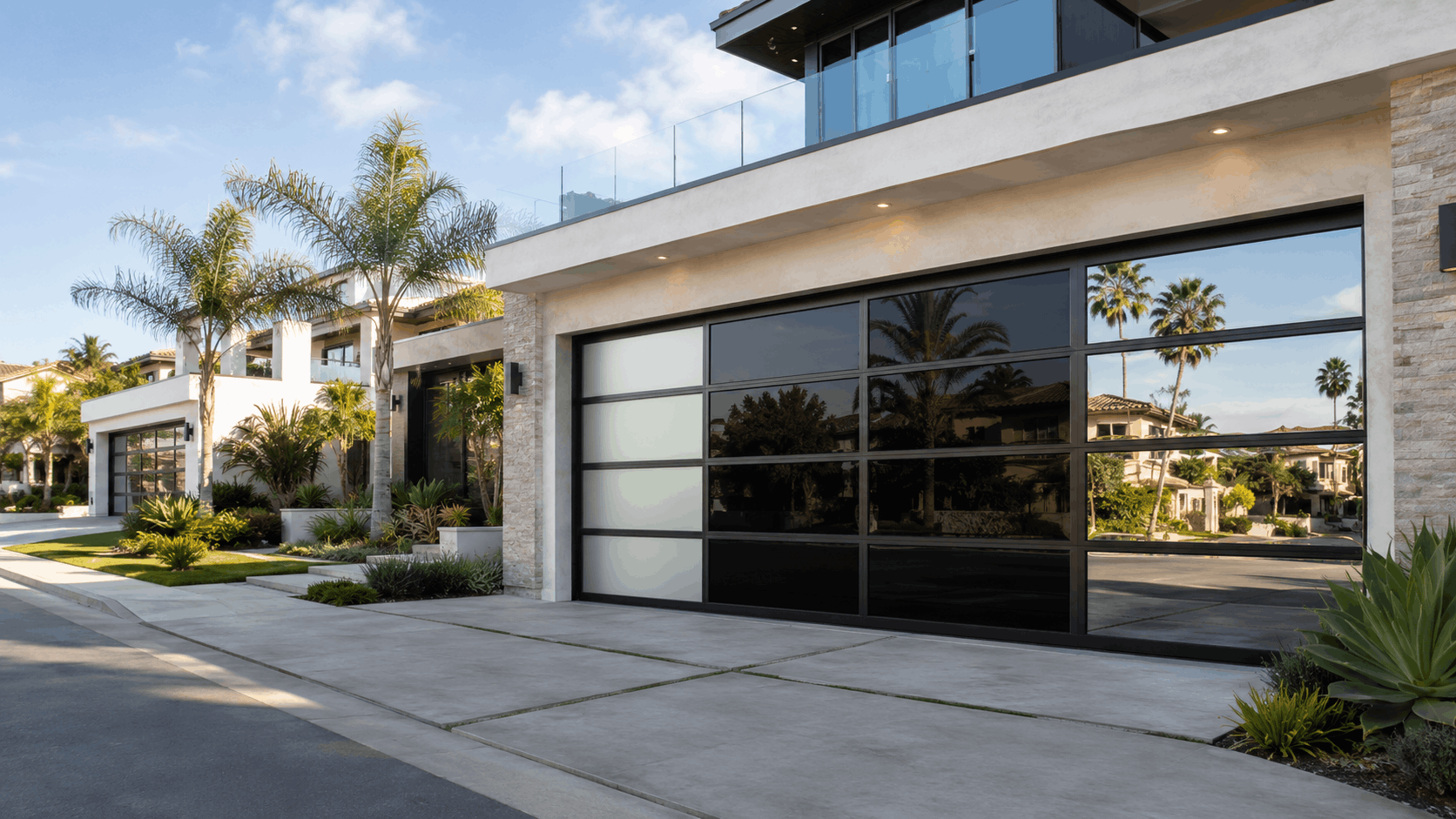
Mirrored glass gives the strongest daytime screening of the three options. From the street, the panels look like a solid reflective surface, so passersby see the neighborhood reflected back, not the garage inside. It is a bold, sleek look.
Reflective glazing suits homeowners who want a striking exterior and firm daytime privacy from a busy street. It turns the door into a mirror during daylight hours.
| Feature | Mirrored Glass Performance |
|---|---|
| Daytime privacy | Excellent |
| Nighttime privacy | Poor (with lights on) |
| Style impact | High, reflective |
| Heat control | Good |
| Best for | High-traffic street frontage |
How One-Way Reflective Coatings Work
Mirrored glass uses a thin metallic reflective coating on the surface. That coating bounces back most of the light that hits the brighter side of the glass. The effect is the classic one-way mirror.
The physics depends entirely on light balance. When the outside is brighter than the inside, the coating reflects the outdoor scene and hides the interior. People outside see themselves, not the garage.
This mirror effect only works in one direction at a time. During the day, with sunlight outside, the reflective side faces the street and privacy is strong. From inside, owners can still see out reasonably well.
It is worth understanding that the coating does not create a permanent one-way barrier. It simply reflects toward whichever side has more light. That single fact explains both its strength and its main weakness.
The Trade-Off: Nighttime Visibility
The honest downside of mirrored glass is nighttime privacy. Once the sun goes down and interior lights turn on, the garage becomes the brighter side. The mirror effect reverses, and people outside can see in clearly.
This surprises some homeowners, so we always explain it before install. Mirrored glass is a daytime privacy tool, not an all-hours one. Expecting it to hide the interior at night leads to disappointment.
There are good fixes. Owners can add interior blinds, shades, or a privacy film layer for evening use. Simply keeping bright lights off when not in the garage also limits the exposure window.
For many homes, this trade-off is manageable. If the garage is dark most evenings, the loss of nighttime privacy rarely matters. It is about matching the glass to how the space actually gets used.
Curb Appeal on High-Traffic Roads Like Culver and Jamboree
Homes near busy roads get a lot of eyes on them every day. Properties close to Culver Drive or along Jamboree Road deal with steady, fast-moving traffic. For those owners, extra street screening is a real priority.
Mirrored glass shines in these spots. The reflective panels give strong daytime privacy from all that passing traffic while still looking modern and high-end. The door becomes a design statement instead of a security worry.
The reflective finish also plays nicely with contemporary architecture. On the right home, it reads as sleek and intentional. It suits owners who want their house to stand out on a high-traffic corridor.
We help homeowners on busy roads weigh mirrored against tinted, since both cut daytime visibility. The final call usually comes down to how bold a look the owner wants. Some love the mirror effect, others prefer the softer tint.
Glare Concerns for Neighbors and Sidewalks
Reflective glass throws light, and that can create glare. On a bright afternoon, a large mirrored door can bounce sun toward neighbors, sidewalks, or passing drivers. This is the main concern HOAs raise about mirrored doors.
Panel placement and orientation help control the issue. We look at how the sun tracks across the property and where reflections would land. Sometimes a slightly less reflective coating solves the problem while keeping most of the privacy.
Neighbor relations matter here too. A door that blinds the house across the street or a walker on the sidewalk will cause friction fast. We factor the surrounding homes into the recommendation.
For lots where glare would be a real problem, we often steer owners toward a heavy tint or frosted option instead. Those give strong privacy without the reflection. Choosing the right glass avoids conflict down the road.
Need Help in Irvine?
Urgent Garage Doors serves Irvine and all of Orange County.
Comparing Frosted, Tinted, and Mirrored Side by Side
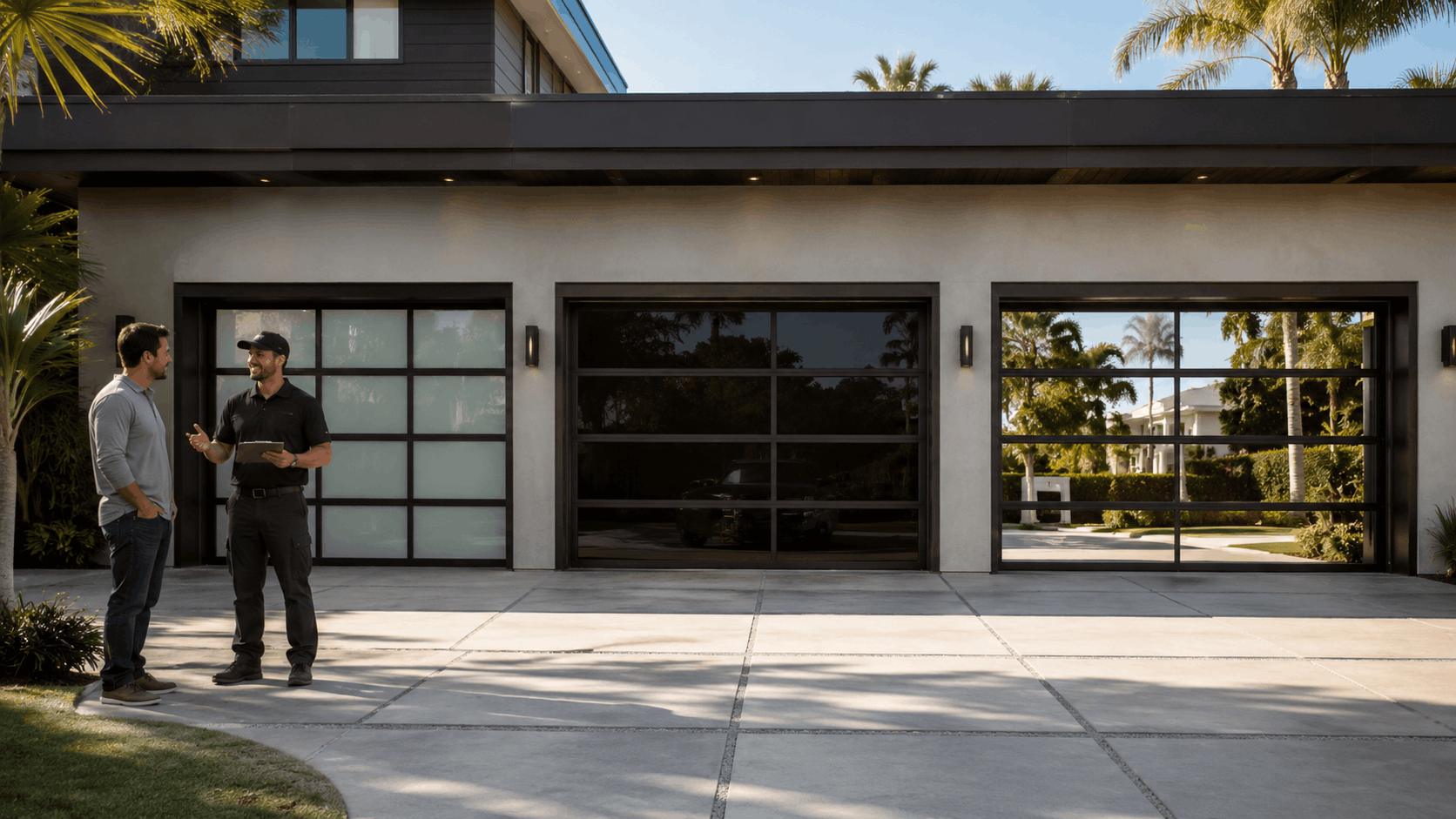
With three solid options, the choice comes down to priorities. This glazing comparison lays out how frosted, tinted, and mirrored stack up on privacy, light, heat, cost, and style. It helps homeowners narrow the privacy choices to the right garage door glass for their situation.
| Factor | Frosted | Tinted | Mirrored |
|---|---|---|---|
| Daytime privacy | Excellent | Good | Excellent |
| Nighttime privacy | Very good | Low | Poor |
| Light let in | High (diffused) | Moderate | Moderate |
| Heat and glare control | Low to moderate | Excellent | Good |
| Style | Soft, modern | Subtle, versatile | Bold, reflective |
Privacy Rating: Day Versus Night
For all-day and all-night privacy, frosted glass leads the pack. Its obscuring effect does not depend on light balance, so it hides the interior day and night. That consistency is why we recommend it most for privacy-first homeowners.
Mirrored glass ties frosted for daytime privacy but drops off sharply at night. Tinted glass sits in the middle for the day and near the bottom after dark with lights on. Both need help to hold privacy in the evening.
The right privacy rating depends on when the garage gets used. A daytime gym is fine with tint or mirrored. A space used at all hours does better with frosted.
We always ask how and when the garage will be used before recommending a type. That single answer often points straight to the best glass. Matching use to glazing prevents surprises later.
Light and Heat Performance
Frosted glass wins on light. It spreads a high volume of daylight into the space without direct sightlines. For a bright, well-lit garage, nothing beats it.
On heat, the order flips. Tinted glass, especially with a Low-E coating, controls heat and glare best. Mirrored glass also helps by reflecting solar energy away.
Frosted glass offers the least heat control of the three. It diffuses light but does little to block solar heat on its own. On a west-facing wall, that can be a real drawback.
So the light-versus-heat trade-off is central. Owners chasing maximum daylight lean frosted. Owners fighting afternoon heat and glare lean tinted or mirrored. Orientation usually decides it.
Cost Ranges for Each Glazing Type
Pricing varies with door size, frame material, and glass quality, but ranges help set expectations. Frosted and standard tinted glazing tend to fall on the lower end of the glass-upgrade scale. Many full glass door upgrades land somewhere between roughly 2,500 and 5,500 dollars installed.
Mirrored and premium reflective coatings usually cost more per panel than basic frosted glass. Adding Low-E coatings to tinted glass also raises the price. Those upgrades can push a project toward the higher end of the range.
Larger doors and custom frame colors add cost as well. A wide two-car door with premium glass will run more than a single-car door. Frame material choice matters too.
We give firm, itemized quotes so homeowners see exactly what each option costs. A quick consultation and measurement pin down the real number for a specific door. Every home is a little different.
Which Choice Fits Your Home and Street
The decision guide comes down to three questions. How much traffic passes the home, which direction the door faces, and when the garage gets used. Answer those and the right glass usually becomes clear.
High-traffic frontage with strong daytime privacy needs points toward mirrored or heavy tint. A sun-baked west-facing garage leans tinted with Low-E. A privacy-first space used day and night points to frosted.
Design goals matter too. Owners wanting a bold statement gravitate to mirrored. Those wanting a soft, quiet modern look prefer frosted or subtle tint.
When the choice is not obvious, we walk the property and look at the street, the sun, and the neighbors. A quick site visit removes the guesswork. Our team helps match the glass to the home and street traffic every time.
HOA Rules and Permits for Glass Garage Doors in Irvine
Before any glass door goes up, most Irvine homeowners face an approval step. HOA rules and city permits both come into play, and skipping them causes headaches later. Getting the paperwork right up front saves time and money.
Irvine's master-planned villages tend to have detailed design guidelines. Knowing what a given community allows shapes the glass and frame choices from the start.
Common HOA Restrictions in Master-Planned Villages
Master-planned villages love consistency, and garage doors are heavily reviewed. Communities like Woodbury and Cypress Village often limit finishes, colors, and reflective surfaces. What flies in one village may be rejected in another.
Reflective glass draws the most scrutiny. Many boards worry about glare and how a mirrored door fits the neighborhood look. Some restrict or ban strongly reflective coatings outright.
Frame color and glass type also face rules. A board may require frames to match approved trim palettes or limit how much glass a door can show. These HOA restrictions vary by village.
We always check the specific community's guidelines before finalizing a design. That step prevents a homeowner from falling in love with a door the board will reject. Knowing the rules early keeps the project on track.
Working With the Irvine Community Development Department
Beyond the HOA, the city may require a permit for a garage door change. The Irvine Community Development Department handles building permits and inspections. Whether a permit applies depends on the scope of the work.
A straight door replacement in the same opening is often simpler than a structural change. When framing, headers, or the opening size change, a building permit is more likely. The city process usually involves a submittal, review, and inspection.
Permit timelines vary, but planning ahead avoids delays. Starting the approval before ordering the door keeps everything moving. Rushing tends to create problems.
We help homeowners figure out whether their project needs a permit. If it does, we know how the local building process runs and what to expect. That local knowledge keeps the job smooth.
Getting Reflective Glass Approved
Mirrored glass takes extra effort to approve because of glare rules. Boards want assurance the door will not blind neighbors or drivers. A strong submittal addresses that head on.
We recommend including reflectivity specs and, where possible, a lower-reflectivity option in the request. Showing the board that glare has been considered goes a long way. Documentation that answers their concerns speeds approval.
Sometimes the right move is proposing a tinted or lightly reflective alternative. Many boards approve those more readily than a full mirror finish. Flexibility often wins reflective glass approval more easily.
Reaching out to the HOA board early is smart. A quick conversation reveals what they will and will not accept. That saves a rejected submittal and a second round of paperwork.
How Our Team Handles the Paperwork
Approval paperwork trips up a lot of homeowners, so we take that load on. Our team at Urgent Garage Doors provides the spec sheets, product data, and drawings boards and cities want to see. Complete documentation gets quicker answers.
We assemble the submittal package with glass specs, frame details, and color samples. When a board asks a question, we have the answer ready. That reduces back-and-forth and delays.
For city permits, we help gather what the building department requires. Knowing the local process means fewer surprises for the homeowner. We handle the technical parts so owners do not have to.
The goal is a smooth path from idea to installed door. Getting the submittal right the first time is the fastest route there. Homeowners can reach our team through our contact page to start the process.
Need Help in Irvine?
Urgent Garage Doors serves Irvine and all of Orange County.
Installation and Care Tips From Our Irvine Team
A glass garage door is only as good as its installation and upkeep. Getting the glass panels, hardware, and frame right at install sets the door up for years of smooth use. Ongoing care keeps the glazing clear and safe.
Here is the practical advice we share with every glass door customer across Irvine and the surrounding OC cities.
Safety Glass and Panel Strength
A garage door moves constantly, so the glass has to be safe. We use tempered glass, which is heat-treated to be much stronger than standard glass. If it does break, it crumbles into small, dull pieces instead of sharp shards.
Laminated glass is another option, with a plastic layer bonded between two glass sheets. It holds together when cracked and adds extra security and sound dampening. Both tempered and laminated meet safety standards for moving doors.
For families with kids or high-traffic garages, we often suggest laminated or thicker tempered panels. The added strength is worth it. Safety should never be an afterthought with a large moving glass door.
Panel strength also affects how the door handles wind and daily use. Quality glass and solid hardware keep the door operating cleanly. It is the foundation of a door that lasts.
Frame Materials That Hold Up in Coastal Air
Frame material matters, especially for homes closer to the coast. Salt air speeds up corrosion, so a cheap frame fails fast. Aluminum frames resist rust and stay light, which suits large glass doors.
Powder-coated finishes add another layer of protection. The baked-on coating shields the metal and resists chipping and fading. For homes in Newport Beach or nearer the ocean, powder coating is a smart call.
Aluminum plus powder coating is our default for coastal-influenced areas. The combination handles salt air and sun without corroding. It keeps the door looking sharp for years.
We match the frame finish to the home while keeping durability in mind. A good-looking door that rusts in three years helps no one. Picking the right material protects the investment.
Cleaning Glazing Without Scratching Coatings
Tinted and mirrored glass have coatings that need gentle care. Harsh chemicals or abrasive tools can damage tint film and reflective layers. Cleaning the wrong way ruins the finish.
We recommend a soft microfiber cloth and a mild, ammonia-free glass cleaner. Ammonia can break down some tint films over time. A gentle cleaner protects the coating while cutting dust and spots.
Never use scouring pads, razor blades, or gritty rags on coated glass. Those cause scratches that cannot be buffed out. Coating care comes down to being gentle and consistent.
A quick wipe every couple of weeks keeps the glass clear. After dusty winds, a rinse and dry helps. Regular light cleaning beats occasional aggressive scrubbing every time.
When to Call for Repair or Panel Replacement
Some problems need a professional. Cracked glass, fogging between layers, or a failed seal all signal it is time to call. Fogging usually means moisture got past a seal and the panel needs attention.
A single damaged panel does not always mean a whole new door. In many cases we can handle sectional replacement or swap the affected glass. That saves money and time.
Cracks are also a safety issue on a moving door. Damaged glass should be addressed quickly before it worsens. Waiting risks a bigger failure.
Our team responds fast across Irvine and nearby cities for glass door issues. Whether it is a crack, fog, or a broken panel, we offer same-day repair when needed. A quick call gets the door back in shape.
Final Thoughts
Glass garage doors give OC homes a clean, modern look, and privacy no longer has to be the reason to skip them. Frosted glass delivers soft, all-hours privacy with plenty of daylight. Tinted glass fights heat and glare while screening the view during the day. Mirrored glass offers bold, strong daytime privacy for high-traffic streets.
The right choice depends on the home's street, the sun, and how the garage gets used. Matching the glass to those factors is what turns a good-looking door into the right door.
Our team knows Irvine's neighborhoods, HOA rules, and sun patterns street by street. If a glass garage door is on the wish list, reach out for a consultation and honest advice. Call Urgent Garage Doors or visit our contact page to get started, and see all our installation options along the way.
Frequently Asked Questions
- Which glass garage door glazing offers the most privacy?
- Frosted glass offers the strongest overall privacy because it obscures the view both day and night, no matter the lighting. Mirrored glass matches it for daytime privacy but loses that effect after dark with interior lights on. Tinted glass gives good daytime screening but the least nighttime privacy. For all-hours coverage, frosted is our top recommendation.
- Does mirrored glass keep privacy at night?
- No, mirrored glass loses much of its privacy at night. The reflective effect only works when the outside is brighter than the inside. Once interior lights turn on after dark, the garage becomes the brighter side and people outside can see in. Adding interior blinds, shades, or a privacy film, or simply keeping lights off when the garage is empty, restores evening privacy.
- How much do frosted glass garage door panels cost?
- Frosted glazing sits on the lower end of the glass-upgrade scale. Full glass door upgrades often run between roughly 2,500 and 5,500 dollars installed, depending on door size, frame material, and glass quality. A wide two-car door with premium framing costs more than a single-car door. We provide firm, itemized quotes after measuring so homeowners know the exact price.
- Can tinted glass reduce heat in a garage?
- Yes, tinted glass blocks a meaningful share of solar heat and glare, which helps a lot on west-facing garages. Pairing tint with a Low-E coating boosts that performance even further and adds strong UV protection for stored items. Combined with good weatherseals and insulation, tinted glass keeps a garage noticeably cooler through hot Irvine afternoons.
- Do I need HOA approval for a glass garage door in Irvine?
- Most Irvine master-planned villages require HOA approval before changing a garage door. Communities like Woodbury and Cypress Village often restrict finishes, colors, and reflective surfaces. Reflective glass gets the most scrutiny due to glare concerns. A city building permit may also apply depending on the work. Our team prepares the spec sheets and submittal documents to make approval smoother.
- Is glass garage door glazing safe if it breaks?
- Yes, when the right glass is used. We install tempered glass, which crumbles into small, dull pieces instead of sharp shards if broken. Laminated glass, with a plastic layer between two panes, holds together when cracked and adds security. Both meet safety standards for moving doors, making a glass garage door safe for homes with kids and daily traffic.
- Will reflective glass bother my neighbors with glare?
- Strongly reflective glass can throw glare toward neighbors, sidewalks, or drivers, especially in the afternoon sun. This is the main reason some HOA boards limit mirrored doors. We study how the sun tracks across the property and adjust panel orientation or suggest a lower-reflectivity coating to reduce the issue. For lots where glare would be a problem, heavy tint or frosted glass is a better fit.
- How do I clean tinted or frosted garage door glass?
- Use a soft microfiber cloth and a mild, ammonia-free glass cleaner. Ammonia can damage tint film over time, so avoid it on coated glass. Never use scouring pads, razor blades, or gritty rags, since those scratch coatings permanently. Frosted panels hide fingerprints and dust well and need only a gentle wipe. A quick cleaning every couple of weeks keeps the glass clear.
- Can I replace just one broken glass panel?
- In many cases, yes. A single cracked or fogged panel often does not require a whole new door. Depending on the door design, we can swap the affected glass or handle a sectional replacement, which saves money and time. Cracked glass on a moving door is a safety issue, so it should be addressed quickly. Our team offers fast panel replacement across Irvine.
- Which glazing works best for west-facing garages in OC?
- West-facing garages take the full brunt of strong afternoon sun exposure, so heat and glare control matter most. Tinted glass, ideally paired with a Low-E coating, is usually the best choice for those doors. It cuts solar heat, reduces glare, and protects stored items from UV fading. Mirrored glass also helps by reflecting sun away. Homes in Portola Springs and around the Great Park often benefit from these options.
Licensed garage door repair professionals serving Irvine and Orange County.
Licensed in California · License #1055150
Why trust Urgent Garage Doors?
Founded in 2017, Urgent Garage Doors is a licensed and insured garage door services serving Irvine and Orange County. All content is reviewed by our licensed technicians.

Need Help in Irvine?
Urgent Garage Doors serves Irvine and all of Orange County.
Related Articles

Emergency Garage Door Repair in Irvine Villages: Gate Codes, Association Quiet Hours, and Our Protocol
How Urgent Garage Doors handles emergency garage door repair in Irvine's gated villages, from gate codes and guard lists to HOA quiet hours and our step-by-step repair protocol.
Emergency Garage Door Repair in Newport Coast: Same-Day Service for Pelican Hill and Crystal Cove
A local guide to emergency garage door repair in Newport Coast, covering common failures, same-day service for Pelican Hill and Crystal Cove, costs, and prevention.
Turtle Rock Irvine Garage Door Repair: Why HOA Approval Affects Color and Style
Learn why Turtle Rock Irvine garage door repair often involves HOA approval, how color and style rules work, and how to stay compliant before you fix or replace your door.