Maintenance
Talega San Clemente Garage Door Repair: Coastal Salt Air Damage Specialists
Key Takeaways
- Ocean salt air carries moisture that corrodes garage door springs, cables, hinges, and tracks far faster than inland conditions.
- Homes on exposed Talega ridges near Avenida Vista Hermosa and the trails catch more wind-driven salt spray than sheltered lots.
- Early warning signs include rust streaks, chalky white spots, grinding rollers, sticking doors, and pitted springs.
- Springs, cables, and roller bearings fail first on coastal doors, while humidity also corrodes opener boards and safety sensors.
- Repairs work best with corrosion-resistant parts, thorough cleaning, marine-grade lubrication, and proper track alignment.
- Aluminum or fiberglass doors with galvanized, powder-coated hardware resist salt best while still meeting Talega HOA design rules.
- Monthly fresh-water rinses, quarterly lubrication, and twice-yearly professional tune-ups dramatically extend a coastal door's life.
- Urgent Garage Doors offers same-day and 24/7 emergency coastal repair from Irvine down to San Clemente via the I-5 corridor.
In This Article
A homeowner in Talega walks out to grab the morning paper and notices something new. Faint orange streaks run down the bottom panels of the garage door, and a chalky white film has settled on the hinges. When they press the remote, the door hesitates, then groans its way up like it is fighting every inch. That ocean breeze that makes San Clemente so pleasant just left its mark.
This is one of the most common calls our team gets from coastal neighborhoods. Salt air does not announce itself with a slam. It works slowly, hiding under paint and inside springs, until a door that worked fine last year starts sticking, squealing, or failing outright. Living near the water is worth it, but the garage door pays a price.
Why Coastal Salt Air Wears Down Garage Doors in Talega?
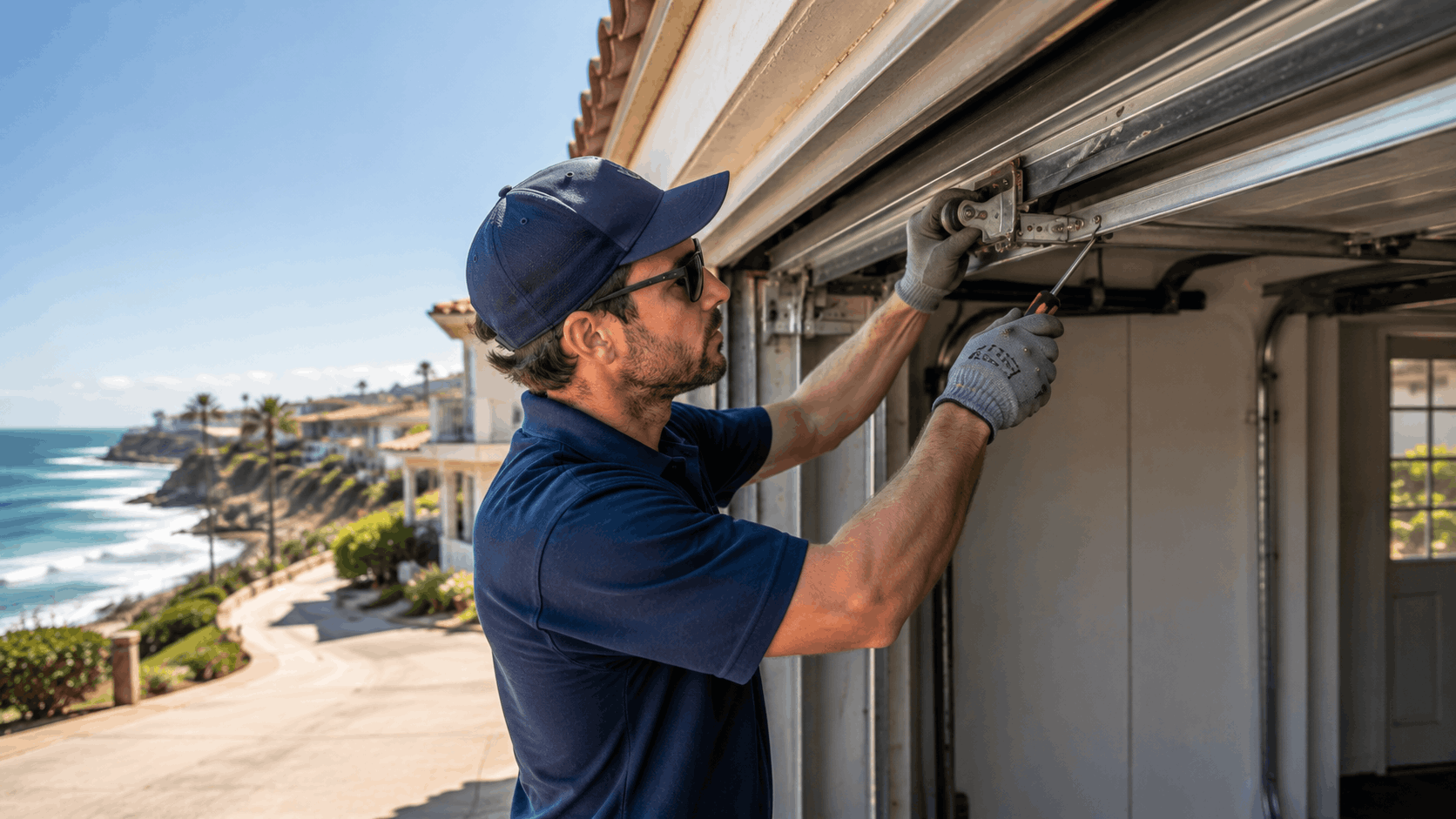
The ocean air that rolls into San Clemente carries more than a nice smell. It carries microscopic salt particles and constant moisture, and both go straight to work on metal. Garage doors are built from steel, springs, cables, and hardware that all react badly to salt. That is why coastal garage door damage shows up years sooner than it does for homes a few miles inland.
Talega sits on rolling hills close enough to the coast to catch steady marine air. The combination of salt and San Clemente humidity creates conditions that accelerate rust on nearly every moving part. Our crews see the difference firsthand between coastal tracts and inland ones, and the gap is wide.
How Salt Speeds Up Rust and Corrosion
Salt is hygroscopic, which is a fancy way of saying it pulls water out of the air and holds onto it. When salt lands on a steel hinge or spring, it traps a thin film of moisture against the metal. That film never fully dries in a coastal climate, so the metal stays damp for hours or days at a time.
Wet metal plus oxygen equals rust, and salt acts like an accelerant for that reaction. Instead of taking years, metal corrosion can take root in months on an unprotected door near the beach. The salt also conducts electricity, which speeds up the electrochemical process that eats away at steel.
Once rust starts on a hinge, spring, or track, it spreads. It works under paint, lifts coatings, and weakens the metal underneath. By the time most homeowners notice the orange streaks, the corrosion has already been growing for a while beneath the surface.
Why Talega and Coastal San Clemente Get Hit Hardest
Not every home in San Clemente gets the same dose of salt. Homes closer to the water and those sitting up on ridges catch far more wind-driven spray than homes tucked into inland valleys. The higher and more exposed the lot, the more salt reaches the garage face.
Properties along ridges near Avenida Vista Hermosa get steady ocean breeze exposure that carries fine salt mist inland and deposits it on whatever it hits first. Garage doors facing the prevailing wind take the brunt of it. We have serviced homes a single block apart where one door is rusting and the other looks nearly new, all because of how the wind wraps around the hill.
The same pattern shows up across other coastal pockets we work in, from San Clemente neighborhoods down to the Pier Bowl. The closer the home sits to open ocean air, the more often the door needs attention.
Seasonal Marine Layer and Morning Moisture
Anyone who lives in Talega knows the May Gray and June Gloom routine. The marine layer rolls in overnight and sits over the coast until late morning. During those hours, everything outside stays coated in a damp film, including the garage door.
That morning dampness is a problem because it gives salt the moisture it needs to keep corroding metal. A door that might dry out quickly in a desert climate stays wet for half the day here. Multiply that by months of marine layer mornings and the corrosion adds up fast.
The wet season is not the only culprit, but it is when damage speeds up the most. Springs and cables that already carry salt residue get a fresh dose of moisture every single morning. We see a noticeable jump in coastal service calls right after a long stretch of gloomy mornings.
Wind Patterns Across Talega's Hillside Lots
Talega's layout is full of hillside lots near its parks and trails, and those elevated spots catch the most wind. Onshore breezes push up the slopes and carry salt straight onto exposed garage faces. The higher the lot, the steadier the airflow.
Homes near the upper trails and open green spaces tend to show wear faster than ones shielded by other houses. There is no fence or building to break the wind, so the salt rides right up to the door. Even well-built steel doors struggle against that constant exposure.
Wind also drives salt into the gaps around hinges and rollers where it collects and stays. Those tight spots are exactly where corrosion does the most hidden damage. Understanding the wind on a given Talega lot helps us predict which parts will fail first.
Get Your Free Quote
Tell us about your garage door and we'll get back to you fast.
Warning Signs Your Coastal Garage Door Needs Repair
Salt damage rarely takes a door out all at once. It gives plenty of warning if a homeowner knows what to look and listen for. Catching these garage door warning signs early keeps a small repair from turning into a full replacement.
Here is a quick reference for the most common salt damage symptoms we find on coastal doors, along with what each one usually means.
| Warning Sign | What It Usually Means | Urgency |
|---|---|---|
| Orange rust streaks on panels | Surface corrosion spreading under paint | Moderate |
| Chalky white spots | Salt buildup and early metal pitting | Moderate |
| Grinding or squealing | Salt grit in rollers and tracks | High |
| Door sticking or jerking | Corroded rollers or bent track | High |
| Visible spring pitting | Weakened torsion spring near failure | Urgent |
| Sagging or crooked panels | Rusted hinges and loose hardware | High |
Rust Streaks and Chalky White Spots on Panels
The first thing most Talega homeowners notice is rust streaks running down the lower panels. They often start at a scratch, a screw head, or a seam where the paint is thinnest. Once moisture reaches bare steel, the orange staining begins and spreads outward.
Chalky white spots are another early flag. That powdery film is salt deposit mixed with the start of metal pitting. It might wipe off at first, but the corrosion underneath keeps going even after the surface looks clean.
Panel corrosion is sneaky because it works behind the paint. By the time you see the streaks, rust has usually crept along the steel where you cannot see it. Treating it early, before it eats through, saves the panel and the rest of the door.
Grinding, Squealing, or Sticking Rollers
A noisy garage door is one of the clearest signals that salt has moved in. When grit and corrosion build up on the rollers and inside the tracks, the smooth glide turns into grinding and squealing. The sound usually gets worse over a few weeks.
Sticking rollers cause the door to jerk or pause partway through its travel. That uneven movement puts extra strain on the opener and the springs, which speeds up wear everywhere else. A door that used to run quietly and now fights you is asking for service.
We often fix this with cleaning, fresh rollers, and proper lubrication, but ignoring it leads to bigger problems. A roller that seizes can throw the door off its track entirely, which is a far more involved repair. The noise is the cheap warning before the expensive failure.
Weak or Broken Springs from Pitting
Torsion springs carry enormous tension, and salt is brutal on them. As corrosion pits the steel, it creates tiny weak points where the spring is more likely to crack. A pitted spring near the coast simply does not last as long as one inland.
You might spot rust flaking off the coils or hear a loud bang when a spring finally lets go. Spring failure usually leaves the door too heavy to lift, and a manual attempt can be dangerous. We treat broken springs as an urgent, hands-off repair.
Because springs are under such heavy load, this is not a part to ignore or DIY. Our torsion spring replacement work uses parts chosen to stand up better against salt. Catching pitting early means scheduling a planned swap instead of an emergency call.
Corroded Hinges and Loose Hardware
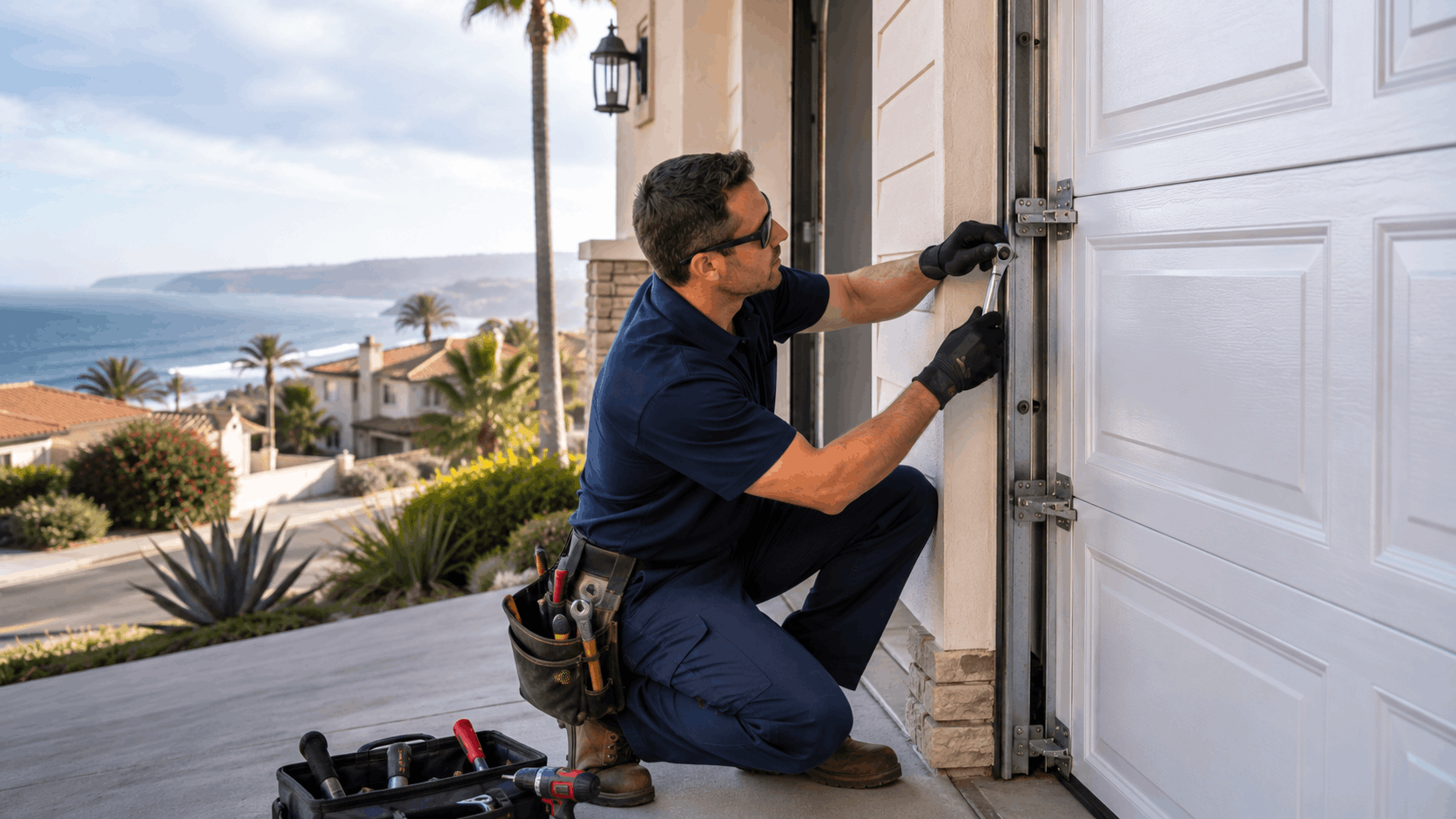
Hinges hold the panels together and let them bend as the door rolls up. When salt corrodes the hinges and the bolts that hold them, the connection loosens. That is when panels start to sag or shift out of line.
Loose hardware also rattles, which you may hear during operation. Rusted bolts can shear off or strip, leaving a panel barely attached. Once alignment slips, the whole door binds against the tracks and wears out faster.
We check every hinge and bolt during service because corroded hinges are easy to miss. Tightening, replacing, and protecting this hardware keeps the door square and quiet. It is small, cheap hardware that holds the entire door together.
Need Help in Irvine?
Urgent Garage Doors serves Irvine and all of Orange County.
Garage Door Parts Most Affected by San Clemente Salt Air
Not every part of a garage door wears at the same rate near the ocean. Some take the salt head-on and fail first, while others hold up longer. Knowing which garage door parts show coastal wear soonest helps homeowners inspect smarter.
Here is how the major components rank when it comes to salt exposure in San Clemente.
Springs and Cables Under Constant Stress
Springs and lift cables do the heaviest work on the door, lifting and lowering a few hundred pounds every cycle. That constant stress combined with salt corrosion is a rough combination. They tend to be among the first parts to fail on coastal homes.
Lift cables are thin braided steel, and once salt starts fraying the strands, they weaken quickly. A frayed cable can snap suddenly, leaving the door hanging crooked or stuck. We inspect cables closely because a small frayed spot is a warning of a bigger break to come.
Springs corrode from the inside of the coils where moisture collects and lingers. The pitting reduces their strength and shortens their working life by years compared to inland doors. When we handle spring and cable repair on the coast, we plan for shorter replacement cycles.
Tracks, Rollers, and Bearings
The tracks guide the door, and the rollers ride inside them on small bearings. Salt grit settles into the bottom of the tracks where the door meets the ground, exactly where moisture pools. That grit grinds against the rollers every time the door moves.
Roller bearings are tiny and precise, so they do not tolerate corrosion well. As the bearings rust and seize, the rollers drag instead of spin, which is what causes that grinding sound. Worn rollers also push the door out of alignment.
Tracks themselves can rust and develop rough spots or slight bends. A bent or corroded track makes the door bind and increases strain on every other part. Cleaning and realigning the track is a regular part of coastal upkeep.
Steel Panels and Painted Surfaces
Most garage doors in Talega are steel, which looks great but rusts where the finish breaks. A small scratch, a chip from a basketball, or a worn seam gives salt a way in. From there, rust spreads under the paint across the steel panels.
Coastal finishes break down faster than inland ones because of the constant salt and UV combination. The paint may fade, chalk, or bubble where corrosion lifts it from below. Once paint failure starts, water reaches the metal more easily and the cycle speeds up.
Good touch-up and protective coatings slow this down, but no finish lasts forever by the ocean. We help homeowners decide when a panel can be saved versus when the rust has gone too deep. Catching surface damage early is the difference between a touch-up and a new panel.
Opener Motors and Electronic Sensors
Salt air does not stop at the metal door. The humidity works its way into the opener motor, the circuit board, and the wiring connections. Corroded contacts can cause the opener to act erratically or quit entirely.
The safety sensors at the base of the door are especially exposed. Their contacts and wiring sit low to the ground where moisture collects, so corrosion there leads to a door that reverses for no reason or refuses to close. Sensor trouble is one of the more common coastal opener complaints.
We check wiring connections and clean corroded contacts during service, and we can handle sensor alignment and repair when the salt gets to them. Protecting the electronics matters as much as protecting the door itself. A rusted board can mean replacing the whole opener.
How Our Team Repairs Salt-Damaged Garage Doors
Repairing a coastal door takes more than swapping a part and leaving. The salt that caused one failure is still sitting on every other component. Our garage door repair process for San Clemente homes is built around catching and treating that hidden corrosion.
Here is how a typical coastal repair visit goes from start to finish.
Full Corrosion Inspection From Top to Bottom
Every visit starts with a complete corrosion inspection. We check each spring, cable, roller, hinge, track, and panel for rust, pitting, and fraying. Salt damage hides in tight spots, so we look where most homeowners never do.
We test the door balance and watch how it travels to catch binding or drag. We also inspect the opener, wiring, and sensors for corroded contacts. This top-to-bottom check tells us what is failing now and what will fail soon.
A thorough garage door tune up on the coast often turns up problems the homeowner had not noticed yet. Finding a frayed cable or a pitted spring early saves a future emergency call. We would rather flag a part now than have it strand someone later.
Replacing Rusted Springs, Cables, and Rollers
When we find corroded springs, cables, or rollers, we replace them with parts chosen for coastal use. Corrosion-resistant replacements hold up far better against salt than standard hardware. The upfront difference is small and the longer lifespan is worth it.
Spring replacement is done with the right tools and tension settings to keep the door balanced and safe. We never reuse a pitted spring just to save a few dollars, because that risk is not worth it near the coast. Matching the spring rating to the door weight keeps everything running smoothly.
For cables and rollers, we install sealed or coated versions that resist salt grit. Our cable repair work focuses on parts that last longer in this climate. The goal is fewer repeat visits for the same failures.
Cleaning, Lubricating, and Re-Aligning Tracks
Salt grit jams tracks and locks up moving parts, so cleaning comes before lubrication. We clear the buildup from the tracks, rollers, and hinges so nothing grinds. A clean surface lets the new lubricant actually do its job.
Then we apply the right lubricant for a marine climate, one that repels moisture instead of washing away. The wrong product attracts grit and makes things worse, so the choice matters. We coat the rollers, hinges, and springs at the points that need it.
Track alignment is the final step. A door that runs true puts less strain on every part and stays quieter. Proper alignment combined with clean, lubricated parts is what brings a rough coastal door back to smooth operation.
Repairing or Replacing Damaged Panels
When rust hits the panels, we judge whether the steel can be saved. Surface corrosion caught early can often be cleaned, treated, and refinished. Deep rust that has eaten through the metal usually means the panel needs to go.
Panel replacement makes sense when one or two sections are damaged but the rest of the door is sound. Swapping a panel costs far less than a full door and keeps the look consistent. We help homeowners weigh that choice honestly.
Sometimes the corrosion is widespread enough that full door replacement is the smarter long-term move. If half the door is rusting, patching one panel only delays the inevitable. We lay out both options with real numbers so the decision is clear.
Choosing Salt-Resistant Garage Doors for Coastal Homes
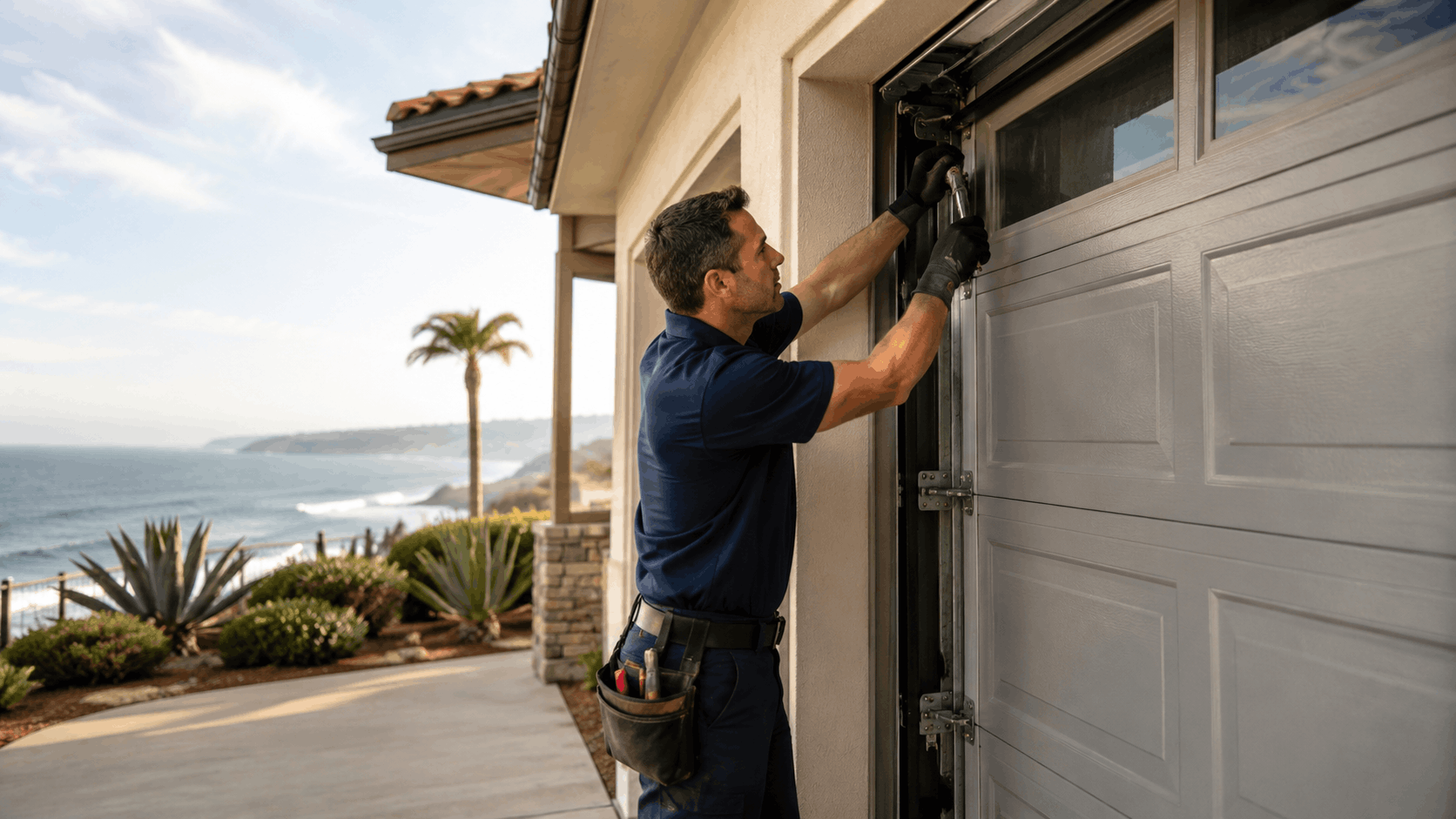
When a coastal door reaches the end of its life, the replacement choice matters more than it would inland. The right material and hardware can add years before salt becomes a problem again. Here is what we recommend for a salt resistant garage door in Talega.
Picking the right coastal door materials is about more than looks. It is about how each piece holds up against constant salt and moisture.
Aluminum and Fiberglass vs. Steel
Steel doors are strong and affordable, but they rust wherever the finish fails. Near the ocean, that vulnerability shows up sooner than many homeowners expect. Steel still works on the coast with good coatings and upkeep, but it asks for more maintenance.
An aluminum door does not rust the way steel does, which makes it a strong coastal choice. It is lighter and naturally resists corrosion, though it can dent more easily. Many San Clemente homeowners trade a little dent resistance for not worrying about rust streaks.
A fiberglass door sidesteps corrosion entirely because it is not metal. It holds up well against salt and moisture and can mimic the look of wood. The frame and hardware still need to be corrosion-resistant, but the door face itself stays clean.
Galvanized and Powder-Coated Hardware
Here is something many people miss: the door material matters less than the hardware near the coast. Hinges, springs, cables, brackets, and bolts are what fail first. Galvanized hardware carries a zinc coating that resists rust far longer than bare steel.
Powder coating adds another protective layer that seals metal against salt and moisture. A powder-coated spring or bracket stands up to the marine environment much better than an untreated one. The cost difference is modest compared to the lifespan gain.
When we install a new door, we push for galvanized and powder-coated components throughout. A beautiful door with cheap hardware will rust at the joints within a couple of years. Protecting the parts that move and carry load is where the real durability lives.
Weather Seals and Insulation for Marine Climate
Good weather seals do more than block drafts. They keep moist marine air from creeping into the garage and settling on stored items and the door's interior side. A tight bottom seal and side seals make a real difference in a humid coastal garage.
Garage insulation helps regulate temperature and reduces condensation inside. Less condensation means less moisture sitting on metal parts overnight. For homes that use the garage as a workshop or storage, that protection pays off.
We often pair a new door with a weatherseal and insulation retrofit for coastal clients. Sealing out the marine layer slows corrosion on everything inside. It is one of the simpler upgrades with a strong payoff.
Matching HOA Rules in Talega Communities
Talega communities have design guidelines, and the HOA reviews garage door changes. Color, style, and panel design usually need to match the neighborhood's approved palette. A durable door still has to fit those rules.
The good news is that corrosion-resistant doors come in plenty of styles that satisfy Talega HOA standards. Aluminum and fiberglass both offer looks that pass design review while holding up to salt. We have installed coastal-grade doors across Talega that meet the guidelines without trouble.
We help homeowners check the design requirements before ordering so there are no surprises. Submitting the right paperwork up front keeps the project moving. Picking a compliant door that also resists salt is entirely doable with the right selection.
Need Help in Irvine?
Urgent Garage Doors serves Irvine and all of Orange County.
Preventing Salt Air Damage Before It Starts
The best repair is the one you never need. A little routine garage door maintenance goes a long way toward salt damage prevention on the coast. Here is a simple schedule any Talega homeowner can follow between professional visits.
None of these steps take long, and together they add years to a coastal door.
Rinsing and Wiping Down Doors Monthly
The single most effective thing a homeowner can do is rinse the door with fresh water once a month. A garden hose washes away the salt film before it can settle in and corrode. Think of it like rinsing a surfboard after a session.
After rinsing, wipe down the panels and hardware with a soft cloth. Drying the metal removes the moisture that salt loves to hold. Pay attention to the lower panels and the seams where salt collects most.
During the marine layer months, the door cleaning matters even more because of the daily dampness. A quick fresh water rinse on a weekend keeps the buildup from compounding. It is five minutes that prevents real corrosion.
Lubricating Moving Parts Every Three Months
Every three months, the moving parts deserve fresh lubrication. Use a silicone-based or lithium garage door lubricant rather than a generic spray oil that attracts grit. Apply it to the rollers, hinges, springs, and the track's pivot points.
A good lubrication schedule keeps salt and moisture from locking up the parts that move. Wipe off excess so it does not collect dust and grime. The goal is a thin protective film, not a dripping mess.
Coastal doors need this more often than inland ones because the salt strips protection faster. Marking it on the calendar four times a year keeps it from slipping. Smooth, quiet operation is the reward for the small effort.
Scheduling Twice-Yearly Professional Tune-Ups
Inland homes can often get by with a yearly inspection, but coastal doors need more attention. We recommend a professional tune up twice a year for homes near the San Clemente coast. The salt simply works faster here.
A professional garage door inspection catches the things a homeowner cannot, like spring tension, cable fraying, and bearing wear. We measure balance, test the safety reverse, and treat early corrosion before it spreads. Many of our clients sign up for a preventive maintenance plan to keep it on schedule.
Twice-yearly visits also let us track how a specific door is aging in its specific spot. A door on an exposed Talega ridge gets watched more closely than a sheltered one. That ongoing care is how we keep coastal doors out of the emergency category.
Spotting Small Problems Early
The homeowners who avoid big repair bills are the ones who notice small changes. A new squeak, a faint rust streak, a door that hesitates - these are all early signals. Acting on them while they are minor issues is the cheapest path.
We encourage clients to do a quick monthly look-over while rinsing the door. Check for fraying cables, flaking rust, and loose bolts. None of it takes long once you know what to look for.
Early repair almost always costs less than waiting for a failure. A frayed cable caught early is a quick swap, while a snapped one can mean a stuck door and a stressful morning. Spotting trouble early keeps the door reliable and the repair small.
Why Talega and San Clemente Homeowners Call Urgent Garage Doors
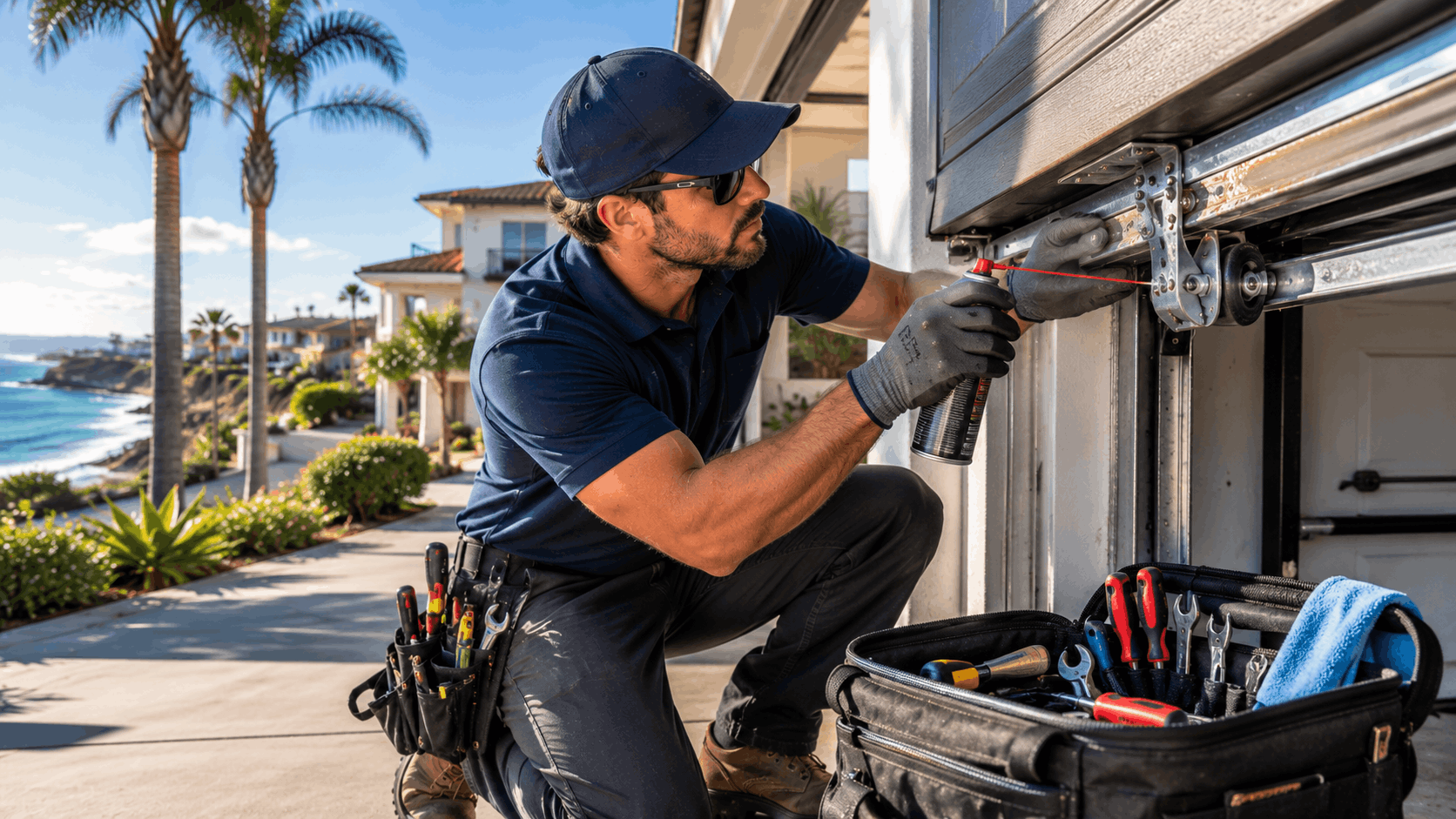
Coastal doors need a repair team that actually understands salt air, not one that treats every door the same. At Urgent Garage Doors, we have spent years working across San Clemente's neighborhoods. We know how the salt behaves here because we see it every week.
As a local garage door company serving the coast, we bring both the right parts and the right experience to every visit.
Local Knowledge of Coastal Conditions
We have worked on doors from the hillside lots of Talega to the older homes near Forster Ranch and down into the Pier Bowl area. Each pocket has its own salt exposure and its own common failures. That hands-on experience shapes how we approach every coastal repair.
Knowing the local conditions means we can predict which parts will go first on a given street. A ridge home near the trails gets a different inspection focus than a sheltered inland tract. That local read saves homeowners time and money.
We also understand the design rules across Talega and the wider San Clemente area. When a door needs replacing, we steer clients toward options that fit both the climate and the neighborhood. Local knowledge is the difference between a generic fix and one built for the coast.
Fast Service From Irvine to San Clemente
Our team is based in Irvine, and the I-5 corridor gives us a straight shot down to San Clemente. That route lets us reach Talega and the surrounding neighborhoods quickly when a door goes down. We service the whole coastal stretch, not just the inland cities.
A fast response matters most when a door is stuck open and the home feels exposed. We plan our routes so coastal calls do not sit waiting. Being an established Irvine garage door team with coastal coverage means help is closer than people expect.
We cover a wide service area from Newport Beach down to San Clemente. No matter where along the coast the call comes from, we aim to be there the same day when we can. Quick arrival is part of how we keep small problems small.
Same-Day and Emergency Repairs
A broken spring or a door that will not close is not something that can wait. We offer same-day service for these situations across San Clemente. A stuck door is both an inconvenience and a security concern, and we treat it that way.
Our emergency repair coverage handles broken springs, snapped cables, off-track doors, and openers that quit. We carry common coastal parts on the truck so many repairs finish in one visit. That saves a second trip and gets the home secure faster.
When a door fails after hours, a security gap is the real worry. Our 24/7 emergency repair line is there for exactly those moments. Getting the door working and the home secure is always the first priority.
Honest Quotes and Coastal-Grade Parts
We give upfront pricing before any work starts, so there are no surprises on the bill. A homeowner knows what the repair costs and why before they say yes. Clear quotes build the trust that keeps clients calling us back.
We also use corrosion-resistant, coastal-grade components rather than the cheapest part available. Quality parts cost a little more up front and last far longer in salt air. For a coastal home, that math almost always favors the better part.
Honest advice is part of the package too. If a door is better replaced than repaired, we say so and explain why. The goal is a door that holds up, not a quick fix that fails again next season.
Need Help in Irvine?
Urgent Garage Doors serves Irvine and all of Orange County.
Final Thoughts
Salt air is the price of living somewhere as beautiful as Talega, and the garage door takes the hit so the rest of the home stays comfortable. Rust streaks, grinding rollers, and pitted springs are all signs the ocean is doing its slow work. Catching those signs early and treating them keeps a small fix from becoming a big one.
A little routine care - monthly rinses, quarterly lubrication, and twice-yearly professional service - goes a long way toward keeping a coastal door running for years. When a repair or replacement is needed, choosing corrosion-resistant parts and the right material makes the next round of salt far less of a problem.
If a garage door in Talega or anywhere in San Clemente is showing salt damage, our team is ready to help. Contact Urgent Garage Doors for an honest inspection, a clear quote, and coastal-grade repair work built to last. Call us today to schedule a visit and keep that ocean air from winning.
Frequently Asked Questions
How fast does salt air damage a garage door in San Clemente?
On unprotected metal close to the coast, visible rust can show up within a year or two. Springs, cables, and hardware corrode fastest because they carry load and trap moisture in tight spots. Homes on exposed Talega ridges see it sooner than sheltered inland ones. Regular rinsing and corrosion-resistant parts slow this timeline down considerably, but salt air never fully stops working on bare steel.
How much does coastal garage door repair cost in Talega?
Costs vary by the part and the extent of corrosion. Roller replacement and tune-ups tend to run on the lower end, spring or cable replacement falls in the middle, and panel work or full replacement costs the most. Coastal-grade parts add a small amount but last much longer. We give upfront pricing after inspecting the door, so homeowners know the exact cost before any work begins.
Can a rusted garage door be saved or does it need replacing?
It depends on how deep the rust goes. Surface corrosion caught early can often be cleaned, treated, and refinished, and a single damaged panel can usually be swapped. When rust has eaten through the steel across several panels, full replacement is the smarter long-term choice. We inspect honestly and lay out both options with real numbers so the decision is clear.
What is the best garage door material for coastal San Clemente homes?
Aluminum and fiberglass both stand up to salt far better than standard steel because they resist or avoid rust entirely. Just as important is the hardware - galvanized and powder-coated springs, hinges, and brackets outlast bare steel by years. Pairing a corrosion-resistant door with coastal-grade hardware gives the longest life near the ocean. We help match a durable option that also meets local design rules.
How often should coastal garage doors be serviced?
We recommend a professional tune-up twice a year for homes near the San Clemente coast. Salt works faster here than it does inland, so the standard yearly schedule is not enough. Twice-yearly visits let us catch spring pitting, cable fraying, and corroded sensors before they cause a failure. Between visits, monthly rinsing and quarterly lubrication keep the door in good shape.
Why is my garage door making grinding noises?
Grinding usually means salt grit and corrosion have built up in the tracks and rollers. As the roller bearings rust and seize, they drag instead of spin, which creates that harsh sound. Dirty, dry tracks make it worse. Cleaning, fresh rollers, and the right marine-grade lubricant typically fix it. Ignoring the noise can lead to a seized roller throwing the door off its track.
Do salt-damaged garage door springs break more often?
Yes. Salt pitting creates tiny weak points in the steel coils, and under the spring's heavy tension those points are where cracks start. A pitted coastal spring simply does not last as long as one inland. Replacing it with a corrosion-resistant, galvanized, or powder-coated spring extends the lifespan. Watching for rust flaking off the coils helps you plan a swap before it snaps.
Will my Talega HOA allow a new garage door?
Talega communities have design guidelines covering color, style, and panel look, and the HOA reviews door changes. The good news is that corrosion-resistant aluminum and fiberglass doors come in styles that meet those standards. Check the design requirements and submit any needed paperwork before ordering. We help homeowners pick a door that satisfies the HOA while still holding up to coastal salt air.
Does Urgent Garage Doors offer same-day service in San Clemente?
Yes. We offer same-day and emergency service across San Clemente, including Talega, Forster Ranch, and the Pier Bowl area. Our Irvine-based team reaches the coast quickly via the I-5 corridor and carries common coastal parts on the truck. For broken springs, stuck doors, and security concerns, we treat the call with urgency and aim to get the home secure the same day whenever possible.
Can I prevent salt damage myself between service visits?
Absolutely. Rinse the door with fresh water once a month to wash off salt, then wipe the panels and hardware dry. Every three months, apply a silicone or lithium garage door lubricant to the rollers, hinges, and springs. Do a quick look for rust streaks, fraying cables, and loose bolts while you rinse. These simple steps slow corrosion and help you catch small problems early.
Frequently Asked Questions
- How fast does salt air damage a garage door in San Clemente?
- On unprotected metal close to the coast, visible rust can show up within a year or two. Springs, cables, and hardware corrode fastest because they carry load and trap moisture in tight spots. Homes on exposed Talega ridges see it sooner than sheltered inland ones. Regular rinsing and corrosion-resistant parts slow this timeline down considerably, but salt air never fully stops working on bare steel.
- How much does coastal garage door repair cost in Talega?
- Costs vary by the part and the extent of corrosion. Roller replacement and tune-ups tend to run on the lower end, spring or cable replacement falls in the middle, and panel work or full replacement costs the most. Coastal-grade parts add a small amount but last much longer. We give upfront pricing after inspecting the door, so homeowners know the exact cost before any work begins.
- Can a rusted garage door be saved or does it need replacing?
- It depends on how deep the rust goes. Surface corrosion caught early can often be cleaned, treated, and refinished, and a single damaged panel can usually be swapped. When rust has eaten through the steel across several panels, full replacement is the smarter long-term choice. We inspect honestly and lay out both options with real numbers so the decision is clear.
- What is the best garage door material for coastal San Clemente homes?
- Aluminum and fiberglass both stand up to salt far better than standard steel because they resist or avoid rust entirely. Just as important is the hardware - galvanized and powder-coated springs, hinges, and brackets outlast bare steel by years. Pairing a corrosion-resistant door with coastal-grade hardware gives the longest life near the ocean. We help match a durable option that also meets local design rules.
- How often should coastal garage doors be serviced?
- We recommend a professional tune-up twice a year for homes near the San Clemente coast. Salt works faster here than it does inland, so the standard yearly schedule is not enough. Twice-yearly visits let us catch spring pitting, cable fraying, and corroded sensors before they cause a failure. Between visits, monthly rinsing and quarterly lubrication keep the door in good shape.
- Why is my garage door making grinding noises?
- Grinding usually means salt grit and corrosion have built up in the tracks and rollers. As the roller bearings rust and seize, they drag instead of spin, which creates that harsh sound. Dirty, dry tracks make it worse. Cleaning, fresh rollers, and the right marine-grade lubricant typically fix it. Ignoring the noise can lead to a seized roller throwing the door off its track.
- Do salt-damaged garage door springs break more often?
- Yes. Salt pitting creates tiny weak points in the steel coils, and under the spring's heavy tension those points are where cracks start. A pitted coastal spring simply does not last as long as one inland. Replacing it with a corrosion-resistant, galvanized, or powder-coated spring extends the lifespan. Watching for rust flaking off the coils helps you plan a swap before it snaps.
- Will my Talega HOA allow a new garage door?
- Talega communities have design guidelines covering color, style, and panel look, and the HOA reviews door changes. The good news is that corrosion-resistant aluminum and fiberglass doors come in styles that meet those standards. Check the design requirements and submit any needed paperwork before ordering. We help homeowners pick a door that satisfies the HOA while still holding up to coastal salt air.
- Does Urgent Garage Doors offer same-day service in San Clemente?
- Yes. We offer same-day and emergency service across San Clemente, including Talega, Forster Ranch, and the Pier Bowl area. Our Irvine-based team reaches the coast quickly via the I-5 corridor and carries common coastal parts on the truck. For broken springs, stuck doors, and security concerns, we treat the call with urgency and aim to get the home secure the same day whenever possible.
- Can I prevent salt damage myself between service visits?
- Absolutely. Rinse the door with fresh water once a month to wash off salt, then wipe the panels and hardware dry. Every three months, apply a silicone or lithium garage door lubricant to the rollers, hinges, and springs. Do a quick look for rust streaks, fraying cables, and loose bolts while you rinse. These simple steps slow corrosion and help you catch small problems early.
U
Licensed garage door repair professionals serving Irvine and Orange County.
Licensed in California · License #1055150
Why trust Urgent Garage Doors?
Founded in 2017, Urgent Garage Doors is a licensed and insured garage door services serving Irvine and Orange County. All content is reviewed by our licensed technicians.

Need Help in Irvine?
Urgent Garage Doors serves Irvine and all of Orange County.
Related Articles
Maintenance
How Dana Point Salt Air Destroys Garage Door Hardware and How to Prevent It
Dana Point salt air destroys garage door springs, cables, and hinges faster than most homeowners realize. Learn how to prevent costly corrosion damage with expert tips.

Maintenance
How to Lubricate a Garage Door in Irvine Without Damaging Parts
Learn proper garage door lubrication techniques for Irvine's coastal climate. Prevent costly repairs with step-by-step guidance on products, safety, and maintenance schedules.
How-To Guides
How to Stop Salt-Air Corrosion on Coastal OC Garage Doors
Step-by-step guide to slow salt-air corrosion on coastal Orange County garage doors. Balboa Peninsula, SeaCliff, South Laguna. Lubrication, hardware, maintenance.