Maintenance
Why Aluminum and Glass Doors Warp in Direct OC Sunlight
Key Takeaways
- Aluminum expands nearly twice as much as steel under heat, and glass moves at a different rate, creating stress where they join.
- South and west facing doors take the most direct sun and warp fastest in Orange County.
- Long OC summers, inland heat near Northwood and Orchard Hills, Santa Ana spikes, and reflected stucco glare all speed up warping.
- Dark finishes can run 30 to 50 degrees hotter than light ones, pushing panels closer to permanent deformation.
- Early warning signs include doors that stick in the afternoon, uneven gaps, bowing panels, and rattling or cracked glass.
- Lighter finishes, reflective coatings, shade, and thermally broken frames are the strongest defenses against heat damage.
- Mild warping can often be adjusted or reinforced, while severe permanent bends call for panel or full door replacement.
- Spring and fall tune-ups keep expansion gaps and hardware set correctly for the long OC heat season.
In This Article
A homeowner near Woodbridge called our team last August during a brutal heat wave. Her sleek aluminum and glass garage door had started sticking at the same point every afternoon, and she swore the panels looked like they were bowing outward by dinnertime.
She is not alone. Across Irvine, modern doors with thin metal frames and large glass panels are popping up on new and remodeled homes. They look stunning in the morning, but by mid-afternoon the same doors can bind, gap, and warp under relentless Orange County sun.
How Sunlight Actually Affects Aluminum and Glass Doors?
Sun exposure does more than heat up the outside of a door. Over months and years, it slowly bends, loosens, and stresses the materials until the door no longer behaves the way it did when it was installed.
An aluminum garage door soaks up heat fast because metal is a strong conductor. When that heat hits a large glass panel held in a thin frame, the two materials start fighting each other as they grow and shrink at different speeds.
Here is what direct sun does to these doors over time:
- Heats the metal frame far above the surrounding air temperature
- Causes glass door warping where panels meet the frame
- Loosens sealants and gaskets that hold glass in place
- Creates repeated expansion and contraction that fatigues the metal
- Pushes panels out of alignment so the door sticks or gaps
The core problem is simple. Heat makes materials move, and when they cannot move freely or evenly, that movement turns into damage you can see and feel.
What Warping Looks Like on a Real Door
Most homeowners do not call us saying their door has thermal stress. They call because the door looks wrong or acts wrong. The words we hear most are bowing panels, a door that drags, or a gap that lets sunlight leak into the garage.
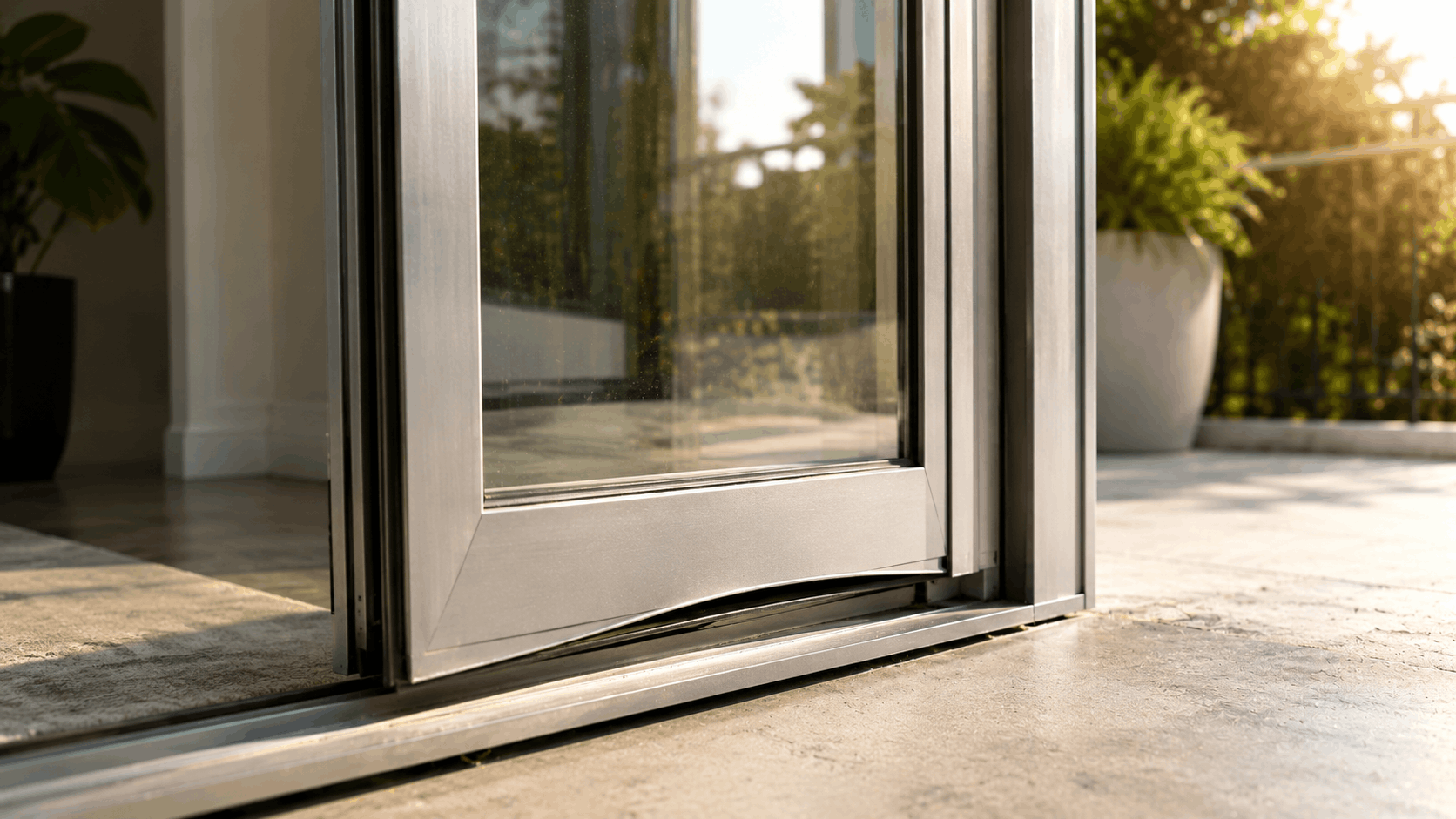
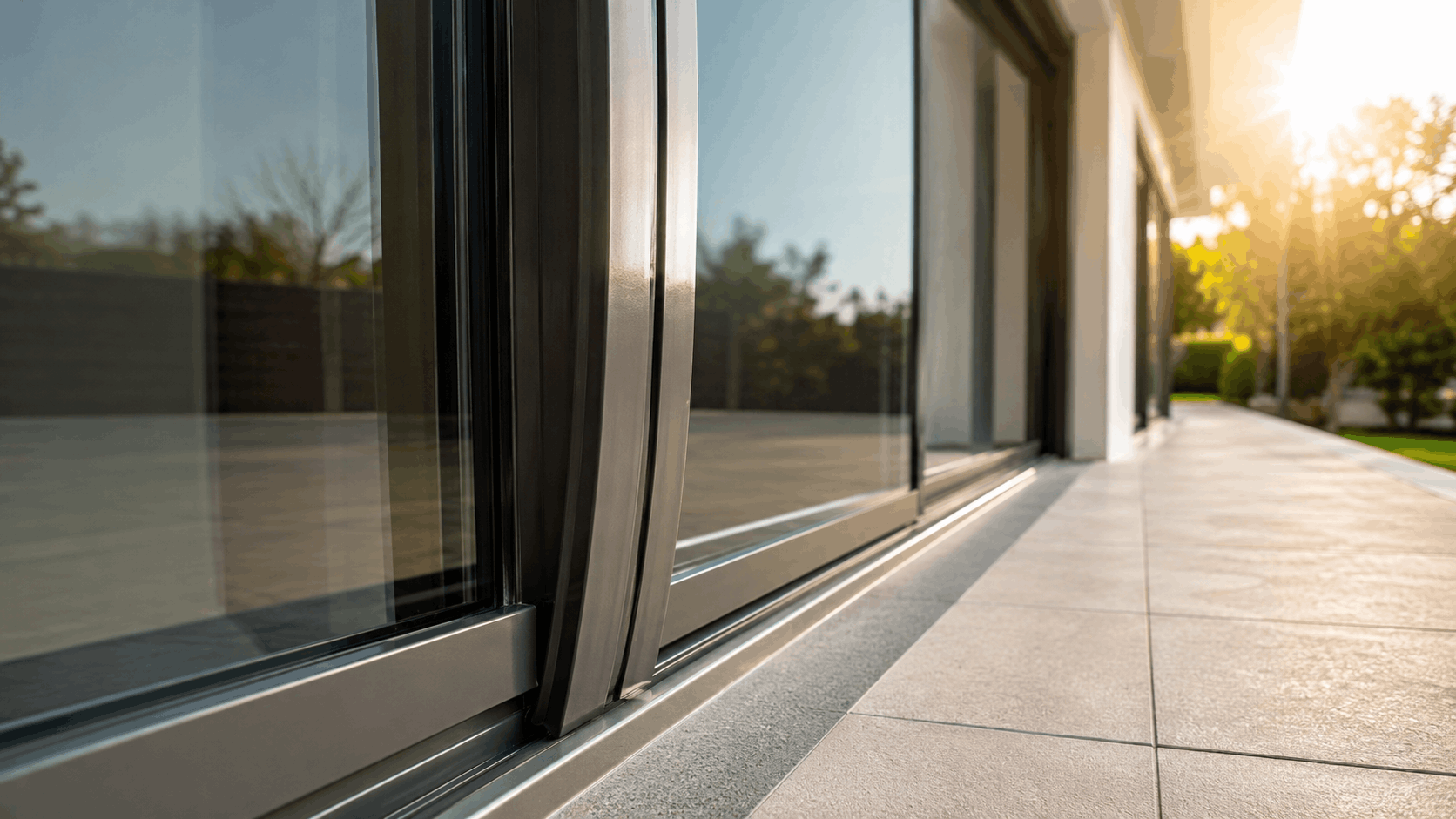
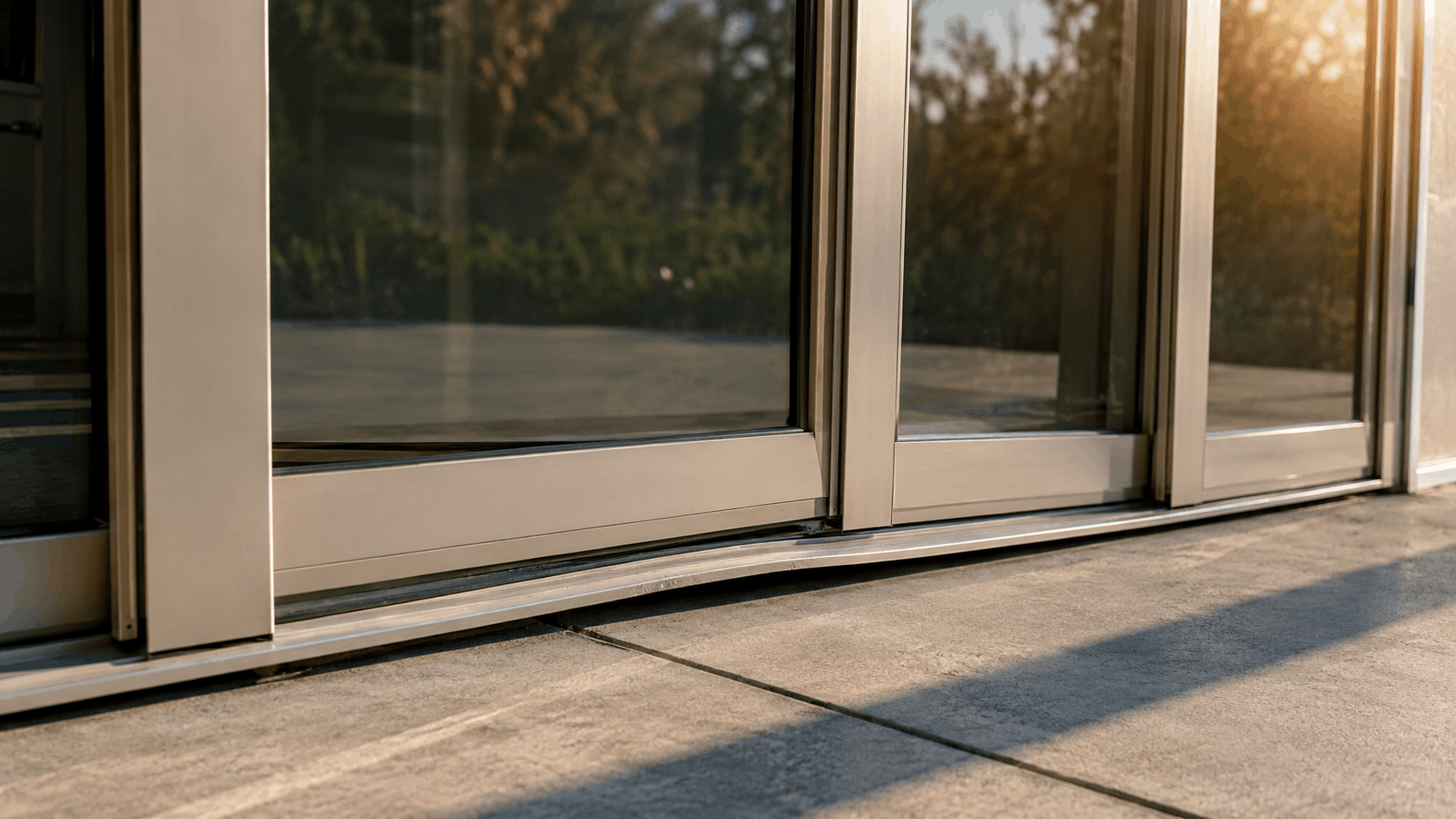
Bowing panels are the most common complaint. The middle of a panel pushes outward or curves inward, so the door no longer sits flat against the frame. You can often see it just by standing back at the curb and looking down the line of the door.
Door gaps are the next sign. A door that once sealed tight now shows daylight along one edge or near a corner. Homeowners notice drafts, dust, leaves, or even small puddles after a rare rain because the seal no longer makes full contact.
Then there is the feel of the door. It sticks, drags, or makes a grinding sound when it moves. A door that used to glide now needs an extra push, and that resistance almost always traces back to a panel or track that has shifted out of true.
Why South and West Facing Doors Suffer Most
Orientation decides how many hours of hard sun a door takes each day. In Orange County, a south facing door catches sun for most of the daylight hours, while a west facing door gets blasted during the hottest part of the afternoon.
South facing doors deal with steady solar exposure from late morning through the afternoon. The heat builds slowly but lasts for hours, so the metal frame rarely gets a break to cool down and reset.
West facing doors get the worst of it. The afternoon sun sits low and shines straight onto the door surface, often when air temperatures are already at their daily peak. We see far more warped doors on west-facing driveways in neighborhoods like Woodbridge and Northwood than on shaded north sides.
North and east facing doors usually fare better. East doors get morning sun while the air is still cool, and north doors get almost no direct exposure. If a homeowner has a choice during a remodel, orientation makes a real difference in how a door ages.
The Difference Between Surface Heat and Internal Stress
It is easy to assume the only problem is a hot door surface. You touch the metal, it burns your hand, and you figure that is the whole story. The surface heat is only what you can feel from the outside.
The bigger issue is internal stress that builds up inside the material. When one part of a panel heats faster than another, the warmer section wants to expand while the cooler section holds it back. That tug-of-war creates pressure inside the metal and at the joints.
A glass and aluminum door makes this worse because the two materials sit right next to each other and respond to heat differently. The frame grows around glass that grows at a different rate, so stress collects at every connection point.
Over time, that hidden stress is what bends the door for good. Surface heat comes and goes each day, but internal stress slowly works on the material until something gives. Catching it early is what separates a quick adjustment from a full replacement.
Get Your Free Quote
Tell us about your garage door and we'll get back to you fast.
The Material Science of Thermal Expansion
Every solid material grows when it heats up and shrinks when it cools. This is thermal expansion, and it is the root cause behind nearly every warped door we service across Irvine.
The amount a material moves is measured by something called the coefficient of expansion. A higher number means the material grows more for each degree of temperature rise. Aluminum, glass, and steel each have a different number, and those differences drive the whole problem.
Understanding the material science here helps homeowners see why a door that worked fine in spring starts acting up by July. It is not poor build quality on its own. It is physics meeting Orange County heat with no room to give.
How Aluminum Expands More Than Steel
Aluminum is a lightweight, attractive metal, which is why it shows up on so many modern Irvine doors. The trade-off is that aluminum expansion runs higher than steel. Aluminum moves nearly twice as much as steel for the same rise in temperature.
The thermal coefficient tells the story. Aluminum expands at roughly 23 micrometers per meter per degree Celsius, while steel sits closer to 12. That means a long aluminum frame can grow noticeably more across its length on a hot day than a steel one would.
On a wide double-car door, that extra growth adds up. A frame several meters across can stretch a few millimeters more than a steel equivalent, and those millimeters have to go somewhere. If the door has tight tolerances, that growth pushes against the track and frame.
This is why we often steer heat-sensitive homeowners toward an insulated steel garage door when the look allows it. Steel moves less, holds its shape better, and handles the OC sun with more margin to spare.
Why Glass and Metal Move at Different Rates
Glass and aluminum do not expand at the same speed, and that mismatch is where a lot of trouble starts. Glass expansion runs around 9 micrometers per meter per degree, far lower than aluminum at 23. The frame grows much more than the glass it holds.
This differential movement creates stress at every point where glass meets metal. The aluminum frame tries to stretch around glass that barely moves, so it squeezes and pulls at the panel edges. The sealant and gasket in between take the brunt of that force.
Picture a sunny afternoon on a west-facing door in Orchard Hills. The frame is expanding hard while the glass holds nearly still. The two materials grind against each other along the seal line, and that motion repeats every single hot day.
Quality framing and the right flexible sealant absorb some of this movement. Cheap framing and the wrong sealant do not, which is why glass panels in budget doors crack or rattle loose long before the rest of the door fails.
The Daily Heat and Cool Cycle
The damage is not just about how hot a door gets. It is about the back-and-forth. Every day the door heats up through the afternoon and cools down at night, running through a full heat cycle.
During the day, the metal grows. At night it shrinks back. One cycle does almost nothing you would notice, but Irvine summers deliver this cycle day after day for months on end.
That repetition causes metal fatigue. The same way bending a paperclip back and forth eventually snaps it, repeated expansion and contraction slowly weakens the metal and the joints. The material loses its ability to spring fully back to its original shape.
Over a few summers, a door that started perfectly flat can develop a permanent set. The cumulative effect of hundreds of heat cycles is what turns a brand-new door into one that sticks and bows by its third or fourth year on a hot driveway.
When Stress Turns Into Permanent Warping
There is a point where a material stops bouncing back. As long as stress stays below what engineers call the yield point, the metal returns to its shape once it cools. Below that line, the warping is temporary.
Push past the yield point, and the metal undergoes permanent deformation. The bend stays even after the door cools down overnight. This is the moment a temporary afternoon bow becomes a year-round problem.
Thin aluminum reaches its yield point faster than thick steel, especially when heat lowers the metal's strength. Hot metal is softer metal, so a panel already weakened by heat bends under less force than it could handle cold.
Once a door crosses that threshold, no amount of cooling fixes it. At that stage homeowners face either reinforcement, panel replacement, or a full new door. Catching the problem while the warping is still temporary is what keeps repair costs low.
Need Help in Irvine?
Urgent Garage Doors serves Irvine and all of Orange County.
What Makes Orange County Sun So Tough on Doors
The physics of thermal expansion applies everywhere, but Orange County conditions push doors harder than most regions. The Irvine climate combines long sunny stretches, inland heat, and bright reflective surfaces that gang up on a door.
UV exposure here is intense and consistent. Irvine averages more than 270 sunny days a year, and the Orange County sun shines strong from spring well into fall. Doors get little of the cloudy relief that protects materials in other climates.
We have serviced doors from the coast in Newport Beach to the inland edge of Tustin, and the inland doors take a heavier beating. Here is why local conditions matter so much.
Inland Heat Around Irvine and Tustin
Coastal areas like Newport stay cooler thanks to the ocean breeze. Move a few miles inland toward central and eastern Irvine, and summer temperatures climb several degrees higher. That inland heat lands directly on garage doors.
Neighborhoods like Northwood, Orchard Hills, and Portola Springs sit far enough from the coast to miss most of the marine cooling. Afternoon highs in these areas regularly run hotter than the Irvine average, and panel temperatures follow.
We see this in our service calls. A door in Portola Springs often shows more heat stress than the same model near the coast, simply because it bakes a few degrees hotter every afternoon.
That extra heat matters because warping scales with temperature. A door pushed five or ten degrees higher each day expands more and inches closer to its yield point sooner. Inland homeowners need to watch their doors more closely than coastal ones.
Santa Ana Wind Events and Sudden Temperature Spikes
Santa Ana winds are a fall and winter staple in Orange County, and they do strange things to doors. These dry, warm winds can send temperatures up 15 or 20 degrees in a matter of hours, creating a sudden temperature spike.
That fast swing is harder on materials than a slow, steady warm-up. The door has no time to adjust gradually, so the metal expands quickly and stress builds fast at the joints and seals.
The dry air makes it worse. Santa Ana conditions strip moisture out of everything, including sealants and gaskets. As those materials dry and harden, they lose flexibility and crack, leaving the glass and frame free to move and grind.
We get a noticeable bump in stuck-door and panel calls during Santa Ana stretches. A door that limped along all summer often finally gives out during one of these sharp, dry heat events.
How Long OC Summers Extend the Damage
In many parts of the country, summer is a short window. In Orange County, the high-sun season stretches from late spring through October. That long run of summer heat gives doors very little recovery time.
Extended exposure is what turns small stress into real damage. A door that took a few weeks of heat might recover fine, but five or six straight months of daily heat cycles add up. The metal fatigues without a long cool season to reset.
By the time October arrives, many doors have logged well over a hundred hard heat cycles. We see the most warping complaints in late summer and early fall, right at the tail end of that long exposure window.
This is why we push preventive maintenance before the heat season starts. Getting hardware and tracks set correctly in spring gives a door the best chance of surviving the long OC summer intact.
Reflected Heat From Driveways and Light Walls
Direct sun is only part of the heat load. Light-colored stucco walls and concrete driveways, both extremely common in Irvine, bounce extra sunlight right back onto the door. That reflected heat stacks on top of the direct exposure.
A pale stucco wall next to the garage acts like a mirror for sunlight. The door takes its own direct sun plus the glare bouncing off the wall, raising the surface temperature beyond what the sun alone would cause.
Driveway heat adds another layer. A wide concrete driveway in full sun radiates warmth upward into the lower panels of the door. On a hot afternoon, the bottom of a door can run hotter than the top because of this rising driveway heat.
Many newer Irvine communities favor light stucco and broad concrete drives for their clean look. The downside is that this exact combination creates a hot pocket around the garage door that speeds up warping.
Design Flaws That Make Warping Worse
Not every door handles heat the same way. Door design and installation choices make a huge difference in how fast a door warps. Some doors are built to take the sun, and some are not.
The frame design, panel thickness, finish color, and the gaps left during installation all play into a door's heat resistance. Spotting these flaws helps homeowners know whether their door is at risk before the warping starts.
Here are the design and install choices we see cause the most trouble on local doors.
Thin Aluminum Frames and Cheap Extrusions
Aluminum frames come in many grades. A thin, low-grade aluminum frame bends far more easily under heat than a thicker commercial-grade one. The aluminum frame is the backbone of the door, and a weak one folds under thermal stress.
The extrusion grade describes how the aluminum is shaped and how thick its walls are. Budget doors use thin-walled extrusions to cut cost and weight, but those thin walls reach their yield point at lower temperatures and forces.
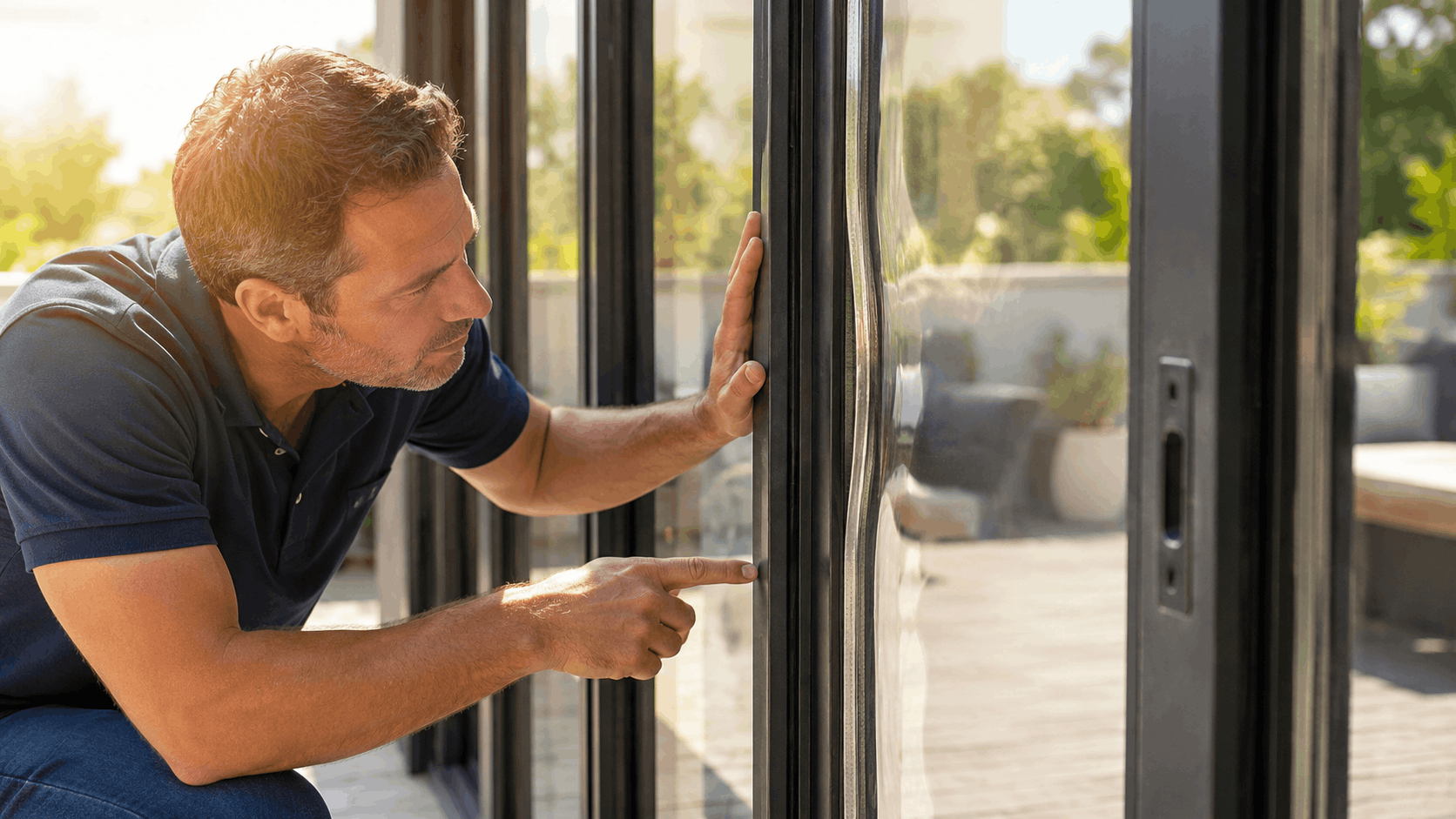
We can often tell a cheap door just by tapping the frame. A thin extrusion sounds hollow and flexes under light hand pressure. A quality frame feels solid and resists bending, which translates directly to better heat performance.
For homeowners who love the modern aluminum and glass look, we recommend stepping up to a heavier commercial-grade extrusion. A modern glass garage door built with thicker framing costs more up front but holds its shape far longer in the OC sun.
Dark Finishes That Absorb More Heat
Dark colors are everywhere on modern Irvine homes. Matte black and dark bronze finishes look sharp against light stucco, but a dark finish soaks up far more solar heat than a light one.
Heat absorption depends heavily on color. A black surface can run 30 to 50 degrees hotter than a white one under the same sun. On a metal door, that means a darker panel reaches higher temperatures and expands more.
We measured a black aluminum panel in Northwood at over 160 degrees on a summer afternoon, while a cream-colored door two doors down read far lower. That gap directly affects how much each door expands and how fast it fatigues.
This does not mean homeowners must give up the look they want. It means a dark door needs extra defenses, like reflective coatings, thicker framing, or afternoon shade, to survive the same conditions a lighter door shrugs off.
Poor Sealant and Gasket Choices
The sealant and gasket between glass and frame do quiet but important work. They hold the glass, block water, and absorb the small movements between materials. The wrong sealant fails fast under heat.
Cheap sealants harden and crack within a couple of OC summers. Once a sealant fails, the glass loses its cushion and starts moving directly against the metal frame. That direct contact creates new stress and lets the panel rattle.
A failed gasket also opens the door to leaks and drafts. We often find dried, cracked gaskets on doors that homeowners thought just needed an adjustment, when the real issue was a seal that gave out under repeated heat cycles.
Quality flexible sealants stay pliable through hot summers and cool nights. They flex with the differential movement between glass and aluminum instead of cracking, which keeps the panel cushioned and the stress under control.
Tight Tolerances With No Room to Expand
Metal needs room to grow. A door installed with no expansion gap has nowhere to go when the material heats up and stretches. The growing metal pushes against the frame and track, and that pressure bends the panel.
Installation tolerance is the small space left between the door and its surrounding frame. Skilled installers leave the right gap so the door can expand on hot days without binding. Rushed or inexperienced installs often skip this.
When a door has tight tolerances, you see it as a door that fits perfectly in the cool morning but jams by mid-afternoon. The metal has expanded into space it does not have, so it binds against the track.
Correct gaps are simple to get right during installation but hard to fix afterward without rework. This is one of many reasons we stress proper measurement during a garage door installation, especially on heat-exposed driveways.
How to Spot Early Warping Before It Gets Worse
Catching warping early saves money and stress. Most warped doors give clear warning signs weeks before they fail outright. A quick door inspection a few times each summer catches most problems.
Homeowners do not need special tools to spot early warping signs. Good eyes, a flashlight, and attention to panel alignment cover most of what matters. Here is a simple checklist to run during the hot months.
| Warning Sign | What to Check | What It Means |
|---|---|---|
| Door sticks in afternoon | Open and close at 3pm vs morning | Thermal expansion binding the panels |
| Uneven gaps | Look for daylight along edges | Panels shifting out of alignment |
| Glass rattles | Listen and feel panels when moving | Failed sealant or stressed glass |
| Visible bow | Sight down the door from the side | Panel warping under heat |
Doors That Stick or Bind During Hot Afternoons
A telling sign is a door that opens smoothly at 8am but sticks at 3pm. That pattern points straight at heat. The door is binding because the metal has expanded into spaces it does not have during the cool morning.
When a door works cold and fails hot, the issue is almost never the opener. It is the panel and track reacting to temperature. The sticking door is telling you the tolerances are too tight for the heat it faces.
We ask homeowners to test their door at the hottest part of the day. If it drags, grinds, or stalls in the afternoon but glides in the morning, thermal binding is the likely cause and worth a closer look.
Ignoring this leads to bigger problems. A door forced to operate while binding strains the opener, the springs, and the tracks, turning one heat issue into several mechanical ones over a season.
Uneven Gaps Along the Frame and Threshold
Gaps tell a clear story. Stand inside the closed garage during the day and look for light leaking around the door edges. Uneven gaps that let in daylight mean the door no longer sits square in its frame.
Check the weather seal along the bottom and sides. A healthy seal makes full contact all the way around. If you see daylight, feel a draft, or find dust and debris collecting inside, the seal is no longer doing its job.
Pay attention to whether a gap is bigger at one corner than the others. An even gap all around may just be normal spacing. A gap that grows toward one side usually means a panel has bowed or shifted.
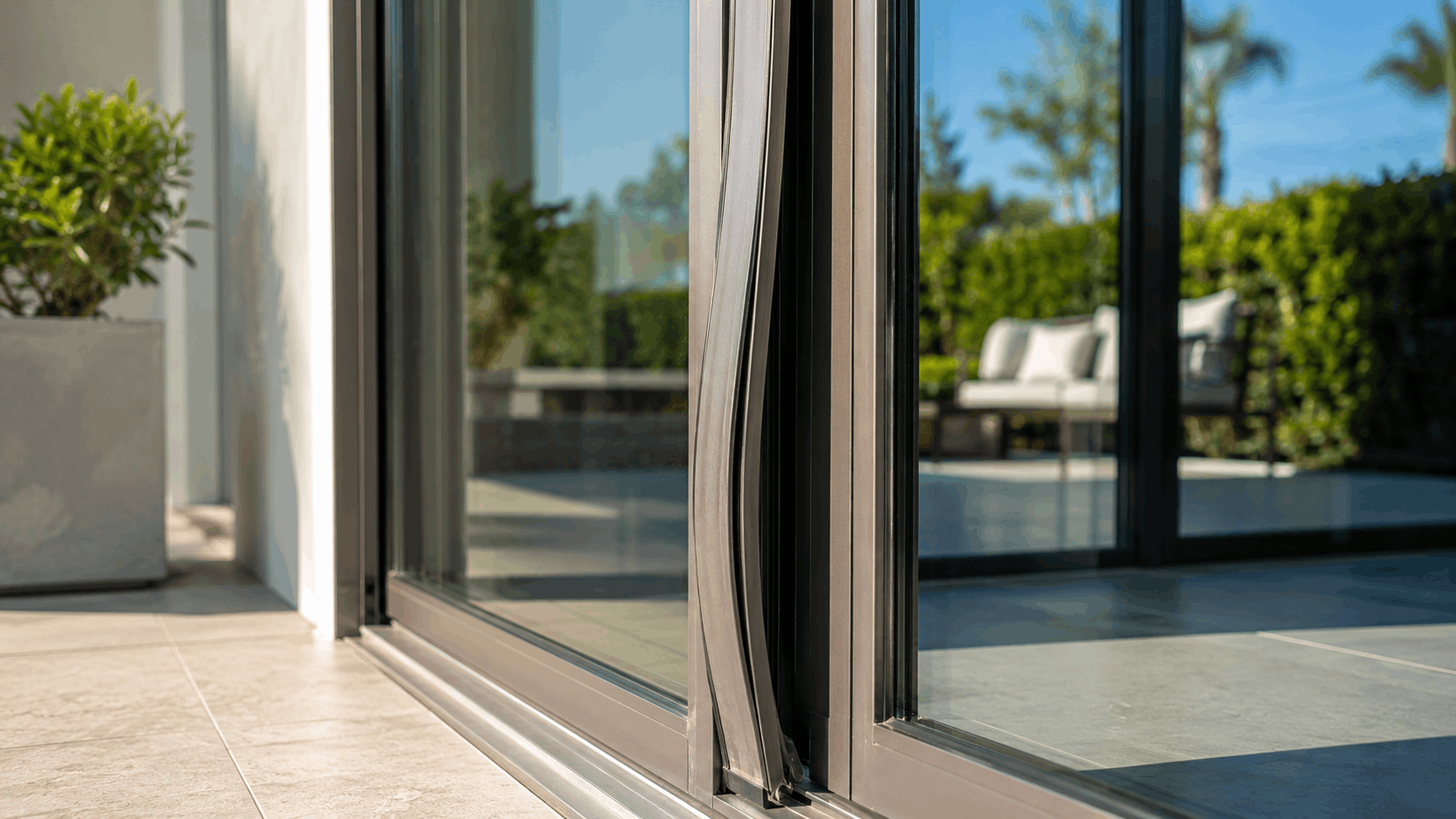
These gaps do more than look bad. They let in heat, dust, and water, and they often signal that warping has already begun. A weatherseal retrofit can restore the seal once the panel issue is addressed.
Glass Panels That Rattle or Look Stressed
Glass shows stress in its own ways. A panel that rattles when the door moves has lost its tight grip in the frame, usually because the sealant or gasket has failed under heat.
Look closely for hairline cracks, especially starting at the corners or edges of a pane. These small cracks are early signs of glass stress, where the frame is squeezing the glass harder than it should as it expands.
A cracked pane is more than cosmetic. Stressed glass can spread a small crack into a full break, and on a moving door that becomes a safety hazard. Loose panes can also fall out if the framing has shifted enough.
If you see cracks or feel a pane moving in its frame, stop using the door hard and call for an inspection. Glass problems tend to worsen quickly once they start, and early action keeps a small repair from becoming a panel replacement.
When to Call a Local Technician
Some adjustments are fine for homeowners, but there is a clear line. Once a door is binding hard, the glass shows cracks, or panels visibly bow, it is time to stop adjusting it yourself and bring in a technician.
Forcing a stuck door or over-tightening hardware often makes warping worse. Springs and cables hold serious tension, and working near them without training is dangerous. A professional inspection finds the real cause without that risk.
Our team handles garage door repair across Irvine and can usually pinpoint a warping issue in one visit. We check panel alignment, track condition, hardware tension, and seal integrity to map out exactly what is happening.
If a door has reached the point of sticking daily or showing cracked glass, reach out for an emergency garage door repair visit. The sooner we catch warping, the more likely we can fix it without replacing the whole door.
Need Help in Irvine?
Urgent Garage Doors serves Irvine and all of Orange County.
Preventing Heat Damage on OC Garage Doors
The good news is that heat damage prevention is very doable. Smart choices in color, shade, framing, and maintenance dramatically slow how fast a door warps. Good garage door care keeps a door flat and working for years.
Prevention works best before damage starts, but even an at-risk door benefits from these steps. Shade solutions and lighter finishes alone can cut surface temperatures enough to make a real difference.
Here are the specific steps we recommend to Irvine homeowners with sun-exposed doors.
Choosing Lighter Finishes and Reflective Coatings
Color is the cheapest defense against heat. A light finish reflects sunlight instead of absorbing it, and that keeps the surface temperature far lower than a dark door under the same sun.
A reflective coating takes it further. These finishes are engineered to bounce solar energy away, and they can drop a panel's peak temperature by 20 to 40 degrees compared to a standard dark coating.
Cooler surfaces expand less. Less expansion means less stress, fewer hard heat cycles, and a much lower chance of reaching the yield point. For a west-facing door, this single choice can add years of life.
Homeowners set on a dark look can still help themselves with a quality heat-reflective topcoat. It keeps the bold color while cutting some of the heat load that drives warping.
Adding Shade With Awnings or Landscaping
If you can keep the sun off the door, you solve most of the problem at the source. An awning or overhang over a west-facing driveway blocks the harsh afternoon sun when temperatures peak.
Even partial shade helps. A well-placed tree that shades the driveway from mid-afternoon onward can cut hours of direct exposure each day. Many Irvine yards have room for a shade tree that protects both the door and the car.
Architectural overhangs work well on newer homes. A deep overhang above the garage shields the upper panels through much of the day, lowering peak temperatures across the whole door.
We have seen identical doors age very differently based on shade alone. The shaded one stays flat for years while the fully exposed twin warps within a few summers. Shade is one of the most cost-effective fixes available.
Upgrading to Thermally Broken Frames
For homeowners committed to aluminum and glass, a thermally broken frame is the strongest defense. A thermal break is a non-conductive barrier built into the frame that separates the outer metal from the inner metal.
This barrier stops heat from passing straight through the frame. The hot outer surface no longer drags the inner structure up to the same temperature, so the door as a whole expands less and stays more stable.
An insulated frame with a thermal break also keeps the garage cooler, which matters for homes that use the garage as a gym or workshop. The comfort benefit comes along with the warping protection.
Thermally broken frames cost more, but for a sun-blasted driveway they pay off. When homeowners ask us about durable modern doors, we point them toward these frames during a custom door design and install consultation.
Routine Adjustments and Seasonal Tune-Ups
Even a well-built door needs upkeep in this climate. A garage door tune-up before summer sets the tracks, hardware, and tension correctly for the heat season ahead. Spring is the ideal time to book one.
During seasonal maintenance, we check and reset expansion gaps, lubricate moving parts, inspect seals, and confirm the door is balanced. These small adjustments give the door room to expand without binding.
A balanced door also strains less when it heats and moves. Our door balancing and tension adjustment service keeps the door moving smoothly so heat-related sticking is less likely to develop.
We suggest one tune-up in spring before the heat hits and a quick check in fall after the long summer. That rhythm catches small issues before they grow into the kind of warping that needs a panel or full door replacement.
Repair Versus Replacement for a Warped Door
When a door warps, the first question homeowners ask is whether to repair it or replace it. The answer depends on how far the warping has gone. Minor cases often respond to a door repair, while severe ones call for door replacement.
A warped panel caught early is usually fixable. One that has crossed the yield point and bent permanently across its width is a different story. Knowing the difference saves money and avoids throwing good repairs at a door that is past saving.
Here is how we think through the repair-versus-replace decision for local doors.
When a Warped Panel Can Be Adjusted or Reinforced
Mild warping often has simple fixes. If a panel has only shifted slightly or the door binds from tight tolerances, realigning the hardware and adjusting the gaps can restore smooth operation.
Panel reinforcement is another option for borderline cases. Adding a reinforcement bar, often called a strut, across the back of a panel stiffens it and resists further bowing. This works well when warping is caught early.
Hardware adjustment covers a lot of ground too. Realigning tracks, resetting rollers, and correcting tension can fix a door that sticks from heat without touching the panels at all. Our track repair and realignment service handles many of these cases.
These repairs are affordable and fast, often done in a single visit. The key is catching the warping while it is still mild enough to correct, which is why early inspection matters so much.
Signs the Door Is Past Saving
Some warping is too far gone to fix. Severe warping that runs across the full width of a panel, or affects several panels at once, usually means the metal has permanently deformed beyond what reinforcement can correct.
Cracked or broken glass paired with a bent frame is another sign that replacement is the safer call. Trying to patch a structurally compromised door often costs nearly as much as a new one and leaves safety risks behind.
If a door has been forced to operate while binding for a long time, the damage often spreads to tracks, rollers, and springs. At that point a piecemeal repair rarely holds, and a fresh door is the sounder investment.
We always give homeowners an honest read. If a panel can be saved, we say so. If the door is past saving, we explain why and lay out the replacement options without pressure.
What Replacement Costs Around Irvine
Replacement cost depends on the door type, size, and materials. For a standard sectional door, replacement in the Irvine area often runs in the lower-to-mid thousands. Aluminum and glass doors sit higher because of the materials and custom framing.
A modern glass and aluminum door, especially with a thermally broken frame and reflective finish, lands at the upper end of the range. The glass, the framing grade, and the size all push the price. Wider double doors cost more than single ones.
Sometimes only a panel needs replacing rather than the whole door. A single panel replacement costs far less than a full door and works well when only one or two panels have warped.
We give clear, itemized quotes so homeowners know exactly what drives the price. Factors like finish, glass type, insulation, and frame grade all affect the final number, and we walk through each one.
How Urgent Garage Doors Handles Heat-Damaged Doors
Our team has worked on heat-warped doors across every corner of Irvine, from Turtle Rock to Woodbridge to Orchard Hills. We start every job with a full inspection to find the real cause, not just the symptom.
We check panel alignment, frame condition, seal integrity, track straightness, and hardware tension. From there we give an honest recommendation, whether that is a simple adjustment, a panel reinforcement, or a planned replacement.
When replacement is the right move, we help homeowners pick a door built to handle OC sun, with the right framing grade, finish, and thermal protection. The goal is a door that does not warp again two summers later.
Homeowners across Irvine and nearby cities count on our Irvine garage door service for fast, straight answers. If your aluminum and glass door is sticking or bowing this summer, we are ready to take a look.
Need Help in Irvine?
Urgent Garage Doors serves Irvine and all of Orange County.
Final Thoughts
Aluminum and glass doors warp in OC sun for one core reason. Heat makes materials expand, and when aluminum and glass grow at different rates with no room to move, that stress turns into bends and gaps over time.
The long Irvine summers, inland heat, Santa Ana spikes, and reflected glare off light stucco all speed the process. Thin frames, dark finishes, weak sealants, and tight tolerances make it worse. The fixes are lighter finishes, shade, thermally broken frames, and regular tune-ups.
If your door is showing early warping signs, do not wait for a hot afternoon to make it worse. Contact our team for an inspection, and we will help you keep your door flat, sealed, and working through every OC summer.
Frequently Asked Questions
Why does my aluminum garage door bow in the afternoon sun?
Aluminum expands fast when it heats up, and afternoon sun pushes panel temperatures high. As the metal grows, it has nowhere to go if the door has tight tolerances, so the panel bows outward. In most early cases the bow is temporary and relaxes overnight. If it keeps happening through OC summers, the warping can become permanent and need professional attention.
Do glass garage doors warp more than steel ones?
Glass and aluminum doors tend to warp more than steel because aluminum expands nearly twice as much as steel, and glass and metal move at different rates. Steel is stiffer and holds its shape better under heat. The glass panels themselves rarely warp, but the aluminum frames around them do, and that stress shows up at the joints where glass meets metal.
Will a warped door fix itself when it cools down?
It depends on how far the metal bent. If the stress stayed below the yield point, the door returns to shape as it cools, and the warping was only temporary. If the metal crossed the yield point, the bend becomes permanent and stays even after cooling. A door that still looks bowed in the cool morning has likely passed that line and needs a technician.
Are dark-colored doors a bad idea in Orange County?
Dark doors are not off-limits, but they absorb far more heat, often running 30 to 50 degrees hotter than light ones. In OC sun that extra heat speeds up expansion and warping. If you love the dark look, pair it with a reflective coating, thicker framing, or afternoon shade. Those defenses let a dark door survive the heat that would otherwise warp it.
How hot does a garage door surface actually get in Irvine summers?
On a sunny Irvine afternoon, a light-colored door surface can reach 110 to 130 degrees, while a dark door can climb past 150 or even 160 degrees. Reflected heat from light stucco and concrete driveways pushes those numbers higher. Inland neighborhoods like Northwood and Orchard Hills run hotter than coastal areas, raising peak surface temperatures further.
Can shade or an awning really prevent warping?
Yes, shade is one of the most effective fixes. Blocking direct sun with an awning, overhang, or shade tree keeps the door surface much cooler, which means less expansion and less stress. We have seen identical doors age very differently based on shade alone, with the shaded one staying flat for years while the exposed one warps within a few summers.
What is a thermally broken aluminum frame?
A thermally broken frame has a non-conductive barrier built inside it that separates the outer metal from the inner metal. This barrier stops heat from passing straight through the frame. The result is a door that expands less and stays more stable under sun, while also keeping the garage cooler. It is one of the best upgrades for aluminum and glass doors in hot climates.
How much does it cost to repair a warped door?
Minor repairs like hardware adjustment, track realignment, or adding a reinforcement bar are usually the most affordable option and often done in one visit. A single panel replacement costs more but far less than a full door. The final price depends on the door type, the extent of warping, and the parts needed. We provide clear, itemized quotes before any work begins.
How often should I have my garage door inspected in OC?
Given the long, hot OC summers, we recommend a tune-up in spring before the heat season and a quick check in fall afterward. That twice-a-year rhythm catches expansion issues, seal failures, and early warping before they grow. Doors on west-facing or fully exposed driveways benefit from an extra mid-summer look, especially in hotter inland neighborhoods.
Does Urgent Garage Doors service all Irvine neighborhoods?
Yes, our team services every Irvine community, from Woodbridge and Turtle Rock to Northwood, Orchard Hills, and Portola Springs. We also cover nearby cities across Orange County, including Newport Beach, Costa Mesa, Tustin, and Lake Forest. Wherever your aluminum and glass door is warping in the sun, we can come inspect it and lay out your repair or replacement options.
Frequently Asked Questions
- Why does my aluminum garage door bow in the afternoon sun?
- Aluminum expands fast when it heats up, and afternoon sun pushes panel temperatures high. As the metal grows, it has nowhere to go if the door has tight tolerances, so the panel bows outward. In most early cases the bow is temporary and relaxes overnight. If it keeps happening through OC summers, the warping can become permanent and need professional attention.
- Do glass garage doors warp more than steel ones?
- Glass and aluminum doors tend to warp more than steel because aluminum expands nearly twice as much as steel, and glass and metal move at different rates. Steel is stiffer and holds its shape better under heat. The glass panels themselves rarely warp, but the aluminum frames around them do, and that stress shows up at the joints where glass meets metal.
- Will a warped door fix itself when it cools down?
- It depends on how far the metal bent. If the stress stayed below the yield point, the door returns to shape as it cools, and the warping was only temporary. If the metal crossed the yield point, the bend becomes permanent and stays even after cooling. A door that still looks bowed in the cool morning has likely passed that line and needs a technician.
- Are dark-colored doors a bad idea in Orange County?
- Dark doors are not off-limits, but they absorb far more heat, often running 30 to 50 degrees hotter than light ones. In OC sun that extra heat speeds up expansion and warping. If you love the dark look, pair it with a reflective coating, thicker framing, or afternoon shade. Those defenses let a dark door survive the heat that would otherwise warp it.
- How hot does a garage door surface actually get in Irvine summers?
- On a sunny Irvine afternoon, a light-colored door surface can reach 110 to 130 degrees, while a dark door can climb past 150 or even 160 degrees. Reflected heat from light stucco and concrete driveways pushes those numbers higher. Inland neighborhoods like Northwood and Orchard Hills run hotter than coastal areas, raising peak surface temperatures further.
- Can shade or an awning really prevent warping?
- Yes, shade is one of the most effective fixes. Blocking direct sun with an awning, overhang, or shade tree keeps the door surface much cooler, which means less expansion and less stress. We have seen identical doors age very differently based on shade alone, with the shaded one staying flat for years while the exposed one warps within a few summers.
- What is a thermally broken aluminum frame?
- A thermally broken frame has a non-conductive barrier built inside it that separates the outer metal from the inner metal. This barrier stops heat from passing straight through the frame. The result is a door that expands less and stays more stable under sun, while also keeping the garage cooler. It is one of the best upgrades for aluminum and glass doors in hot climates.
- How much does it cost to repair a warped door?
- Minor repairs like hardware adjustment, track realignment, or adding a reinforcement bar are usually the most affordable option and often done in one visit. A single panel replacement costs more but far less than a full door. The final price depends on the door type, the extent of warping, and the parts needed. We provide clear, itemized quotes before any work begins.
- How often should I have my garage door inspected in OC?
- Given the long, hot OC summers, we recommend a tune-up in spring before the heat season and a quick check in fall afterward. That twice-a-year rhythm catches expansion issues, seal failures, and early warping before they grow. Doors on west-facing or fully exposed driveways benefit from an extra mid-summer look, especially in hotter inland neighborhoods.
- Does Urgent Garage Doors service all Irvine neighborhoods?
- Yes, our team services every Irvine community, from Woodbridge and Turtle Rock to Northwood, Orchard Hills, and Portola Springs. We also cover nearby cities across Orange County, including Newport Beach, Costa Mesa, Tustin, and Lake Forest. Wherever your aluminum and glass door is warping in the sun, we can come inspect it and lay out your repair or replacement options.
U
Licensed garage door repair professionals serving Irvine and Orange County.
Licensed in California · License #1055150
Why trust Urgent Garage Doors?
Founded in 2017, Urgent Garage Doors is a licensed and insured garage door services serving Irvine and Orange County. All content is reviewed by our licensed technicians.

Need Help in Irvine?
Urgent Garage Doors serves Irvine and all of Orange County.
Related Articles
Maintenance
7 Signs Your Garage Door Spring Is About to Break
Torsion springs fail eventually. Learn the warning signs—uneven movement, loud noises, slow opening—before you're stuck. Orange County homeowners: act early.

Maintenance
How to Lubricate a Garage Door in Irvine Without Damaging Parts
Learn proper garage door lubrication techniques for Irvine's coastal climate. Prevent costly repairs with step-by-step guidance on products, safety, and maintenance schedules.
Cost Guides
Steel vs Wood vs Glass Garage Doors for Orange County Homes
Compare steel, wood, and glass garage doors for Orange County. Durability, maintenance, cost, and coastal considerations. Irvine to Newport Beach.