How-To Guides
CSLB Contractor Verification for OC Garage Door Companies

Key Takeaways
- The CSLB licenses and regulates garage door contractors in California, and checking a license number takes only a few minutes at cslb.ca.gov.
- California's $500 rule requires a licensed contractor for nearly every garage door job once labor and parts are added together.
- The D-28 classification covers garage door work, so confirm a contractor's license shows D-28 or a broad B general building classification.
- Watch for red flags like cash-only demands, unmarked vans, lowball quotes, and refusal to show proof of insurance or a written contract.
- Irvine HOA communities and the city building department often require licensed contractors, proper permits, and approval documents for exterior door work.
- Coastal salt air and hot dry summers wear out springs and hardware faster in OC, making quality licensed installs worth the cost.
- If you hired an unlicensed installer, file a CSLB complaint, document all damage and payments, and have a licensed pro correct the work.
- Urgent Garage Doors is licensed, bonded, and insured, based in Irvine, and offers same-day repairs with honest, itemized estimates.
In This Article
A homeowner near Woodbridge called our team last spring after a stranger in an unmarked van replaced her torsion spring for what sounded like a great price. Two weeks later the door slammed shut on its own, the new spring snapped, and the man who installed it never answered his phone again. She had no contract, no receipt, and no way to track him down.
Stories like this play out across Irvine more often than people think. A low quote and a quick fix sound appealing when a garage door breaks, but hiring an unlicensed installer can cost far more in repairs, injuries, and headaches than the original job ever should have.

What CSLB Verification Means for Orange County Homeowners?
Before any wrench touches a spring, a homeowner has a simple right: to know the person doing the work is properly licensed. The CSLB, or Contractors State License Board, is the agency that makes that check possible in California.
A contractor license number is more than a string of digits. It tells you the person passed a trade exam, posted a bond, and answers to a state agency if something goes wrong. For garage door work across Orange County, that single check separates a trained pro from a roaming handyman.
The table below breaks down what verification actually confirms and why each piece matters.
| What You Verify | Why It Matters |
|---|---|
| Active license number | Confirms the contractor is tested and legal to work |
| License classification | Shows the trade they are approved to perform |
| Bond status | Gives you a financial path if work is left unfinished |
| Workers comp coverage | Protects you if a worker is hurt on your property |
| Disciplinary record | Reveals past complaints, citations, or suspensions |
Who the CSLB Is and What They Regulate
The Contractors State License Board is a California state agency that licenses and oversees construction contractors. It exists to protect the public by setting standards for who can legally perform building and repair work in the state. Garage door installation and repair fall squarely under its authority.
The board reviews each applicant's experience, runs a trade exam, and runs a background check before issuing a license. It covers dozens of trades, from electrical and plumbing to roofing and, yes, overhead doors. Every licensed contractor in California carries a number tied to a specific classification.
The CSLB also handles complaints. When a job goes bad, the board can investigate, issue citations, and in serious cases pull a contractor's license. That oversight is the reason a license number carries real weight rather than just being a marketing line. You can read more about the agency directly on the official CSLB website.
Why a License Number Protects You
A valid license number is proof of tested skill. To earn it, a contractor had to show years of hands-on experience and pass an exam covering trade knowledge and California law. That alone weeds out people who simply bought a truck and some tools last month.
The number also signals financial backing. Licensed contractors carry a contractor bond, which gives homeowners a way to recover money if a job is abandoned or done poorly. Without a license, there is no bond and no safety net behind the work.
Consumer protection is the larger point here. When a licensed contractor cuts corners, a homeowner can file a formal complaint and the state will look into it. With an unlicensed operator, the only recourse is small claims court, and often the person cannot even be found. A license number gives the homeowner leverage that a cash handshake never will.
The $500 Rule Every OC Homeowner Should Know
California law sets a clear line. Any home improvement project where the combined labor and materials cost more than $500 must be performed by a licensed contractor. This is known as the $500 rule, and it covers nearly every garage door job.
Think about what a garage door repair usually runs. A new torsion spring, a set of cables, or a replacement opener almost always pushes past $500 once labor is included. A full garage door installation is far above that figure. That means the law requires a licensed pro for the work most homeowners need.
Anyone who offers to do a sizable garage door job without a license is breaking California law. That is a warning sign on its own. If a contractor downplays the rule or claims it does not apply, treat that as a reason to walk away and find someone who follows it.
Get Your Free Quote
Tell us about your garage door and we'll get back to you fast.
How to Verify a Garage Door Contractor's CSLB License
Checking a license takes about three minutes and costs nothing. The CSLB lookup tool is free and open to the public, so there is no reason to skip it before hiring a garage door contractor in OC.
Here is what the process looks like and what to confirm along the way:
- Have the license number or exact business name ready
- Search the CSLB online database at cslb.ca.gov
- Confirm the status reads active
- Match the classification to garage door work
- Check the bond and workers comp details
- Scan for any citations or disciplinary history
Using the CSLB Online License Lookup Tool
The license lookup tool lives on the official site at cslb.ca.gov. From the home page, a homeowner can choose to search by license number, by business name, or by personnel name. The number is the fastest and most exact way to find a record.
Once the search runs, the result page shows the business name, the license number, the issue date, and the current status. It also lists the classification, the bond carrier, and any workers comp policy on file. Everything a homeowner needs sits on that one screen.
If a contractor gives a name that returns no match, that is a problem. A real licensed company will appear in the database with details that line up with what they told you. When the name on the truck does not match the name on the license, ask why before any work begins.
Reading the License Status and Classification
The most important word on the record is the status. An active status means the license is current and the contractor is clear to work. An expired, suspended, or inactive status means the opposite, and the homeowner should not move forward.
Classification tells you what trade the license actually covers. For garage door work, the relevant California classification is D-28, which is specific to doors, gates, and activating devices. Some contractors hold a broader B general building license that can also cover this work.
A homeowner should match the classification to the job. If someone holds only a landscaping or painting classification and offers to swap a torsion spring, the license does not cover that work. Reading the classification carefully prevents hiring a licensed contractor who is licensed for the wrong trade.
Spotting Suspended or Revoked Licenses
A suspended license is a red flag the CSLB record shows plainly. Suspension can happen for unpaid bonds, tax issues, or disciplinary action after complaints. A revoked license means the board pulled it entirely, and that contractor cannot legally work.
The record also lists citations and any history of disciplinary action. A single old issue that was resolved may not be a dealbreaker, but a pattern of complaints should give any homeowner pause. The detail page links out to the specifics so you can read what happened.
When a contractor's record shows active discipline or a recent suspension, the safe move is to keep looking. Plenty of licensed garage door companies in Orange County have clean records. There is no reason to gamble on one carrying open marks against its license.
Checking Bond and Workers Comp Status
Every licensed contractor in California must carry a contractor bond, and the CSLB record shows the bond amount and carrier. The bond gives homeowners a financial avenue if a job is abandoned or left defective. A missing or lapsed bond is a serious gap.
The record also notes workers comp coverage when a contractor has employees. Workers comp matters because it protects the homeowner if a worker is injured on the property. Without it, an injured worker could try to hold the homeowner responsible for medical bills.
A homeowner should confirm both items read as current on the record. If the bond shows as exempt or the workers comp line is blank for a company with a crew, ask directly. A trustworthy contractor will explain the coverage without hesitation and back it up in writing.

Need Help in Irvine?
Urgent Garage Doors serves Irvine and all of Orange County.
Red Flags When Hiring a Garage Door Company in OC
Most garage door companies in Orange County are honest. The trouble comes from a small group of unlicensed operators who chase quick cash and leave bad work behind. Knowing the warning signs keeps homeowners out of that trap.
We have seen these patterns repeat in Irvine neighborhoods for years. The table below sums up the most common red flags and what each one usually means.
| Red Flag | What It Often Means |
|---|---|
| Cash only, no card accepted | No real business, no paper trail |
| Refuses a written contract | Wants room to change the deal later |
| Door-to-door pitch, unmarked van | No traceable, licensed company |
| Price far below everyone else | Cheap parts or unlicensed labor |
| Will not show insurance | You carry the risk if someone is hurt |
Cash-Only Demands and No Written Contract
A push for cash up front, before any work is done, is one of the oldest warning signs in the trade. Cash leaves no record, which is exactly what an unlicensed operator wants. If something goes wrong, there is no proof you ever paid.
A refusal to put terms in writing is just as telling. A real contractor provides a written contract or estimate that spells out the work, the parts, and the cost. Someone who only wants a verbal agreement keeps the freedom to change the price or deny what was promised.
California law actually requires a written contract for most home improvement work over $500. So a contractor who dodges paperwork is not just being casual, they are ignoring the law. That alone is enough reason to find another company for a job like torsion spring replacement.
Door-to-Door Pitches and Unmarked Vans
Some operators roam neighborhoods near Woodbridge and Northwood knocking on doors and offering quick garage door fixes. They often drive plain white vans with no company name, phone number, or license number painted on the side. That lack of branding is intentional.
An unmarked vehicle means there is nothing to trace if the work fails. A legitimate local company puts its name and contact details where everyone can see them. They want repeat customers and referrals, so they have no reason to hide who they are.
Door-to-door pitches also pressure homeowners to decide on the spot, before they can check a license. The better move is always to slow down. Ask for a license number, look it up, and never let a stranger start work on a door simply because they happened to be in the neighborhood.
Prices That Seem Too Low to Be Real
A lowball quote that undercuts every other bid by hundreds of dollars usually hides something. Real garage door parts and trained labor cost money, so a price that seems impossible often is. The gap gets made up somewhere the homeowner cannot see.
Sometimes the savings come from cheap, off-brand springs or cables that fail within months. Other times the low number is bait, and hidden fees appear once the work is underway. By then the old parts are off and the homeowner feels stuck paying more.
A fair quote reflects quality parts, proper labor, and a warranty behind the work. When comparing bids for something like spring and cable repair, the middle of the range is usually safer than the rock-bottom outlier. A price that sounds too good to be real almost always is.
No Proof of Insurance When Asked
Liability insurance protects the homeowner if a contractor damages the home or if someone is hurt during the job. A pro carries it and shows proof of insurance without fuss. Hesitation when asked is a clear warning.
Garage door work involves heavy springs under high tension and panels that can weigh well over a hundred pounds. If a worker is injured installing a door and the company carries no coverage, the homeowner can end up facing the injury claim. That is a financial risk no one should accept.
Asking for proof of insurance is normal and reasonable. A reputable company will send a certificate or show one on request. If a contractor brushes off the question or claims insurance is not needed for garage doors, that answer is reason enough to look elsewhere.
Why Licensing Matters More in Irvine and Surrounding Cities
Licensing is not just a state formality in Irvine. Local conditions, HOA rules, and permit requirements all raise the stakes for hiring the right contractor. A licensed pro understands these local layers in a way a roaming handyman never will.
From master-planned villages to the city building department, Orange County adds rules that an unlicensed operator usually ignores. Here is how those local factors play out.
HOA Communities and Approved Contractors
Master-planned communities like Great Park, Portola Springs, and Turtle Rock often have detailed rules about exterior work. Many HOAs require any garage door change to use a licensed contractor and to match approved colors and styles. A new door installed without HOA approval can trigger fines or a forced replacement.
HOA boards usually ask for the contractor's license number and proof of insurance as part of the approval packet. An unlicensed installer cannot provide those documents, which stalls the project before it starts. That paperwork requirement quietly filters out the fly-by-night operators.
Working with a licensed company that knows these communities saves time. The team can supply the documents the HOA needs and install a door that fits the architectural guidelines. That keeps the homeowner clear of violation notices and the cost of redoing the work.
City of Irvine Permits and Garage Door Work
Not every garage door job needs a permit, but some do. The Irvine building department generally requires a permit when the work changes the structure of the opening, alters the header, or involves significant electrical work for an opener. A like-for-like door swap often does not, but the rules vary by project.
Licensed contractors know when to pull a permit and how to handle the inspection. They sign their license number on the application, which puts their record on the line for the quality of the work. That accountability is exactly what the permit system is meant to provide.
An unlicensed operator skips permits entirely, which can create problems when a home is sold. Unpermitted work may have to be torn out and redone, sometimes at the seller's expense. Hiring a licensed pro from the start avoids that surprise down the road.
Climate and Coastal Air in OC Garage Doors
Orange County sits close enough to the coast that salt air drifts inland on the marine layer. That salty moisture speeds up rust on springs, cables, and metal hardware. Doors in communities closer to Newport Beach and the coast feel this wear sooner than inland homes.
Then come the hot, dry summers. Heat and dryness stress the steel in springs, and the daily cycle of expansion and contraction shortens their life. Spring wear is the single most common reason homeowners across OC call for a repair.
A quality licensed install uses parts rated to hold up against this climate, like coated springs and corrosion-resistant hardware. A cheap unlicensed job often uses bare steel that rusts and snaps within a season or two. Paying once for the right materials beats paying twice when the budget parts fail. Our preventive maintenance plan helps catch this wear early.

Questions to Ask a Garage Door Company Before Hiring
The right questions reveal a lot in a short phone call. A real professional answers them easily, while a fly-by-night operator gets vague or defensive. Here are the ones that matter most before hiring a garage door contractor.
Asking for the License Number Up Front
The first question to ask is simple: what is your CSLB license number? A legitimate contractor will share it without hesitation, often listing it on the website, the estimate, and the truck. A pause or an excuse is a warning sign on its own.
Once you have the number, cross-check it against the business name on the CSLB record. The name on the license should match the company name on the quote. A mismatch can mean the contractor is borrowing someone else's license, which is illegal and dangerous.
This single step takes a couple of minutes and prevents most bad hires. Verify the number before any deposit changes hands. A homeowner who confirms the license up front avoids almost every unlicensed-contractor problem we see.
Confirming Warranty and Parts Coverage
Ask what kind of warranty covers both the labor and the parts. A solid company stands behind its workmanship with a labor warranty and passes along the manufacturer warranties on openers and springs. Get the length and terms of each in writing.
Openers, springs, and hardware all carry different manufacturer coverage. A good contractor explains which parts are warranted, for how long, and what could void that coverage. They also tell you how a claim is handled if a part fails early.
Unlicensed operators rarely offer any real warranty. Once they are paid, they are gone, and a failed part becomes the homeowner's problem. A clear written warranty is one of the strongest signs of a company that plans to stand behind a garage door opener installation.
Verifying Local Address and Service Area
A real company has a real local address, not just a cell phone number. Ask where the business is based and which areas it serves day to day. A contractor rooted in Irvine and nearby OC cities has a reputation to protect and is easy to reach.
An operator with no fixed address and only a mobile number can vanish overnight. If the work fails next month, there is nowhere to follow up. A traceable local base gives the homeowner confidence and a way to hold the company accountable.
Confirming the service area also matters for response time. A company that regularly works your part of the county can get to an emergency faster. You can see the full list of cities our team covers to confirm we work in your area.
Getting Everything in a Written Estimate
A proper written estimate spells out every part of the job. It should list the specific parts, the part numbers or brands, the labor cost, the total price, and a timeline. Vague estimates that just show one lump sum hide too much.
An itemized cost breakdown lets the homeowner compare bids fairly and spot hidden charges. When each line is visible, there is no room for surprise fees to appear later. It also gives both sides a clear record of what was agreed to.
A contractor who provides a detailed written estimate is showing respect for the customer. It is a sign of a company that operates by the book. Keep the signed estimate on file as proof of the deal in case any question comes up afterward.
Need Help in Irvine?
Urgent Garage Doors serves Irvine and all of Orange County.
How Urgent Garage Doors Earns Trust in Irvine
Trust is built one honest job at a time. Urgent Garage Doors works as a licensed, local company serving Irvine and the surrounding OC cities with clear pricing and verifiable credentials. Homeowners can check our record the same way this guide describes for any contractor.
The table below sums up how our team operates and why neighbors across Irvine call us back.
| What We Provide | What It Means for You |
|---|---|
| Current CSLB license | Verifiable, legal, tested work |
| Bond and liability insurance | You are protected on every job |
| Local Irvine base | Fast response and real accountability |
| Written, itemized estimates | No surprise fees later |
| Same-day repair service | Broken doors fixed quickly |
Licensed, Bonded, and Insured Work
Our team carries current CSLB credentials, a contractor bond, and liability coverage on every job. That means a homeowner can look up our license, see an active status, and confirm the bond and insurance details before we ever start. We welcome that check.
Being bonded and insured protects the customer in real ways. The bond gives a financial path if anything is left undone, and the liability coverage handles any accidental damage or injury during the work. The homeowner carries none of that risk.
We keep our paperwork ready because we know how much it matters in HOA communities and on permitted jobs. When a board or inspector asks for documents, we provide them right away. That keeps projects moving instead of stalling over missing credentials.
Neighborhoods the Team Serves Daily
Our trucks run regular routes through Woodbridge, University Park, Quail Hill, and Northwood every week. Working these neighborhoods daily means we know the common door styles, the HOA guidelines, and the climate wear patterns in each area. That local knowledge speeds up every visit.
We also serve nearby cities across the county, from Costa Mesa to Lake Forest and beyond. Familiar service routes let us reach most homes quickly, which matters when a door is stuck and a car is trapped inside.
Because we are based right here, we are not a faceless company that shows up once and disappears. Neighbors see our marked trucks, refer us to friends, and call us back for the next job. That kind of repeat trust only comes from steady, local work.
Same-Day Repairs and Honest Estimates
A broken spring or a dead opener can leave a family unable to get a car out of the garage. Our team offers same-day repair for those urgent situations so homeowners are not stuck waiting days. Fast response is a core part of what we do, including same-day garage door repair.
We quote honest pricing before any work begins. The estimate is itemized, the parts are quality, and the price we name is the price you pay. There are no surprise fees added once the job is underway.
Whether it is a snapped spring, a worn cable, or an opener that quit, we explain what is wrong and what the fix costs in plain terms. Homeowners deserve to understand the work and the price. That clarity is how we earn the call the next time a door acts up.
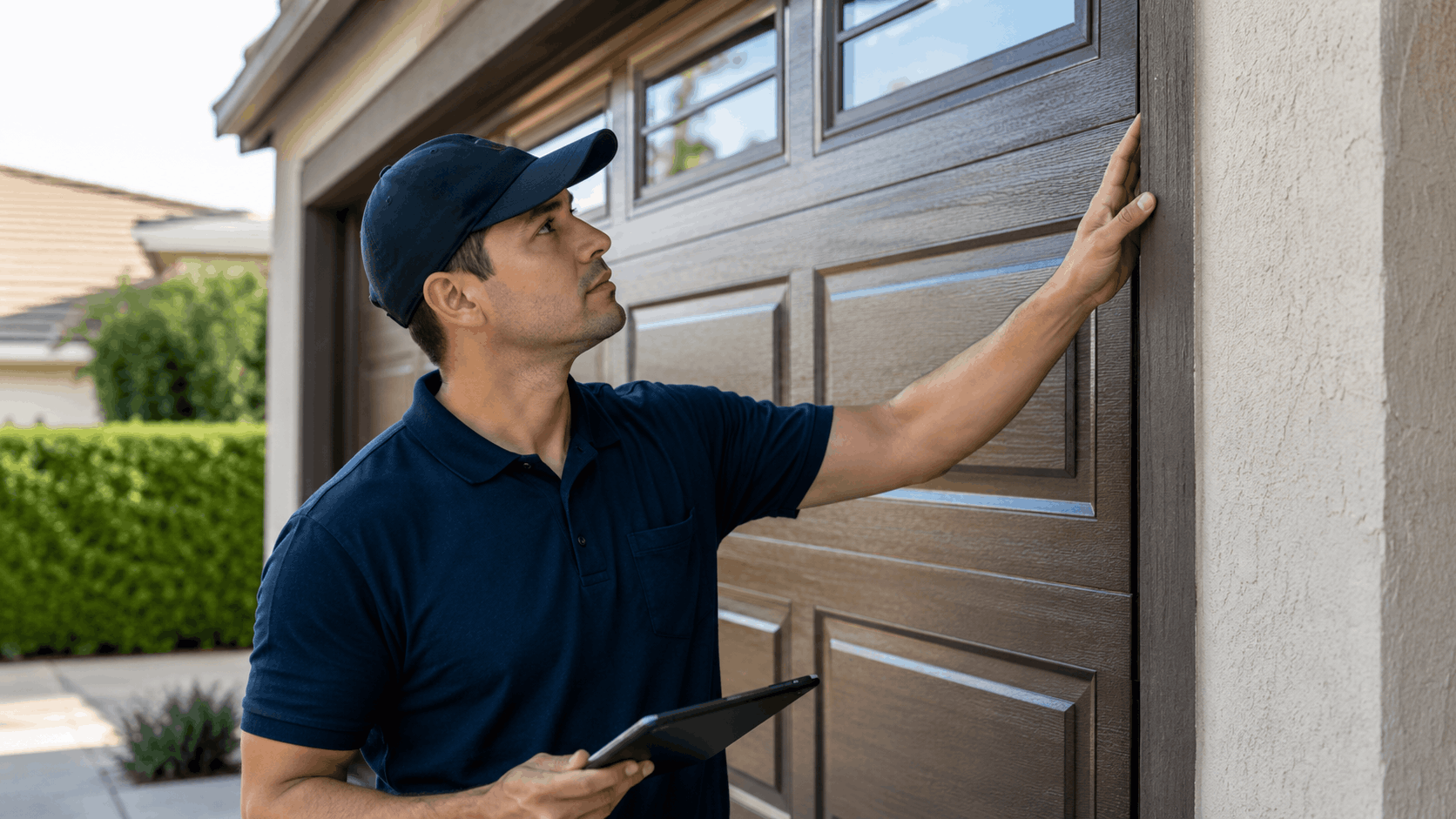
What to Do If You Hired an Unlicensed Contractor
If the work has already failed and the installer has gone quiet, there are still steps to take. Acting quickly protects your rights and helps you get the door fixed properly. Here is the path forward.
Filing a Complaint With the CSLB
The CSLB accepts complaints about both poor workmanship and unlicensed activity. A homeowner can file a complaint online through the board's website, describing what happened and naming the person or company involved. The board reviews each report and can investigate.
Reporting unlicensed activity matters even if you cannot recover money directly. It puts the operator on the state's radar and can stop them from harming the next homeowner. The board can pursue citations and penalties against people working without a license.
When filing, include as much detail as possible: dates, amounts paid, and what was promised versus what was delivered. The more complete the report, the more the board has to work with. You can start the process directly through the CSLB complaint page.
Documenting the Damage and Payments
Strong documentation makes any claim far easier to pursue. Take clear photos of the failed work and any damage to the door or home. Date them and keep them organized so the timeline is easy to follow.
Gather every receipt, invoice, or proof of payment you have, even a screenshot of a payment app. Save text messages and emails where the work, the price, or the promises were discussed. These records show what was agreed to and what actually happened.
If you paid in cash with no receipt, write down everything you remember while it is fresh: dates, amounts, and what was said. Any record helps. The stronger your file, the better your position when you report the contractor or seek corrective work.
Getting the Work Corrected by a Licensed Pro
A licensed company can step in to assess and fix a botched install. During the visit, the technician inspects the springs, cables, tracks, and opener to find what was done wrong. They explain what is unsafe and what needs to be corrected.
Corrective work sometimes means replacing cheap parts the previous installer used. A torsion spring rated for the wrong door weight, or cables that are already fraying, has to come out for safety. The licensed pro brings the right components and installs them to standard.
The goal is a door that is safe, balanced, and reliable again. Our team handles this kind of emergency garage door repair regularly and gives an honest assessment of what the previous job left behind. Homeowners get a clear path back to a working door.
Need Help in Irvine?
Urgent Garage Doors serves Irvine and all of Orange County.
Final Thoughts
Verifying a garage door contractor's CSLB license is the simplest way to avoid the kind of trouble that started this article. A three-minute check confirms the license is active, the classification fits, and the bond and insurance are in place. That small effort prevents most of the problems homeowners run into.
Watch for the red flags, ask the right questions, and keep every agreement in writing. Across Irvine and the rest of Orange County, a licensed pro who follows the rules is worth far more than a cheap quote from a stranger in an unmarked van.
When you need a licensed, bonded, and insured team in Irvine, our crew is ready to help. Contact Urgent Garage Doors for an honest estimate or same-day repair, and hire with confidence.

Frequently Asked Questions
What is CSLB contractor verification?
CSLB verification is the process of confirming a contractor holds a valid California license through the Contractors State License Board. A homeowner searches the contractor's license number or business name on the CSLB website and checks that the status reads active. The same record shows the trade classification, bond, insurance, and any disciplinary history. It is a free, public check that takes only a few minutes.
Does a garage door company in OC need a CSLB license?
Yes. California law requires a licensed contractor for any home improvement project where labor and materials together cost more than $500. Almost every garage door job, from a spring or cable repair to a full door installation, passes that figure once parts and labor are added. So a garage door company in Orange County needs a valid CSLB license to legally perform the work most homeowners require.
How do I check a contractor's license number?
Visit the CSLB website at cslb.ca.gov and use the online license lookup tool. You can search by license number, business name, or personnel name. Confirm the status reads active, match the classification to garage door work, and review the bond and workers comp details. Also scan for any citations or disciplinary action. The whole check is free and takes about three minutes.
What license classification covers garage door work?
The D-28 classification covers doors, gates, and activating devices, which includes garage door installation and repair in California. Some contractors perform this work under a broader B general building license. When checking a contractor, a homeowner should confirm the record shows D-28 or another classification that legitimately covers door work. A license held only for an unrelated trade does not cover garage door jobs.
What happens if I hire an unlicensed garage door installer?
Hiring an unlicensed installer carries real risk. The work is often done with cheap parts and no warranty, so failures can come within months. There is no bond to recover money if the job is abandoned, and no liability insurance if a worker is hurt on your property. You may also face unpermitted-work issues when selling the home, sometimes paying to redo the entire job.
Does Irvine require a permit for garage door replacement?
It depends on the scope. The Irvine building department generally requires a permit when the work changes the structure of the opening, alters the header, or involves significant electrical work. A straightforward like-for-like door swap often does not need one. A licensed contractor knows when a permit applies and handles the application and inspection, which keeps the work on record and avoids problems at resale.
How do I know if a contractor is bonded and insured?
The CSLB record lists the contractor bond amount and carrier, plus any workers compensation policy on file. Check that both read as current when you look up the license. For liability insurance, ask the contractor directly for a certificate of insurance, which a reputable company provides without hesitation. If a contractor avoids the question or claims insurance is not needed, treat that as a warning sign.
What should a written garage door estimate include?
A fair written estimate should list the specific parts, the brand or part numbers, the labor cost, the total price, and a timeline for the work. An itemized breakdown lets you compare bids and spot any hidden fees before they appear. Keep the signed estimate on file as a record of the agreement. A vague one-line quote with no detail is a sign to ask more questions.
Can I file a complaint against a garage door contractor?
Yes. The CSLB accepts complaints about poor workmanship and unlicensed activity through its website. Describe what happened, name the company or person, and include dates, amounts paid, and what was promised versus delivered. Supporting evidence like photos, receipts, and text messages strengthens your case. The board reviews each complaint and can investigate, issue citations, or pursue penalties against the contractor.
Is Urgent Garage Doors licensed in Orange County?
Yes. Urgent Garage Doors holds current CSLB credentials and carries a bond and liability insurance on every job. The team is based in Irvine and serves nearby OC cities, including neighborhoods like Woodbridge, University Park, Quail Hill, and Northwood. Homeowners are welcome to verify our license through the CSLB lookup tool before hiring, and we provide written, itemized estimates on every project.
Frequently Asked Questions
- What is CSLB contractor verification?
- CSLB verification is the process of confirming a contractor holds a valid California license through the Contractors State License Board. A homeowner searches the contractor's license number or business name on the CSLB website and checks that the status reads active. The same record shows the trade classification, bond, insurance, and any disciplinary history. It is a free, public check that takes only a few minutes.
- Does a garage door company in OC need a CSLB license?
- Yes. California law requires a licensed contractor for any home improvement project where labor and materials together cost more than $500. Almost every garage door job, from a spring or cable repair to a full door installation, passes that figure once parts and labor are added. So a garage door company in Orange County needs a valid CSLB license to legally perform the work most homeowners require.
- How do I check a contractor's license number?
- Visit the CSLB website at cslb.ca.gov and use the online license lookup tool. You can search by license number, business name, or personnel name. Confirm the status reads active, match the classification to garage door work, and review the bond and workers comp details. Also scan for any citations or disciplinary action. The whole check is free and takes about three minutes.
- What license classification covers garage door work?
- The D-28 classification covers doors, gates, and activating devices, which includes garage door installation and repair in California. Some contractors perform this work under a broader B general building license. When checking a contractor, a homeowner should confirm the record shows D-28 or another classification that legitimately covers door work. A license held only for an unrelated trade does not cover garage door jobs.
- What happens if I hire an unlicensed garage door installer?
- Hiring an unlicensed installer carries real risk. The work is often done with cheap parts and no warranty, so failures can come within months. There is no bond to recover money if the job is abandoned, and no liability insurance if a worker is hurt on your property. You may also face unpermitted-work issues when selling the home, sometimes paying to redo the entire job.
- Does Irvine require a permit for garage door replacement?
- It depends on the scope. The Irvine building department generally requires a permit when the work changes the structure of the opening, alters the header, or involves significant electrical work. A straightforward like-for-like door swap often does not need one. A licensed contractor knows when a permit applies and handles the application and inspection, which keeps the work on record and avoids problems at resale.
- How do I know if a contractor is bonded and insured?
- The CSLB record lists the contractor bond amount and carrier, plus any workers compensation policy on file. Check that both read as current when you look up the license. For liability insurance, ask the contractor directly for a certificate of insurance, which a reputable company provides without hesitation. If a contractor avoids the question or claims insurance is not needed, treat that as a warning sign.
- What should a written garage door estimate include?
- A fair written estimate should list the specific parts, the brand or part numbers, the labor cost, the total price, and a timeline for the work. An itemized breakdown lets you compare bids and spot any hidden fees before they appear. Keep the signed estimate on file as a record of the agreement. A vague one-line quote with no detail is a sign to ask more questions.
- Can I file a complaint against a garage door contractor?
- Yes. The CSLB accepts complaints about poor workmanship and unlicensed activity through its website. Describe what happened, name the company or person, and include dates, amounts paid, and what was promised versus delivered. Supporting evidence like photos, receipts, and text messages strengthens your case. The board reviews each complaint and can investigate, issue citations, or pursue penalties against the contractor.
- Is Urgent Garage Doors licensed in Orange County?
- Yes. Urgent Garage Doors holds current CSLB credentials and carries a bond and liability insurance on every job. The team is based in Irvine and serves nearby OC cities, including neighborhoods like Woodbridge, University Park, Quail Hill, and Northwood. Homeowners are welcome to verify our license through the CSLB lookup tool before hiring, and we provide written, itemized estimates on every project.
U
Licensed garage door repair professionals serving Irvine and Orange County.
Licensed in California · License #1055150
Why trust Urgent Garage Doors?
Founded in 2017, Urgent Garage Doors is a licensed and insured garage door services serving Irvine and Orange County. All content is reviewed by our licensed technicians.

Need Help in Irvine?
Urgent Garage Doors serves Irvine and all of Orange County.
Related Articles

How-To Guides
Garage Door Safety Sensors: How to Test and Fix Alignment in Your OC Home
Learn how to test and fix garage door safety sensor alignment issues in your Orange County home with this comprehensive guide covering troubleshooting, maintenance, and repair.

How-To Guides
Garage Door Shaking or Jerking in Irvine: Rollers vs Tracks vs Springs
Learn to diagnose garage door shaking in Irvine - whether rollers, tracks, or springs cause the problem. Expert repair guidance, costs, and safety tips from local professionals.

How-To Guides
How to Avoid HOA Issues When Replacing a Garage Door in Irvine
Learn how to navigate Irvine HOA requirements when replacing your garage door. Complete guide to avoiding violations, choosing compliant options, and working with architectural review committees.