Why You Should Never Pull the Emergency Release With a Broken Spring - The Crash Risk Explained
Key Takeaways
- The red emergency release cord disconnects the door from the opener for manual use, and it only works safely when the springs are intact.
- A broken spring removes the door's counterbalance, leaving the opener as the only thing holding hundreds of pounds in place.
- Pulling the release with a broken spring can drop a heavy door in under a second, risking crushed hands, dented cars, and injured pets.
- Clear signs of a broken spring include a loud bang, a two-inch gap in the torsion spring, a door that feels impossibly heavy, and an opener that strains or reverses.
- The safe response is to stop, keep everyone clear, avoid forcing the door, and call a local technician for same-day repair.
- Spring replacement requires winding bars, correct sizing, and trained handling because of the deadly stored energy involved.
- Springs typically last 7 to 12 years, and coastal air plus temperature swings in Irvine can shorten that lifespan.
- Yearly tune-ups, lubrication, and balance checks help prevent sudden spring failures before they happen.
In This Article
A homeowner near Woodbridge called our team one afternoon in a panic. The garage door would not open, the car was stuck inside, and after hearing a loud bang the night before, they reached up and yanked the red emergency release cord. What happened next scared them. The door dropped several inches and slammed against the frame with a bang that shook the whole garage.
That reflex to pull the red cord when a door will not open feels natural. Most people assume the cord is a shortcut to move the door by hand. But when a spring has snapped, pulling that cord removes the last thing holding hundreds of pounds of steel in place.
What the Emergency Release Cord Actually Does?
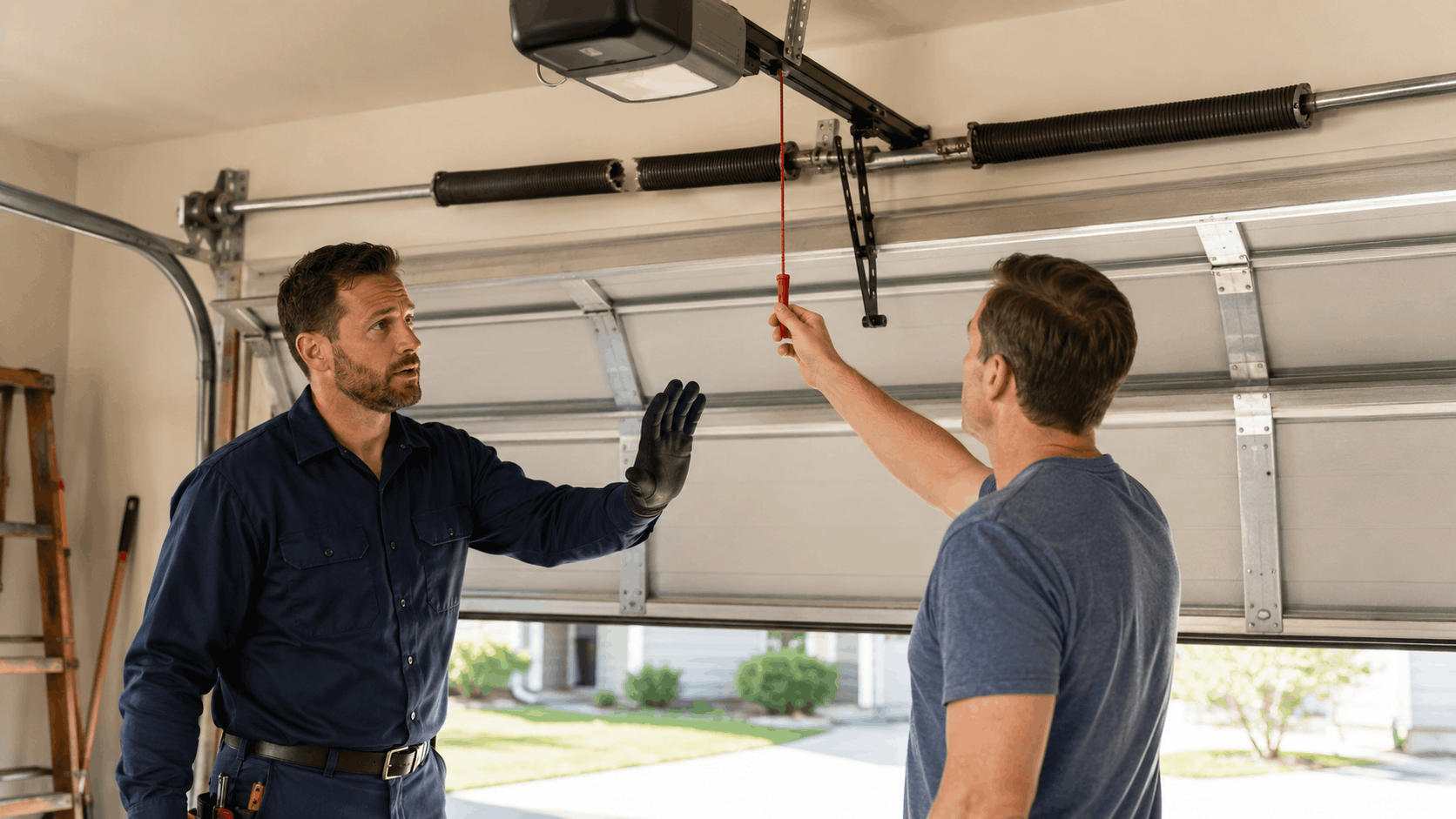
The red cord hanging from your opener is one of the most misunderstood parts of a garage door. It was never made to be a fix for a stuck door. It has one job, and using it at the wrong time turns a small problem into a dangerous one.
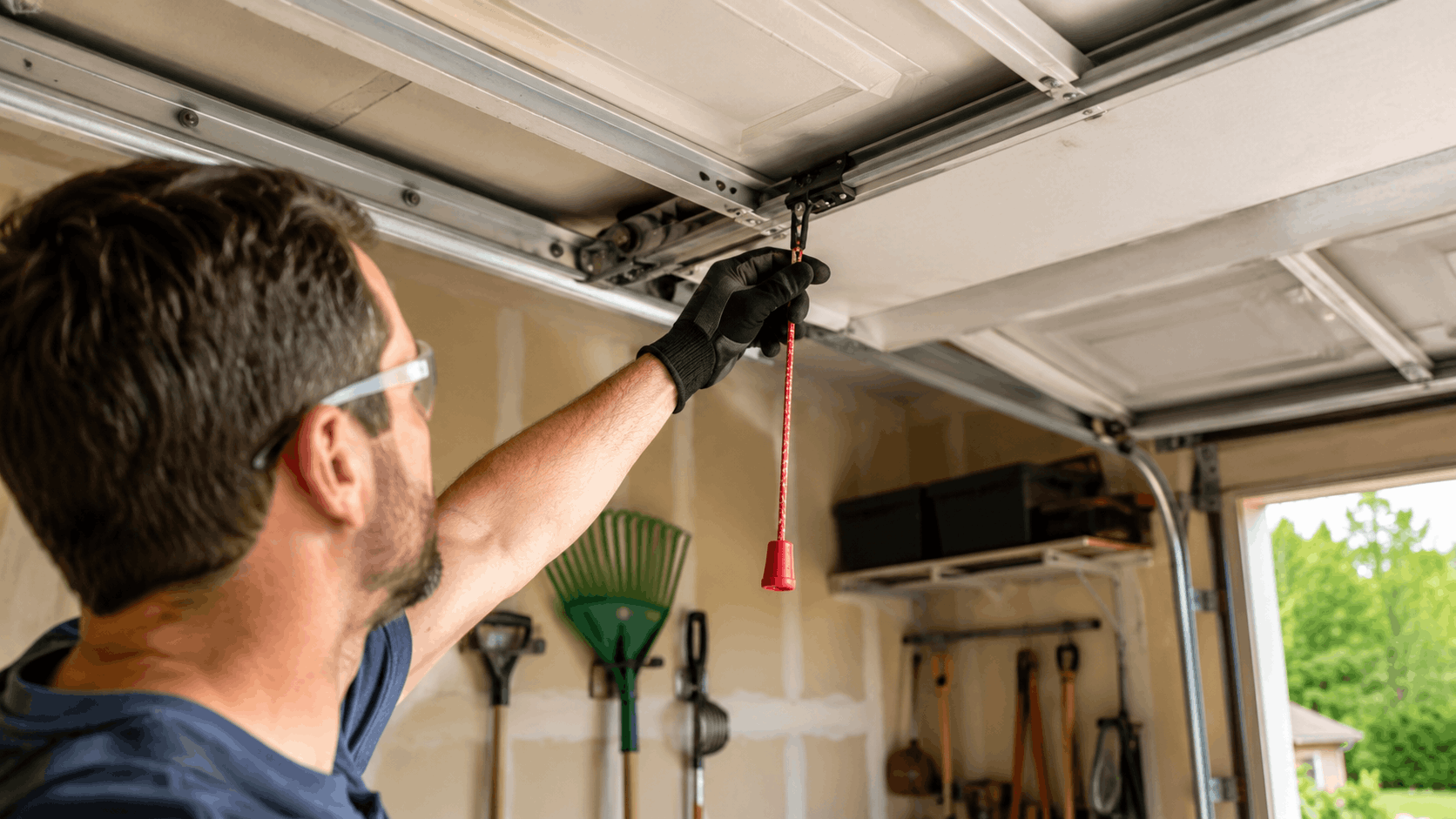
The emergency release cord connects to the garage door opener. Its purpose is simple. It lets you switch the door from automatic operation into manual mode so you can move it by hand.
- It disconnects the door from the electric opener motor
- It lets the door move up and down by hand
- It is meant for times when the opener cannot run, like a power outage
- It assumes the springs are still doing their job of holding the weight
The Red Cord and the Trolley Explained
On a typical Irvine garage, the opener sits on the ceiling with a long rail running to the door. A part called the trolley slides along that rail and connects to the top of the door with an arm. When the motor runs, it pushes the trolley, which pushes the door.
The red cord attaches to a release lever on that trolley. Pulling it separates the trolley from the carriage that the motor drives. Once disconnected, the door is no longer linked to the motor at all.
This is what people mean when they talk about putting a door in manual mode. The door can now roll freely on its tracks. On homes across neighborhoods like Northwood and Turtle Rock, this setup looks nearly the same regardless of the opener brand.
The mechanism is clever and safe when everything works as designed. The problem starts when one part of the system, the spring, has already failed before you pull the cord.
When the Release Is Meant to Be Used
A common correct use is a power outage. If the electricity goes out and you need to get your car in or out, the release lets you operate the door manually. This is why the feature exists.
Another proper time is when the opener motor itself has died but the door and springs are fine. You can disconnect and move the door by hand until a technician replaces the motor. In both cases, the door still weighs almost nothing to lift because the springs carry the load.
Manual operation is only safe when the counterbalance system is intact. The springs must still be doing their job. That single detail is what separates a routine release from a dangerous one.
When homeowners understand this, they stop reaching for the cord out of habit. They pause and check whether the spring is the real issue first.
The Common Misconception That Causes Accidents
Here is where trouble begins. When a door will not open, most people assume the opener is broken. They see the door stuck and think the release cord will let them move it by hand.
But often the real problem is a broken spring, not the opener. The opener is straining against a door that suddenly weighs the full amount because the spring no longer helps lift it. Pulling the cord in this moment is the manual release mistake that leads to injuries.
The instinct feels right but it is backward. The opener was the only thing still holding that heavy door up. Disconnect it, and gravity takes over instantly.
We see this scenario in Irvine garages more often than people expect. A calm pause and a quick check can prevent a crashing door and a trip to urgent care.
Get Your Free Quote
Tell us about your garage door and we'll get back to you within 30 to 60 minutes.
How Garage Door Springs Carry the Weight
To understand the danger, you first have to understand what the springs do. A garage door is heavy. The springs are the reason it feels light enough for a small motor, or even one person, to lift.
Springs work through a counterbalance system. They store energy and release it to offset the weight of the door. Without them, no household opener could budge the door.
| Spring Type | Where It Is Mounted | Common Use |
|---|---|---|
| Torsion Spring | On a metal shaft above the door opening | Most modern Irvine homes and heavier doors |
| Extension Spring | Along the horizontal tracks on each side | Older or lighter single doors |
Torsion Springs vs Extension Springs
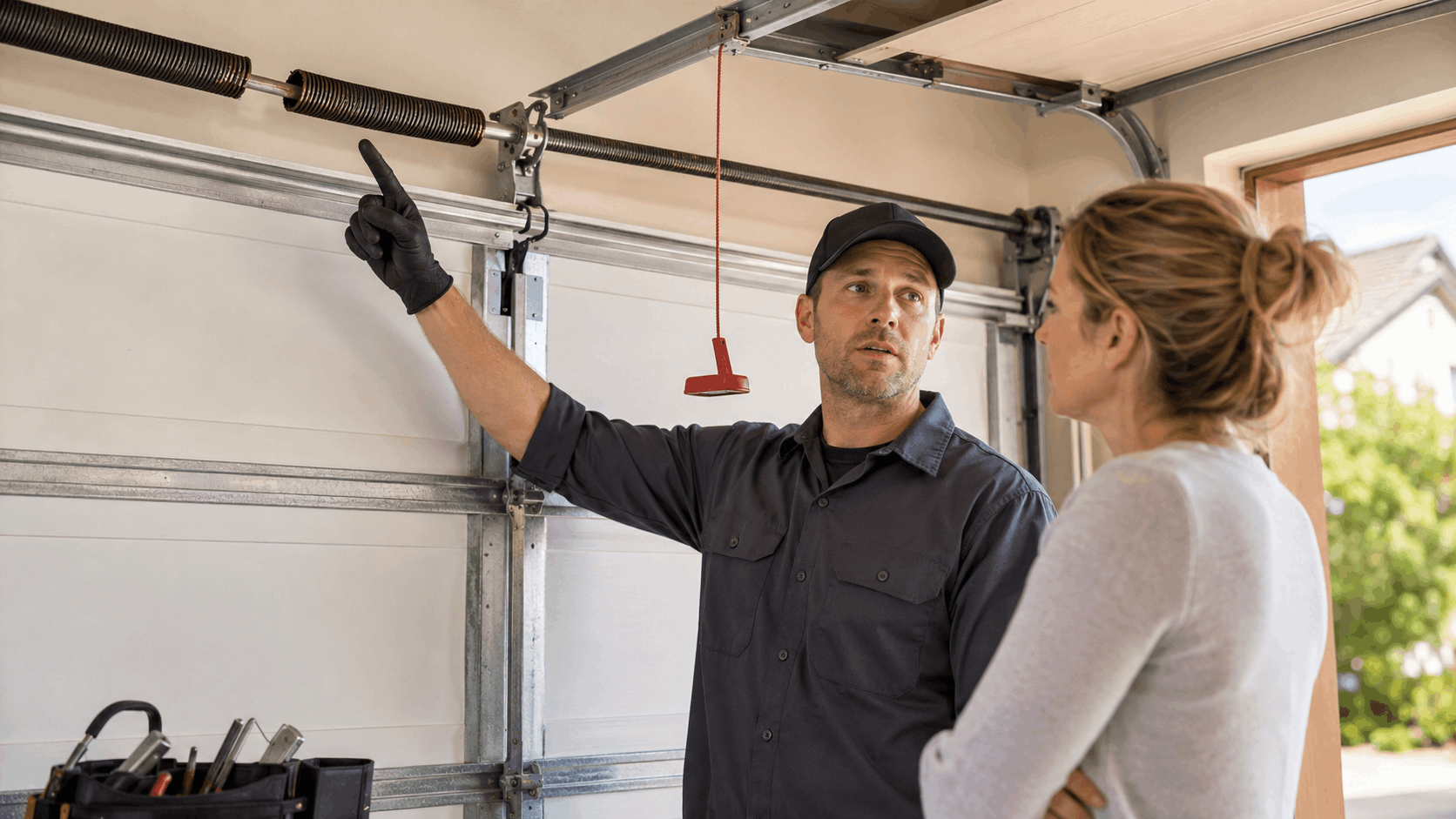
Torsion springs mount on a bar above the door and wind up tightly to store energy. When the door moves, the spring unwinds or winds to balance the weight. These are the springs found on most homes we service across Irvine.
Extension springs stretch out along the tracks on either side of the door. They pull to help lift the door as it opens. You see these more on older or lighter single-car doors.
The torsion vs extension question matters because the failure looks different for each. A torsion spring shows a clear gap when it breaks. An extension spring may hang loose or snap free. Our spring and cable repair team works with both spring types every day.
Many double doors in newer Irvine communities use torsion springs because they handle heavier loads better. The right spring choice depends on door size and weight.
The Counterbalance System in Plain Terms
Think of the counterbalance like a partner helping you carry a heavy box. The spring holds most of the load so the opener only handles a small push. That balance is what keeps daily operation smooth and safe.
When the door is balanced correctly, it should stay in place when you lift it halfway by hand. It should not slam down or fly up. This door balance is a sign the springs match the door weight.
The opener is a small motor. It was never built to lift the full weight of the door. It relies on the springs to do the heavy work so it just guides the door along.
Once you grasp this, the risk becomes clear. Remove the spring's help, and the opener is fighting a load it was never meant to hold.
How Much a Garage Door Really Weighs
A single-car garage door usually weighs between 100 and 150 pounds. A standard double door often runs 200 to 250 pounds. These are not light objects.
Custom doors seen in some upscale Irvine communities weigh even more. Solid wood or insulated steel double doors can push past 300 or even 400 pounds. Many custom carriage-style doors add weight with thick panels and decorative hardware.
All of that weight is held back by the springs. When they work, you feel none of it. When they break, every pound of that door weight is suddenly free to drop.
Picture a 250-pound double door falling from head height. That is the force waiting behind the release cord when a spring has snapped.
Need Help in Irvine?
Urgent Garage Doors serves Irvine and all of Orange County.
Why Pulling the Release With a Broken Spring Is Dangerous
Now we get to the heart of the matter. When the spring is broken and you pull the release, physics takes over in a fraction of a second. There is nothing left to slow the door down.
The crash risk is real and immediate. This is not a rare freak event. It is the predictable result of removing the last support from a heavy object held above the ground.
- The opener was the only thing holding the door up
- A heavy door can fall in under a second
- Hands, feet, cars, and pets can be in the fall path
- The door itself, the tracks, and the opener can all be damaged
The Opener Was the Only Thing Holding It Up
With a healthy spring, the opener shares the load. With a broken spring, the opener carries the entire door weight by itself. It strains, but it may hold the door in place for the moment.
When you pull the release, you disconnect the door from that motor. Now nothing holds it. There is no counterbalance, and the motor is out of the picture too.
The door drops the instant the trolley separates. This is why the broken spring danger is so severe with the release cord. You are removing the one thing still keeping gravity at bay.
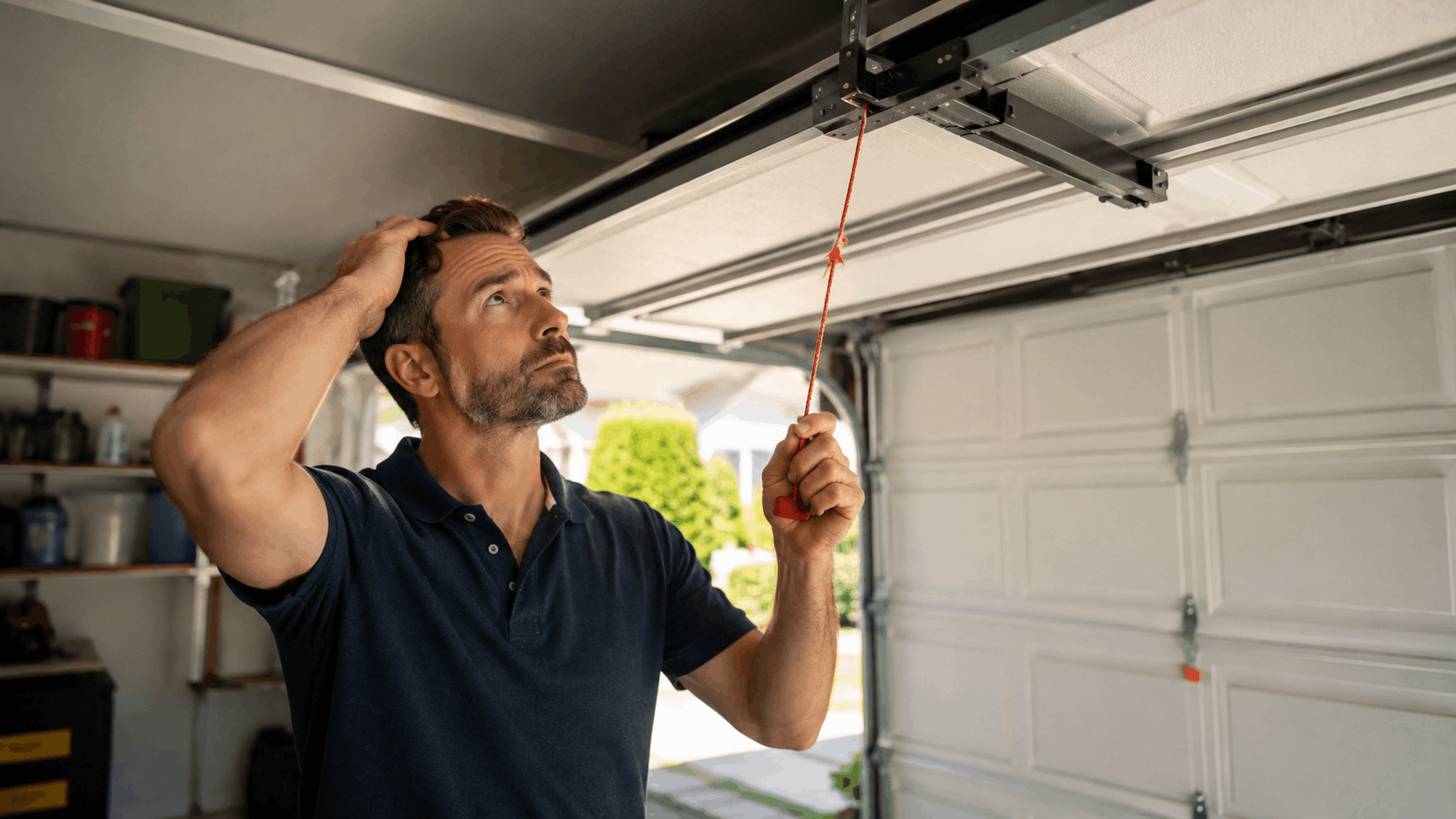
Our technicians always tell Irvine homeowners the same thing. If the door will not open and feels stuck, leave the cord alone until someone checks the spring.
How Fast a Heavy Door Can Fall
A garage door in the open position sits several feet off the ground. When it falls with no spring support, it picks up speed quickly. From fully open, it can slam shut in about a second.
The impact force of a 200-pound door dropping from that height is enough to crush bone. A door slam like this can break fingers, hands, and feet in an instant. There is no time to react once it starts moving.
The injury risk grows if a child or pet is near the doorway. Pets especially like to wander through open garages. A falling door does not stop for anything in its path.
We have seen dented car hoods, cracked bumpers, and worse from doors that dropped without warning. The speed leaves no chance to pull back or jump clear.
Damage to People, Vehicles, and the Door Itself
The human toll is the worst part. Crushed fingers, broken toes, and head injuries all happen when a door crashes down. These are emergency room injuries, not minor bumps.
Vehicles take a beating too. A door falling onto a car parked half in the doorway can dent the hood, crack the windshield, or bend the roof. Repair bills climb fast.
The door and its hardware also suffer. A hard drop can leave bent panels, twist the tracks, and snap the opener arm. What started as a broken spring can turn into a full door replacement.
When tracks bend, the whole door may need realignment or new parts. Our off-track door repair service often handles the aftermath of a crash that started with a pulled release cord.
Why the Door Can Fall Even When It Looks Closed
Some homeowners assume a closed or nearly closed door is safe to release. This is a dangerous mistake. Even a door resting partway down holds stored tension in the cables and system.
A door sitting a foot off the ground can still drop hard when the release is pulled. The sudden drop happens because the failed system still holds uneven forces. Cables can whip and parts can shift without warning.
Hidden tension lingers even in a broken setup. Just because the door is not fully open does not mean it is settled and safe. The cables may still be under load.
Our team treats every broken spring situation as live and dangerous. We never assume a resting door is harmless until the tension is properly released.
How to Tell If Your Spring Is Broken
Spotting a broken spring early can save you from pulling that cord by mistake. The signs are usually clear once you know what to look for. Most homeowners can check from inside the garage in under a minute.
Knowing the spring failure symptoms helps you make the right call. Instead of yanking the release, you can step back and phone a technician. Here are the broken spring signs to watch for.
The Loud Bang and the Gap in the Spring
A common sign is a loud bang. Many people describe it as a gunshot or firecracker going off in the garage. It often happens at night when the temperature drops.
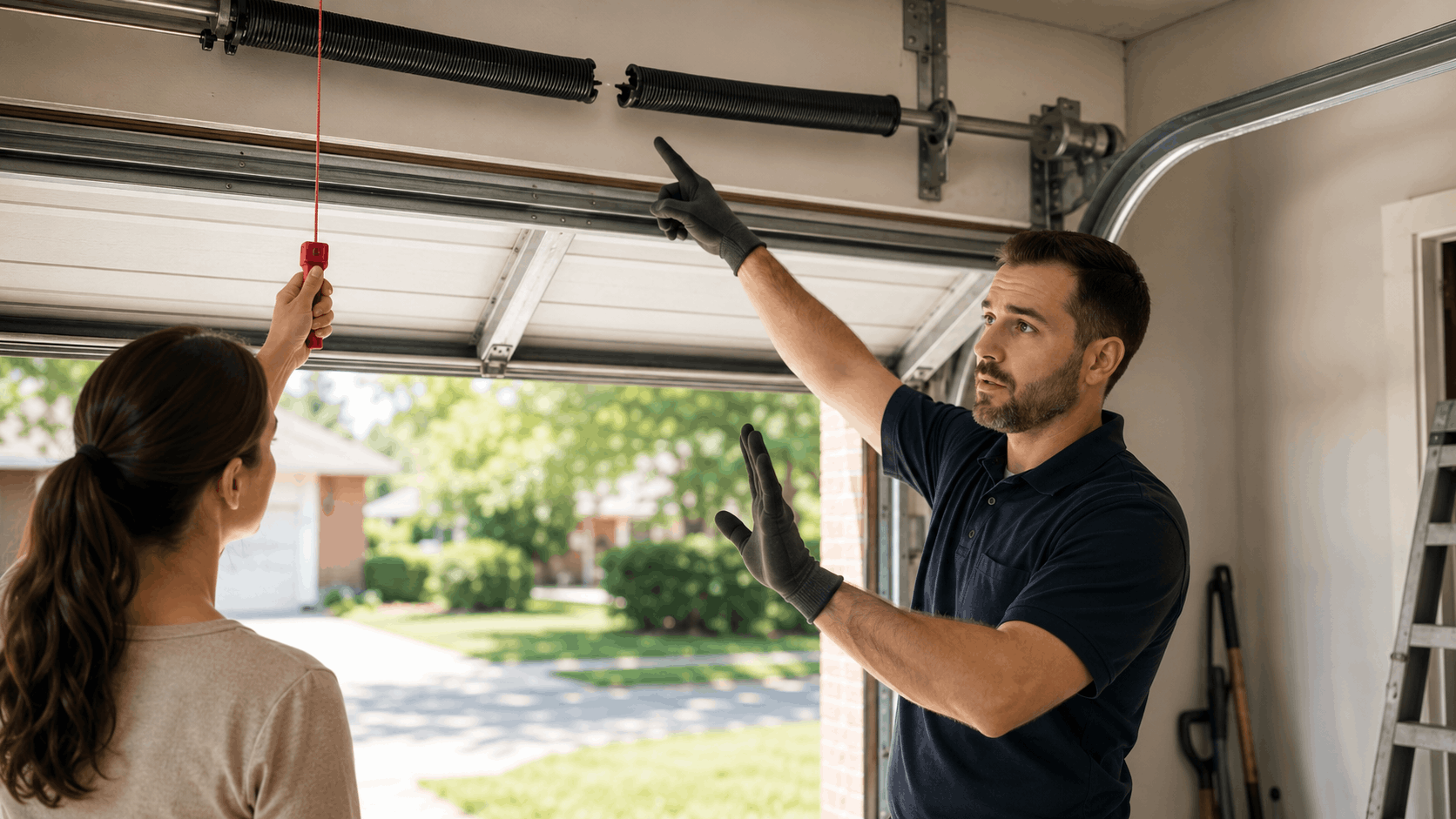
After that noise, look at the torsion spring on the bar above the door. If you see a two-inch gap where the coils separated, the spring is broken. A whole spring has tight, continuous coils with no gap.
This spring gap is the clearest sign of all. Once you spot it, you know the door has lost its counterbalance. Do not try to operate the door after seeing this.
If your home uses extension springs, look along the tracks for a spring that hangs loose or has snapped in two. Our extension spring replacement team can confirm the failure and fix it fast.
The Door Feels Impossibly Heavy
If you try to lift the door by hand and it feels like it weighs hundreds of pounds, the spring has likely failed. A balanced door lifts with light effort. A door with a broken spring feels like dead weight.
This heavy door feel is your body telling you something is wrong. The springs are no longer offsetting the load. You are feeling the full door weight for the first time.
Do not force it. Trying to muscle a heavy door up can strain your back or cause the door to slip and fall. The spring failure feel is a clear stop signal.
Set the door down gently if you already lifted it a little. Then step away and call for help before anything shifts.
The Opener Strains, Reverses, or Only Lifts a Few Inches
Sometimes the first sign is the opener acting strange. It hums and strains but the door barely moves. Or the door lifts a few inches then stops or reverses.
This happens because the opener has lost its counterbalance partner. The safety features sense the extra load and shut down to protect the motor. The opener strains because it is doing a job it cannot handle alone.
When the door lifts only a few inches and quits, stop using the opener right away. Running it again can burn out the motor or strip the gears. You could turn a spring repair into a spring and opener repair.
These signs point straight to lost counterbalance. If you notice any of them, our door wont open or close pros can diagnose the cause quickly.
Need Help in Irvine?
Urgent Garage Doors serves Irvine and all of Orange County.
What Irvine Homeowners Should Do Instead
So the spring broke and the door is stuck. What now? The safe response is simple and it keeps everyone out of harm's way.
The right steps for what to do with a broken spring come down to patience and calling a pro. Garage door safety starts with resisting the urge to fix it yourself. Here is the plan our team recommends.
Stop, Keep Clear, and Do Not Force the Door
First, stop. Do not pull the release cord and do not keep hitting the opener button. Both actions make things worse.
Keep people, kids, and pets away from the door path. Treat the area under the door like a no-go zone until a technician arrives. Stay clear even if the door looks fine where it sits.
Do not try to force the door open or closed by hand. Forcing it can cause a sudden shift or drop. The calm choice is to leave it exactly where it is.
Staying calm prevents injury. A broken spring is an inconvenience, not an emergency worth risking your fingers over. Give our team a call and let the door stay put.
How to Get Your Car Out Safely
If your car is trapped inside, this is the situation that tempts people to pull the cord. We understand the pressure of needing to get to work. But a solo attempt is where injuries happen.
The safe way to raise a door with a broken spring takes support and usually more than one person. A technician can lift the door and secure it with clamps or vice grips on the track so it cannot fall. Only then is it safe to drive the car out.
Never try this alone. A trapped car is frustrating, but a crushed hand or a dented roof is far worse. If you can wait, the safest move is to leave the car until help arrives.
Our crew often clamps the door open, pulls the vehicle out, then completes the repair. It is a routine part of a broken spring visit across Irvine.
Call a Local Technician Right Away
The fastest fix is a call to a local technician who knows Irvine homes. Our team services every neighborhood from Northwood to Turtle Rock and knows the door styles common in each. We arrive with the right springs and tools on the truck.
We offer same-day repair for spring failures because a stuck door disrupts your whole day. Most spring jobs are done in about an hour once we are on site. You do not have to live with a dead door for long.
Our same-day garage door repair service is built for exactly this kind of problem. We prioritize spring failures because of the safety risk they carry.
Homeowners in Turtle Rock and Portola Springs call us often for quick spring service. A single phone call replaces a risky guessing game.
Why Spring Repair Is a Job for Trained Pros
We get why DIY appeals to handy homeowners. But spring repair is one job we strongly advise leaving to trained technicians. The tension involved is no joke.
Springs store enormous energy. Handled wrong, they can cause serious injury in a heartbeat. The right tools, sizing, and technique make the difference between a safe fix and a hospital visit.
The Stored Energy That Makes Springs Deadly
A wound torsion spring holds a tremendous amount of stored energy. That energy is what lifts your heavy door. It is also what makes an unwinding spring so dangerous.
If a spring slips or a tool kicks back during work, that spring tension releases all at once. It can break fingers, hands, and wrists. There are documented cases of severe injuries from home spring repairs gone wrong.
The U.S. Consumer Product Safety Commission has long tracked garage door injuries, including those tied to spring and hardware failures. You can read general home safety guidance from the Consumer Product Safety Commission. The energy stored in these parts is not something to test by hand.
Our technicians respect that energy every time. Proper handling keeps that stored force under control from start to finish.
Winding Bars, Sizing, and Proper Balance
Replacing a torsion spring requires winding bars, the correct size spring, and careful measurement. Winding bars let a technician safely add tension to the new spring. Using the wrong tool, like a screwdriver, is how people get hurt.
Spring sizing matters too. The wire size, coil length, and inside diameter must match the door weight. Guessing at the size leaves the door unbalanced or wears the new spring out fast.
A correctly sized spring gives you proper balance, so the door stays put at any height. This balance protects the opener and makes the door safe to operate. Our torsion spring replacement team measures every door before choosing parts.
The International Door Association sets standards for this kind of work. You can learn more about professional door standards through the International Door Association. Proper sizing and balance are not guesswork for a trained crew.
Why Both Springs Are Often Replaced Together
Many double doors use two torsion springs. When one breaks, the other is usually close behind. Both springs went through the same number of cycles and aged the same way.
Replacing both at once saves you a second service call within months. It also keeps the door balanced with matched springs. A new spring paired with a worn one creates uneven tension.
Typical springs last 7 to 12 years depending on use. If one has reached the end of its life, the other has too. Our team almost always recommends replacing both to prevent a repeat failure.
It is the smarter long-term choice for your wallet and your door. Two fresh springs age together and share the load evenly for years to come.
Need Help in Irvine?
Urgent Garage Doors serves Irvine and all of Orange County.
Preventing Sudden Spring Failures in Irvine Homes
The best broken spring is the one that never breaks. A few simple habits stretch the life of your springs. Local conditions in Irvine also play a part.
Good spring maintenance keeps you from getting stuck with a dead door. A little attention each year helps prevent spring failure at the worst possible time. Here is what we suggest.
How Cycles and Age Wear Springs Out
Springs are rated by cycles, and one cycle is a single open and close. A standard spring is rated for around 10,000 cycles. That sounds like a lot until you count daily use.
A family that opens the door four times a day uses about 1,460 cycles a year. At that rate, a 10,000-cycle spring lasts roughly 7 years. Homes with teenagers or extra trips wear springs out sooner.
Spring age adds up quietly until the day it snaps. Most failures happen right in that 7 to 12 year window. Knowing your door's age helps you plan ahead.
If your door is over a decade old and still on the original springs, a proactive replacement beats a surprise failure. High-cycle springs are available for busy households that want longer life.
Coastal Air and Irvine Weather Effects
Irvine sits close enough to the coast that marine air drifts inland. Areas like University Park and communities nearer the coast get more of that salty, humid air. Over time this speeds up rust on springs.
Rust is a spring's enemy. It creates rough spots where the metal weakens and eventually cracks. A rusty spring fails sooner than a clean, lubricated one.
Temperature swings also stress the metal. Cool mornings and warm afternoons make springs expand and contract. That constant change is why so many springs break on the first cold snap of the season.
Coastal air rust and temperature swings both shorten spring life in Irvine. A light protective lubricant helps guard against corrosion. Regular checks catch rust before it turns into a break.
Yearly Tune-Ups and Balance Checks
An annual tune-up is the best way to catch problems early. During a visit we lubricate the springs, check the cables, and test the door balance. Small issues get fixed before they become failures.
The balance test is simple. We disconnect the opener, lift the door halfway, and see if it holds. A door that drifts up or down needs adjustment.
Homeowners near Woodbridge and Quail Hill often sign up for yearly service to stay ahead of trouble. A tune-up catches fraying cables, worn rollers, and tired springs. Our preventive maintenance plan keeps everything running smoothly.
Lubrication and a quick balance check each year add years to your springs. It is a small investment that prevents the dangerous scenario this whole article is about. Our door balancing and tension service handles the fine adjustments.
Final Thoughts
The red emergency release cord is a useful tool, but only when the springs are healthy. Pulling it with a broken spring removes the last support holding a heavy door in place, and the door can crash down in under a second.
If you hear a loud bang, see a gap in the spring, or feel the door turn heavy, stop and keep clear. Do not pull the cord and do not force the door. Call a trained technician who can release the tension safely and replace the springs the right way.
Our team at Urgent Garage Doors serves Irvine homes from Northwood to Turtle Rock with fast, safe spring repair. Protecting your family, your car, and your door starts with one simple choice: leave the cord alone and let a pro handle it.
Frequently Asked Questions
- Can I still pull the emergency release if my spring is broken?
- No. Pulling the release with a broken spring is unsafe and can cause the door to crash down. With no working spring, the opener is the only thing holding the door up. Disconnecting it removes that support, and the door can slam shut in under a second. Leave the cord alone and call a technician to handle the repair safely.
- What happens if I open my garage door with a broken spring?
- The opener strains to lift the full weight of the door with no help from the spring. It may hum, stall, lift a few inches, or reverse. Repeated attempts can burn out the motor or strip the gears, turning a spring repair into a larger job. Stop using the opener right away and call for service before you damage more parts.
- How do I know if the noise I heard was a spring breaking?
- A breaking spring makes a loud bang that many people compare to a gunshot or firecracker. It often happens at night when temperatures drop. Afterward, check the torsion spring above the door. If you see a two-inch gap where the coils separated, the spring broke. That visible gap and the loud sound together are clear signs of a spring failure.
- How much does garage door spring replacement cost in Irvine?
- Most spring replacements in Irvine fall between about $200 and $450, depending on the spring type, door size, and whether one or both springs are replaced. High-cycle springs for busy households cost a bit more. Torsion springs generally run higher than extension springs. We give a clear quote before starting so there are no surprises on your bill.
- How long does it take to replace a broken spring?
- A typical spring replacement takes about 45 minutes to an hour once our technician is on site. Double doors with two springs may take slightly longer. We arrive with common spring sizes on the truck, so most Irvine repairs are done in a single visit the same day you call.
- Is it safe to get my car out when the spring is broken?
- Only with proper support. Never try to lift a heavy door alone. A technician can raise the door and secure it with clamps on the track so it cannot fall, then you can safely drive the car out. If you must act before help arrives, get another person and never stand under the door. When in doubt, wait for a pro.
- Should I replace one spring or both?
- Replacing both is usually the smarter choice on a two-spring door. Both springs age at the same rate and go through the same cycles, so if one breaks the other is close behind. Replacing both avoids a second service call soon after and keeps the door balanced with matched springs. It saves money and hassle in the long run.
- How long do garage door springs last?
- Most springs last between 7 and 12 years, based on cycles and how often the door is used. A standard spring is rated for around 10,000 cycles. A family using the door several times a day may see failure around year 7, while lighter use can push it past a decade. Coastal air in parts of Irvine can shorten that lifespan.
- Can I replace a garage door spring myself?
- We strongly advise against it. Springs hold tremendous stored energy, and a slip during winding can cause serious injury to hands and wrists. The job requires winding bars, correct spring sizing, and proper technique. The savings are not worth the risk. A trained technician replaces springs safely and balances the door correctly in about an hour.
- Do you offer same-day spring repair in Irvine?
- Yes. We prioritize spring failures because of the safety risk and the disruption a stuck door causes. Our team serves every Irvine neighborhood from Woodbridge to Turtle Rock and Portola Springs with same-day response whenever possible. Call us, and we will arrive with the right springs and tools to get your door working safely again. Do not risk a crashing door. If your spring has broken or your door will not open, contact Urgent Garage Doors for fast, safe service across Irvine. Call our team today for a same-day repair or a maintenance consultation, and let a trained technician handle the tension so you never have to.
Licensed garage door repair professionals serving Irvine and Orange County.
Licensed in California · License #1055150
Why trust Urgent Garage Doors?
Founded in 2017, Urgent Garage Doors is a licensed and insured garage door services serving Irvine and Orange County. All content is reviewed by our licensed technicians.

Need Help in Irvine?
Urgent Garage Doors serves Irvine and all of Orange County.
Related Articles
Coto de Caza Garage Door Repair: Custom Estate Doors and Emergency Service
Skilled garage door repair for Coto de Caza estates - custom wood door restoration, emergency service through the gate, spring and opener replacement, and local maintenance.
Emergency Garage Door Repair in Newport Coast: Same-Day Service for Pelican Hill and Crystal Cove
A local guide to emergency garage door repair in Newport Coast, covering common failures, same-day service for Pelican Hill and Crystal Cove, costs, and prevention.

Why Anaheim Hills Homes Need Heavy-Duty Garage Door Springs
Discover why Anaheim Hills homes require heavy-duty garage door springs due to extreme temperatures, heavy insulated doors, and unique climate challenges that cause standard springs to fail prematurely.