Which Pre-Listing Garage Door Repairs Add Value on a Lake Forest Sale
Key Takeaways
- The repairs that add value are the visible, safety, and function fixes a buyer or inspector notices: auto-reverse, photo eyes, springs, cables, balance, panels, seals, and tracks.
- A home inspector checks auto-reverse, photo-eye function, balance, and spring and cable condition, and a failed check becomes a buyer repair request during escrow.
- Run the safe owner test, the 2x4 auto-reverse check, but never adjust or replace a torsion spring yourself, as it stores enough energy to cause serious injury.
- Typical Orange County ranges include torsion spring replacement $150 to $300, cable repair $150 to $300, opener installation $250 to $600, and panel replacement $250 to $800 per panel, all given in writing before work begins.
- A visible door or color change usually needs architectural approval under Davis-Stirling before ordering, and lakeside tracts carry Lake Forest Beach and Tennis Club or Sun and Sail Club membership as an incident of ownership.
- Since July 1, 2019, SB 969 requires a battery backup on every residential opener sold or installed in California, with a $1,000 civil penalty, so a replacement opener includes one by law.
- The City of Lake Forest confirms the permit position for a specific address, and a pre-1993 opener predates the federal entrapment-protection mandate and should be replaced rather than repaired.
- Urgent Garage Doors holds CSLB license #1055150, classification C-61/D-28, offers 24/7 emergency service with a 30 to 60 minute Orange County response, and includes haul-away on new door installs.
In This Article
A Lake Forest seller stands at the curb with a real estate agent, looking back at the house the way a buyer will. The lawn is mowed, the trim is painted, and then the eye lands on the garage door. It is faded, one panel is dented, and it groans when it opens. That door is often the first thing a buyer judges, and it sets the tone before anyone reaches the front step.
The repairs that add value before a Lake Forest sale are the visible, safety, and function fixes that a buyer or a home inspector will notice. A door that passes the auto-reverse and photo-eye tests, runs quietly on sound springs and cables, sits straight on its track, and looks clean from the street does more for a listing than almost any cosmetic touch inside the house. A door that fails any of those checks becomes a repair request during escrow, often after an offer is already on the table.
Why the Garage Door Matters More Than Sellers Think in Lake Forest?
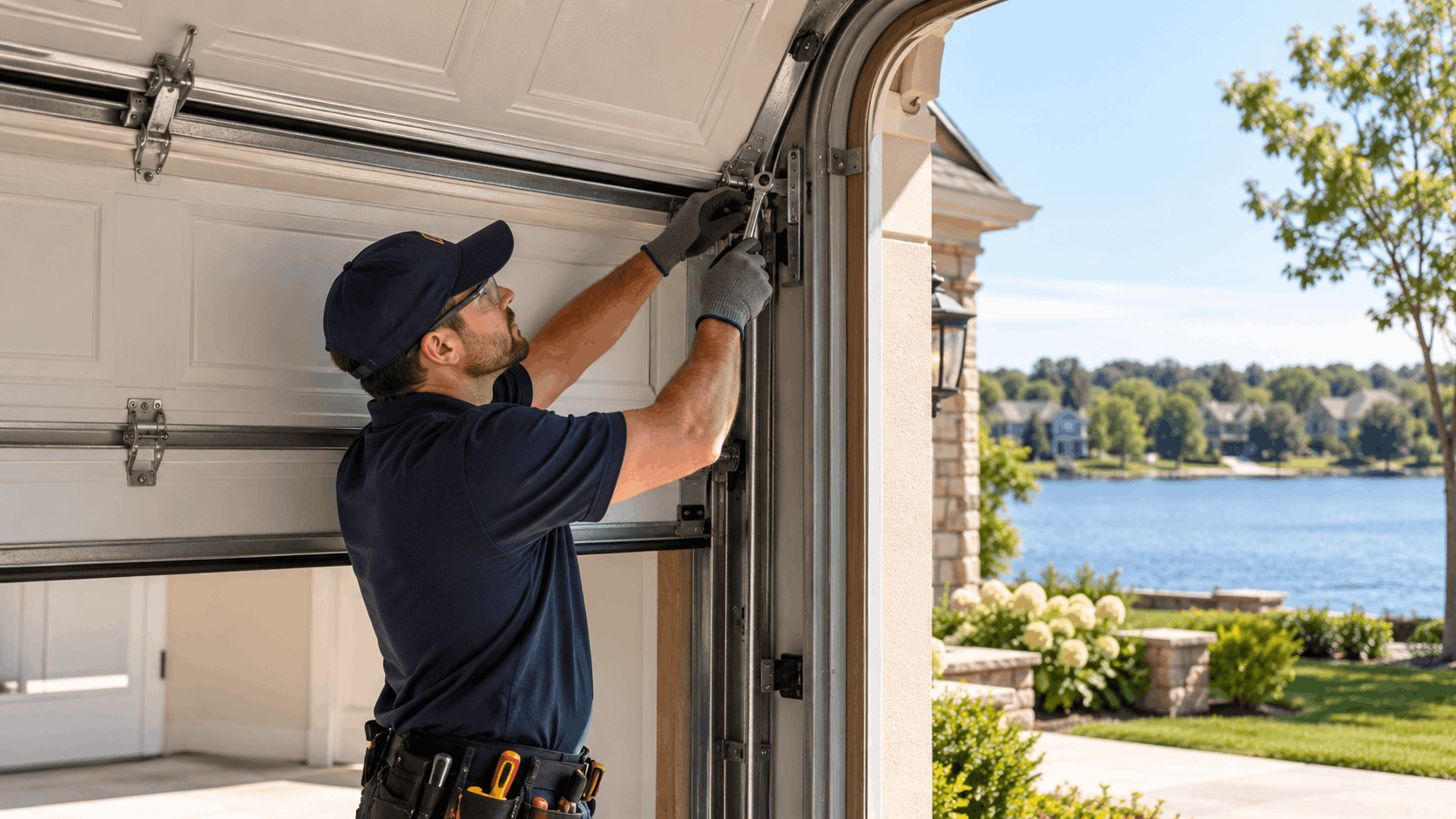
In a city where the median owner-occupied value sits at $937,000, buyers come in with high expectations and sharp eyes. The garage door is one of the largest street-facing surfaces on the house, and it is reviewed before a buyer ever walks inside. A tired door quietly lowers the perceived home value of everything behind it.
Lake Forest covers 17.9 square miles across ZIP codes 92609, 92610, 92630, and 92679, and the housing stock spans three distinct building eras. That mix means no single checklist fits every home here. The door condition on a 1970s El Toro-era tract home near Serrano Road is a different problem from a late-2010s Baker Ranch floor plan near Alton Parkway.
| Lake Forest Housing Era | Typical Door Type | Common Pre-Listing Issue |
|---|---|---|
| 1960s-70s El Toro core | One-piece tilt-up or early sectional | Pre-1993 opener, dated styling, worn springs |
| 1990s Foothill Ranch and Portola Hills | Sectional with standard opener | Springs near cycle end, faded finish |
| Late-2010s Baker Ranch | Sectional with smart opener | Noise over bedrooms, minor cosmetic wear |
The Door Is the Biggest Thing Buyers See From the Curb
On most Lake Forest homes, the garage door takes up close to a third of the front elevation. That makes it the single largest painted or finished surface a buyer sees from the street. When that surface is faded, dented, or sagging, it drags down the first impression of the whole property.
Curb appeal is not a soft idea. It shapes whether a buyer slows down, parks, and books a second look, or scrolls past the listing photos. A clean, straight, quiet door signals a home that has been cared for.
The opposite is also true. A door with a cracked panel and a sagging bottom edge tells a buyer to expect deferred maintenance everywhere else. That one surface frames how the rest of the showing gets read.
For sellers along El Toro Road, Lake Forest Drive, or Trabuco Road, the door is part of the street view the moment a buyer rounds the corner. Getting it right costs far less than losing offers over a poor first impression.
How Lake Forest's Three Housing Eras Change What Needs Fixing
The 1960s and 1970s El Toro-era tracts at the core of the city are the oldest. Many of these homes still carry one-piece tilt-up doors, which are a different product from the sectional doors that came later, with different hardware and a different look. A tilt-up that still works may still read as dated to a modern buyer.
The 1990s master-planned communities of Foothill Ranch and Portola Hills on the northeast edge mostly run sectional doors with standard openers. Doors from this era are the ones most likely to have springs reaching the end of their cycle rating right about now. A seller here is often one spring away from a mid-escrow surprise.
Baker Ranch, built out through the late 2010s on the west side near State Route 241 and Alton Parkway, has the newest doors and smart openers. The fixes here lean cosmetic or noise-related rather than structural. Each era carries its own pre-listing to-do list, which is why a preventive maintenance check matched to the home's age pays off.
What Home Inspectors Flag on a Door During Escrow
A home inspector runs through a short, predictable list on the garage door. They check the auto-reverse, the photo-eye function, the balance, and the condition of the springs and cables. These are the same safety and function points that keep a door working correctly.
When a check fails, it lands in the inspection report. From there it usually becomes a buyer repair request, and those requests often arrive after an offer is already in place. That timing gives the buyer leverage and can shave money off the sale price or stall the escrow entirely.
Fixing these items before listing removes the leverage. A door that passes every inspector check is one less thing a buyer can use to renegotiate. It also keeps the deal moving on the seller's timeline rather than the buyer's.
A short pre-listing inspection of the door catches these items while the seller still controls the process. It is far cheaper to handle a flagged spring now than to credit a nervous buyer later.
Renters, Landlords, and Who Actually Orders the Repair
About 29.5 percent of Lake Forest homes are rented, so a large share of sales involve tenant-occupied properties. On those homes, the person living behind the door is not the person who authorizes or pays for the repair. The landlord or property manager makes that call.
An investor selling a rented home has to coordinate access with the tenant before any pre-listing repair can happen. That adds a scheduling layer that owner-occupants do not deal with. A tech cannot run the balance test or replace a spring if no one can let them into the garage.
For investor sellers, the practical step is to line up tenant access early, before the listing date is locked. A door repair that needs two visits because the first access fell through can hold up photos and the listing itself. Clear communication with the renter keeps the pre-listing work on track.
Get Your Free Quote
Tell us about your garage door and we'll get back to you within 30 to 60 minutes.
Safety Repairs That Pass Inspection and Protect the Dealo
The repairs most likely to be demanded by a buyer or an inspector are safety items. These are not optional polish, they are the function points that an inspection report is built around. A seller who runs the three basic tests before listing knows exactly where the door stands.
Garage door safety comes down to a door that stops and reverses when it should, stays balanced, and uses sound hardware. Each of these tests is something a homeowner can run safely, and each one maps directly to a line in an inspection. Passing them before a buyer's inspector arrives protects both the price and the timeline.
The Auto-Reverse and 2x4 Test
The 2x4 test checks the door's contact reverse. Lay a flat 2x4 across the opening under the door, then close the door with the opener. When the door bottom contacts the board, it must reverse within two seconds.
This is the same contact-reverse behavior UL 325 requires, and it is one of the first things an inspector checks. A door that keeps pushing against the board instead of reversing is a flagged item in almost every inspection report. It reads as a safety defect, not a cosmetic one.
The fix can be as simple as an opener force adjustment or as involved as a control board or opener replacement, depending on the unit. A tech runs the test, reads the result, and matches the repair to the cause. Guessing at the force setting without the right tools can leave the door unsafe in the other direction.
For a seller, this test takes two minutes and a scrap of lumber. If the door fails it, that is a repair to handle before the listing photos, not after an offer.
Photo-Eye Alignment and the Beam Test
The photo eyes are the two sensors mounted on each side of the opening, no higher than six inches off the floor. The beam test is simple: with the door closing, break the beam with an object, and the door must stop and reverse. A door that will not respond is a safety failure.
Misaligned, blocked, or dirty photo eyes are the most common cause of a door that reverses for no visible reason. Wind in the Portola Hills area carries dust and plant debris into the opening, and that grit can coat a sensor lens and break the beam. The door then refuses to close, or closes and bounces back, which looks alarming during a showing.
Cleaning the lenses and realigning the brackets often restores normal function. When a bracket is bent or a wire is damaged, the sensor needs more than a wipe. A safety sensor alignment and repair gets the beam square and clear again.
Because this is such a common and visible fault, it is worth checking before every showing, not just once before listing. A buyer watching a door bounce back for no reason loses confidence fast.
Entrapment Protection on Older Openers
California required openers to be manufactured with an automatic reverse device and sensor under AB 3600 in 1990. Federal coverage followed for openers manufactured for the United States after January 1, 1993, built to the UL 325 standard. Those rules are why modern openers reverse on contact and on a broken beam.
An opener made before 1993 predates the federal entrapment-protection mandate. On an El Toro-era home at the core of Lake Forest, the original opener may be exactly that old. A buyer's inspector will note a unit that lacks modern entrapment protection.
The CPSC documented 62 deaths and 49 injuries to children under 15 between March 1982 and November 1996, which is the history behind these rules. An old opener without external sensors is not illegal to own, but it does not have the protection every modern unit carries. The manufacturer position, LiftMaster for example, is that pre-1993 openers should be replaced rather than repaired.
For a seller with an opener that old, replacement is usually the cleaner pre-listing move than trying to patch a unit the maker no longer supports. A new opener also sets up the battery backup the state now requires on a replacement.
Why Springs Are the One Thing a Seller Should Not Touch
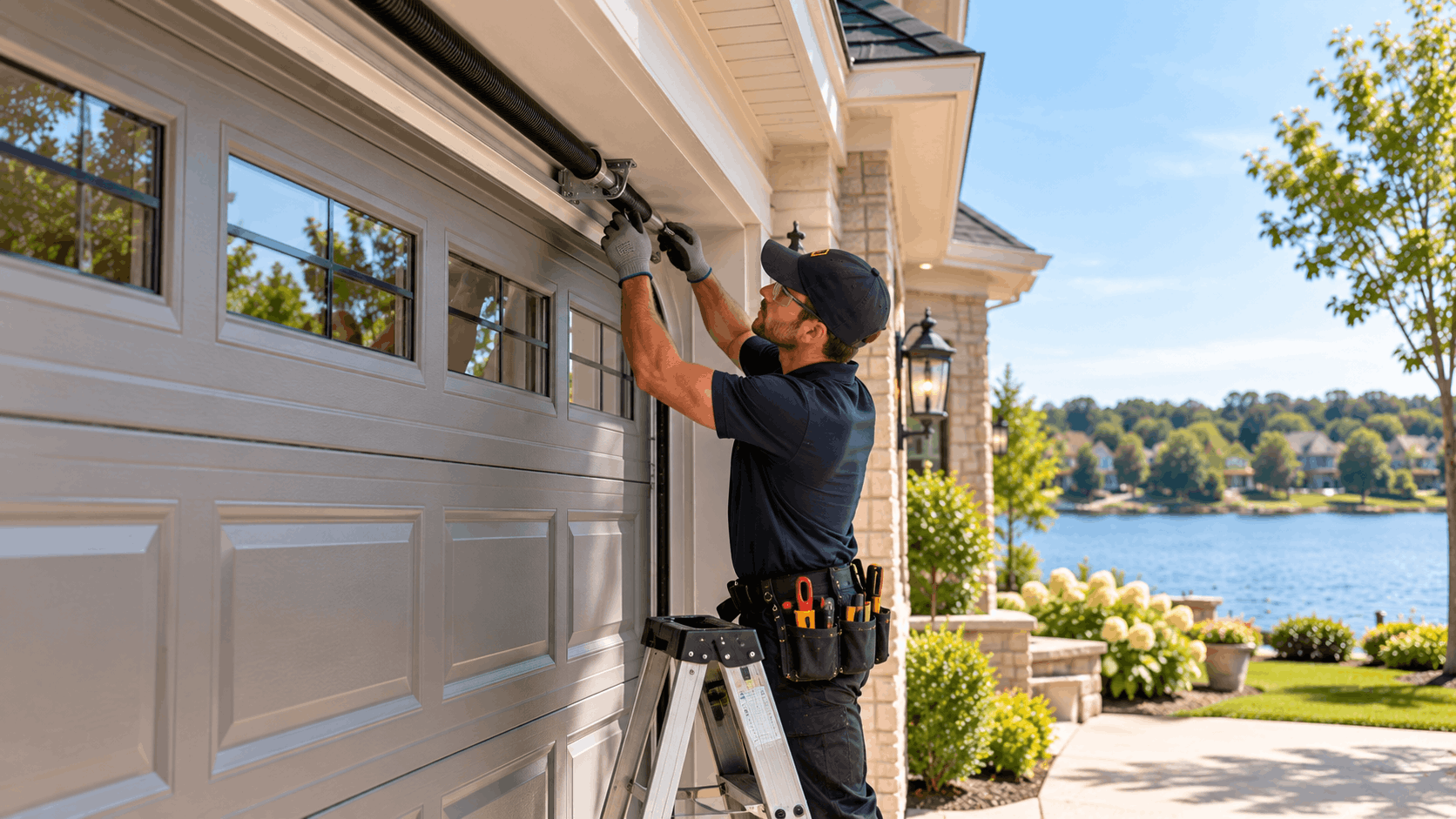
A torsion spring stores enough energy to cause serious injury and releases it instantly if a winding bar slips. This is the one component a homeowner should never adjust, wind, unwind, or replace. The safe move is to leave all spring work to a licensed technician.
The test a seller can safely run is the auto-reverse check described above: lay the flat 2x4 in the door path, confirm the door reverses on contact, and check the photo-eye beam is aligned and clear. That tells the seller whether the safety systems work without touching anything under tension. It is the right home test to recommend.
When a spring is near the end of its life or already broken, that is a job for a tech with winding bars and the correct spring rating. A torsion spring replacement done right matches the spring to the door's weight and height. Done wrong, it is dangerous and often fails again quickly.
No amount of maintenance stops a spring from eventually breaking, because springs are rated in cycles and wear with use. The honest frame is the rating and the age, not a promise that service prevents failure. A seller is far better off letting a licensed tech handle the tension work.
Need Help in Irvine?
Urgent Garage Doors serves Irvine and all of Orange County.
Mechanical Fixes That Keep the Door From Failing Mid-Showing
A door that sticks, grinds, or jumps the track during a showing kills buyer confidence on the spot. The moving-part repairs make a door feel solid and new, which is exactly the impression a seller wants. These are the fixes that keep the door quiet and reliable when a buyer tests it.
Springs, cables, drums, rollers, and bearings all wear together, and a door is only as sound as the weakest of them. Getting the whole system inspected and repaired before listing prevents the kind of failure that turns a strong showing into a red flag. A smooth, balanced door is one buyers stop noticing, which is the goal.
Springs Near the End of Their Cycle Rating
Standard residential springs are commonly rated around 10,000 cycles, where one cycle is one full open and close. For a typical household that works out to roughly seven to twelve years. A door that serves as the main entrance and cycles several times a day reaches that rating much sooner.
Many 1990s Foothill Ranch and Portola Hills tract homes are now in or past that window. If the original springs are still in place, they may be due regardless of how the door looks. A spring that breaks the week before closing is a problem no seller wants.
There is no published multiplier for how much any local condition shortens spring life. The honest measure is the cycle rating and the age of the spring, not a climate claim. Dust and grit in the hardware can bring a spring to the end of that rating earlier, but the number to watch is still cycles and years.
Replacing a worn spring before listing removes the single most likely mid-escrow mechanical failure. A tech sizes the replacement to the actual weight and height of the door so it balances correctly.
Cables, Drums, and Bearings Inspected Together
Replacing a spring without checking the cables is how a second failure follows weeks later. Cables, drums, rollers, hinges, and bearings all wear alongside the springs. Treating them as a set during a pre-listing inspection avoids a return visit during escrow.
Cables take a beating because they carry the door's weight as the springs do their work. A frayed cable that is left in place while a new spring goes on will often snap once the system is under full tension again. A cable repair done at the same time as the spring work keeps the door from failing twice.
Drums, rollers, and bearings show their wear in noise and rough motion. A grinding door or one that shudders as it moves is telling the seller those parts are near the end. A buyer hears that grind and assumes neglect.
Inspecting the full lifting system before listing is the difference between one clean repair and a string of small failures. It also lets the seller price the work once rather than reacting to surprises during the sale.
Off-Track and Balance Problems
The balance test tells a seller whether the springs are doing their job. Disconnect the opener with the release cord, raise the door by hand to waist height, and let go. A correctly balanced door stays put rather than falling or rising.
A door that falls or rises on its own is a spring problem, not an opener problem. This is a point worth knowing, because sellers often blame the opener for what is really a spring or balance issue. A door balancing and tension adjustment restores that hold.
An off-track door is a visible red flag that any buyer spots immediately. When a door jumps its track it sits crooked, binds, and can be dangerous to operate. That is not a problem to show a buyer.
Getting an off-track door back on its rails and properly balanced before listing keeps the door running straight and quiet. An off-track repair handled before the photos means the door looks and works right during every showing.
Quiet Hardware for Homes With Rooms Above the Garage
Many newer Baker Ranch and Foothill Ranch floor plans put bedrooms over the garage. In those homes, a loud chain drive opener is something buyers notice, especially during an evening showing. Noise that travels into a bedroom is a mark against the home.
Belt drives run quieter than chain drives, which makes them the better fit where living space sits above the garage. A buyer standing in an upstairs bedroom hears the difference when the door opens. For sellers with that layout, a quieter opener is a genuine selling point.
Quiet roller upgrades also cut noise by replacing worn metal rollers with smoother-running ones. The door moves with less rattle and grind. A quiet roller and hardware upgrade is an affordable way to make an older door feel refined.
For a home with rooms over the garage, reducing door noise addresses a complaint a buyer might not say out loud but will still feel. It is a small change that improves how the whole home shows.
Cosmetic Repairs That Lift Curb Appeal Without a Full Replacement
Many Lake Forest sellers do not need a new door at all. Surface-level fixes can make an existing door photograph and show well for a fraction of a replacement cost. These are the repairs that improve curb appeal without the budget of a full installation.
A clean panel, a fresh seal, and straight, tidy hardware can make a door look cared for even if it is years old. Buyers respond to a door that looks maintained. Spending a little on the surface often returns more than letting a tired door drag down the listing photos.
Single Panel Replacement Versus a New Door
A single dented or cracked panel can sometimes be swapped rather than replacing the whole door. On a sectional door, the panels are separate sections, so one damaged section can come out without touching the rest. That is a far smaller job than a full replacement.
A panel match is realistic when the door's style and color are still available and the rest of the door is sound. The new panel has to match the existing ones closely enough that the repair does not show from the street. A panel replacement works well on recent doors from common manufacturers.
Age and discontinued styles push the decision toward a full door. If the panel design is no longer made, a single replacement will stand out instead of blending in. On an older El Toro-era door, finding a matching section can be harder than it is worth.
A tech can tell quickly whether a panel swap will look right or whether the door is better replaced. For a seller, the goal is a door that photographs as one clean surface, not a patchwork.
Weatherseal and Bottom Seal Refresh
Over time, grit packs into the bottom seal so it stops flattening against the slab. Wind carries dust and plant debris into the tracks and seals, and that buildup keeps the rubber from sealing the way it should. The result is a gap a buyer can see at the bottom of the door.
A fresh bottom seal and perimeter weatherstrip tidies the look and closes those gaps. The door sits flush to the slab again, and the edges look crisp rather than cracked and curling. A weatherseal and insulation retrofit handles both the bottom seal and the side and top weatherstrip.
Beyond the look, a good seal keeps dust and debris out of the garage, which matters where wind drives grit toward the opening. A buyer peering into the garage sees a clean, sealed space rather than a dusty one. Small details like this add up in a showing.
This is one of the lower-cost cosmetic fixes with an outsized effect on how the door reads. Fresh rubber on a clean slab makes an older door look recently serviced.
Track Cleaning, Realignment, and Hardware Tidy-Up
Debris in the tracks and rusty visible hardware make a door look neglected, even when it still works. Grit and plant matter collect in the tracks, and over time that buildup makes the door run rough. A buyer who sees dirty tracks and corroded hinges assumes the worst.
Cleaning the tracks and realigning them makes the door run straight and smooth. When the tracks are square and clear, the rollers glide instead of catching. A track repair and realignment fixes a door that binds or runs crooked.
A hardware refresh ties it together. Replacing worn, rusty rollers and tightening loose hinges makes the door look cared for and run quietly. These are the details a sharp buyer notices on a close look.
Together, a track clean-up and hardware tidy turn a neglected-looking door into one that reads as maintained. It is inexpensive work that pays off in the impression the door leaves.
The Opener and Battery Backup Rule Every Lake Forest Seller Should Know
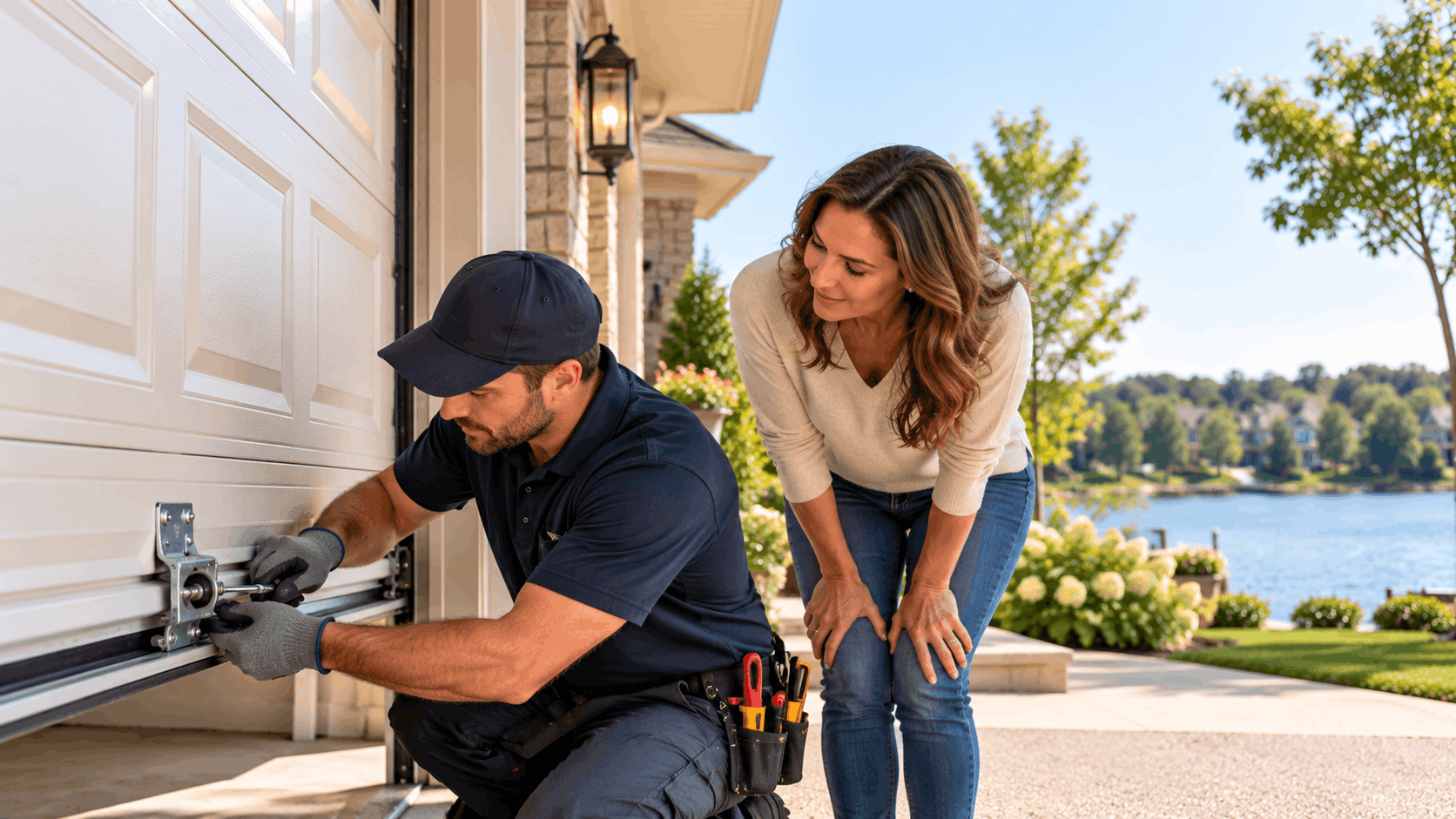
If a seller replaces an opener before listing, state law shapes what they can install. The main point is the SB 969 battery backup requirement, and it is not an optional feature. A smart opener can also be a selling point, but the battery backup is the law.
A seller who understands these rules avoids installing a non-compliant unit and avoids the civil penalty that comes with it. It also helps a seller decide whether to repair the existing opener or replace it. The right choice depends on the opener's age and condition.
SB 969 and Battery Backup on a Replacement Opener
Since July 1, 2019, SB 969 has required every residential garage door opener sold or installed in California to have a battery backup that operates during an electrical outage. Violations carry a $1,000 civil penalty. A replacement residential garage door may not be connected to an opener that does not comply.
This is statewide law, not a paid upgrade and not a fire-zone rule. The legislature passed it in response to deaths in the 2017 Northern California wildfires, where people could not open their garage doors during power cuts. The purpose is evacuation when the grid goes down and a resident cannot lift a heavy door by hand.
For a Lake Forest seller, the practical result is clear. A homeowner replacing an opener is buying a battery backup unit whether or not they asked for one. It applies to residential openers only, not commercial ones, and across the whole state.
SB 969 does not force an owner to upgrade an opener that is simply sitting there working. It applies when the opener is sold or installed. So a seller who keeps the existing compliant opener is fine, while a seller installing a new one gets the battery backup as part of the job.
Smart Wi-Fi Openers and What Buyers Look For
A smart Wi-Fi opener with MyQ setup lets a homeowner open, close, and monitor the door from a phone app. In newer Lake Forest tracts like Baker Ranch, buyers often expect app control as a standard feature. A door that connects to a phone reads as current and convenient.
Adding one makes sense when a seller is already replacing the opener or when the existing unit is dated. Pairing a smart opener with the required battery backup covers both the law and the feature buyers want. A smart Wi-Fi opener and MyQ setup handles the app side.
On an older home with a working but basic opener, a smart unit is a judgment call. If the opener is sound and compliant, the money might go further on cosmetic or safety fixes. The decision depends on the buyer pool for that particular tract.
For sellers in the newer west-side communities, app control is often an expectation rather than a bonus. In the older El Toro core, it is more of an extra that may or may not move the needle. A tech can help weigh where it pays off.
Repair or Replace the Existing Opener
A noisy or slow opener can sometimes be repaired rather than replaced. Worn gears, a tired control board, or a failing sensor can often be fixed, which restores quiet, reliable operation. An opener repair is the lower-cost path when the unit is otherwise sound.
A pre-1993 unit is a different story. The manufacturer position is that openers made before 1993 should be replaced rather than repaired, because they predate the entrapment-protection mandate. Patching a unit that old does not add the modern safety a buyer's inspector expects.
The decision comes down to age and function. A relatively recent opener that is just noisy is usually worth repairing. A unit from the El Toro era, or one that is slow, unreliable, and non-compliant, is usually worth replacing before listing.
Replacing an old opener also brings the door into line with current law through the battery backup requirement. For a seller, that removes a possible inspection note and modernizes the door in one step.
Need Help in Irvine?
Urgent Garage Doors serves Irvine and all of Orange County.
What These Pre-Listing Repairs Typically Cost in Orange County?
Sellers want to budget before they commit, so here are the typical Orange County ranges for the work. These are typical market ranges for the area, never a quote or a fixed price from our team. The actual price for a specific garage depends on that garage and is given in writing before work begins.
| Repair | Typical Orange County Range |
|---|---|
| Torsion spring replacement | $150 to $300 |
| Extension spring replacement | $150 to $250 |
| Cable repair | $150 to $300 |
| Door balancing and tension adjustment | $75 to $150 |
| Opener installation | $250 to $600 |
| Battery backup installation | $200 to $400 |
| Panel replacement | $250 to $800 per panel |
Spring, Cable, and Balance Repair Ranges
The core function repairs fall in a predictable band for Orange County. Torsion spring replacement runs $150 to $300, and extension spring replacement runs $150 to $250. The difference reflects the two spring systems and the door they serve.
Cable repair runs $150 to $300, which is why pairing it with spring work during one visit makes sense. Replacing the spring while the cable is already worn risks a second failure, so handling both at once is often the smarter spend. The combined visit saves a return trip during escrow.
Door balancing and tension adjustment runs $75 to $150. This is the lower-cost fix for a door that will not hold position on the balance test. It restores the spring tension so the door behaves correctly on the way up and down.
These ranges cover the mechanical fixes most likely to be flagged in an inspection. For a seller, they represent the cost of removing the biggest mid-escrow failure risks.
Opener, Sensor, and Backup Ranges
Opener work spans a wider band depending on what the job involves. Opener installation runs $250 to $600, with belt drive costing more than chain drive. Opener repair runs $75 to $200 when the existing unit is worth saving.
A smart Wi-Fi opener and MyQ setup runs $150 to $300, and battery backup installation runs $200 to $400. For a seller replacing an opener, the battery backup is part of meeting state law, not an add-on to skip. Keypad and remote programming runs $45 to $85.
Safety sensor alignment and repair runs $75 to $150. Given how often misaligned or dirty photo eyes cause a door to reverse on its own, this is one of the lower-cost fixes with a direct effect on how the door shows. A buyer who sees a door bounce back for no reason does not know the fix is this simple.
Together these ranges cover the opener and safety-system work that keeps a door compliant and reliable. Matching the repair to the opener's age keeps the spend sensible.
Cosmetic and Track Repair Ranges
The surface fixes that lift curb appeal sit at the affordable end for most jobs. Panel replacement runs $250 to $800 per panel, depending on the door and the panel. Weatherseal and insulation retrofit runs $150 to $400.
Track repair and realignment runs $125 to $300, which covers cleaning, straightening, and squaring the tracks so the door runs smooth. A quiet roller and hardware upgrade runs $150 to $300. For a home with bedrooms over the garage, that upgrade targets a noise complaint directly.
A preventive maintenance visit runs $99 to $149 per visit and includes a written report of what was found and what is recommended. For a seller who wants a clear picture of the door's condition before listing, that report is a useful starting point. It separates the must-fix safety items from the nice-to-have cosmetic ones.
These cosmetic ranges are what let a seller improve how the door shows without the cost of a full replacement. In many cases, a few hundred dollars of surface work is all a sound door needs.
When a Full Door Replacement Pays Off Before Listing
Sometimes the door is past repair, and a new one is the better pre-listing spend. Sectional garage door replacement runs $800 to $2,500, and an insulated steel garage door runs $900 to $2,500. A carriage-house garage door runs $1,200 to $4,500.
A full replacement makes sense when the door is badly dated, the panels are discontinued, or the cost of piecemeal repairs approaches the cost of a new door. An old one-piece tilt-up on an El Toro-era home is a common case where a modern sectional door transforms the front elevation. The upgrade can shift how the whole house reads from the street.
A sectional garage door replacement or an insulated steel door gives a buyer a clean, modern surface with no deferred maintenance. For a seller whose door is the weak point of the front, that can be the repair that returns the most.
The call comes down to the door's condition against the repair cost. When the repairs stack up or the style is beyond matching, a new door is the stronger investment before listing.
HOA Approval and Permits Before You Change the Door in Lake Forest
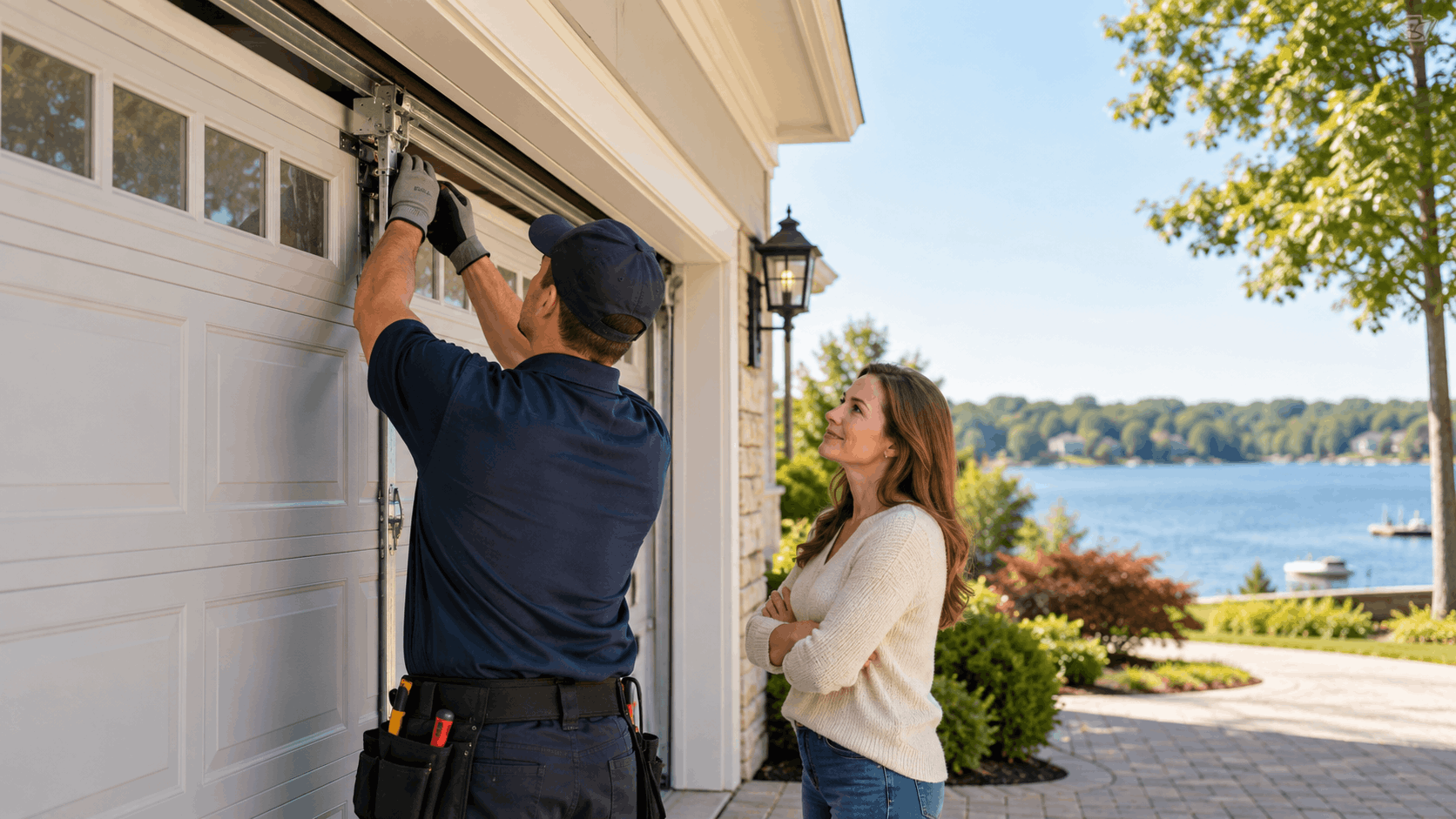
A seller who swaps a visible door or changes its color may need association sign-off first, and that timing can hold up a listing. Lake Forest has association structures tied to its original lakes, and the City of Lake Forest handles permits. Both need to be factored into the schedule before a new door gets ordered.
Starting the approval process early keeps it from delaying the listing date. A seller who orders a door first and asks the association later can end up with a product they are not allowed to install. The order of operations matters.
Architectural Approval Comes First Under Davis-Stirling
Under the Davis-Stirling Act, association review covers style, panel design, color, and visible hardware. Most Orange County master-planned communities treat a garage door as a street-facing exterior modification that requires written architectural approval before installation. Approval must come before the order.
That review can add several weeks to the timeline. A seller planning a new door before listing should start the application early, well ahead of the intended listing date. Ordering a door that the association later rejects wastes both time and money.
Approval from a master association does not substitute for a city building permit where one applies. The two are separate steps that both have to be cleared. A seller should confirm the association's current requirements directly, since review rules and timelines can change.
For sellers in the 1990s Foothill Ranch and Portola Hills communities and in Baker Ranch, this architectural review is a standard part of changing a street-facing door. Building the approval window into the listing plan avoids a scramble later.
The Lake Forest Club Memberships You Cannot Opt Out Of
The original Lake Forest development was built around two private man-made lakes, each with a membership club attached to the surrounding tracts. Homes in those tracts carry membership in the Lake Forest Beach and Tennis Club or the Lake Forest Sun and Sail Club as an incident of ownership. That is not an optional subscription an owner can drop.
Because membership comes with the home, the association structure is not something the owner chose and cannot leave. Those associations approve exterior changes whether the owner wanted that structure or not. For a door or color change, that means the club's architectural process applies.
This is the defining fact of those lakeside neighborhoods, and it shapes who signs off on a new door. A seller in one of those tracts has to route the change through the club's review before ordering. Skipping that step risks a forced change after installation.
Sellers in these neighborhoods should identify which club governs their tract and contact it early. The review adds time, so folding it into the pre-listing schedule keeps the sale on track.
Who Confirms Whether a Permit Applies
The City of Lake Forest handles permits, plan check, and inspections. Whether a door or opener replacement needs a permit is confirmed for the specific address, not set by one county-wide rule. The city building department is the authority on any given job.
Structural work, such as widening an opening or altering the header, is generally what triggers a permit rather than a like-for-like door swap. A same-size door replacement in an existing opening is a different matter, and the city confirms the position for the particular property. A seller should ask the city directly rather than assume.
Needing a permit also removes the under-$1,000 unlicensed-work exemption in Business and Professions Code section 7048. That exemption was raised from $500 to $1,000 by AB 2622 effective January 1, 2025, and it fails at any value if the work requires a building permit or if the person employs anyone on the job. So a permitted job is licensed work regardless of its cost.
The practical takeaway is to let the city confirm the permit position for the address and to use a licensed contractor for the work. That keeps the job clean on both the permit and the licensing side.
Need Help in Irvine?
Urgent Garage Doors serves Irvine and all of Orange County.
How Our Team Handles a Pre-Listing Garage Door Job
A seller working with Urgent Garage Doors gets a licensed, local team that handles the full pre-listing job. From the estimate to the written price to haul-away, the process is built to fit a seller's timeline. Here is what working with us looks like.
We work across Lake Forest on all major brands, from the El Toro core to Baker Ranch on the west side. The goal on a pre-listing job is a door that passes inspection, shows well, and does not surprise anyone during escrow. We handle the safety, function, and cosmetic work in one coordinated visit where the job allows.
Licensed, Verifiable, and Local to Orange County
Urgent Garage Doors holds California license CSLB #1055150, under classification C-61/D-28, Doors, Gates and Activating Devices. That classification covers sectional and rolling doors, torsion and extension spring systems, operators, control boards, safety sensors, and activating devices. It is the correct license for garage door work.
The license is verifiable free at cslb.ca.gov, where the classification, status, bond, and workers compensation are all public record. A seller can confirm the license before any work starts. C-28 is Lock and Security Equipment and is not the garage door license, so the right classification matters.
The storefront is at 76 Ashford, Irvine, which keeps the team close to Lake Forest and the rest of Orange County. Founded in 2017, the company has more than eight years of experience across the area. The Google Local Services listing carries the Google Guarantee badge.
Being local and licensed means a seller gets a contractor who knows the Lake Forest housing eras and the association structures that govern exterior changes. That local knowledge speeds up a pre-listing job.
On-Site Estimate and Written Price Before Work Starts
We offer a free on-site estimate for new garage door installations. A tech looks at the actual door, the opening, and the hardware, which is the only way to price a job accurately. For a seller, that means a clear picture of what the door needs before committing.
A written price is available before work begins. For a pre-listing job where the seller is weighing repair against replacement, having the price in writing helps the budget decision. The written price covers what the work involves so there are no surprises.
California Business and Professions Code section 7159 requires a written home improvement contract for work over $500. That is a legal requirement, separate from the licensing threshold. For most door replacements and larger repairs, the written contract is part of the job.
Between the free estimate for new doors and the written price before work starts, a seller knows what they are spending ahead of time. That clarity fits the pre-listing goal of controlling cost and timing.
Truck Stock, Same-Visit Repairs, and Haul-Away
Our trucks carry common torsion spring sizes, so a spring replacement is often completed on the same visit. For a seller on a listing deadline, that speed matters. Not every job finishes in one trip, but stocked trucks mean many common repairs do.
On a new door installation, removing and hauling away the old door is included. A seller does not have to deal with disposing of a heavy old door or an old opener. The old unit leaves with the crew.
Carrying stock also helps on same-day repairs when a door fails close to a showing. A broken spring or a door stuck off its track can often be handled quickly rather than waiting days. That keeps a listing on schedule.
Between truck stock, same-visit repairs where possible, and haul-away on new installs, the pre-listing job is built to be efficient. A seller gets the door handled without a string of return trips.
24/7 Response Across Lake Forest
Our team takes emergency calls 24 hours a day, 7 days a week, every day of the year including holidays. The response window is 30 to 60 minutes anywhere in Orange County. That matters when a door fails right before a showing or an open house.
A door that jumps its track or breaks a spring the morning of a showing is the kind of problem a seller cannot wait on. A 24/7 emergency response means the seller is not stuck with a broken door while buyers are on the way. The crew can get there inside the response window across Lake Forest.
For sellers in the hillside communities like Portola Hills or the valley-floor tracts near El Toro Road, the same coverage applies. The team works the whole city. Access and fire-zone considerations sit differently in Portola Hills, but the service reaches it.
Having emergency coverage removes one of the stressors of selling a home. If the door fails at the worst moment, there is a licensed crew available to fix it fast.
Getting Your Lake Forest Door Ready to List
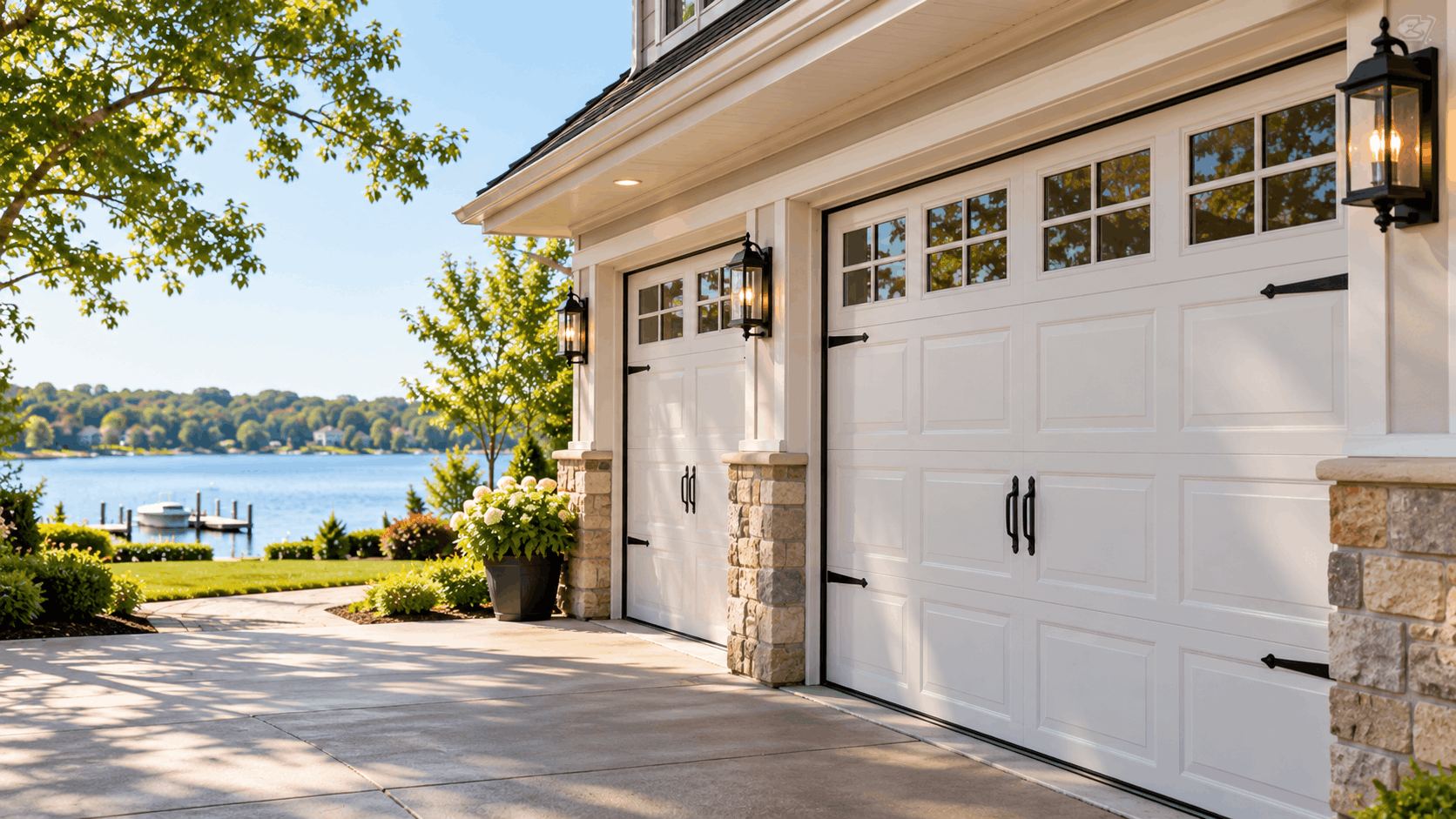
If your garage door needs a pre-listing check or repair, our licensed team can look at it, confirm what it needs, and give you a written price before any work starts. Call Urgent Garage Doors at (949) 529-7743 or reach us through our contact page to schedule a visit. We cover Lake Forest and the surrounding Orange County cities every day of the week.
Frequently Asked Questions
- Which garage door repairs add the most value before a Lake Forest sale?
- Three groups of repairs carry the most weight. Safety fixes like a working auto-reverse and aligned photo eyes matter because inspectors check them. Function fixes like sound springs, cables, and proper balance keep the door from failing mid-showing. Visible cosmetic fixes like a panel replacement, fresh weatherseal, and clean, straight tracks lift curb appeal. Together these address what buyers and inspectors notice most, which protects both the price and the escrow timeline.
- Do I need a new garage door to sell, or will repairs be enough?
- Many Lake Forest sellers only need repairs. A sound door with worn springs, a dented panel, or tired seals can usually be fixed for a fraction of a replacement cost. A full door replacement pays off when the door is past repair, the panel style is discontinued and cannot be matched, or the door is badly dated, like an old one-piece tilt-up on an El Toro-era home. A tech can tell quickly which path fits your door.
- How much do common pre-listing garage door repairs cost?
- These are typical Orange County ranges, not a quote. Torsion spring replacement runs $150 to $300, cable repair $150 to $300, and door balancing $75 to $150. Opener installation runs $250 to $600, opener repair $75 to $200, and safety sensor alignment and repair $75 to $150. Panel replacement runs $250 to $800 per panel. The actual price for your garage depends on that garage and is given in writing before work begins.
- Can I replace a garage door spring myself before listing?
- No. A torsion spring stores enough energy to cause serious injury and releases it instantly if a winding bar slips. This is the one component a homeowner should never adjust, wind, or replace. The safe test to run is the auto-reverse check: lay a flat 2x4 in the door path, confirm the door reverses on contact, and check the photo-eye beam is aligned and clear. Leave all spring work to a licensed technician.
- Does my HOA need to approve a new garage door in Lake Forest?
- Usually, yes, for a visible exterior change. Under the Davis-Stirling Act, association review covers style, panel design, color, and visible hardware, and approval must come before the order. Homes in tracts tied to the Lake Forest Beach and Tennis Club or the Sun and Sail Club carry that membership as an incident of ownership, so those associations approve exterior changes. Review can add several weeks, so confirm your association's current requirements and start the application early.
- Do I need a permit to replace a garage door in Lake Forest?
- The City of Lake Forest handles permits, plan check, and inspections, and the permit position is confirmed for your specific address. Structural work like widening an opening or altering the header is generally what triggers a permit, rather than a same-size door swap. Ask the city building department directly rather than assuming. Note that needing a permit also removes the under-$1,000 unlicensed-work exemption, so permitted work is licensed work regardless of cost.
- If I replace the opener, does it have to have a battery backup?
- Yes. Since July 1, 2019, SB 969 has required every residential garage door opener sold or installed in California to have a battery backup that operates during a power outage, with a $1,000 civil penalty for violations. A replacement residential door may not be connected to a non-compliant opener. This is statewide law passed after the 2017 Northern California wildfires, not an optional upgrade. So a seller installing a new opener gets the battery backup as part of the job.
- What will a home inspector check on my garage door?
- An inspector checks the auto-reverse, the photo-eye function, the door balance, and the condition of the springs and cables. The auto-reverse is tested with a flat 2x4 across the opening, and the photo eyes with a broken beam while the door closes. Balance is checked by disconnecting the opener and raising the door by hand. Failing any of these can become a buyer repair request during escrow, which is why handling them before listing protects the deal.
- How fast can someone come out if my door fails right before a showing?
- Urgent Garage Doors takes emergency calls 24 hours a day, 7 days a week, including holidays, with a response window of 30 to 60 minutes anywhere in Orange County. That covers all of Lake Forest, from the El Toro core to the hillside communities like Portola Hills. Because the trucks carry common torsion spring sizes, many failures like a broken spring or an off-track door can be handled quickly so your showing stays on schedule.
- My garage is an El Toro-era home with an old opener. Should I replace it before selling?
- Likely yes. An opener made before January 1, 1993 predates the federal entrapment-protection mandate that modern openers meet under UL 325. The manufacturer position, LiftMaster for example, is that pre-1993 openers should be replaced rather than repaired. Replacing it adds the auto-reverse and photo-eye protection a buyer's inspector expects, and because it is a replacement, the new unit will include the battery backup that California law now requires.
Licensed garage door repair professionals serving Irvine and Orange County.
Licensed in California · License #1055150
Why trust Urgent Garage Doors?
Founded in 2017, Urgent Garage Doors is a licensed and insured garage door services serving Irvine and Orange County. All content is reviewed by our licensed technicians.

Need Help in Irvine?
Urgent Garage Doors serves Irvine and all of Orange County.
Related Articles
Foothill Ranch Lake Forest Garage Door Service: Tract Home Service Plans
How garage door service plans work for identical-build tract homes in Foothill Ranch and Lake Forest, from matched maintenance to HOA-compliant repairs and local response.
Garage Door Repairs Costa Mesa Buyers Ask For After a Home Inspection
The garage door repairs Costa Mesa buyers ask for after a home inspection, from photo-eye and spring fixes to battery backup, with local causes, costs and permit rules.
What a 24/7 Garage Door Company Actually Stocks on the Truck - Why Some Fixes Finish in One Visit
See exactly what a 24/7 garage door truck stocks - springs, cables, openers, and more - and why the right parts on board finish most Irvine repairs in one visit.