The 19th Street and Triangle Pockets: Garage Door Access on Costa Mesa's Busiest Blocks
Key Takeaways
- On busy 19th Street and Triangle blocks, a door must open on the first try because there is no room to idle in a narrow alley or on a through-route.
- The west-side marine layer brings corrosion to springs, cables and tracks, so cables fray from the inside and reach their cycle rating earlier than inland hardware.
- Torsion springs are rated in cycles, commonly around 10,000, which a main-entrance door cycling four times a day reaches in roughly seven years.
- Battery backup is required on every residential opener sold or installed in California since July 1, 2019 under SB 969, with a $1,000 civil penalty, not an optional upgrade.
- California required auto-reverse and a sensor under AB 3600 in 1990, with federal coverage for openers made after January 1, 1993 under UL 325; photo-eye faults are the top cause of a door reversing on its own.
- Garage door work is licensed under CSLB C-61/D-28, not C-28, and the unlicensed-work exemption rose to $1,000 under AB 2622 effective January 1, 2025.
- Typical ranges include torsion spring replacement $150 to $300, opener installation $250 to $600 and sectional door replacement $800 to $2,500, with a written price before work begins.
- Urgent Garage Doors offers 24/7 emergency service with a 30 to 60 minute response window across Orange County from its Irvine storefront at 76 Ashford.
In This Article
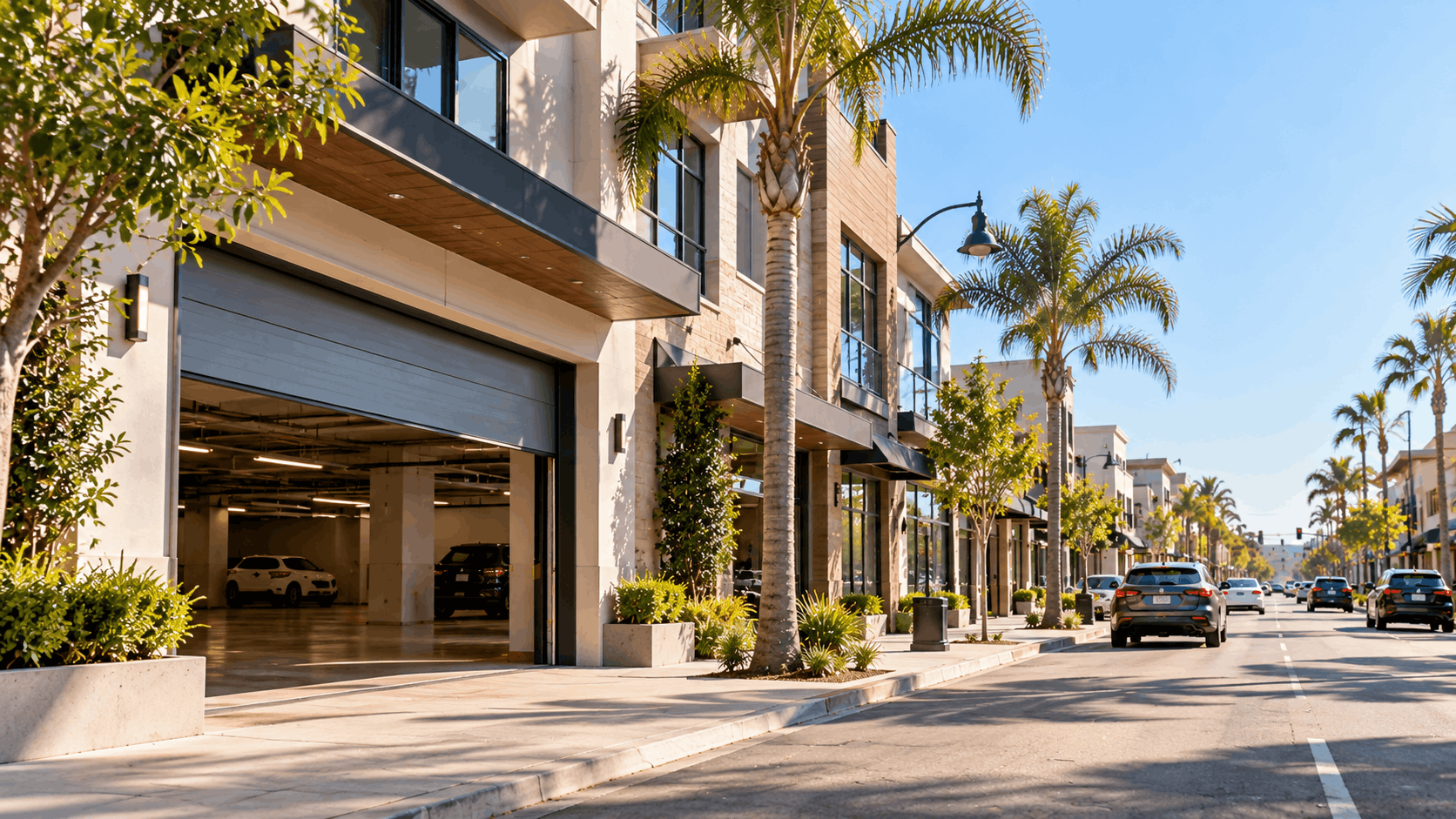
Anyone who has tried to back out of a garage along 19th Street during the afternoon rush knows the feeling. The alley is narrow, the driveway is shared, and there is no shoulder to pull onto while the door decides whether it wants to lift. On these busy Westside and Eastside blocks, a garage door that hesitates is not a minor annoyance. It can leave a car half in the street with traffic stacking up behind it.
The pockets around 19th Street and the Triangle near Newport Boulevard carry some of the oldest residential stock in Costa Mesa, mixed with denser attached product closer to South Coast Metro. That range of build eras means a service call on one block looks nothing like a call three streets over. One home has a modern sectional door with photo eyes, the next still carries a one-piece tilt-up from the postwar years.
What the 19th Street and Triangle Pockets Are, for Garage Door Work?
The era decides the job in this part of town. Costa Mesa grew up as postwar California development, and the housing stock south and west of 17th Street tells that story in its driveways and garage doors. Knowing what the original builder put in tells us what we are likely to find when the door comes apart.
Where These Blocks Sit in Costa Mesa
19th Street runs through the Westside, west and northwest of 17th Street toward the Santa Ana River. The Triangle sits near where Newport Boulevard, which is State Route 55, carries traffic south through the city toward Newport Beach. Harbor Boulevard runs parallel to the east, carrying its own heavy local load.
These are not quiet cul-de-sac streets. They are through-routes and feeder blocks, which is exactly why access becomes the headline of so many jobs here. A door opening onto a busy street has no margin for error.
The Eastside, which runs south of 17th Street toward the Newport Beach border, rounds out the picture. It carries postwar cottages and ranch houses on larger lots, many now holding accessory dwelling units. The Westside Costa Mesa character and the Eastside character together set the stage for the work.
The Build Era and What the Original Builder Installed
Eastside Costa Mesa is postwar cottages and ranch houses, many on larger lots. When these homes went up, the garage door the builder hung was not the insulated sectional most people picture today. On older lots we still find one-piece tilt-up doors, a different product entirely from the sectional doors that replaced them.
A tilt-up swings out and up as a single slab, and it needs clear space in front to do it. A sectional door rolls up in panels on tracks and stays within the opening. The two use different hardware, so a repair or a replacement on a tilt-up is a different conversation than a panel swap on a sectional.
The Westside stock is mixed. Creative and industrial uses sit beside small houses and duplexes, so the door on one parcel may be decades newer than the one next door. Older hardware, worn springs and outdated openers turn up regularly, and some of these openers predate the entrapment-protection rules we cover below.
Where a ranch house still carries its original hardware, the whole system tends to be at the end of its service life at once. Replacing a spring without inspecting the cables, drums and rollers is how a second failure follows a few weeks later.
Alley-Loaded and Rear Garages Change the Job
Alley and rear-loaded garages are common on the Eastside, and that layout changes how we approach the work. The door often faces a narrow alley rather than a wide street-facing driveway, so there is limited room to stage a ladder, a truck and the old door panels during a swap.
Detached garages behind the house add another wrinkle. The sight lines are different, and the door swing has to be checked against fences, parked cars and the alley width before anything is ordered. A door that clears fine on a drawing can foul on a real alley.
Rear-loaded access also affects how a tech moves materials. On a busy block there may be no legal place to park the service truck close to a rear garage, so the job gets planned around that from the first call. None of this changes the mechanics of the door itself, but it changes the time and the staging.
For tilt-up doors behind the house, the out-and-up swing matters even more in a tight alley. That clearance question is part of why many owners convert to a sectional door when the old one finally gives out.
Get Your Free Quote
Tell us about your garage door and we'll get back to you within 30 to 60 minutes.
Access Problems on the Busiest Blocks
Garage door access is the real subject on high-traffic streets. A door that sticks, reverses or refuses to open becomes a traffic problem, not just a repair ticket. The constraints here are physical and specific, so it helps to see them laid out.
| Access Situation | Where It Shows Up | What It Affects |
|---|---|---|
| Narrow alley, no shoulder | Eastside rear-loaded garages | No place to idle if the door sticks |
| Shared driveway | Denser attached product toward Metro | Clearance and staging for the work |
| Tight motor court | South Coast Metro condos and townhomes | Headroom and drive type choice |
| Busy street frontage | 19th Street and Triangle blocks | Door must clear on the first try |
Why a Door Has to Open Right the First Time Here
On a busy street or a narrow alley there is nowhere to wait. If the door sticks halfway or reverses as a car is pulling in, the driver is stuck blocking traffic or an alley with nowhere to go. That is why reliability matters more on these blocks than almost anywhere else in the city.
Most doors that reverse for no visible reason are a photo-eye problem. Misalignment, a blocked beam or a dirty lens is the most common cause of a door that will not close or bounces back up. The sensors sit no higher than six inches off the floor on each side of the opening, and anything in that beam path stops the door.
A door that opens slowly, binds or drops is often a balance problem instead. When a door is out of balance the opener fights the whole weight, which stresses the motor and the hardware. A properly balanced door holds its position with the opener disconnected, and we check that on every call.
If the door simply will not move, the fastest path is a trained eye on the springs, cables, sensors and opener together. Our garage door will not open or close service exists for exactly the stuck-on-a-busy-block scenario.
Shared Driveways and Motor Courts Toward South Coast Metro
South Coast Metro is the dense quarter around South Coast Plaza and the Segerstrom Center, mostly attached 1970s and 1980s condominiums and townhomes. These carry shared driveways, motor courts, and tuck-under and tandem parking. The layout squeezes clearance in ways a single-family driveway never does.
Tandem parking means one car behind another in a single-depth run, so the door and the opener have to serve a deeper garage. Tuck-under parking, where the garage sits beneath living space, often comes with lower headroom and the added concern of a quiet door under a bedroom. Both change which opener makes sense.
Shared driveways also mean a neighbor may be using the same access during the job. We plan staging so the work does not block a shared run longer than it has to. For South Coast Metro product, the drive type and the mounting are chosen around the real clearance, not a generic layout.
Association rules often govern this product too, which we cover in the permits section. Style and hardware changes on attached product usually need sign-off first.
Headroom and Drive Type on Tight Lots
There are three common opener drive types, and the right one depends on the garage. Chain drives are the workhorse and the most economical. Belt drives run quieter, which matters a great deal when there is a room above the garage, as there often is in tuck-under product.
Jackshaft openers are the answer when headroom is low or the ceiling holds storage. A jackshaft mounts on the wall beside the door and drives the torsion bar directly, leaving the ceiling clear. On a tight Metro garage or a shortened Eastside bay, that wall-mounted design can be the only clean fit.
Choosing a drive is not only about noise and headroom. The weight and height of the door, the cycle demand and whether the garage is the main entrance all factor in. A heavily used door earns a sturdier setup.
Our opener installation work matches the drive to the garage rather than installing one size for every home. On a low-headroom bay near the Triangle, that usually points toward a belt or a jackshaft.
Live-Work Lofts and Duplexes on the Westside
The Westside mix of live-work lofts, small houses and duplexes near the Santa Ana River changes who uses the door and how often. A live-work space may run the door many times a day for deliveries and comings and goings, far beyond a typical household.
A duplex shares a building between two households, and each garage door earns its own use pattern. When a garage is the main entrance rather than a weekend car store, the cycle count climbs fast. That matters because springs are rated in cycles, not years.
High daily use is the single biggest driver of early spring wear on these blocks. The hardware does not know how old it is, only how many times it has opened and closed. A door cycled several times a day reaches its rated life years sooner than one opened on weekends.
For these high-use Westside doors, matching the spring to the real duty is the fix that lasts. That is a conversation about cycle rating, which the next sections walk through in full.
Need Help in Irvine?
Urgent Garage Doors serves Irvine and all of Orange County.
The West-Side Marine Layer and What It Does to Door Hardware
There is one real local condition worth understanding here. The marine layer reaches the western neighborhoods harder than the inland streets near the 405, so corrosion on springs, cables and tracks is a west-side conversation first. On 19th Street and the blocks toward the river, it is part of the diagnosis.
How Moisture Reaches Springs, Cables and Tracks
The marine layer rolls in off the coast and settles over the western neighborhoods more than the inland tracts. That damp, salt-carrying air reaches the metal parts of a garage door system every day. Springs, cables, tracks, hinges and bearings all sit exposed to it.
What moisture does to steel is corrosion, plain and simple. It does not change how a spring is rated, but it does bring a spring to the end of its cycle rating earlier than clean, dry air would. The spring still has a cycle count from the manufacturer, and corrosion just means it reaches the end of that count sooner.
On tracks, surface rust can roughen the path the rollers travel. On hinges and bearings, corrosion adds friction that the opener then has to fight. None of this is a sudden failure, but it is why a west-side door often shows its age before an identical inland one.
When we service a Westside door, we look at the whole metal system rather than the one part that failed. Addressing corrosion across the hardware is what keeps the next problem from showing up right behind this one.
Why Cables Fail Before They Snap
Garage door cables are wound from many steel fibers twisted together. Corrosion attacks those fibers, often from the inside of the strand where it is hard to see. A cable can look intact on the surface while fibers fray within.
That is why a cable rarely snaps out of nowhere. It frays, loses strength strand by strand, and then one day it gives. On a door that is the main entrance on a busy block, a cable failure can leave the door jammed at the worst possible moment.
Inspecting cables alongside a spring replacement is how we prevent a second call weeks later. When a spring breaks on a west-side door, the cables have lived through the same damp air and the same cycle count. Replacing the spring and ignoring the cables invites a repeat.
Our cable repair work checks the cable condition as part of the job, not as an afterthought. A frayed cable caught during a spring visit saves a return trip.
Inland Blocks Near the 405 and Temperature Swing
Move inland toward the Eastside tract blocks and the 405, and the conversation changes. The marine layer is lighter there, so salt corrosion is less of the story. What stresses hardware instead is seasonal temperature swing.
Temperature swing is hard on wood doors in particular. Wood expands and contracts with heat and cold, and over years that movement can warp a panel or loosen joints. A warped wood door binds in its tracks and throws off the balance the opener relies on.
Older hardware feels the swing too. Metal parts expand and contract, and worn bearings and hinges that were already loose get looser. The result is a door that is noisier and rougher than it was a few seasons ago.
So the diagnosis depends on which side of 17th Street the home sits on. A west-side door points us toward corrosion first, while an inland Eastside door points toward warping and worn hardware. Either way, catching it early keeps a track repair and realignment from turning into a bigger job.
Spring and Cable Life on High-Use Doors
On busy-block homes where the garage is the main entrance, cycle count matters more than calendar years. A torsion spring is rated by the manufacturer in cycles, and the honest way to talk about spring life is in those cycles rather than a flat number of years.
Cycles, Not Years: What a Standard Spring Gives You
One cycle is one full open and close. Standard residential springs are commonly rated around 10,000 cycles. For a typical household that works out to roughly seven to twelve years of service.
The catch on these blocks is that many of these doors are not typical households. Where the garage is the main entrance and the door cycles several times a day, the spring reaches that 10,000-cycle rating far sooner. A door opened four times a day hits around 10,000 cycles in roughly seven years.
A live-work loft or a busy family home that runs the door even more gets there faster still. The spring is not failing early in any defective sense. It is simply using up its rated cycles at a higher rate than a weekend-use door.
That is why we ask how the door gets used, not just how old it is. An eight-year-old spring on a main-entrance door is a different risk than an eight-year-old spring on a rarely used second bay.
When High-Cycle Springs Make Sense Here
High-cycle springs are available for exactly these heavy-duty situations. Where a door cycles many times a day, a high-cycle spring rated well above the standard count gives longer service before the next replacement. On a main-entrance door, that math often works in the owner's favor.
Door weight drives the spring choice too. Springs are sized to the actual weight and height of the door. A replacement door in a heavier material, such as insulated steel or a solid carriage-house design, needs springs matched to it rather than a reuse of the old set.
Reusing an undersized spring on a heavier door is a mistake that shows up fast. The spring works harder than it was rated for and gives out early. That is why a new door installation includes springs sized to the new door, not the old one.
For owners weighing it, we talk through the real duty and the door weight before recommending a spring. A heavier door and heavy daily use is the clearest case for high-cycle springs on these blocks.
Why Springs Are the One Thing an Owner Must Not Touch
A torsion spring stores a large amount of energy under tension. It releases that energy instantly if a winding bar slips during adjustment. That sudden release can cause serious injury, which is why spring work belongs to a trained, licensed tech.
This is not a case where a careful homeowner can manage with the right video. The tools and the technique exist because the failure mode is immediate and dangerous. There is no partial mistake with a loaded torsion spring.
The safe tests an owner can run are the ones that do not involve touching the spring at all, which the next section covers. Checking the auto-reverse and the photo-eye beam tells you plenty without any risk.
When the spring is the problem, our torsion spring replacement handles the winding and tensioning safely. It is the single clearest line between what a homeowner can do and what should be left to a tech.
Safety Rules and Tests That Apply on These Blocks
Entrapment protection and battery backup are the two rule sets that govern any opener work in California. Each has its own date and its own purpose, and they are easy to confuse. Here is each one explained once, with the right dates, plus the simple tests an owner can run safely.
Auto-Reverse and Photo-Eye Requirements
California required automatic reverse and a sensor under AB 3600 back in 1990. The federal requirement followed, covering openers manufactured for the United States after January 1, 1993. UL 325 is the standard those safety devices are built to.
In practice this works two ways at once. The opener must reverse the door within two seconds of contacting an obstruction, and nearly all openers add a non-contact system, the photo eyes mounted no higher than six inches off the floor on each side of the opening. Break that beam while the door is closing and it must stop and reverse.
Photo-eye faults are the most common cause of a door that reverses for no visible reason. Misalignment, a blocked beam or a dirty lens all break the connection the opener needs to close. On a dusty Westside alley, wind carries plant debris and grit onto the lenses, which is enough to stop the door.
Openers made before 1993 predate the federal entrapment-protection mandate. On older Eastside and Westside lots, that is worth knowing, and the manufacturer position is that pre-1993 openers should be replaced rather than repaired. Our safety sensor alignment and repair handles the common beam faults.
Battery Backup Is the Law, Not an Upgrade
Battery backup is a separate and later rule. Since July 1, 2019, SB 969 has required a battery backup on every residential garage door opener sold or installed in California. It carries a $1,000 civil penalty, and a replacement door may not be connected to an opener that does not comply.
The law came out of the 2017 Northern California wildfires, where people could not open their garage doors during power outages and could not evacuate. A battery backup lets the opener run when the grid is down. That is the whole point of the requirement.
Because it is the law, a homeowner replacing an opener in California gets a battery backup unit as part of the job. It is not an optional add-on tier. It applies statewide to residential openers, and it is attributed to SB 969, not to any energy code or fire-zone rule.
If an existing opener is simply sitting in place, the law does not force an upgrade. The requirement attaches at the point of sale or installation. Our battery backup installation covers compliant setups for a replacement.
The Two Tests an Owner Can Run Safely
There are tests a homeowner can run without any risk. The first is the 2x4 auto-reverse test. Lay a two-by-four flat across the opening under the door, and on closing the door must reverse within two seconds of contacting it. If it does not reverse, the contact-reverse system needs attention.
The second is the photo-eye test. With the door closing, break the beam with an object such as a broom handle at about six inches off the floor. The door must stop and reverse. If it keeps closing, the sensors need alignment or cleaning.
The balance test tells a spring problem from an opener problem. Disconnect the opener with the release cord, raise the door to waist height, and let go. A correctly balanced door stays put. A door that falls or rises is a spring problem, not an opener problem.
These three checks are safe because none of them touches the springs. Run them a couple of times a year on a high-use door, and they will catch most trouble before it strands a car on a busy block.
Need Help in Irvine?
Urgent Garage Doors serves Irvine and all of Orange County.
Permits, Associations and Licensing for Costa Mesa Door Work
Permits, association review and the correct contractor license all apply to door work near 19th Street and the Triangle. Each operates at a different level, so it helps to keep them separate. Where a rule is general, we keep it general.
Permits Run Through the City of Costa Mesa
For addresses inside the city, permits, plan check and inspections run through the City of Costa Mesa building division. Whether a door or opener replacement needs a permit is confirmed for the specific address, not by a single county-wide rule.
A like-for-like replacement that alters no structure generally does not require a permit. Swapping an old sectional door for a new one of the same size in the same opening is usually a straightforward exchange. The structure is untouched.
Altering the opening or the header is what tends to trigger a permit. Widening an opening or changing the framing is structural work, and that is where the building department gets involved. The city with jurisdiction confirms the position for the specific job.
There is one trap worth flagging. Santa Ana Heights, next to John Wayne Airport, is often listed as a Costa Mesa area, but its permits may run through the City of Newport Beach or whichever jurisdiction the parcel record shows. Confirm the authority from the parcel rather than the postal town, because a permit from the wrong city does not cover the address.
Association Review on Governed Streets
Some of the attached product toward South Coast Metro and the 1970s association-governed homes operate under California's Davis-Stirling Common Interest Development Act. On those streets, architectural review typically covers door style, panel design, color and visible hardware.
The important timing point is that approval comes before the order. A door fitted without approval can be required to come out at the owner's cost, which is an expensive way to learn the rule. The sign-off protects the streetscape the association is charged with keeping consistent.
Review can add time to a project, so owners planning a new door on a governed street should start the approval early. Submitting the style, color and hardware details up front keeps the install on schedule.
Association approval does not replace a city building permit where one applies. The two are separate approvals at separate levels. On a governed street that also needs a permit, both have to be in hand before work begins.
The Right License and the Unlicensed-Work Threshold
Garage door work in California is licensed under CSLB classification C-61/D-28, Doors, Gates and Activating Devices. That scope covers sectional and rolling doors, torsion and extension spring systems, operators, control boards, safety sensors and activating devices. C-28 is Lock and Security Equipment and is not the garage door license.
A license can be verified free at cslb.ca.gov, where the classification, status, bond and workers compensation are all public record. Urgent Garage Doors holds California license #1055150.
The unlicensed-work exemption in Business and Professions Code section 7048 was raised from $500 to $1,000 by AB 2622, effective January 1, 2025. The exemption also fails, at any value, if the work requires a building permit of any kind or if the person employs anyone on the job. A job cannot be split into sub-$1,000 slices.
A separate rule is often confused with it. Business and Professions Code section 7159 requires a written home improvement contract for work over $500. That is a contract requirement, not a licensing threshold, and the two are different figures for different purposes. Because a permitted job also loses the under-$1,000 exemption, permitted work goes to a licensed contractor whatever its size.
What Garage Door Work Costs in This Part of Costa Mesa
Here are the typical Orange County ranges for the common jobs on high-use alley and busy-street doors. These are typical market ranges, not a quote or a fixed price. The actual price for a specific garage depends on that garage, and a written price is available before work begins.
| Job | Typical Range |
|---|---|
| Torsion spring replacement | $150 to $300 |
| Extension spring replacement | $150 to $250 |
| Cable repair | $150 to $300 |
| Door balancing and tension adjustment | $75 to $150 |
| Opener installation | $250 to $600 |
| Opener repair | $75 to $200 |
| Battery backup installation | $200 to $400 |
| Safety sensor alignment and repair | $75 to $150 |
| Off-track door repair | $125 to $275 |
| Panel replacement | $250 to $800 per panel |
| Sectional garage door replacement | $800 to $2,500 |
Springs, Cables and Balance
The most common high-use repairs on these blocks are spring and cable work. Torsion spring replacement runs $150 to $300, and extension spring replacement runs $150 to $250. Which spring type a door uses depends on the original build and the available headroom.
Cable repair runs $150 to $300. On a Westside door, where corrosion frays cables from within, pairing a cable inspection with a spring job often falls inside a single visit. Catching a frayed cable then is cheaper than a second call after it snaps.
Door balancing and tension adjustment runs $75 to $150. A door that is out of balance makes the opener work harder and wears the whole system faster. A balancing and tension adjustment is one of the lower-cost ways to extend the life of the hardware.
These ranges are typical for Orange County. The real figure for a specific door comes in writing before work starts.
Openers, Battery Backup and Sensors
Opener work covers a wide range depending on the drive type and the job. Opener installation runs $250 to $600, with belt drives costing more than chain drives. Opener repair runs $75 to $200 when the existing unit can be fixed rather than replaced.
Battery backup installation runs $200 to $400. Remember that on a new opener in California, the battery backup is required under SB 969, so it is part of a compliant install rather than a separate choice.
Safety sensor alignment and repair runs $75 to $150. Given that photo-eye faults are the top cause of a door reversing on its own, this is often the fix for the most common complaint on a busy block.
For owners weighing a smart opener, opener and smart access options add remote control and monitoring. The drive type still comes down to headroom and noise, as covered earlier.
Off-Track, Panels and New Doors
Off-track door repair runs $125 to $275, and track repair and realignment runs $125 to $300. A door jumps its track when a roller fails, a cable lets go or something strikes the door, and on a tight alley that can leave the door stuck mid-opening.
Panel replacement runs $250 to $800 per panel. On a sectional door, a single damaged panel can sometimes be swapped rather than replacing the whole door, which depends on the door's age and whether matching panels are still made. Our panel replacement service covers that assessment.
A full sectional garage door replacement runs $800 to $2,500. For an old tilt-up door behind the house, converting to a modern sectional often makes sense for both the clearance and the safety features. Removing and hauling away the old door is included in a new install.
Every one of these is a typical range. The specific price depends on the door, the hardware and the access, and it is given in writing before work begins.
Need Help in Irvine?
Urgent Garage Doors serves Irvine and all of Orange County.
How Urgent Garage Doors Handles Work on These Blocks
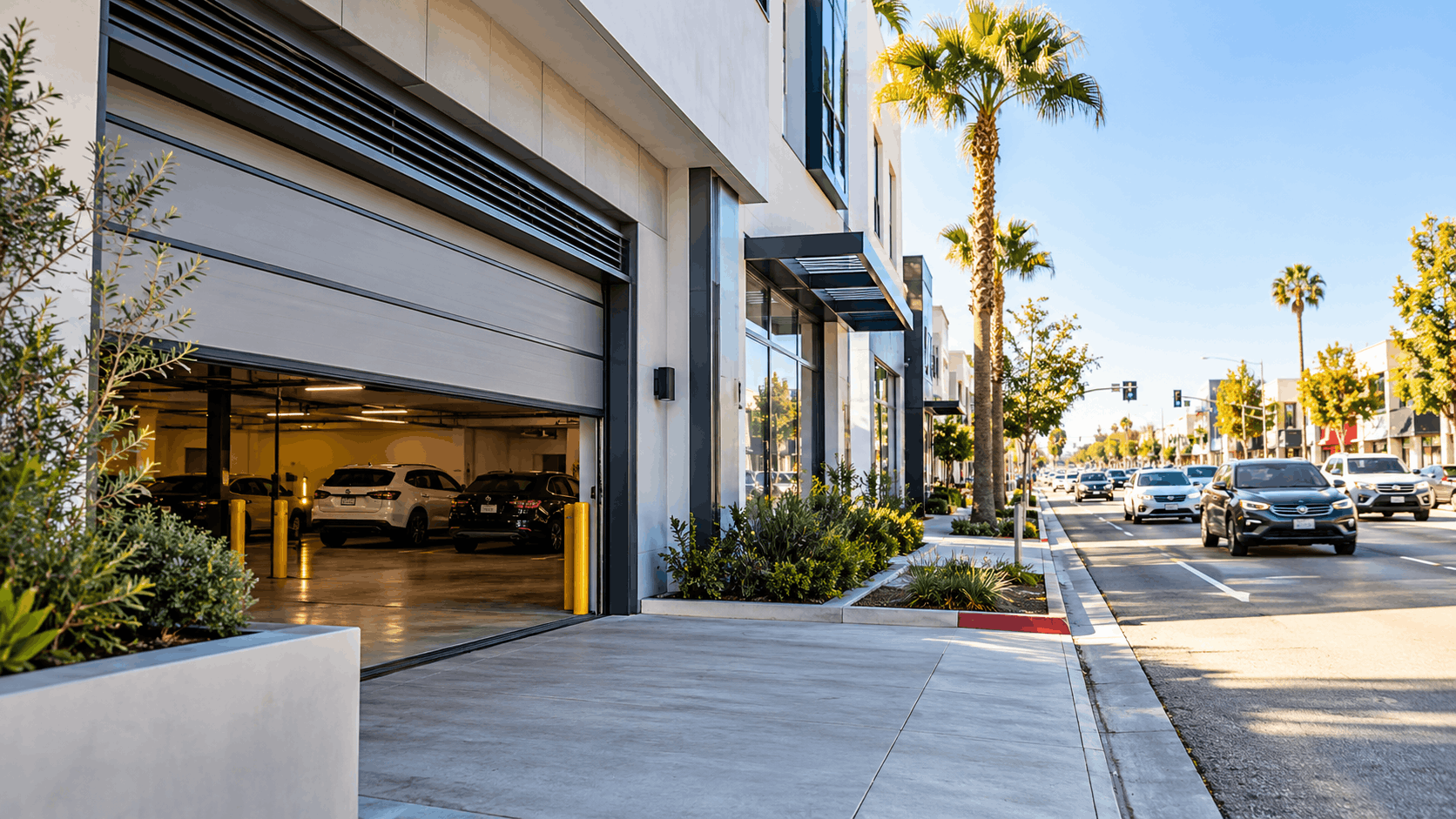
Working a job near 19th Street and the Triangle means planning around access from the first call. Our team runs out of Irvine and covers these Costa Mesa blocks with a process built for tight alleys and busy frontage.
On-Site Estimate and Written Price
For a new door installation, we offer a free on-site estimate. Seeing the actual opening, the access and the existing hardware is the only honest way to scope a job on a block where every lot differs. A phone quote cannot account for a shared driveway or a one-piece tilt-up behind the house.
A written price is available before work begins, and we provide it when the job calls for it or the customer asks. For work over $500, a written home improvement contract is required under state law anyway, so the written figure is standard on larger jobs.
Removing and hauling away the old door is included in a new installation. There is no separate charge for dragging the old panels out of a tight alley, which matters on these blocks where disposal is not simple.
Knowing the price before tools come out lets an owner make the decision with the full picture. That is how we prefer to work.
Truck Stock and Same-Visit Spring Work
Our trucks carry common torsion spring sizes. Because spring failure is the most common reason a high-use door quits, carrying stock means a spring replacement is often completed on the same visit rather than after a parts run.
That matters more on a busy block than almost anywhere. A broken spring can leave a car trapped behind a door that will not lift, and a same-visit fix gets the household moving again without a second appointment.
We do not promise that every replacement finishes on the first visit, since an odd size or a related failure can change the plan. But for the common cases, the part is on the truck.
Each preventive maintenance visit includes a written report of what was found and what is recommended. On a west-side door facing the marine layer, that report is where corroding cables and worn hardware get flagged before they strand you. Our preventive maintenance plan keeps that record over time.
24/7 Response Across Orange County
We take emergency calls and respond 24 hours a day, 7 days a week, every day of the year including holidays. A door that fails at a bad hour on a busy street does not wait for business hours, and neither do we.
The response window is 30 to 60 minutes anywhere in Orange County. From the storefront at 76 Ashford in Irvine, the Costa Mesa blocks around 19th Street and the Triangle are well within that reach.
We work on all garage door brands, including LiftMaster, Chamberlain, Genie, Craftsman, Clopay, Amarr, Wayne Dalton and CHI. Whatever the original builder or a previous owner installed, our team is set up to service it.
For the stuck-on-a-busy-block scenario, our 24/7 emergency repair is built around that exact window.
Getting Your Door Fixed on These Blocks
When a door quits on a busy Costa Mesa street, the fix starts with a look at the actual springs, cables, sensors and opener, a written price before work begins, and common torsion spring sizes already on the truck. Call Urgent Garage Doors at (949) 529-7743 to get a tech out to your block, or reach us through our contact page. You can verify our California license #1055150 free at cslb.ca.gov, and read more on garage door safety standards at the Consumer Product Safety Commission.
Frequently Asked Questions
- My garage door reverses for no reason on a busy street. What is wrong?
- The most common cause is a photo-eye fault. Misalignment, a blocked beam or a dirty lens stops the door from closing and sends it back up. Check the sensors on each side of the opening, mounted no higher than six inches off the floor, and make sure nothing blocks the beam and the lenses are clean. On a dusty Westside alley, wind-blown grit on a lens is enough to cause it.
- How much does a spring replacement cost in Costa Mesa?
- Torsion spring replacement runs $150 to $300, and extension spring replacement runs $150 to $250, as typical Orange County ranges. Which type your door uses depends on the original build and headroom. These are typical ranges, not a quote. The actual price for your door depends on the spring size, the door weight and any related wear, and a written price is given before work starts.
- Why do my cables rust faster near the Westside and the river?
- The marine layer reaches the western neighborhoods harder than the inland streets near the 405, so the damp, salt-carrying air settles on the metal hardware more. That corrosion brings cables and springs to the end of their manufacturer cycle rating earlier than clean, dry air would. Cables fray from the inside of the strand as fibers corrode, which is why they weaken before they snap. Inspecting cables during a spring job catches that early.
- Do I need a permit to replace my garage door in Costa Mesa?
- A like-for-like swap that alters no structure generally does not require a permit, while altering the opening or the header does. For addresses inside the city, permits run through the City of Costa Mesa building division, and the building division confirms the position for your specific address. One caution: Santa Ana Heights may run through Newport Beach, so confirm the authority from the parcel record rather than the postal town.
- Is battery backup required when I replace my opener?
- Yes. Since July 1, 2019, SB 969 requires a battery backup on any residential garage door opener sold or installed in California, with a $1,000 civil penalty for violations. A replacement door may not be connected to a non-compliant opener. The law followed the 2017 Northern California wildfires, where people could not open their garage doors during power outages. It is a legal requirement, not an optional upgrade tier.
- Can I replace a garage spring myself?
- No. A torsion spring stores enough energy to cause serious injury and releases it instantly if a winding bar slips during adjustment. There is no safe margin for error with a loaded spring, so it is a job for a licensed tech with the right tools. The safe checks an owner can run are the 2x4 auto-reverse test, the photo-eye beam check and the balance test, none of which touch the spring.
- Which opener drive is best for a low-headroom garage near the Triangle?
- A wall-mounted jackshaft unit suits low headroom or a ceiling that holds storage, because it mounts beside the door and drives the torsion bar directly, leaving the ceiling clear. Belt drives run quieter, which matters when there is a room above the garage, as in tuck-under product. Chain drives are the most economical where noise and headroom are not concerns. The right choice depends on the garage, which is why we look before recommending.
- I rent on 19th Street. Who calls for a broken garage door?
- Most homes in Costa Mesa are rented, so on a large share of properties the person who authorizes and pays for the work is the landlord or property manager, not the tenant. If you rent, call your landlord or property manager about a failed door. They decide on and pay for the repair, and they can arrange service. Keep their contact handy, since a stuck door on a busy block needs a quick decision.
- Do I need association approval before a new door on a governed street?
- If your street is governed by an association under Davis-Stirling, yes. Architectural review typically covers door style, panel design, color and visible hardware, and approval must come before you place the order. A door fitted without approval can be required to come out at your own cost. Confirm the requirements with your association early, and remember that association approval does not replace a city building permit where one applies.
- How fast can someone get to my block for an emergency?
- We offer 24/7 emergency service every day of the year, including holidays, with a response window of 30 to 60 minutes anywhere in Orange County. From our storefront at 76 Ashford in Irvine, the Costa Mesa blocks around 19th Street and the Triangle are well within that reach. Call (949) 529-7743 to get a tech headed your way.
Licensed garage door repair professionals serving Irvine and Orange County.
Licensed in California · License #1055150
Why trust Urgent Garage Doors?
Founded in 2017, Urgent Garage Doors is a licensed and insured garage door services serving Irvine and Orange County. All content is reviewed by our licensed technicians.

Need Help in Irvine?
Urgent Garage Doors serves Irvine and all of Orange County.
Related Articles
Garage Door Cable and Drum Replacement on Heavy Newport Coast Doors
How cable and drum replacement works on heavy Newport Coast estate doors: why coastal hardware fails, warning signs, costs, guard-gate access and the right California license.
How Much Does Garage Door Spring Replacement Cost in Eastside Costa Mesa?
Garage door spring replacement cost in Eastside Costa Mesa depends on spring type, cycle rating and cable condition. Here is what drives the price near the Back Bay.
The Orange County Garage Door Guide by Home Era: 1950s Tract, 70s-80s South County, 90s Irvine, 2010s Great Park
A garage door guide for Orange County by home era - 1950s tract homes, 70s-80s South County, 90s Irvine villages, and 2010s Great Park builds.