Mission Viejo Garage Door Service: 1980s-90s Spring Replacement Pricing

Key Takeaways
- Original springs on 1980s-90s Mission Viejo homes were rated for about 10,000 cycles and are often decades past their limit.
- Coastal humidity, heavier wood and steel doors, and daily use all speed up spring failure on older homes.
- Torsion spring jobs typically run $200-$500 and extension spring pairs $180-$320, with high-cycle upgrades adding $50-$120.
- Rusted cables, drums, and shafts on 30-plus year old doors can add to the total and should be replaced alongside springs.
- Neighborhood conditions vary, from lakeside humidity to heavier hillside custom doors and high-use family zones.
- DIY spring replacement is dangerous due to stored tension, hidden part wear, and sizing mistakes that cause repeat failures.
- Replacing both springs at once and upgrading to high-cycle springs saves money over time on frequently used doors.
- Urgent Garage Doors offers fast Mission Viejo response from Irvine, upfront pricing, quality springs, and warranty coverage.
In This Article
Plenty of Mission Viejo homes were built during the boom years of the 1980s and 90s, and many of them still run on the same garage door springs installed the day the house went up. So when a homeowner near Alicia Parkway hears a sudden bang from the garage and finds the door refusing to lift the next morning, it usually comes down to one thing: the original spring finally gave out after decades of daily use.
That scenario plays out across the city more often than people expect. The springs on these older doors were rated for a set number of open-and-close cycles, and after thirty-plus years, most have long passed that limit. When one snaps, the whole door stops working, and the fix is not something to put off.
Why 1980s and 90s Garage Door Springs Fail in Mission Viejo?
Spring failure on older homes rarely happens out of nowhere. The age of the hardware, the local climate, and the weight of these older doors all stack up over time. Homes from this period were built with springs meant for the usage patterns of that era, not the way families open and close doors today.
Below we cover the main reasons springs on 1980s garage doors give out, and what Mission Viejo homes tend to have in common when a spring breaks.
The Age of Original Springs in Older Homes
Most springs installed during the 80s and 90s carried a spring cycle rating of around 10,000 cycles. One cycle means the door goes up once and comes down once. A family that opens the door four times a day burns through those cycles in roughly seven years.
Do the math on a house built in 1988, and you can see the problem. Many homes near Alicia Parkway and Marguerite Parkway are still running on their original hardware, which means the springs have been through two, three, or even four times their rated life.
When a spring stretches that far past its design limit, the metal weakens with every trip. It is not a matter of if it will break, but when. We see this pattern constantly on doors that have never had a spring swap since the house was new.
That is why we always ask homeowners how long they have lived in the house and whether the springs were ever replaced. If the answer is no, the original spring is almost certainly overdue.
Coastal Climate and Metal Fatigue
Mission Viejo sits inland, but salt air still drifts up from the coast and settles on metal parts over the years. That coastal climate speeds up rust on springs, cables, and other steel components that were never coated to handle it.
Rust eats into the surface of a spring and creates weak spots. Once those spots form, the daily flexing of the spring turns into metal fatigue, and the spring cracks along the damaged area. This is common on both torsion and extension springs in older homes.
Daily temperature swings make it worse. Cool mornings and warm afternoons cause the metal to expand and contract, and over decades that constant movement wears the spring down from the inside out.
Homeowners often notice orange dust on the garage floor or streaks of rust on the spring itself. That is a clear sign the metal is fatigued and living on borrowed time.
Heavier Wood and Older Steel Door Panels
Doors from the 80s and 90s were often built heavier than modern ones. Solid wood doors and thick older steel panels put more strain on the spring system every single day.
A heavier door needs a stronger spring to balance it. When the original spring starts to weaken, the extra door weight speeds the decline because the spring is working harder than a lighter modern door would demand.
Many of these wood doors have also soaked up moisture over the years, adding even more weight than they had when new. A door that started at 180 pounds can weigh noticeably more after decades of paint layers and humidity.
That added panel strain is a big reason older doors fail sooner than owners expect. The spring simply was not built for the load it ends up carrying near the end of its life.
Common Warning Signs Neighbors Report
A common broken spring sign we hear about is a loud bang, often loud enough to wake the whole house. That sound is the spring snapping under tension, and it usually happens at night or early morning when the metal is coldest.
After the bang, the door won't open, or the opener strains and hums without lifting the door. Some homeowners try to force it and end up bending a panel or knocking the door off track.
A visible gap in the torsion spring is another dead giveaway. If you look above the door and see a spring split into two pieces with a two-inch space between them, that spring is broken.
On doors with extension springs, folks report one-sided sagging where one corner of the door droops lower than the other. If any of these show up, stop using the door and call for help. Our emergency garage door repair team handles these calls across Mission Viejo daily.
Get Your Free Quote
Tell us about your garage door and we'll get back to you within 30 to 60 minutes.
Types of Garage Door Springs Found in Era-Built Homes
Mission Viejo homes from this period use a few different spring types, and the type you have changes the repair approach and cost. Knowing the difference helps homeowners understand what they are dealing with before the truck even arrives.
Here is a quick breakdown of the spring types found in local era-built homes.
| Spring Type | Where It Sits | Common Door | Typical Lifespan |
|---|---|---|---|
| Torsion Spring | Above the door on a shaft | Heavier double doors | 10,000 cycles stock |
| Extension Spring | Along the horizontal tracks | Lighter single doors | 7,000 to 10,000 cycles |
| High-Cycle Torsion | Above the door on a shaft | Any upgraded door | 20,000 to 25,000 cycles |
Torsion Springs and Where They Sit
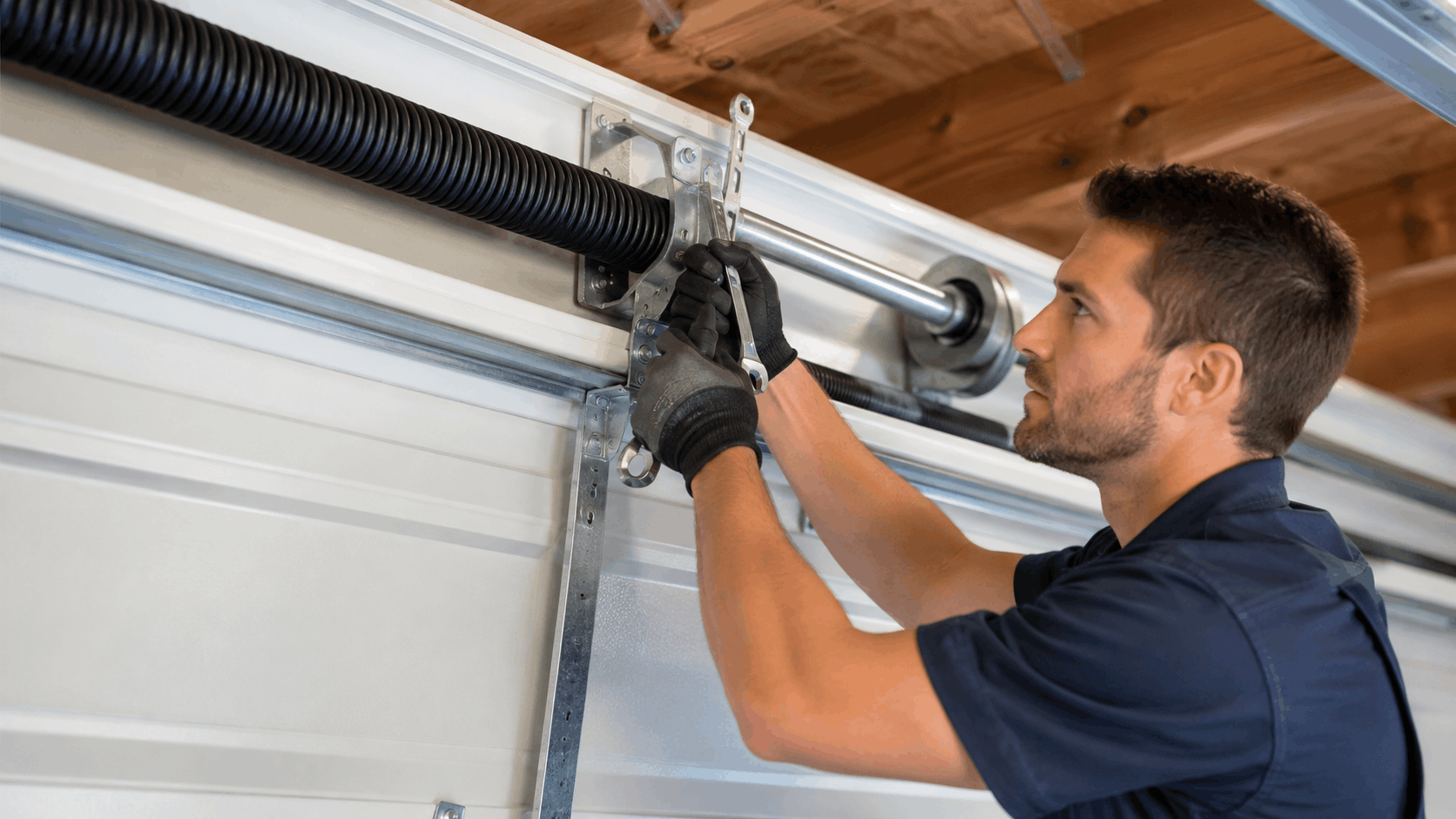
Torsion springs mount on a metal shaft above the door opening, running parallel to the top of the door. They wind and unwind to lift and lower the door, storing energy through the shaft mount system.
These were the common choice on heavier era doors because they handle more weight and balance the door better. Double-car doors in Mission Viejo almost always use a torsion spring setup.
You can spot them by looking straight up above the closed door. If you see one or two long springs on a bar running across the wall, that is a torsion system.
Because they carry so much tension, torsion springs demand careful handling. Our torsion spring replacement service covers these setups safely on older doors.
Extension Springs on Lighter Doors
Extension springs run along the horizontal tracks on each side of the door, stretching and contracting as the door moves. These track springs are the older, simpler design.
You will find extension springs on lighter single-car doors, common in neighborhoods like Deerfield where many homes have separate one-car bays. They were cheaper to install when these tracts were built.
Because each spring works one side of the door, they are always installed in pairs. When one wears out, the other is not far behind, which is why both get replaced together.
If you are dealing with these, our extension spring replacement page walks through what the job involves for older doors.
How to Tell Which System a Home Has
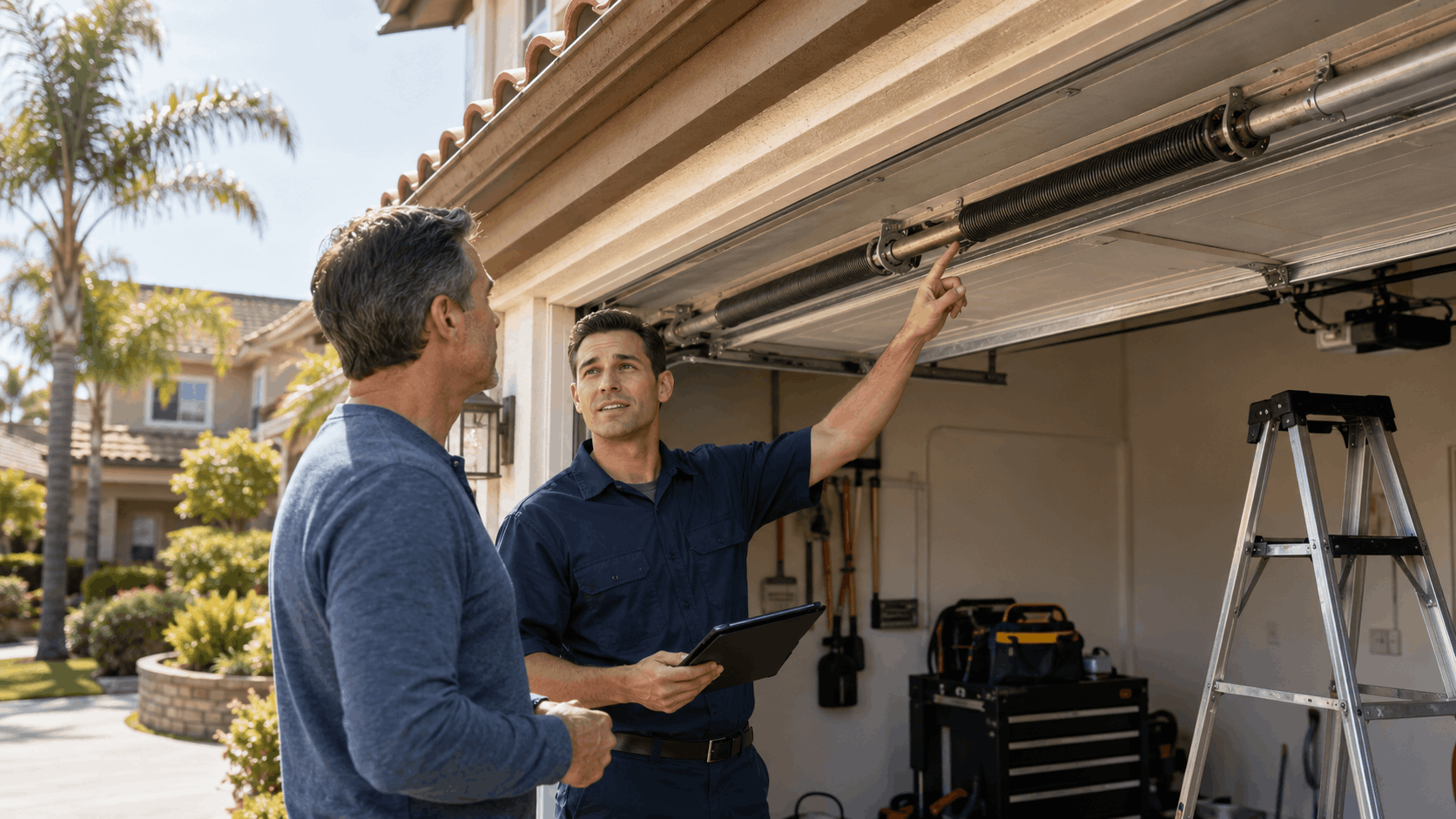
Homeowners can identify their spring type with a simple visual inspection. Open the garage, keep the door closed, and look up and around the frame.
If the spring runs across a bar directly above the door, it is torsion. If the springs stretch along the tracks on the left and right sides near the ceiling, those are extension springs.
Snapping a phone photo of the setup before calling helps our team bring the right parts on the first trip. It saves everyone time and cuts down on return visits.
When in doubt, a quick call and a photo settle the question fast. We can usually tell the system from a picture and quote accordingly.
Upgrading Old Springs to Higher Cycle Ratings
Replacing a worn 10,000-cycle spring with a high cycle spring is one of the smartest moves on an older door. Springs rated for 20,000 or 25,000 cycles last two to three times longer.
For a family that uses the garage as their main entrance, that spring upgrade can mean the difference between replacing springs every seven years versus every fifteen or twenty. The extra cost up front is small compared to the added years.
These higher-rated springs also handle the heavier era doors better, reducing strain and keeping the door balanced longer. It is a solid choice on any door that sees heavy daily use.
We often pair this with a spring conversion upgrade when an old extension system is due for a full overhaul.
Need Help in Irvine?
Urgent Garage Doors serves Irvine and all of Orange County.
Spring Replacement Pricing for Mission Viejo Homes
Spring replacement cost depends on the spring type, door size, and the condition of the surrounding hardware. Older homes sometimes need extra parts, which affects the final price. Below are honest ranges so homeowners know what to expect for garage door repair in this area.
| Job Type | Typical Price Range | Notes |
|---|---|---|
| Single torsion spring | $200 - $350 | One-car or lighter door |
| Double torsion springs | $300 - $500 | Standard double-car door |
| Extension spring pair | $180 - $320 | Both springs replaced |
| High-cycle upgrade | Add $50 - $120 | 20,000-25,000 cycle springs |
| Cable replacement | Add $40 - $100 | Common on rusted hardware |
Torsion Spring Replacement Price Ranges
For a single torsion spring on a lighter door, most Mission Viejo homeowners pay in the $200 to $350 range including parts and labor. That covers the spring, the winding work, and a full balance check.
Double door pricing runs higher because these doors use two springs and carry more weight. A double torsion spring job typically lands between $300 and $500 depending on the spring size and door.
The torsion spring cost varies with the spring dimensions needed to match your specific door weight. Heavier wood doors need thicker wire springs, which cost a bit more.
We always quote the full number before starting, so there is no guessing once the work is done. The price you agree to is the price you pay.
Extension Spring Replacement Costs
Extension spring price for a full pair usually falls between $180 and $320 for most single-car doors in the area. That includes both springs, safety cables, and the labor to install them.
Replacing the spring pair together is standard practice for good reason. If one spring has worn out after decades, the matching spring on the other side is at the same age and stress level.
Swapping just one leaves the door unbalanced and sets up a repeat failure within months. Doing both at once keeps the door even and saves a second service call.
On older Deerfield single doors, we almost always recommend the pair replacement plus fresh safety cables since the originals are usually frayed.
Added Costs for Old or Rusted Hardware
Doors that are 30-plus years old often hide extra wear beyond the spring. Corroded shafts, frayed cables, and worn drums are common on hardware that has never been touched since installation.
Cable replacement is the most frequent add-on. Rusted or fraying cables run an extra $40 to $100, and they need to go in with the new springs since a bad cable can undo a fresh spring job.
Worn drums or a pitted shaft add more, but they are worth addressing while everything is apart. Reusing corroded parts around brand-new springs is a false savings that leads to another breakdown.
Our garage door cable repair often goes hand in hand with spring work on these older systems.
What Drives Price Differences in This Area
Several price factors shape the final cost across Mission Viejo neighborhoods. Door weight is the biggest one, since heavier doors need larger, pricier springs.
Spring quality matters too. A basic 10,000-cycle replacement costs less than a high-cycle spring built for many more years of use, but the cheaper option needs replacing sooner.
Access can affect the number as well. Custom hillside doors or tight garages take more time and care, which shows up in the labor portion of the quote.
The type of door and any related repairs also play in. We factor all of it into one clear quote before any tools come out.
Neighborhood Conditions That Affect Spring Life
Mission Viejo neighborhoods are not all the same when it comes to spring wear. Local conditions like humidity, door size, and how often a family uses the garage create different wear patterns across the city.
Here is how specific areas and their housing stock affect how long springs last.
Older Tracts Near Lake Mission Viejo
Homes near Lake Mission Viejo deal with higher humidity than the drier hillside areas. That extra moisture in the air speeds up rust on older spring assemblies and cables.
The lake keeps the air damp, especially in the mornings, and that moisture settles on unprotected steel. Over years, it corrodes springs from the surface inward.
We see more rust-driven failures in these lakeside tracts than in other parts of the city. Springs there tend to fail earlier than the same age spring in a drier neighborhood.
Homes in the Finisterra on the Lake area are a good example of where humidity shortens hardware life.
Hillside Homes Off Olympiad Road
The hillside properties off Olympiad Road often feature larger custom doors. These wider, taller doors carry significantly more weight than a standard tract door.
More door weight means the springs work harder on every cycle, and that extra load wears them out sooner. A custom double door can weigh far more than a builder-grade single.
Owners of these homes are sometimes surprised their springs fail sooner than a neighbor's smaller door. The size of the door is the reason.
For these bigger doors, we usually recommend high-cycle springs so the extra load does not cut spring life short. It is a smart match for heavier custom setups.
HOA Communities and Matching Requirements
Many Mission Viejo neighborhoods have HOA rules that affect repairs. In communities like Casta del Sol, the HOA may require doors and visible hardware to match a set look.
That matters during a repair because it can limit color choices or require specific finishes. If a full door replacement ever comes up, matching hardware and style rules come into play.
For a straight spring swap, this usually is not an issue since springs are hidden inside the garage. But it is worth knowing before any exterior work.
Our team is familiar with these HOA requirements and works within them, whether it is a repair or a larger garage door installation.
Daily Usage Patterns in Family Zones
Homes near school zones and busy family streets tend to open their garage doors more often. In the Aegean Hills area and similar family zones, that means more daily cycles.
A door opened six or eight times a day uses up spring cycles far sooner than one used twice a day. School runs, sports practice, and errands all add up.
Those extra cycles cut years off the spring life. A 10,000-cycle spring in a busy household might only last four or five years.
For these high-use homes, upgrading to a higher-cycle spring pays off quickly by stretching the time between replacements.
Need Help in Irvine?
Urgent Garage Doors serves Irvine and all of Orange County.
The Spring Replacement Process Step by Step
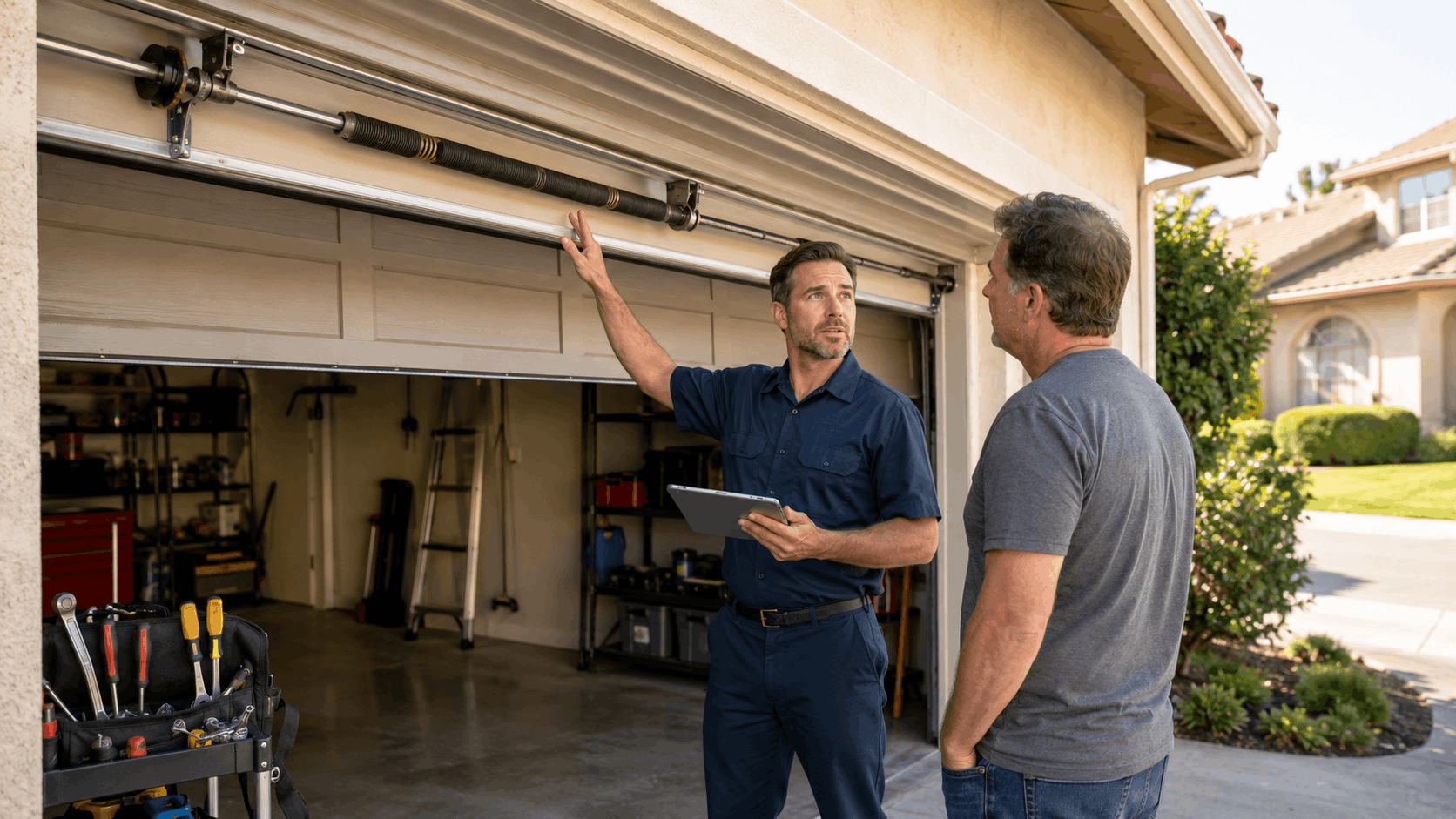
Knowing what happens during a professional spring replacement helps homeowners feel confident about the service. Our repair steps follow a set order to keep the work safe and the door running smoothly afterward.
| Step | What Happens | Time |
|---|---|---|
| 1. Inspection | Measure door weight, check hardware | 10-15 min |
| 2. Removal | Unwind and remove old springs safely | 15-20 min |
| 3. Install | Mount and wind new springs | 20-30 min |
| 4. Testing | Balance, opener check, cleanup | 10-15 min |
Inspection and Door Weight Measurement
The job starts with a door weight measurement and a full inspection of the old hardware. We disconnect the opener and lift the door by hand to gauge its true weight.
That weight tells us exactly which spring size to install. Guessing here leads to a poorly balanced door, so we take the time to measure right.
During inspection we also check the cables, drums, shaft, and rollers for wear. Older doors often reveal issues that need attention alongside the spring.
This upfront check lets us give an accurate quote and bring the correct parts before any work begins.
Safe Removal of Tensioned Springs
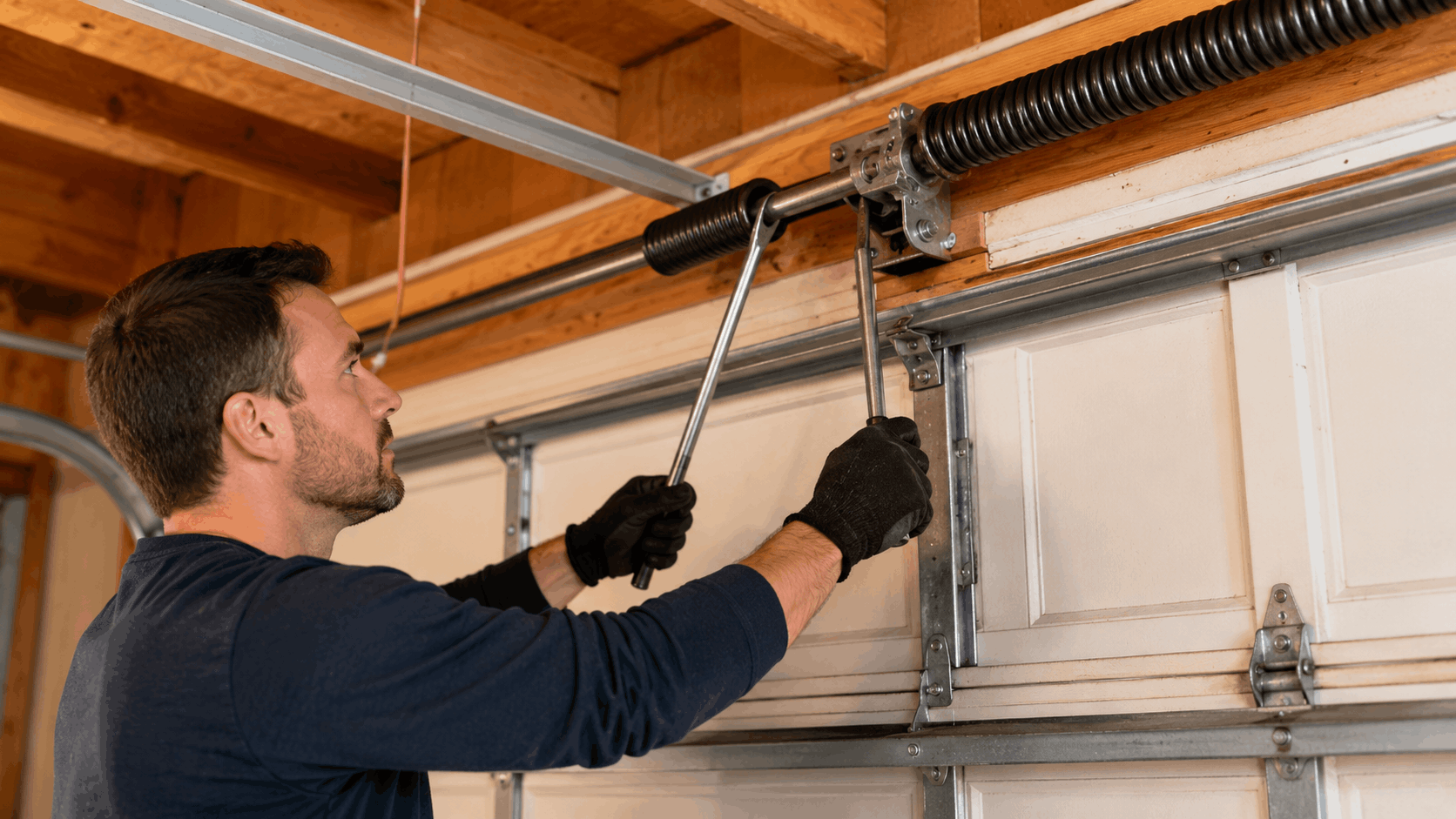
Old springs hold dangerous tension even when broken, so safe removal is a careful process. We use proper winding bars to release the stored energy in a controlled way.
For torsion springs, that means slowly unwinding the spring on the shaft before loosening any mounts. Rushing this step is how people get hurt.
On extension springs, we release the tension from the tracks and pulleys carefully before detaching them. Every step follows a safe order.
This is the part of the job that makes DIY so risky. Our techs do this daily and have the right tools to handle the spring tension safely.
Installing and Balancing the New Springs
With the old springs out, we mount the new springs and wind them to the correct tension for the door weight. Proper spring installation is all about matching the winding to the door.
Then comes door balance. We lift the door halfway by hand and let go. A well-balanced door holds its position without drifting up or down.
If it drifts, we adjust the tension until the travel is smooth and even. This balancing keeps the door easy to lift and takes strain off the opener.
Our door balancing and tension adjustment step is what separates a lasting repair from a quick patch.
Final Testing and Cleanup
Final testing wraps up the job. We reconnect the opener and run the door through several full cycles to confirm smooth, quiet travel.
The opener check makes sure the safety reverse works and the motor is not straining. If the opener needs a minor adjustment after the new springs, we handle it on the spot.
We also test the safety sensors and lubricate moving parts so everything runs quietly. A fresh spring job should leave the door working better than it has in years.
Before we leave, the crew clears out the old springs and any debris. The garage is left clean and the door ready for daily use.
Why DIY Spring Replacement Is Risky on Older Doors
We understand the urge to save money on a repair, but DIY spring danger is real, especially on aged hardware. Garage door springs store enough force to cause serious injury, and older parts add hidden hazards.
Here is why we steer homeowners away from tackling springs themselves.
The Force Behind a Loaded Spring
A torsion spring under full tension holds a surprising amount of stored energy. That spring tension force is what lifts a door weighing hundreds of pounds.
If that energy releases suddenly during a bad DIY attempt, the winding bar or spring piece can fly across the garage. The injury risk is severe, including broken bones and worse.
Every year, emergency rooms treat people hurt trying to change their own garage springs. The Consumer Product Safety Commission has flagged garage door springs among household hazards for exactly this reason.
This is not a job where a wrong move means a redo. It is one where a wrong move means a trip to the hospital.
Hidden Wear on Cables and Drums
Old doors carry more than a worn spring. Cable wear and drum failure often hide right next to the spring, and a DIY swap misses them.
When someone replaces just the spring on a 30-year-old door, the frayed cable or grooved drum frequently fails soon after. Then the door is broken again within weeks.
These parts work as a system. A pro checks all of them, but a DIY job usually focuses only on the obvious broken spring.
That is why the repair a homeowner thought they finished ends up needing a callout anyway, often at a worse time.
Getting the Right Spring Size Wrong
Spring sizing is precise work. The wire diameter, length, and inside diameter all have to match the door weight exactly.
Buy the wrong spring online and the door ends up out of balance. A door imbalance strains the opener, wears the new spring fast, and makes the door hard to lift.
Many homeowners guess the size or copy a number off the old spring that turns out to be wrong. The result is a repeat failure and wasted money.
Getting it right takes measuring the door weight and matching the spring to it, which is exactly what our inspection step covers.
When a Professional Call Saves Money
A proper first-time fix from a professional repair team usually costs less than a botched DIY attempt plus the eventual callout. The math favors doing it right the first time.
Our Irvine-based crew brings the correct springs, checks the full system, and balances the door so it lasts. That avoids the repeat failures that come from partial fixes.
Add in the safety factor and the choice gets easy. The cost savings of skipping a hospital bill and a second repair are hard to beat.
For urgent breaks, our same-day garage door repair gets the door working fast and correctly.
Need Help in Irvine?
Urgent Garage Doors serves Irvine and all of Orange County.
How Urgent Garage Doors Serves Mission Viejo
Urgent Garage Doors is based in Irvine, and Mission Viejo is a regular stop on our route. We know these neighborhoods and the older door systems that fill them. Here is what sets our Mission Viejo service apart.
| What We Offer | Details |
|---|---|
| Fast response | Quick trip via the 5 and 405 |
| Era-door experience | Familiar with 80s-90s hardware |
| Upfront pricing | Clear quote before work starts |
| Quality springs | High-cycle options with warranty |
Fast Response From Irvine to Mission Viejo
Our home base in Irvine puts us a short drive from Mission Viejo down the 5 and 405 corridors. That fast response means we can reach most homes in the area quickly when a spring breaks.
Mission Viejo sits well within our regular service area, so these are not out-of-the-way calls for us. We are here often.
A broken spring leaves a car stuck in the garage, so speed matters. We prioritize these calls to get families back on schedule.
You can learn more about our coverage from our home base on the Irvine location page.
Experience With Era-Built Door Hardware
We have worked on hundreds of doors built in the 80s and 90s across Orange County. That older hardware experience means we recognize the quirks of era doors fast.
These older systems use parts and setups that newer techs may not know well. We come prepared with the right springs and hardware for these specific doors.
Knowing what to expect behind an older Mission Viejo door saves time and prevents surprises during the repair. We have seen these systems many times.
That familiarity is a real advantage when a door has decades of wear and mismatched parts from past patch jobs.
Upfront Pricing With No Surprises
We give upfront pricing before any work starts. After the inspection, we hand over a transparent quote that covers parts, labor, and any needed extras.
The number we quote is the number you pay. No add-ons appear at the end, and nothing gets done without your approval.
This matters most on older doors where hidden wear can come up. We explain what we find and what it costs before touching it.
Homeowners appreciate knowing the full picture ahead of time so they can make a clear decision.
Quality Springs and Warranty Coverage
We install quality springs, including high-cycle options that outlast the original 10,000-cycle parts by years. On heavy or high-use doors, that upgrade pays for itself.
Every spring replacement comes with warranty coverage, so homeowners are protected after we leave. We stand behind the parts and the workmanship.
Using better springs and backing them with a warranty is how we keep Mission Viejo customers from calling back for the same problem. We build the repair to last.
For homes that want to keep the door in top shape long term, our preventive maintenance plan catches small issues early.
Final Thoughts
Springs on 1980s and 90s Mission Viejo homes were built for a different era, and most have long outlived their rated cycles. Age, coastal humidity, heavier doors, and daily use all add up until the spring finally snaps.
Replacing a spring is not a guessing game or a safe DIY project. It takes the right size, the right tools, and a full check of the surrounding hardware to do it once and do it right.
If your garage door has stopped working or you heard that telltale bang, reach out to Urgent Garage Doors. Call our team or visit our contact page for a clear quote and fast service across Mission Viejo. The CPSC home safety guides back up why professional spring work is the safe route.
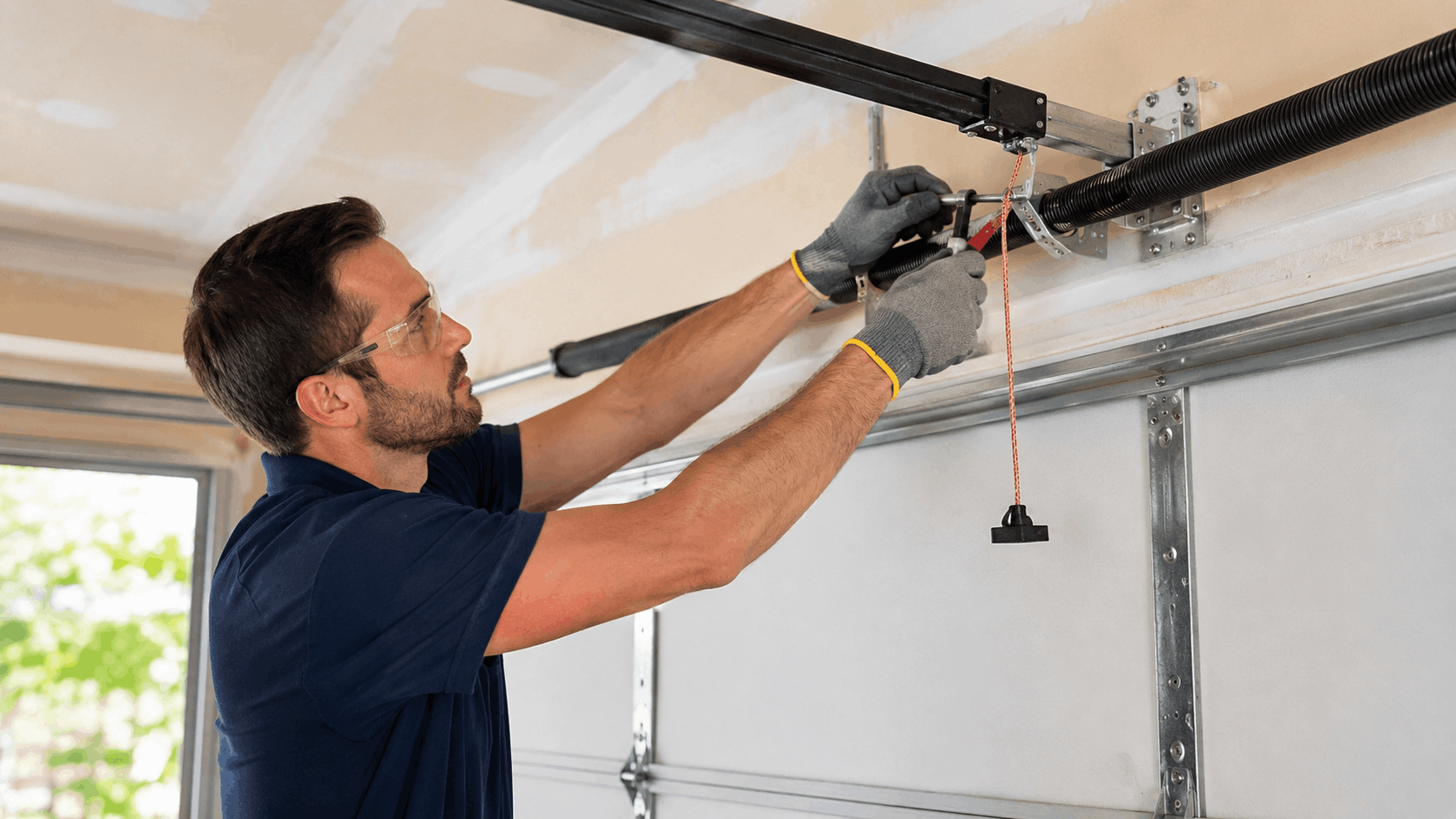
Frequently Asked Questions
- How much does a garage door spring replacement cost in Mission Viejo?
- Most spring replacements in Mission Viejo run between $180 and $500 depending on the spring type and door size. A single torsion spring on a lighter door falls near the lower end, while a double-car door with two springs costs more. Extension spring pairs land in the middle. High-cycle upgrades and any needed cable work add to the total, but we quote the full price before starting.
- How long do garage door springs last on 1980s and 90s homes?
- Original springs from that era were rated for about 10,000 cycles, which equals roughly seven years for a family opening the door four times a day. Many Mission Viejo homes still run on those original springs, meaning they are two to four times past their rated life. If your springs have never been replaced, they are long overdue and could fail at any time.
- Should both springs be replaced if only one breaks?
- Yes, on older doors we recommend replacing both springs at once. If one spring has worn out after decades, the matching spring is the same age and under the same stress, so it will likely fail within months. Replacing just one leaves the door unbalanced and sets up a second repair. Doing both together keeps the door even and saves you a second service call.
- How can a homeowner tell if a spring is broken?
- A common sign is a loud bang, often heard overnight. After that, the door won't open or the opener strains without lifting it. On torsion systems, look above the door for a visible gap where the spring split into two pieces. On extension springs, one side of the door may sag lower than the other. Any of these means the spring is broken.
- Can old springs be repaired instead of replaced?
- No, once a spring fails it must be replaced rather than repaired. A broken or fatigued spring has lost its structural strength, and there is no safe way to restore it. Trying to patch or reuse a damaged spring risks another sudden failure. Replacement with a properly sized spring is the only reliable fix, and it is a chance to upgrade to a longer-lasting high-cycle spring.
- How long does a spring replacement take?
- A standard spring replacement on an older door usually takes about one hour from start to finish. That includes inspecting and measuring the door, safely removing the old springs, installing and winding the new ones, balancing the door, and testing the opener. Jobs that need extra work like cable replacement or drum repair take a bit longer, but most homeowners are back in business within the hour.
- Are higher-cycle springs worth the extra cost?
- For frequently used doors, yes. A high-cycle spring rated for 20,000 or 25,000 cycles lasts two to three times longer than a standard 10,000-cycle spring. The extra $50 to $120 up front means far fewer replacements over the years. Homes near school zones or family streets that open the door many times a day get the most value from the upgrade.
- Does the door opener need adjustment after spring replacement?
- Often a minor adjustment helps. After new springs go in, we run the opener through several cycles and check the force settings and safety reverse. A properly balanced door with fresh springs takes strain off the opener, so we make sure the two work together smoothly. If the opener needs fine-tuning, we handle it during the same visit as part of the job.
- Does Urgent Garage Doors offer same-day service in Mission Viejo?
- Yes, we offer same-day service for urgent spring calls in Mission Viejo whenever our schedule allows. Our Irvine base is a short drive down the 5 and 405, so we reach the area quickly. A broken spring leaves a car trapped in the garage, so we prioritize these calls. Reach out early in the day for the best chance at a same-day slot.
- Is a broken spring safe to leave until repair?
- No, a door with a broken spring should not be used. Without the spring balancing the weight, the door can slam down unexpectedly or fall off track, which is dangerous. Do not try to force it open with the opener, since that can burn out the motor or bend panels. Leave the door closed and call for repair rather than risking injury or more damage.
Licensed garage door repair professionals serving Irvine and Orange County.
Licensed in California · License #1055150
Why trust Urgent Garage Doors?
Founded in 2017, Urgent Garage Doors is a licensed and insured garage door services serving Irvine and Orange County. All content is reviewed by our licensed technicians.

Need Help in Irvine?
Urgent Garage Doors serves Irvine and all of Orange County.
Related Articles
Garage Door Cable Replacement Cost Orange County: Why Pricing Varies by Neighborhood
Garage door cable replacement cost in Orange County varies by neighborhood. Learn why prices differ, real cost ranges, and how to get a fair, accurate quote.
Garage Door Panel Replacement vs Full Door Replacement in Orange County
Should you replace one damaged garage door panel or the entire door? This guide covers costs, timelines, HOA rules, and local Orange County factors to help you decide.
Northpark Irvine Garage Door Service: 1990s-Era Spring Replacement Costs
What 1990s-era garage door springs cost to replace in Northpark Irvine, why they fail, warning signs to watch for, and how to choose an honest local service.