Cost Guides
Garage Door Repair Warranty OC: What 90-Day vs 1-Year Coverage Actually Means
Key Takeaways
- A garage door repair warranty splits into parts and labor coverage, and each can carry a different length of time.
- 90-day warranties fit small fixes like roller swaps and cable adjustments, but many failures show up just after day 90.
- 1-year warranties usually pair with high-cycle springs and quality hardware, covering a full Orange County season cycle.
- Coastal salt air near Newport Coast and inland heat in Portola Springs speed up wear, making longer coverage more valuable here.
- Warranty length is a trust signal; a very short term on a major install can hint at cheaper parts or lower confidence.
- Always get warranty terms in writing on the invoice and keep records to protect a future claim.
- Match the warranty to the job: 90 days for minor adjustments, a full year for springs, openers, and installs.
- Urgent Garage Doors matches coverage to the repair and offers fast return visits across Woodbridge, Turtle Rock, and beyond.
In This Article
A homeowner in Woodbridge called us last spring with a familiar story. Her garage door spring had snapped, a technician replaced it, and less than four months later the same door refused to open again. When she checked her paperwork, she found the fine print: the first repair carried only a 90-day warranty, and the failure landed on day 118. She paid twice for what felt like the same problem.
Stories like hers come up more than most people expect, especially across older tracts near the Woodbridge lakes and up in the hills of Turtle Rock. The difference between 90-day and 1-year coverage is not just a number on an invoice. It changes who pays when a part gives out a few months down the road.
What a Garage Door Repair Warranty Actually Covers
A repair warranty is a written promise that a fix will hold for a set period. If the same part fails or the same problem returns within that window, the company comes back and makes it right at no extra charge. That is the simple version most Orange County homeowners want.
The tricky part is that coverage almost always splits into two pieces: labor and parts. Each can carry its own timeframe, and each has limits. Knowing what falls inside those lines is what keeps you from paying twice for the same repair.
| Warranty Element | What It Covers | Common Term |
|---|---|---|
| Parts warranty | Replacement of the specific part if it fails on its own | 90 days to 5+ years |
| Labor warranty | The technician's time to reinstall or refix | 90 days to 1 year |
| Manufacturer warranty | Factory defects on new springs or openers | 1 to 7 years |
| Service guarantee | The repair company's own workmanship promise | 90 days to 1 year |
Parts Warranty vs Labor Warranty
A parts warranty covers the physical component itself. If a torsion spring or a roller has a defect and fails under normal use, that piece gets swapped out without a parts charge. Springs, cables, rollers, and opener boards all can carry their own separate part coverage.
A labor warranty is different. It covers the technician's time to come back out and do the work again. You can have a spring with a two-year part warranty but only a 90-day labor warranty, which means the spring is free after four months but you still pay for the visit.
This split matters most on spring and cable repairs, where the part might be cheap but the labor is where the real cost sits. Always ask which term applies to which piece. A good invoice lists both clearly instead of lumping them together.
When both parts and labor carry the same length, that is the cleanest situation for a homeowner. You know that for the full term, any covered failure means a free part and a free visit. That is the standard our team aims for on most repairs.
What Falls Outside the Warranty
Every warranty has warranty exclusions, and knowing them upfront saves arguments later. Storm damage, flooding, a car backing into the door, and forcing a stuck door open by hand all fall outside normal coverage. Those are events, not defects.
Normal wear and tear is another common exclusion, though this one gets misunderstood. A spring that snaps from a manufacturing flaw is covered. A spring that simply reaches the end of its rated cycle life after heavy daily use is wear, not a defect.
Misuse also voids most coverage. That includes hanging heavy items on the door, disabling the safety sensors, or letting a known problem run for weeks until something bigger breaks. If a technician warns you about an off-track door and you keep using it, that later damage is on the homeowner.
Reading these exclusions before signing keeps expectations realistic. Nobody likes hearing a claim is denied, so we walk customers through what is and is not covered while we are still standing in the driveway.
Manufacturer Warranty vs Service Warranty
A manufacturer warranty comes from the company that built the part. Buy a new LiftMaster opener or a name-brand torsion spring, and the maker backs it against factory defects for a set number of years. This coverage follows the part, not the installer.
A service guarantee comes from the local repair company that did the work. It covers the quality of the installation and the labor. If a spring is wound wrong or a cable is set with the wrong tension, that is a workmanship issue the service warranty handles.
These two can overlap in confusing ways. A five-year manufacturer part warranty does you little good if the shop that installed it only backs its labor for 30 days. You could get a free replacement spring but pay full price to have it put in.
The best outcome pairs a strong manufacturer warranty with a solid service warranty. That combination means both the part and the workmanship are protected. When we quote a job, we spell out both so there are no surprises.
Get Your Free Quote
Tell us about your garage door and we'll get back to you fast.
The 90-Day Warranty Explained
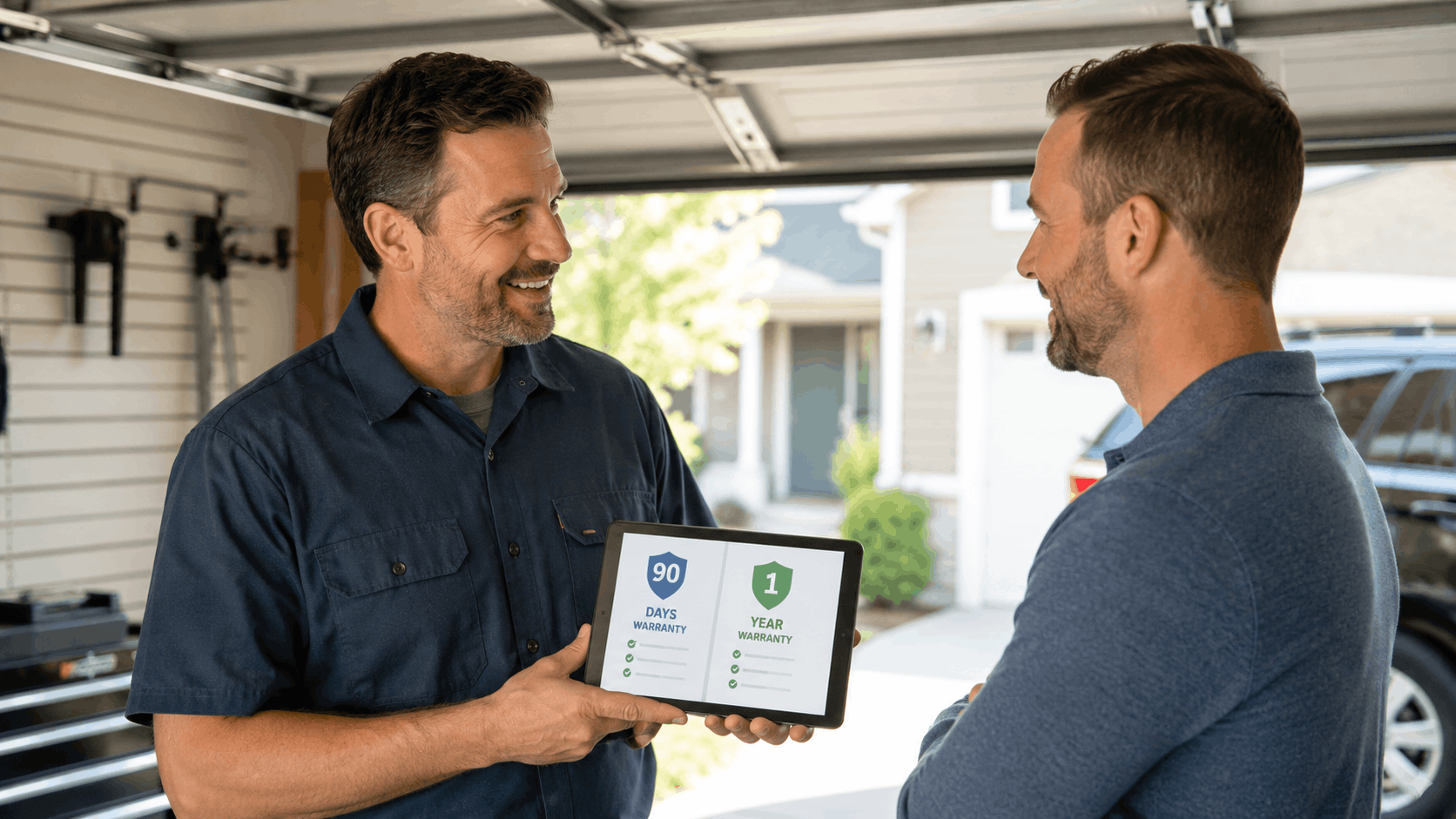
A 90-day warranty gives you three months of protection on a repair. It is the most common term you will see on smaller fixes and quick adjustments. For the right kind of job, it is perfectly reasonable.
The trouble starts when a 90-day term gets attached to a repair that really should carry longer short-term coverage. Here is how to tell the difference and what to watch for.
- Covers defects and workmanship for 90 calendar days from the repair date
- Usually applies to minor adjustments and smaller part swaps
- Often the default term when a customer chooses a lower-cost part
- Best suited to fixes that either hold long-term or fail fast if done wrong
What 90 Days of Coverage Typically Includes
Standard 90-day coverage protects both the part installed and the repair labor for three months. If a roller you paid to replace seizes up in week six, the return visit and the new roller are covered. That is the promise in its simplest form.
Most three-month warranties cover the exact work performed, not the whole door. If you had a cable replaced and a different cable on the other side fails later, that new failure is a separate repair. The warranty follows what was actually fixed.
This term works well for repairs where problems show up almost immediately or not for a long time. A tension adjustment either holds or it does not within the first few weeks. Ninety days is plenty of runway to catch that kind of issue.
The catch is that some parts wear on a slower clock. A cheaper spring or a bargain roller set might make it past 90 days and fail in month five. That is where short-term coverage leaves a gap.
Common Repairs That Come With Short Warranties
Certain fixes almost always carry a 90-day term. Roller replacement on standard nylon or plastic rollers is a common one. So is a basic cable repair where a frayed cable gets swapped without upgrading the surrounding hardware.
Minor track adjustments, hinge tightening, and sensor realignment also tend to fall in the short-warranty group. These are lower-cost jobs where the labor is quick and the parts are inexpensive. A shorter term matches the smaller scope.
Our garage door cable repair visits are a good example. A straight cable swap is a modest job, and a 90-day term fits it. Upgrade to better hardware or a spring conversion, though, and the coverage should stretch.
The pattern to remember is simple. Small, low-cost fixes come with short warranties, and that is fair. The moment a repair involves a higher-cost part or a bigger install, you should expect and ask for more.
The Risk of Failures After Day 91
Here is the frustrating reality: many repair failures show up right after a short warranty ends. A spring or cable installed in spring can make it through the mild months and then give out when the door gets heavy use in late summer. That timing often lands past day 90.
We saw this play out with a family near University High. Their door got a low-cost spring in April, sailed through the cool months, and snapped in August around day 130. The part was gone from warranty by weeks.
Up in Turtle Rock, the same pattern shows on older doors that cycle constantly for busy households. A quick fix holds through the first stretch, then warranty expiration arrives just as the part starts to fatigue. The homeowner ends up back at square one.
This is not always a sign of bad work. Sometimes it is simply a cheaper part on a demanding door. But it explains why matching warranty length to part quality matters, and why a 90-day term on a hardworking repair can be a false economy.
Need Help in Irvine?
Urgent Garage Doors serves Irvine and all of Orange County.
The 1-Year Warranty Explained
A 1-year warranty covers a repair for a full twelve months. That longer window changes the math in the homeowner's favor. It also usually points to a higher-quality part and more confidence in the work.
A full year of annual coverage is common on bigger repairs and installs. Here is what that extra time actually buys you and which jobs tend to earn it.
- Protects the repair through all four Orange County seasons
- Typically pairs with higher-cycle springs and better hardware
- Common on torsion spring and opener replacements
- Signals a shop willing to stand behind its work long-term
What a Full Year of Coverage Protects
With 1-year coverage, both the part and the labor are protected for twelve months from the repair date. If the covered component fails anytime in that window, the return visit and the replacement are handled at no charge. That removes the gamble around slow-developing failures.
The bigger advantage is that a year covers a complete seasonal cycle. Your door runs through the cooler, damper winter months and the hot, dry summer stretch. If a part is going to buckle under a full range of conditions, a year gives it time to reveal that.
This matters because garage door parts respond to temperature and use. Metal expands and contracts, springs fatigue, and openers work harder in heat. A repair that survives a full Orange County year has genuinely proven itself.
For homeowners, the practical benefit is predictability. You pay once and know the fix is protected through an entire calendar of weather and daily cycles. That is the kind of coverage we build into our larger repairs.
Repairs and Installs That Earn Longer Warranties
Bigger jobs justify the longer term. A torsion spring replacement is the classic example, since it is a high-cost, high-tension part that carries the full weight of the door. When we do a torsion spring replacement, a 1-year warranty is the standard we aim for.
Opener work also lands in this group. A new opener installation involves a motor, logic board, and safety system that should hold up for years. Our garage door opener installation jobs carry longer coverage to match the investment.
Full door installs and sectional replacements sit at the top end. These are large projects with many parts working together, so backing them for a year is reasonable and expected. A short warranty on a full install should raise an eyebrow.
The rule of thumb: the more a repair costs and the more it carries the door's daily workload, the longer the warranty should run. Spring conversions and opener swaps almost always deserve a year.
Why a Longer Warranty Reflects Better Parts
A shop can only back its work as long as its parts can survive. That is why longer warranties usually come paired with high-cycle springs and stronger components. A standard spring might be rated for 10,000 cycles, while a high-cycle version handles 20,000 or more.
More cycles means more open-and-close operations before fatigue sets in. For a busy household that runs the door six or eight times a day, that difference is the gap between a spring lasting a few years versus many. Better parts simply outlast cheaper ones.
Quality hardware across the board supports the same idea. Coated cables resist corrosion, sealed rollers run smoother for longer, and heavier-gauge brackets hold tension without flexing. When a shop uses these, it can confidently offer a year.
So a longer warranty is more than a marketing perk. It is a signal that the company chose parts it trusts to last. When you see a full year on a spring job, it usually means high-cycle steel is going on your door.
90-Day vs 1-Year: A Side-by-Side Comparison
Putting the two terms next to each other makes the choice clearer. This warranty comparison helps you weigh what you save upfront against what you might risk later. The right answer depends on the repair.
The core coverage difference comes down to time and part quality. A 90-day term costs less but exposes you to mid-year failures. A 1-year term costs more but closes that gap.
| Factor | 90-Day Warranty | 1-Year Warranty |
|---|---|---|
| Coverage window | 3 months | 12 months |
| Typical part quality | Standard | High-cycle / premium |
| Best for | Minor fixes, adjustments | Springs, openers, installs |
| Upfront cost | Lower | Higher |
| Seasonal coverage | Partial | Full cycle |
Cost Differences You Might See
The upfront gap is usually smaller than people assume. On a spring repair, choosing high-cycle parts with a 1-year term might add somewhere in the range of $40 to $120 over a standard 90-day option. The exact figure depends on the spring size and door weight.
For an opener install, the repair cost difference tied to warranty pricing often reflects the model tier rather than the warranty alone. A better opener with a longer backing costs more because the unit itself is more capable. The warranty rides along with the quality.
On small jobs like a roller swap, the price to extend coverage may not even be offered, since the part is inexpensive either way. There the 90-day term is simply the norm. Paying extra there rarely makes sense.
The honest way to look at it is cost-per-month of protection. A modest upcharge that doubles or quadruples your coverage window is often the better deal on any repair that carries the door's weight.
Which Repairs Justify Paying for More Coverage
The repair type should drive the decision. Spring replacements, cable-and-spring combos, and opener installs all justify paying for a year. These carry heavy loads and cost enough that a second failure hurts.
Smaller adjustments rarely need extended terms. A sensor realignment, a hinge tightening, or a single roller swap will show problems fast if done wrong. For those, 90 days delivers plenty of coverage value.
Think about how hard your door works, too. A household near Woodbridge that cycles the door constantly gets more benefit from a year than a lightly used door. Heavy use burns through cheaper parts faster.
The simple test: if a repeat failure would mean paying for both a part and a labor visit again, the longer warranty is worth it. If a redo would be quick and cheap, the short term is fine.
How Coverage Length Signals Contractor Confidence
Warranty length is a quiet trust signal. A short warranty term on a major repair can hint that a shop is not fully confident the part or the work will hold. That is worth noticing.
Strong contractor confidence shows up as coverage that matches the job. When a company offers a full year on a spring or opener, it is putting its own money behind that promise. A failure means the shop eats the cost of the return visit.
Be cautious when a big install comes with only 30 or 60 days of backing. That timeframe protects the shop far more than it protects you. It suggests corners may have been cut on parts or workmanship.
Reading the warranty is a fast way to judge a contractor before the work starts. Ask what they back and for how long, then compare it to the size of the job. The answer tells you a lot.
Need Help in Irvine?
Urgent Garage Doors serves Irvine and all of Orange County.
How Orange County Weather Affects Your Warranty
Local conditions wear parts differently than the rating labels assume. The Orange County climate ranges from salty coastal air to hot inland afternoons, and both take a toll. That is why garage door wear here can outpace what a national spec sheet predicts.
Understanding your specific microclimate helps you pick the right coverage. A door near the water faces different threats than one baking in the inland heat.
Coastal Salt Air Near Newport Coast and Corona del Mar
Homes closer to the ocean deal with salt air corrosion that eats at metal parts. Springs, cables, and hinges near Newport Coast and Corona del Mar rust faster than the same parts a few miles inland. The salt never really lets up.
Corrosion weakens springs from the inside out. A rusted coil loses strength and snaps earlier than its cycle rating suggests. Cables fray at the corroded spots and can fail without much warning.
For coastal homes, this makes coated and corrosion-resistant hardware a smart choice. The parts cost a bit more but last far longer in salty air. Our team recommends them for anyone near the water and up in areas like Big Canyon in Newport Beach.
A longer warranty carries extra weight in these zones. When salt is working against your hardware daily, a year of coverage gives real protection against premature corrosion failures.
Heat and Sun Exposure in Inland Irvine Neighborhoods
Inland areas trade salt for sun. Afternoon heat exposure in neighborhoods like Northwood and Portola Springs pushes garage temperatures high, and that stresses electronics and rubber. The heat is relentless in late summer.
Opener stress is the main concern here. Motors work harder in heat, logic boards can degrade, and lubricants thin out and drip away. A door in a hot, west-facing garage ages its opener faster than a shaded one.
Weather seals and rollers also suffer. Rubber seals crack and harden under constant sun and heat, letting more hot air into the garage. Homes in Portola Springs often need seal and roller attention sooner than expected.
For inland doors, coverage that spans a full summer matters. A repair that survives one hot Irvine season has proven it can handle the worst the climate throws at it.
Why Local Conditions Make Warranty Length Matter More
National cycle ratings assume average conditions. Orange County is not average, so real-world local wear often runs ahead of the label. A spring rated for years of average use may fatigue faster in salt or heat.
That gap is exactly why warranty value climbs in this region. A longer term absorbs the risk that local conditions accelerate wear. You are buying protection against a climate that is harder on parts than the spec sheet expects.
Pairing the right parts with the right coverage is the smart move here. Corrosion-resistant hardware near the coast, heat-tolerant openers inland, and a year of backing on both. That combination matches the repair to the environment.
Our team factors your neighborhood into every recommendation. A door in coastal air and a door in an inland heat pocket get different advice, because they face different threats. The preventive maintenance plan we offer helps offset both.
Reading the Fine Print Before You Sign
The warranty fine print is where good intentions meet reality. Most people skim it, then get surprised when a claim gets complicated. A few minutes of reading protects you for months.
Knowing the right warranty terms to look for turns you into an informed customer. Here is what to check and ask before any work begins.
Questions to Ask Before the Work Starts
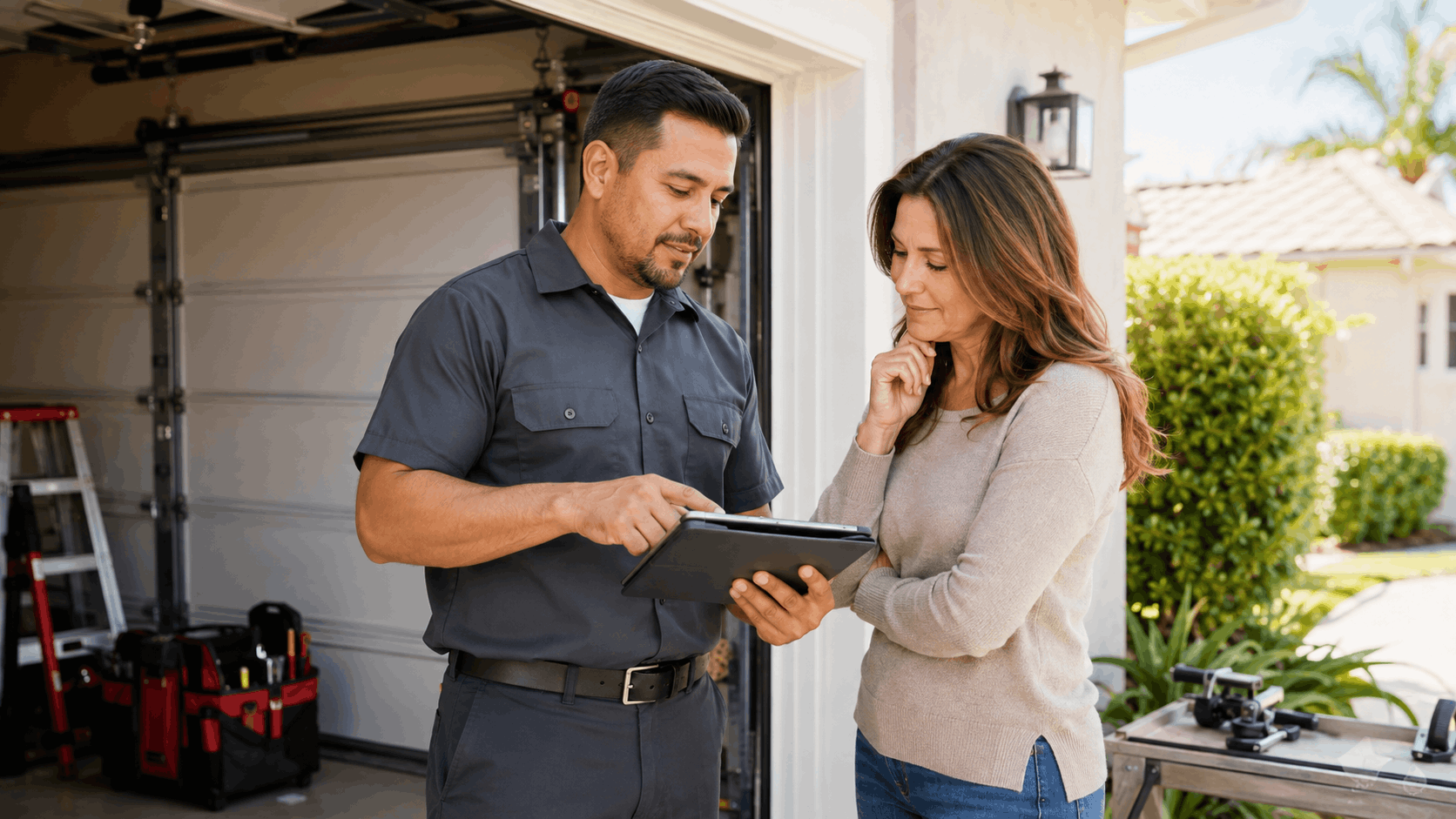
Start with the basics on parts and labor. Ask how long the part is covered and how long the labor is covered, since they can differ. Get both numbers on the record.
Then ask specific warranty questions about scope. Does the coverage apply only to the exact part replaced, or to related components? What voids the warranty, and does routine maintenance need to be documented?
Cover transfer and process next. Can the coverage pass to a new owner if you sell? How do you file a claim, and how fast is a return visit scheduled? These answers should come with your repair estimate, not after.
A trustworthy company answers all of this without hesitation. If getting straight answers feels like pulling teeth, that itself is useful information about how a claim might go later.
Written Warranty vs Verbal Promise
A spoken guarantee is worth little when a part fails eight months out. A written warranty on the invoice is what actually holds up. If it is not documented, it may as well not exist.
Your service invoice should list the parts installed, the labor performed, the warranty length on each, and the date. That paper is your proof if you ever need to make a claim. Keep it somewhere safe.
Watch for vague language, too. Phrases like backed for life without terms attached often mean less than they sound. A clear term with clear conditions beats a grand promise with no details.
Every job our team completes comes with written terms on the invoice. You should never have to remember what someone said in the driveway. It is all in writing.
How to Keep Your Warranty Valid
Coverage can be voided by neglect, so basic care matters. Keeping the door lubricated, the tracks clear, and the sensors aligned all support warranty validity. Some warranties require this upkeep.
Documenting your maintenance helps if a claim ever gets questioned. Save receipts for any service and note when you did DIY upkeep. Good maintenance records back your position.
Avoid the actions that void coverage. Do not force a stuck door, disable safety features, or ignore warning signs like grinding or slow operation. Letting a small problem grow can turn a covered repair into an excluded one.
A yearly tune-up is the simplest way to protect both the door and its warranty. Our maintenance and upgrade services keep everything in spec and give you a paper trail at the same time.
Need Help in Irvine?
Urgent Garage Doors serves Irvine and all of Orange County.
How Urgent Garage Doors Handles Warranty Coverage in Irvine
At Urgent Garage Doors, warranty coverage is not an afterthought. We match the term to the repair and put it in writing every time. For Irvine garage repair work, that means clear expectations from the first visit.
Our team knows this city block by block, from the lakes of Woodbridge to the hillsides of Turtle Rock. Here is how we approach coverage and what local customers can count on.
- Warranty length matched to the repair type and part quality
- Written terms on every invoice, parts and labor spelled out separately
- Fast return visits across Irvine when a covered issue comes up
- Honest advice on when a longer warranty is worth the cost
The Warranty Terms Offered on Common Repairs
We set repair warranty terms based on what the job demands. Minor adjustments and single-part swaps carry shorter coverage that fits their scope. Major work gets a full year.
Spring replacements, opener installs, and full door installs come with our longer backing. These carry the door's weight and cost enough that a year of protection is the right call. We use high-cycle parts to support that promise.
Our local service approach means you always know what you are getting. Before we start, we tell you the part warranty, the labor warranty, and what would void either. No guessing after the fact.
When a homeowner is unsure, we lay out the options plainly. Sometimes 90 days is genuinely enough, and we say so. We would rather earn a repeat customer than upsell coverage nobody needs.
Fast Response Across Woodbridge, Turtle Rock, and Beyond
Speed matters when a door quits, and it matters even more on a warranty claim. Our routes cover Woodbridge, Turtle Rock, Northwood, Portola Springs, and the rest of Irvine. We keep drive times short.
Because we work these neighborhoods every day, we can often reach a covered issue quickly. A homeowner near the Woodbridge lakes or up in Turtle Rock rarely waits long for a return visit. That fast response is part of the promise.
Our trucks carry common springs, cables, rollers, and opener parts. That means many warranty claims get resolved on the first return trip instead of waiting on an order. Fewer trips, faster fix.
For urgent situations, our same-day repair service covers both new problems and warranty follow-ups. A stuck door should not sit for days.
What to Do If a Repair Fails Under Warranty
Filing a warranty claim with us is straightforward. First, find your invoice with the warranty terms and repair date. That confirms the coverage window and what was done.
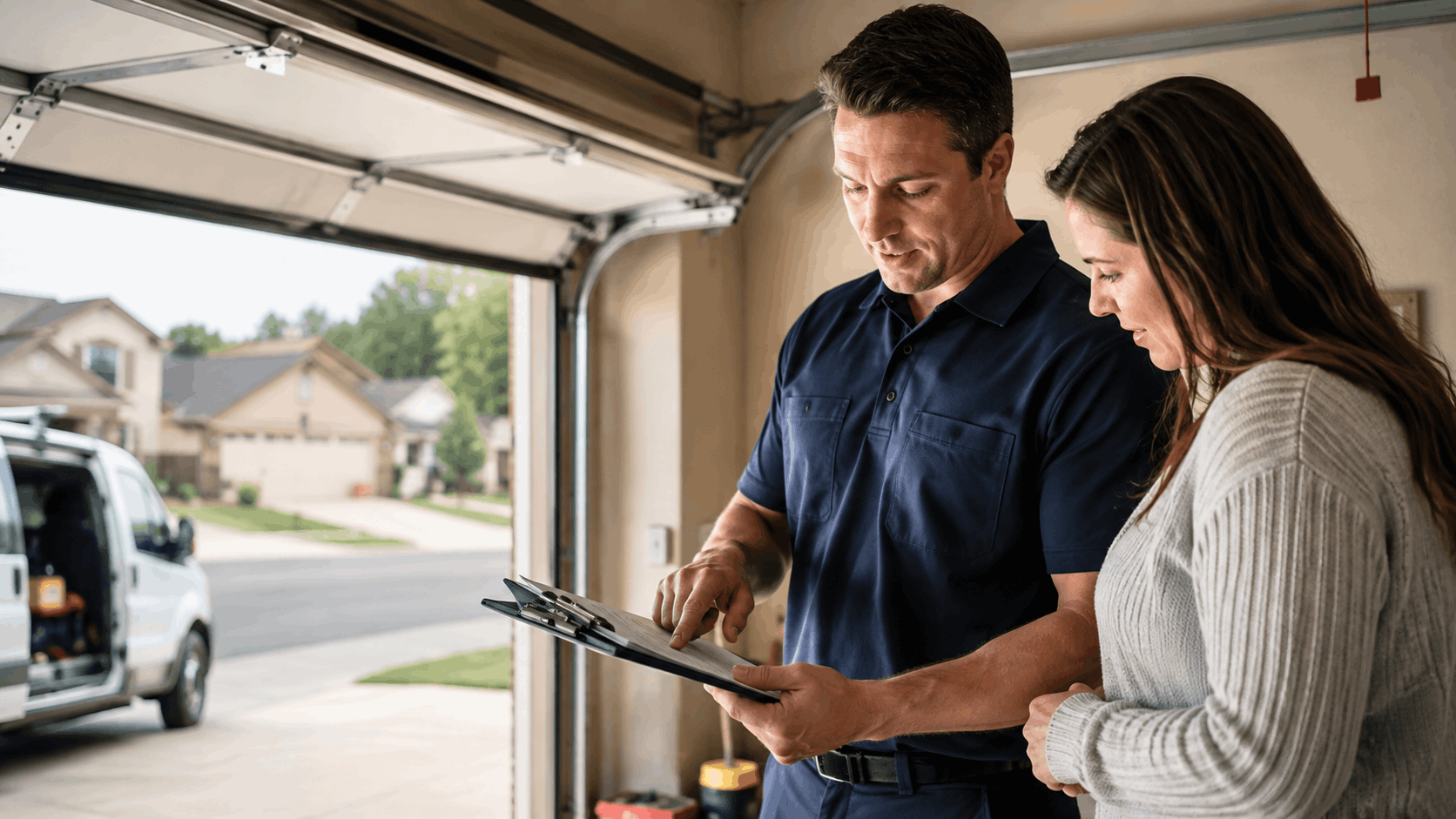
Second, call our team and describe the problem. We check the invoice, confirm the repair is still in its window, and schedule a return visit. Covered failures come with no charge for the part or the labor.
Third, let the technician inspect the door. If the failure falls inside the warranty and is not caused by an excluded event, we make it right. If it is a separate issue, we explain exactly why before any charge.
The whole point is to make a claim painless. You already paid for the repair once, so a covered failure should not cost you again. Reach out to our team and we will get you scheduled.
Final Thoughts
The gap between 90-day and 1-year coverage is really a gap in risk. A short term saves a little upfront but leaves you exposed to the mid-year failures that Orange County heat and salt air tend to cause. A full year closes that window.
Match the warranty to the job. Small adjustments do fine with 90 days, while springs, cables, and openers deserve a year backed by high-cycle parts. Always get the terms in writing on your invoice.
If you want honest advice on the right repair and the right coverage for your Irvine home, our team is ready to help. Call Urgent Garage Doors or contact us for a consultation, and we will walk you through your options before any work starts.
Frequently Asked Questions
- What is the difference between a 90-day and 1-year garage door warranty?
- The main difference is the coverage window. A 90-day warranty protects the repair for three months, while a 1-year warranty covers it for twelve. The longer term also usually comes with higher-quality, high-cycle parts. That extra time spans a full change of Orange County seasons, catching failures that a short term would miss. For springs and openers, the year is generally worth it.
- Does a longer warranty mean a better repair?
- Often, yes. A shop can only back its work as long as its parts can survive, so a 1-year warranty usually signals high-cycle springs and quality hardware. It also reflects contractor confidence, since the company pays for any covered return visit. A long warranty on a major job is a good trust signal. A very short term on a big install can hint that corners were cut.
- What is usually not covered by a garage door repair warranty?
- Common warranty exclusions include storm damage, flooding, a vehicle hitting the door, and forcing a stuck door open by hand. Normal wear and tear on a part that reached its rated cycle life is also excluded. Misuse, like disabling safety sensors or ignoring warning signs, voids most coverage. Warranties protect against defects and workmanship problems, not accidents or neglect. Always read the exclusions before signing.
- Does the warranty cover both parts and labor?
- It can, but parts and labor often carry separate terms. A spring might have a two-year part warranty but only 90 days of labor coverage, meaning the part is free later but the visit is not. The cleanest situation is when both parts and labor share the same length. Always ask for both numbers and confirm they appear on your invoice before the work begins.
- How does Orange County weather affect my garage door warranty?
- Local conditions wear parts faster than national cycle ratings assume. Coastal salt air near Newport Coast and Corona del Mar corrodes springs, cables, and hinges quickly. Inland heat in areas like Northwood and Portola Springs stresses openers, seals, and lubricants. Because real-world wear runs ahead of the label, a longer warranty carries more value here. It absorbs the risk that the climate accelerates failure.
- Is a garage door spring warranty different from an opener warranty?
- Yes, they usually carry different terms. Springs are mechanical parts under high tension, and their coverage depends on cycle rating, with high-cycle springs earning longer warranties. Openers are electronic units, and their coverage often reflects the model tier and manufacturer backing. A repair invoice may list distinct warranty lengths for each. Always check the specific term on the exact part installed rather than assuming one covers the other.
- Can a warranty transfer if I sell my home?
- It depends on the specific warranty. Some service warranties are transferable to a new owner, while others end when the original customer sells. Manufacturer part warranties are more likely to follow the part regardless of ownership. If a transfer matters to you, ask before the work starts and get the answer in writing. It can be a small selling point when you list your home.
- What should I do if my repair fails under warranty?
- Start by finding your invoice with the warranty terms and repair date. Then call the company and describe the problem so they can confirm the repair is still in its window. They schedule a return visit, and a covered failure comes with no charge for the part or labor. Let the technician inspect the door. If the failure falls inside the terms and is not an excluded event, it gets fixed at no cost.
- Do I need to keep my invoice to use the warranty?
- Yes, keeping your invoice protects your claim. It documents the parts installed, the labor performed, the warranty length on each, and the repair date. Without it, proving what was covered and when becomes difficult. Store it somewhere safe, along with any maintenance receipts. Good records make a warranty claim quick and painless, and they back your position if a claim ever gets questioned.
- How much more does a 1-year warranty cost in Irvine?
- The upfront gap is usually smaller than people expect. On a spring repair, choosing high-cycle parts with a 1-year term might add roughly $40 to $120 over a standard 90-day option, depending on spring size and door weight. On openers and installs, the difference often reflects the model tier rather than the warranty alone. Looked at as cost-per-month of protection, the longer term is frequently the better deal.
U
Licensed garage door repair professionals serving Irvine and Orange County.
Licensed in California · License #1055150
Why trust Urgent Garage Doors?
Founded in 2017, Urgent Garage Doors is a licensed and insured garage door services serving Irvine and Orange County. All content is reviewed by our licensed technicians.

Need Help in Irvine?
Urgent Garage Doors serves Irvine and all of Orange County.
Related Articles
Cost Guides
Broken Garage Door Spring Repair Cost Newport Beach vs Anaheim: Why Pricing Varies
Compare broken garage door spring repair costs in Newport Beach vs Anaheim, why coastal prices run higher, and how to read quotes without getting overcharged.
Cost Guides
Cheapest Garage Door Repair OC vs Best Value: Why the Lowest Quote Costs More
Why the cheapest garage door repair in Orange County often costs more. Learn how low quotes hide fees, use weak parts, and how to find real best value in Irvine.
Cost Guides
Garage Door Sensor Repair Cost Orange County: Photo Eye Replacement Pricing
Real garage door sensor repair costs in Orange County, plus photo eye replacement pricing, warning signs, DIY checks, and how to pick an honest Irvine repair team.