Cost Guides
Garage Door Sensor Repair Cost Orange County: Photo Eye Replacement Pricing
Key Takeaways
- Photo eye sensors use an infrared beam to trigger auto-reverse and have been required by UL 325 safety law since 1993.
- Sensor repair in Orange County typically runs $85 to $300, with realignment cheapest and full photo eye replacement in the middle.
- Common warning signs include a blinking sensor light, a door that closes then reopens, and having to hold the wall button to close.
- Coastal salt air near Newport Beach, afternoon sun glare in Woodbridge and Turtle Rock, and construction dust near Great Park all cause local sensor failures.
- Safe DIY checks include cleaning lenses with a soft cloth, realigning bumped sensors, and inspecting visible wiring, but stop before springs or electrical work.
- Choose a local company that diagnoses honestly, prices upfront, and repairs before pushing a full opener replacement.
- Monthly auto-reverse testing and an annual tune-up keep sensors reliable and prevent repeat repairs.
- Urgent Garage Doors offers same-day sensor repair across Irvine and Orange County.
In This Article
It is a busy Tuesday morning in Irvine. A homeowner near Woodbridge presses the wall button, watches the garage door start down, then jerk back up while a little light on the sensor blinks red. The kids are late for school, the car is trapped inside, and that blinking light will not stop. If this sounds familiar, you are not alone. Our team gets these calls almost every day from across Orange County.
A garage door that refuses to close is usually a photo eye sensor problem, and the good news is that most of these repairs are fast and affordable. The tricky part is knowing whether you are looking at a five-minute realignment or a full sensor replacement, and how much either one should cost.
What Garage Door Photo Eye Sensors Actually Do?
Most homeowners never think about their garage door sensors until the door stops closing. These small plastic units sit near the floor and do one big job: they keep the door from crushing anything in its path. A photo eye sensor is the safety brain of a modern garage door system.
Here is what these sensors handle every single day:
- They watch the door opening with an invisible infrared beam
- They stop and reverse the door if something breaks that beam
- They talk to the opener's logic board to confirm it is safe to close
- They protect kids, pets, cars, and bikes from a heavy closing door
When a garage door safety sensor works right, you never notice it. When it fails, the whole door stops behaving. Let's walk through how these parts actually function.
How the Infrared Beam Prevents Accidents
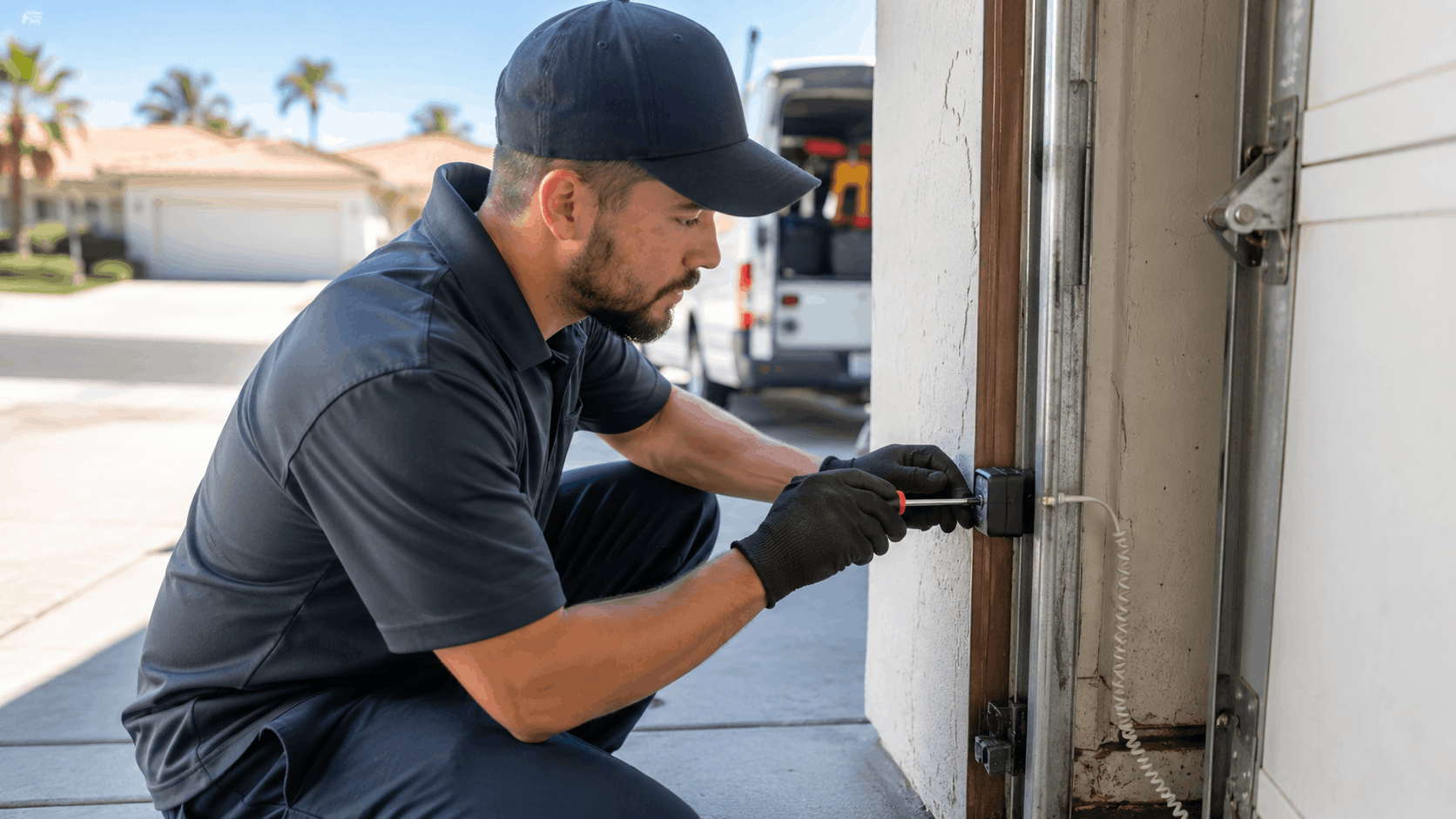
A garage door has two photo eye sensors, one on each side of the opening. One sensor sends out an infrared beam, and the other sensor receives it. This creates an invisible tripwire across the bottom of your door.
As long as that beam travels cleanly from one side to the other, the opener knows the path is clear and lets the door close. The moment something blocks the beam, a trash can, a backpack, a curious dog, the receiving sensor loses the signal. That break tells the opener to stop the door and send it back up.
This is the auto-reverse feature, and it is the reason garage doors are far safer than they were decades ago. The whole system reacts in a fraction of a second. A door that weighs over 150 pounds will bounce back up before it ever touches whatever crossed its path.
The beam is invisible to the human eye, which is why people get confused when the door refuses to close with nothing obvious in the way. Sometimes the beam is blocked by something small, and other times the sensors have simply drifted out of line with each other.
Where the Sensors Sit on the Door Track
The two sensors mount low on the door track, usually about four to six inches off the garage floor. This height is set by design. Sensors this low can catch a small child or a pet before the door reaches them, which is the entire point of the safety rule.
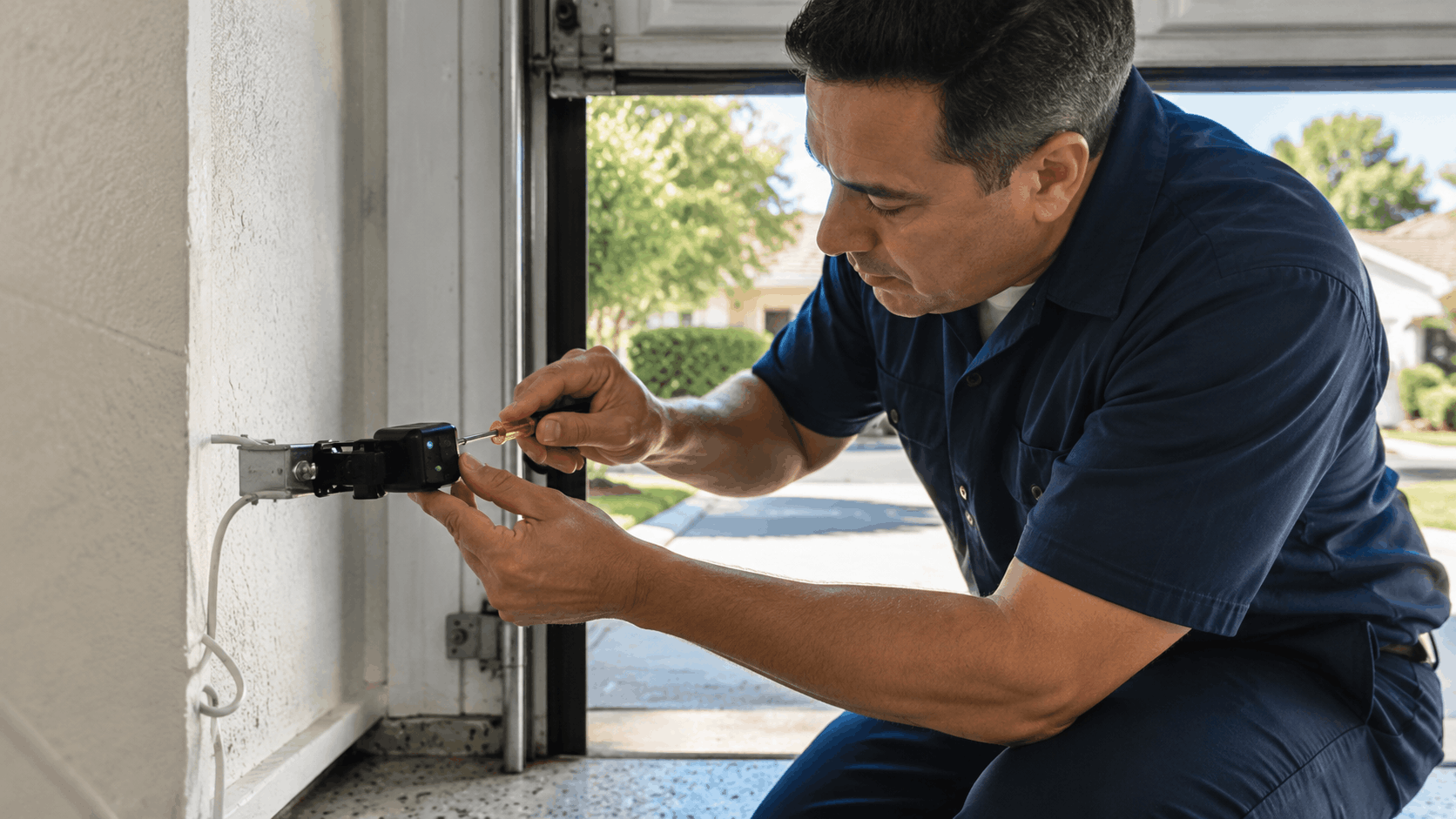
Each sensor clips onto a small metal bracket that bolts to the vertical track. The brackets let the sensor pivot slightly so a technician can aim one eye directly at the other. Proper sensor mounting means both units point straight across the opening at the same height.
If a sensor sits too high or too low compared to its partner, the beam misses its target and the door will not close. We see this a lot when someone bumps a bracket with a lawn mower or a bike. Even a small nudge can knock the alignment off just enough to cause trouble.
The low position also makes these sensors easy targets for damage. They live right where cars pull in and where water pools during a rainstorm. That is part of why they need attention over the years.
Federal Safety Rules That Made Them Standard
Photo eye sensors are not optional add-ons. Since 1993, federal law has required every residential garage door opener sold in the United States to include an external entrapment protection system. That rule falls under the Consumer Product Safety Commission and the UL 325 safety standard.
Before this UL 325 safety requirement, garage doors caused serious injuries and deaths, often to young children. The photo eye system was the industry's answer, and it has saved countless people since. Any opener made after that date must have working sensors to close in normal mode.
This is why you cannot simply disconnect a bad sensor and move on. The opener is built to refuse a normal close cycle when the sensors are missing or faulty. It is doing exactly what it was designed to do.
Understanding this rule helps homeowners see why a sensor repair matters beyond convenience. A door that will not close is annoying, but the sensors that cause that frustration are the same ones protecting your family. That trade-off is worth remembering.
How a Bad Sensor Affects the Whole Door
One failed photo eye can throw off the entire door. Since both sensors have to agree that the path is clear, a single dead eye is enough to stop the door from closing. The opener assumes something is wrong and refuses to complete the cycle.
A sensor failure shows up in a few common ways. The door might start down and then reverse back up mid-travel. It might not move at all when you press the button. Or it might close only if you hold the wall button down the whole time, which is the opener's forced override mode.
Sometimes the door gets stuck open entirely, which is a real problem for security and weather. A wide open garage invites anyone to walk in, and in coastal Orange County it lets in salt air and moisture that can damage stored items. This is why a stuck door counts as an urgent issue for us.
The frustrating part is that all of these symptoms trace back to one small part. A homeowner might think their whole opener is dying when the real fix is a sensor pair that costs a fraction of a new unit. Knowing the difference saves money.
Get Your Free Quote
Tell us about your garage door and we'll get back to you fast.
Common Signs Your Photo Eye Sensor Needs Repair
When people call us, they rarely say "my photo eye sensor is misaligned." They describe what they see and feel. The door acts up, the light blinks, or they have to fight with the wall button to get it closed.
Learning these sensor repair signs early can save you a bigger headache later. Here are the symptoms we hear most often and what each one usually means.
| Symptom | Likely Cause | Urgency |
|---|---|---|
| Sensor light blinks red | Alignment or wiring fault | Medium |
| Door closes then reopens | Blocked or misaligned beam | High |
| Must hold wall button to close | Sensor override mode active | High |
| Cracked or foggy lens | Physical or weather damage | Medium |
| No LED lights at all | Power or wiring failure | High |
Blinking or Solid LED Warning Lights
Each sensor has a small LED light that tells a story. On most systems, one sensor glows a steady green to show it is sending power, and the other glows a steady amber or red to show it is receiving the beam. When both lights are solid, the system is happy.
A blinking sensor light is the first clue something is off. When the receiving LED blinks or goes dark, it usually means the beam is broken or the two eyes are out of alignment. The pattern of the blink can point to the exact problem, and different brands use slightly different codes.
Sun glare, a bumped bracket, or a dirty lens can all cause a blinking light. So can a loose wire behind the sensor. Checking sensor alignment is the first thing we do because it fixes a large share of these calls.
If cleaning and gentle realignment do not steady the LED light, the issue is deeper. At that point we test the wiring and the opener's logic board to find the real fault. A steady light after service tells us the repair worked.
Door Closes Then Reopens on Its Own
This is the classic complaint. You press the button, the door heads down, and then it stops and rolls right back up as if it changed its mind. Nothing is in the way, yet the door refuses to stay closed.
That behavior is the auto-reverse feature doing its job with bad information. The opener thinks the beam is blocked, so it reverses to avoid crushing something. In reality the sensors are misaligned, dirty, or getting a false reading.
Salt air and morning fog in coastal areas can fog a lens just enough to scatter the beam. Afternoon sun hitting a sensor head-on can also trick it. When a garage door reverses without a real obstacle, the sensors are almost always the culprit.
We often solve this with a cleaning and a careful realignment on the spot. If the door still reverses after that, we look at wiring or a failing sensor. Either way, this symptom should not be ignored because a door that will not stay shut is a security gap.
You Have to Hold the Wall Button
Here is a workaround many Irvine homeowners discover on their own. If you press and hold the wall button, the door will keep closing even when the sensors object. Let go, and it stops. This forced close mode is built into most openers as a manual override.
It feels like a fix, but it is really a warning sign. The opener only makes you hold the button because it does not trust the sensors. You are bypassing the safety system every time you do it.
Using the wall button this way is fine as a short-term measure to get your car out. It is not a long-term solution. The remote and keypad will not close the door in this mode, so you lose most of the convenience of a powered opener.
When we hear that a customer has been holding the button for weeks, we know the sensor problem has been building. The sooner it gets diagnosed, the less chance it turns into a bigger repair. Our safety sensor alignment repair service is built for exactly this situation.
Physical Damage From Cars, Kids, or Weather
Sensors sit low and exposed, so they take a beating. A car pulling in a little too far can clip a bracket. A basketball or a bike can crack the plastic lens. Kids running through the garage bump them all the time.
A cracked lens scatters the infrared beam and gives false readings. A bent bracket knocks the alignment off. Both are common and both usually mean the sensor needs replacing rather than adjusting.
Weather adds another layer in Orange County. Homes closer to the coast deal with humidity and salt air that lead to corroded wiring and rusted terminals. Water that pools near the track during winter rains can seep into the sensor housing.
When we spot corroded wiring or a cracked housing, we know a simple realignment will not hold. These parts have reached the end of their useful life. Replacing the sensor pair and sealing the wiring gives a lasting fix instead of a temporary patch.
Need Help in Irvine?
Urgent Garage Doors serves Irvine and all of Orange County.
Garage Door Sensor Repair Cost in Orange County
Price is the first thing most people want to know, and we get it. A blinking sensor should not cost a fortune to fix. The honest answer is that sensor repair is one of the more affordable garage door jobs, but the exact figure depends on what is actually wrong.
Below is a realistic look at photo eye replacement pricing and repair costs across Orange County. These ranges reflect what local homeowners typically pay, including the service call.
| Service | Typical Cost Range | What It Includes |
|---|---|---|
| Sensor realignment | $85 - $150 | Service call and adjustment |
| Wiring repair | $125 - $225 | Splicing or replacing damaged wire |
| Sensor pair replacement | $150 - $300 | New sensors, parts, and labor |
| Sensor plus logic board | $250 - $450 | Both sensors and control board |
Typical Repair vs Replacement Price Ranges
A basic realignment is the cheapest outcome. If your sensors just drifted out of line and need adjusting, the repair cost range usually falls between $85 and $150, and most of that is the service call. No new parts are needed, so you are paying for the visit and the expertise.
Rewiring runs a bit higher, often $125 to $225, because it takes more time and materials. Damaged, chewed, or corroded wire has to be cut back, spliced, or run fresh from the sensor to the opener. This is careful work that affects whether the fix lasts.
A full photo eye replacement, meaning both sensors swapped out, typically lands between $150 and $300 including parts and labor. Replacing both eyes at once is smart because they age together and a matched pair reads more reliably. The replacement cost stays reasonable compared to a new opener.
If the opener's logic board is also failing, the total can climb toward $450. That is still far less than replacing the entire system, which is why an honest diagnosis matters so much.
Service Call and Labor Fees Explained
Almost every garage door company charges a service call fee. This covers the trip to your home, the diagnosis, and the technician's time to figure out what is wrong. In Orange County this fee usually runs $75 to $125.
The good part is that a fair company rolls that fee into the repair. If we come out, diagnose a misalignment, and fix it in the same visit, you are not paying the service call on top of a separate labor charge. It is bundled.
Labor cost for sensor work is modest because the job is not long. Most sensor repairs take under an hour. The labor reflects the skill of testing the beam, the wiring, and the board rather than hours of heavy work.
We always quote the full price before we start. You should never get surprised by a bill that is double the estimate. Clear, upfront pricing is something to insist on with any company you call.
Parts Cost by Opener Brand
Sensor parts vary by opener brand, and this affects your final price. A LiftMaster sensor pair and the matching Chamberlain units run roughly $30 to $60 for the parts alone, since these two brands share much of the same technology. They are common, so parts are easy to source.
Genie sensors sit in a similar range, though some models use a slightly different plug. These mainstream brands keep costs down because the parts are stocked and standardized. Most repairs on these systems are quick and predictable.
Older or off-brand systems are where opener brand parts get pricier. A discontinued sensor can be hard to find, and sometimes an adapter or a workaround is needed to make a modern sensor talk to an aging opener. That adds both parts cost and labor time.
When a sensor for your brand is no longer made, replacing the opener sometimes costs about the same as chasing down rare parts. We lay out both options so you can decide. Our opener repair and troubleshooting team handles both paths.
What Makes One Job Cost More Than Another
Two sensor jobs on the same street can cost different amounts. The biggest cost factors are how the wiring is run and how easy the sensors are to reach. Wiring buried inside a wall or stapled deep along the ceiling takes longer to trace and repair.
Hard-to-reach mounts add time too. If a sensor is jammed behind stored boxes or the bracket is rusted solid, the technician spends more effort getting it free. That extra labor shows up in the price.
Discontinued parts are the other big driver. When a part is out of production, we spend time sourcing a compatible replacement, and rare parts cost more. This is most common on openers older than fifteen years.
Corrosion from coastal humidity can also expand a job. What starts as a simple sensor swap sometimes reveals rusted terminals or a degraded wire run that needs full replacement. We flag these before doing the work so there are no surprises.
Repair or Replace: How to Decide
Not every sensor problem needs new parts, and not every fix should be a quick patch. Knowing when to repair or replace saves money and prevents repeat visits. The decision comes down to the age and condition of your sensors and opener.
Here is a simple decision guide our team uses on service calls.
| Situation | Best Choice | Why |
|---|---|---|
| Bumped, still intact sensors | Realign | Cheapest, no parts needed |
| Chewed or corroded wire | Repair wiring | Sensors may be fine |
| Cracked lens or dead eye | Replace pair | Damage is permanent |
| Opener over 15 years old | Consider upgrade | Repeat failures likely |
When a Simple Realignment Solves It
The best case is a quick fix. If your sensors got bumped out of line but are otherwise healthy, a realignment is all you need. The lenses are clear, the wiring is sound, and the LEDs light up once the eyes point at each other again.
This happens constantly. Someone knocks a bracket while parking, and suddenly the door will not close. A few minutes of careful adjustment brings both LED lights back to steady, and the door works like new.
No new parts means the lowest possible cost. You are paying for the visit and the know-how to aim the sensors correctly. It sounds simple, but getting both eyes locked at the same height and angle takes a practiced hand.
We always test the door several times after a realignment to make sure it holds. If the alignment drifts again quickly, that points to a loose bracket or a wiring issue that needs more attention.
When Wiring Is the Real Culprit
Sometimes the sensors are perfectly fine and the wiring is the problem. Damaged wire can mimic a bad sensor exactly. The LED goes dark, the door reverses, and everything looks like a failed eye when the real issue is a broken connection.
Rodents love to chew on the low-voltage wires that run to the sensors. A single chewed spot can cut the signal completely. Loose staples, pinched cables behind a stud, and corroded terminals cause the same symptoms.
Wiring repair is different work than swapping a sensor. We trace the wire, find the break, and either splice it cleanly or run a fresh line. A proper repair restores the connection and protects it from happening again.
The upside is that fixing the wire often saves the sensors entirely. There is no reason to buy new eyes if the old ones work once the wiring is sound. A good diagnosis catches this and keeps your cost down.
When Full Replacement Makes More Sense
Some damage cannot be adjusted or spliced away. A cracked lens, a sensor that took a hard hit, or an eye that simply will not read anymore all call for full replacement. At that point, new parts are the only real fix.
We always replace both sensors as a pair rather than just one. They wear at the same rate, and a fresh sensor paired with an old one tends to cause reading mismatches. Matching the pair gives the most reliable result.
Sensor age matters here too. Photo eyes typically last ten to fifteen years. If yours are pushing that mark and one just failed, the other is not far behind. Replacing both now avoids a second service call in a few months.
Cracked housings from sun and heat, or corrosion from coastal moisture, both point toward full replacement. When the plastic and terminals have degraded, no adjustment will make them dependable again. Fresh sensors restore full safety and function.
Matching Sensors to an Aging Opener
There comes a point where patching sensors on an old opener stops making sense. If you have replaced or realigned sensors two or three times on a fifteen-year-old opener, the system itself is telling you something. The board and mechanics are wearing out.
Newer openers use compatible sensors with better shielding against sun glare and moisture. They also add features like battery backup and smartphone control. When repairs pile up, an opener upgrade often costs less over time than repeated fixes.
We help homeowners weigh this honestly. If your opener is solid and only the sensors failed, we fix the sensors and leave the opener alone. There is no reason to sell you something you do not need.
But when an aging unit keeps failing, we lay out the numbers for a new one. Our garage door opener installation service pairs a modern opener with reliable sensors, and it ends the cycle of repeat repairs.
Local Conditions That Affect Sensors in Orange County
Garage door sensors do not fail in a vacuum. The Orange County climate plays a real part in why certain neighborhoods see more sensor trouble than others. After years of working on Irvine garage doors, we have seen clear patterns tied to location.
Coastal humidity, harsh afternoon sun, and construction dust each cause their own kind of sensor problem. Knowing your area helps you spot issues early.
Coastal Moisture Near Newport Beach and Corona del Mar
Homes closer to the water face a slow, steady enemy: salt air. The marine layer that rolls in over Newport Beach and Corona del Mar each morning carries moisture and salt that settle on metal parts. Over time this leads to salt air corrosion on sensor terminals and wiring.
Corroded terminals lose their electrical connection bit by bit. A sensor that worked fine for years starts blinking as rust builds up on the contacts. The wiring gets brittle and the low-voltage signal weakens.
We see this pattern in coastal-adjacent neighborhoods more than anywhere else. The fix often means cleaning or replacing the terminals and sealing the connection against future moisture. Homes in the Big Canyon area of Newport Beach deal with this regularly.
Regular inspection catches corrosion before it kills the sensor. A dab of dielectric grease on the terminals and a proper seal go a long way in these salt-heavy zones. It is worth the small effort.
Sun Glare in Woodbridge, Turtle Rock, and Northwood
Sensors and direct sunlight do not mix. In inland Irvine neighborhoods like Woodbridge, Turtle Rock, and Northwood, the low afternoon sun can shine straight into a photo eye. That bright light washes out the infrared beam and causes false readings.
When the sun angle is just right, a perfectly good sensor suddenly acts up for an hour or two, then works fine again by evening. Homeowners find this maddening because the problem seems to come and go. The cause is glare, plain and simple.
We fix this by adjusting the sensor angle, adding a small sun shield, or repositioning the bracket slightly. In Woodbridge homes with west-facing garages, this is a common seasonal call as the sun angle shifts.
Turtle Rock's hillside lots make glare worse because of the open exposure. A quick shield or angle change usually clears it up. Once the beam is protected from direct sun, the false triggers stop.
Dust and Debris in Newer Great Park and Portola Springs Homes
Irvine keeps growing, and the newer communities bring their own sensor challenge: construction dust. Areas around the Great Park and Portola Springs still have active building nearby. Fine dust drifts everywhere and coats the sensor lenses.
A thin film of dust scatters the infrared beam just like a cracked lens does. The sensor reads a partial block and the door refuses to close. Homeowners clean their cars and windows but rarely think to wipe the sensor lenses.
In these developing zones, we recommend wiping the lenses more often than usual. A soft cloth every couple of weeks keeps the beam clear during heavy construction periods. It is a small habit that prevents a service call.
Families in Portola Springs often call about a door that stopped closing right after a dusty week. A simple lens cleaning solves most of these. Once the neighborhood build-out slows, the problem eases too.
HOA and Community Standards Across Irvine
Irvine is full of Irvine Company managed communities, and they hold homes to a certain standard. Garage doors are expected to look clean and work smoothly. A door stuck half open or one that will not close draws attention fast.
These HOA standards affect repair choices. Some communities have rules about door color, style, and hardware, so a full replacement has to match the approved look. Sensor repairs themselves are not usually regulated, but the door they serve is.
We know the common expectations across Irvine's planned communities. When a repair might touch on appearance, we point it out so you stay in good standing with your association. It saves homeowners from a warning letter later.
For most sensor jobs this is a non-issue since the parts are hidden low on the track. But if a repair leads to visible work, understanding the community rules keeps everything smooth. Local knowledge helps here.
Need Help in Irvine?
Urgent Garage Doors serves Irvine and all of Orange County.
What to Try Yourself Before Calling a Pro
Before you pick up the phone, there are a few safe checks any homeowner can do. Many sensor problems come down to a dirty lens or a bumped bracket, and those you can handle yourself in minutes. Just know your limits.
These DIY sensor check steps are safe because they do not involve springs, electrical panels, or the opener's internals. Start here and you might save a service call entirely.
Cleaning the Lenses the Right Way
Start with the simplest fix: clean the lenses. Grab a soft cloth, something like a microfiber rag, and gently wipe the small round lens on each sensor. Dust, pollen, spider webs, and grime all block the beam.
Do not use harsh cleaners or anything abrasive that could scratch the plastic. A dry soft cloth handles most buildup. For stubborn grime, a barely damp cloth works, then dry it right after.
Spider webs are a surprisingly common cause. Garages attract spiders, and a single web across a lens breaks the beam enough to stop the door. Clearing it out often fixes the problem on the spot.
After cleaning, watch the LED lights. If they go steady and the door closes normally, you just solved it with a rag. This is the number one fix we wish more people tried first.
Checking for Blocked or Bumped Alignment
If cleaning did not work, check the alignment. Look at each sensor and see if one is tilted or pointing off to the side. A bike, a trash can, or a stored box may have nudged a bracket without you noticing.
The goal is to get both sensors pointing straight at each other at the same height. Gently move the sensor in its bracket until the receiving LED glows steady instead of blinking. Take it slow and make small adjustments.
Also clear anything sitting in the beam's path. A broom leaning against the wall or a low box can block the beam just enough. Move clutter away from the bottom of the tracks.
Once both LEDs are steady and nothing blocks the path, test the door. A steady LED on both sides is the sign that the alignment is right. If it keeps drifting, a bracket is loose and needs firmer attention.
Inspecting Visible Wiring for Damage
Take a look at the thin wires running from each sensor up toward the opener. You are checking for anything obvious without opening the opener itself. Loose staples, a chewed section, or a pinched cable all cause sensor faults.
Rodents sometimes gnaw these low-voltage wires, leaving a visible bare spot. Staples that have worked loose can let the wire sag and get caught. A cable pinched behind a stud can slowly wear through.
If you spot damaged wire, do not try to splice it yourself unless you are comfortable with basic electrical work. The safer move is to note where the damage is and call a technician. A wiring inspection is easy to look at but repair takes care.
Never open the opener housing or poke around the circuit board. That crosses into work best left to a pro. Your job is just to look and report what you see.
When to Stop and Call a Technician
Some things are off limits for DIY, and knowing your safety limits keeps you out of the emergency room. Never touch the garage door springs. They hold enormous tension and can cause serious injury if they let go.
Leave any real electrical work to a technician too. Rewiring, board repairs, and anything involving the opener's internals need proper tools and training. The risk is not worth saving a service fee.
If your sensors keep failing after you clean and realign them, stop patching and call for help. Repeated failures point to a deeper wiring or board issue that will not fix itself. Chasing it yourself wastes time.
When in doubt, reach out. Our garage door won't open or close team handles the parts you should not. A quick call is safer than a risky fix.
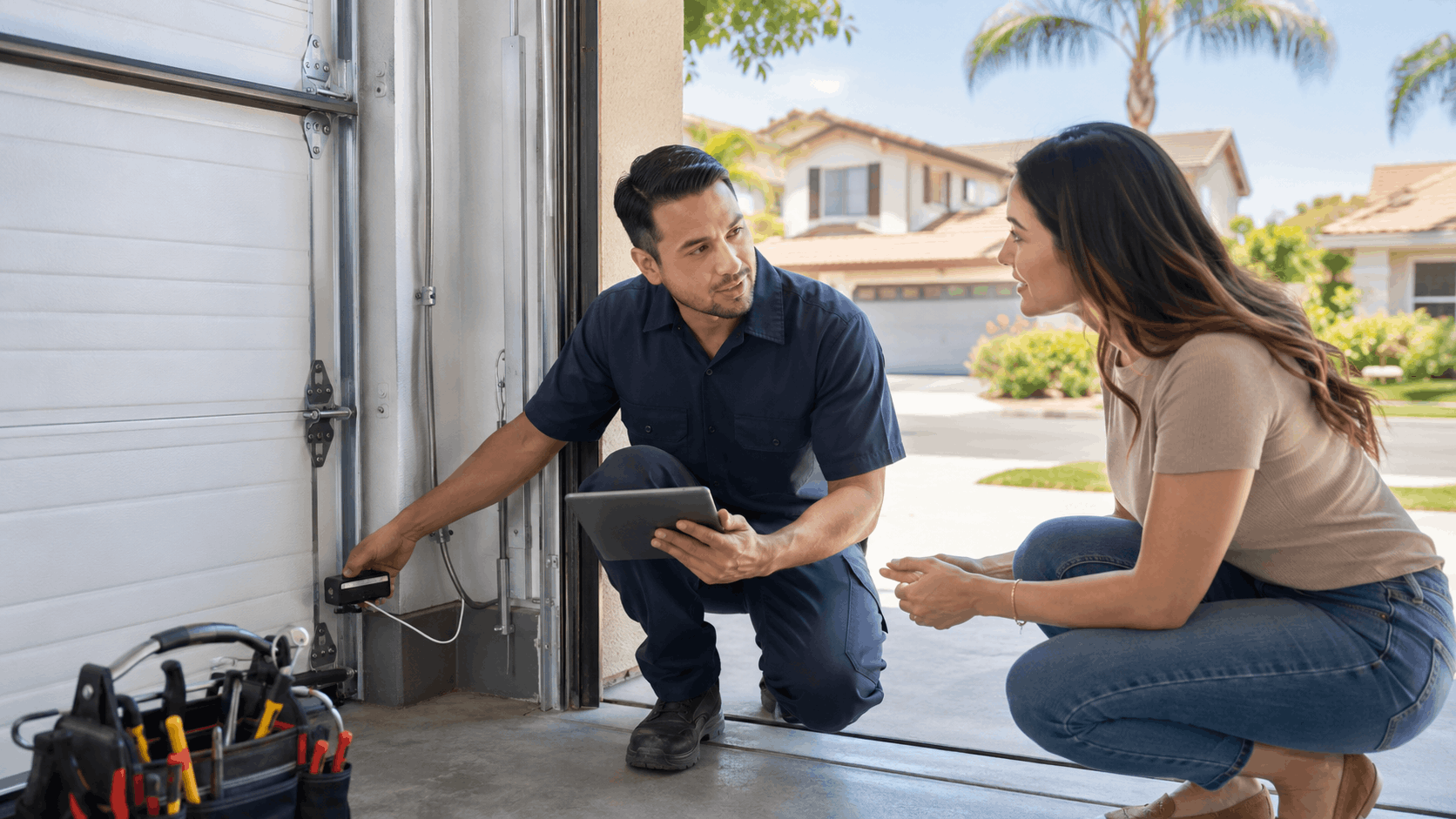
Choosing a Garage Door Repair Company in Irvine
Not every garage door company treats a sensor job the same way. Some see a blinking light as a chance to sell you a whole new opener. Picking a fair, honest team makes all the difference in what you pay and how well the fix holds.
Here is what to look for when you need garage door repair in Irvine, and how our team approaches these calls.
Why Local Response Time Matters
A garage door stuck open is more than an inconvenience. It leaves your home and everything in the garage exposed to anyone walking by. In a busy area, that is a real security risk that grows the longer the door stays open.
This is why response time matters so much. A local technician can often reach you the same day, while an out-of-area crew might leave you waiting until tomorrow. Fast local service closes that security gap quickly.
Being based right here in Irvine means we know the fastest routes to every neighborhood. We are not fighting freeway traffic from another county to get to you. That local edge shows up in how fast we arrive.
Our same-day garage door repair covers sensor emergencies across the area. When your door will not close, waiting is not the answer.
Questions to Ask Before Booking
A few good questions weed out the upsell-heavy companies. Ask for the service call fee upfront and whether it rolls into the repair. A fair company will tell you plainly and put it in writing.
Ask about the warranty on parts and labor. Quality sensors and honest work come with a guarantee. If a company dodges the warranty question, that tells you something about how confident they are in the repair.
Ask whether they will try a repair before pushing a replacement. The answer reveals a lot. A trustworthy team fixes what can be fixed and only replaces what is truly worn out.
Get upfront pricing before anyone starts turning wrenches. You should know the ballpark before the visit and the exact figure before the work begins. No surprises is the standard to hold everyone to.
How Urgent Garage Doors Diagnoses Sensor Issues
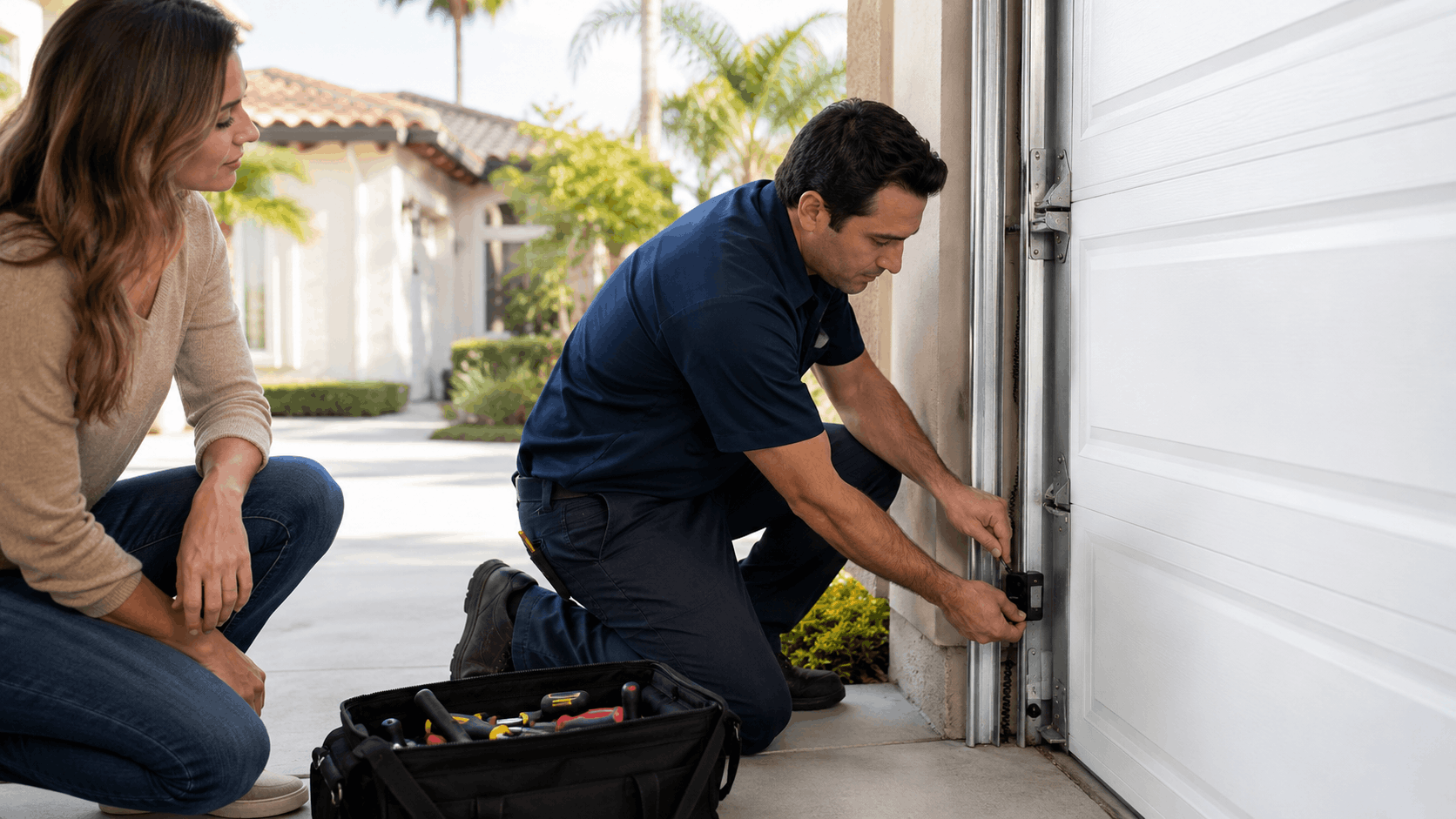
When our team arrives for a sensor call around Irvine, we follow a clear diagnosis process. First we check the beam alignment and the LED lights on both sensors. That alone identifies a large share of problems.
Next we test the wiring from the sensors back toward the opener, looking for breaks, corrosion, and loose connections. We use a meter to confirm the signal is actually reaching the board. This catches the wiring faults that mimic a bad sensor.
Then we check the opener's logic board to make sure it is reading the sensors correctly. Sometimes the sensors are fine and the board is the weak link. Testing all three points means we find the true cause, not just a guess.
Only after this full check do we recommend a fix. That way you get the right repair the first time, whether it is a realignment, a wiring fix, or a fresh sensor pair. Our Irvine service is built around getting it right.
Avoiding Common Overcharge Traps
The most common overcharge trap is selling a whole new opener when only a sensor pair is needed. A new opener runs several hundred dollars installed, while a sensor pair is a fraction of that. Some companies blur that line on purpose.
Watch out for anyone who diagnoses a "bad opener" without testing the sensors and wiring first. If they skip straight to replacement talk, be cautious. A proper diagnosis always comes before a big-ticket recommendation.
Honest pricing means matching the fix to the actual problem. If your opener is healthy and only the sensors failed, that is what we tell you. We would rather earn a repeat customer than oversell one job.
You can always ask for the reasoning behind a replacement recommendation. A good technician will walk you through exactly why, showing you the failed part. Transparency is how you avoid getting overcharged.
Keeping Your Sensors Working Long Term
A little upkeep goes a long way with garage door sensors. Most repeat repairs come from neglect that could have been caught early. A simple routine keeps your sensors reading true and stretches their life well past a decade.
Here is the sensor maintenance approach we recommend to every homeowner we visit.
A Simple Monthly Test Routine
Once a month, run a quick auto-reverse test. With the door open, place an object like a cardboard box or a roll of paper towels in the beam's path near the floor. Then press the button to close the door.
A healthy system will stop and reverse the moment the door senses the object. If it reverses, your sensors are working correctly. If it keeps closing, the sensors are failing and need attention right away.
This monthly test takes under a minute and tells you your safety system is doing its job. It is the same wave-an-object check technicians use, just done on a schedule. Mark it on your calendar so it becomes a habit.
Testing regularly means you catch a fading sensor before it strands your car inside. A small monthly check beats an emergency call every time. It also keeps your family safe from a door that no longer reverses.
Protecting Wiring From Weather and Pests
The low-voltage wiring is where a lot of long-term trouble starts. Keep it secured with proper staples or clips so it does not sag or get pinched. Loose wire invites damage over time.
Pests are a real threat, especially near open fields and newer developments. Rodents chew wire, so sealing gaps around the garage keeps them out. Steel wool in small openings and sealed weatherstripping help block their entry.
Moisture protection matters most in coastal-influenced areas. A dab of dielectric grease on the terminals fights salt air corrosion. Keeping the wire runs off the floor stops water damage during winter rains.
These small steps prevent the wiring faults that mimic sensor failure. A protected wire run lasts far longer and saves you repeat repairs. Our maintenance and upgrades service can handle this during a visit.
Scheduling an Annual Door Tune-Up
Once a year, have the whole door checked by a pro. An annual tune-up catches sensor drift, loose brackets, and worn wiring before any of it fails. It also covers the springs, rollers, and tracks in one visit.
During a tune-up we realign the sensors, clean the lenses, test the wiring, and confirm the auto-reverse works. Small adjustments now prevent the surprise breakdowns that always seem to happen at the worst time.
Think of it like an oil change for your garage door. Preventive service costs far less than emergency repairs, and it keeps everything running smoothly. One yearly visit covers a lot of ground.
Our preventive maintenance plan makes this easy to stay on top of. Regular checks are the surest way to avoid sensor headaches down the road.
Signs It Is Time to Upgrade the Whole System
Sometimes maintenance can only do so much. If your opener is over fifteen years old and you have fixed the sensors more than once, those are clear upgrade signs. The system is near the end of its useful life.
Frequent breakdowns, hard-to-find parts, and an opener that lacks modern safety features all point the same direction. A new opener comes with better-shielded sensors that resist sun glare and moisture. It ends the cycle of repeat repairs.
Newer systems also add battery backup, so your door works during a power outage, and smartphone control for convenience. These features make the upgrade worthwhile beyond just reliability. The peace that comes from a door that just works is real.
When the numbers favor a new system, we lay it out honestly and never push. If your current setup has life left, we say so. When it is truly time, a fresh opener with modern sensors is a solid investment.
Need Help in Irvine?
Urgent Garage Doors serves Irvine and all of Orange County.
Final Thoughts
A blinking sensor light does not have to ruin your morning. Most photo eye sensor problems are quick and affordable to fix, whether it is a simple realignment, a wiring repair, or a fresh sensor pair. Knowing the warning signs and the honest cost ranges puts you in control.
The Orange County climate, from coastal salt air to harsh afternoon sun and construction dust, plays a real part in why sensors fail. A little monthly testing and an annual tune-up keep those failures from catching you off guard.
When you need help, choose a local team that diagnoses honestly and prices upfront. If your garage door refuses to close in Irvine or anywhere across Orange County, our team at Urgent Garage Doors is ready to help. Reach out through our contact page or call us for same-day sensor service that gets your door working again.
Frequently Asked Questions
How much does garage door sensor repair cost in Orange County?
Most sensor repairs in Orange County run between $85 and $300. A simple realignment falls in the $85 to $150 range since it needs no new parts. Wiring repair lands around $125 to $225. A full photo eye replacement of both sensors, including parts and labor, typically costs $150 to $300. If the opener's logic board also needs work, the total can reach $450.
Why does my garage door close then open back up?
This is the auto-reverse feature reacting to a blocked or misaligned sensor beam. The two photo eyes send an infrared beam across the door opening, and if that beam is broken or the sensors are out of line, the opener assumes something is in the way. It reverses to avoid crushing an obstacle. Cleaning the lenses and realigning the sensors usually fixes it right away.
Can I fix a garage door sensor myself?
You can handle the safe basics yourself. Wipe the lenses with a soft cloth to clear dust and spider webs, and gently realign the sensors until both LED lights glow steady. Clear any clutter blocking the beam. Stop there if the problem involves wiring, springs, or the opener's internals. Those repairs need a technician for safety reasons, so call a pro if cleaning and alignment do not solve it.
What does a blinking sensor light mean?
A blinking sensor light means the system has lost the beam. On most units, a blinking receiver LED points to misalignment, a dirty or cracked lens, or a wiring fault. Different brands use slightly different blink patterns, but the message is the same: the two eyes are not communicating cleanly. Start by cleaning the lenses and checking alignment. If the light stays blinking, the wiring or the sensor itself likely needs service.
How long do garage door sensors last?
Photo eye sensors typically last ten to fifteen years. In Orange County, coastal salt air, harsh afternoon sun, and construction dust can shorten that lifespan. Corrosion on terminals, cracked lenses from heat, and chewed wiring all cut life short. Homes near the coast tend to see sensors fail sooner than inland properties. Regular cleaning and an annual tune-up help your sensors reach the longer end of that range.
Do both sensors need to match brands?
The two sensors in a pair must match each other and be compatible with your opener brand. A LiftMaster opener needs LiftMaster or Chamberlain-compatible sensors, for example, since those brands share technology. Mixing a random sensor with a mismatched partner or opener usually causes reading errors. We always replace both sensors as a matched pair to keep the beam reliable and avoid mismatch problems down the road.
How long does a sensor repair take?
Most sensor repairs take under an hour. A simple realignment or lens cleaning can be done in fifteen to thirty minutes. A full sensor pair replacement usually takes thirty to sixty minutes including testing. Wiring repairs may run a bit longer if the damaged section is hard to reach or buried in the wall. In most cases, we diagnose and complete the fix in a single visit.
Is a stuck-open garage door a security risk?
Yes, a stuck-open garage door is a serious security risk. It gives anyone easy access to your garage and often to your home through the interior door. In coastal Orange County it also lets in moisture and salt air that can damage stored items. A failing sensor that leaves the door open should be fixed quickly. This is why we treat stuck-door calls as urgent, same-day priorities.
Does sun glare really affect photo eye sensors?
Yes, direct sunlight can absolutely trigger false readings. In Irvine neighborhoods like Woodbridge and Turtle Rock, low afternoon sun can shine straight into a photo eye and wash out the infrared beam. The sensor reads the glare as a blocked path and the door refuses to close. The fix is usually adjusting the sensor angle or adding a small sun shield to block the direct light.
Does Urgent Garage Doors offer same-day sensor repair in Irvine?
Yes, we offer same-day sensor repair across Irvine and the surrounding Orange County communities. Because we are based locally, our technicians can reach most neighborhoods quickly, from Woodbridge and Turtle Rock to Portola Springs and the Great Park area. A stuck-open door is a security concern, so we prioritize these calls. Reach out through our contact page or give us a call to schedule fast local service.
Frequently Asked Questions
- How much does garage door sensor repair cost in Orange County?
- Most sensor repairs in Orange County run between $85 and $300. A simple realignment falls in the $85 to $150 range since it needs no new parts. Wiring repair lands around $125 to $225. A full photo eye replacement of both sensors, including parts and labor, typically costs $150 to $300. If the opener's logic board also needs work, the total can reach $450.
- Why does my garage door close then open back up?
- This is the auto-reverse feature reacting to a blocked or misaligned sensor beam. The two photo eyes send an infrared beam across the door opening, and if that beam is broken or the sensors are out of line, the opener assumes something is in the way. It reverses to avoid crushing an obstacle. Cleaning the lenses and realigning the sensors usually fixes it right away.
- Can I fix a garage door sensor myself?
- You can handle the safe basics yourself. Wipe the lenses with a soft cloth to clear dust and spider webs, and gently realign the sensors until both LED lights glow steady. Clear any clutter blocking the beam. Stop there if the problem involves wiring, springs, or the opener's internals. Those repairs need a technician for safety reasons, so call a pro if cleaning and alignment do not solve it.
- What does a blinking sensor light mean?
- A blinking sensor light means the system has lost the beam. On most units, a blinking receiver LED points to misalignment, a dirty or cracked lens, or a wiring fault. Different brands use slightly different blink patterns, but the message is the same: the two eyes are not communicating cleanly. Start by cleaning the lenses and checking alignment. If the light stays blinking, the wiring or the sensor itself likely needs service.
- How long do garage door sensors last?
- Photo eye sensors typically last ten to fifteen years. In Orange County, coastal salt air, harsh afternoon sun, and construction dust can shorten that lifespan. Corrosion on terminals, cracked lenses from heat, and chewed wiring all cut life short. Homes near the coast tend to see sensors fail sooner than inland properties. Regular cleaning and an annual tune-up help your sensors reach the longer end of that range.
- Do both sensors need to match brands?
- The two sensors in a pair must match each other and be compatible with your opener brand. A LiftMaster opener needs LiftMaster or Chamberlain-compatible sensors, for example, since those brands share technology. Mixing a random sensor with a mismatched partner or opener usually causes reading errors. We always replace both sensors as a matched pair to keep the beam reliable and avoid mismatch problems down the road.
- How long does a sensor repair take?
- Most sensor repairs take under an hour. A simple realignment or lens cleaning can be done in fifteen to thirty minutes. A full sensor pair replacement usually takes thirty to sixty minutes including testing. Wiring repairs may run a bit longer if the damaged section is hard to reach or buried in the wall. In most cases, we diagnose and complete the fix in a single visit.
- Is a stuck-open garage door a security risk?
- Yes, a stuck-open garage door is a serious security risk. It gives anyone easy access to your garage and often to your home through the interior door. In coastal Orange County it also lets in moisture and salt air that can damage stored items. A failing sensor that leaves the door open should be fixed quickly. This is why we treat stuck-door calls as urgent, same-day priorities.
- Does sun glare really affect photo eye sensors?
- Yes, direct sunlight can absolutely trigger false readings. In Irvine neighborhoods like Woodbridge and Turtle Rock, low afternoon sun can shine straight into a photo eye and wash out the infrared beam. The sensor reads the glare as a blocked path and the door refuses to close. The fix is usually adjusting the sensor angle or adding a small sun shield to block the direct light.
- Does Urgent Garage Doors offer same-day sensor repair in Irvine?
- Yes, we offer same-day sensor repair across Irvine and the surrounding Orange County communities. Because we are based locally, our technicians can reach most neighborhoods quickly, from Woodbridge and Turtle Rock to Portola Springs and the Great Park area. A stuck-open door is a security concern, so we prioritize these calls. Reach out through our contact page or give us a call to schedule fast local service.
U
Licensed garage door repair professionals serving Irvine and Orange County.
Licensed in California · License #1055150
Why trust Urgent Garage Doors?
Founded in 2017, Urgent Garage Doors is a licensed and insured garage door services serving Irvine and Orange County. All content is reviewed by our licensed technicians.

Need Help in Irvine?
Urgent Garage Doors serves Irvine and all of Orange County.
Related Articles
Cost Guides
Broken Garage Door Spring Repair Cost Newport Beach vs Anaheim: Why Pricing Varies
Compare broken garage door spring repair costs in Newport Beach vs Anaheim, why coastal prices run higher, and how to read quotes without getting overcharged.
Cost Guides
Garage Door Cable Replacement Cost Orange County: Why Pricing Varies by Neighborhood
Garage door cable replacement cost in Orange County varies by neighborhood. Learn why prices differ, real cost ranges, and how to get a fair, accurate quote.
Cost Guides
Garage Door Panel Replacement vs Full Door Replacement in Orange County
Should you replace one damaged garage door panel or the entire door? This guide covers costs, timelines, HOA rules, and local Orange County factors to help you decide.