How-To Guides
New Doors for Old Towne Orange Historic Homes: Period-Appropriate Styles That Pass Review
Key Takeaways
- Old Towne Orange sits inside a National Register historic district, so visible garage door changes usually require City of Orange design review before installation.
- Match your door to the home's era: horizontal carriage styles for Craftsman, vertical board for Victorian, and arched iron-accented doors for Spanish Colonial.
- Solid wood earns the easiest approval, but quality composite and steel wood-grain doors can pass review with accurate panels, hardware, and low-gloss finishes.
- Skipping review risks code violations, fines, and forced removal, making early submission far cheaper than fixing a rejected door.
- Modern openers, insulation, and smart controls can hide behind a period-correct carriage face without failing review.
- Old detached garages face UV fading, off-square openings, rot, and termites, so custom fitting and framing checks matter before install.
- Urgent Garage Doors serves Old Towne Orange from Irvine, handling style selection, custom sourcing, fitting, and emergency repairs for historic homes.
In This Article
A homeowner on North Cambridge Street called us last spring in a panic. She had just installed a shiny new steel garage door on her 1912 bungalow, and within a week the City of Orange sent a notice that the door failed design review. The panels were wrong, the finish was too glossy, and now she faced removing a brand-new door she had already paid for.
Stories like this happen more than people think in Old Towne Orange. The neighborhood sits inside one of the largest protected historic districts in California, and that protection changes how residents replace anything visible from the street, garage doors included.
Why Old Towne Orange Homes Have Special Door Rules?
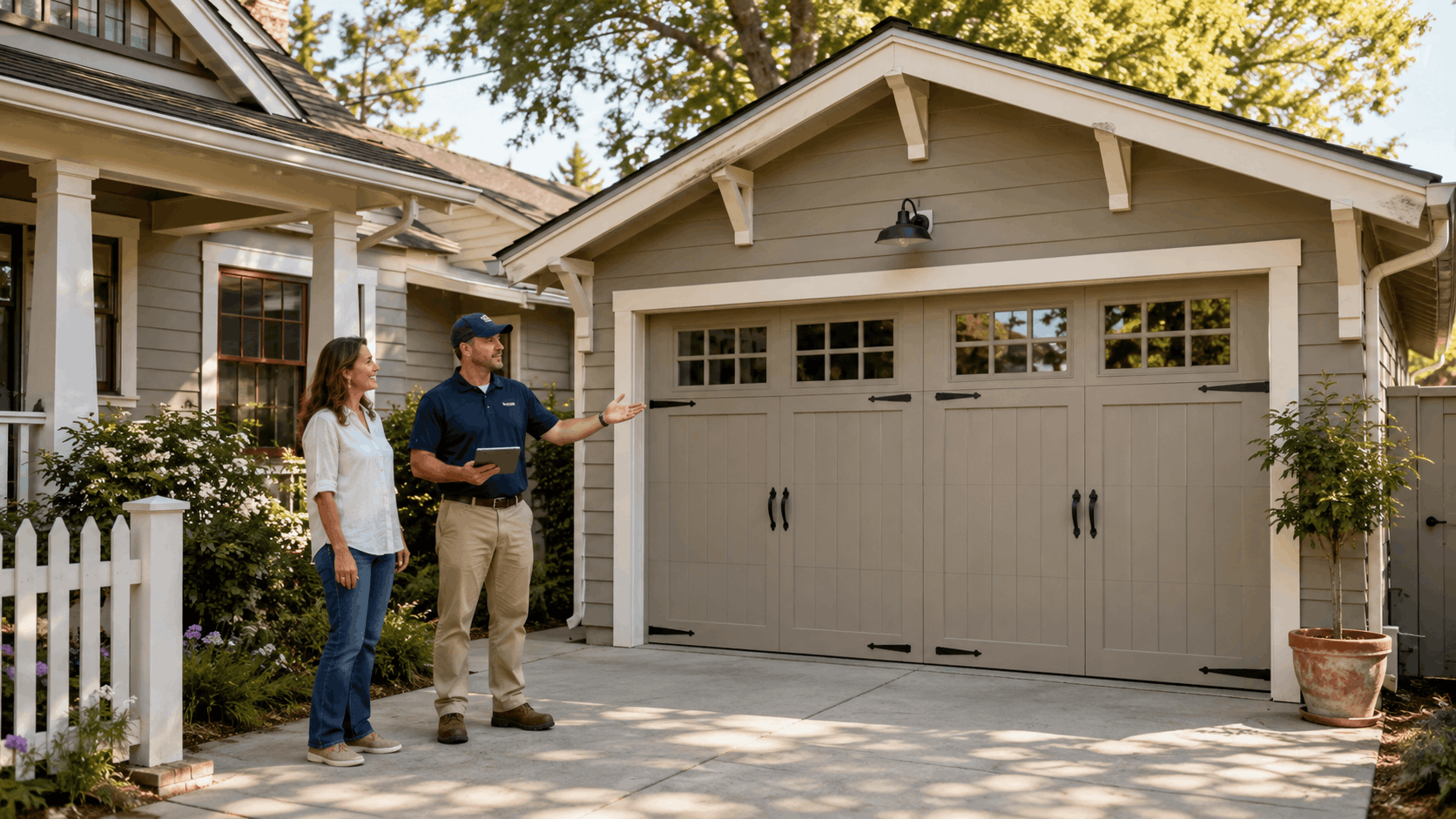
Old Towne is not a normal neighborhood when it comes to home changes. It is a recognized historic district, and that status comes with rules most Orange County homeowners never deal with. Before you swap a garage door, the city wants a say in how it looks.
Here is why the rules exist and what they protect:
- The district keeps a consistent early-1900s look across hundreds of homes
- Doors, windows, and trim visible from the street are reviewed for accuracy
- Property values in Old Towne partly ride on the preserved historic character
- Changes made without review can be reversed at the owner's cost
Once an owner understands that the goal is preservation, the review steps make a lot more sense. The city is not trying to be difficult. It is protecting a shared streetscape that draws visitors to the Orange area every weekend.
The National Register Historic District Explained
Old Towne Orange covers roughly one square mile centered on the Orange Plaza, the famous traffic circle where Glassell and Chapman meet. The district was placed on the National Register of Historic Places, which recognizes it as a place worth protecting for its architecture and history.
That National Register listing is why the homes look so uniform. Walk any block near the Orange Plaza and you will see Craftsman bungalows, Victorians, and Spanish-style cottages that still carry their original details. The listing does not freeze the homes in time, but it does guide how they can change.
For garage doors, the practical effect is simple. Anything the public can see from the sidewalk should reflect the era of the house. A modern raised-panel steel door on a 1915 bungalow breaks that visual rhythm, and the city notices.
The protection also brings benefits. Homes inside the district often qualify for the Mills Act, a California program that can lower property taxes in exchange for keeping the home historically accurate. That trade-off pushes many owners toward period-correct doors anyway.
Which Streets and Areas Fall Under Review
The review zone is larger than most people expect. It stretches out from the Orange Circle along Glassell Street and Chapman Avenue, then spreads into the surrounding blocks of homes. If your house is anywhere near the plaza, assume review applies.
Streets like Glassell, Grand, Cambridge, Center, and Olive all sit inside the district. Homes along these roads almost always need approval before a visible door swap. We have worked on garages tucked behind Grand and Cambridge where even the alley-facing door drew attention.
The area near the Orange Circle is the most closely watched. Homes within a few blocks of the plaza get the strictest look because they define the district's front door for tourists and film crews. Many movies and shows film here, so the city guards the look carefully.
If you are unsure whether your property falls inside the boundary, the City of Orange planning department keeps a district map. A quick call to confirm your address saves a lot of grief later. Owners in nearby areas like Orange Park Acres face different rules, so location matters.
What Happens if You Skip the Review
Skipping review is the most expensive mistake we see. The homeowner on Cambridge learned this the hard way when the city flagged her new door. Installing a non-approved door is treated as a code violation, and the city can order it removed.
A forced removal means paying twice: once for the wrong door and again for the correct one. On top of that, the city can issue fines that grow the longer the violation sits. Those fines can climb into the hundreds or thousands depending on the case.
There is also the permit problem. A door change usually needs a permit, and skipping it can freeze other work on the home. If you ever sell, an unpermitted change can surface during inspection and stall the whole deal.
The safer path is to go through review first, even when it feels slow. A few weeks of waiting beats months of fines and a torn-out door. We always advise owners to start with the city before ordering anything.
Get Your Free Quote
Tell us about your garage door and we'll get back to you fast.
Matching Your Door to the Home's Architectural Era
Old Towne is a mix of housing styles built mostly between 1888 and 1930. Each era carries its own door look, and the review board wants your new door to match the home it sits on. Getting the architectural style right is the first step toward a period-appropriate door that passes.
The trick is reading your house before you shop. A Craftsman bungalow, a Queen Anne Victorian, and a Spanish Colonial each call for a different door. Guess wrong and you invite a rejection.
Craftsman and Bungalow Homes
Craftsman bungalows make up a huge share of Old Towne, especially in the blocks near Chapman University. These homes favor honest materials, low rooflines, and simple horizontal lines. The garage door should echo that same calm, grounded feel.
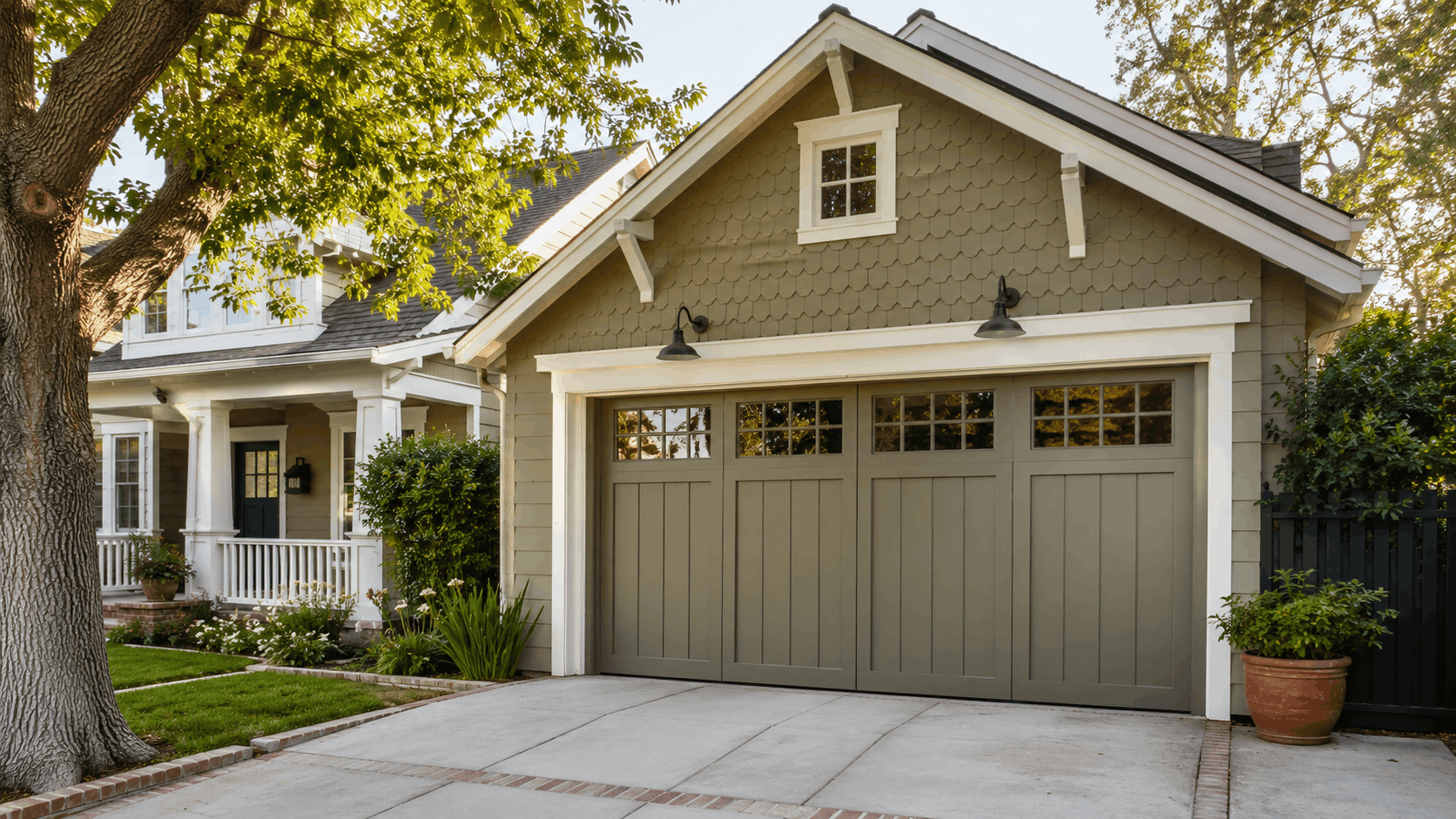
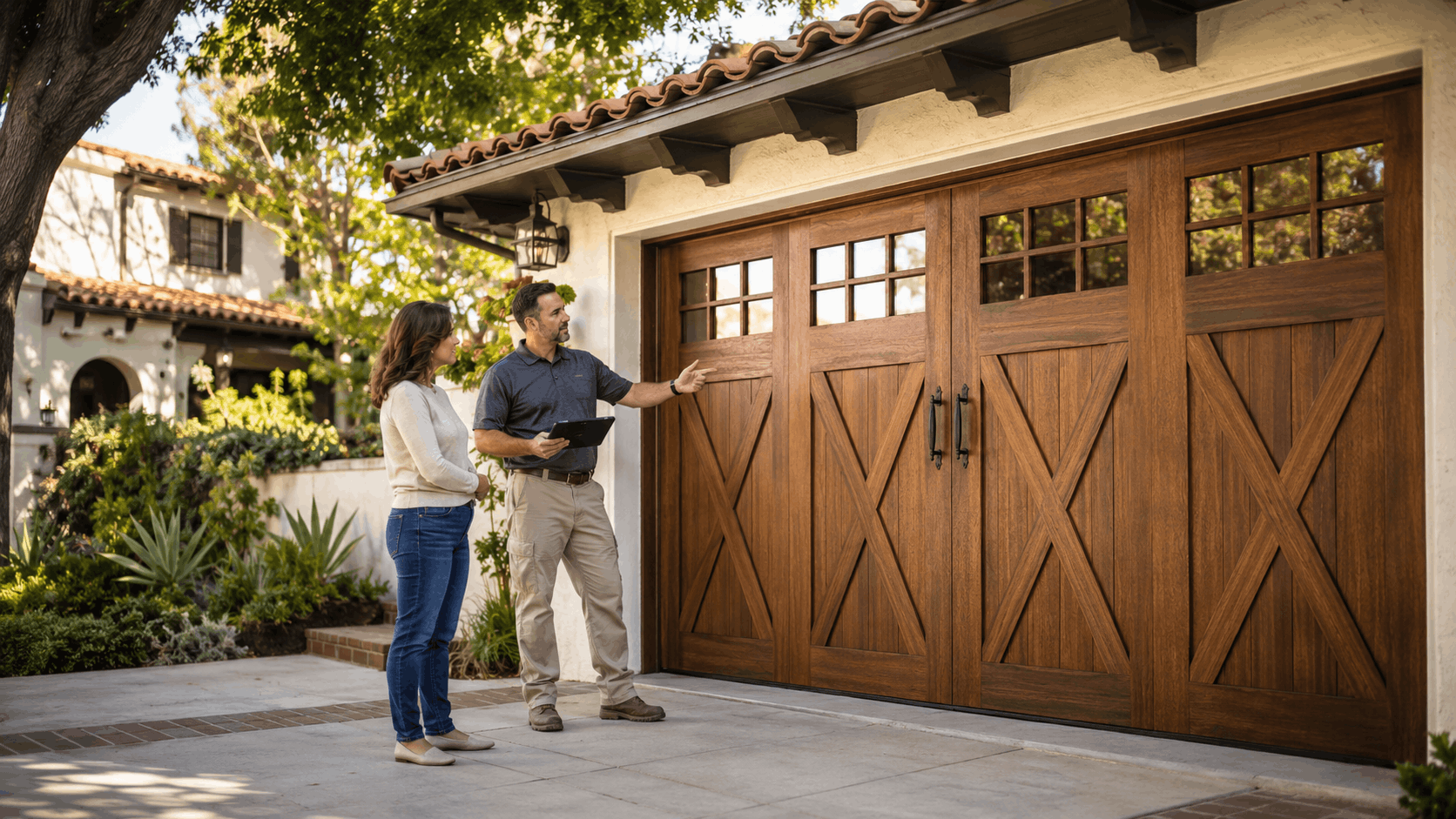
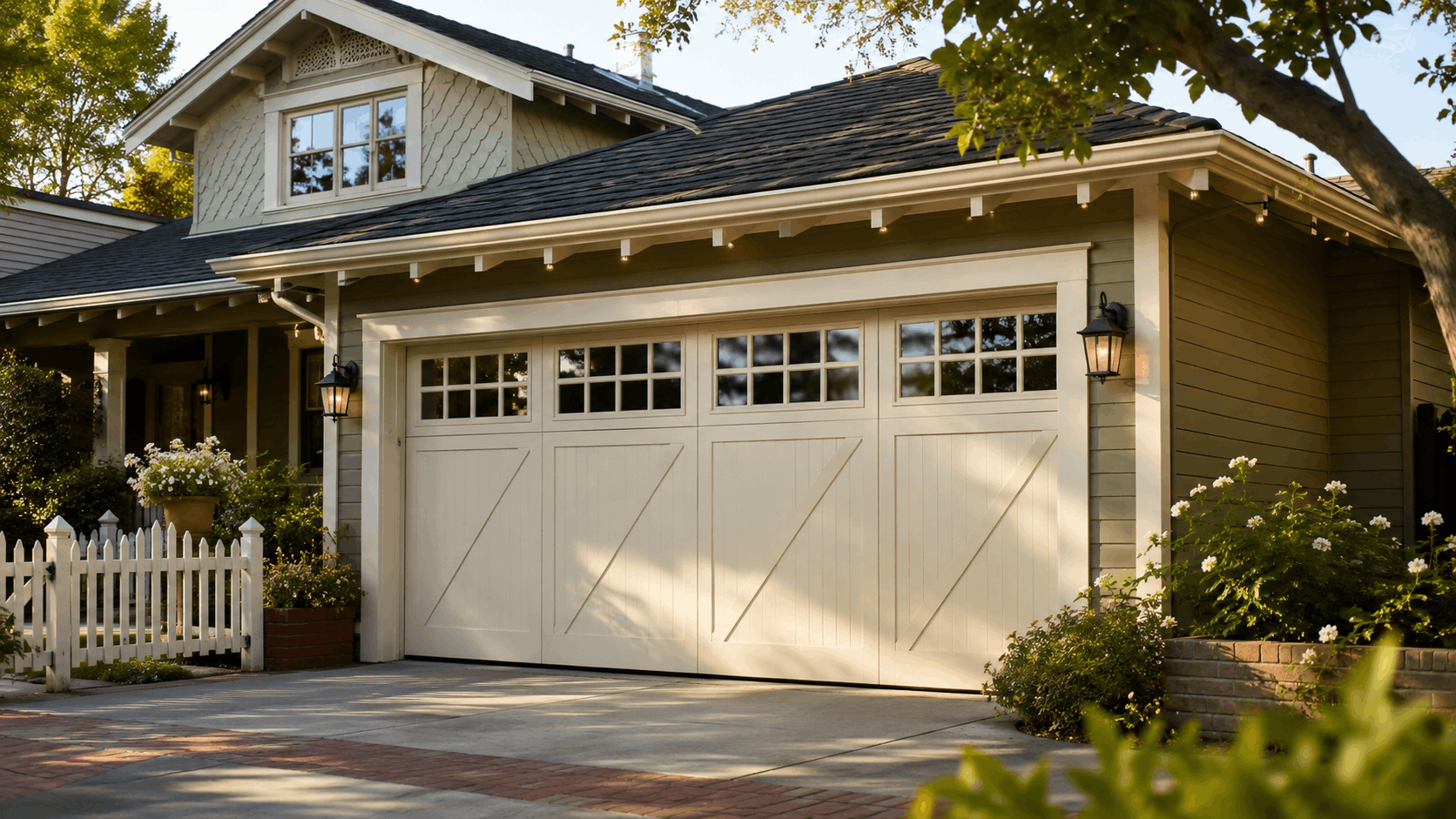
The classic choice is a wood carriage door with horizontal panels and a low-gloss stained finish. Some carry small square windows across the top row, matching the divided-light windows on the house. A carriage house garage door in a warm stain reads as period-correct right away.
Hardware matters here too. Simple black strap hinges and a modest handle finish the look without going overboard. Craftsman style is about restraint, so a plain but well-built door usually beats a fancy one.
Avoid high-gloss paint and vertical raised panels on these homes. Those details belong to other eras and will feel out of place to a reviewer. When in doubt, keep it horizontal, matte, and wood-toned.
Victorian and Queen Anne Properties
The older Victorian and Queen Anne homes cluster toward the north end of the district. These houses show off ornate trim, tall proportions, and rich detail. Their doors can be more decorative than a Craftsman door without breaking the rules.
Vertical board designs suit these homes well. A door built from tall vertical planks, sometimes with a beadboard texture, echoes the fence and porch details common on Victorians. Darker stains or deep historic paint colors round out the look.
Many of these homes came before cars, so their garages were added later or converted from carriage houses. That history gives owners room to lean into a true swing-style carriage look, which reviewers tend to welcome on Victorian lots.
Trim and molding on the door frame should reflect the fussier Victorian detailing. Skipping trim on a Queen Anne garage often looks bare and can draw a note from the committee. Matching the home's existing woodwork keeps everything in harmony.
Spanish Colonial and Mission Revival Styles
Spanish Colonial and Mission Revival homes show up throughout Old Towne, marked by stucco walls, red tile roofs, and arched openings. Their garage doors follow a different set of cues than the wood-heavy Craftsman look.
Arched or curved door tops fit these homes when the opening allows it. The color palette leans toward stains that pair well with tan and cream stucco, or muted earth-tone paints. Bright or cool colors clash with the warm Spanish look.
Wrought-iron accents are the signature detail here. Decorative iron straps, handles, and small speakeasy-style grilles give the door that Mission Revival character. Even a flat sectional door can pass when the right iron hardware is added.
The wood itself is often a warm alder or a wood-grain finish that reads as hand-built. Reviewers want the door to look like it belongs to the era of tile roofs and adobe influence, not a modern tract home. Keeping the finish soft and the hardware iron does most of the work.
Reading Your Home's Original Details
Before shopping, spend an afternoon studying your own house. The home tells you what door it wants if you look closely. Start with the front door and windows, since those set the tone for everything else.
Check whether your window panels run horizontal or vertical, and count the divided lights. Match that pattern in your garage door glass. A home with six-over-one windows pairs nicely with a door carrying a similar grid.
Look at the trim around doors and windows next. Note the width, the profile, and the color. Repeating that trim on the garage door frame ties the whole facade together and reads as intentional to a reviewer.
Rooflines and materials matter too. A steep gable with exposed rafter tails points to Craftsman, while a flat parapet with tile points to Spanish. When the original details all line up with your door choice, approval gets much easier.
Need Help in Irvine?
Urgent Garage Doors serves Irvine and all of Orange County.
Materials That Look Historic and Still Hold Up
Picking a style is only half the job. The material has to satisfy the review board and survive Orange County weather at the same time. The Orange sun is hard on doors, so authenticity and durability both count.
Here is how the common material choices stack up:
| Material | Review Approval | Durability | Upkeep | Cost Range |
|---|---|---|---|---|
| Solid Wood | Highest | Good with care | High | $3,500 - $9,000+ |
| Composite | Good with detailing | Very good | Low | $2,500 - $6,000 |
| Steel with wood grain | Case by case | Excellent | Low | $1,800 - $4,500 |
| Aluminum faux wood | Limited | Very good | Low | $2,000 - $5,000 |
Real Wood Doors: Pros and Upkeep
Solid wood is the gold standard for review approval in Old Towne. Nothing matches the look, weight, and grain of real wood, and the committee knows it on sight. If you want the smoothest path to a yes, wood is the safe bet.
The trade-off is upkeep. The Orange sun dries out wood and fades stain over a few seasons, especially on south-facing garages. Owners should plan to reseal or restain every two to four years to keep the wood healthy.
Species matters for longevity. Cedar and redwood resist rot and warping better than cheaper woods, which helps in our dry heat. Paying more up front for a stable species saves headaches later.
A wood door also needs a good roof overhang or eave to shield it. Doors with no shade above them age fastest. Our team helps owners weigh the maintenance load before they commit to solid wood.
Faux Wood and Composite Options
Not every owner wants the upkeep of real wood, and that is where composite and faux wood come in. A well-made composite door or a steel door with a wood-grain finish can pass review when the detailing is right. The panels, proportions, and hardware have to be accurate.
Composite doors handle the Orange climate with far less care. They do not dry out, warp, or need restaining every couple years. For a detached garage that bakes in afternoon sun, that stability is a real advantage.
The catch is that reviewers look closely. A cheap faux wood door with shallow grain and wrong panels gets flagged fast. The successful composite doors mimic real board layouts and carry proper period hardware to sell the illusion.
We often steer budget-minded owners toward a quality composite with careful detailing. It costs less over its life and still reads as historic from the street. A professional garage door installation makes the difference between a door that passes and one that looks fake.
Hardware, Hinges, and Handles That Match the Period
Hardware is what turns a plain door into a historic one. Reviewers expect to see decorative strap hinges, correct handles, and often clavos, the round nail-head studs seen on Spanish and rustic doors. These small pieces carry a lot of visual weight.
Strap hinges should run along the panel seams to suggest a swing-out carriage door, even on a sectional. Black wrought-iron or oil-rubbed bronze finishes fit almost every era found in Old Towne. Shiny chrome or brass usually looks too modern.
Handles and pull rings should match the hinge finish and style. A single centered ring pull reads Spanish, while paired handles read carriage house. Mixing finishes or styles is a common reason a door looks off.
For Spanish and Mission Revival homes, clavos add authenticity that reviewers reward. Scattering a few across the door face mimics the hand-forged look of old ranch doors. Getting the hardware right often carries a borderline door across the finish line.
Finishes and Colors That Get Approved
The finish can make or break an approval. Old Towne favors low-gloss, muted, historic tones over bright or shiny finishes. A glossy paint job on a Craftsman door is one of the fastest ways to earn a rejection.
Stain is the preferred choice for most wood and wood-grain doors. It shows the grain, ages gracefully, and matches the era. Deep browns, warm reds, and honey tones all sit comfortably in the district.
When paint is used, stick to historic paint colors. Muted greens, soft grays, deep reds, and creamy off-whites all appear in period color guides. Chapman and other local paint sources can supply historically accurate palettes.
Gloss level deserves special attention. Aim for flat, matte, or low-sheen finishes rather than semi-gloss or high-gloss. The duller the finish, the more period-correct the door looks, and the happier the committee tends to be.
How the Old Towne Design Review Process Works
The design review process scares a lot of owners, but it follows a clear path once you know the steps. The City of Orange runs it, and most door projects move through without drama when the application is complete. Here is the roadmap.
Broadly, the steps look like this:
- Confirm your property sits inside the historic district
- Gather photos, drawings, and product specs for the proposed door
- Submit to the Design Review Committee or planning staff
- Wait for either a staff-level approval or a full committee hearing
- Pull the permit and schedule installation once approved
Starting the paperwork early keeps your timeline realistic. We usually help owners assemble the packet so nothing gets kicked back for missing pieces.
Submitting to the Design Review Committee
The Design Review Committee wants to see exactly what you plan to install. That means clear photos of the existing garage and house, a product cut sheet or spec from the manufacturer, and the finish and color you intend to use. The more detail, the smoother the review.
Your submittal should also show the door in context. A simple drawing or photo mockup of the new door on your home helps the committee picture the change. Reviewers approve faster when they can see the finished result clearly.
Applications go to the City of Orange Community Development department. Staff will tell you whether your project qualifies for a quick staff review or needs the full committee. Submitting online or in person both work, depending on the current process.
Include dimensions and note any hardware you plan to add. Listing the strap hinges, handles, and glass details up front prevents follow-up questions. A complete first submittal is the biggest time saver in the whole process.
Minor vs Major Review Timelines
Not every door change needs a full hearing. Small, clearly compatible changes often qualify for a minor review handled by planning staff. These can clear in a couple weeks when the paperwork is clean.
A minor review usually applies when your new door closely matches what was there and fits the home's era. Swapping a worn wood carriage door for a new one in the same style is a typical minor case. Staff can sign off without a public meeting.
Bigger or less obvious changes go to the full Design Review Committee, which meets on a set schedule. That path can take several weeks longer because you wait for the next available hearing date. Plan for four to eight weeks when a full review is involved.
The timeline gap is why we push owners to start early. If your project might need a full hearing, do not order the door until you have a date. Rushing an order before approval is how doors end up in garages instead of on them.
Common Reasons Doors Get Rejected
Most rejections come from a short list of repeat mistakes. Wrong panel orientation tops that list, like putting vertical panels on a Craftsman home that calls for horizontal ones. The committee spots orientation problems instantly.
Modern windows are another frequent trigger. Large clear glass or trendy frosted panels clash with the small divided-light look of the era. Matching the glass pattern to the house avoids this common denial.
High-gloss finishes get rejected often too. A door that shines under sunlight looks brand-new in a way the district resists. Dropping to a matte or low-sheen finish usually resolves the concern.
Wrong or missing hardware rounds out the list. A bare door with no straps or handles on a carriage-style home reads as incomplete. Fixing these issues and resubmitting is normal, and most owners pass on the second try.
Keeping the Look Historic While Adding Modern Function
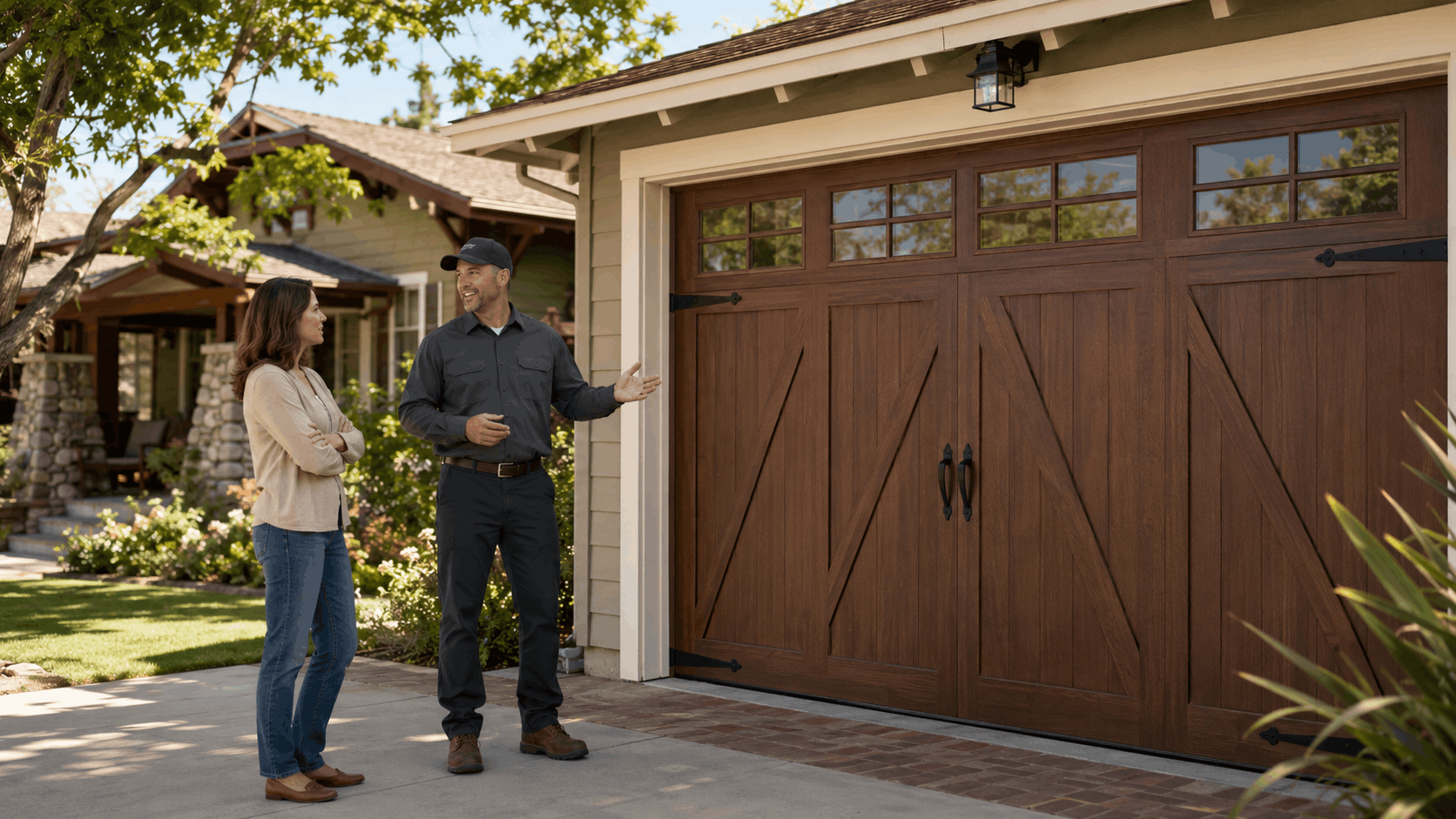
Owners love the charm of an old house but still want a door that opens with a button and keeps the garage comfortable. The good news is you can have both. Modern function can hide behind a historic face without failing review.
The rule of thumb is simple: the street sees history, and you get convenience. Everything modern lives behind the period-correct exterior.
Hidden Openers and Smart Controls
A carriage-style face can hide a fully automatic opener with no visible sign of the mechanism. The door looks like an old swing-out from the sidewalk while rolling up on a modern track. Reviewers only see the historic exterior, which is all that matters to them.
Smart controls take it further. App-based openers let owners open and close from a phone, get alerts, and set schedules. A smart WiFi opener setup adds all that without touching the door's appearance.
The opener itself mounts inside the garage, out of public view. Nothing about the automation shows on the historic face, so the district look stays intact. Owners get the same convenience as a new home in a modern subdivision.
We install these systems on Old Towne garages regularly. The trick is fitting a quality opener that runs quietly and reliably behind a heavier historic door. Our team sizes the opener to the door weight so it lasts.
Insulation and Energy Savings
Many Old Towne garages are detached and were never built for comfort. In an Orange summer, an uninsulated garage turns into an oven, which ruins it for hobbies, workshops, or storage. An insulated door fixes that without changing the exterior.
Insulated cores sit inside the door panels, invisible from the street. They cut heat transfer, so the space stays more usable through July and August. For owners who work in their garage, this upgrade pays off quickly.
Insulation also dampens noise and adds stiffness to the door. A stiffer door resists warping, which helps in our dry heat. The energy savings are a bonus on top of the comfort gain.
Because the insulation hides inside, it never affects review. Owners can add a weatherseal and insulation retrofit to an approved historic door and keep the look intact. It is one of the easiest wins for older detached garages.
Faux Swing-Out Doors on Modern Tracks
The most popular Old Towne solution is a sectional door styled to mimic old swing-out carriage doors. From the street it looks like two doors that swing open on hinges. In reality it lifts overhead on a modern track like any garage door.
This swing-out look gives owners the vintage charm the district wants with the practicality of an overhead door. There are no wide clearances needed in the driveway and no doors to prop open. The illusion is convincing when the hardware and panel lines are right.
Reviewers accept these readily because the visible result matches the era. The faux hinges and center seam sell the swing-out story. Meanwhile the family gets a door that opens with a remote in seconds.
We install a lot of these across Old Towne. A sectional garage door replacement in a carriage style hits the sweet spot between history and function. It is the choice we recommend most often for the district.
Need Help in Irvine?
Urgent Garage Doors serves Irvine and all of Orange County.
Weather and Wear Issues Unique to Old Towne Garages
Century-old garages come with their own set of problems. The framing has shifted, the wood has weathered, and the alleys hold moisture. Knowing these issues ahead of time helps owners plan the right fix.
Here are the common trouble spots we find on Old Towne garages:
| Issue | Cause | Common Fix |
|---|---|---|
| UV fading | South-facing afternoon sun | Restain, add overhang, use fade-resistant finish |
| Off-square openings | Old framing shifting over decades | Custom-sized door and careful fitting |
| Wood rot | Moisture in alleys and low panels | Panel or door replacement, sealing |
| Termite damage | Old untreated wood framing | Treatment and framing repair before install |
Sun Exposure and Fading on South-Facing Garages
Afternoon sun off Chapman Avenue is brutal on south-facing garages. The direct light fades stain and dries out wood faster than most owners expect. A rich brown door can look washed out within a few summers.
The drying does more than change color. As the wood loses moisture it can crack, cup, and split along the grain. Those cracks then let in more sun and moisture, speeding the decline.
Slowing UV fading starts with a quality finish. Marine-grade or UV-resistant stains hold color far longer than basic products. Reapplying every two to three years keeps the protective layer fresh.
Adding or extending an eave over the door helps a lot. Even a modest overhang cuts the direct sun hitting the door face. On the worst-exposed garages, we sometimes suggest a composite door that shrugs off UV entirely.
Old Framing and Off-Square Openings
Garage framing built a hundred years ago rarely stays square. Decades of settling, seismic shifts, and moisture cause the opening to lean or sag. A standard off-the-shelf door often will not fit these openings.
An off-square opening causes real problems if ignored. The door may bind, leave gaps, or refuse to seal along the bottom. Forcing a square door into a crooked opening leads to constant service calls.
The fix is custom sizing and careful fitting. We measure the opening at multiple points to catch the lean, then order or trim the door to match. Sometimes the frame itself needs shimming or minor rebuilding first.
This is where experience with old garages pays off. A crew used to modern tract homes may miss the out-of-square problem entirely. Our team expects it on Old Towne jobs and plans the install around it.
Moisture, Rot, and Termite Concerns
The alleys behind Grand and Cambridge trap moisture and shade, which is bad news for old wood. Rot tends to start at the bottom panels where water splashes and sits. Left alone, it spreads up the door and into the frame.
Termites are the other threat in older untreated framing. Orange County has active termite pressure, and century-old garage wood is a soft target. We often find damage hidden behind the trim once we start work.
Before installing a new door, the framing needs a look. Rotted or bug-eaten members should be treated or replaced first. Hanging a nice new door on failing framing wastes the investment.
Sealing and drainage help prevent a repeat. Keeping the bottom of the door off wet concrete and sealing end grain slows future rot. On borderline doors, a panel replacement can save a door that is otherwise sound.
Why Homeowners Call Urgent Garage Doors for Historic Projects
Historic door projects have more moving parts than a standard install. There is the review process, the custom fitting, the period hardware, and the old framing to deal with. Owners call our team because we handle all of it from one Irvine base.
We help Old Towne owners pick approved styles, order the right doors, and install them cleanly. Coordinating with review requirements is part of the service, so owners are not left guessing.
Local Knowledge of Orange County Historic Districts
Our team knows the Orange County historic districts well, including Old Towne and nearby areas like Old Town Tustin. We have worked on district homes and understand what the review boards want to see. That experience shortens the road to approval.
The drive from our Irvine base to the Orange Circle is a quick trip up the 5 and over. Being close means we can measure, consult, and install without long delays. Old Towne is well within our regular service range.
We also stay current on the local rules. Review guidelines and preferred styles shift over time, and we keep track so owners do not have to. That local knowledge is what separates a smooth project from a rejected door.
Serving the broader region also helps us source the right products. We know which suppliers carry period-correct doors and hardware that satisfy the committee. That network saves owners weeks of searching on their own.
Custom Door Sourcing and Fitting
Finding a period-correct door is half the battle, and we handle that sourcing for owners. Whether the home needs a Craftsman carriage door or a Spanish arched design, we know where to get it. Custom orders are routine for us.
Fitting is the other half. Old garages have off-square openings, so a custom door that is measured and trimmed to the exact space is often the only real option. We take the extra measurements that a rushed crew skips.
Our fitting work includes the frame, not just the door. If the opening needs shimming or the header has sagged, we address it before hanging the door. A properly fitted door seals well and lasts far longer.
For truly unique homes, a custom garage door design and install lets owners match tricky historic details exactly. That level of customization keeps the door authentic and the reviewers satisfied.
Repair vs Full Replacement Guidance
Not every old door needs to go. Sometimes an original historic door is worth restoring rather than replacing. We help owners weigh which path makes sense for their door and budget.
Restoration wins when the core structure is sound and the damage is surface level. Refinishing, replacing a rotted panel, and updating the hardware can bring a tired door back to life. Keeping the original also pleases the review board.
Replacement wins when rot, termites, or warping have gone too far. A door that no longer seals or has structural damage is usually cheaper to replace than to patch endlessly. We give an honest read on which side of that line a door falls.
Either way, the mechanical parts often need attention. A spring and cable repair or a track realignment can make an old door work like new even without full replacement. We look at the whole system, not just the panels.
Emergency Service for Stuck or Broken Doors
When a historic door breaks, the home can be left wide open, and that is not something to sit on. A broken spring or a door stuck halfway leaves the garage exposed. We offer fast response so owners are not stranded.
Broken springs are the most common emergency we get. A snapped torsion spring drops a heavy door and locks it in place. Our emergency garage door repair team gets these back in service quickly.
Doors that jump off their track are another frequent call. On old off-square openings, a door can slip its rollers and jam. We reset the door and correct the cause so it does not repeat.
Same-day help matters most on historic homes, since a custom door cannot be swapped from a shelf overnight. We stabilize and secure the door fast, then plan any period-correct repairs. Keeping the home safe comes first.
Need Help in Irvine?
Urgent Garage Doors serves Irvine and all of Orange County.
Final Thoughts
Replacing a garage door in Old Towne Orange takes more planning than a standard swap, but the result is worth it. Matching your home's era, picking materials that survive the sun, and clearing design review all protect both your investment and the district's character.
The owners who get it right start early, study their home's details, and lean on a team that knows the local rules. Rushing an order before approval is the one mistake that costs the most.
If you own a historic home near the Orange Plaza and want a door that passes review the first time, our team is ready to help. Call Urgent Garage Doors or reach out for a consultation, and we will walk you through styles, materials, and the approval steps from our Irvine base.
Frequently Asked Questions
Do I need approval to replace my garage door in Old Towne Orange?
Yes, in almost every case. Homes inside the Old Towne historic district need design review before any door change that is visible from the street. The City of Orange wants to confirm the new door matches the home's era and the district's look. Installing without review risks a code violation, fines, and forced removal. Always confirm your address falls in the district and submit before ordering a door.
How long does the design review process take?
It depends on the type of review. A minor, staff-level approval for a clearly compatible door can clear in about two weeks when the paperwork is complete. A full Design Review Committee hearing takes longer, often four to eight weeks, because you wait for the next meeting date. Starting early and submitting a complete application with photos and specs is the best way to keep the timeline short.
Can I use a steel or composite door instead of real wood?
Often yes, if the detailing is right. Composite and steel doors with accurate wood grain, correct panel layouts, and period hardware can pass review. They also handle Orange County heat with less upkeep than wood. The most closely watched homes near the Orange Circle sometimes require solid wood for a true match. We help owners choose the material most likely to be approved for their specific home and location.
How much does a period-appropriate garage door cost?
Prices vary by material and customization. A quality composite or steel wood-grain door usually runs between $1,800 and $6,000 installed. Solid wood carriage doors range higher, often $3,500 to $9,000 or more for custom sizes and premium species. Hardware, custom fitting for off-square openings, and finish work add to the total. We provide a clear estimate after measuring the opening and confirming the style your review requires.
What door style matches my Craftsman bungalow?
Craftsman bungalows, common near Chapman University, call for horizontal-panel carriage-style doors. Aim for a low-gloss stained finish in a warm wood tone, with simple black strap hinges and a modest handle. Small square windows across the top row can match the home's divided-light windows. Keep the look restrained and horizontal. Avoid vertical raised panels and glossy paint, which belong to other eras and tend to draw a rejection.
Can I add an automatic opener without changing the historic look?
Yes. A carriage-style face can hide a modern overhead opener completely. From the street the door looks like a vintage swing-out, while it lifts on a track and opens with a remote or phone app. The opener mounts inside the garage, out of public view, so it never affects review. This is one of the most popular upgrades we install on Old Towne garages.
What happens if my door gets rejected during review?
A rejection is not the end of the project. The committee usually lists the specific reasons, such as wrong panel orientation, modern windows, or a high-gloss finish. You revise the design to address those notes and resubmit. Most doors pass on the second try once the flagged issues are corrected. We help owners read the feedback and adjust the door, hardware, or finish so the resubmittal clears.
Should I repair my old door or replace it?
It depends on the condition. If the core structure is sound and the damage is surface level, restoration through refinishing, panel repair, and new hardware often makes sense and pleases reviewers. If rot, termites, or heavy warping have set in, replacement is usually more cost-effective. We inspect the door and framing, then give an honest recommendation based on what will last and what your review requires.
Does Urgent Garage Doors serve Old Towne Orange from Irvine?
Yes. Our team is based in Irvine and regularly serves Old Towne Orange and the surrounding neighborhoods. The drive to the Orange Circle is a quick trip, so we can measure, consult, and install without long delays. We know the local historic district rules and preferred styles, which helps owners get through review and get their door fitted correctly the first time.
How do I know which architectural era my home belongs to?
Start with your property records, which often list the build year and original style. Then read the home's details: horizontal lines and exposed rafters point to Craftsman, ornate trim and tall proportions point to Victorian, and stucco with tile and arches points to Spanish Colonial. Matching your door to those existing windows, trim, and rooflines is the surest guide. When in doubt, our team can help identify the era on-site.
Frequently Asked Questions
- Do I need approval to replace my garage door in Old Towne Orange?
- Yes, in almost every case. Homes inside the Old Towne historic district need design review before any door change that is visible from the street. The City of Orange wants to confirm the new door matches the home's era and the district's look. Installing without review risks a code violation, fines, and forced removal. Always confirm your address falls in the district and submit before ordering a door.
- How long does the design review process take?
- It depends on the type of review. A minor, staff-level approval for a clearly compatible door can clear in about two weeks when the paperwork is complete. A full Design Review Committee hearing takes longer, often four to eight weeks, because you wait for the next meeting date. Starting early and submitting a complete application with photos and specs is the best way to keep the timeline short.
- Can I use a steel or composite door instead of real wood?
- Often yes, if the detailing is right. Composite and steel doors with accurate wood grain, correct panel layouts, and period hardware can pass review. They also handle Orange County heat with less upkeep than wood. The most closely watched homes near the Orange Circle sometimes require solid wood for a true match. We help owners choose the material most likely to be approved for their specific home and location.
- How much does a period-appropriate garage door cost?
- Prices vary by material and customization. A quality composite or steel wood-grain door usually runs between $1,800 and $6,000 installed. Solid wood carriage doors range higher, often $3,500 to $9,000 or more for custom sizes and premium species. Hardware, custom fitting for off-square openings, and finish work add to the total. We provide a clear estimate after measuring the opening and confirming the style your review requires.
- What door style matches my Craftsman bungalow?
- Craftsman bungalows, common near Chapman University, call for horizontal-panel carriage-style doors. Aim for a low-gloss stained finish in a warm wood tone, with simple black strap hinges and a modest handle. Small square windows across the top row can match the home's divided-light windows. Keep the look restrained and horizontal. Avoid vertical raised panels and glossy paint, which belong to other eras and tend to draw a rejection.
- Can I add an automatic opener without changing the historic look?
- Yes. A carriage-style face can hide a modern overhead opener completely. From the street the door looks like a vintage swing-out, while it lifts on a track and opens with a remote or phone app. The opener mounts inside the garage, out of public view, so it never affects review. This is one of the most popular upgrades we install on Old Towne garages.
- What happens if my door gets rejected during review?
- A rejection is not the end of the project. The committee usually lists the specific reasons, such as wrong panel orientation, modern windows, or a high-gloss finish. You revise the design to address those notes and resubmit. Most doors pass on the second try once the flagged issues are corrected. We help owners read the feedback and adjust the door, hardware, or finish so the resubmittal clears.
- Should I repair my old door or replace it?
- It depends on the condition. If the core structure is sound and the damage is surface level, restoration through refinishing, panel repair, and new hardware often makes sense and pleases reviewers. If rot, termites, or heavy warping have set in, replacement is usually more cost-effective. We inspect the door and framing, then give an honest recommendation based on what will last and what your review requires.
- Does Urgent Garage Doors serve Old Towne Orange from Irvine?
- Yes. Our team is based in Irvine and regularly serves Old Towne Orange and the surrounding neighborhoods. The drive to the Orange Circle is a quick trip, so we can measure, consult, and install without long delays. We know the local historic district rules and preferred styles, which helps owners get through review and get their door fitted correctly the first time.
- How do I know which architectural era my home belongs to?
- Start with your property records, which often list the build year and original style. Then read the home's details: horizontal lines and exposed rafters point to Craftsman, ornate trim and tall proportions point to Victorian, and stucco with tile and arches points to Spanish Colonial. Matching your door to those existing windows, trim, and rooflines is the surest guide. When in doubt, our team can help identify the era on-site.
U
Licensed garage door repair professionals serving Irvine and Orange County.
Licensed in California · License #1055150
Why trust Urgent Garage Doors?
Founded in 2017, Urgent Garage Doors is a licensed and insured garage door services serving Irvine and Orange County. All content is reviewed by our licensed technicians.

Need Help in Irvine?
Urgent Garage Doors serves Irvine and all of Orange County.
Related Articles
How-To Guides
Low-Headroom Garages in Older OC Homes: The Track Kits That Make Modern Doors Fit
Older Orange County homes often have low-headroom garages that block modern doors. Learn how low-clearance track kits, measuring tips, costs, and pro installation make a new door fit.
How-To Guides
Orange County Garage Door Permit Requirements: When You Need One
A clear guide to Orange County garage door permit requirements: when you need one, when you do not, permit costs, HOA rules, inspections, and how to stay compliant.
Cost Guides
Steel vs Wood vs Glass Garage Doors for Orange County Homes
Compare steel, wood, and glass garage doors for Orange County. Durability, maintenance, cost, and coastal considerations. Irvine to Newport Beach.