How-To Guides
Orange County HOA Garage Door Approval Process: Step-by-Step Guide
Key Takeaways
- Most Orange County communities, including Woodbridge, Northwood, and Turtle Rock, require HOA approval before a full garage door replacement or color change.
- Find your rules in your CC&Rs and architectural guidelines, and get current forms from managers like FirstService Residential or Keystone Pacific.
- The approval process runs through four steps: gather specs and photos, complete the ARC form, submit and track, then wait for the board's decision.
- Typical HOA review takes 30 to 45 days, though small communities and pre-approved product lists can shorten it to a week or two.
- Applications get rejected most often for color mismatches, incomplete forms, and unapproved styles like glass panels or modern designs.
- Emergency repairs that keep the door's appearance the same generally do not need HOA approval, so safety fixes can proceed while you wait.
- Matching your door to neighbors, submitting extra photos and detail, and asking the board questions first raise your odds of first-try approval.
- Urgent Garage Doors supplies specs, color chips, and photos, recommends neighborhood-friendly doors, and schedules installation once approval comes through.
In This Article
A homeowner off Yale Avenue in Woodbridge called our shop last spring, frustrated and out a few hundred dollars. She had found a sharp black modern garage door online, paid for it, and had it installed over a weekend. Two weeks later, a violation notice showed up in her mailbox. Her HOA required earth-tone doors with a raised-panel style, and black modern doors were not on the approved list. She had to pay to have the door repainted and refaced to match her neighbors.
Stories like hers are common across Irvine and the rest of Orange County. Most planned communities here have strict rules about what your home can look like from the street, and the garage door is one of the biggest visual pieces. Skip the approval step and you risk fines, forced changes, or an awkward standoff with your board.

Why HOA Approval Matters Before Replacing a Garage Door
Orange County is full of master-planned neighborhoods where the whole point is a consistent, tidy look. Homes are built close together, and the garage door often takes up a third of the front elevation. That is why so many boards want to review any change before it happens.
HOA approval protects the shared appearance of the community, and by extension, everyone's property values. When one house installs something that clashes, it stands out on the street. The board's architectural review exists to catch those changes early, before a garage door replacement turns into a neighborhood dispute.
Homeowners who skip the step often think a garage door is no big deal. In reality, associations treat it as one of the most visible exterior features on the property. Here is what the review process usually guards against:
- Colors that fight with the stucco or trim
- Panel styles that do not match nearby homes
- Add-ons like glass or decorative hardware that break the community look
- Materials the community does not allow in certain villages
How Common HOA Rules Are Across Orange County
If you live in Irvine, odds are very high you are inside an HOA with architectural standards. Neighborhoods like Woodbridge, Northwood, and Turtle Rock almost always require sign-off before any exterior change. The same is true for most of the villages managed under the Irvine Company master plan.
These are not loose suggestions. Woodbridge and Northwood publish detailed design handbooks that spell out approved colors, panel profiles, and materials down to fine detail. Turtle Rock, with its hillside lots and older custom homes, has its own set of standards that vary by tract.
Beyond Irvine, master-planned areas across the county follow the same pattern. Communities in Mission Viejo, Ladera Ranch, and parts of Newport Coast all keep architectural standards on file. If your home was built as part of a larger development, assume rules apply until you confirm otherwise.
The takeaway is simple. In Orange County, the default is that your garage door falls under HOA review, not the exception. Confirming this before you shop saves a lot of grief later.
What Counts as an Exterior Modification
Not every job needs board approval, so it helps to know where the line sits. A full garage door swap is almost always considered an exterior modification and needs sign-off. Same goes for changing the color or adding new window inserts to the top row of panels.
A garage door color change is one of the most scrutinized items because it directly affects curb appeal. Even repainting your existing door a different shade can trigger a review in strict communities. Window inserts fall into the same category since they change the face of the door.
On the other hand, most repairs that keep the same look do not require approval. Replacing a broken spring, fixing a cable, or swapping a damaged roller keeps the door looking exactly as it did. Our spring and cable repair work usually falls into the no-approval-needed category for that reason.
The gray area is a single panel replacement. If the new panel matches the original style and color, many boards treat it as a repair. If you are unsure, a quick call to your manager clears it up before any work starts.
Penalties for Installing Without Approval
Boards take unapproved changes seriously, and the consequences add up fast. The first thing most homeowners see is a violation notice in the mail, giving them a set window to fix the issue or respond.
HOA fines often follow if the notice is ignored. Depending on the association, these can run from a small monthly penalty to hundreds of dollars per infraction until the door is brought into compliance. Some communities escalate the fines the longer the violation sits.
In stubborn cases, boards can pursue forced removal. That means the homeowner pays to take down the new door and either repaint it or install a compliant one. Our Woodbridge customer learned this the hard way, spending more on the fix than she would have on doing it right the first time.
A few associations will even place a lien on the property or take the matter to their legal counsel. That is rare, but it shows how much authority these boards carry in Orange County. Getting approval up front is far cheaper than fighting a violation later.
Get Your Free Quote
Tell us about your garage door and we'll get back to you fast.
Finding Your HOA's Garage Door Guidelines
Before you look at a single door, find your community's specific design standards. Every association is different, and what flies in Portola Springs may be forbidden in University Park. Knowing the rules first stops you from falling in love with a door you can never install.
Most of the information you need lives in two places: your governing documents and your property manager. Both are worth checking, since the written rules and the current forms do not always live in the same file.
Here is where to start looking for your HOA guidelines:
- Your recorded CC&Rs, which came with your closing paperwork
- The architectural design handbook published by your association
- Your property management company's homeowner portal
- The architectural review committee contact listed on your HOA website
Reading the CC&Rs and Architectural Guidelines
The CC&Rs, short for Covenants, Conditions, and Restrictions, are the legal backbone of your HOA. Garage door rules usually live under a section about exterior modifications or architectural control. This is the document that gives the board the power to approve or deny changes.
The CC&Rs tend to be broad, saying things like all exterior changes require approval. The finer detail lives in the architectural guidelines or design handbook. That is where you find approved colors, panel styles, and material lists spelled out.
If you no longer have your copy, you can request one from your management company or find it on the homeowner portal. California's Davis-Stirling Act governs how HOAs must operate and disclose these documents, and you can read more about your rights on the Davis-Stirling resource site. Homeowners have a legal right to access these records.
Read both documents together. The CC&Rs tell you approval is required, and the guidelines tell you exactly what will and will not pass. Skipping the handbook is where most people go wrong.
Contacting Your Property Management Company
Large management firms handle much of the day-to-day work for Orange County associations. Companies like FirstService Residential and Keystone Pacific manage many Irvine communities, and they are your fastest route to current forms and requirements.
Call or email the management contact for your community and ask for the architectural application packet for a garage door. They will send the current form, the fee schedule if any, and the submission deadlines. Always ask for the most recent version, since guidelines get updated.
The property management portal is also worth a look. Many now let you download forms, submit applications, and track their status online. FirstService Residential and Keystone Pacific both offer resident portals for exactly this purpose.
Do not rely on old paperwork from a neighbor or a previous owner. Rules change, approved color lists get revised, and using an outdated form is a common reason applications bounce back. Confirm everything with your manager before you start.
Approved Colors, Styles, and Materials
Most Orange County communities keep an approved palette for garage doors. Often the door must match or complement the trim and stucco already on your home. Earth tones, whites, and soft grays are common, while bold or high-contrast colors are frequently off the table.
Panel style matters just as much as color. Many villages require raised-panel or flush designs to keep a uniform look, and some specifically call for a carriage house style to match the neighborhood theme. Modern flat designs may only be allowed in newer tracts built with that aesthetic.
Materials come with rules too. Faux wood finishes are popular and often approved because they look upscale without the maintenance of real wood. Glass panels, on the other hand, are restricted in many older villages and only welcomed in communities designed around a contemporary look.
Before choosing, cross-check your top options against the approved list. If your favorite door does not appear, ask whether the board considers comparable products. A quick check now beats a rejection later.

Need Help in Irvine?
Urgent Garage Doors serves Irvine and all of Orange County.
Step-by-Step: The Architectural Approval Process
Once you know the rules, the actual submission is straightforward if you stay organized. The architectural approval process is mostly about giving the board complete, clear information so they can say yes quickly.
The ARC application, short for architectural review committee application, is the heart of the process. Fill it out well and back it up with the right documents, and you avoid most of the back-and-forth that slows people down.
Here is the general flow every homeowner should expect:
- Gather product specs, colors, and photos
- Complete the architectural review form
- Submit and get a confirmation
- Wait for the board's decision
Step 1: Gather Product Specs and Photos
Boards want to see exactly what you plan to install. Start by collecting the manufacturer product specs for your chosen door, including the model number, dimensions, and panel profile. This is the technical sheet that proves the door meets their standards.
Next, pull together color samples. A physical color chip or a printed swatch showing the exact finish helps the board picture the door on your home. If the door has window inserts, include an image showing the glass style and placement.
Then take clear door photos of your current garage. Shoot the full front elevation of your home so the board sees how the new door will sit next to the trim and stucco. A few angles help more than a single blurry shot.
Our team can supply all of this in one package. When customers order a door through us, we hand over the manufacturer specs, color chips, and a panel diagram so nothing is missing when they submit. That single step prevents a lot of delays.
Step 2: Complete the Architectural Review Form
The architectural review form is where you formally describe your project. Fill in every field, even the ones that seem minor. Blank spaces are one of the fastest ways to get an application returned unread.
Write a clear project description. State that you are replacing the existing garage door with a specific model, list the color and panel style, and note any window inserts. Being specific reassures the board that you understand the rules.
Include contractor details if the form asks. Listing a licensed, insured local installer signals that the work will be done properly. Homeowners often add our license number here since a professional install carries more weight with a board.
Read the form twice before signing. Confirm that the color name matches your sample and that the model number matches your spec sheet. Small mismatches between the form and the attachments create confusion and slow the review.
Step 3: Submit and Track Your Request
Most associations accept submissions through their online portal, by email, or by mail. The portal is usually fastest and gives you a digital record. Whichever method you use, keep a copy of everything you send.
Ask for a confirmation that your application was received. Many portals send an automatic receipt, and managers can confirm by email. That confirmation is your proof of the submission date, which matters for the review clock.
Then follow up if you do not hear anything within a week or two. Applications sometimes sit in an inbox, and a polite check-in keeps yours moving. A short email to the manager asking for a status update is enough.
Keep a simple record of dates: when you submitted, when you got confirmation, and when the next board meeting falls. Staying on top of the timeline puts you in a better position if anything stalls.
Step 4: Wait for the Board's Decision
Most boards review architectural requests at a regular meeting, often monthly. Your application gets added to the agenda, and the committee votes on it. The meeting schedule is the single biggest factor in how long you wait.
You will receive one of three outcomes. A full approval means you are clear to install. A conditional approval means yes, but with a change, such as a different color or removing a window insert. A denial means the request did not meet the standards.
If you get a conditional approval, read the conditions carefully. Meeting them usually just means adjusting your order slightly, not starting over. Many homeowners can satisfy a condition with a single email confirming the change.
Once you have written approval in hand, save it. You may need to show it before the install, and it protects you if any question comes up later. Never start work on the word approval alone; wait for the document.
How Long the Approval Process Usually Takes
Timing is where a lot of homeowners get caught off guard. They pick a door, place an order, then learn the board will not even look at it for a month. Planning around the approval timeline keeps your project on schedule.
The HOA review time depends mostly on how often the board meets and how complete your application is. A clean submission timed right before a meeting moves fast. A messy one filed just after a meeting can drag out for weeks.
Standard Review Windows of 30 to 45 Days
Most Orange County associations use a review window of 30 to 45 days. This range is not random. California's Davis-Stirling Act sets guidelines for how associations must handle architectural requests, and many boards build their timelines around it.
The 30 day mark is common when a board meets monthly and your application lands well before the meeting. If you submit right after a meeting, you may wait closer to 45 days for the next one plus the notification time. You can review the state framework for these rules through the California Department of Real Estate.
Plan for the full 45 days to be safe. If it comes back sooner, great. Building the longer window into your schedule means you are never stuck with a door sitting in your garage waiting on paperwork.
Remember the clock usually starts when the board receives a complete application. An incomplete form can reset or pause that window, which is another reason to submit everything at once.
Why Some Communities Move Faster
Not every approval takes a month. Smaller associations with fewer homes sometimes review requests within a week or two, especially if a single manager handles decisions on routine items. Fewer layers mean faster answers.
Pre-approved products speed things up the most. Some Irvine communities keep a list of already-approved doors, colors, and styles. If you choose from that list, approval can be nearly automatic since the board has already blessed the product.
Ask your manager whether your community has a pre-approved product list before you shop. Picking from it can turn a 45 day wait into a few days. It also removes almost all risk of rejection.
Communities that use online portals with digital voting also tend to move quicker. When board members can review and approve between meetings, you are not stuck waiting for the next scheduled gathering.
Planning Around Emergency Repairs
Sometimes a door breaks and cannot wait for a 45 day review. A snapped spring or a door stuck halfway open is a safety and security problem, not a cosmetic upgrade. HOAs recognize this difference.
Emergency repairs that restore the door to working order without changing its look almost never need approval. Replacing a broken spring, cable, or opener keeps the same appearance, so it falls outside the architectural review. Our emergency garage door repair team handles these situations every day.
If the door is damaged and needs a full replacement, a temporary repair can hold you over. We can often secure a door that will not open or close so your home stays safe while your replacement application goes through the board.
Document the emergency if you can. A photo of the broken door and a note to your manager shows you acted responsibly. That paper trail helps if anyone questions the temporary fix later.
Common Reasons HOA Applications Get Rejected
Rejections are frustrating, but almost all of them come from a handful of avoidable mistakes. Knowing why applications get denied lets you sidestep the same traps and get approved the first time.
When an application is rejected, the board usually explains why. Fixing the issue and resubmitting is common, but it costs you another review cycle. Getting it right up front saves weeks.
Wrong Color or Non-Matching Trim
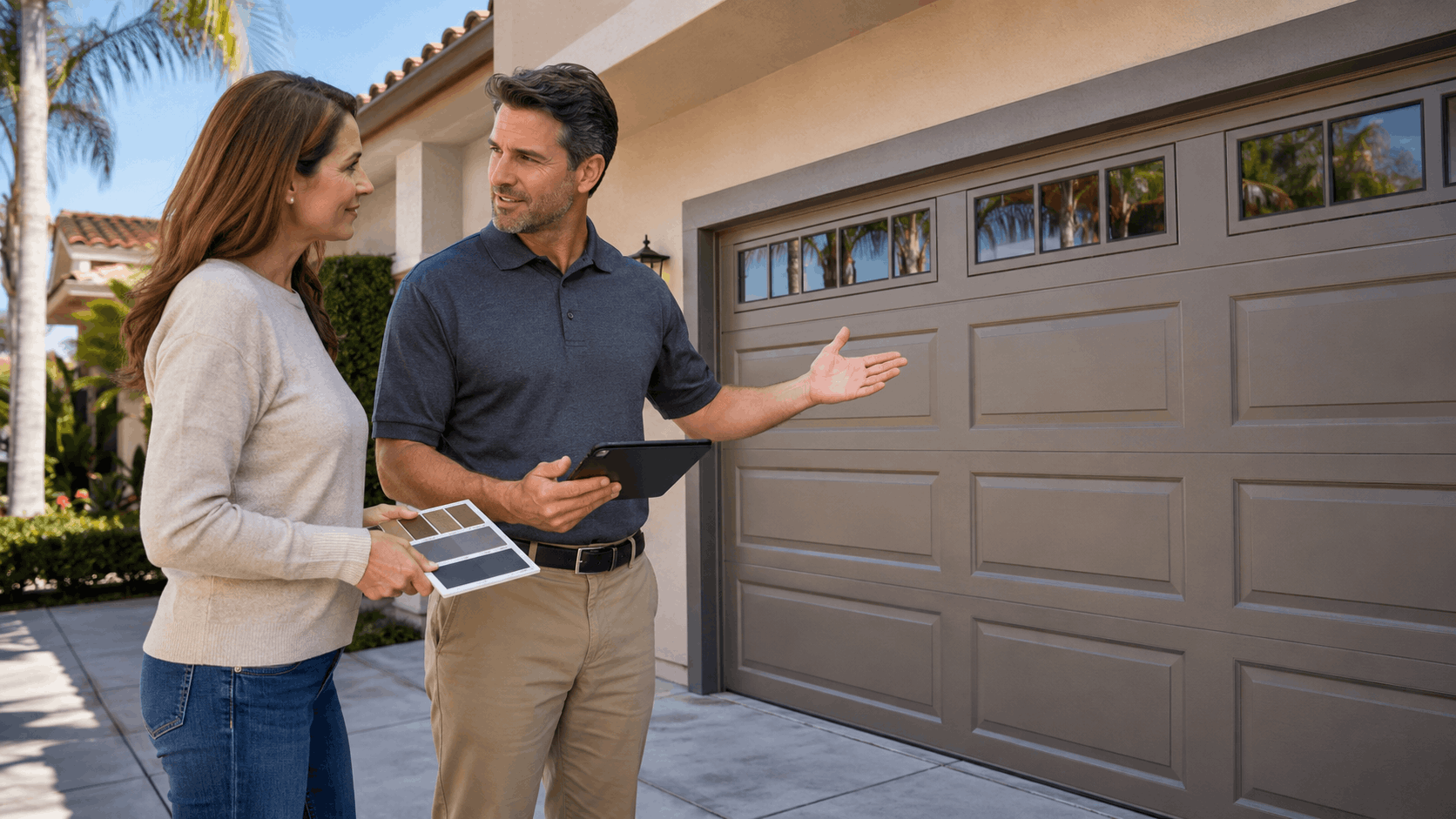
Color mismatch is the number one reason boards say no. If your chosen door clashes with the stucco or trim already on your home, the board will reject it to protect the street's consistent look. Even a shade that is close but not quite right can trigger a denial.
Many communities require the door to match or complement existing trim colors. A white door on a home with beige trim, for example, might stand out too much in an earth-tone neighborhood. Boards notice these details.
Before submitting, hold your color sample against your actual trim and stucco in daylight. If it does not blend, reconsider. Matching the door to your home's existing palette removes the most common rejection reason entirely.
When in doubt, ask the board which colors they prefer for your specific tract. Some keep a short list of approved shades that are guaranteed to pass.
Missing Documents or Incomplete Forms
An incomplete form is an easy way to get bounced. Blank fields, a missing model number, or no color sample forces the board to either reject the request or send it back for more information. Either way, you lose time.
Missing documents are just as common. If the manufacturer specs or door photos are left out, the board cannot judge the request and will not approve it blind. They need the full picture before voting.
Double-check your packet before sending. Confirm the form is filled out completely, the specs are attached, the color sample is included, and the photos show your current door and home. A quick checklist prevents most of these misses.
This is where working with a local installer helps. We provide the full document set so nothing is missing, which is one less thing for you to chase down.
Unapproved Styles or Add-Ons
Sometimes the color is fine but the style is the problem. Glass panels, decorative hardware, and modern designs can clash with a community's approved look, especially in older Irvine villages built around a traditional style.
A sleek modern glass garage door may be perfect for a contemporary tract but rejected in a neighborhood full of raised-panel doors. Decorative wrought-iron hardware can meet the same fate if the community favors a clean face.
Check the approved styles in your handbook before falling for a look. If your community only allows raised-panel or carriage designs, choose from those. Trying to sneak in a style the board does not permit almost always ends in a denial.
If you love a modern look, ask whether any comparable approved option exists. Sometimes a faux wood or subtle window design gives you the feel you want while staying inside the rules.
Need Help in Irvine?
Urgent Garage Doors serves Irvine and all of Orange County.
How Urgent Garage Doors Helps Irvine Homeowners Through Approval
We work in these communities every week, so we know how boards think and what they want to see. Our goal is to make the approval part as painless as the install itself. Homeowners come to us because we speak the language of both garage doors and HOA paperwork.
Based in Irvine, we serve homeowners across the city and the wider county. Here is how our team supports customers through the HOA process:
- Supplying the specs, chips, and photos boards require
- Recommending doors that fit each neighborhood's look
- Coordinating the install once approval comes through
- Handling emergency repairs while you wait on the board
Providing Specs and Samples for Your Application
The biggest hurdle for most homeowners is gathering the right documents. We hand over the manufacturer specs, color chips, and product diagrams your board needs, all in one package. No hunting through websites for a spec sheet.
When you pick a door with us, we include the exact model information the ARC form asks for. That means the panel profile, dimensions, material, and finish are all documented and ready to attach. Boards approve faster when everything matches.
We also provide physical color chips whenever possible. Holding a real sample against your trim beats guessing from a screen. It helps you choose a shade that will pass and gives the board confidence in the match.
If your board needs anything extra, we are quick to supply it. Our familiarity with local applications means we usually know what a given community will ask for before they ask.
Recommending HOA-Friendly Doors by Neighborhood
Every Irvine village has its own visual personality, and we have installed doors in most of them. We know the look boards expect near Jeffrey Road, in University Park, and out in Quail Hill, so we can steer you toward doors that fit.
Homes near Jeffrey Road often lean traditional, so raised-panel and carriage styles tend to pass without trouble. University Park, one of Irvine's older neighborhoods, has its own established palette that we account for when suggesting options.
Quail Hill mixes newer architecture, which opens the door to slightly more contemporary designs. Whether you need a classic look or something more current from our garage door installation lineup, we match the recommendation to your community.
This local knowledge saves you from choosing a door that looks great in a catalog but will never clear your board. We point you toward options that photograph well and pass review.
Scheduling Installation After Approval Comes Through
Once your board signs off, we move quickly. We coordinate the install date around your schedule and the approval, so the new door goes up as soon as you are cleared. No long gaps between approval and installation.
Because we stock common Irvine-friendly doors, we can often schedule the install within days of getting your board approval. That keeps your project tight and avoids leaving a door sitting in the garage.
While you wait on the board, we keep your current door safe and working. Our same-day repair options handle any breakdown so security is never a concern during the review period.
If you need help at any stage, reach out through our contact page. We are glad to walk you through the process before you commit to anything.
Tips to Get Approved on the First Try
First-try approval is the goal, and it is very doable with a little prep. The homeowners who breeze through are the ones who do their homework before submitting. A few simple habits raise your odds dramatically.
These HOA tips come straight from watching hundreds of applications succeed and fail across Orange County. Follow them and you avoid the most common causes of rejection.
Match Your Door to Neighbors' Homes
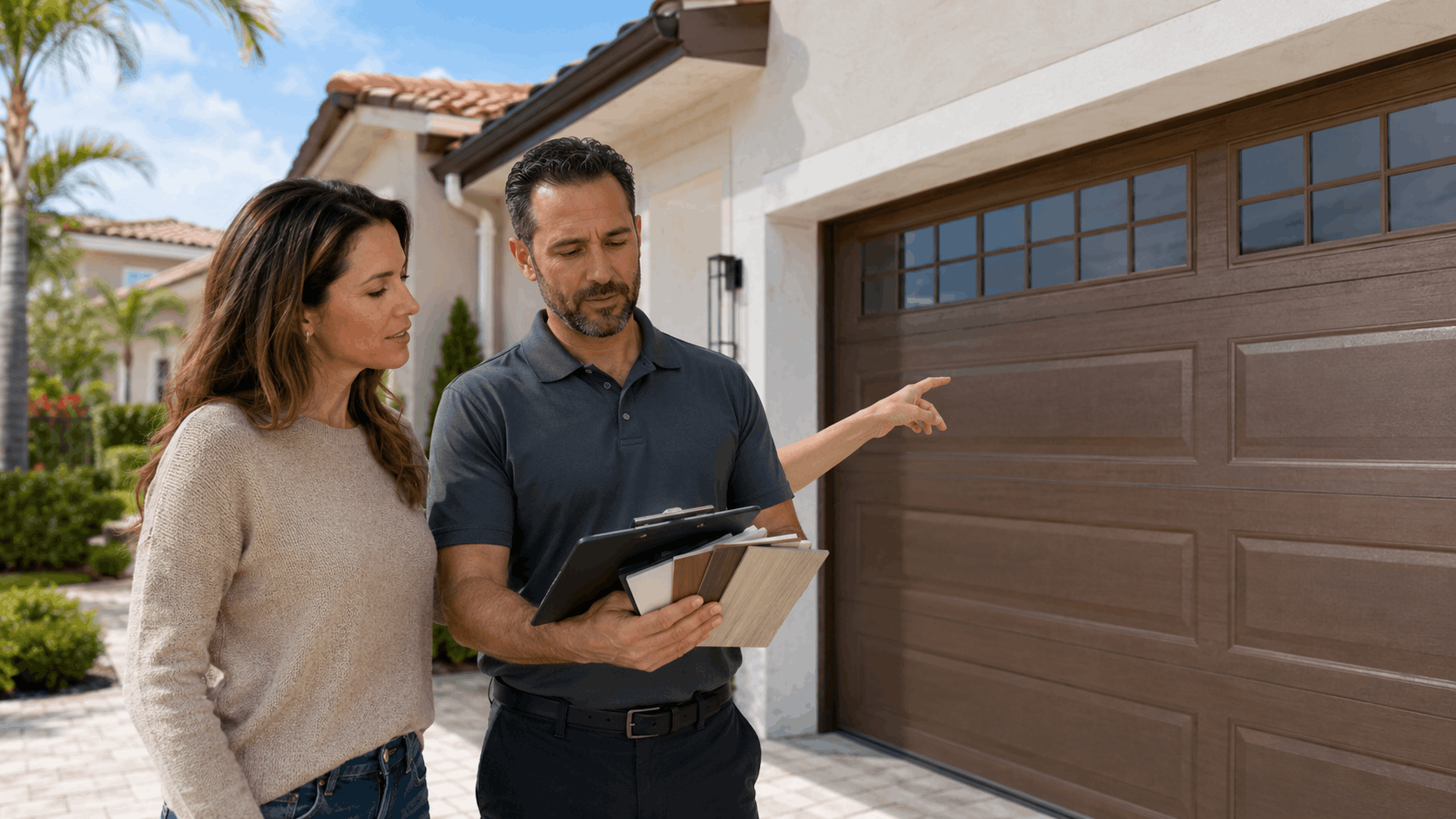
The easiest way to reassure a board is to fit in. Drive your own street and look at what your neighbors have. If most homes have earth-tone raised-panel doors, a similar choice is almost certain to pass.
Consistent style is what boards are protecting. When your door looks like it belongs on the block, the review becomes a formality. Standing out is exactly what gets applications flagged.
Pay attention to curb appeal from the board's view, not just yours. A door that complements the neighborhood keeps property values steady, which is the board's main concern. Matching the surroundings works in your favor.
If you want a little personality, express it in small approved ways, like a subtle window design that others on the street already use. Fitting the pattern while adding a touch of your own is the safest path.
Submit Extra Photos and Detail
More information almost always speeds up approval. Include extra photos beyond the minimum: the full front of your home, close-ups of your trim, and a rendering of the new door if you have one. The clearer the picture, the easier the yes.
Add a written description that leaves no questions. Spell out the model, color, style, and any features so the board does not have to guess. Vague applications invite follow-up questions that add days.
Think of it as making the board's job effortless. When they can see and understand everything at a glance, there is no reason to send it back. Detail reduces the back-and-forth that stretches out a review.
We help customers assemble this package so it looks thorough and professional. A complete, well-documented submission signals that the whole project will be done right.
Ask the Board Questions Before You Submit
A quick pre-submission question can save a whole review cycle. Email or call the ARC or your property manager and ask about their preferences before you formally apply. Most are happy to point you in the right direction.
Ask which colors and styles tend to get approved for your tract. If there is a pre-approved list, request it. Knowing this before you shop means you only consider doors that will pass.
You can also ask about the meeting schedule and submission deadline. Timing your application to land just before a meeting shortens your wait. A manager will usually tell you exactly when to submit.
These small conversations build goodwill too. A board is more inclined to work with a homeowner who checked in first than one who submits blind. A five minute call can smooth the entire process.
Need Help in Irvine?
Urgent Garage Doors serves Irvine and all of Orange County.
Final Thoughts
Replacing a garage door in Orange County is rarely just about the door. In Irvine especially, the HOA approval step comes first, and skipping it leads to fines, forced removal, and wasted money. A little planning avoids all of it.
Find your rules, gather your documents, submit a clean application, and time it around your board's meeting. Do that and most homeowners sail through on the first try. When you need doors that fit your neighborhood and paperwork that satisfies the board, our team is ready to help. Call Urgent Garage Doors in Irvine or reach us through our contact page for a consultation, and we will guide you from approval to installation.

Frequently Asked Questions
Do I need HOA approval to replace my garage door in Orange County?
In most cases, yes. Nearly every planned community in Orange County requires architectural approval for a full garage door replacement, especially when you change the color or style. A door is one of the most visible parts of your home's front, so boards review it closely. Check your CC&Rs and architectural guidelines, and confirm with your property manager before ordering anything.
How long does HOA garage door approval take in Irvine?
Most Irvine associations use a 30 to 45 day review window, driven largely by how often the board meets. A complete application submitted just before a meeting moves toward the shorter end. Smaller communities or those with pre-approved product lists can approve in a week or two. Incomplete forms slow things down, so submit everything at once to keep the clock moving in your favor.
Can I repair my garage door without HOA approval?
Usually, yes. Repairs that keep the door looking the same, like replacing a broken spring, cable, roller, or opener, do not change the exterior appearance and rarely need approval. A full door swap or a color change is different and almost always requires sign-off. If you are unsure whether a single panel replacement counts as a repair, ask your property manager before the work starts.
What documents does my HOA need for a garage door request?
Most boards want a completed architectural review form, manufacturer product specs with the model number, a color sample or chip, and clear photos of your current door and home. Some also ask for contractor details, including a license number. Including a written project description and extra photos speeds things up. We supply the specs, color chips, and diagrams for customers so their application packet is complete.
What happens if I install a new door without approval?
You risk a violation notice, followed by HOA fines that can grow the longer the issue sits. Boards can also order forced removal, meaning you pay to take down or repaint the non-compliant door. In rare cases, an association may place a lien or involve legal counsel. Getting approval first is far cheaper and less stressful than fixing an unapproved install later.
Can I get an emergency garage door repair while waiting for approval?
Yes. Safety and security repairs that restore your door without changing its look are generally allowed and do not need board approval. If your door will not open or close, or a spring snaps, we can make a temporary or permanent repair to keep your home secure while your replacement application goes through. Document the issue with a photo and a quick note to your manager.
Does my HOA restrict garage door colors and styles?
Very likely. Many Orange County associations limit colors to an approved palette that matches trim and stucco, and they often require specific panel styles like raised-panel or carriage designs. Glass panels and modern looks are frequently restricted in older villages. Check your architectural guidelines for the approved list, and pick from it to avoid a color or style rejection.
Who do I contact to find my HOA's garage door rules?
Start with your CC&Rs and architectural design guidelines, which came with your closing documents or live on your homeowner portal. For current forms and requirements, contact your property management company. Large managers like FirstService Residential and Keystone Pacific handle many Irvine communities and can send you the right application packet along with any deadlines or fees.
Will Urgent Garage Doors help with my HOA paperwork?
Yes. Our Irvine team provides the manufacturer specs, color chips, and product photos that boards require for approval. We also recommend doors that fit the look of your specific neighborhood, from Jeffrey Road to University Park to Quail Hill, so your application has the best chance of passing. Once your board signs off, we coordinate the installation date around your schedule.
What should I do if my application is denied?
Read the denial carefully, since the board almost always explains why. Common reasons are a color mismatch, an unapproved style, or missing documents. Adjust your door choice to fix the specific issue, add any missing specs or photos, and resubmit with more detail. A quick call to your manager before resubmitting confirms the change will pass, saving you another review cycle.
Frequently Asked Questions
- Do I need HOA approval to replace my garage door in Orange County?
- In most cases, yes. Nearly every planned community in Orange County requires architectural approval for a full garage door replacement, especially when you change the color or style. A door is one of the most visible parts of your home's front, so boards review it closely. Check your CC&Rs and architectural guidelines, and confirm with your property manager before ordering anything.
- How long does HOA garage door approval take in Irvine?
- Most Irvine associations use a 30 to 45 day review window, driven largely by how often the board meets. A complete application submitted just before a meeting moves toward the shorter end. Smaller communities or those with pre-approved product lists can approve in a week or two. Incomplete forms slow things down, so submit everything at once to keep the clock moving in your favor.
- Can I repair my garage door without HOA approval?
- Usually, yes. Repairs that keep the door looking the same, like replacing a broken spring, cable, roller, or opener, do not change the exterior appearance and rarely need approval. A full door swap or a color change is different and almost always requires sign-off. If you are unsure whether a single panel replacement counts as a repair, ask your property manager before the work starts.
- What documents does my HOA need for a garage door request?
- Most boards want a completed architectural review form, manufacturer product specs with the model number, a color sample or chip, and clear photos of your current door and home. Some also ask for contractor details, including a license number. Including a written project description and extra photos speeds things up. We supply the specs, color chips, and diagrams for customers so their application packet is complete.
- What happens if I install a new door without approval?
- You risk a violation notice, followed by HOA fines that can grow the longer the issue sits. Boards can also order forced removal, meaning you pay to take down or repaint the non-compliant door. In rare cases, an association may place a lien or involve legal counsel. Getting approval first is far cheaper and less stressful than fixing an unapproved install later.
- Can I get an emergency garage door repair while waiting for approval?
- Yes. Safety and security repairs that restore your door without changing its look are generally allowed and do not need board approval. If your door will not open or close, or a spring snaps, we can make a temporary or permanent repair to keep your home secure while your replacement application goes through. Document the issue with a photo and a quick note to your manager.
- Does my HOA restrict garage door colors and styles?
- Very likely. Many Orange County associations limit colors to an approved palette that matches trim and stucco, and they often require specific panel styles like raised-panel or carriage designs. Glass panels and modern looks are frequently restricted in older villages. Check your architectural guidelines for the approved list, and pick from it to avoid a color or style rejection.
- Who do I contact to find my HOA's garage door rules?
- Start with your CC&Rs and architectural design guidelines, which came with your closing documents or live on your homeowner portal. For current forms and requirements, contact your property management company. Large managers like FirstService Residential and Keystone Pacific handle many Irvine communities and can send you the right application packet along with any deadlines or fees.
- Will Urgent Garage Doors help with my HOA paperwork?
- Yes. Our Irvine team provides the manufacturer specs, color chips, and product photos that boards require for approval. We also recommend doors that fit the look of your specific neighborhood, from Jeffrey Road to University Park to Quail Hill, so your application has the best chance of passing. Once your board signs off, we coordinate the installation date around your schedule.
- What should I do if my application is denied?
- Read the denial carefully, since the board almost always explains why. Common reasons are a color mismatch, an unapproved style, or missing documents. Adjust your door choice to fix the specific issue, add any missing specs or photos, and resubmit with more detail. A quick call to your manager before resubmitting confirms the change will pass, saving you another review cycle.
U
Licensed garage door repair professionals serving Irvine and Orange County.
Licensed in California · License #1055150
Why trust Urgent Garage Doors?
Founded in 2017, Urgent Garage Doors is a licensed and insured garage door services serving Irvine and Orange County. All content is reviewed by our licensed technicians.

Need Help in Irvine?
Urgent Garage Doors serves Irvine and all of Orange County.
Related Articles

Tips & Advice
Best Garage Door Size and Fit Guide for Orange County Homes
Garage door size and fit guide for Orange County. Single vs double, standard sizes, custom widths. Old Town Tustin narrow lots to Northwood Pointe 3-car.
Tips & Advice
The Orange County Garage Door Guide by Home Era: 1950s Tract, 70s-80s South County, 90s Irvine, 2010s Great Park
A garage door guide for Orange County by home era - 1950s tract homes, 70s-80s South County, 90s Irvine villages, and 2010s Great Park builds.
How-To Guides
Orange County Garage Door Permit Requirements: When You Need One
A clear guide to Orange County garage door permit requirements: when you need one, when you do not, permit costs, HOA rules, inspections, and how to stay compliant.