CA AB-481 and Smart Home Surveillance: Does Your Smart Opener Qualify
Key Takeaways
- CA AB-481 regulates how police and government agencies acquire surveillance equipment, not private household smart openers or cameras.
- Residential devices like camera openers and doorbell cameras fall outside AB-481's scope, so homeowners do not need public approval or reports.
- The privacy rules that actually matter are California's two-party audio consent law, reasonable expectation of privacy, HOA guidelines, and the CCPA.
- Disable audio recording on camera openers unless you have consent, since recording private conversations can violate California law.
- Aim garage cameras at your own driveway and property, use privacy masking, and avoid capturing neighbors' private spaces.
- Larger Irvine homes in Turtle Rock and Quail Hill often lose Wi-Fi at the garage, usually fixed with an extender or mesh node.
- Standard smart openers run about 400 to 650 dollars installed, while camera models run roughly 550 to 900 dollars plus any cloud fee.
- Urgent Garage Doors installs and configures smart openers across Irvine with proper camera aiming, network security, and privacy settings.
In This Article
A homeowner in Woodbridge called our office last month with a question we now hear almost weekly. She had just bought a camera-equipped smart garage opener and wanted to know if it counted as surveillance under a state law she kept seeing mentioned online. Down the road in Northwood, another family asked the same thing before we finished their install. The confusion is real, and it usually traces back to a piece of California legislation called AB-481.
Here is the short version: AB-481 has almost nothing to do with your garage. It governs how police and government agencies buy and use surveillance gear, not what a family installs above their own driveway. Still, the name gets tossed around in smart home forums, so it is worth clearing up.
What CA AB-481 Actually Regulates
People keep tying AB-481 to their doorbell cameras and garage openers, and we get why. The word surveillance sounds like it should cover any device with a lens. In reality, this California law was written for a very different audience.
Here is what the law focuses on, in plain terms:
- How local police and sheriff departments acquire surveillance equipment
- Public approval and reporting before agencies deploy that technology
- Annual usage reports that keep government surveillance transparent
- City council oversight of tools like license plate readers and drones
None of those bullet points describe a homeowner mounting a camera opener over the garage. That gap is exactly why residents keep asking us for clarity.
The Law's Focus on Government and Police Equipment
AB-481 was passed to control how law enforcement agencies get and use surveillance technology. Before an Irvine-area department can buy a new drone, body camera program, or automated license plate reader, it has to follow a public process. That means a written surveillance policy, a public hearing, and approval from an elected body.
The goal was accountability. Lawmakers wanted residents to know when tax dollars pay for tools that can track people in public spaces. Agencies must also publish yearly reports covering how each piece of surveillance equipment was used and whether it caused any problems.
Notice the common thread through the entire law. Every requirement points at a public agency, not a private person. The surveillance policy language applies to departments answering to a city, not to a family answering to nobody but their HOA.
So when someone reads the phrase surveillance equipment in the California law and assumes it reaches their garage, the mistake is understandable but wrong. The statute simply was not built to govern household gear.
How the Confusion Started with Smart Home Gear
The mix-up grew as smart home devices flooded Irvine driveways over the past few years. Camera doorbells, video openers, and app-controlled locks all record or sense activity. When a new privacy law made headlines, people connected dots that were never meant to connect.
Online threads made it worse. Someone in a neighborhood group would post that a state law now regulates home cameras, others would repeat it, and the privacy confusion spread before anyone could correct it. Product marketing that leans on the word security only added to the blur.
It also does not help that real privacy rules do exist for home cameras, just not this one. Because AB-481 shares vocabulary with those rules, folks assumed they were the same thing. They are not, and treating them as identical leads to bad decisions.
We spend a fair amount of time on install calls untangling this. Once homeowners hear that the law targets police tech, the worry usually fades and the real questions about placement and audio take over.
What the Law Does Not Cover for Homeowners
Let us be direct about the homeowner exemption side of this. Residential devices such as smart openers, video doorbells, and backyard cameras fall outside AB-481's scope. The law never mentions private households because it was never aimed at them.
Your myQ camera opener does not require a public hearing. You do not file an annual report with the city about your driveway footage. No council vote is needed before you mount a camera over your own garage bay in Northwood or Woodbury.
That said, being exempt from one law does not mean no rules apply at all. Other California statutes and local HOA guidelines still shape how you can record. We cover those later because they are the ones that actually matter for your setup.
The point here is narrow but useful. If your only concern was AB-481, you can relax. Residential devices are simply not what that legislation regulates.
Where Irvine Residents Can Verify the Text
We always tell homeowners not to take our word for it alone. The full legislative text is public and easy to read. You can view AB-481 directly on the California Legislature website, where the government and law enforcement focus becomes obvious in the first few paragraphs.
Beyond state law, the City of Irvine follows its own local ordinances. Some rules about property use, cameras, and construction come from the city or from your community association rather than Sacramento. Checking both levels gives you the full picture.
For camera and privacy questions specifically, the California Attorney General's privacy resources are a solid starting point. They explain consumer rights in plain language without the legal jargon.
If you want help matching a device to Irvine ordinances and HOA expectations, our team knows this city well and can point you in the right direction during a smart opener consultation.
Get Your Free Quote
Tell us about your garage door and we'll get back to you within 30 to 60 minutes.
How Modern Smart Garage Openers Work
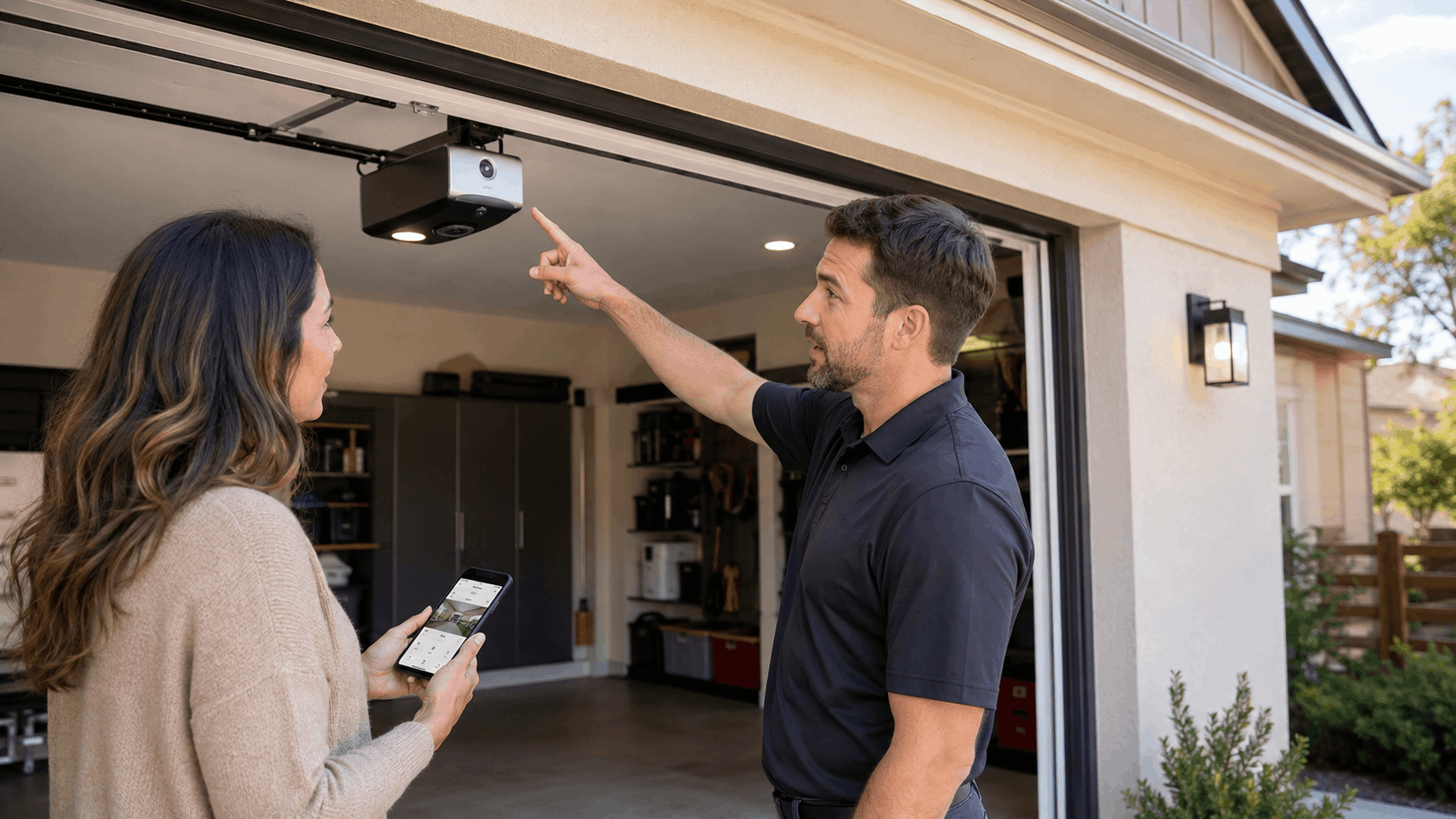
Before anyone can decide whether an opener raises privacy issues, it helps to know what is actually inside these things. A smart garage opener is not just a motor with a wireless remote anymore. Today's connected devices pack in radios, sensors, and sometimes full cameras.
Here is a quick look at the main components and what each one does with your information:
| Component | What It Does | Data It Handles |
|---|---|---|
| Wi-Fi module | Connects opener to home network and app | Open/close commands, status logs |
| Mobile app (myQ) | Remote control and alerts | Account info, activity history |
| Camera opener | Records video of the garage bay | Video clips, timestamps |
| Motion sensor | Detects movement near the door | Trigger events, notifications |
| Cloud service | Stores footage and settings | Saved video, user data |
Not every model includes every row. A basic smart opener may only handle commands and status, while a premium camera opener touches every category above.
Wi-Fi Connectivity and Mobile App Control
Most smart openers join your home Wi-Fi network the same way a phone or laptop does. Once paired, the opener talks to an app on your phone, often the myQ app for Chamberlain and LiftMaster units. From there you can open the door, close it, or check whether you left it up while driving down Culver.
A Wi-Fi opener gives you remote access, which is the whole appeal. You can let a delivery driver in, close the door for a house guest, or get a push alert when the garage opens at an odd hour. All of that runs through your network and the manufacturer's servers.
Because access flows through an app account, your login credentials matter a great deal. If someone gets into your myQ account, they can potentially operate your door. That is why we walk every customer through strong passwords and two-factor login during setup.
The connection also creates a log of activity. Every open and close gets a timestamp. That history is handy for security but is also data stored somewhere outside your walls, which leads into the storage question.
Built-In Cameras and Motion Sensors
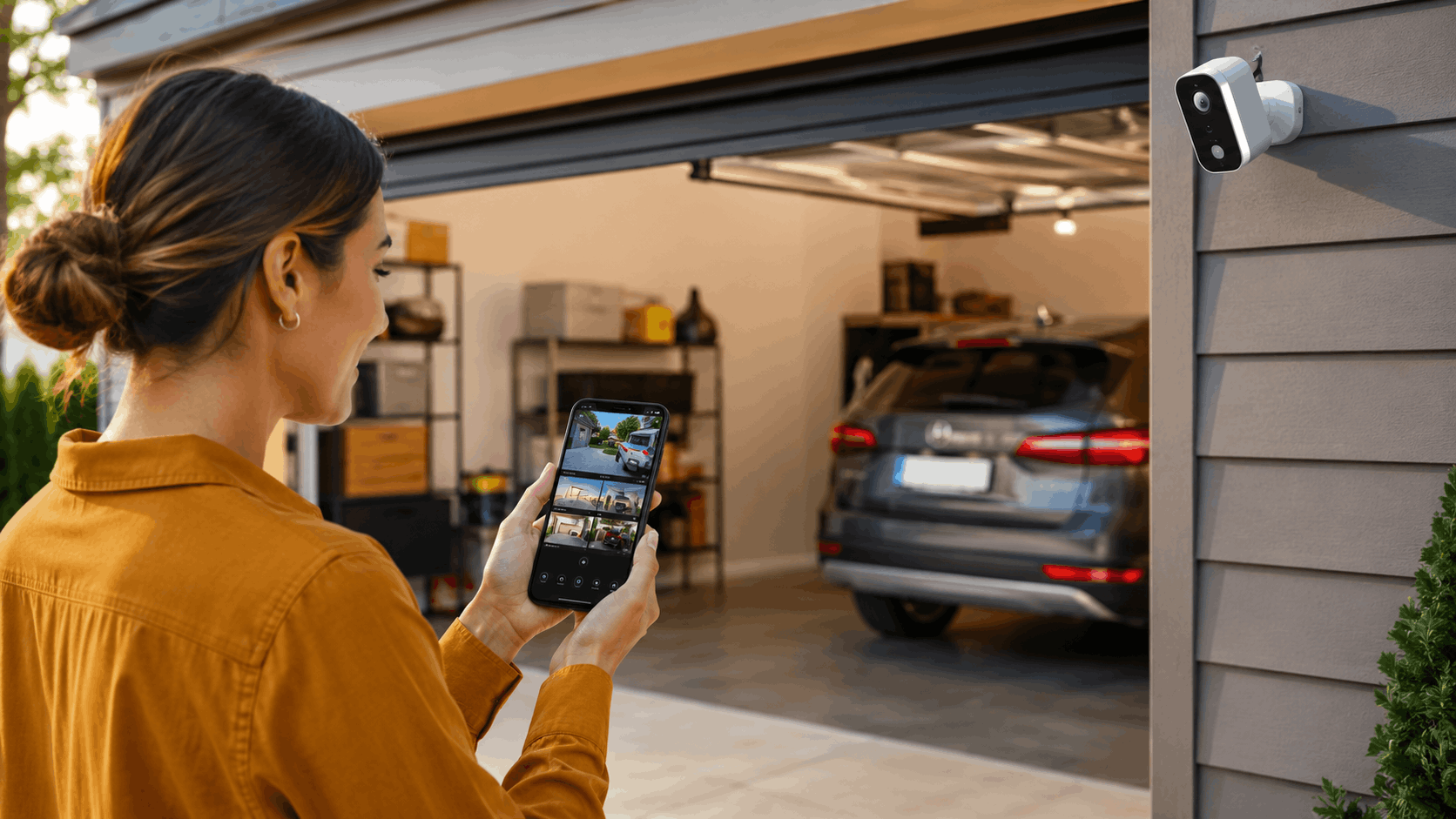
Higher-end openers now build a garage camera right into the motor head or a separate mounted unit. These cameras watch the garage bay and often the space just inside the door. Some record continuously, while most trigger on events.
A motion sensor works alongside the camera. When it detects movement, it wakes the camera, starts a clip, and sends you a notification. This keeps storage down and battery drain low on any wireless components.
Video recording features vary widely. Entry-level camera openers save short clips only when motion fires, while premium tiers offer round-the-clock recording for a monthly fee. Night vision, two-way talk, and package detection show up on the pricier models.
For a family in Quail Hill worried about porch pirates or a car break-in, these features carry real value. The camera turns the opener from a convenience tool into a light security device. It also, of course, means a lens is now running in your garage, which is where privacy talk begins.
Cloud Storage and Video Retention
When your camera opener records a clip, that footage usually travels to cloud storage run by the manufacturer. Some models offer local storage on a card, but the popular myQ camera line leans on the cloud. Free tiers often keep clips for a short window, while paid plans extend video retention to weeks or even months.
Retention windows matter more than people expect. A free plan might hold footage for one to seven days, then delete it automatically. If you want to look back at an incident from two weeks ago, you may need a subscription that keeps clips for 30 days or longer.
Access is another piece. In normal use, only your account can view the video. The provider technically holds the data on their servers, which is why their privacy policy and California data rules come into play, as we cover later.
We suggest homeowners read the retention terms before buying. Knowing whether your clips vanish in a day or stick around for a month should shape which plan, if any, you pay for.
Integration with Home Security Systems
Smart openers rarely live alone. Many tie into a broader home security integration, linking to alarm panels, a smart lock on the entry door, and doorbell cameras out front. When the systems talk to each other, a single app can show the whole picture.
For example, one routine might arm your alarm, lock the interior door, and close the garage with a single tap at bedtime. Another might trigger the garage camera to record whenever your doorbell detects someone at the front porch. These links make the home feel like one connected unit.
Integration also spreads your data across more services. Each connected platform stores some slice of your activity, so more accounts means more places to secure. We help Irvine homeowners map these connections so nothing is left wide open.
Done well, the combined system adds genuine protection. A properly configured setup with a smart Wi-Fi opener and myQ setup can coordinate with the rest of your security gear cleanly. The trick is planning it so convenience never outruns your privacy.
Need Help in Irvine?
Urgent Garage Doors serves Irvine and all of Orange County.
Does a Smart Opener Count as Surveillance
Now for the core question homeowners actually care about. Does putting a camera opener over your garage make you a surveillance operator in any legal sense? The honest answer is no in the way most people fear, but the details deserve a real look.
It helps to split two ideas apart. There is the legal category the law worries about, and there is the everyday concern about who might be watched. Those are different, and mixing them causes most of the smart opener surveillance confusion.
Cameras That Record vs. Openers That Only Sense
Not every smart opener has an eye. Many models only sense door position and motion without any video recording at all. A door-position sensor knows whether the door is open or closed, and a basic motion detector knows something moved, but neither captures an image.
That distinction changes the privacy conversation entirely. An opener that only reports open or closed status collects almost nothing sensitive. There is no footage of faces, plates, or packages to worry about.
A camera opener is different because it produces video recording of the garage and sometimes beyond. Now there is a stored image of whoever walks into frame. This is the type of device that prompts the surveillance question in the first place.
When homeowners tell us they are nervous about surveillance, we first ask which type they have or want. Much of the time the worry disappears once they realize a sensor-only unit was never watching anyone.
When Home Cameras Reach Public Areas
The trickier scenario is a garage camera that sees past your property line. In many Irvine layouts, driveways sit close together, and some communities like Turtle Rock share alleys or narrow lanes. A wide camera angle can easily catch a neighbor's door, a shared driveway, or the public sidewalk.
Recording your own garage is one thing. Capturing the public view of a shared driveway or a neighbor's front step raises different questions about reasonable privacy. It rarely makes anything illegal on its own, but it can create friction and, in some cases, cross lines.
Sound is where it gets more serious, which we address in the audio section. A camera that captures conversations happening on a shared path carries more legal weight than one capturing silent images.
Our advice in dense neighborhoods is simple. Aim tight, favor your own bay and driveway, and avoid framing a neighbor's living space. Good aim solves most of these concerns before they start.
Private Property Rights for Irvine Homeowners
California generally supports homeowner recording on your own property. You are usually allowed to place cameras that watch your garage, driveway, yard, and entry points. Property rights give you wide latitude over your own land.
Those rights are not unlimited, though. You cannot aim a camera into a neighbor's bathroom or bedroom window, and you cannot record areas where others hold a reasonable expectation of privacy. The line sits at other people's private spaces, not your own.
For most Irvine homes, a garage camera pointed at your own driveway sits comfortably within your rights. The issue only appears when the lens drifts onto someone else's private area or picks up audio it should not.
We keep these boundaries in mind on every install. Placing the camera to protect your property while respecting the neighbors is part of doing the job right.
Why AB-481 Likely Does Not Apply to Your Opener
Bringing it back to the law, the AB-481 scope is government surveillance, full stop. A personal device you own and control for your own household is outside that frame. The statute regulates public agencies, and you are not one.
Your camera opener is not deployed by a police department, does not require a public policy, and files no reports with the city. Every trigger the law uses to apply simply is not present in a private home.
That is why we tell worried customers that AB-481 almost certainly does not touch their opener. The real rules to mind are the California privacy statutes and any HOA guidelines, not this one.
So the fear that a home camera opener puts you under a government surveillance law can be set aside. The law and your garage were never on the same page.
Privacy Laws That Actually Affect Home Cameras
Since AB-481 is the wrong worry, let us focus on the California rules that genuinely shape home camera use. These are the ones we walk Irvine homeowners through during installs. They cover audio consent, privacy expectations, HOA limits, and how companies handle your data.
Here is a quick map of what actually applies:
| Rule | What It Covers | Why It Matters at Home |
|---|---|---|
| Two-party consent (audio) | Recording private conversations | Audio on a camera can break the law |
| Reasonable expectation of privacy | Where people expect to be unseen | Limits aiming at windows or yards |
| HOA guidelines | Community camera placement rules | May restrict where you mount cameras |
| CCPA | Consumer data rights | Governs how providers store footage |
These four cover nearly every real concern a homeowner brings to us. Get them right and your setup is on solid ground.
California's Two-Party Consent for Audio
California is a two-party consent state for private conversations. That means recording audio of a private talk without everyone's agreement can violate the audio recording law. This rule surprises a lot of homeowners because they focus only on video.
Many camera openers include a microphone by default. If that mic captures a private conversation happening in your garage or driveway without consent, you could be on the wrong side of the statute. The video may be fine while the audio is the problem.
The safest move is to disable audio recording unless you have a clear reason and consent to use it. On most openers this is a simple toggle in the app. We flip it off during setup unless the customer specifically wants and understands it.
This single setting resolves a common legal risk with home camera openers. It costs nothing and removes a real liability, so we bring it up on every camera install.
Reasonable Expectation of Privacy
California recognizes that people have a reasonable expectation of privacy in certain places. A neighbor inside their home, behind a fence, or in a private yard generally expects not to be filmed. Cameras that reach into those spaces can cross legal lines.
Neighbor cameras become a dispute when one home's lens stares into another's window or backyard. Even if your intent is only to watch your own driveway, a wide angle can accidentally capture protected areas. That is where complaints and, occasionally, legal claims start.
The fix is thoughtful aiming and, when needed, privacy masking. Many camera systems let you black out portions of the frame so a neighbor's window never records. We use these tools to keep footage focused on your property.
Respecting this expectation keeps the peace on the block and keeps you clear of trouble. In tight Irvine developments, a little care with camera direction goes a long way.
HOA Rules in Irvine Communities
Irvine is full of managed communities, and many set their own camera guidelines. Associations in areas like Woodbury and Portola Springs sometimes limit where and how you mount visible cameras. These HOA camera rules can address exterior appearance, placement, and shared-space recording.
Before drilling into a wall or fascia, it is worth checking your community's architectural guidelines. Some HOAs require approval for exterior-mounted devices, and a garage camera opener may or may not count depending on how it is installed. A quick read of the rules saves a redo later.
We have installed openers across many Irvine HOA neighborhoods and know these expectations vary. What passes without comment in one community may need a form in another. When homeowners in Portola Springs ask, we help them stay within their guidelines.
Following HOA rules is not just about avoiding a notice. It keeps your install clean, approved, and free of neighbor pushback down the line.
Data Sharing and the CCPA
The California Consumer Privacy Act, or CCPA, governs how companies collect and share personal data, including video tied to you. When your opener sends clips to a provider's cloud, that company falls under data privacy obligations for California residents. You gain certain rights over that information.
Under the CCPA, you can generally ask what data a company holds, request deletion, and learn whether they sell or share it. For a camera opener, this touches your footage, account details, and activity logs. Reputable providers publish how to exercise these rights.
We encourage homeowners to read the manufacturer's privacy policy before committing to a cloud plan. Knowing who can access your video and how to delete it puts you in control. The California Attorney General's CCPA page explains these rights in clear terms.
Data privacy is the quiet part of owning a camera device. The footage lives somewhere, and the CCPA gives California residents a say in how it is handled.
Need Help in Irvine?
Urgent Garage Doors serves Irvine and all of Orange County.
Setting Up a Smart Opener the Right Way in Irvine
Knowing the rules is one thing. Installing a camera-equipped opener responsibly is where it all comes together. A good setup protects your home, respects your neighbors, and keeps you clear of privacy issues from day one.
Here is how we approach a smart opener installation for Irvine homes, from camera placement to network security.
Aiming Cameras at Your Own Property
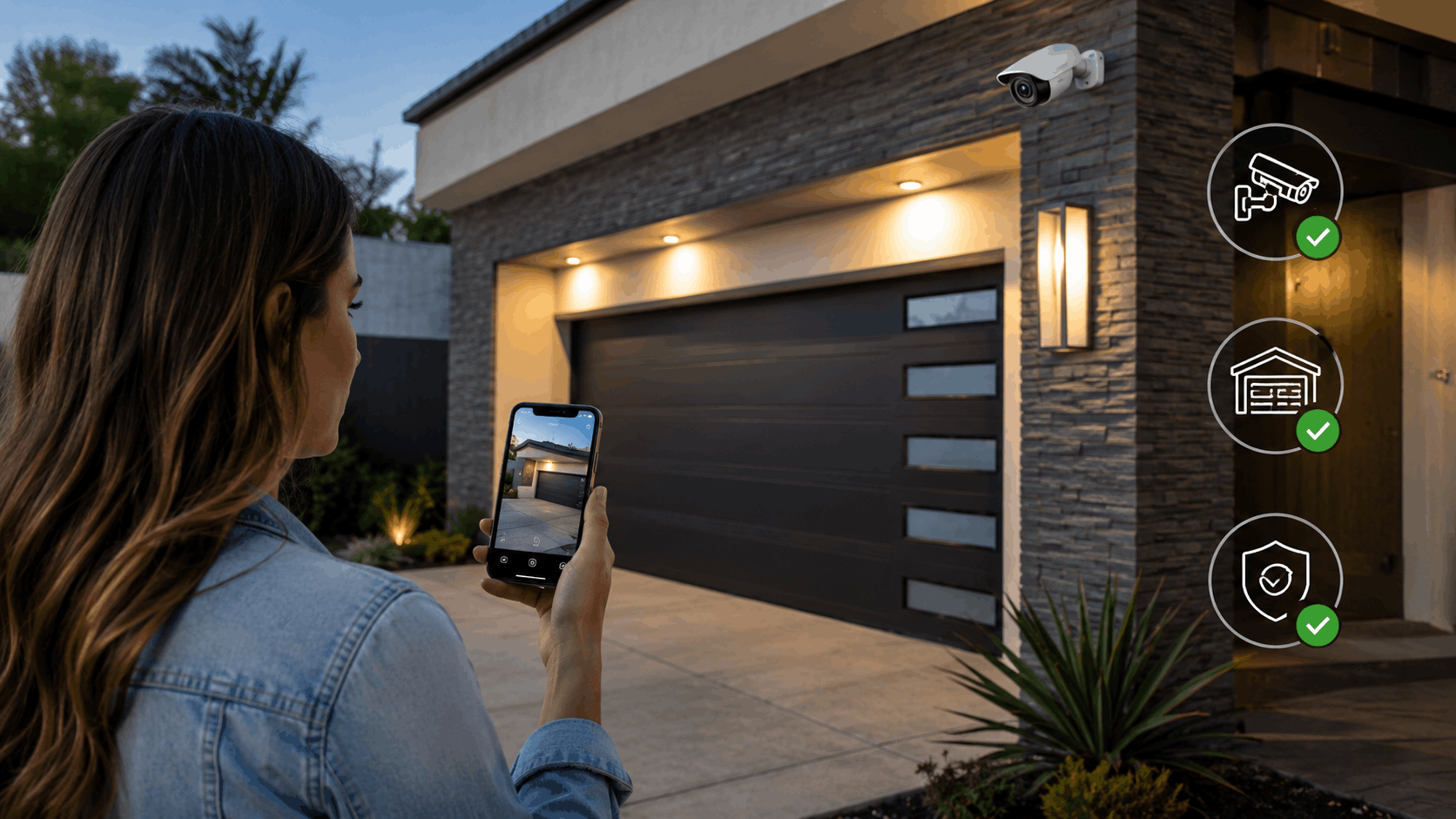
The single most useful step is pointing the camera at your own property. We angle the lens toward your garage bay and driveway rather than the neighbor's lot or the open street. This keeps the useful footage while avoiding the privacy pitfalls.
Getting the camera angle right takes a little trial and error. We adjust tilt and zoom on site, then review the live view to confirm the frame stops at your property boundary. If the shot creeps onto a neighbor's door, we tighten it.
Where a wide view is unavoidable, we use privacy masking to block out areas beyond your line. That way the camera still covers your driveway approach without recording next door. It is a small step with a big payoff.
Good aim answers most surveillance concerns before they arise. A camera focused on your own space is doing exactly what a home security tool should.
Securing Your Home Wi-Fi Network
A camera opener is only as safe as the network it runs on. Weak network security can let a stranger reach your opener or view your footage. We treat Wi-Fi protection as part of the install, not an afterthought.
That means confirming your router uses strong encryption, changing any default passwords, and putting the opener on a solid connection. For homes with lots of devices, we sometimes suggest a separate network segment for smart gear. It limits exposure if one device is ever compromised.
We also set up strong, unique passwords on the opener's app account and turn on two-factor login when available. A stolen password should never be enough to open your garage. These steps take minutes and close a common gaps.
Protecting the network protects everything downstream. The opener, the camera, and your entry all depend on that connection staying private.
Choosing Audio Settings Carefully
As covered earlier, California's consent rules make audio the riskiest feature. During setup, we review the audio settings with the homeowner and usually recommend disabling recording. Silent video sidesteps the two-party consent problem entirely.
If a homeowner wants audio for a specific reason, we make sure they understand consent obligations first. Recording conversations without agreement can create legal exposure, so the choice should be informed. Most families decide the video alone meets their needs.
Turning audio off is a one-tap change in most apps, but it is easy to overlook. Leaving it on by default is how people accidentally capture talks they had no right to record. We catch it during configuration so you do not have to think about it.
This one setting prevents a common legal headache with camera openers. It is a simple choice that keeps your setup clean.
How Our Team Handles Installations Across Irvine
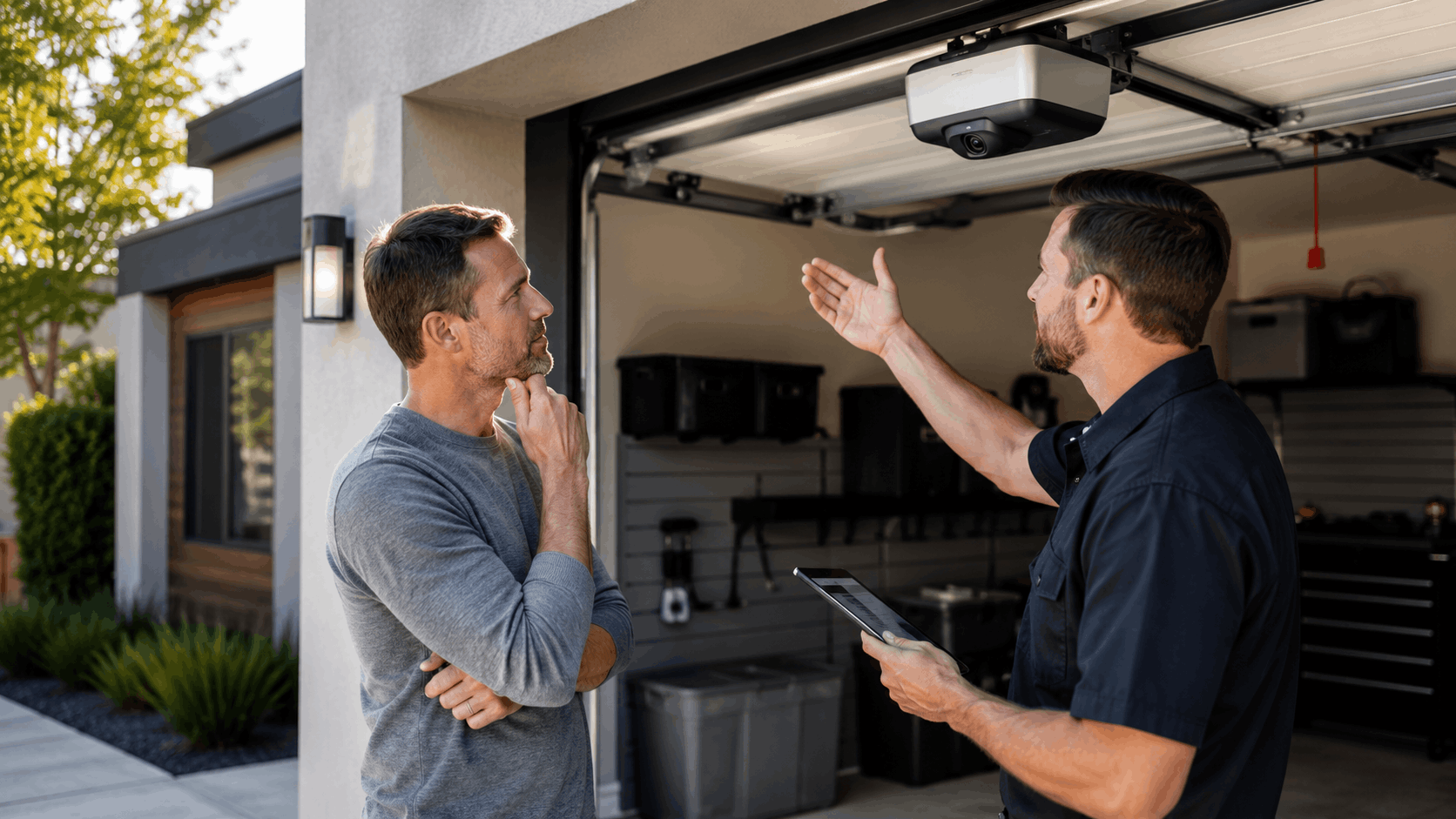
Urgent Garage Doors installs and configures smart openers throughout Irvine, from Northwood tracts to University Park and beyond. We handle the mounting, the app pairing, the network setup, and the privacy configuration in one visit. The goal is a system that works and respects the rules.
Every install starts with a quick conversation about your priorities and your neighborhood's expectations. A home in Woodbridge may have different HOA and layout concerns than one near the Great Park. We tailor placement and settings to your specific situation.
Our technicians also test the full system before leaving. That includes opening and closing from the app, confirming camera angles, checking notifications, and verifying audio is set the way you want. You leave with a working setup and a clear understanding of it.
For homeowners planning a new opener, our garage door opener installation service covers the whole process. Professional installation means fewer surprises and a cleaner result.
Common Smart Opener Problems We See in Irvine Homes
Connected openers are great when they work. When they hiccup, the whole family notices. Over hundreds of Irvine service calls, a few smart opener problems show up again and again.
Here are the issues we field most often and how they usually get resolved:
- Wi-Fi that drops in larger homes far from the router
- Camera glare and weak night vision in bright or dark garages
- App failures that lock you out of opener access
- Connectivity issues after a router change or power outage
Some of these are quick DIY fixes. Others need a technician, which we cover at the end of this section.
Dropped Wi-Fi in Larger Homes
Big homes in Turtle Rock and Quail Hill often place the garage far from the router. That distance means the opener sits at the edge of Wi-Fi range, where the signal drop shows up as an opener that goes offline in the app. The door still works from the wall button, but remote control stops.
The usual cause is simple physical distance plus walls and appliances soaking up signal. Detached garages and homes with thick interior walls make it worse. A weak connection also disrupts camera clips and notifications.
The fix is often a Wi-Fi extender or mesh node placed near the garage. Moving the router or adding a dedicated access point can also solve it. We test signal strength at the opener and recommend the simplest option that holds a stable connection.
Once the signal is solid, the app-based features come back to life. A reliable connection is what makes a smart opener actually smart.
Camera Glare and Night Vision Trouble
Garage cameras deal with tough lighting. In the morning, Irvine sun can hit a west-facing driveway and wash out the image with camera glare. At night, a dark garage can leave night vision struggling to show detail.
Glare usually comes from direct sun or a bright bulb sitting in the camera's view. Repositioning the camera a few degrees or moving a light fixture often clears it up. Some cameras have exposure settings that help balance a bright scene.
Night vision trouble often traces to infrared reflecting off a nearby wall or a dirty lens. Cleaning the lens and angling the camera away from close surfaces improves the picture. Adding a small ambient light can also help color night footage.
We adjust these on service visits and during installs. A camera that produces clear footage day and night is worth the few minutes of tuning.
App Failures and Lost Access
Sometimes the hardware is fine but the app misbehaves. Login loops, pairing failures, and a device that shows offline are common app complaints. When the app fails, you lose remote opener access even though the door itself works.
Many cases resolve with basic steps. Logging out and back in, updating the app, or restarting the opener and router clears a lot of glitches. Re-running the app pairing process reconnects a device that dropped off your account.
If a firmware update stalled or the account got tangled, the fix takes more care. Deleting and re-adding the device usually restores control, though you may need your original account details. We keep notes on the quirks of popular models to speed this up.
When the app simply will not cooperate, that often points to a deeper issue. That is the moment to bring in help rather than reset endlessly.
When to Call for Professional Repair
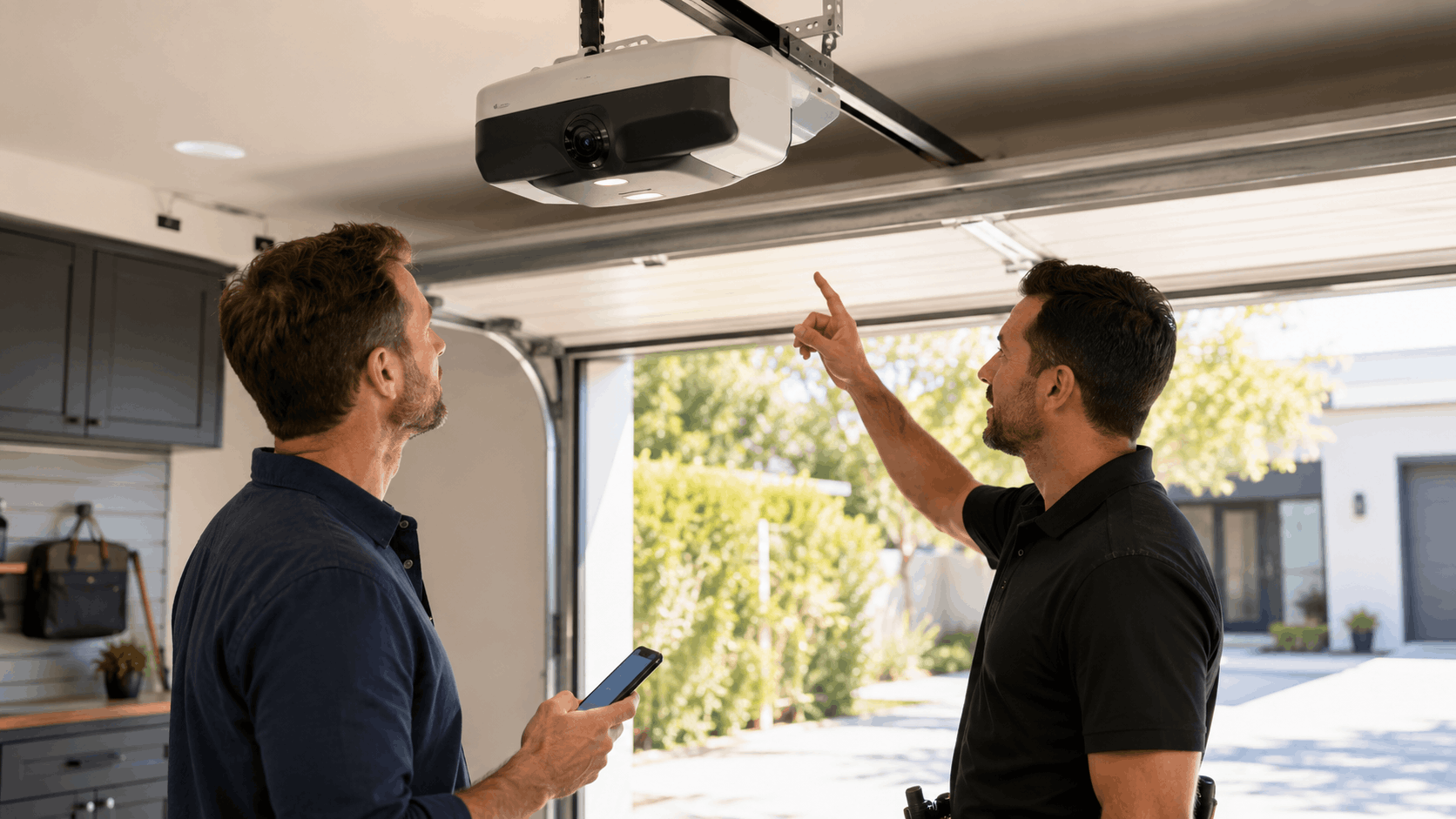
Some problems are worth a DIY attempt. A quick router restart or app update is fair game for any homeowner. But grinding motors, a door that reverses or sticks, and repeated failures after resets usually mean it is time for garage door repair.
Mechanical issues like worn gears, a slipping belt, or misaligned safety sensors need a technician's hands. These are not settings problems, and forcing them can damage the door or hurt someone. Our team diagnoses the real cause instead of guessing.
We also handle the overlap cases where smart features and hardware both act up. If the opener drops offline and the door struggles to close, the two may be related. A trained tech sorts out which is which.
For urgent situations, our emergency garage door repair team covers Irvine quickly. When a smart opener leaves you stuck, a real fix beats another failed reset.
Need Help in Irvine?
Urgent Garage Doors serves Irvine and all of Orange County.
Choosing Between Camera and Non-Camera Openers
Not every Irvine homeowner needs a camera on their opener. Some love the extra eyes, and others prefer a simpler, private setup. Weighing security value against privacy simplicity helps you land on the right choice.
Here is how we help customers compare a camera opener vs a standard model.
Benefits of a Camera-Equipped Opener
A camera opener adds real security benefits beyond opening the door. You can see who enters the garage, check on deliveries, and review footage after an odd notification. For homes that worry about break-ins or theft, the visibility is genuinely useful.
Package monitoring is a popular reason people upgrade. If drivers leave boxes inside the garage, the camera confirms the drop and catches any problem. Two-way talk lets you speak to a visitor from your phone.
The camera also pairs well with the rest of a home security setup. Combined with a doorbell camera and smart lock, it rounds out your view of the entry points. For active families, that coordinated coverage is worth the cost.
For anyone who values seeing rather than just knowing, the camera earns its place. It turns a simple opener into a light security hub.
Reasons Some Homeowners Skip the Camera
Plenty of homeowners choose to skip the lens. A privacy preference is the top reason, since some people simply do not want a recording device in their garage or their data in the cloud. A camera-free opener sidesteps every audio and footage question.
Cost is another factor. Many camera openers push a subscription cost for cloud storage and full features. Over a few years those monthly fees add up, and a standard smart opener avoids them entirely.
Simplicity matters too. A non-camera opener has fewer settings, fewer things to break, and no footage to manage. For homeowners who just want reliable remote control, that is plenty.
There is no wrong answer here. The right pick depends on how much you value the camera against the privacy and cost of running it.
Price Ranges for Popular Models
Cost helps a lot of decisions, so here are ballpark figures. A standard smart Wi-Fi opener installed in Irvine typically runs in the range of about 400 to 650 dollars including installation, depending on the model and horsepower. That covers the app control most families want.
A camera-equipped opener sits higher, often in the 550 to 900 dollar range installed, plus any cloud subscription. Premium models with round-the-clock recording and advanced features can push toward the top of that band. The subscription usually adds a modest monthly or yearly fee.
Existing openers can sometimes gain smart features with an add-on module for less than a full replacement. We assess whether an upgrade or a new unit makes more sense for your door. Our maintenance and upgrade services can help retrofit where it fits.
These figures shift with promotions and model availability, so treat them as a starting point. We give firm quotes after seeing the door and your setup.
What Fits Different Irvine Neighborhoods
Irvine neighborhoods vary, and so do the openers that suit them. Older Northwood tracts often have detached or standard garages where a straightforward smart opener does the job well. Homeowners there frequently want reliability over extra features.
Newer areas like the Great Park neighborhoods tend toward connected homes where a camera opener fits the tech-forward lifestyle. These families often already run smart locks and doorbell cameras, so a matching opener rounds out the system. Integration is a bigger draw there.
Larger estates in Turtle Rock and Quail Hill may need extra attention to Wi-Fi range regardless of camera choice. We factor that in so the opener stays connected no matter which model you pick. The home's layout shapes the plan as much as the neighborhood does.
We know these areas street by street and match the opener to the home. Whether you want simple or fully connected, there is a right fit for your block.
Final Thoughts
AB-481 was written for police surveillance gear, not the camera opener over your garage. That fear can be set aside. What actually matters for home cameras are California's audio consent rule, reasonable privacy expectations, your HOA guidelines, and the CCPA.
Set up the right way, a smart opener protects your home while respecting the neighbors and the law. Aim the camera at your own property, secure your network, and choose audio settings with care. Whether you go with a camera model or keep it simple, the right configuration makes all the difference.
Our team at Urgent Garage Doors installs, configures, and repairs smart openers across Irvine, from Woodbridge to University Park to the Great Park. If you want a system that works cleanly and stays within the rules, reach out to us for a consultation. Call today and we will help you pick and set up the opener that fits your home.
Frequently Asked Questions
- Does CA AB-481 apply to my home smart garage opener?
- No. CA AB-481 regulates how law enforcement agencies acquire and use surveillance equipment, along with public reporting and oversight. It was written for government bodies, not private households. Your personal smart garage opener, camera or not, falls outside its scope. The law never mentions residential devices because it was never aimed at homeowners. Other California privacy rules may still apply, but AB-481 itself does not.
- Is a garage opener with a camera legal in Irvine?
- Yes. A camera-equipped opener is legal for personal property use in Irvine when aimed responsibly. California generally allows homeowners to record their own driveway, garage, and entry points. Trouble only appears if the camera captures a neighbor's private space or records audio without consent. Keep the lens on your property, disable audio unless you have consent, and check your HOA guidelines. Do those, and your setup stays on solid legal ground.
- Can my smart opener camera record audio?
- It can, but California is a two-party consent state for private conversations. Recording audio of a private talk without everyone's agreement can break state law, even at home. Many openers ship with the microphone on by default. We recommend disabling audio recording during setup unless you have a clear reason and consent to use it. Silent video sidesteps the issue and removes a common legal risk with home camera openers.
- Can I point my garage camera at the street or driveway?
- Recording your own driveway is generally fine. Pointing the camera at the public street is usually allowed too, since there is limited privacy expectation in public view. The concern is capturing a neighbor's private space, like a window, fenced yard, or their portion of a shared driveway. In tight Irvine layouts, aim tight and use privacy masking to block areas beyond your property. That keeps footage useful and neighbors comfortable.
- Do Irvine HOAs restrict smart opener cameras?
- Some do. Many Irvine communities, including areas like Woodbury and Portola Springs, set their own rules on exterior camera placement and appearance. An HOA may require approval before you mount a visible device or may limit recording of shared spaces. Check your community's architectural guidelines before installing. A quick read saves a redo later. We install across many Irvine HOA neighborhoods and can help you stay within your community's expectations.
- Where is my garage camera footage stored?
- Most camera openers send clips to cloud storage run by the manufacturer, though some offer local storage on a card. Free plans often keep footage for one to seven days, while paid plans extend retention to 30 days or more. Under the CCPA, California residents can ask what data a company holds and request deletion. Read the provider's privacy policy before choosing a plan so you know who can access your video.
- How much does a smart opener cost to install in Irvine?
- A standard smart Wi-Fi opener typically runs about 400 to 650 dollars installed, depending on the model and horsepower. A camera-equipped opener usually falls in the 550 to 900 dollar range installed, plus any cloud subscription fee. Existing openers can sometimes gain smart features with an add-on module for less. These are starting points. We provide a firm quote after seeing your door and current setup.
- Why does my smart opener keep losing Wi-Fi?
- Usually the garage sits too far from the router, so the opener runs at the edge of Wi-Fi range and drops offline. Walls, appliances, and detached garages make the signal drop worse. Larger homes in Turtle Rock and Quail Hill see this often. A Wi-Fi extender or mesh node near the garage typically solves it. We test signal strength at the opener and recommend the simplest fix that holds a stable connection.
- Can Urgent Garage Doors set up my smart opener correctly?
- Yes. We install and configure smart openers throughout Irvine, from Northwood to University Park and the Great Park. That includes mounting, app pairing, network security, camera aiming, and privacy settings like disabling audio. We test the full system before leaving, so opening from the app, camera angles, and notifications all work. You leave with a working setup and a clear understanding of it. Contact us to schedule your installation.
- Should I choose a camera or non-camera opener?
- It depends on your priorities. A camera opener adds security, package monitoring, and integration with doorbell cameras and smart locks, but it may carry a subscription cost and raises privacy questions. A non-camera smart opener gives you app control with fewer settings, no footage to manage, and no cloud fees. If you value seeing your garage, go camera. If you want simple and private, skip it. We help you decide during a consultation.
Licensed garage door repair professionals serving Irvine and Orange County.
Licensed in California · License #1055150
Why trust Urgent Garage Doors?
Founded in 2017, Urgent Garage Doors is a licensed and insured garage door services serving Irvine and Orange County. All content is reviewed by our licensed technicians.

Need Help in Irvine?
Urgent Garage Doors serves Irvine and all of Orange County.
Related Articles
myQ Setup and Troubleshooting - The Complete OC Homeowner Guide to Smart Monitoring
A local Irvine guide to myQ setup and troubleshooting, from prep and pairing to fixing offline errors, HOA quirks, smart home links, and when to call a pro.
Smart Garage Door Openers: WiFi vs Cellular vs Z-Wave Reliability in OC
Compare WiFi, cellular, and Z-Wave smart garage door openers for reliability across Orange County homes, plus local climate and outage factors to weigh before you buy.

Smart Garage Door Openers: Are They Worth It for OC Homeowners
Smart garage door openers offer OC homeowners remote access, real-time alerts, and auto-close features. Find out what they cost and whether the upgrade makes sense for your home.