How-To Guides
Corona Del Mar Garage Door Service: Historic Style Door Restoration
Key Takeaways
- Restoration saves an original door's character while repair fixes one part and replacement starts fresh.
- Salt air, fog, and afternoon sun near Ocean Boulevard speed up rust, wood swelling, and finish fading.
- The process runs from in-person inspection through stripping, repair, marine-grade refinishing, and safety testing.
- Period-correct hardware can be saved, sourced, or fabricated, with rust-resistant materials for coastal homes.
- Modern smart openers and quiet nylon rollers can be hidden behind an original historic face.
- Restoration costs range from about $800 for light refinishing to $8,000+ for full rebuilds.
- HOA appearance standards and Newport Beach permits may apply, and faithful restorations usually pass easily.
- Regular salt rinses, resealing every one to three years, and lubrication keep a restored door lasting for decades.
In This Article
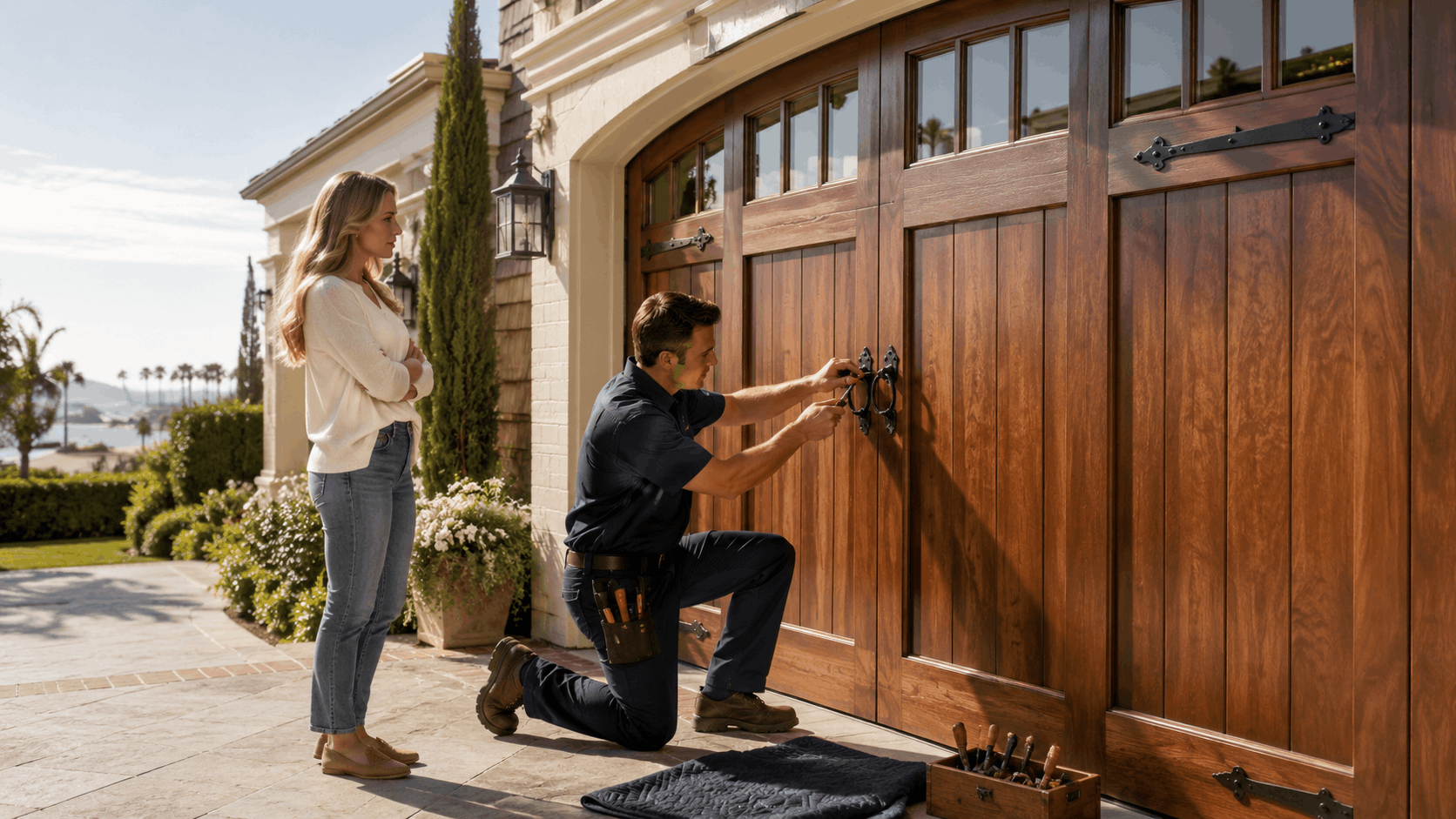
A homeowner near Ocean Boulevard called us last spring, standing in front of a weathered wood garage door that had guarded her Corona Del Mar home since the 1950s. The panels had gone gray, the hinges wore a coat of rust, and the bottom rail was starting to soften from years of fog and salt. She loved the door and did not want to lose it, but she was not sure it could be saved.
That call is one we get often in this stretch of Newport Beach. The older homes along the Flower Streets and up toward the Village carry doors with real character, and coastal air is hard on every one of them. The good news is that many of these doors can be restored rather than tossed out.
What Historic Style Garage Door Restoration Really Means
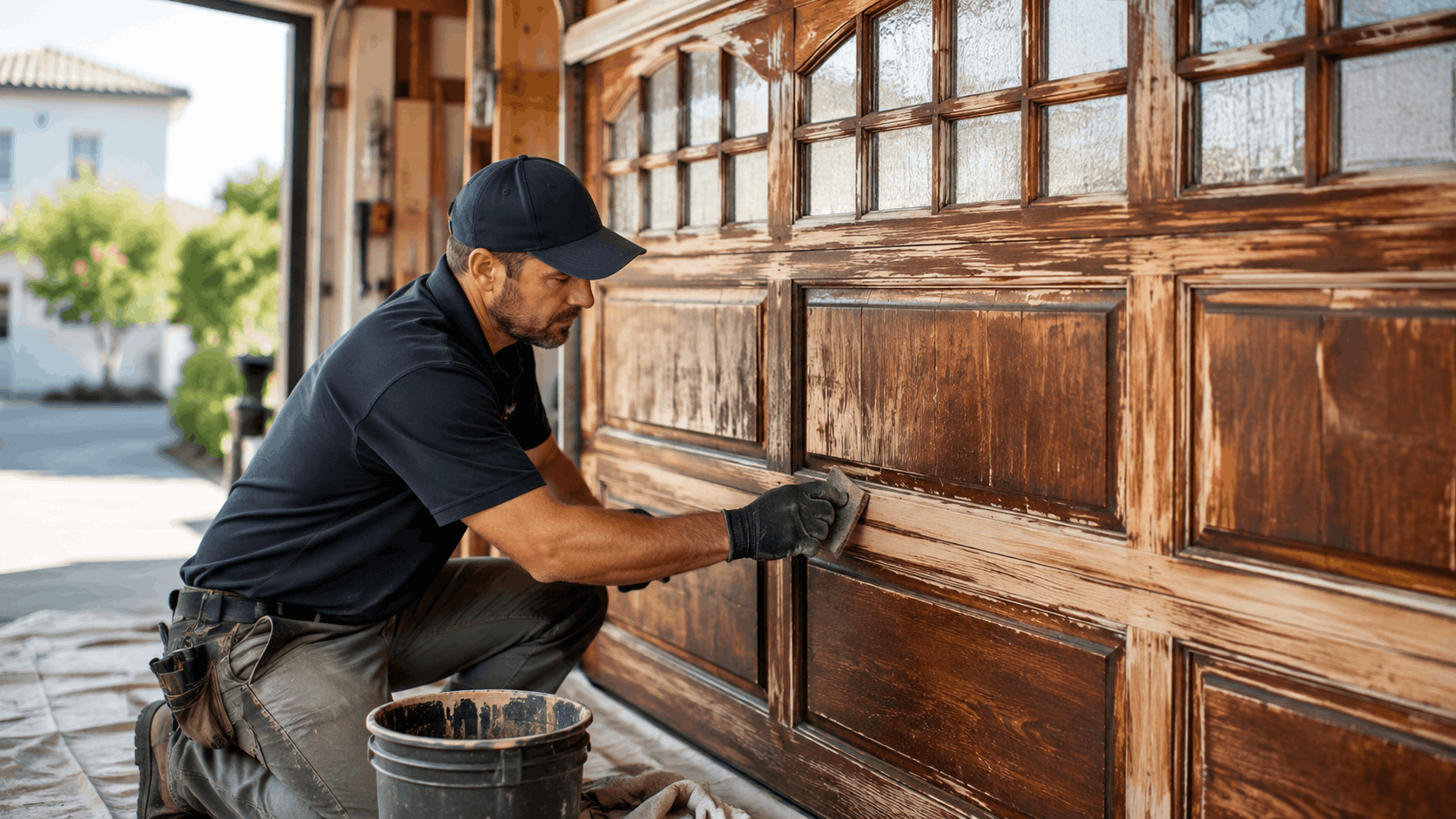
Restoration is not the same as a quick fix, and it is not the same as buying a brand new door. Historic garage door restoration means bringing an original door back to life while keeping the details that make it special. Repair patches a problem. Replacement starts fresh. Restoration lives in between, and it takes the most care.
Homeowners with a vintage garage door should set clear expectations from the start. A door that is 60 or 70 years old will never look factory-new again, and that is fine. The goal is a period style door that looks true to its era, works safely, and stands up to the coast.
- Repair fixes a single failing part, like a cracked panel or a broken spring, without touching the rest.
- Restoration strips, repairs, refinishes, and rebuilds the door while saving original wood and hardware wherever possible.
- Replacement swaps the whole door for a new one, sometimes styled to match the old look.
Restoration Versus Replacement: How to Decide
The first question we ask is simple: how much of the original door is still solid? If the frame and most panels are sound, restoration usually wins. When we can save the good wood and repair the rest, the door keeps its soul and the homeowner keeps their budget in check.
Wood rot is the deciding factor most of the time. Surface rot on the bottom rail is common near the water and can often be cut out and replaced. Deep rot that has spread into the stiles and joints is a different story, because it weakens the structure the whole door depends on.
We also look for warping and structural failure. A door that has bowed badly or pulled apart at the corners may cost more to rebuild than to replace. When the choice to restore or replace is close, we lay out both paths with real numbers so the homeowner can decide with clear eyes.
As a rough rule, if more than roughly 40 percent of the wood needs replacing, we start talking honestly about a new door styled to match. Below that, restoration almost always makes sense and holds more value.
Common Historic Door Styles in Corona Del Mar
Corona Del Mar has a mix of door styles that tell the story of when each home was built. The carriage house door is the one people picture first, with its swing-out look, decorative straps, and divided panels. Many were later converted to overhead operation while keeping that classic face.
Spanish Revival homes bring their own flavor. These doors often feature heavy wood, arched tops, wrought-iron hardware, and a warm stained finish that pairs with red tile roofs. They are beautiful and they are heavy, which matters when we plan springs and openers.
Mid-century wood doors show up on ranch-style homes across the neighborhood. They lean into clean horizontal lines, flat panels, and simple hardware. Each of these styles asks for a different hand during restoration, and we treat them accordingly. For homes that need a full match, our carriage house garage door work keeps that period look intact.
Knowing the style also helps us source the right materials. A Spanish Revival door needs different stains and iron than a mid-century door, and getting that wrong is easy to spot from the street.
Keeping Original Character Intact
The whole point of restoration is that the door still looks like itself when we are done. We match original panels by species and grain so a repaired section blends in rather than standing out. When a panel is beyond saving, we mill a new one to the same profile.
Joinery matters just as much. Old doors were built with mortise-and-tenon or doweled joints, and we rebuild them the same way instead of gluing on shortcuts. That keeps the door strong and period-correct, and it holds up better over the years.
Original hardware is worth saving whenever we can. A little rust removal and a fresh coat often bring old handles and hinges back to life. When a piece is gone for good, we track down a match or fabricate one so the finished door reads as authentic, not patched together.
Why Older Homes Near Ocean Boulevard Face Unique Issues
Homes near Ocean Boulevard and throughout the Flower Streets carry decades of coastal wear that inland homes never see. Salt air rides in on the marine layer every morning, and it settles into every seam and hinge. Over time that speeds up rot and rust in ways a homeowner might not notice until a part fails.
Past remodels add another wrinkle. Many of these homes have been updated more than once, and previous owners sometimes covered original wood with paint or bolted on hardware that does not fit the era. Peeling back those layers is part of a good restoration.
Age alone takes a toll too. Doors that have opened and closed for 50 years develop loose joints, tired springs, and worn tracks. Homes near the Newport Beach coastline deal with all of this at once, which is why a careful assessment comes first.
Get Your Free Quote
Tell us about your garage door and we'll get back to you fast.
How Coastal Air Affects Garage Doors in Corona Del Mar
Living close to the water is the whole reason people love Corona Del Mar, but that same air is tough on garage doors. Coastal salt air carries tiny salt particles that cling to metal and wood alike. Combined with fog and afternoon sun, it creates a cycle of wear that inland doors simply do not face.
We see moisture damage and garage door corrosion on nearly every coastal door we inspect. Understanding these forces helps homeowners plan smarter restorations that actually last near the shore.
- Salt speeds rust on hinges, rollers, springs, and fasteners.
- Fog and humidity swell wood panels and make them stick.
- Strong afternoon sun fades stains and breaks down finishes.
- The wrong timing for refinishing can trap moisture under the coat.
Salt Air and Metal Hardware Corrosion
The metal parts of a garage door take the first hit from salt air. Standard steel hinges and rollers near the water can show rust within a couple of years, and springs are not far behind. Once corrosion sets in, parts bind, squeak, and eventually break.
Material choice makes a big difference. Galvanized hardware resists rust far better than plain steel, and stainless fasteners hold up even closer to the shore. When we restore a coastal door, we upgrade the hidden metal to these tougher materials while keeping the visible hardware period-correct.
Springs deserve special attention because they carry the whole weight of the door. A rusted spring is a safety risk, not just a noise problem. Our spring and cable repair team uses coated components built to survive the salt air these homes deal with daily.
We also seal and grease connection points so salt has fewer places to settle. Small steps like this add years to the hardware on a restored door.
Moisture, Wood Swelling, and Warping
Wood loves to drink up moisture, and near Big Corona Beach there is plenty of it. Morning fog and high humidity soak into unsealed wood, causing panels to swell. A door that closed cleanly in summer might drag or stick during a damp winter stretch.
Repeated swelling and drying leads to warping over time. The wood expands, contracts, and slowly loses its flat shape. Left unchecked, this pulls joints apart and throws the whole door out of alignment.
The fix starts with proper sealing on every surface, including the top and bottom edges that people often skip. Those hidden edges are where wood swelling usually begins. During restoration we seal the door fully so moisture cannot sneak in through the back door, so to speak.
Sun Exposure and Finish Breakdown
South and west-facing doors in Corona Del Mar catch hard afternoon sun. That UV damage fades stains and chalks paint faster than most people expect. A finish that looked rich two years ago can turn dull and gray from sun alone.
Finish fading is more than a looks problem. Once the protective coat breaks down, the wood underneath is exposed to salt and moisture. That is when small cosmetic issues turn into real rot.
We recommend UV-resistant marine finishes for doors that face the afternoon sun. These coats hold color longer and shield the wood better. Pairing the right finish with regular upkeep keeps a restored door looking good far past the usual fade date.
Seasonal Timing for Restoration Work
Timing matters more on the coast than most homeowners realize. Refinishing during the thick of the marine layer season, often late spring into early summer, can trap moisture under the finish. That leads to bubbling and early failure.
The best refinishing season here tends to be late summer through early fall, when the air is drier and the days are warm. Coats cure properly and bond tighter during these windows. We plan restoration schedules around this whenever the door is not an emergency.
For repair work that cannot wait, we still restore doors year-round and adjust our methods to the conditions. But when a homeowner has the flexibility, choosing the right season pays off in a finish that lasts.
Need Help in Irvine?
Urgent Garage Doors serves Irvine and all of Orange County.
The Step-by-Step Restoration Process
People often ask what a restoration actually looks like day to day. The process moves through clear stages, from the first inspection to the final reinstall. Each step protects the original door while making it safe and durable again.
Here is a look at the full restoration process, refinishing included, so homeowners know what to expect from a proper garage door inspection through to a working door.
| Stage | What Happens | Typical Time |
|---|---|---|
| Inspection | Assess panels, hardware, and door balance | 1 visit |
| Stripping and repair | Remove finish, fix cracks, replace bad wood | 2-4 days |
| Refinishing | Stain, seal, and cure with marine-grade coats | 2-3 days |
| Reinstall and test | Rehang, adjust springs, run safety checks | 1 day |
On-Site Inspection and Assessment
Every restoration starts with a hands-on door assessment at the home. We check each panel for rot, cracks, and separation, and we probe the bottom rail where coastal damage tends to hide. Photos alone never tell the full story, which is why we come out in person.
Hardware gets a close look too. We inspect hinges, straps, handles, rollers, and tracks for rust and wear. This tells us what can be saved and what needs to be sourced or fabricated.
The balance test is a big part of the visit. We disconnect the opener and lift the door by hand to see if it holds position. A door that drifts or slams points to spring trouble that we factor into the plan. From there we build a clear scope so the homeowner knows exactly what the job involves.
Stripping, Sanding, and Repairing Panels
Once the plan is set, we strip the old finish down to bare wood. This reveals the true condition underneath, including hidden cracks and soft spots. Careful stripping also removes decades of paint layers that hide the original grain.
Sanding follows, and it is patient work. We smooth every surface without rounding off the crisp edges that give the door its era-correct look. Good sanding is the difference between a finish that glows and one that looks flat.
Panel repair is where craftsmanship shows. We fill small cracks, splice in new wood where rot has taken hold, and rebuild joints that have loosened. The goal is always to save as much original wood as possible while making the door structurally sound again. If a panel is truly beyond help, our panel replacement service matches the profile so the repair disappears.
Refinishing and Sealing for Coastal Weather
Refinishing is where the door comes back to life. We choose a wood stain that matches the original tone, then build up protective coats. On the coast we lean toward marine-grade sealant because it stands up to salt and moisture far better than standard products.
We seal every surface, including the top and bottom edges. Those hidden faces are where moisture usually attacks first, so skipping them shortens the life of the whole job. Full sealing is a small step that makes a large difference near the water.
Curing time matters too. We let each coat set fully before adding the next, which is why we watch the marine layer forecast. A properly cured finish resists fading, chalking, and water intrusion for years instead of months.
Reinstalling and Testing the Door
With the door refinished, we rehang it and dial in the mechanics. Spring adjustment is careful work, especially on heavy Spanish Revival and carriage doors that carry real weight. Proper tension keeps the door balanced and easy to lift.
We fine-tune the tracks and rollers so the door glides quietly. On restored wood doors we often add nylon rollers to cut noise and reduce wear. Small adjustments here protect all the work that came before.
The final step is a full safety test. We check the auto-reverse, confirm the photo-eye sensors line up, and run the door through several cycles. Only once it opens smoothly and stops safely do we call the job done.
Restoring and Sourcing Period-Correct Hardware
Hardware is what makes a historic door feel authentic. The right hinges, handles, and straps turn a plain door into a period piece. Restoration means saving vintage hardware when we can and finding smart replacements when we cannot.
There is also a hidden side to hardware. Behind the decorative pieces sit the rollers, tracks, and springs that make the door work every day. We treat both the visible and the mechanical parts with equal care.
Matching Original Handles, Hinges, and Straps
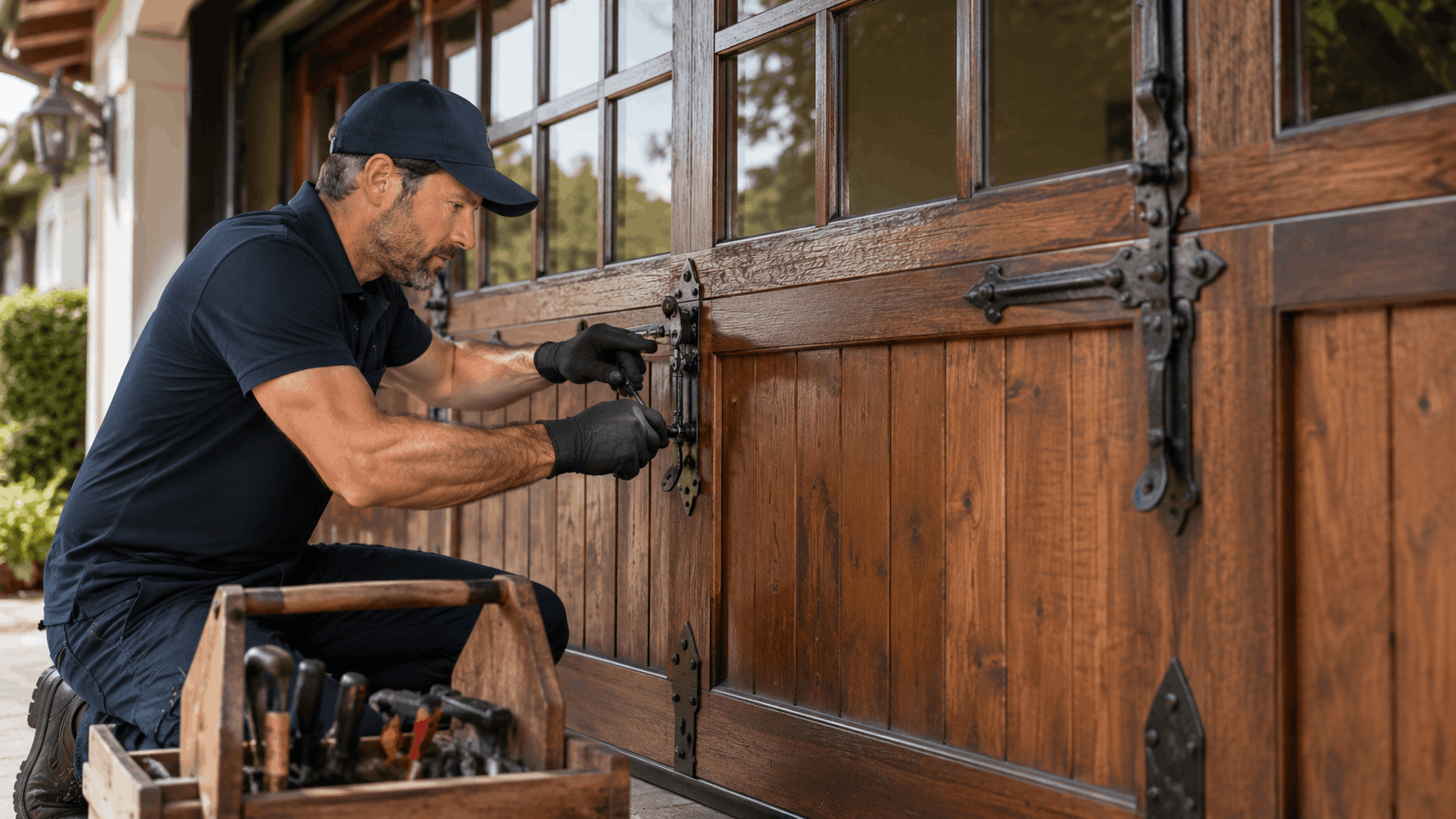
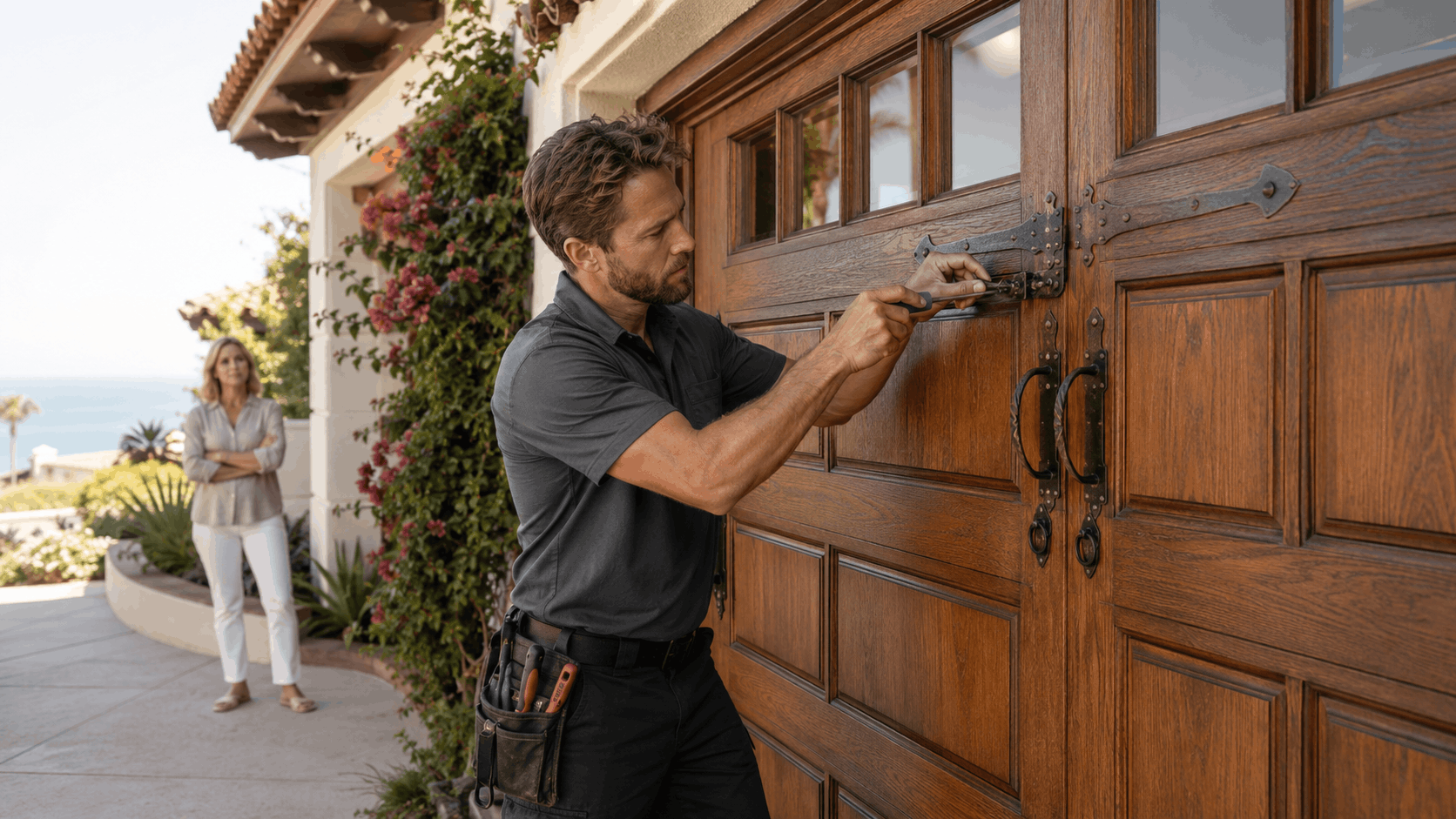
Original decorative hinges and straps are often salvageable with rust removal and a fresh coat. We clean them down, treat the metal, and refinish them to match the era. Saving these pieces keeps the door true to its original design.
When a handle or strap is missing or too far gone, handle matching becomes a hunt. We search salvage sources and specialty suppliers for pieces that fit the style. Carriage and Spanish Revival doors have well-known hardware looks that we can usually source or reproduce.
For one-of-a-kind pieces, fabrication is the answer. A metal shop can forge a strap or hinge to match an existing one exactly. It costs more, but it keeps the door looking whole rather than mismatched.
Choosing Rust-Resistant Materials for Coastal Homes
Close to the shoreline, hardware material is a make-or-break choice. Stainless hardware and coated fasteners resist the salt air that eats through plain steel. We recommend these upgrades on any door within a few blocks of the water.
Rust resistant does not have to mean modern-looking. We can source stainless or coated pieces finished to look like traditional iron. The door keeps its vintage face while the metal survives the coast.
This choice pays off over time. A homeowner who spends a little more on rust-resistant hardware avoids repeat repairs and keeps their restored door looking sharp longer. On the coast, that trade almost always makes sense.
Rollers, Tracks, and Springs Behind the Scenes
The parts you do not see keep the door moving smoothly. We upgrade rollers, tracks, and springs during restoration while leaving the visible style untouched. A homeowner gets modern reliability without losing the historic look.
Torsion springs are our usual choice for heavier restored doors. They handle weight better and last longer than lighter setups. Our torsion spring replacement work is sized to the exact weight of each door we restore.
Roller replacement is another quiet upgrade. Worn metal rollers grind and rust, while fresh nylon rollers glide and stay quiet. Swapping these during restoration means the whole system runs like new even though the door is decades old.
Adding Quiet Operation Without Losing Charm
Old doors can be loud, and homeowners near quiet streets notice every rattle. Nylon rollers are the simplest fix, cutting most of the metal-on-metal noise. They also last well in coastal conditions.
A modern quiet opener helps too. Belt-drive units run far quieter than old chain drives, which matters when a bedroom sits above the garage. We can pair one with a restored door without changing its appearance.
For homeowners who want the full quiet package, our quiet roller hardware upgrade pulls these pieces together. The result is a historic door that opens smoothly and softly.
Adding Modern Openers to a Vintage Door
A restored door does not have to feel stuck in the past. Modern openers bring smart, safe operation to even the oldest wood doors. The trick is choosing the right unit and hiding it well.
Vintage door automation is one of our favorite parts of a restoration. Homeowners keep the look they love and gain the convenience they expect from a new garage door opener.
Picking an Opener That Fits Heavy Wood Doors
Restored wood doors are heavy, and the opener has to match. We size horsepower to the door weight so the motor is not straining on every cycle. An undersized opener wears out fast on a heavy Spanish Revival door.
Belt drive is our go-to for these doors. It moves heavy weight smoothly and quietly, which suits both the door and the neighbors. A quality belt-drive unit handles a heavy door opener job for years.
We also check the door balance before installing any opener. A well-balanced door lets the opener do its job without excess load. Our opener installation team sets everything up to match the restored door exactly.
Smart Features and Smartphone Control
Smart openers add real convenience to a historic door. A Wi-Fi opener lets a homeowner open, close, and check the door from their phone anywhere. For homes near Bayside Drive where residents come and go often, that control is handy.
App alerts tell you if the door was left open, which is easy to forget on a busy morning. Some units also log activity so you know when the door moved. These features fit modern life without touching the door's classic face.
We handle the full setup, including linking the opener to a home network. Our smart Wi-Fi opener setup gets everything talking to your phone before we leave.
Meeting Current Safety Codes
Any opener we install must meet current California safety rules. Photo-eye safety sensors sit near the floor on both sides and stop the door if something crosses the path. This protects kids, pets, and cars.
The auto-reverse feature is required too. If the door meets resistance while closing, it must stop and reverse on its own. We test this on every install to confirm it works correctly.
These rules apply even on a restored vintage door. Old doors were built before these standards existed, so adding a code-compliant opener brings safety up to date. We make sure the finished setup passes every check.
Hiding Modern Tech Behind Original Looks
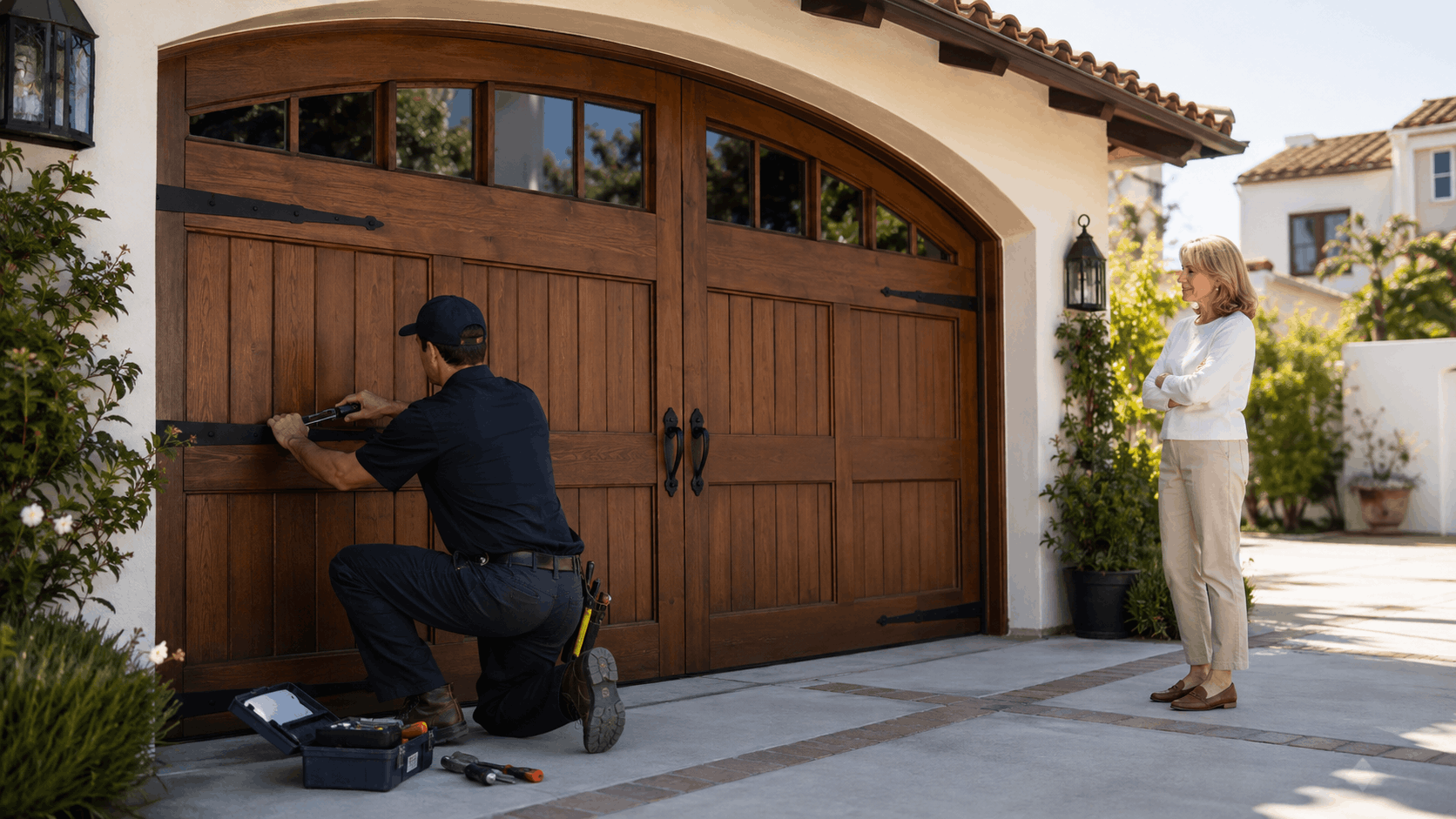
The best modern upgrade is one you cannot see. We route wiring and mount sensors so they stay out of sight from the street. The door's historic face stays exactly as it should.
Concealed hardware keeps the illusion complete. We can tuck brackets and reinforcement behind panels so the door looks original while carrying modern parts. Hidden automation means the charm stays and the function improves.
This approach lets homeowners have both. The neighbors see a period-correct door, while inside the garage sits quiet, smart, safe machinery. That balance is the goal of every restoration we do.
Need Help in Irvine?
Urgent Garage Doors serves Irvine and all of Orange County.
Costs, Timelines, and What to Expect
Cost is the question on every homeowner's mind, and fair enough. Restoration pricing varies with the door's condition, size, and hardware needs. Below are honest ranges to help set expectations before we ever quote a job.
These figures cover the Corona Del Mar area and reflect the extra care coastal doors require. Your exact restoration cost depends on the factors listed under the table.
| Project Type | Typical Price Range | Timeline |
|---|---|---|
| Light refinishing | $800 - $1,800 | 3-5 days |
| Moderate restoration | $1,800 - $4,000 | 1 week |
| Full restoration and rebuild | $4,000 - $8,000+ | 2 weeks |
| Custom hardware fabrication | $500 - $2,500 add-on | Varies |
Typical Price Ranges for Historic Door Work
Light refinishing is the most affordable path. If the door is structurally sound and just needs new finish, refinishing cost often lands in the lower range. This covers stripping, sanding, staining, and sealing.
Moderate restoration adds panel repair and hardware work. When some wood needs splicing and a few pieces of hardware need attention, the price climbs into the middle range. Most coastal doors we see fall here.
Full restoration is the top tier. When a door needs extensive rebuilding, new panels, and custom hardware, it reaches the higher price range. Even so, it often costs less than a comparable custom new door while keeping the original character.
What Adds to the Cost
Several factors push a restoration price higher. Custom hardware cost is a common one, since fabricating matching hinges or straps takes skilled shop time. Rare styles cost more to reproduce accurately.
Rot repair is another big driver. Light surface rot is quick to fix, but deep rot that has spread into stiles and rails means more wood replacement and labor. The more original wood we have to rebuild, the higher the cost.
Door size matters too. Multi-car and oversized doors take more material, more finish, and more time. A double-wide carriage door naturally costs more than a single. We spell all of this out in the quote so nothing surprises the homeowner later.
How Long a Restoration Takes
Timelines depend on the scope of work. A straightforward refinishing project timeline runs a few days from start to finish. That includes drying and curing time between coats.
A moderate restoration schedule usually takes about a week. Panel repair, hardware work, and refinishing each add days. Coastal curing conditions can stretch this a little during the marine layer season.
Full rebuilds take the longest, often up to two weeks. Sourcing or fabricating custom hardware can extend that further. We give a clear timeline upfront so homeowners can plan around the work.
Getting an Accurate Quote in Corona Del Mar
Photos are a fine starting point, but they never show hidden rot or true door balance. That is why we travel from Irvine to Corona Del Mar for in-person quotes. Seeing the door in person is the only way to price the job right.
During the free quote visit we test the door, probe for damage, and check the hardware. Then we lay out options from light refinishing to full restoration. You get real numbers, not a rough guess.
Our Irvine-based garage door team covers Corona Del Mar and the surrounding coast regularly. Reach out through our contact page to set up a visit and get an accurate quote.
HOA Rules, Permits, and Local Guidelines
Before any work begins, it helps to know the local rules. Some Corona Del Mar communities have appearance standards, and the city has its own requirements for certain changes. A little planning here saves headaches later.
We guide homeowners through HOA rules, Newport Beach permits, and garage door guidelines so the project goes smoothly. Restoration usually raises fewer flags than replacement, which is another reason to save the original door.
Working With Corona Del Mar HOA Standards
Some neighborhoods near the Village and China Cove have appearance rules that cover garage doors. These standards protect the historic feel of the area, so a restored door that matches the original often earns easy HOA approval.
When rules do apply, they usually focus on color, style, and material. A faithful restoration that keeps the original look tends to satisfy these guidelines without trouble. Changing the door's appearance is what draws scrutiny.
We help homeowners prepare the details an HOA might request. Knowing the standards before we start means the finished door passes review the first time. That keeps the project on schedule.
Newport Beach Building Department Basics
Straight refinishing rarely needs a building permit. When a project involves structural changes, though, the city may require one. Corona Del Mar falls under Newport Beach jurisdiction for permits.
You can confirm current requirements through the Newport Beach Building Division. They handle structural and safety-related work. When a permit applies, we help homeowners understand the process.
Most restorations stay in cosmetic and mechanical territory, which keeps permitting simple. If a job does cross into structural changes, we flag it early. No one likes a surprise from the building department mid-project.
Preserving Curb Appeal Along the Village Streets
A restored door does more than serve one home. It helps hold the historic character of streets near Coast Highway and the Village. Curb appeal along these blocks depends on doors that fit their era.
Buyers notice these details too. An authentic restored door adds charm that a generic replacement cannot match. It signals that the home has been cared for.
We take that responsibility seriously on every job. Keeping a door period-correct benefits the whole street, not just the one property. That is part of why restoration is worth the effort here.
Documentation and Warranty Records
Good paperwork protects a homeowner long after the job ends. We provide restoration documentation that records what was repaired, refinished, and replaced. This helps with HOA questions and future resale.
Warranty records matter too. Keeping the details of materials and workmanship on file makes any future service straightforward. It also reassures a buyer that the work was done right.
We recommend storing these records with your home documents. If you ever sell, the restoration paperwork becomes a selling point. It shows the door was professionally cared for.
Keeping a Restored Door in Great Shape
A restoration is an investment, and simple upkeep protects it. In the coastal climate, a little regular garage door maintenance goes a long way. Wood door care near the water is not hard, it just has to be consistent.
Here are the coastal upkeep habits that keep a restored door looking and working its best for years to come.
Seasonal Cleaning and Salt Rinse Routines
Salt buildup is the quiet enemy of coastal doors. A regular salt rinse with fresh water washes it off the finish and hardware before it can do damage. This simple habit protects both the wood and the metal.
Seasonal cleaning goes a step further. A gentle wash with mild soap removes grime and salt residue that plain water misses. Doing this a few times a year keeps the finish healthy.
Pay attention to hardware during cleaning. Rinsing hinges, rollers, and tracks slows corrosion between service visits. It only takes a few minutes and adds real life to the door.
Refinishing and Resealing Schedule
Wood needs fresh protection on a schedule. In the Corona Del Mar climate, resealing every one to three years keeps moisture and salt out. Sun-facing doors may need it more often.
Watch for signs the finish is wearing. Fading color, dull spots, and water that no longer beads all point to time for a fresh coat. Catching this early prevents rot from starting.
Regular wood maintenance is far cheaper than repair. A resealing every couple of years costs little compared to fixing rot down the road. Staying ahead of it is the smart move on the coast.
Lubricating Moving Parts
Moving parts need lubrication to run smoothly and quietly. A few times a year, homeowners can apply a proper garage door lubricant to hinges, rollers, and springs. This simple roller care cuts noise and reduces wear.
Use the right product. A silicone or lithium-based garage door lubricant works best, while household oils attract grime. A light application on the moving points is all it takes.
Skip the tracks when lubricating rollers, since grease there collects dirt. Wipe tracks clean instead. Done right, lubrication keeps the whole system gliding for years.
When to Call the Team for a Tune-Up
Some issues need a professional eye. If the door starts sticking, dropping, or making new noises, it is time for a tune-up. These are early warnings that something is off.
A professional inspection catches problems before they become failures. We check balance, spring tension, hardware, and safety features in one visit. Our preventive maintenance plan keeps restored doors on a regular schedule.
When a spring breaks or the door will not move, do not force it. Reach out and let us handle it safely. Catching trouble early protects both the door and everyone who uses it.
Need Help in Irvine?
Urgent Garage Doors serves Irvine and all of Orange County.
Final Thoughts
A weathered historic door in Corona Del Mar is rarely a lost cause. With the right restoration, an original door can look true to its era, work safely, and stand up to the salt air for decades. Saving that character is almost always worth the effort.
The path runs from honest inspection through careful stripping, repair, refinishing, and smart hardware choices. Add a hidden modern opener and a little regular upkeep, and a vintage door becomes a reliable part of the home. Our team handles every step with the door's original look in mind.
If you have a historic door near Ocean Boulevard, the Flower Streets, or anywhere in Corona Del Mar, we would be glad to take a look. Call Urgent Garage Doors or reach out through our contact page to schedule an in-person quote. Let us help you keep the door that gives your home its character.
Frequently Asked Questions
What is historic style garage door restoration?
It is the process of bringing an original vintage door back to life while keeping its authentic look. Instead of replacing the whole door, our team strips, repairs, and refinishes the original wood and saves the period-correct hardware wherever possible. We match panels, joinery, and finishes to the door's era so the finished result reads as authentic. The goal is a door that looks true to its age but works safely and stands up to the coast.
How much does garage door restoration cost in Corona Del Mar?
Light refinishing usually runs between $800 and $1,800, while moderate restoration falls in the $1,800 to $4,000 range. Full rebuilds with custom hardware can reach $4,000 to $8,000 or more. The final cost depends on how much wood needs repair, whether custom hardware must be fabricated, and the size of the door. Because coastal doors often hide rot, we provide an accurate quote only after an in-person inspection.
Can a badly weathered wood door still be saved?
Often, yes. If the frame and most panels are still solid, restoration usually works well even on a rough-looking door. Surface rot on the bottom rail is common near the water and can be repaired. When deep rot has spread through the stiles and joints, or when more than roughly 40 percent of the wood is failing, replacement may make better sense. We assess each door honestly and lay out both options.
How long does a restoration project take?
A straightforward refinishing job takes about three to five days, including drying and curing time between coats. Moderate restorations with panel and hardware work usually run about a week. Full rebuilds, especially those needing custom hardware fabrication, can take up to two weeks. Coastal humidity during the marine layer season can add a little curing time. We give a clear timeline upfront so you can plan around the work.
Will salt air ruin my newly restored door?
Not if it is protected properly. We seal every surface, including the hidden top and bottom edges, with marine-grade sealant built for coastal conditions. We also upgrade hidden hardware to galvanized or stainless materials that resist corrosion. With regular salt rinses and resealing every one to three years, a restored door holds up well near the water. The protection is what makes coastal restoration last.
Can I add a smart opener to an old wood door?
Yes. Modern openers work well with restored heavy wood doors as long as the horsepower is matched to the weight. We usually recommend a quiet belt-drive unit and often add a Wi-Fi opener for smartphone control. All of it can be installed without changing the door's historic face, with wiring and sensors kept out of sight. You keep the classic look and gain modern convenience and safety.
Do I need HOA approval for restoration work?
It depends on your community. Some neighborhoods near the Village and China Cove have appearance standards that cover garage doors. A faithful restoration that keeps the original look usually earns easy approval, since it preserves the area's character. Changes to color, style, or material are what draw scrutiny. We help homeowners prepare the details an HOA might request so the project passes review the first time.
Does Urgent Garage Doors service Corona Del Mar from Irvine?
Yes. Our team is based in Irvine and travels to Corona Del Mar and the surrounding coastal areas regularly, including Newport Beach, Balboa Peninsula, and the Flower Streets. We come out in person for inspections and quotes because photos never show hidden rot or true door balance. Reach out through our contact page and we will schedule a visit to look at your door.
How often should a restored door be resealed?
In the Corona Del Mar climate, plan to reseal wood every one to three years. Doors that face the hard afternoon sun may need it more often, since UV breaks down the finish faster. Watch for fading color, dull spots, or water that no longer beads on the surface, which all signal it is time. Staying ahead of resealing prevents rot and costs far less than repair.
Can original hardware be matched or reproduced?
Yes. We save original decorative hinges, handles, and straps whenever possible by removing rust and refinishing them. When a piece is missing or too damaged, we source a matching replacement from salvage and specialty suppliers. For rare styles, a metal shop can fabricate a strap or hinge to match an existing one exactly. On coastal homes we often use stainless or coated versions finished to look like traditional iron.
Frequently Asked Questions
- What is historic style garage door restoration?
- It is the process of bringing an original vintage door back to life while keeping its authentic look. Instead of replacing the whole door, our team strips, repairs, and refinishes the original wood and saves the period-correct hardware wherever possible. We match panels, joinery, and finishes to the door's era so the finished result reads as authentic. The goal is a door that looks true to its age but works safely and stands up to the coast.
- How much does garage door restoration cost in Corona Del Mar?
- Light refinishing usually runs between $800 and $1,800, while moderate restoration falls in the $1,800 to $4,000 range. Full rebuilds with custom hardware can reach $4,000 to $8,000 or more. The final cost depends on how much wood needs repair, whether custom hardware must be fabricated, and the size of the door. Because coastal doors often hide rot, we provide an accurate quote only after an in-person inspection.
- Can a badly weathered wood door still be saved?
- Often, yes. If the frame and most panels are still solid, restoration usually works well even on a rough-looking door. Surface rot on the bottom rail is common near the water and can be repaired. When deep rot has spread through the stiles and joints, or when more than roughly 40 percent of the wood is failing, replacement may make better sense. We assess each door honestly and lay out both options.
- How long does a restoration project take?
- A straightforward refinishing job takes about three to five days, including drying and curing time between coats. Moderate restorations with panel and hardware work usually run about a week. Full rebuilds, especially those needing custom hardware fabrication, can take up to two weeks. Coastal humidity during the marine layer season can add a little curing time. We give a clear timeline upfront so you can plan around the work.
- Will salt air ruin my newly restored door?
- Not if it is protected properly. We seal every surface, including the hidden top and bottom edges, with marine-grade sealant built for coastal conditions. We also upgrade hidden hardware to galvanized or stainless materials that resist corrosion. With regular salt rinses and resealing every one to three years, a restored door holds up well near the water. The protection is what makes coastal restoration last.
- Can I add a smart opener to an old wood door?
- Yes. Modern openers work well with restored heavy wood doors as long as the horsepower is matched to the weight. We usually recommend a quiet belt-drive unit and often add a Wi-Fi opener for smartphone control. All of it can be installed without changing the door's historic face, with wiring and sensors kept out of sight. You keep the classic look and gain modern convenience and safety.
- Do I need HOA approval for restoration work?
- It depends on your community. Some neighborhoods near the Village and China Cove have appearance standards that cover garage doors. A faithful restoration that keeps the original look usually earns easy approval, since it preserves the area's character. Changes to color, style, or material are what draw scrutiny. We help homeowners prepare the details an HOA might request so the project passes review the first time.
- Does Urgent Garage Doors service Corona Del Mar from Irvine?
- Yes. Our team is based in Irvine and travels to Corona Del Mar and the surrounding coastal areas regularly, including Newport Beach, Balboa Peninsula, and the Flower Streets. We come out in person for inspections and quotes because photos never show hidden rot or true door balance. Reach out through our contact page and we will schedule a visit to look at your door.
- How often should a restored door be resealed?
- In the Corona Del Mar climate, plan to reseal wood every one to three years. Doors that face the hard afternoon sun may need it more often, since UV breaks down the finish faster. Watch for fading color, dull spots, or water that no longer beads on the surface, which all signal it is time. Staying ahead of resealing prevents rot and costs far less than repair.
- Can original hardware be matched or reproduced?
- Yes. We save original decorative hinges, handles, and straps whenever possible by removing rust and refinishing them. When a piece is missing or too damaged, we source a matching replacement from salvage and specialty suppliers. For rare styles, a metal shop can fabricate a strap or hinge to match an existing one exactly. On coastal homes we often use stainless or coated versions finished to look like traditional iron.
U
Licensed garage door repair professionals serving Irvine and Orange County.
Licensed in California · License #1055150
Why trust Urgent Garage Doors?
Founded in 2017, Urgent Garage Doors is a licensed and insured garage door services serving Irvine and Orange County. All content is reviewed by our licensed technicians.

Need Help in Irvine?
Urgent Garage Doors serves Irvine and all of Orange County.
Related Articles
Maintenance
Foothill Ranch Lake Forest Garage Door Service: Tract Home Service Plans
How garage door service plans work for identical-build tract homes in Foothill Ranch and Lake Forest, from matched maintenance to HOA-compliant repairs and local response.
How-To Guides
Ladera Ranch Garage Door Service: HOA-Approved Replacement Options
A local guide to HOA-approved garage door replacement in Ladera Ranch, covering village rules, the approval process, materials, costs, and matching your village style.
How-To Guides
New Doors for Old Towne Orange Historic Homes: Period-Appropriate Styles That Pass Review
A local guide to replacing garage doors on Old Towne Orange historic homes with period-appropriate styles, approved materials, and tips to pass City of Orange design review.