Maintenance
Dana Point Garage Door Repair: Coastal Steel Corrosion Specialists
Key Takeaways
- Salt air and marine fog trap moisture against steel, causing garage doors near Dana Point Harbor and the Lantern District to rust years faster than inland Irvine doors.
- Watch for early warning signs like orange streaks, bubbling paint, squeaky hardware, and doors that bind or move unevenly.
- Early surface rust can often be sanded, sealed, and refinished, while rust-through holes and weakened panels call for replacement.
- Corroded springs and cables are a serious safety risk because they can snap suddenly under high tension.
- Galvanized and powder-coated steel, aluminum, and fiberglass doors with stainless or nylon-coated hardware hold up best near the ocean.
- Simple habits like rinsing salt off the door, proper lubrication, and touch-up paint slow corrosion between service visits.
- Coastal homes should get a professional inspection at least once a year, or twice for bluff and harbor-adjacent properties.
- The Irvine-based team serves all of Dana Point, from Monarch Beach to Capistrano Beach, with same-day and scheduled appointments.
In This Article
Every winter, homeowners near Dana Point Harbor wake up to the same unwelcome surprise. After a stretch of foggy nights, orange rust streaks show up on garage doors that looked fine a few months earlier. The paint bubbles near the bottom panel, and the hinges start to squeak louder than they used to.
Living close to the ocean has real perks, but salt air is hard on steel. The same marine breeze that makes Doheny State Beach so pleasant carries tiny salt particles that settle on metal and eat away at it over time. Doors that would last decades inland can show serious corrosion in just a few years along the coast.
Our team at Urgent Garage Doors works these coastal streets every week, from the Lantern District to Capistrano Beach. This guide walks through what causes salt-air corrosion, how to spot the early warning signs, when to repair versus replace, and the smart material choices that hold up near the water. Read on to protect one of the largest moving parts of your home.
Why Coastal Steel Corrosion Hits Dana Point Garage Doors Harder
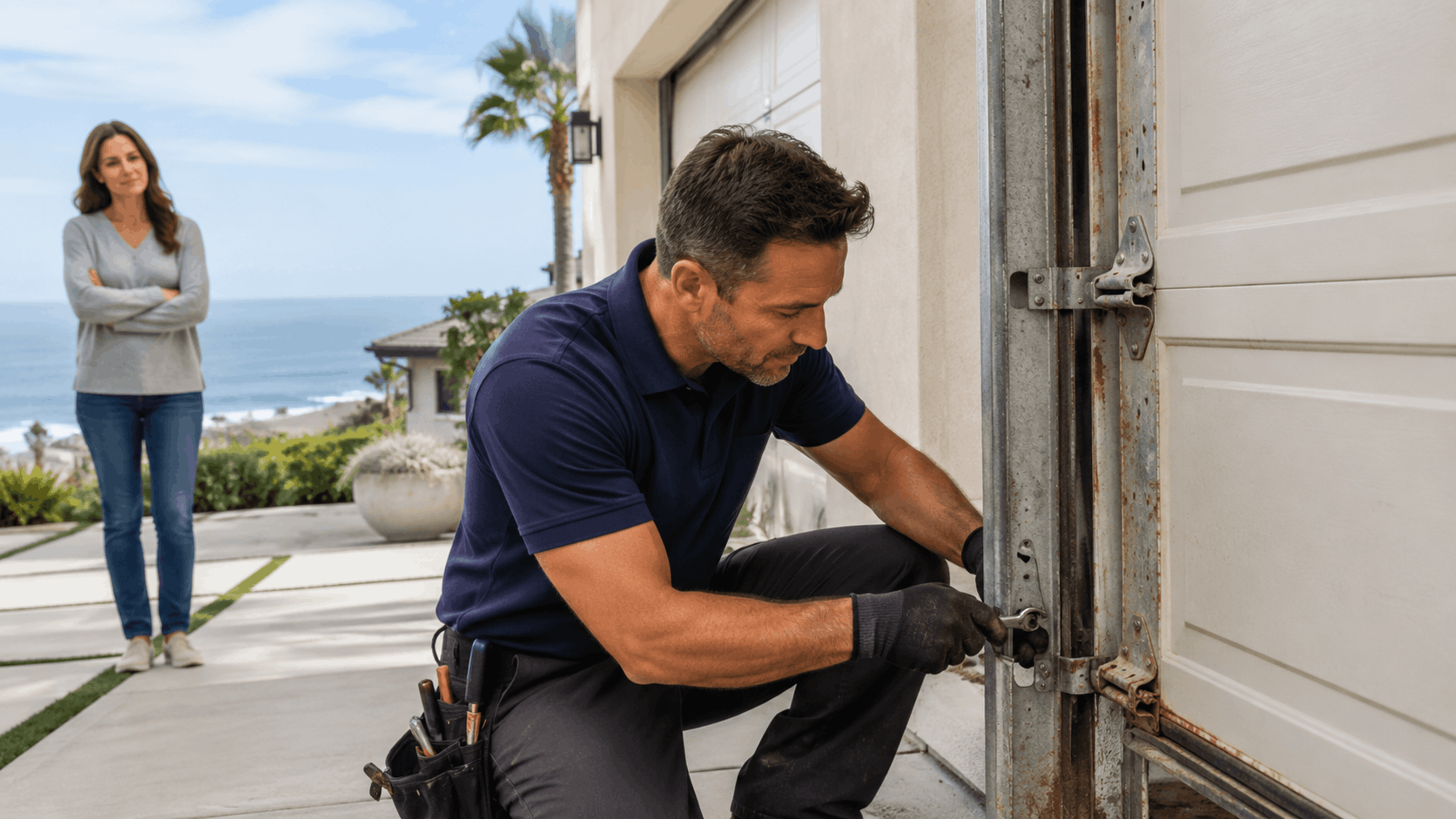
Dana Point sits right on the water, and that location changes everything about how a garage door ages. Salt, moisture, and constant humidity work together to break down metal faster than most homeowners expect. The physics are simple even if the damage is frustrating.
Here is what makes coastal corrosion so aggressive in this area:
- Airborne salt sticks to metal and holds moisture against the surface
- Marine fog keeps that moisture in contact with steel for hours at a time
- Temperature swings between night fog and daytime sun speed up rust cycles
- Wind carries salt spray well past the immediate shoreline
How Salt Air and Marine Fog Attack Steel Panels
Salt air is not just a smell. It is made of tiny salt crystals suspended in moisture, and those crystals cling to any surface they touch. When they land on a steel garage door, they pull water out of the air and hold it against the metal like a wet sponge that never fully dries.
That trapped moisture is where coastal corrosion begins. Steel reacts with oxygen and water to form iron oxide, which is the rust everyone recognizes. Salt speeds this reaction up dramatically because it conducts the electrical charge that drives the rusting process.
Marine fog makes the problem worse because it rolls in overnight and lingers for hours. A door in the Lantern District can stay damp from midnight until mid-morning, giving salt corrosion plenty of time to work. The rust often starts on the inside of the panel where you cannot see it, then works its way outward until streaks appear.
By the time surface rust shows on the paint, the metal underneath has usually been corroding for a while. That is why we tell coastal homeowners to treat early signs seriously instead of waiting.
Homes Near Dana Point Harbor and Lantern District at Highest Risk
Not every home in Dana Point faces the same level of exposure. The closer a property sits to the water, the faster its metal breaks down. Homes near Dana Point Harbor take a direct hit from salt spray carried on the breeze.
The Lantern District, with its walkable streets just above the harbor, sees heavy salt exposure too. Properties along Del Prado and the streets running down toward the water get coated with fine salt mist during windy stretches. Doheny State Beach homes deal with the same constant marine layer.
We have serviced doors just a few blocks apart where one shows heavy rust and the other looks almost new. The difference usually comes down to wind direction, how much salt reaches the door, and whether the previous owner kept up with maintenance.
Older homes near the harbor often have original steel doors that were never coated for coastal life. Those are the ones we see fail first, sometimes with rust-through holes along the bottom panel within a decade.
Seasonal Patterns: June Gloom and Winter Storms
Corrosion in Dana Point follows the seasons. Early summer brings June gloom, that thick marine layer that hangs over the coast for weeks. Those gray mornings keep doors damp day after day, which stacks up moisture exposure fast.
The marine layer does not just make the sky gray. It leaves a film of salty moisture on every metal surface it touches. When that pattern repeats for a month straight, unprotected steel takes real damage even without a single drop of rain.
Winter is the other rough season. Storm systems push salt spray inland and drive rain against doors that face the ocean. The combination of wind, salt, and standing water along the track base creates ideal conditions for corrosion to spread.
We get the most calls about rust in late winter and again in early summer, right after these two patterns peak. Homeowners who rinse and inspect their doors before and after these seasons tend to avoid the worst of it.
Why Inland Irvine Doors Rust Slower Than Dana Point Doors
Our base is in Irvine, and the difference between the Irvine climate and Dana Point is striking. Inland homes sit far enough from the water that salt rarely reaches them in meaningful amounts. The air is drier, and doors stay cleaner longer.
A steel door in a neighborhood like Woodbridge or Turtle Rock can go fifteen or twenty years with minor rust if it is kept up. The same door in Dana Point often shows serious corrosion much sooner because of the coastal exposure.
Humidity plays a part too. Inland Orange County dries out during the day, which gives metal a chance to shed moisture. Coastal fog denies that door the chance to dry, so the rusting process barely pauses.
This is why coastal homeowners cannot follow the same maintenance schedule as their inland neighbors. What works in Irvine is not enough near the harbor. Dana Point doors need more frequent attention and better material choices from the start.
Get Your Free Quote
Tell us about your garage door and we'll get back to you fast.
Early Warning Signs of Rust on Your Garage Door
Catching corrosion early saves money and prevents dangerous failures. The good news is that most rust signs are easy to spot once you know what to look for. A quick monthly inspection can catch problems while they are still cheap to fix.
Watch for these clues that garage door corrosion is starting:
- Orange streaks running down the panels
- Paint that bubbles, flakes, or peels
- Squeaking, grinding, or jerky movement
- Rust flakes on the garage floor below the door
Surface Rust Streaks and Bubbling Paint
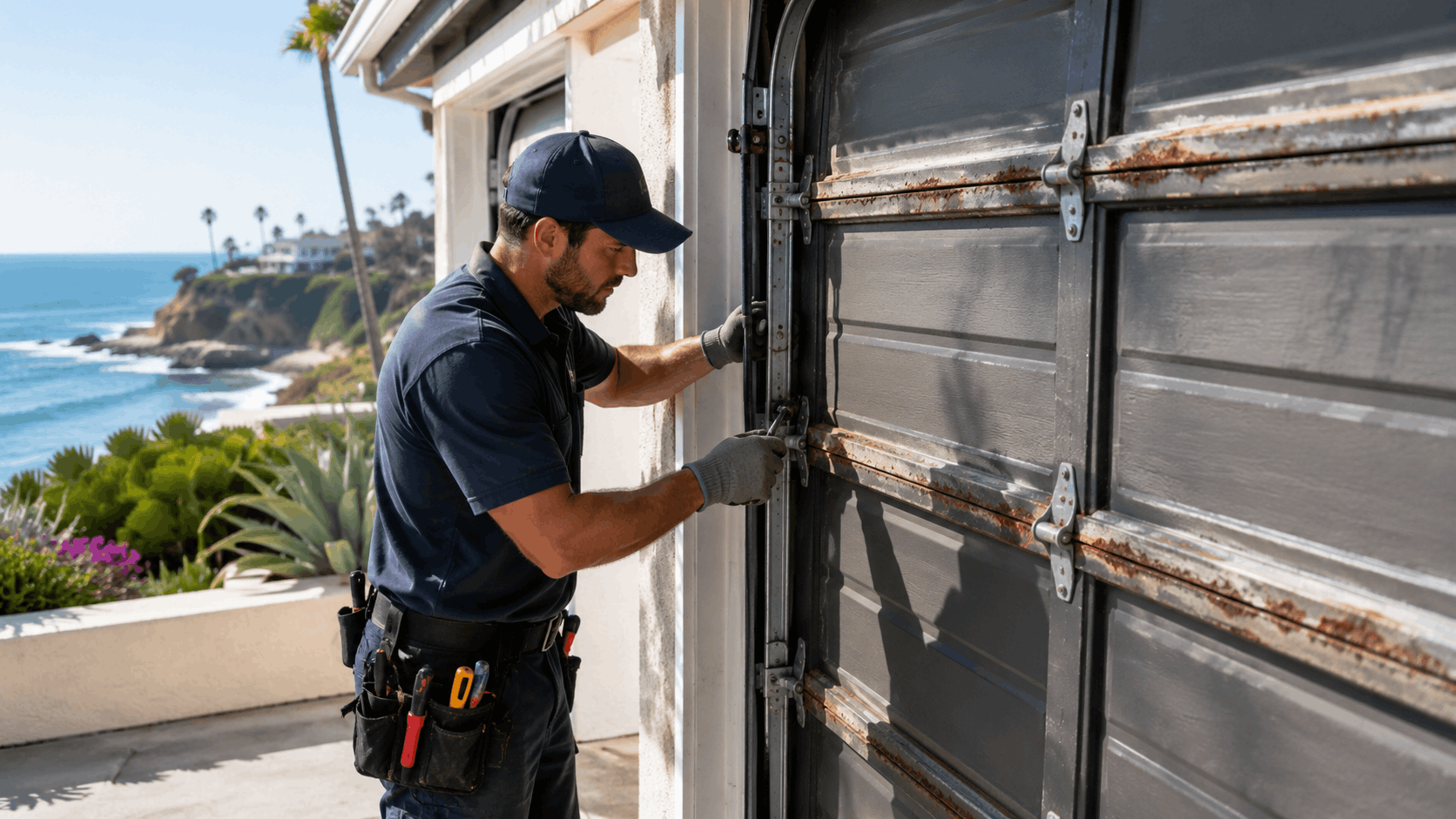
The first thing most homeowners notice is orange streaking on the door face. Surface rust often starts at a scratch, a dent, or a seam where the protective finish has worn thin. From there it spreads across the panel as moisture works into the metal.
Bubbling paint is another early flag. When you see the finish rising up in small blisters, moisture is trapped underneath and rust is forming below the surface. The paint may still look intact from a distance, but pressing on those bubbles often reveals soft, flaking metal.
Peeling and flaking usually come next. Once the bond between paint and steel breaks, the finish sheds and exposes bare metal directly to the salt air. That accelerates the whole process.
Caught at the streaking or bubbling stage, this damage is often repairable. We can sand it down, treat the metal, and refinish the panel before the rust eats through.
Corroded Hardware: Hinges, Rollers, and Springs
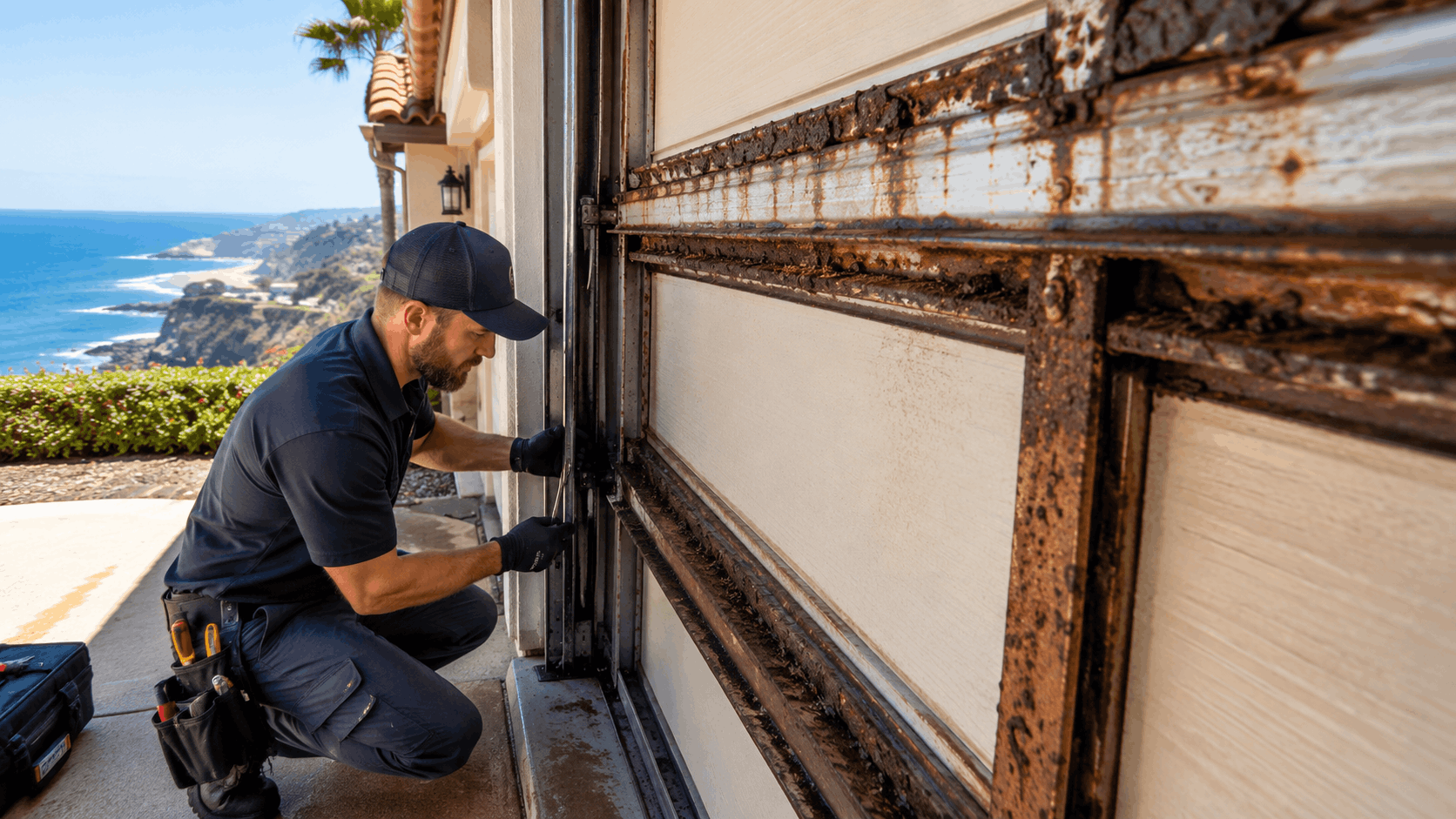
The moving parts of a garage door rust before the panels do in many cases. Corroded hinges start to squeak and stiffen, which makes the door sound rough as it opens and closes. That grinding noise is often the first thing a homeowner reports.
Rollers are another weak point. When the bearings inside a roller rust, the wheel stops spinning smoothly and starts dragging along the track. That drag makes the door jerk and hesitate, and it puts extra strain on the opener.
Torsion spring rust is the most serious of these. Springs hold enormous tension, and salt corrosion pits the metal and weakens it. A rusted spring can snap without warning, which is why we treat spring wear as an urgent safety issue.
If you hear new noises or notice orange dust near the hardware, have it checked. Our spring and cable repair team handles coastal-grade replacements that stand up far better to salt air.
Rust at the Bottom Panel and Track Base
The bottom of a garage door is where corrosion hides. Rain, salt spray, and runoff pool along the bottom seal and the base of the tracks. Water sits there long after the rest of the door has dried, which makes it a rust hot spot.
Bottom panel rust often goes unnoticed because homeowners rarely look at the lower edge closely. By the time it shows, the metal may be thin or already holed through in spots. We check this area first on every coastal inspection.
Track corrosion is just as common. The metal tracks that guide the rollers collect salt and moisture along their base. Rusted tracks develop rough spots that catch the rollers and make the door bind.
If you see rust bleeding out from under the bottom seal or flaking off the track base, the door needs attention. Left alone, this hidden damage can spread to structural parts of the door.
Doors That Bind, Stick, or Move Unevenly
Homeowners often notice a performance problem before they notice the rust that causes it. A sticking door that hangs up partway, or one side that lags behind the other, points to corrosion in the tracks or rollers.
Uneven movement usually means the rollers are not rolling freely. When rust locks up a roller bearing, that corner of the door drags while the rest keeps moving. Over time this pulls the door out of alignment and stresses the whole system.
Binding can also come from rusted tracks that have warped or roughened. The door fights its way through the tight spots, which strains the opener motor and shortens its life. You may hear the motor working harder than usual.
These operational issues are worth acting on quickly. Our track repair and realignment service clears up binding before it damages other parts of the door.
Need Help in Irvine?
Urgent Garage Doors serves Irvine and all of Orange County.
Repair vs. Replace: Making the Right Call
Not every rusty door needs to be replaced. Some corrosion can be treated and the door restored to good working order. Other times the damage runs too deep, and a new door is the safer, smarter choice.
Here is a general guide to help you weigh repair or replace decisions:
| Condition | Recommended Action | Typical Cost Range |
|---|---|---|
| Surface rust, no holes | Sand, treat, refinish | $150 - $400 |
| Rusted hardware only | Replace springs, rollers, cables | $200 - $600 |
| One damaged panel | Panel replacement | $300 - $800 |
| Rust-through, multiple panels | Full door replacement | $1,200 - $3,500+ |
When Surface Rust Can Be Sanded and Refinished
Early surface corrosion is the best case. When rust sits on top of the metal and has not eaten through, we can often clean it off and restore the finish. This buys the door many more years of coastal service.
The rust refinishing process starts with sanding down the affected areas to bare, clean metal. We remove every trace of loose rust because any left behind will keep spreading under the new finish. Then we apply a rust-inhibiting primer that bonds to the steel.
A quality topcoat seals the surface treatment and matches the door color. Done right, a refinished panel can look nearly new and resist salt air far better than the failed original finish did. This works well when the metal is still structurally sound.
The trick is catching it early. Surface treatment only works while the rust is shallow, so we encourage homeowners to call at the first orange streak rather than waiting a season.
Signs the Panels Are Too Far Gone
Some doors reach a point where repair no longer makes sense. Rust-through holes are the clearest sign. Once you can see daylight through a panel or push a finger through soft metal, that section has lost its strength.
Weakened panels that flex when you press on them are another warning. The steel has thinned to the point where it no longer holds its shape, and no coating will bring that back. Panel replacement or full door replacement is the honest answer here.
Structural sagging is the most serious sign. When the door frame or panels start to bow or droop, the corrosion has compromised the parts that keep the door square and safe. A sagging door can jam, fall off track, or fail entirely.
When multiple panels show rust-through, replacing the whole door usually costs less than patching each section. We give homeowners an honest assessment so they are not paying to repair a door that will fail again soon.
Cost Ranges for Repair Versus Full Replacement
Cost matters, so here are realistic ranges for the Dana Point area. Hardware swaps like new rollers, hinges, or a spring set typically run from a couple hundred dollars to around six hundred, depending on parts and door size.
Surface rust treatment and refinishing usually falls in the $150 to $400 range for a single door. Replacing a single damaged panel runs higher, often $300 to $800, because panels must be matched and fitted to the existing door.
A full door replacement is the biggest expense. Basic steel doors start around $1,200 installed, while coastal-grade or custom doors can run $3,500 or more. The extra cost of corrosion-resistant materials pays off in longer life near the water.
We give clear estimates before any work begins so there are no surprises. In many cases a well-timed repair costs a fraction of replacement, which is one more reason to act on rust early.
Safety Risks of Ignoring Corroded Springs and Cables
Rust on springs and cables is not just a cosmetic problem. These parts carry the full weight of the door under high tension. When corrosion weakens them, they can fail suddenly and with real force.
A spring failure sends a heavy coil snapping across the garage in an instant. This can injure anyone nearby, dent a car, or drop the door with no warning. Cable corrosion is just as dangerous because a frayed, rusted cable can break and let the door slam down.
Salt air makes these failures more likely along the coast. The pitting from corrosion creates weak points that concentrate stress until the metal gives way. We see far more coastal spring and cable failures than inland ones.
If you spot rust on your springs or cables, keep the door closed and call us. Our emergency repair team handles these urgent situations safely with the right tools.
Corrosion-Resistant Materials for Coastal Homes
The best defense against salt air starts with the right materials. When it is time to replace a door or upgrade hardware, choosing corrosion-resistant options pays off for years. Coastal homeowners have several smart choices.
These material upgrades hold up much better near the water and are worth considering for any Dana Point home.
Galvanized and Powder-Coated Steel Options
Steel is still popular because it is strong and affordable, but coastal homes need protected steel. Galvanized steel has a zinc coating that acts as a sacrificial barrier. The zinc corrodes first, protecting the steel underneath from salt and moisture.
Powder coating adds another layer of defense. Instead of liquid paint, powder coating bakes a tough finish onto the metal that resists chips, scratches, and salt far better than standard paint. The two together make a strong combination for the coast.
A galvanized steel door with a quality powder coat can survive Dana Point conditions for many years with basic upkeep. The finish resists the bubbling and flaking that plagues cheaper doors near the harbor.
We help homeowners pick coatings rated for marine environments. Not every powder coat is equal, so the right specification matters when you are this close to salt water.
Aluminum and Fiberglass Alternatives
For oceanfront properties, rust-proof materials are worth the investment. Aluminum doors do not rust the way steel does because aluminum forms a protective oxide layer instead of flaking iron oxide. They are lighter too, which is easier on the opener.
Fiberglass is another strong choice for coastal homes. A fiberglass door will not corrode at all, and it can be molded to look like wood or other finishes. It handles constant salt exposure without the maintenance a steel door demands.
Both options cost more upfront than basic steel, but they save money over time near the water. Homeowners right on the bluff or steps from the beach often find these materials outlast several steel doors.
The tradeoff is that aluminum can dent more easily and fiberglass can crack under hard impact. We walk through the pros and cons based on where your home sits and how exposed it is.
Stainless and Coated Hardware for the Coast
The door material is only half the equation. Hardware rusts too, and standard steel rollers, hinges, and springs fail fast in salt air. Stainless hardware resists corrosion far better and holds up for years.
Nylon-coated rollers are a favorite for coastal homes. The coating keeps salt off the metal and runs quieter too. Coated and galvanized springs also last longer than bare steel, which matters given how dangerous a spring failure can be.
Cables should be upgraded as well. Stainless or heavily galvanized cables resist the fraying that comes from corrosion. Given how much these parts affect safety, coastal-grade hardware is money well spent.
When we service a Dana Point door, we recommend these upgrades as part of the job. Our quiet roller and hardware upgrade service is a common pick for homes near the water.
Matching Materials to Dana Point HOA and Design Rules
Many Dana Point communities have design standards that limit your choices. The Monarch Beach HOA and gated areas like Ritz Cove have rules about door style, color, and materials. You cannot just install any door you like.
These standards exist to keep neighborhoods looking consistent, and they are enforced. Before ordering a replacement, homeowners in these communities should check with their HOA on approved options. We help navigate those requirements so the new door passes review.
The good news is that corrosion-resistant doors come in many styles that meet design standards. You can get a coastal-grade door that also fits the look your community requires. It just takes matching the right product to the rules.
Our team has installed doors across these communities and knows what tends to get approved. A professional installation handled correctly saves the headache of a rejected door.
How Our Team Treats and Restores Corroded Doors
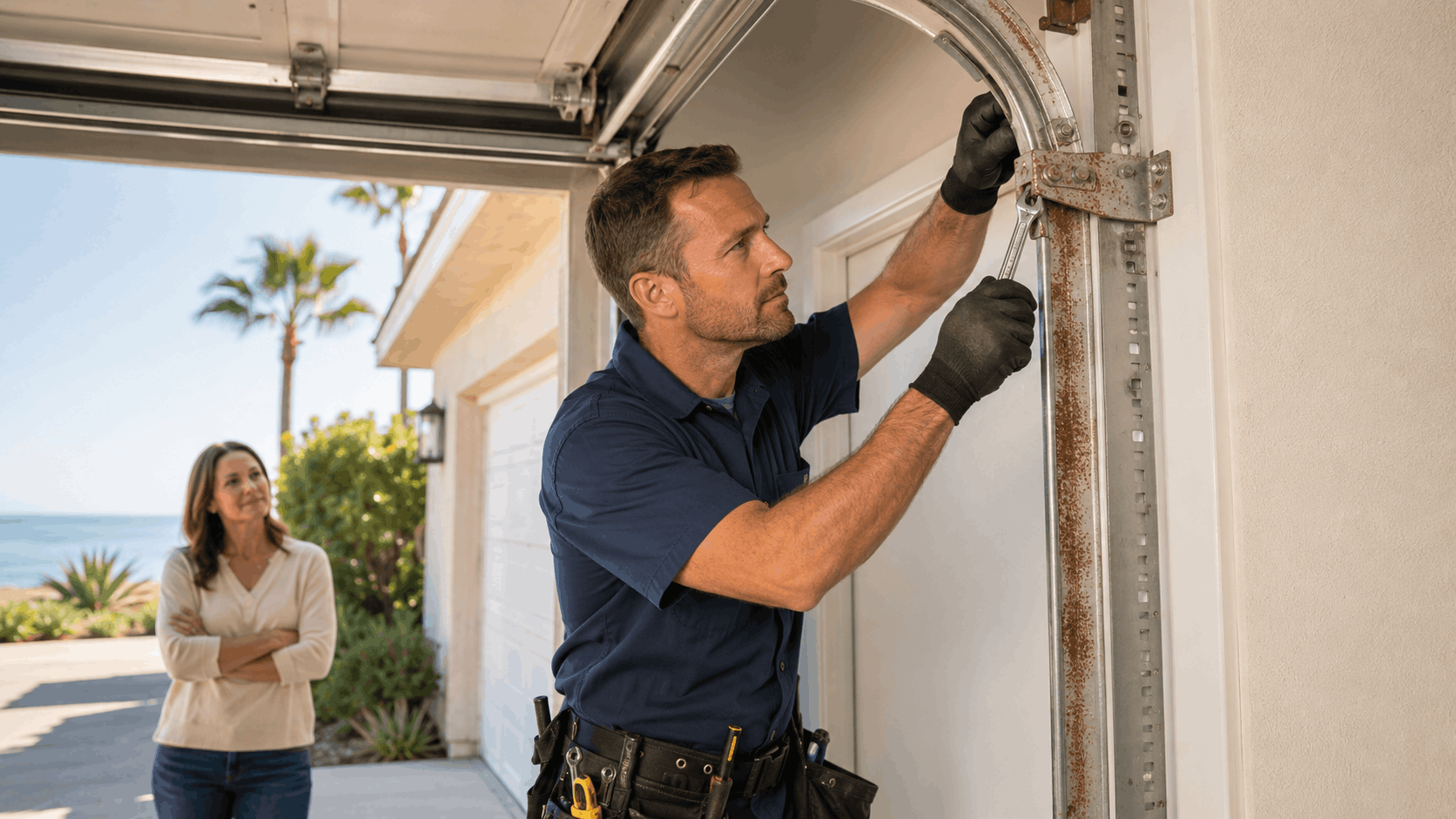
When we take on a salt-damaged door, we follow a proven process to stop the rust and restore the door. The goal is not just to hide the corrosion but to treat it so it does not come back quickly.
Here is how our door restoration process works from start to finish:
- Full inspection and rust mapping
- Sanding, sealing, and rust-inhibitor coating
- Replacing corroded springs, cables, and rollers
- Testing balance and operation before we leave
Inspection and Rust Mapping
Every job starts with a careful rust inspection. We check the panels, the hardware, the tracks, and the hidden areas where corrosion likes to hide. Mapping the full extent of the damage tells us what can be saved and what must be replaced.
Rust mapping matters because corrosion is often worse than it looks. We check the inside of panels, the bottom edge, and the base of the tracks where moisture pools. Skipping these spots leads to repairs that fail early.
Our damage assessment gives the homeowner a clear picture. We show exactly where the rust is, how deep it goes, and what each repair option involves. That way you can make an informed choice about repair versus replacement.
This first step also catches safety issues like weakened springs before they become emergencies. Finding a corroded cable during inspection is far better than having it snap later.
Sanding, Sealing, and Rust-Inhibitor Coating
Once we know what we are dealing with, we clean the corrosion off. Sanding removes the rust down to sound metal, and we make sure no loose flakes remain. Any rust left behind will keep spreading under the new finish.
Next comes sealing. We apply a rust inhibitor and primer that bonds to the bare steel and blocks moisture. This coating is the barrier that keeps salt air from reaching the metal again. It is the step that makes the repair last.
A durable topcoat finishes the job and matches the door. On coastal homes we use finishes rated for marine exposure, since standard paint fails too fast near the water. The result looks clean and holds up to the salt.
This treatment is what separates a real repair from a quick cover-up. Done thoroughly, it can add years to a door that would otherwise keep rusting.
Replacing Corroded Springs, Cables, and Rollers
Refinishing the panels does nothing if the hardware is shot. We replace corroded springs, cables, and rollers with coastal-grade parts that resist salt. This is often the part of the job that restores smooth, quiet operation.
Spring replacement is handled with care because of the tension involved. We swap rusted torsion or extension springs for galvanized or coated versions built for coastal life. Our torsion spring replacement service uses parts that hold up near the water.
Roller replacement makes an immediate difference in how the door runs. Fresh nylon-coated rollers roll quietly and resist the rust that locks up standard bearings. Cables get swapped for corrosion-resistant versions too.
After the hardware is in, we balance the door and test it. A properly balanced door puts less strain on every part, which extends the life of the whole system in a tough coastal setting.
Same-Day Service Across Dana Point Neighborhoods
When a door fails, waiting days for a repair is not an option. We offer same-day repair across Dana Point whenever possible. Our trucks carry the parts needed for most coastal jobs so we can finish on the first visit.
We travel from our Irvine base to every corner of Dana Point, from Capistrano Beach to Del Obispo to the harbor. Knowing the roads means we get there fast and spend our time fixing your door, not hunting for the address.
Our same-day garage door repair covers urgent problems like broken springs, stuck doors, and off-track panels. Coastal failures often happen at the worst times, and we respond quickly.
Scheduling is easy, and we give a clear arrival window. Whether it is an emergency or a planned restoration, we work around your day.
Need Help in Irvine?
Urgent Garage Doors serves Irvine and all of Orange County.
Preventing Rust Before It Starts
The smartest way to deal with corrosion is to slow it down before it takes hold. A little coastal care goes a long way toward keeping a door healthy. These maintenance steps are simple enough for any homeowner to handle between service visits.
Rinsing Salt Off Your Door Regularly
The single best habit is a regular salt rinse. Spraying the door down with fresh water washes off the salt that would otherwise sit and corrode the metal. It takes just a few minutes and makes a real difference.
Homeowners near the harbor should rinse their door every couple of weeks during heavy fog or after storms. Salt builds up fastest during June gloom and winter weather, so those are the times to be diligent about washing the door.
Focus on the bottom panel and the hardware where salt collects. A gentle stream from a garden hose is enough, and mild soap helps for heavier buildup. Let it dry in the sun afterward.
This one step slows corrosion more than almost anything else. It removes the salt before it can pull moisture against the steel and start the rust cycle.
Lubricating Hardware With the Right Products
Good lubrication protects moving parts from both wear and rust. The right product coats the metal, repels moisture, and keeps salt from settling on the hardware. It also keeps the door running quietly.
Use a garage door lubricant made for the job, not a general spray that attracts grit. Silicone-based or lithium-based lubricants work well because they protect the metal without gumming up. Apply them to hinges, rollers, springs, and the track.
Coastal homes benefit from lubricating more often than inland ones. Every couple of months keeps a protective film on the hardware and slows corrosion. Wipe off excess so it does not collect dust and sand.
Proper hardware care extends the life of springs and rollers considerably. It is a small task that prevents bigger repairs down the road.
Touch-Up Paint and Sealant Schedule
Keeping the finish intact is what keeps salt off the steel. When a chip or scratch exposes bare metal, touch-up paint seals it before rust can start. Check the door for nicks a few times a year and address them promptly.
Coastal doors need repainting and resealing more often than inland ones. Every couple of years is a reasonable schedule for a full touch-up along the water. The barrier breaks down faster here, so staying ahead of it matters.
Pay attention to the seams and the bottom edge where the finish wears first. A dab of matching paint on a fresh scratch takes seconds and prevents a rust streak later. Sealant along the bottom keeps water from wicking into the panel.
Maintaining the finish is far cheaper than refinishing a whole door. A steady touch-up habit keeps the protective barrier working year after year.
Annual Professional Inspections for Coastal Properties
Even with good home maintenance, coastal doors benefit from a yearly professional check. An annual inspection catches hidden rust and worn parts before they fail. This is preventive maintenance that pays for itself.
We look at the areas homeowners cannot easily see, like the inside of panels and the base of the tracks. Catching a weakening spring or a corroding cable during an inspection prevents a dangerous failure and an emergency call.
For homes near the water, once a year is a solid minimum. Properties right on the bluff or beside the harbor sometimes need a check twice a year given the heavy exposure. Our preventive maintenance plan keeps coastal doors on a regular schedule.
Regular checkups extend the life of the whole system. They also keep small problems small, which saves money over the years.
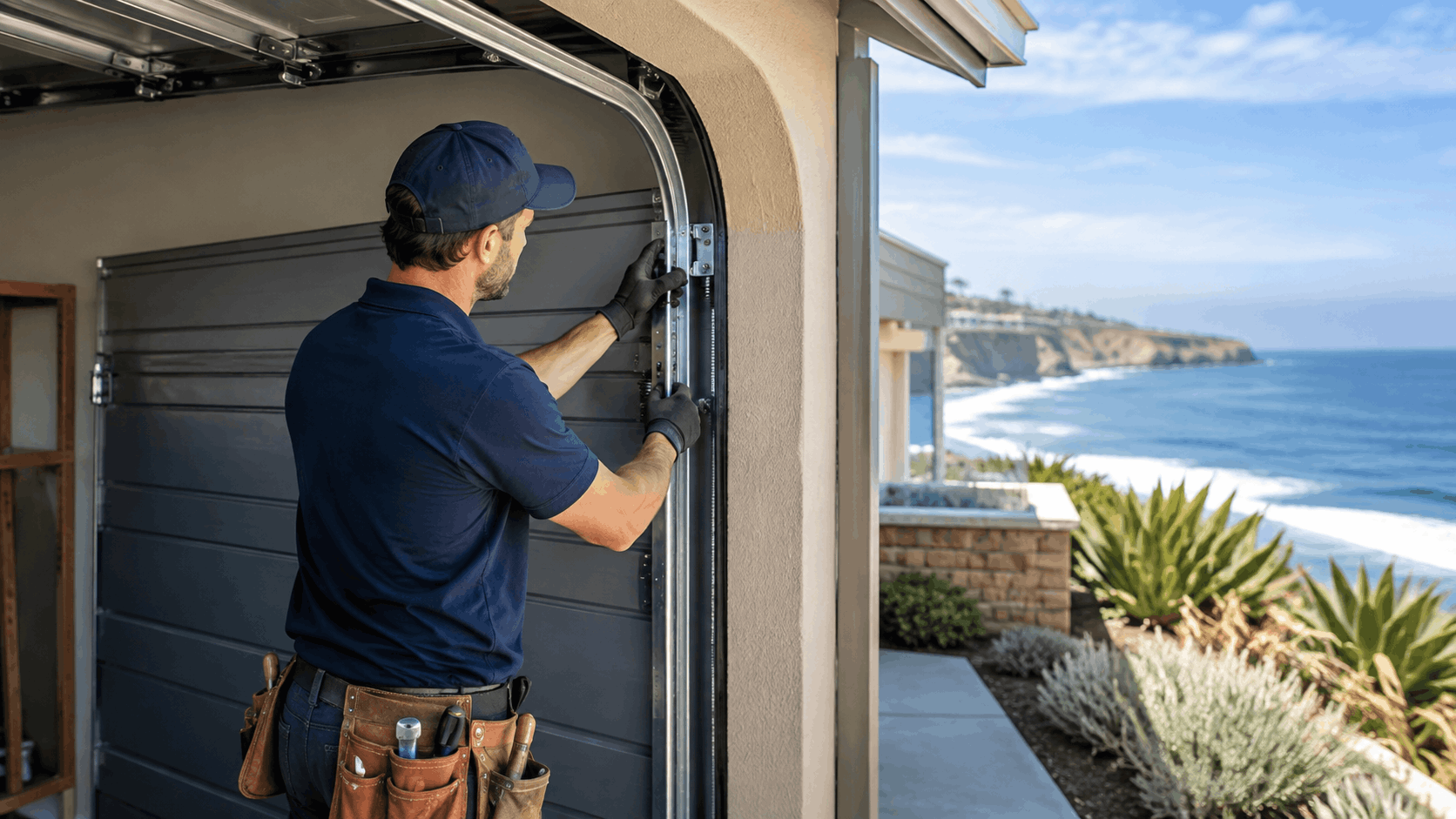
Serving Dana Point From Our Irvine Base
Being based in Irvine puts us close enough to serve Dana Point quickly and often. We know these coastal roads and neighborhoods because we work them week after week. That local knowledge means faster response and better repairs.
Neighborhoods We Cover: Monarch Beach to Capistrano Beach
Our Dana Point service area runs across the whole city. We cover Monarch Beach and the gated streets of Ritz Cove up on the bluff. We also serve Del Obispo, the Lantern District, and down to Capistrano Beach near the county line.
Each of these areas has its own quirks. Monarch Beach homes tend to have HOA design rules, while older Capistrano Beach properties often have original doors that have taken years of salt exposure. We adjust our approach to fit.
We also handle the harbor-adjacent streets where salt hits hardest. Homes along the water need the most attention, and we visit them regularly for both repairs and maintenance.
No matter which part of Dana Point you call from, we can get there. Our coverage spans the entire city and the neighboring coastal towns.
Fast Routes Down the 5 and PCH
Getting to Dana Point from Irvine is quick when you know the routes. We take the I-5 south and cut over toward the coast, or drop down the Pacific Coast Highway when we are already near the water in San Clemente or Laguna.
Knowing these roads saves time on every call. We avoid the slow stretches and pick the fastest path based on the time of day and traffic. That means we spend more of the appointment fixing your door.
The PCH route is handy for coastal jobs since it links the beach towns directly. The I-5 works best for reaching the inland parts of Dana Point and the Del Obispo area.
Either way, we plan the drive so a Dana Point call does not turn into an all-day wait. Fast, reliable arrival is part of the service.
Local Knowledge of Coastal Building Conditions
Working the coast for years has taught us what these homes deal with. We understand salt exposure, the older construction near the harbor, and the HOA requirements that come with many Dana Point neighborhoods. That knowledge shapes every repair.
Coastal homes have building conditions that inland doors never face. We know which materials fail fast here and which hold up. We know where rust hides on older doors and how to treat it so it does not come right back.
We also understand the design standards in communities like Monarch Beach. When a homeowner needs a replacement, we help pick a door that meets both the coastal demands and the HOA rules. That saves time and avoids rejected installs.
This local experience is the difference between a generic repair and one built for coastal life. We fix Dana Point doors for Dana Point conditions.
Emergency and Scheduled Appointments
We handle both urgent calls and planned visits. Emergency repair covers the sudden failures like a snapped spring, a door stuck open, or a panel off its track. Those cannot wait, so we respond same day whenever we can.
Scheduled service is for the planned work like inspections, refinishing, and maintenance. These visits keep a door healthy and catch problems early. Booking ahead lets us pick a time that fits your day.
Our 24/7 emergency repair line is there when something breaks at a bad time. Coastal failures do not keep business hours, so neither do we.
Whether it is an emergency or a routine checkup, one call gets it handled. Reach out through our contact page to set up either type of visit.
Need Help in Irvine?
Urgent Garage Doors serves Irvine and all of Orange County.
Final Thoughts
Salt air is the price of living somewhere as beautiful as Dana Point, and it is hard on steel garage doors. The good news is that corrosion is manageable when you catch it early and use the right materials. Regular rinsing, good lubrication, and yearly inspections keep most doors healthy for years.
When rust does take hold, the right repair can restore a door and stop the damage from spreading. Our Irvine-based team knows these coastal neighborhoods and treats every door for the conditions it actually faces. To protect your garage door from the salt air, contact Urgent Garage Doors for an inspection or repair. You can also learn more about our full range of services for coastal homes.
Frequently Asked Questions
How fast does salt air rust a steel garage door in Dana Point?
Near the harbor, unprotected steel can show visible rust within a couple of years. Salt air holds moisture against the metal and speeds up the rusting process far faster than inland air does. Doors with quality coatings and regular rinsing last much longer. The closer your home sits to the water, the sooner corrosion tends to appear on an untreated door.
Can rust on my garage door be fixed without replacing it?
Often yes, if you catch it early. Surface rust that has not eaten through the metal can be sanded, treated with a rust inhibitor, and refinished. This restores the door and adds years of life. Deep corrosion with rust-through holes or weakened panels needs replacement instead. An inspection tells us which situation you have and what makes the most sense for your budget.
What is the best garage door material for oceanfront homes?
For homes right on the water, aluminum and fiberglass resist salt best since they do not rust the way steel does. If you prefer steel, choose galvanized and powder-coated versions rated for marine exposure. Pair the door with stainless or nylon-coated hardware for the best results. We help match materials to your home's exposure level and any HOA design rules that apply.
How much does corrosion repair cost in Dana Point?
Hardware repairs like new rollers, hinges, or a spring set usually run $200 to $600. Surface rust treatment and refinishing falls around $150 to $400 per door. A single panel replacement runs $300 to $800, and full door replacement starts near $1,200 and climbs for coastal-grade or custom doors. We give a clear estimate before starting any work so there are no surprises.
How often should coastal garage doors be inspected?
At least once a year for homes near the water. Properties right on the bluff or beside the harbor sometimes benefit from a check twice a year given the heavy salt exposure. Annual inspections catch hidden rust, worn hardware, and weakening springs before they fail. This preventive maintenance costs far less than emergency repairs and keeps the door running safely.
Why do my garage door springs rust so quickly near the coast?
Springs are bare metal under high tension, and salt moisture settles right on them. That salty film pulls water against the steel and pits the surface, which speeds up corrosion. Rusted springs weaken and can snap without warning. Coated or galvanized springs made for coastal use hold up far better, and regular lubrication adds a protective layer that slows the rusting.
Can I clean salt off my garage door myself?
Yes, and it is one of the best things you can do. Rinse the door with fresh water from a garden hose every couple of weeks, and more often after storms or heavy fog. Focus on the bottom panel and hardware where salt collects. Mild soap helps with heavier buildup. Let the door dry in the sun afterward to keep moisture from lingering.
Do you serve all Dana Point neighborhoods from Irvine?
Yes, our team covers the entire city from our Irvine base. That includes Monarch Beach, Ritz Cove, the Lantern District, Del Obispo, the harbor area, and down to Capistrano Beach. We know the fast routes down the I-5 and Pacific Coast Highway, so we arrive quickly. Whether it is an emergency or a scheduled visit, we reach every part of Dana Point.
Will corrosion void my garage door warranty?
It can. Many warranties require reasonable maintenance, and neglected upkeep that leads to rust may reduce coverage. Rinsing off salt, lubricating hardware, and keeping the finish intact all help protect both the door and the warranty. Keeping records of professional inspections also helps. Check your specific warranty terms, and we can advise on maintenance that keeps your coverage in good standing.
How long does a coastal corrosion repair take?
It depends on the scope. Surface treatment and refinishing a door often takes a few hours to most of a day, including drying time. Hardware swaps like springs, cables, and rollers usually finish in an hour or two. A full door replacement typically takes a few hours. We carry common parts on our trucks so most repairs are completed in a single visit.
Frequently Asked Questions
- How fast does salt air rust a steel garage door in Dana Point?
- Near the harbor, unprotected steel can show visible rust within a couple of years. Salt air holds moisture against the metal and speeds up the rusting process far faster than inland air does. Doors with quality coatings and regular rinsing last much longer. The closer your home sits to the water, the sooner corrosion tends to appear on an untreated door.
- Can rust on my garage door be fixed without replacing it?
- Often yes, if you catch it early. Surface rust that has not eaten through the metal can be sanded, treated with a rust inhibitor, and refinished. This restores the door and adds years of life. Deep corrosion with rust-through holes or weakened panels needs replacement instead. An inspection tells us which situation you have and what makes the most sense for your budget.
- What is the best garage door material for oceanfront homes?
- For homes right on the water, aluminum and fiberglass resist salt best since they do not rust the way steel does. If you prefer steel, choose galvanized and powder-coated versions rated for marine exposure. Pair the door with stainless or nylon-coated hardware for the best results. We help match materials to your home's exposure level and any HOA design rules that apply.
- How much does corrosion repair cost in Dana Point?
- Hardware repairs like new rollers, hinges, or a spring set usually run $200 to $600. Surface rust treatment and refinishing falls around $150 to $400 per door. A single panel replacement runs $300 to $800, and full door replacement starts near $1,200 and climbs for coastal-grade or custom doors. We give a clear estimate before starting any work so there are no surprises.
- How often should coastal garage doors be inspected?
- At least once a year for homes near the water. Properties right on the bluff or beside the harbor sometimes benefit from a check twice a year given the heavy salt exposure. Annual inspections catch hidden rust, worn hardware, and weakening springs before they fail. This preventive maintenance costs far less than emergency repairs and keeps the door running safely.
- Why do my garage door springs rust so quickly near the coast?
- Springs are bare metal under high tension, and salt moisture settles right on them. That salty film pulls water against the steel and pits the surface, which speeds up corrosion. Rusted springs weaken and can snap without warning. Coated or galvanized springs made for coastal use hold up far better, and regular lubrication adds a protective layer that slows the rusting.
- Can I clean salt off my garage door myself?
- Yes, and it is one of the best things you can do. Rinse the door with fresh water from a garden hose every couple of weeks, and more often after storms or heavy fog. Focus on the bottom panel and hardware where salt collects. Mild soap helps with heavier buildup. Let the door dry in the sun afterward to keep moisture from lingering.
- Do you serve all Dana Point neighborhoods from Irvine?
- Yes, our team covers the entire city from our Irvine base. That includes Monarch Beach, Ritz Cove, the Lantern District, Del Obispo, the harbor area, and down to Capistrano Beach. We know the fast routes down the I-5 and Pacific Coast Highway, so we arrive quickly. Whether it is an emergency or a scheduled visit, we reach every part of Dana Point.
- Will corrosion void my garage door warranty?
- It can. Many warranties require reasonable maintenance, and neglected upkeep that leads to rust may reduce coverage. Rinsing off salt, lubricating hardware, and keeping the finish intact all help protect both the door and the warranty. Keeping records of professional inspections also helps. Check your specific warranty terms, and we can advise on maintenance that keeps your coverage in good standing.
- How long does a coastal corrosion repair take?
- It depends on the scope. Surface treatment and refinishing a door often takes a few hours to most of a day, including drying time. Hardware swaps like springs, cables, and rollers usually finish in an hour or two. A full door replacement typically takes a few hours. We carry common parts on our trucks so most repairs are completed in a single visit.
U
Licensed garage door repair professionals serving Irvine and Orange County.
Licensed in California · License #1055150
Why trust Urgent Garage Doors?
Founded in 2017, Urgent Garage Doors is a licensed and insured garage door services serving Irvine and Orange County. All content is reviewed by our licensed technicians.

Need Help in Irvine?
Urgent Garage Doors serves Irvine and all of Orange County.
Related Articles
Maintenance
Crystal Cove Garage Door Repair: Salt Air Specialists for Oceanfront Homes
Salt air wears down Crystal Cove garage doors fast. Learn the corrosion signs, rust-resistant materials, and coastal maintenance that keep oceanfront doors working.
Maintenance
How Dana Point Salt Air Destroys Garage Door Hardware and How to Prevent It
Dana Point salt air destroys garage door springs, cables, and hinges faster than most homeowners realize. Learn how to prevent costly corrosion damage with expert tips.

Maintenance
Talega San Clemente Garage Door Repair: Coastal Salt Air Damage Specialists
Salt air corrodes garage doors fast in Talega, San Clemente. Learn the warning signs, parts that fail first, repair steps, and prevention from coastal specialists.