How to Extend Garage Door Spring Life in Orange County Heat
Key Takeaways
- Orange County heat speeds up metal fatigue and dries out lubricant, shortening spring life to about five to eight years in hot inland garages.
- Identify whether you have torsion springs (above the door) or extension springs (along the tracks) to inspect the right hardware.
- Use silicone or lithium spray lubricant monthly in summer and run a balance test every six months to reduce strain.
- Cooling the garage with insulation, ventilation, shade, and weather sealing lowers heat stress on all hardware.
- Replace both springs together as a matched pair, and consider high-cycle springs for longer life in hot climates.
- Never adjust or replace springs yourself due to dangerous stored tension - lubrication and visual checks are the safe DIY tasks.
- Urgent Garage Doors offers same-day and emergency spring repair, tune-ups, and preventive maintenance plans across Irvine.
In This Article
It was a 95-degree afternoon in Woodbridge when the Martinez family heard it. A loud snap echoed through their garage, followed by a door that refused to budge. Their car was trapped, the school pickup line was waiting, and the summer heat made the whole situation feel worse.
Stories like this come across our desk almost every week during an Orange County summer. The heat does not just make your garage uncomfortable. It quietly wears down the springs that lift a door weighing 150 pounds or more, day after day.
In this guide, our team at Urgent Garage Doors in Irvine explains how heat affects your springs, how to spot early trouble, and the simple steps that add years to their life. You will also learn when a repair makes sense and when a full replacement saves money in the long run.
How Orange County Heat Affects Garage Door Springs
A garage door spring works hard. Every time the door goes up or down, the spring winds or stretches, storing and releasing tension. Now add Orange County heat to that cycle, and the metal takes a beating it was never fully designed for.
Inland neighborhoods bake far more than coastal ones. A closed garage in Turtle Rock can hit 110 degrees on a July afternoon while a home near the water stays 20 degrees cooler.
- Higher heat speeds up spring wear on the coil metal.
- Attached garages trap warm air with little airflow.
- Dark garage doors absorb sunlight and radiate heat inside.
- Repeated hot-and-cold swings fatigue the steel sooner.
Why Heat Speeds Up Metal Fatigue
Every garage door spring is made of tightly wound steel. That steel expands when it gets hot and contracts when it cools down at night. Over thousands of cycles, this expansion and contraction creates tiny stress points inside the metal.
This is called metal fatigue, and heat makes it happen sooner. A torsion spring rated for 10,000 cycles in a mild climate might reach the end of its life much sooner in a garage that regularly climbs past 100 degrees.
Think of it like bending a paper clip back and forth. The more heat and movement you add, the quicker it snaps. The same physics applies to the coiled steel above your door.
In our experience across Irvine, springs in hot inland garages often show wear a year or two ahead of identical springs in cooler coastal homes. The heat is doing damage you cannot always see from the ground.
Inland vs. Coastal Garage Temperatures
Location inside Orange County matters more than most homeowners realize. Neighborhoods like Turtle Rock, Northwood, and Portola Springs sit inland where afternoon temperatures run hotter and the marine layer burns off early.
Homes closer to the coast, like parts of Newport Beach, get natural cooling from ocean breezes. That coastal air keeps garage interiors more stable throughout the day.
An attached garage adds another layer of heat trapping. It shares a wall with the house, sits under a roof, and often has no cross ventilation. That combination turns it into an oven by mid afternoon.
We service both zones daily, and the difference shows up in the hardware. Inland heat puts extra strain on springs, so homeowners in Turtle Rock and similar areas should watch their springs more closely.
How Lubricant Breaks Down in High Temps
Spring lubricant does a simple but important job. It reduces friction between the coils so the metal does not grind against itself with every cycle.
Heat is the enemy of that lubricant. High temperatures thin it out or dry it up completely, leaving the coils to rub metal on metal. Once that happens, friction climbs and the spring wears out sooner.
A dry spring is also a loud spring. That squeaking or grinding sound you hear on a hot morning is often the first clue the lubricant has cooked off.
Cheap general purpose oils fail the fastest in Orange County heat. We recommend heat resistant products, which we cover later in this guide, so the coating actually lasts through the summer.
Signs Heat Has Already Damaged Your Springs
Heat damage does not always announce itself with a bang. More often, it shows up as small warning signs that homeowners brush off until the door fails.
Watch for a door that opens slowly or seems heavier than it used to. That sluggish movement often means the springs are losing their tension.
Look up at the spring itself when the door is closed. Visible gaps in the coil, rust spots, or a stretched out section point to real spring damage that needs attention.
Loud pops, grinding, or a jerky ride during operation are all red flags. If you notice any of these, our spring and cable repair team can inspect the hardware before it breaks completely.
Get Your Free Quote
Tell us about your garage door and we'll get back to you within 30 to 60 minutes.
What are The Two Main Spring Types
Before you can protect your springs, you need to know which kind you have. There are two main spring types, and each one handles heat a little differently.
Knowing your setup helps you inspect the right parts and explain the problem clearly when you call for help. Here is a quick comparison.
| Feature | Torsion Spring | Extension Spring |
|---|---|---|
| Location | Above the door on a metal bar | Along the tracks on both sides |
| Typical cycle life | 10,000 to 20,000 cycles | 7,000 to 10,000 cycles |
| Heat sensitivity | High under constant load | High, plus rust risk |
| Common on | Modern, heavier doors | Older, lighter doors |
Torsion Springs and Their Cycle Life
A torsion spring mounts on a metal shaft above the garage door opening. When the door moves, the spring winds and unwinds, carrying most of the door's weight through controlled tension.
Every full open and close counts as one cycle. Most torsion springs are rated between 10,000 and 20,000 cycles, which sounds like a lot until you count daily use.
A busy Irvine family might open their door six to eight times a day. In hot conditions, that cycle life shrinks because heat speeds up the metal fatigue we discussed earlier.
That is why a spring rated for 15,000 cycles may not last the full estimate in a garage that hits triple digit temperatures every summer. Our torsion spring replacement service can match a higher rated spring to your home's heat load.
Extension Springs and Common Failures
An extension spring runs along the horizontal tracks on either side of the door. Instead of twisting, it stretches and contracts to lift the load as the door travels.
These springs are common on older and lighter doors around Orange County. Because they sit out in the open air, they collect dust and are more exposed to moisture.
Heat combined with humidity or coastal air leads to rust, which is a major cause of extension spring failure. A rusted coil loses strength and can snap without warning.
If your door uses side mounted springs, our extension spring replacement work keeps them balanced and safe through the hot months.
How to Tell Which Springs You Have
You can identify your springs safely from the ground in about a minute. Never touch or poke them, just look.
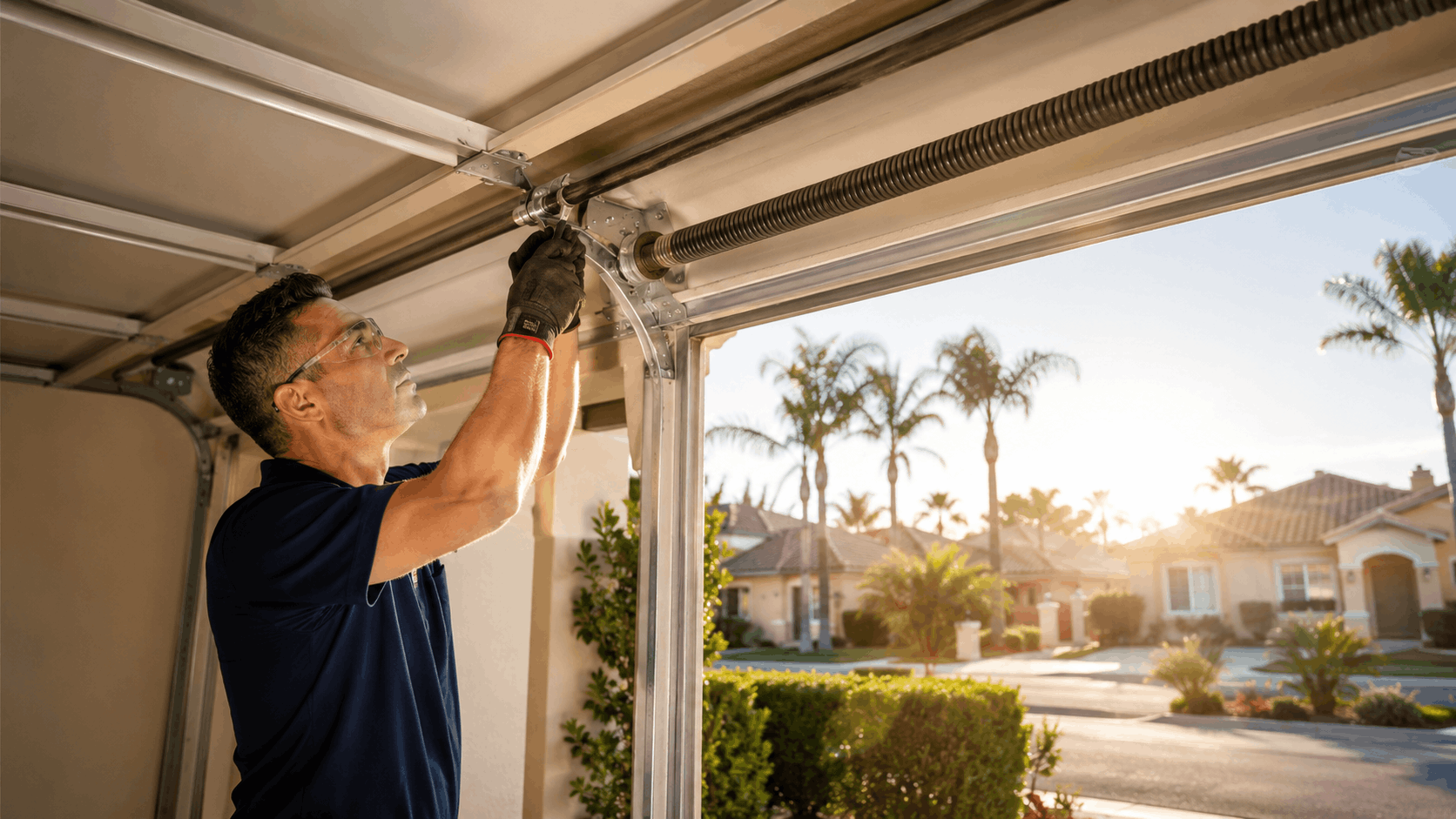
Stand inside the garage with the door closed and look up above the opening. If you see one or two springs mounted on a horizontal metal bar, you have torsion springs.
Now look at the upper corners along the tracks. If you see long stretched springs running parallel to the tracks on both sides, those are extension springs.
Take a quick photo of your garage door hardware from a safe distance. When you call us, that picture helps our team bring the right parts on the first visit.
Why Spring Choice Matters in Hot Climates
Not all springs are built the same. Standard springs come rated for average conditions, which do not match the reality of an Orange County summer.
High-cycle springs are wound from heavier gauge wire and rated for 20,000 to 30,000 cycles or more. That extra durability holds up better against the heat stress that shortens a standard spring's life.
For homeowners in a hot climate who are tired of repeat failures, upgrading is often the smarter long term move. Fewer breakdowns mean fewer emergency calls during the peak heat waves.
We help families weigh the upfront cost against years of added life. Our spring conversion and upgrade options are built with Irvine heat in mind.
Need Help in Irvine?
Urgent Garage Doors serves Irvine and all of Orange County.
Simple Maintenance Steps That Extend Spring Life
The good news is that a little garage door maintenance goes a long way. Most of the tasks that extend spring life are cheap, quick, and safe to repeat.
You do not need special training to handle basic upkeep. Here is a simple schedule to follow through the year.
| Task | How Often | Difficulty |
|---|---|---|
| Lubricate springs | Every 3 months, monthly in summer | Easy |
| Balance test | Every 6 months | Easy |
| Visual inspection | Monthly in summer | Easy |
| Clean tracks and hardware | Every 3 months | Easy |
Choosing the Right Lubricant for Hot Weather
The lubricant you pick makes a real difference in the heat. Skip the general purpose oils that run off and attract dust.
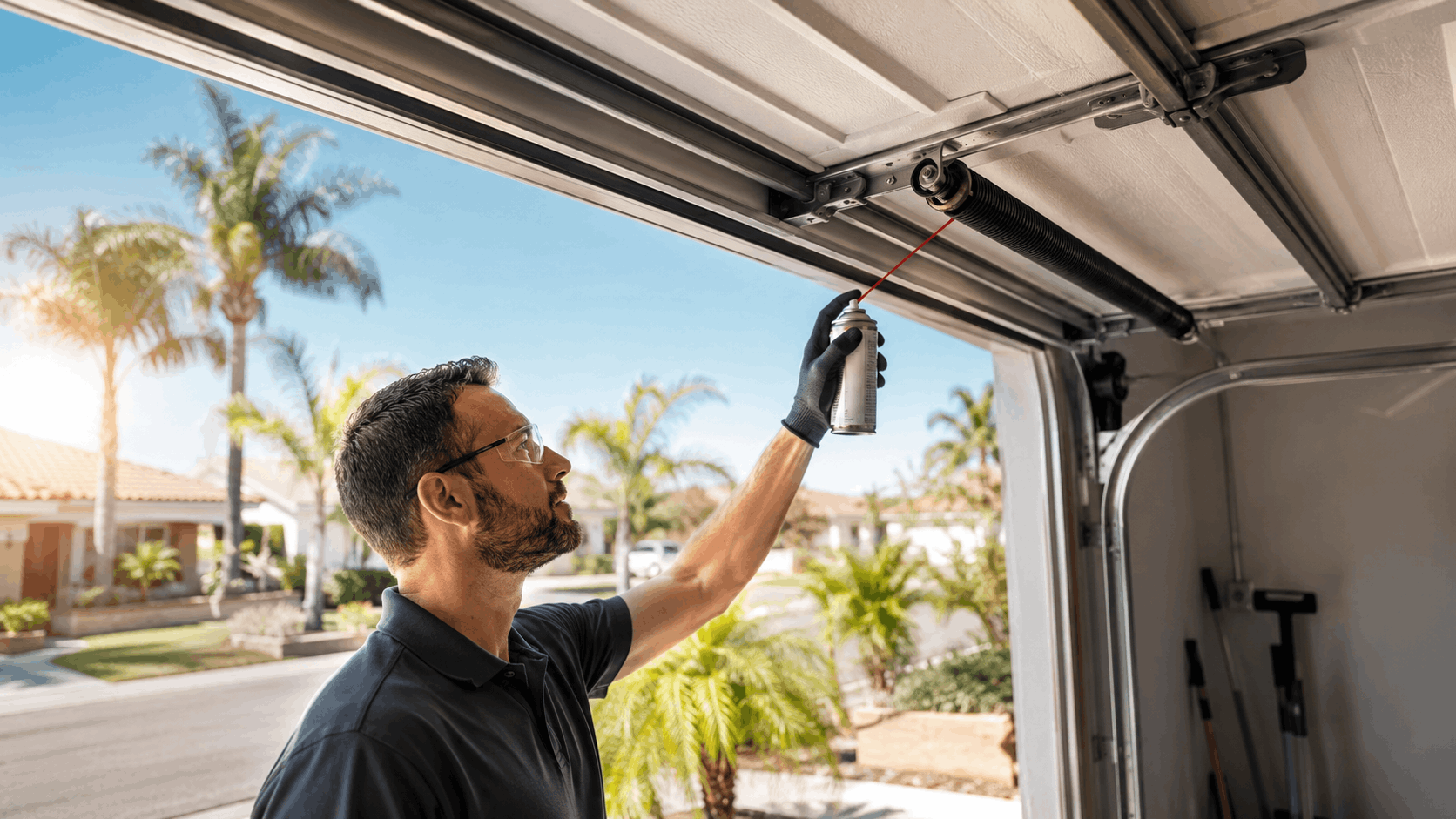
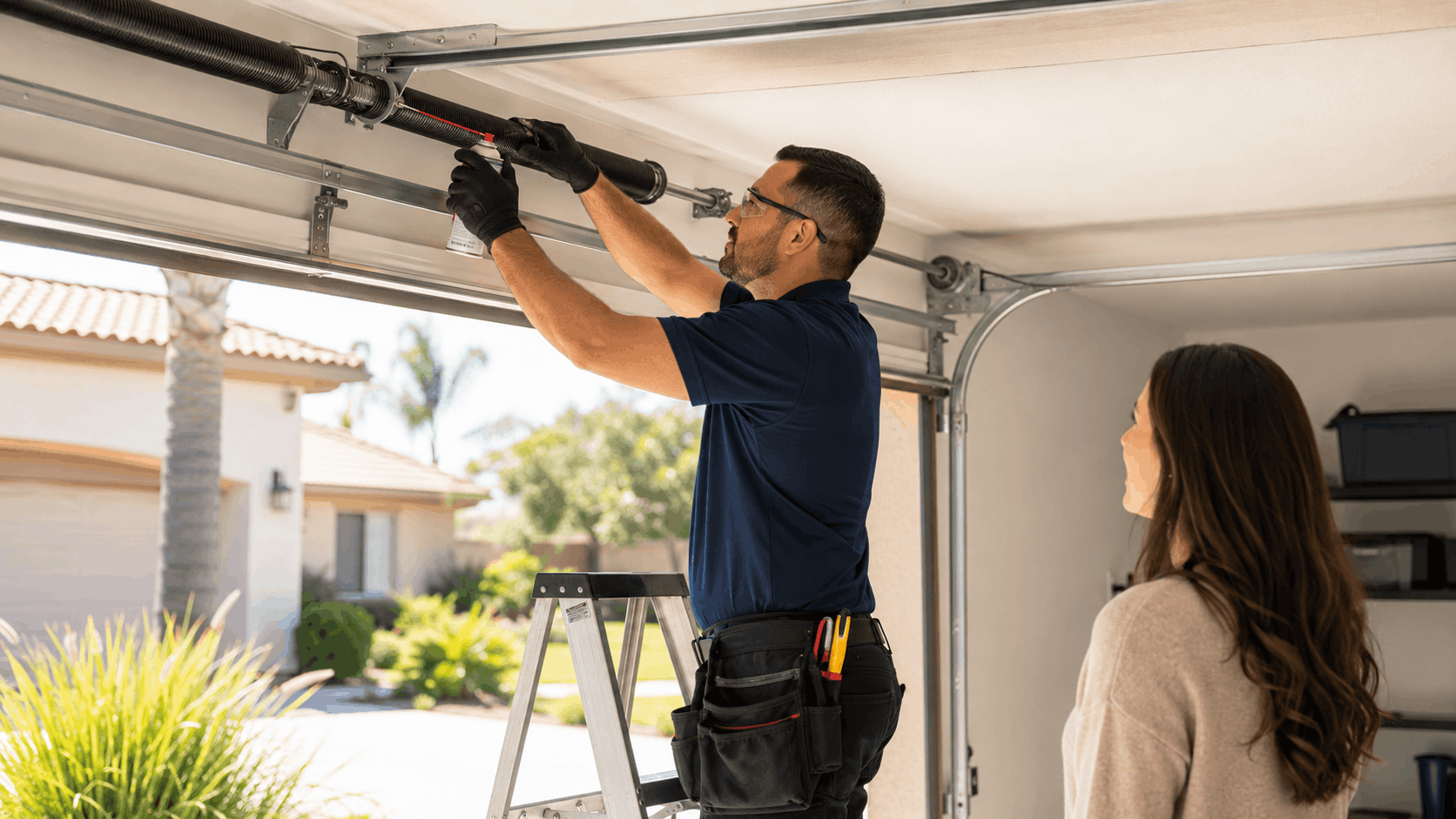
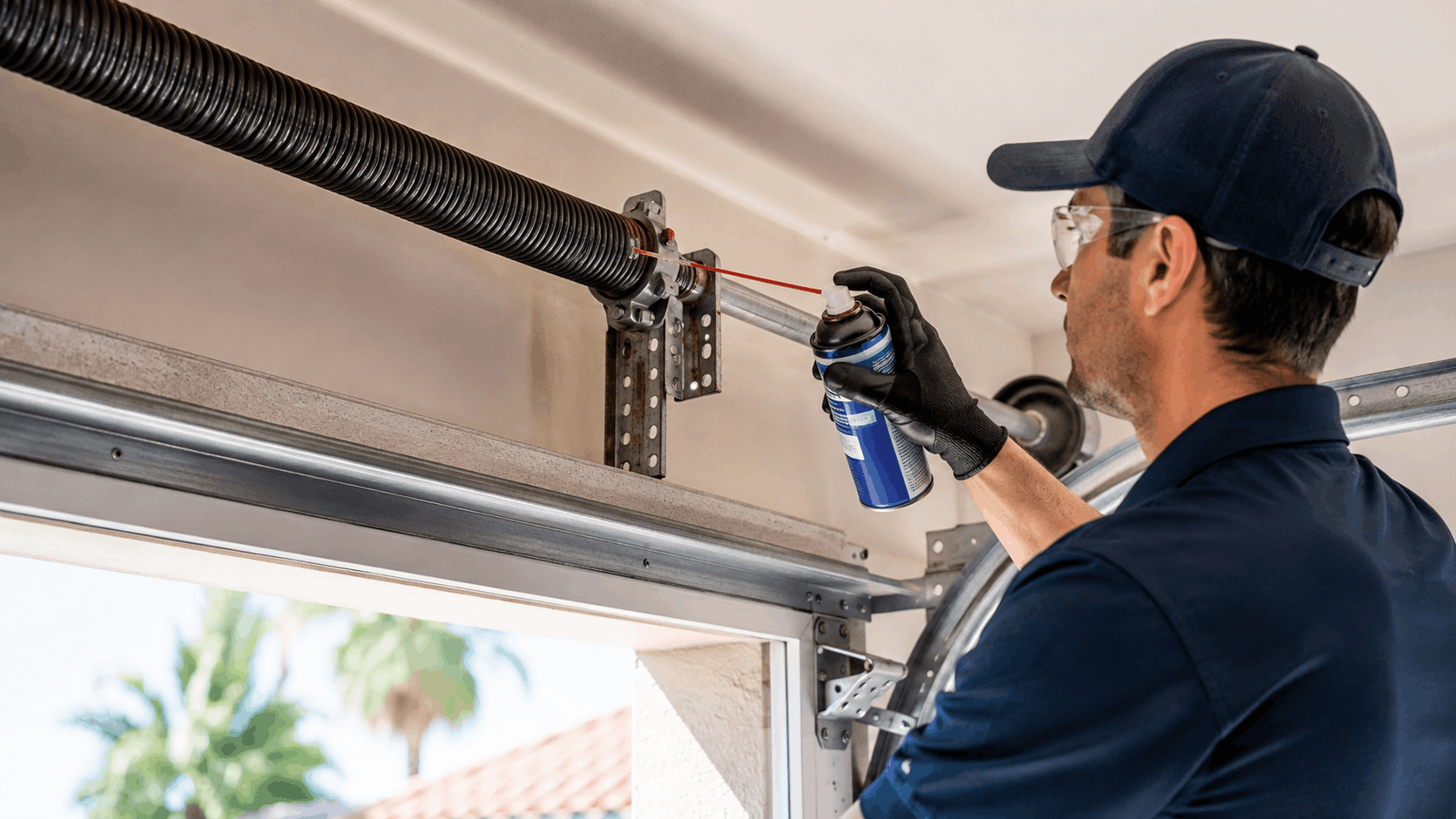
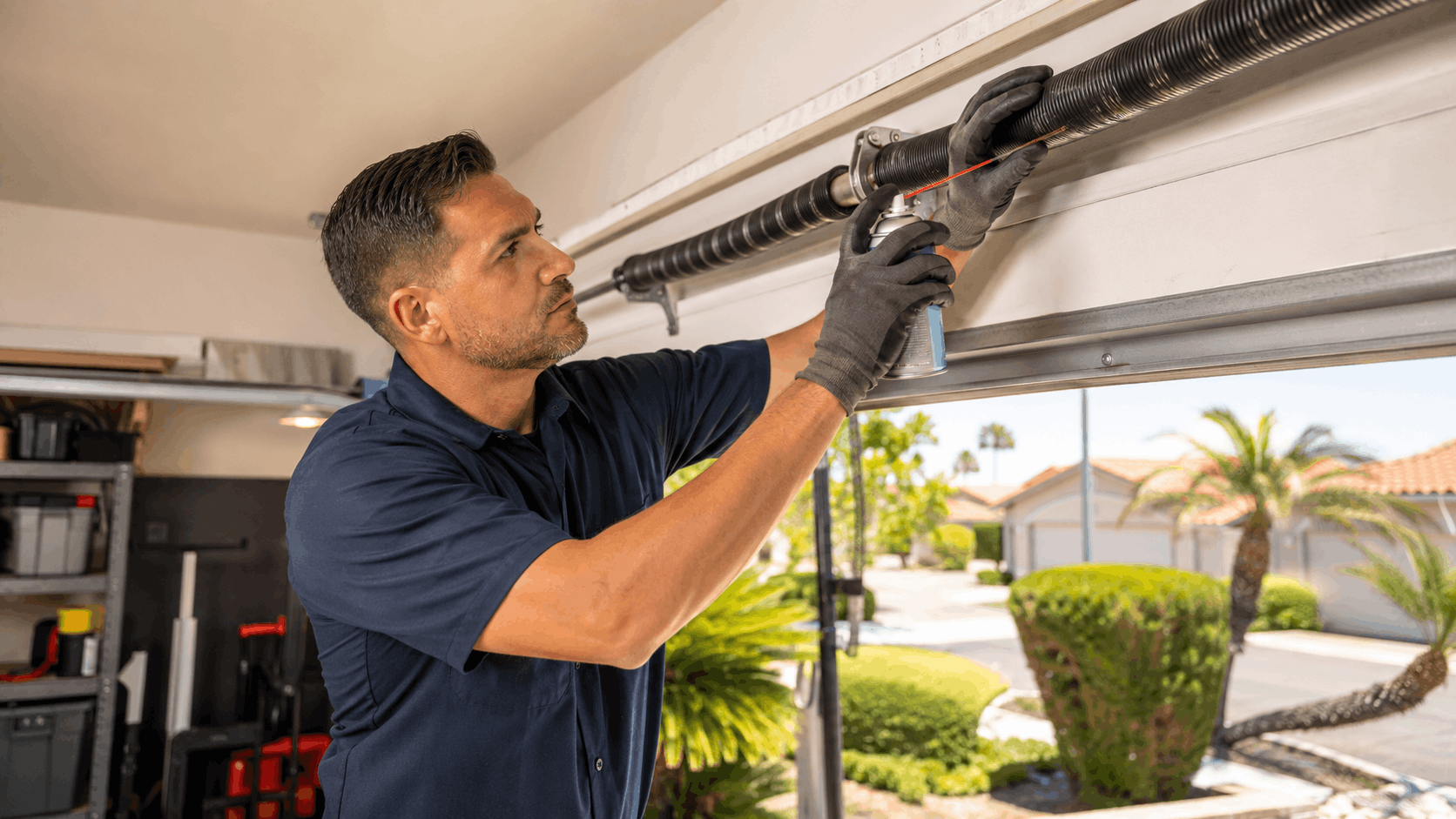
A silicone lubricant or a lithium grease spray resists high temperatures far better. These products cling to the coils instead of dripping away when the garage warms up.
Apply a light, even coat along the spring, then run the door a few times to spread it. Wipe off any excess so it does not collect grit.
During peak summer, we suggest reapplying monthly. The rest of the year, every three months keeps friction down and the coils moving smoothly.
How Often to Inspect Springs in Summer
A spring inspection takes just a few minutes and can save you from a surprise breakdown. Seasonal maintenance should ramp up when the temperatures climb.
During spring and fall, a check every couple of months is plenty. Once July and August arrive, we recommend a quick look every month.
Watch for new rust, listen for fresh noises, and note if the door feels heavier than before. Small changes caught early are cheap to fix.
If anything looks off during your check, our maintenance and upgrade team can take a closer look before the problem grows.
Balancing the Door to Reduce Spring Strain
An unbalanced door forces the springs to work overtime, and heat only makes that strain worse. A quick balance test tells you where you stand.
Start by disconnecting the opener using the manual release cord. Lift the door about halfway by hand and let go.
A balanced door will hold its position or drift only slightly. If it slams down or shoots up, the door balance is off and the springs are carrying the wrong amount of tension.
Do not try to adjust the tension yourself. Our door balancing and tension adjustment service handles this safely so your springs last longer.
Cleaning Debris and Salt Air Buildup
Dust, pollen, and grime build up on springs and tracks over time. That buildup traps moisture and speeds up corrosion.
Homes near the coast, like those around Newport Coast and Balboa, deal with salt air that eats at metal even sooner. The salt settles on the coils and speeds up rust.
Wipe your springs and tracks with a dry cloth every few months to clear away buildup. Follow up with a fresh coat of the right lubricant.
For coastal properties, this simple routine slows corrosion and adds real life to the hardware. It is one of the cheapest habits with the biggest payoff.
Cooling Down Your Garage to Protect Hardware
Lower the temperature in your garage and you lower the stress on every part inside it. Garage cooling is one of the most overlooked ways to protect springs.
You do not need an expensive air conditioning system. A few affordable changes to insulation, airflow, and temperature control make a real difference.
Insulating the Garage Door
An uninsulated metal door soaks up heat and radiates it straight into the garage. That warm air surrounds your springs all afternoon.
An insulated door keeps interior temperatures noticeably lower. The insulation is measured by R-value, and a higher R-value means better resistance to heat transfer.
Upgrading to an insulated steel door can drop garage temperatures by several degrees on a hot day. That reduction eases the heat load on your springs and other hardware.
If a full replacement is on your radar, our insulated steel garage door installation is a strong fit for hot inland homes.
Ventilation and Airflow Tips
Hot air trapped in a garage has nowhere to go without ventilation. Moving that air out keeps the space cooler.
Adding vents near the roofline lets rising heat escape. A simple box fan or wall mounted fan pushes stale hot air out and pulls cooler air in.
Timing matters too. Open windows and the door briefly in the early morning when Irvine air is coolest, then close things up before the afternoon heat builds.
Better airflow costs very little and helps every metal part in the garage, springs included. It is an easy win for summer.
Managing Direct Sun Exposure
A west-facing garage takes the full force of the afternoon sun. Homes in neighborhoods like Portola Springs often have garages that bake for hours as the sun drops.
That direct sun exposure pushes surface temperatures on the door way up. The heat then travels straight to the hardware inside.
Simple fixes help a lot. Planting a shade tree, adding an awning, or using a lighter door color all cut down the heat the door absorbs.
We work throughout Portola Springs and nearby communities and see how much afternoon sun shortens spring life in those homes.
Weather Sealing to Block Hot Air
Gaps around the garage door let hot air, dust, and pests slip inside. Good weather sealing closes those gaps.
A quality bottom seal presses against the floor and blocks heat from creeping under the door. Side weatherstripping does the same along the edges.
Fresh seals also keep out the pollen and grit that settle on your springs. Less debris means less corrosion over time.
Our weatherseal and insulation retrofit service tightens up older doors so they hold cooler air and protect the hardware.
Need Help in Irvine?
Urgent Garage Doors serves Irvine and all of Orange County.
When to Repair vs. Replace Your Springs
At some point every homeowner faces the same question. Should you fix the spring or replace it entirely?
The right answer depends on the spring's age, condition, and how many cycles it has left. Here is a guide to help you decide.
| Situation | Recommended Action |
|---|---|
| Broken coil, door will not lift | Replace both springs |
| Springs 7+ years old | Replace, do not repair |
| Loose or worn cable only | Repair cable |
| One spring broken, second aging | Replace as a matched pair |
| Minor squeak, good tension | Lubricate and monitor |
How Long Springs Typically Last Locally
Spring lifespan comes down to cycle count. Standard springs are rated for 10,000 cycles, which averages out to roughly seven to ten years of normal use.
In milder coastal climates, springs often reach the high end of that range. In hot inland Irvine garages, heat trims that number down.
Many local homeowners see five to eight years instead. Heavy daily use combined with triple digit summer temperatures pushes the wear out sooner.
High-cycle springs rated for 20,000 or more cycles can stretch well past a decade even in hot conditions. That extra life is why so many of our customers choose the upgrade.
Signs It Is Time for Replacement
Some signs leave no doubt. A broken spring shows a clear gap in the coil, and the door usually will not lift at all.
Other clues are more subtle. Uneven door movement, where one side lifts before the other, points to failing or mismatched springs.
If the door feels far too heavy by hand or refuses to stay open, the tension is gone. These replacement signs mean the spring has reached the end of its service.
When you spot any of these, stop using the door and call for help. Forcing a door with a broken spring can damage the opener and tracks.
Why Replacing Both Springs Together Matters
On a two spring system, both springs wear at nearly the same rate. When one breaks, the other is usually close behind.
Replacing only the broken one is a false savings. The old dual spring keeps aging while the new one carries a mismatched load, which strains both.
Installing matched springs keeps the tension even and the door balanced. It also spares you a second service call within a few months.
Our team almost always recommends replacing springs as a set. It is the more reliable choice, especially in the heat.
Upgrading to High-Cycle Springs
If you are already replacing your springs, it is the perfect time to consider an upgrade. High-cycle springs cost a bit more upfront but last much longer.
For a homeowner who opens the door many times a day, the math works out. Fewer replacements over the years means less money and hassle in the long run.
In Orange County heat, that added durability matters even more. The heavier wire resists metal fatigue better through hot summers.
We walk every customer through the trade off so the choice fits their budget and how often they use the door. Many decide the upgrade is worth it.
Why DIY Spring Work Is Dangerous
We understand the urge to fix things yourself. With garage door springs, though, DIY work carries a real risk of serious injury.
A wound spring holds an enormous amount of energy. When it slips or lets go, the force can break bones or worse. This is one job to leave to trained hands.
The Tension That Makes Springs Risky
A torsion spring is wound under heavy spring tension to lift a door that can weigh 200 pounds. All of that stored energy sits waiting inside the coil.
If a winding bar slips or the spring is released wrong, that energy discharges in an instant. The bar or spring can fly across the garage with enough force to cause a serious wound.
Professionals use the correct bars, clamps, and technique to control that release safely. Without the right training, the odds of injury climb fast.
This is not fear talk, it is physics. The tension in a garage door spring deserves genuine respect.
Common DIY Mistakes We See in Irvine
Our team gets called to clean up DIY spring jobs across Irvine every month. The mistakes tend to repeat.
A common is using the wrong spring size or a mismatched pair. This throws off the balance and wears out the new parts fast.
We also see homeowners using screwdrivers or rebar instead of proper winding bars. Those tools slip under tension and cause the accidents we warned about.
Improper winding is another frequent issue. Too many or too few turns leaves the door dangerous to operate and hard on the opener.
What Homeowners Can Safely Do Themselves
Plenty of safe maintenance keeps your door healthy without touching the tension. These are the homeowner tasks we encourage.
Lubricating the springs, rollers, and hinges is completely safe and one of the best things you can do. Visual inspections from the ground are safe too.
You can also test the door balance, wipe down tracks, and check the weather seals. All of these help without any risk.
The line to remember is simple. If a task involves adjusting or replacing the spring itself, that is when you stop and call a professional.
When to Call Urgent Garage Doors
Call us the moment a spring breaks, the door will not lift, or the balance is clearly off. Those are jobs for a technician, not a weekend project.
We also handle tension adjustments, matched pair replacements, and full tune ups. If your door is behaving strangely, an inspection catches trouble early.
For a door stuck open or shut, our team that fixes doors that will not open or close responds quickly across Irvine.
There is no shame in calling for help. It is far cheaper than an emergency room visit or a damaged opener.
Need Help in Irvine?
Urgent Garage Doors serves Irvine and all of Orange County.
How Urgent Garage Doors Helps Irvine Homeowners
We are a local Irvine team, not a national chain reading from a script. We work these streets every day and know how Orange County conditions treat garage doors.
Our goal is to keep your door safe and running with honest advice and fast service. Here is how we help.
Local Knowledge of Orange County Conditions
Working across neighborhoods from University Park to Great Park shapes the advice we give. We see firsthand how heat and sun exposure vary block by block.
A garage in inland Woodbridge faces different challenges than one near the coast. Our recommendations reflect that local knowledge instead of one size fits all guesses.
We know which communities bake in the afternoon and which get ocean cooling. That knowledge helps us match the right springs and upgrades to your home.
When you call, you get a team that already understands the Orange County heat your door fights every summer. We serve the whole Irvine area and surrounding cities.
Spring Replacement and Tune-Up Services
Springs are one of our frequently requested repairs. We handle both torsion and extension spring replacement with matched, quality parts.
A full door tune-up goes beyond the springs. We check the balance, tighten hardware, lubricate moving parts, and inspect the cables and rollers.
Catching small issues during a tune up prevents big breakdowns later. It is the difference between a quick visit and an emergency call.
Whether you need a single repair or a complete refresh, our spring and cable repair service covers it.
Preventive Maintenance Plans
The best way to avoid a broken spring is to catch the wear early. Our preventive maintenance plans put a technician at your door on a set schedule.
During each visit, we look for heat damage, rust, and balance problems before they turn into failures. Regular attention adds real years to your hardware.
For busy families, a maintenance plan takes the guesswork out of upkeep. We track the schedule so you do not have to.
Ask us about our preventive maintenance plan to keep your springs healthy through every summer.
Same-Day and Emergency Repair Options
A broken spring rarely happens at a convenient time. When your car is trapped and the school run is looming, you need fast help.
We offer same-day and emergency repair across Irvine and nearby cities. Most spring failures can be handled within hours of your call.
Our trucks carry common spring sizes so we can fix the problem on the first visit. No waiting days for parts.
When you need us right now, our same-day garage door repair gets your door working again quickly.
Final Thoughts
Orange County heat is hard on garage door springs, but you have more control than you might think. Regular lubrication, monthly summer inspections, a balanced door, and a cooler garage all add years to your springs.
Know which springs you have, watch for the warning signs, and never try to adjust the tension yourself. When it is time for repair or replacement, matched high-cycle springs are the smart move for hot climates.
If your door is showing signs of wear or you just want a professional check before the next heat wave, our Irvine team is ready to help. Call Urgent Garage Doors or reach out through our contact page to schedule a consultation today. For more on the physics of stored energy, the U.S. Consumer Product Safety Commission and industry group DASMA offer helpful safety guidance.
Frequently Asked Questions
- How long do garage door springs last in Orange County heat?
- Standard springs are rated for about 10,000 cycles, which normally means seven to ten years. In hot inland Irvine garages, that range often drops to five to eight years because heat speeds up metal fatigue. High-cycle springs rated for 20,000 or more cycles can last well past a decade even in the heat. Regular lubrication and inspections help you reach the higher end of any range.
- Does heat really cause garage door springs to break sooner?
- Yes, heat has a direct effect. High temperatures make the steel expand and contract more with each cycle, which builds stress points and speeds up metal fatigue. Heat also thins or dries out the lubricant, so the coils grind against each other with more friction. Together, these effects wear springs down sooner than they would in a cooler coastal climate. That is why inland garages often see earlier failures.
- How often should I lubricate my garage door springs in summer?
- During the hottest months, lubricate the springs about once a month. The rest of the year, every three months is enough. Use a silicone-based spray or a lithium grease product, since these resist heat far better than general purpose oils that run off and attract dust. Apply a light, even coat, cycle the door a few times, then wipe away any excess so grit does not stick.
- What are the signs of a worn or broken spring?
- Watch for a door that opens slowly or feels heavier than usual. Listen for loud pops, grinding, or squeaking during operation. Look up at the coil for visible gaps, rust, or a stretched out section. A door that will not lift at all, or one that lifts unevenly with one side lagging, usually means a spring has failed. Stop using the door and call a professional if you see these signs.
- Can I replace a garage door spring myself?
- We strongly advise against it. A wound torsion spring stores enough energy to break bones or cause serious injury if it slips or releases wrong. Homeowners often use the wrong tools or spring sizes, which makes the job even more dangerous. Lubrication and visual checks are safe to do yourself, but adjusting or replacing the spring should always be handled by a trained technician with the proper winding bars and clamps.
- Should both springs be replaced at the same time?
- On a two spring system, yes. Both springs wear at nearly the same rate, so when one breaks the other is usually close behind. Replacing only one leaves an old spring working against a new one, which strains both and throws off the door balance. Installing a matched pair keeps the tension even and spares you a second repair call within a few months. It is the more reliable and cost effective choice.
- How much does spring replacement cost in Irvine?
- Costs vary based on the spring type, how many springs you need, and whether you upgrade to high-cycle springs. A standard torsion spring replacement typically runs a few hundred dollars including parts and labor, with extension springs often on the lower end. Replacing both springs as a matched pair costs more but prevents repeat visits. We provide clear pricing before any work begins, so there are no surprises on the bill.
- Does insulating my garage door protect the springs?
- It helps. An insulated door keeps interior temperatures lower, sometimes by several degrees on a hot afternoon. Since heat is a major driver of spring wear, a cooler garage puts less stress on the springs and other hardware. Insulation is measured by R-value, and a higher number means better heat resistance. Pairing an insulated door with good weather sealing and ventilation gives your springs the best chance at a long life.
- Are high-cycle springs worth it for hot climates?
- For most Orange County homeowners, yes. High-cycle springs cost more upfront but are rated for 20,000 to 30,000 cycles or more, compared to 10,000 for standard springs. In hot conditions that shorten spring life, the extra durability pays off in fewer replacements and fewer emergency calls. If you use your door many times a day or want to avoid summer breakdowns, the upgrade is usually worth the added cost.
- How fast can Urgent Garage Doors repair a broken spring?
- In most cases, the same day you call. We offer same-day and emergency repair across Irvine and nearby cities, and our trucks carry common spring sizes so we can often fix the problem on the first visit. A broken spring can trap your car and strain your opener, so we prioritize these calls. Reach out and we will get your door working again as quickly as possible.
Licensed garage door repair professionals serving Irvine and Orange County.
Licensed in California · License #1055150
Why trust Urgent Garage Doors?
Founded in 2017, Urgent Garage Doors is a licensed and insured garage door services serving Irvine and Orange County. All content is reviewed by our licensed technicians.

Need Help in Irvine?
Urgent Garage Doors serves Irvine and all of Orange County.
Related Articles
Garage Door Panel Replacement vs Full Door Replacement in Orange County
Should you replace one damaged garage door panel or the entire door? This guide covers costs, timelines, HOA rules, and local Orange County factors to help you decide.
Best Garage Door Size and Fit Guide for Orange County Homes
Garage door size and fit guide for Orange County. Single vs double, standard sizes, custom widths. Old Town Tustin narrow lots to Northwood Pointe 3-car.
How Orange County Heat Affects Your Garage Door Springs and Openers
OC summers are tough on garage doors. Heat adds to spring fatigue, expands tracks, and stresses openers. Learn what to watch for and how a preventive maintenance plan helps.