Insulated Garage Door Cost OC: R-Value Pricing Comparison
Key Takeaways
- R-value measures how well a garage door resists heat, and higher numbers mean a more stable garage temperature and lower cooling load.
- Insulated doors in Orange County run roughly $900 to $2,400 for a single and $1,500 to $4,000 for a double steel door installed.
- The biggest value comes from the first step up to mid-range R-10 to R-13 doors, which suit most attached Irvine garages.
- Injected polyurethane doors cost more than polystyrene but deliver higher R-values, a stronger build, and better sound reduction.
- Inland homes near hot freeway zones benefit from high R-value, while coastal homes should focus on sealing and corrosion resistance.
- Most Irvine HOAs require design approval, and permits may apply for structural changes, so start the paperwork early.
- Attached garages next to cooled rooms see the clearest energy savings on Southern California Edison summer bills.
- Urgent Garage Doors provides on-site measurement, a written quote, matched springs, full cleanup, and warranty follow-up service.
In This Article
By two in the afternoon, a closed garage in the middle of summer can feel like a parked car with the windows up. Homeowners across Irvine tell us the same story every June. They open the door to grab a bike or a tool, and a wall of heat pushes back at them.
That heat does not stay in the garage either. It creeps through shared walls into bedrooms, offices, and living rooms, and it forces the air conditioner to work harder. An insulated garage door slows that heat down, and the R-value on the label tells you how well it does the job.
What R-Value Actually Means for an Insulated Garage Door?
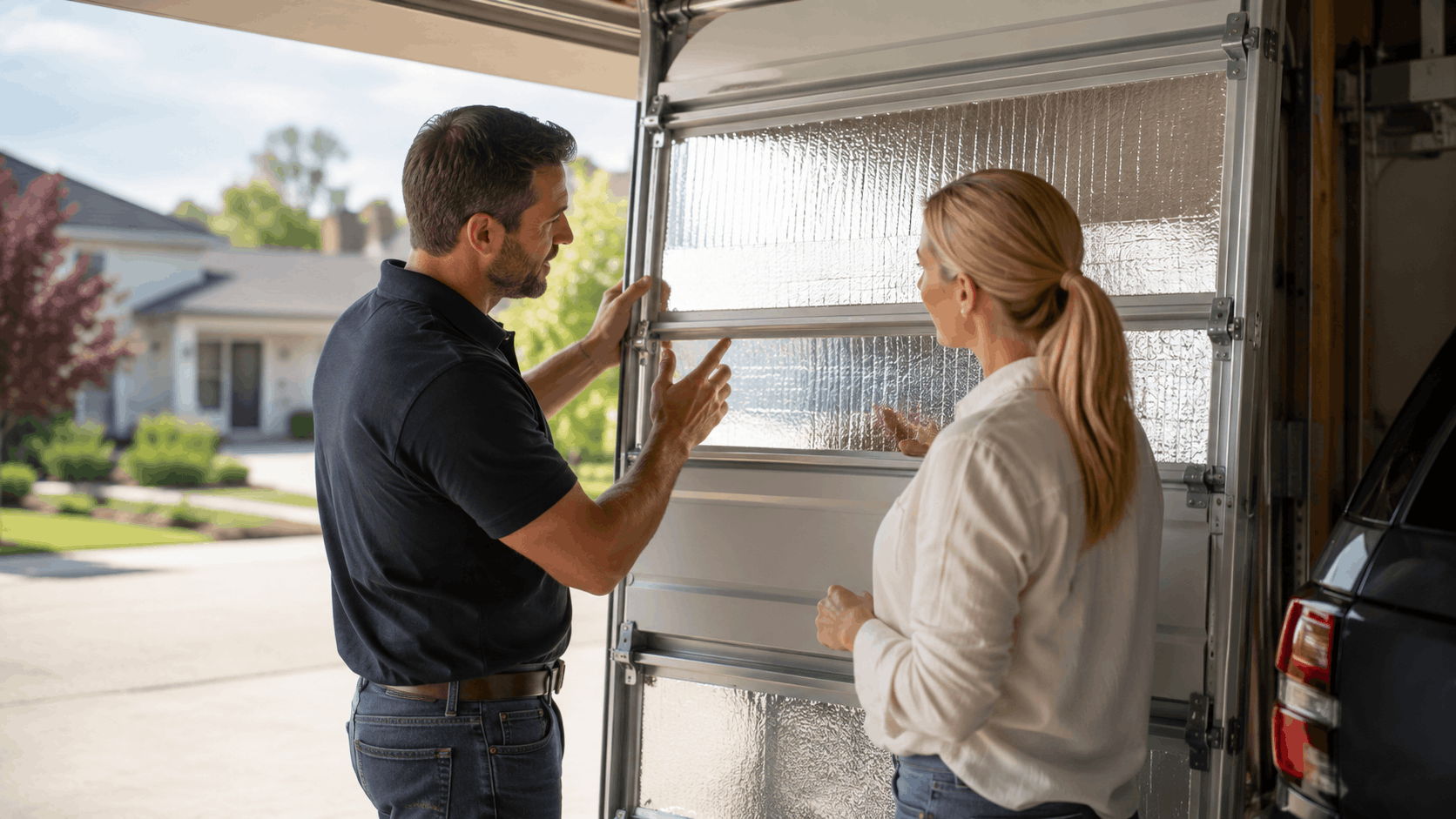
Before you compare prices, it helps to know what you are paying for. R-value is the single number that tells you how well a door resists heat. The higher the number, the better the door keeps heat out in summer and in during winter.
Here is the plain-language version most homeowners want:
- R-value measures how well garage door insulation slows heat transfer.
- A higher insulation rating means a more stable garage temperature.
- Doors range from no insulation at all up to R-18 and beyond.
- The rating usually reflects the whole door section, not just the foam.
Think of R-value as a resistance score. A single-pane sheet of steel barely slows heat, so its number is low. A thick foam-filled door fights heat much harder, so its number climbs.
How R-Value Is Measured
R-value scores thermal resistance, which is the ability of a material to stop heat from moving through it. Heat always travels from the hot side to the cool side, and insulation puts a barrier in the way. The more the door resists that flow, the higher it lands on the R-value scale.
The math behind it looks at material thickness and how well the foam or panel blocks heat. A door with two inches of dense foam scores far higher than a thin single layer of the same material. That is why door thickness and construction matter as much as the foam type.
One point of caution: some manufacturers list the R-value of the foam core alone, while others list the value for the finished door section. Those two numbers can differ by a wide margin. When our team quotes a door, we point out which number is on the spec sheet so nobody compares apples to oranges.
For a deeper look at how thermal resistance works, the U.S. Department of Energy keeps a clear breakdown of insulation ratings that applies to doors and walls alike.
R-Value vs. U-Factor: What Buyers Confuse
Shoppers mix up R-value and U-factor all the time, and manufacturers do not always make it easy. R-value measures resistance to heat flow, so a bigger number is better. U-factor measures how much heat passes through, so a smaller number is better.
The two are basically opposites. A door with an R-value of 16 has a low U-factor, which means very little heat leaks through it. When you read an energy spec sheet, check which measure the maker used before you compare two doors side by side.
Most residential garage door labels lead with R-value because homeowners recognize it. If you ever see U-factor on a window package that shares a wall with your garage, remember that the logic runs the other direction. Our installers walk clients through both numbers so the comparison stays honest.
Getting this right saves money. We have seen people pay for a door they thought was a big upgrade only to find the real difference was small once the numbers were read correctly.
Why R-Value Matters More in Certain OC Homes
Not every garage needs a high R-value, but some benefit a lot. An attached garage shares one or more walls with living space, so heat that builds up in the garage bleeds straight into the house. That extra load lands on your air conditioner.
Many homes in Woodbridge in Irvine and Turtle Rock have attached garages tucked right beside bedrooms or bonus rooms. In those layouts a better insulated door keeps the whole house more even. The living space stays cooler with less effort from the HVAC system.
Detached garages behave differently. If your garage stands apart from the house with no shared walls, insulation still helps the garage itself but does less for your indoor comfort. The choice then depends on how you use the space.
We look at your floor plan before recommending a tier. A townhome with a bedroom over the garage gets different advice than a detached workshop out back near Turtle Rock.
Get Your Free Quote
Tell us about your garage door and we'll get back to you within 30 to 60 minutes.
Insulated Garage Door Cost Ranges in Orange County
Let us talk real numbers. Garage door cost swings a lot based on size, material, and R-value, but homeowners still want a ballpark before they call around. The ranges below reflect typical Orange County pricing for supply and standard installation.
These are 2024-era figures for the Irvine area and nearby cities. Custom finishes, glass, and difficult access can push the top end higher.
| Door Type | Insulated Door Price (Installed) |
|---|---|
| Single steel, low R-value | $900 - $1,600 |
| Single steel, high R-value | $1,400 - $2,400 |
| Double steel, low R-value | $1,500 - $2,600 |
| Double steel, high R-value | $2,200 - $4,000 |
| Aluminum or glass, insulated | $3,000 - $7,000+ |
Single vs. Double Door Pricing
A single door covers one car and usually runs 8 or 9 feet wide. These are common on older tract homes and some townhomes around Irvine. An insulated single door installed lands roughly between $900 and $2,400 depending on R-value and material.
A double garage door covers two cars and spans about 16 feet. It uses more material and more labor, so it costs more per job. Expect a double insulated door to run from around $1,500 on the low end to $4,000 for a high R-value steel model.
Many Irvine tract homes built in the 80s and 90s came with a single 16-foot double door. When those wear out, homeowners often upgrade to an insulated version through our garage door installation service. The width alone drives a big part of the price gap.
Two singles versus one double is another question we hear. Two separate doors with two openers cost more than a single wide door, but some homeowners prefer the look and the backup if one opener fails.
Material Costs: Steel, Aluminum, and Wood
Material changes both the price and how well the door holds insulation. A steel garage door is the most popular pick in Orange County because it takes foam well, resists dents in mid-range gauges, and costs less than the fancier options.
An aluminum door with glass panels looks modern and suits many Newport and Costa Mesa remodels, but aluminum conducts heat easily. To reach a decent R-value it needs foam-backed or insulated glass, which raises the price into the $3,000 to $7,000 range and up. Our modern glass garage door option is a favorite for that look.
Wood doors bring warmth and curb appeal, especially on carriage-style homes. Real wood insulates modestly on its own but needs upkeep and rarely posts high R-values without a foam core behind it. Custom wood runs well above steel in most cases.
For pure insulation value per dollar, foam-filled steel wins for most local homes. That is why the majority of our insulated installs use it.
Installation and Labor in the Irvine Area
Installation cost in Irvine typically falls between $300 and $600 for a standard swap. That covers removing the old door, mounting the new sections, adjusting the springs, and testing the balance. Labor pricing in Irvine sits a little higher than inland counties because of local wages and demand.
Several things push labor up. Tight side room, a low ceiling, or a garage with finished walls near the tracks all add time. Steep driveways and gated communities that require badging in can also stretch the schedule.
New springs and tracks add labor too, since a proper insulated door often needs matched hardware. Our spring and cable techs size the springs to the heavier insulated panels so the door lifts smoothly and the opener does not strain.
A clean, straightforward install in a standard two-car garage usually wraps in half a day. We give the labor figure up front so there are no surprises when the job is done.
Hidden Costs Homeowners Miss
The sticker price on a door is not always the final bill. A removal fee for hauling away the old door and hardware is common, often $50 to $150 depending on the load. Some quotes fold this in, others list it separately.
Springs and tracks are the sneaky ones. A heavier insulated door frequently needs new torsion springs rated for the added weight, and reusing old worn springs is a bad idea. Budget for spring replacement if your current hardware is more than seven or eight years old.
An opener upgrade is another line item people forget. If your old chain-drive opener strains against the new heavier door, a stronger or quieter unit makes sense. Our opener installation team can match a motor to the new door weight.
New weather seals, a bottom rubber gasket, and reprogramming remotes round out the small extras. None of these are huge on their own, but together they can add a few hundred dollars.
Need Help in Irvine?
Urgent Garage Doors serves Irvine and all of Orange County.
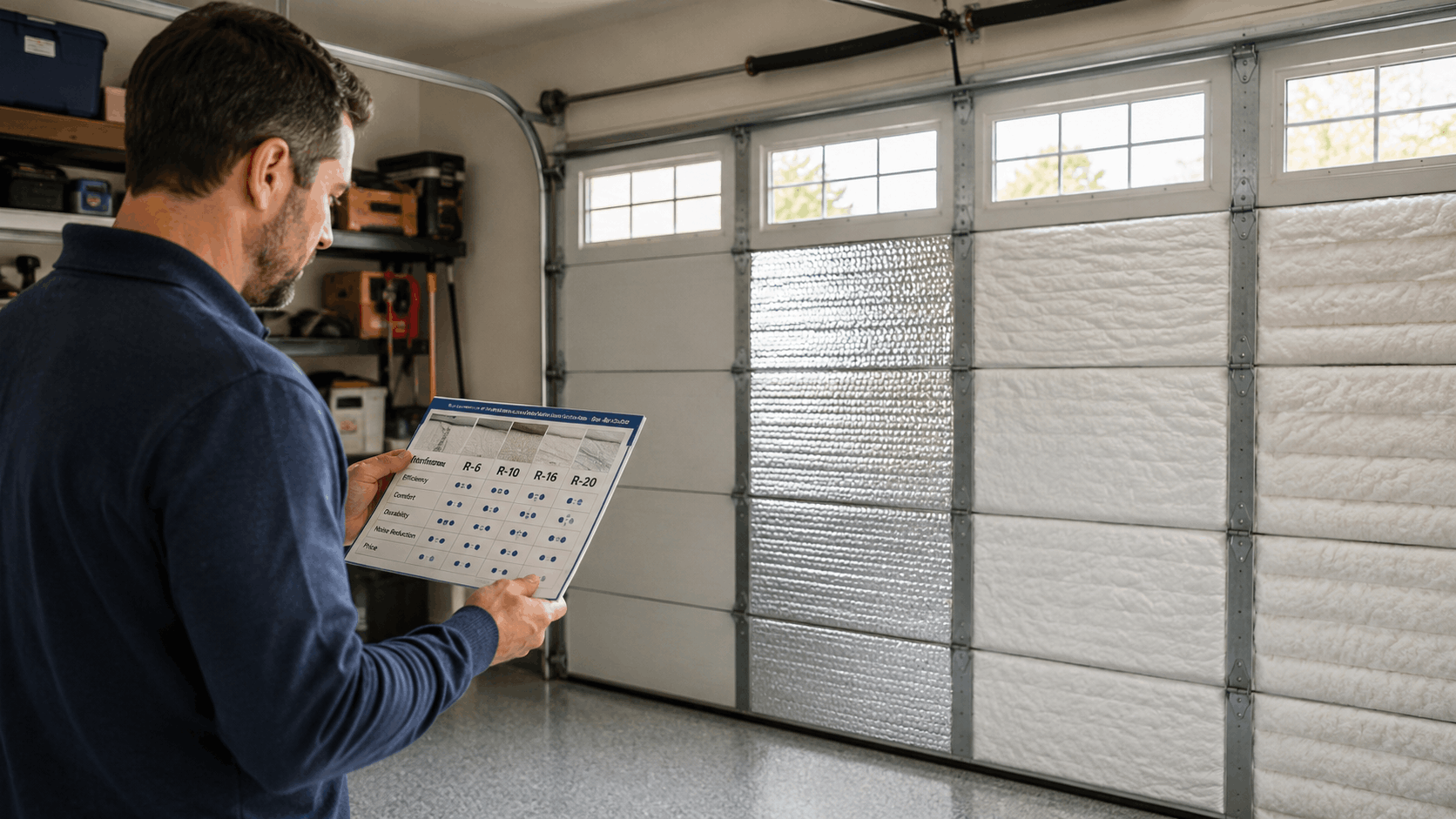
R-Value Pricing Comparison: What Each Tier Costs
Now for the heart of the R-value comparison. Doors sort roughly into three price tiers based on their insulation rating. Seeing the price jumps side by side helps you decide how far up the scale to climb.
The table below shows the typical added cost of each insulated garage door tier over a bare, non-insulated door of the same size.
| R-Value Tier | Typical Rating | Added Cost vs. Bare Door |
|---|---|---|
| Low | R-6 to R-9 | $150 - $400 |
| Mid-range | R-10 to R-13 | $400 - $800 |
| High | R-16 and up | $800 - $1,600 |
Low R-Value Doors (R-6 to R-9)
An R-6 door is the entry-level insulation choice. It uses a thin layer of foam board pressed against the back of a single steel skin. The upgrade over a hollow door is modest but real.
These doors work best on detached garages or spaces that do not share walls with living areas. If your garage is just for parking and light storage, an R-6 or R-8 door keeps the worst of the heat out without a big spend. The added cost over a bare door is usually only a few hundred dollars.
The limits show up in extreme heat and noise. Entry-level insulation still lets a lot of warmth through by mid-afternoon, and the panels are lighter, so they feel less solid. For a garage bedroom wall, this tier often falls short.
We install plenty of these for rental properties and simple carports where budget leads the decision. They still beat a hollow door by a comfortable margin.
Mid-Range R-Value Doors (R-10 to R-13)
This is the sweet spot for most Irvine homeowners. An R-12 door pairs two steel skins around a thicker foam core, giving a big jump in comfort over the low tier. The price bump is reasonable for what you get.
Mid-range insulation handles attached garages well. It keeps the shared wall cooler, quiets street noise, and gives the door a sturdier feel when it closes. For a family home in Northwood or Woodbridge, this tier balances cost and performance nicely.
The cost difference over a low-tier door usually runs a few hundred dollars, and most people feel it is worth it. The double-skin build also resists dents better, which matters when kids and bikes share the space.
When clients ask us where to spend, we point them here first unless the garage has a special use. It covers the needs of the typical Orange County household without paying for the very top tier.
High R-Value Doors (R-16 and Up)
The top tier uses injected polyurethane insulation in a thick sandwich construction. An R-18 door is dense, heavy, and very quiet. It holds a stable garage temperature even during a July heat wave.
These doors make the most sense for garages that double as living space. A converted home gym, an office, or a workshop that runs its own mini-split all benefit from the extra resistance. The steady temperature protects tools, electronics, and stored goods too.
The trade-off is price. High R-value doors add $800 to $1,600 over a bare door, and they usually need matched heavy-duty springs. For a garage used only for parking, that spend is more than most people need.
We install this tier often near inland heat zones and for clients who spend real time in the garage. When the space is truly part of the home, the comfort pays back daily.
Cost Per R-Value Point: Is the Upgrade Worth It?
A simple way to judge value is cost per R-value point. Jumping from R-6 to R-12 might cost $300 more but doubles the rating, which is strong value. Jumping from R-16 to R-18 often costs nearly as much for a small rating gain.
The first steps up the scale give the biggest return. Going from no insulation to mid-range delivers a noticeable comfort change for a fair price. Chasing the last few R-value points costs more per point and matters mostly for heavy-use garages.
Energy savings factor in too. A garage next to a bedroom that runs the AC hard all summer justifies more insulation than a detached shed. Match the spend to how the space affects your home.
Our team runs this value comparison with clients during the quote. We would rather steer you to the tier that actually fits your home than sell the priciest door on the truck.
Insulation Types and How They Affect Price
Two words show up on almost every insulated door spec sheet: polystyrene and polyurethane. The difference in door construction between them explains most of the price gap between a budget door and a premium one.
Both are foam, but they behave very differently once they are inside the panel. Knowing which is which helps you read a quote with confidence.
Polystyrene Panels: Budget-Friendly Choice
Polystyrene foam comes as pre-cut rigid boards slid into the door panels. It is the same white foam you see in coolers and packaging, just shaped for the door. It costs less to make, which keeps the door price down.
A single-layer door with polystyrene backing hits low to mid R-values. The board does not fully fill the panel, so small gaps around the edges let some heat sneak through. Still, it is a solid step up from a hollow door.
The main limits are those gaps and the lighter feel. Polystyrene doors are quieter than bare steel but not as hushed as injected foam. For budget-minded jobs and simple garages, they do the job well.
We recommend polystyrene when the goal is a real improvement at the lowest reasonable cost. It fits many rental and starter-home situations around the county.
Polyurethane Injection: Higher Performance
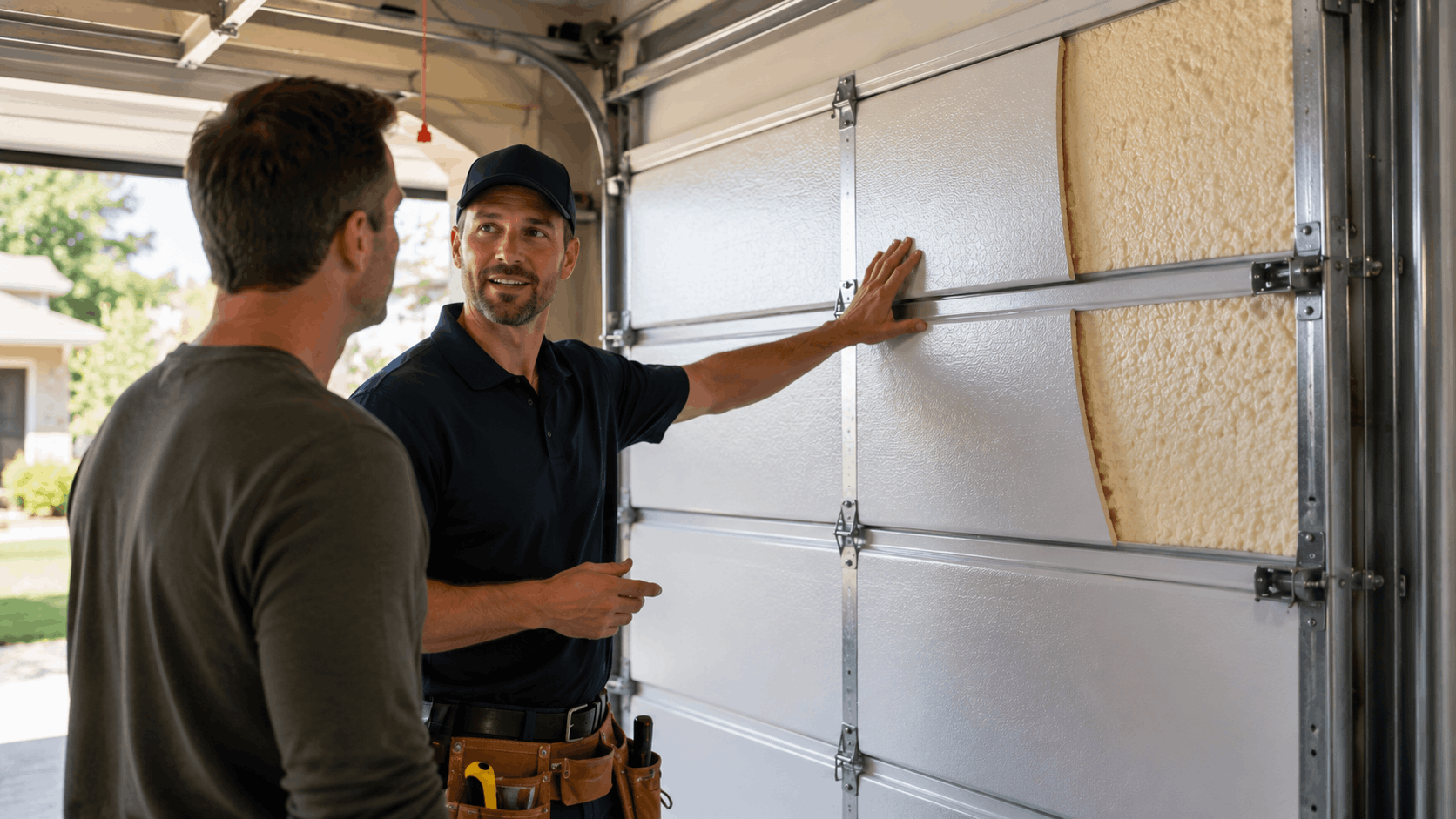
Injected polyurethane is sprayed in as a liquid that expands and fills every corner of the panel. Because it bonds to both steel skins, the door becomes stronger and stiffer as a whole unit. That full fill is why it posts higher R-values than polystyrene of the same thickness.
The sound reduction is the part clients notice most. Injected polyurethane deadens street noise and the rumble of the door itself. Homes near busy roads or with a bedroom over the garage feel the difference right away.
This performance costs more. The manufacturing process is pricier, and the doors weigh more, which can call for upgraded springs. For garages that share walls or serve as living space, the extra spend is usually justified.
Most of our high-tier installs use injected polyurethane. It is the choice when comfort, quiet, and strength all matter.
Single, Double, and Triple-Layer Construction
Layer count describes how the door is built. A single-layer door is just a steel skin, no insulation. A double-layer door adds foam behind that skin, and a triple-layer door sandwiches foam between two steel skins.
Triple-layer, often called sandwich construction, gives the highest R-values and the most solid feel. The foam is protected on both sides, so it resists damage and holds its rating for years. This build is standard for the R-16 and up tier.
More layers mean more material and weight, so price climbs with each step. A double-layer door is the practical middle ground for most homes, while triple-layer suits demanding uses. The insulated steel garage door options we install span all three builds.
When you compare quotes, ask how many layers each door has. Two doors with the same headline R-value can feel very different depending on their construction.

How Orange County Climate Shapes Your Insulation Choice
OC climate is not one thing. Drive from the coast to the inland canyons and the temperature can swing ten or fifteen degrees on the same afternoon. Where your home sits should guide how much insulation you buy.
The goal is a stable garage temperature that protects your comfort and your energy efficiency. Different zones call for different priorities.
Inland Heat in Areas Like Orange Park Acres
Inland heat is no joke once you leave the coastal breeze behind. Neighborhoods near the 55 and 91 freeways, including Orange Park Acres, see summer temperatures climb well past what the beach cities feel. Garages in these zones bake all afternoon.
A higher R-value earns its price here. The extra resistance keeps the garage and any shared walls from turning into a heat source that drives up the AC bill. Mid to high tier doors make the most sense for these homes.
West-facing garages in these areas soak up the worst of the late-day sun. If your garage door faces the setting sun, lean toward more insulation than you might otherwise pick. The afternoon heat load is real and steady from June through September.
We service a lot of these inland homes and see the difference a better door makes on the hottest days. Comfort and lower cooling costs both improve.
Coastal Moisture Near Newport and Corona del Mar
Closer to the water, the story shifts from heat to moisture. Coastal moisture and salt air near Newport Beach and Corona del Mar can lead to salt air corrosion on hardware and thin panels over time. Insulation matters less for temperature and more for keeping the panel solid.
Foam-filled steel with a good finish resists coastal wear better than hollow steel. The dense construction gives moisture fewer places to work into the panel. Rust-resistant hardware is worth asking for in these zones.
Homes on the Balboa Peninsula deal with damp marine air almost year round. A door that seals well keeps that moisture out of the garage, which helps stored items and any living space attached to it.
For coastal clients we focus on sealing, finish quality, and corrosion-resistant parts as much as raw R-value. The mild coastal temperature means you rarely need the very top insulation tier for heat alone.
Garages Used as Gyms, Offices, and Workshops
More homeowners are turning garages into real rooms. A garage conversion into a home gym, office, or studio changes the math entirely. Now the space needs a steady temperature all day, not just heat control for parking.
A home gym garage that runs a fan or mini-split loses efficiency fast through a poorly insulated door. High R-value insulation holds the conditioned air in and keeps the room usable in July and January. The door becomes part of the room, not just a wall.
Workshops with tools and electronics benefit too. Big temperature swings are hard on equipment and glue-ups, so a stable space protects your gear. Sound control from injected foam keeps the noise from bothering the neighbors.
If your garage does double duty, tell us during the quote. We size the door to the way you actually live in the space, not just the square footage.
Need Help in Irvine?
Urgent Garage Doors serves Irvine and all of Orange County.
Energy Savings and Return on Your Insulated Door
An insulated door is part comfort upgrade and part energy investment. The savings show up on your power bill and in the resale value of the home. Both add up over the years you own the door.
The size of the return depends on your garage layout and how you cool your home. Attached garages with shared walls see the clearest payoff.
Impact on Southern California Edison Bills
Most Orange County homes run on Southern California Edison, and cooling costs make up a big slice of the summer bill. A hot garage pushes heat into the house and makes the AC cycle more often. An insulated door slows that heat and eases the HVAC load.
The effect is largest when the garage shares a wall with a room you cool. Keeping that wall cooler means the thermostat clicks on less. Over a long OC summer, fewer cooling cycles add up on the monthly power cost.
Edison rates also rise during peak afternoon hours, which is exactly when the garage heats up most. A door that blunts the afternoon heat load helps you use less power during those expensive windows. The Department of Energy offers tools to estimate how much your cooling adds to a bill.
The exact dollar figure varies by home, but clients with attached garages often report a real drop in their peak-summer bills after upgrading.
Payback Timeline by R-Value
Every door pays for itself eventually through lower bills and added home value. The payback period depends on the tier and how the garage connects to your living space. Lower tiers cost less but save less, while higher tiers cost more and save more per year.
For an attached garage next to conditioned rooms, a mid-range door often returns its added cost through energy savings within several years. The comfort gain starts on day one. High-tier doors take a little longer to pay back on energy alone but shine when the space is lived in.
Detached garages have a longer energy payback since they do not affect indoor cooling much. In those cases the value is mostly comfort and protecting stored items. The door still earns its keep, just through a different path.
We help clients weigh the energy return against upfront cost during the quote. Matching the tier to your layout keeps the payback timeline sensible.
Resale Value in Irvine Neighborhoods
Buyers in Irvine notice garage doors. In communities like Northwood and Quail Hill, a clean insulated door boosts curb appeal and signals that the home has been cared for. It is one of the higher-return exterior upgrades a seller can make.
A new door photographs well and stands out in listings. Because it is a visible, big-ticket item, buyers factor it into their offer. An old, dented, or hollow door does the opposite and invites lowball negotiation.
In Northwood especially, where many homes share a similar era and style, an upgraded door helps a listing stand apart from the pack. Buyers also appreciate the energy angle when comparing homes with high summer bills. It becomes a selling point on the flyer.
Even if you are not selling soon, the resale value cushion makes the upgrade easier to justify. You enjoy the comfort now and recover much of the cost later.
HOA Rules and Permits for Garage Door Replacement in OC
Before any door goes up, the paperwork side matters in Orange County. HOA approval and city rules affect your timeline and sometimes your choices. Skipping this step can mean fines or a forced redo.
Most Irvine neighborhoods sit inside master-planned communities with their own design rules. Knowing the process up front keeps the project on schedule.
HOA Design Guidelines in Master-Planned Communities
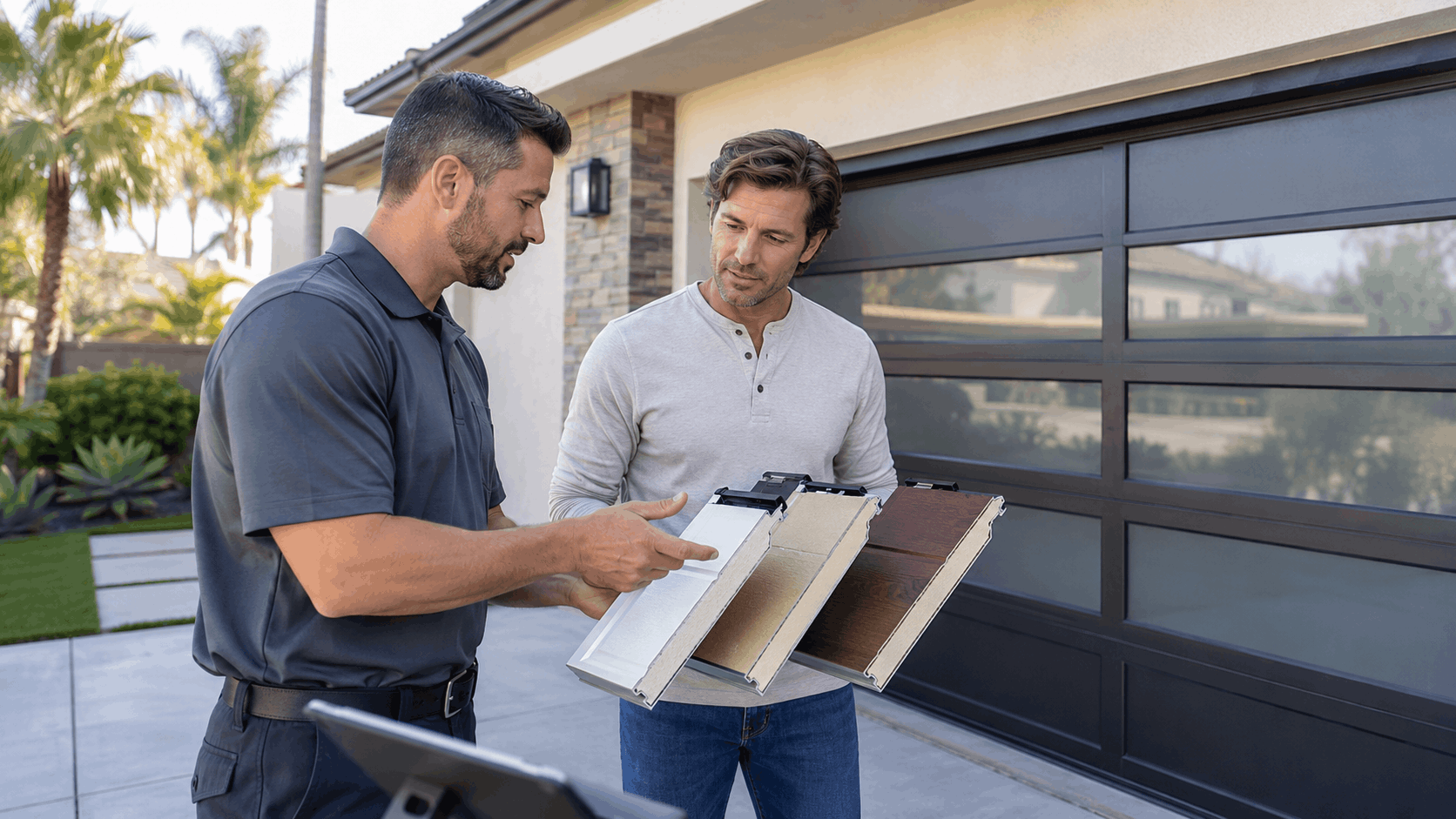
Communities like Portola Springs and the Great Park neighborhoods enforce design rules on exterior changes. HOA guidelines often dictate the color, panel style, and even the window layout of a garage door. A door that breaks the rules can be rejected after install.
These rules keep the streetscape consistent, which most owners appreciate for property values. The catch is that you usually need to submit your door choice for approval before work begins. The HOA reviews the color and style against the community standard.
We are familiar with the common palettes and approved styles across Irvine villages, from Great Park neighborhoods to older villages. That experience helps clients pick a door that will pass review the first time. It saves a round of back-and-forth with the architectural committee.
If you are unsure of your community rules, check your CC&Rs or the HOA portal before you shop. Bringing that info to the quote speeds everything up.
City of Irvine Permit Basics
A straight door replacement in the same opening often does not need a permit, but adding structural changes can. When you alter the opening size, framing, or electrical for a new opener, an Irvine permit may come into play. The building department sets the rules.
For most like-for-like insulated door swaps, the job stays simple and permit-free. The moment the header, framing, or opening changes, though, the city wants to review it. It is worth a quick check for any non-standard install.
You can confirm current requirements with the City of Irvine building department. They keep the residential guidelines and permit process posted online. When a permit is needed, we help clients understand the step.
Getting this right protects you at resale, since unpermitted structural work can surface during an inspection. For standard door swaps it rarely becomes an issue.
How Approvals Affect Your Timeline
Approvals shape your project scheduling more than the install itself. HOA review can take anywhere from a few days to a few weeks depending on the community and how often the committee meets. Plan for that window before you expect a new door.
A permit, when required, adds its own approval timeline on top of the HOA step. The install day is quick by comparison. Most of the calendar time is spent waiting for sign-offs, not swinging tools.
Our advice is to start the HOA submission early, even before the door is ordered. Custom colors and styles also add lead time from the manufacturer, so stacking those steps saves weeks. We map out the timeline with clients so nobody expects a next-day door when approvals are pending.
Standard doors with no HOA hurdles can move fast. When custom finishes and reviews are involved, patience up front keeps the whole project smooth.
Need Help in Irvine?
Urgent Garage Doors serves Irvine and all of Orange County.
How Urgent Garage Doors Prices and Installs in Irvine
Every home is a little different, so our quoting starts with a look at your actual garage. Here is how the process runs from first call to finished install:
- A phone or online request to set up a visit
- An on-site measurement and honest walkthrough of options
- A written quote with the door, R-value, and labor spelled out
- Installation on a scheduled day with full cleanup
- Warranty coverage and local follow-up support
The whole point is a transparent garage door quote with no guessing. You should know what you are paying for before anything is ordered.
The In-Home Measurement and Quote Visit
The free quote starts with an on-site measurement of your opening, headroom, and side room. Photos and rough numbers over the phone only go so far, since real garages have quirks. Measuring in person avoids ordering the wrong size.
During the visit our tech checks the springs, tracks, and opener too. That way the quote reflects the full job, not just the door panel. If your springs need matching to a heavier insulated door, you find out now, not on install day.
We walk you through the options right there in the garage. You see how different R-values and styles fit your home and budget. There is no pressure to pick the top tier if a mid-range door suits you better.
The written quote lists the door, its insulation rating, hardware, labor, and any removal fee. Everything is in front of you before you decide.
Matching R-Value to the Home and Budget
A good door recommendation starts with how you use the garage and where you live. An attached garage near a bedroom in Woodbridge gets different advice than a detached garage in a cooler coastal spot. We match the R-value to the real situation.
Budget match matters just as much. If a mid-range door covers your needs, we say so rather than pushing the priciest option. The goal is the right tier, not the biggest invoice.
For inland homes in hot zones we lean toward higher insulation, and for coastal homes we focus on sealing and finish. Garage gyms and offices get the high tier so the space stays comfortable. Your daily use drives the pick.
We explain the trade-offs in plain terms so you can decide with confidence. The choice is always yours, informed by what we see in your garage.
Installation Day and Cleanup
On installation day the crew arrives in the scheduled window and protects the work area. Old door removal comes first, including the panels, tracks, and any worn hardware. We haul the old door away so you are not left with a pile in the driveway.
Next the new sections go up, the tracks get aligned, and the springs are set to the door weight. The team tests the balance by hand and cycles the door several times. A properly balanced door protects the opener and runs quietly.
We program remotes and keypads, check the safety sensors, and adjust the travel limits. Before we leave, we show you how everything works and answer questions. The garage is swept and left clean.
A standard two-car insulated door usually finishes in a few hours. Custom or complex jobs may run longer, which we flag ahead of time.
Warranty and Follow-Up Service
Every install comes with a warranty on the door and our labor. The manufacturer covers the panels and hardware for their stated terms, and we stand behind the workmanship. You get the paperwork with the details on install day.
Local follow-up service is part of the deal. If something needs a tweak after a few weeks of use, we come back and set it right. Being based in the area means we are not far when you call.
We also offer a preventive maintenance plan to keep the door running smoothly for years. Regular tune-ups catch small issues before they become repairs. An insulated door with proper upkeep lasts a long time.
Should anything urgent come up down the road, our emergency repair team is a call away. Support does not stop when the install truck pulls out.
Final Thoughts
An insulated garage door is one of the more practical upgrades an Orange County homeowner can make. It cools the garage, quiets the street, eases the AC load, and adds curb appeal at resale. The right R-value depends on where you live and how you use the space.
For most attached garages in Irvine, a mid-range door hits the best balance of cost and comfort. Inland homes and converted garages benefit from the high tier, while simple detached garages do fine with entry-level insulation. Match the door to the home, not the other way around.
When you are ready for real numbers, our team offers an on-site measurement and a clear quote with no surprises. Call Urgent Garage Doors in Irvine or reach out through our contact page to set up your visit. We will help you pick the R-value that fits your garage and your budget.
Frequently Asked Questions
- How much does an insulated garage door cost in Orange County?
- A single insulated door installed usually runs $900 to $2,400 depending on R-value and material. A double insulated door lands between $1,500 and $4,000 for steel, with aluminum and glass models reaching $7,000 or more. Labor in the Irvine area typically adds $300 to $600. Extras like new springs, tracks, or a removal fee can raise the final bill.
- What R-value do I need for a garage in Irvine?
- For an attached garage that shares walls with living space, a mid-range door around R-12 covers most Irvine homes well. Detached garages used only for parking do fine with R-6 to R-9. If your garage is a gym, office, or workshop, or sits in a hot inland zone, step up to R-16 or higher for a stable temperature.
- Is a higher R-value worth the extra money?
- It depends on your garage. The first jump from no insulation to mid-range gives the biggest comfort and energy return per dollar. Going to the very top tier pays off when the garage is attached, faces afternoon sun, or serves as living space. For a detached garage used only for parking, the highest R-value is usually more than you need.
- What is the difference between polystyrene and polyurethane doors?
- Polystyrene is a rigid foam board slid into the panel, which keeps the door cheaper but leaves small gaps and a lighter feel. Polyurethane is injected as liquid foam that fills every corner and bonds the steel skins, giving higher R-values, a stronger door, and better sound reduction. Polyurethane costs more but performs noticeably better for attached and lived-in garages.
- Will an insulated door lower my energy bill?
- If your garage shares a wall with a cooled room, yes. An insulated door slows the heat that pushes into the house, so the AC cycles less during hot afternoons. Homes on Southern California Edison often see the clearest savings during peak summer hours. Detached garages help comfort more than the power bill since they do not affect indoor cooling much.
- Do I need HOA approval to replace my garage door in Irvine?
- In most master-planned Irvine communities, yes. HOAs in areas like Portola Springs and the Great Park neighborhoods set rules on color, panel style, and windows. You usually submit your door choice for architectural review before install. Check your CC&Rs or HOA portal early, since approval can take a few days to a few weeks and affects your timeline.
- How long does insulated door installation take?
- A standard two-car insulated door usually installs in a few hours. That includes removing the old door, mounting the new sections, setting the springs, and testing the balance. Custom colors, glass, or difficult access can extend the job. Most of the project calendar time is spent waiting on HOA approval or manufacturer lead time, not the install itself.
- Can I insulate my existing garage door instead of replacing it?
- Insulation kits with foam panels or batts can help a bare door a little, and they cost less than a new door. The catch is they rarely reach the R-values or the tight seal of a factory-built insulated door, and they add weight your springs may not be sized for. If your door is old or worn, a full replacement is the smarter long-term move.
- Does an insulated door make the garage quieter?
- Yes. Thicker foam-filled doors, especially injected polyurethane, deaden street noise and cut the rattle of the door as it opens and closes. Homes near busy roads or with a bedroom over the garage notice the difference most. Pairing an insulated door with a quiet belt-drive opener and smooth rollers makes the whole system much quieter.
- How do I get a price quote from Urgent Garage Doors?
- Call our Irvine team or use the request form on our website to schedule a visit. We come to your home, measure the opening, check the springs and opener, and walk you through R-value options that fit your garage and budget. You get a written quote with the door, labor, and any extras spelled out before anything is ordered. Ready to trade the afternoon oven for a comfortable, quiet garage? Reach out to Urgent Garage Doors in Irvine today for an on-site measurement and a straightforward quote on the insulated door that fits your home.
Licensed garage door repair professionals serving Irvine and Orange County.
Licensed in California · License #1055150
Why trust Urgent Garage Doors?
Founded in 2017, Urgent Garage Doors is a licensed and insured garage door services serving Irvine and Orange County. All content is reviewed by our licensed technicians.

Need Help in Irvine?
Urgent Garage Doors serves Irvine and all of Orange County.
Related Articles
Broken Garage Door Spring Repair Cost Newport Beach vs Anaheim: Why Pricing Varies
Compare broken garage door spring repair costs in Newport Beach vs Anaheim, why coastal prices run higher, and how to read quotes without getting overcharged.
Garage Door Cable Replacement Cost Orange County: Why Pricing Varies by Neighborhood
Garage door cable replacement cost in Orange County varies by neighborhood. Learn why prices differ, real cost ranges, and how to get a fair, accurate quote.
Garage Door Spring Replacement Cost Irvine: Single vs Double Torsion Pricing
Compare single vs double torsion spring replacement costs in Irvine, from honest price ranges to warning signs, DIY dangers, and how to spot a fair quote.