How-To Guides
Mission Viejo and Rancho Santa Margarita HOA Garage Door Approved List

Key Takeaways
- Most Mission Viejo and RSM communities require an architectural application before installing or replacing a garage door, even for like-for-like swaps.
- Approved lists usually specify door style, color, window layout, and material, all documented in the community architectural guidelines.
- Earth tones like desert tan, sandstone, and warm grays pass review, while bright, glossy, or high-contrast finishes get rejected.
- Carriage-style doors are common near Lake Mission Viejo, while RSM villages like Melinda Heights and Dove Canyon favor clean raised panels.
- Approval typically takes 2 to 6 weeks, with gated enclaves like Dove Canyon on the longer end due to less frequent committee meetings.
- Installing before approval, using an unapproved color, or picking the wrong style are the top triggers for violation notices and fines.
- A non-compliant door can often be fixed by repainting, replacing panels, or full replacement, but file the corrected application first.
- Urgent Garage Doors serves Mission Viejo and RSM from Irvine, matching doors to approved lists and providing spec sheets for HOA submittals.
In This Article
A homeowner near Lake Mission Viejo pulls into the driveway after work and spots a folded notice tucked into the front door. It is an HOA violation letter, and the reason is the new garage door installed two weeks earlier. The color was wrong, the style did not match the approved list, and now the community wants it fixed within 30 days.
This scenario plays out more often than most people expect across South Orange County. Master-planned communities in both Mission Viejo and Rancho Santa Margarita keep tight control over how homes look from the street, and garage doors are one of the biggest visual elements they watch. A door that seems perfectly nice to the homeowner can still trigger a fine if it never went through the approval process.
Let's talk about how HOA-approved lists work, the colors and styles that tend to pass review, and the step-by-step submittal process. It also covers common violations, how to fix a non-compliant door, and how our team at Urgent Garage Doors in Irvine helps residents in both cities stay compliant from the first phone call.
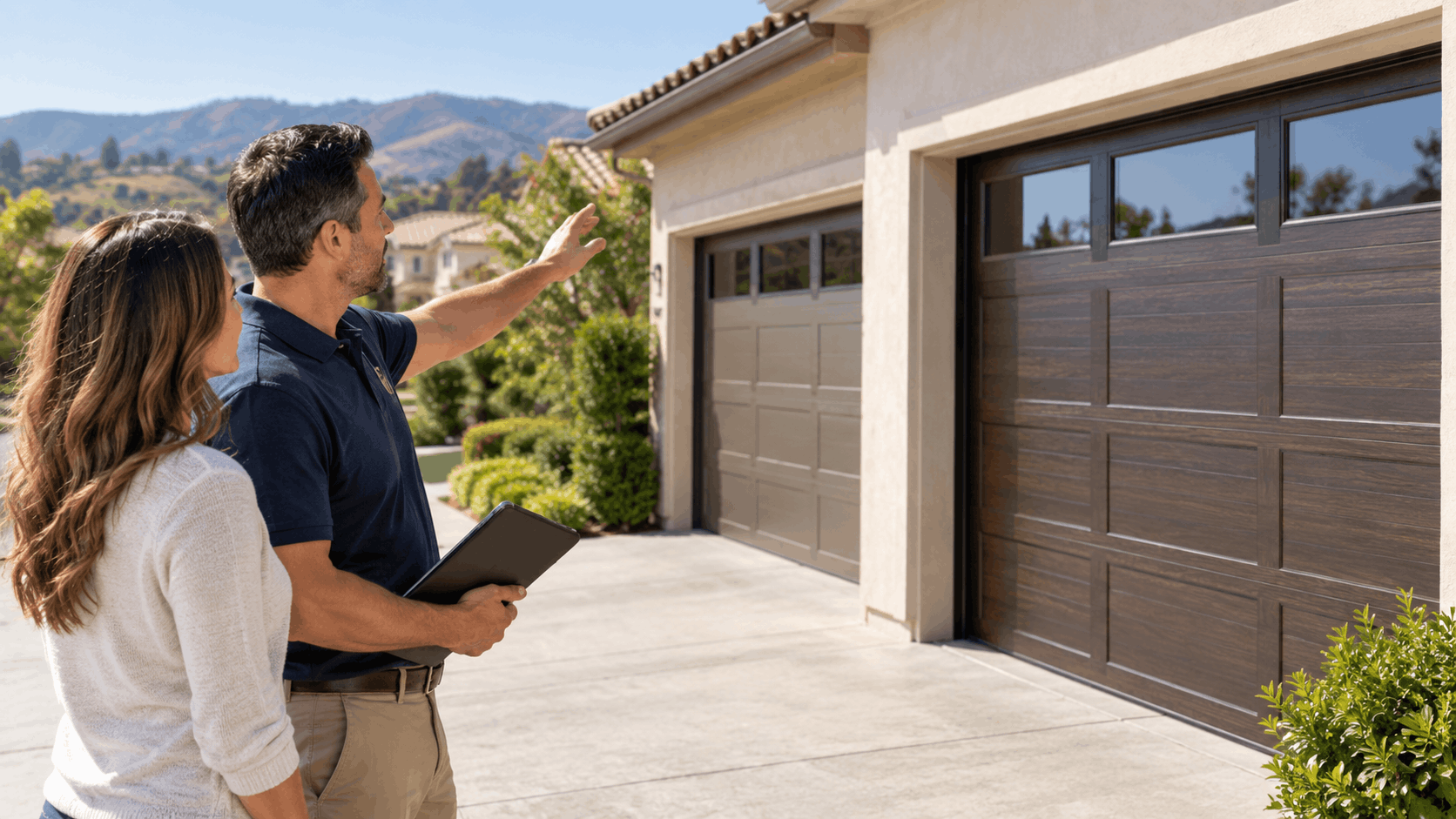
How HOA Garage Door Approved Lists Work in South Orange County?
An HOA approved list is a set of pre-cleared choices a community allows for exterior features like garage doors. Instead of letting every homeowner pick whatever they want, the association narrows the options down to a handful of styles, colors, and materials. This keeps the streetscape consistent across hundreds of homes.
In Mission Viejo and Rancho Santa Margarita, these lists carry real weight. Install something outside the approved list and the architectural committee can require a full replacement. Knowing the garage door rules before you buy saves money and avoids the headache of a rejected door sitting on your house.
What an Approved List Actually Includes
Most approved lists spell out four main things: door style, color, window layout, and material. The style section usually names specific looks like carriage house or flush raised panel, and it often references approved manufacturers or model lines. Homeowners are expected to match one of the listed options rather than propose something new.
Color is where many people slip up. The list may reference a specific paint code or a named shade from the community palette, and the approved colors are chosen to blend with surrounding homes. A door that is technically the right style can still get flagged if the finish falls outside the allowed range.
Window layout and material round out the list. Some communities allow a top row of decorative windows, while others want solid panels with no glass at all. The material section will note whether steel, composite, or wood is acceptable, and each item on the list is documented in the community architectural guidelines so committees can reference it during review.
When homeowners request their list, they often receive a PDF with photos, swatches, and model numbers. Keeping that document handy makes the whole shopping process faster and cleaner.
Why Mission Viejo and RSM Communities Enforce Them
Master-planned communities like those near Alicia Parkway in Mission Viejo and Antonio Parkway in Rancho Santa Margarita were built around a unified look. The developers set the tone decades ago, and the HOAs carry it forward. A consistent street appearance is one of the main reasons buyers pay a premium for these neighborhoods.
Property values are the driving force behind the rules. When every home on a block shares a similar color range and door style, the whole street reads as well kept and cohesive. One bright red door or a mismatched modern panel can pull attention and, over time, chip away at how the block is perceived.
A master-planned community also relies on predictability. Buyers know what they are getting, appraisers see consistency, and lenders view the area as stable. The garage door rules are a small part of a larger system that protects everyone's investment at once.
That is why committees take even minor deviations seriously. It is not about being difficult. It is about holding the line that keeps the neighborhood looking the way it did when people chose to move there.
Who Manages the Rules in Each City
Rules are set and enforced through HOA management structures that vary by community. In Mission Viejo, individual associations like The Grove and Aliso Villas each maintain their own architectural standards, often working with a property management company that handles submittals and notices. Each association has an architectural committee that reviews applications.
In Rancho Santa Margarita, the RSM Landscape and Recreation Corporation oversees broad community standards, while sub-associations within specific villages set finer details. Homeowners sometimes answer to two layers of rules, so it pays to know which body governs a given street.
The architectural committee is the group that actually approves or denies a garage door request. These committees usually meet on a set schedule and review submittals as a batch. Getting to know how your specific committee operates helps you plan the timing of a purchase.
For homeowners unsure who manages their rules, the property management contact on any HOA statement or the community website is the fastest starting point. California's Department of Housing and Community Development also offers general guidance on how common interest developments operate.
Get Your Free Quote
Tell us about your garage door and we'll get back to you fast.
Common HOA Communities and Their Garage Door Standards
Both cities are packed with distinct HOA communities, and each tends to lean toward its own neighborhood standards. Knowing the general expectations in your area helps you shop with confidence. Below is a look at where different requirements tend to show up.
These are patterns we have seen working across South Orange County, not hard rules for every single home. Always confirm with your own association before making a purchase.
Mission Viejo Neighborhoods Near Lake Mission Viejo
Communities around Lake Mission Viejo, including areas off Marguerite Parkway and Casta del Sol, tend to favor warm, earthy looks. Earth-tone doors in tan, sand, and soft brown dominate these streets, and they blend with the Spanish and Mediterranean architecture common to the area.
Carriage-style doors show up often in the lake-adjacent neighborhoods. The carriage look pairs well with the older, established homes here and reads as classic rather than trendy. Homeowners in these pockets usually have good luck with a carriage-style door in a muted finish.
Waterfront and near-lake enclaves like Finisterra on the Lake sometimes carry extra design sensitivity because of their premium location. The community wants those homes to hold their value and their look.
If you live near the water, expect a preference for texture and detail that echoes the surrounding homes rather than a flat, plain panel.
Rancho Santa Margarita Villages Off Antonio Parkway
The villages that branch off Antonio Parkway in Rancho Santa Margarita follow a cleaner, more restrained style. Places like Melinda Heights lean toward muted colors and simple panel designs that keep the newer homes looking crisp and uniform.
Dove Canyon and Robinson Ranch also favor understated doors. In these villages, a raised panel or flush design in a neutral shade tends to sail through review, while anything ornate or high-contrast draws more scrutiny.
Melinda Heights in particular has a large number of homes built in a similar era, so consistency is prized. A door that matches the existing rhythm of the street is the safe bet.
Homeowners in these RSM villages should think neutral and simple first. Fancy hardware and bold colors are usually the fastest path to a rejection.
Gated Enclaves With Stricter Requirements
Gated communities operate under stricter guidelines than open neighborhoods. Dove Canyon is a prime example, where the gated setting comes with a more detailed review and a narrower list of approved options. Homeowners there should plan for extra steps.
A gated community often has its own dedicated architectural committee that meets less frequently, which stretches out timelines. What might take three weeks in an open neighborhood can take five or six weeks behind the gates.
The approved options in these enclaves are usually tighter as well. Fewer colors, fewer styles, and stricter rules on windows and hardware are common. The tradeoff is a very uniform, high-value streetscape.
If you live in a gated enclave, start the approval process early and pad your timeline. Rushing rarely works when a smaller committee controls the calendar.
How to Confirm Your Specific Community Rules
The surest way to know your rules is to request your CC&Rs and architectural guidelines before buying a door. CC&Rs stands for Covenants, Conditions, and Restrictions, and this document lays out what you can and cannot do to your home's exterior.
Homeowners can request these from their HOA management office or download them from the community portal. Many associations keep the current architectural guidelines and the garage door approved list posted online for members.
Read both documents before you shop. The CC&Rs give the legal framework, while the architectural guidelines give the practical list of approved styles and colors. Reading them together removes most of the guesswork.
If anything is unclear, a quick email to the management company usually clears it up. Getting written confirmation of an approved color or style protects you later if a question comes up.
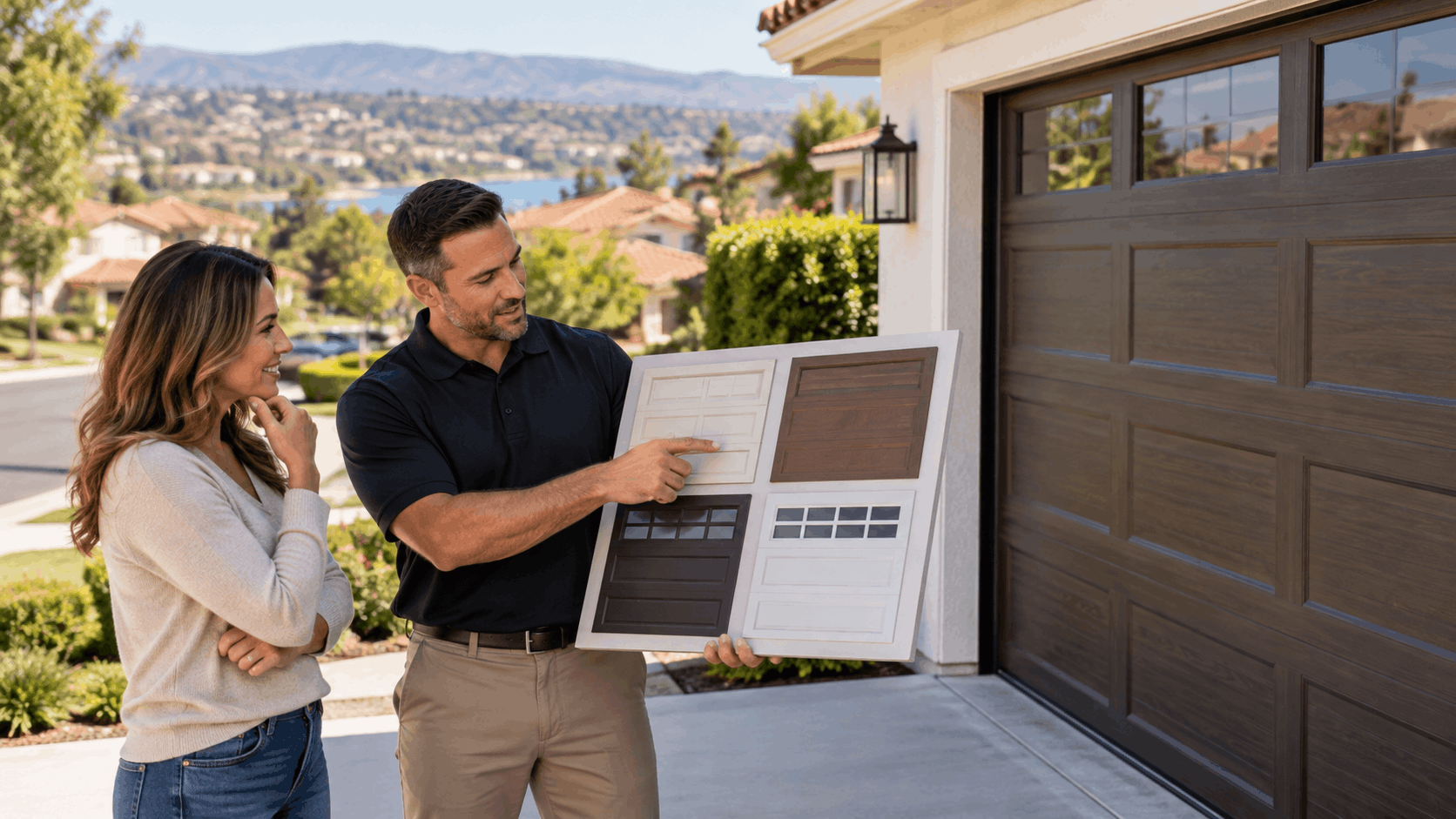
Need Help in Irvine?
Urgent Garage Doors serves Irvine and all of Orange County.
Approved Garage Door Styles and Materials
Certain garage door styles and approved materials show up again and again across both cities. Choosing from these common options gives a homeowner the best shot at passing review the first time. Here is how the popular choices compare.
The table below outlines the styles and materials most often seen on approved lists in Mission Viejo and RSM, along with where each tends to fit.
| Style / Material | Best Fit | HOA Acceptance |
|---|---|---|
| Carriage house steel | Lake-area and older MV homes | High |
| Raised panel steel | RSM villages, newer tracts | High |
| Flush panel composite | Modern-leaning communities | Medium to high |
| Real wood carriage | Premium and custom homes | Medium, often needs review |
Carriage House and Raised Panel Designs
The two most-requested styles in these cities are the carriage house door and the raised panel. Each has a distinct personality and fits a different type of home. Choosing the right one starts with looking at the houses around you.
A carriage house garage door mimics old swing-out barn doors with decorative hardware and detailed panels. It suits the Mediterranean and Spanish-style homes common near Lake Mission Viejo and adds warmth to the front elevation.
The raised panel design is cleaner and more geometric, with rectangular sections pressed into the door face. This look fits the newer tracts in Rancho Santa Margarita and reads as tidy and modern without being flashy. Many RSM villages default to this style on their approved lists.
When homeowners ask which to pick, we tell them to match the block. If neighbors run carriage doors, go carriage. If the street is full of clean raised panels, that is the safer choice for approval.
Steel, Composite, and Wood Options
Material matters for both approval and long-term performance. A steel garage door is the most common approved material because it holds paint well, resists warping, and handles the dry South OC climate with little fuss. Most lists accept steel in the approved colors.
Composite doors offer a wood-look face without the maintenance of real timber. They resist cracking in the heat and take stucco-coordinated finishes nicely, which makes them a solid middle option that many committees accept.
Real wood is beautiful but demanding. The hot, dry inland stretches near Antonio Parkway can dry out wood over the years, leading to cracks and repainting needs. Some HOAs allow wood on premium homes but often require a closer review of the specific product.
For most homeowners, an insulated steel garage door hits the sweet spot of durability, HOA acceptance, and value. It also keeps the garage cooler during summer heat.
Window Inserts and Hardware Choices
Decorative details are often controlled just as tightly as the door itself. Window inserts, when allowed, usually must match a set list of grid patterns and glass types. A community might permit a single top row of windows while banning any others.
Decorative hardware like handles and hinges falls under the same scrutiny. Some carriage-style approvals require specific hardware finishes, and adding your own unlisted handles can trigger a flag even if the door body is approved.
Homeowners should confirm whether their list treats windows and hardware as required, optional, or forbidden. Assuming you can add glass later is a common mistake that leads to a resubmittal.
When in doubt, keep it simple. A solid approved door with no extra windows almost always clears review faster than one loaded with decorative elements.
Approved Colors and Finishes for Both Cities
Color is where the most violations happen, so it deserves close attention. Both cities lean heavily on earth tones and stucco-matching shades. The approved colors are chosen to keep streets calm and cohesive.
The table below shows the color families that tend to pass review versus the ones that get rejected across Mission Viejo and RSM.
| Color / Finish | Typical Result |
|---|---|
| Desert tan, sandstone, warm gray | Usually approved |
| Muted brown, greige, adobe | Usually approved |
| Bright white, black high-contrast | Often rejected |
| Red, blue, high-gloss metallic | Almost always rejected |
Earth-Tone Palettes That Pass Review
Earth tones are the backbone of nearly every approved list in these cities. Shades like desert tan, sandstone, and warm grays appear throughout Mission Viejo because they echo the natural hills and the stucco of the homes themselves.
Desert tan is a reliable choice for homes with lighter stucco, while sandstone works well on tan and beige elevations. Warm grays have grown popular on the newer RSM homes that trend slightly cooler in their palette.
These colors are safe because they disappear into the streetscape rather than standing out. That is exactly what the architectural committee wants to see when a door blends with its surroundings.
If you want the fastest approval, pick a color already used by several neighbors. Matching an established shade removes almost all doubt for the reviewing committee.
Matching Trim and Stucco Colors
The door color usually has to coordinate with your home's existing stucco and trim, not clash with it. Committees look at the whole front elevation as one composition. A door that fights the stucco color reads as out of place.
A common approach is to match the door to the stucco color for a blended look, or to the trim for a subtle accent. Both can work, but only within the approved range. Picking a trim match that falls outside the palette still gets rejected.
Homeowners near Casta del Sol and the lake often have warm tan stucco, so a matching or slightly deeper earth tone door works beautifully. RSM homes with cooler tones do better with a greige or warm gray door.
Bringing a stucco chip to compare against door samples helps you get the coordination right before you submit. Small color mismatches are easy to miss on a computer screen.
Finishes to Avoid
Finish matters as much as color. High-gloss, bright, or reflective finishes get rejected in RSM villages and most Mission Viejo communities. A gloss finish catches light and draws attention, which is the opposite of what these HOAs want.
Rejected colors usually include bright white, true black, and any saturated hue like red or blue. Metallic and semi-gloss finishes also tend to fail because they read as flashy against matte stucco.
Most approved doors use a matte or low-sheen finish that sits quietly on the home. This keeps the whole street looking soft and consistent rather than shiny and mismatched.
When choosing a finish, err toward flat and muted. If a sample looks like it would sparkle in the afternoon sun, it is probably headed for a rejection.
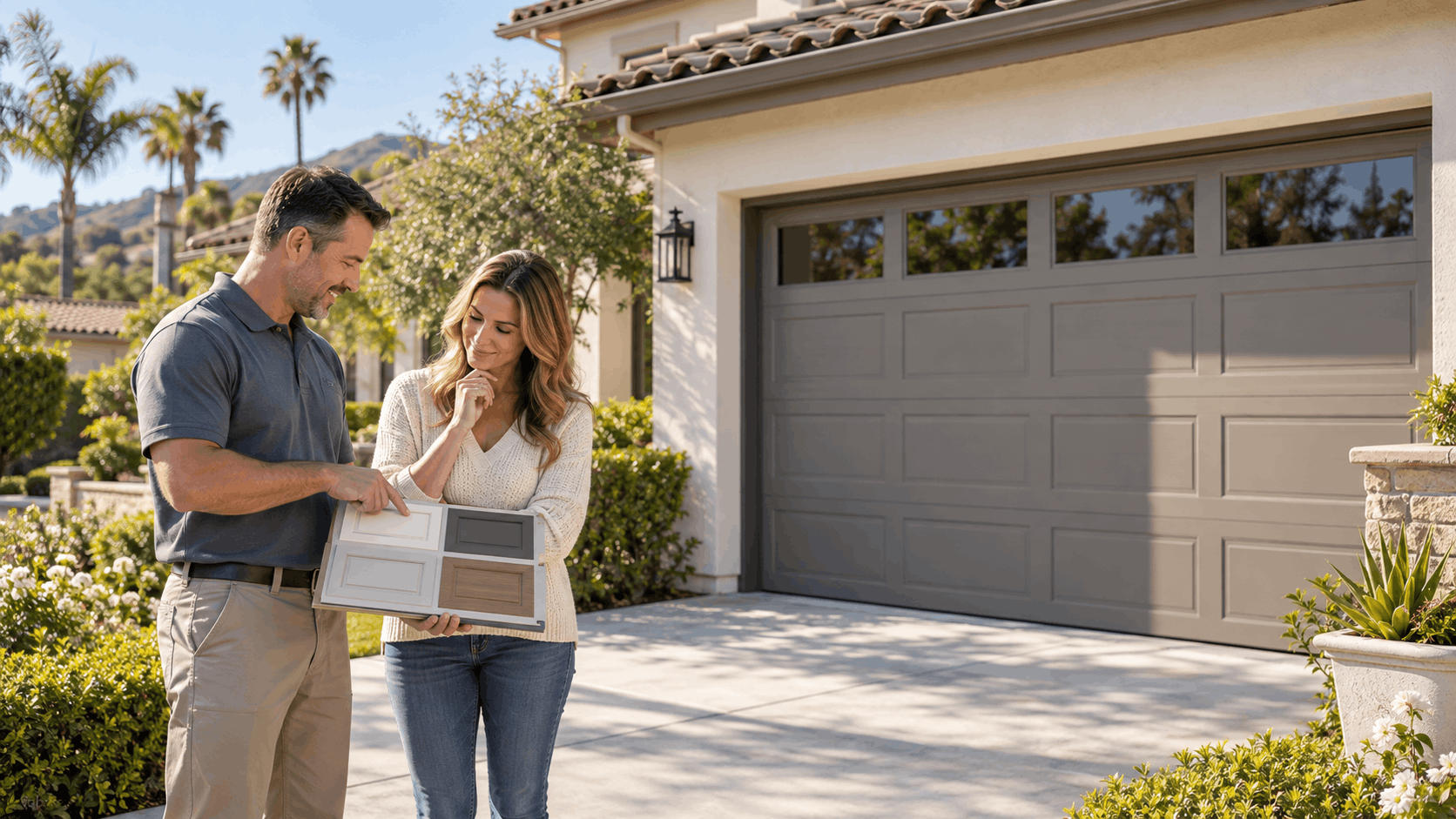
The HOA Approval Process Step by Step
Getting a door approved means filing an architectural application before installation. The approval process is straightforward once you know what to gather and how long to wait. Here is how it typically unfolds.
Skipping this process is the single biggest cause of violation notices, so it is worth doing right from the start.
Gathering Your Application Documents
Most committees ask for a product spec sheet, a color sample, and photos of your current home. The spec sheet shows the door model, style, dimensions, and material so the reviewers know exactly what you plan to install.
A color sample or paint code lets the committee confirm the finish falls within the approved palette. Physical swatches are often stronger than a printed color because they show the true tone and sheen.
Photos of your existing home give context. Reviewers want to see how the new door will sit against your stucco and trim, and a clear front-elevation shot helps them picture the result.
Our team can supply the product specs and documentation homeowners need for this step, which removes a lot of the back-and-forth with manufacturers.
Typical Review Timelines
Review timelines usually run 2 to 6 weeks depending on the community. Open neighborhoods with active committees move on the faster end, while gated enclaves like Dove Canyon lean toward the longer side.
The committee meeting schedule drives the pace. If a committee meets once a month and you submit right after a meeting, your application waits until the next one. Timing your submittal just before a scheduled meeting can shave off weeks.
In both Mission Viejo and RSM, the management company usually confirms receipt of your application and gives an estimated review date. Following up politely if you pass that date is reasonable.
Planning around this timeline matters if you have a broken door. If a door fails and you cannot wait, focus on repairs that keep the current approved appearance while your new-door application processes.
What Happens After Approval or Denial
Once you receive approval, you can schedule installation. Approvals often stay valid for a set window, commonly 6 to 12 months, so check the letter for an expiration date and install within it.
If the committee denies the request, the letter should explain why. Common reasons are an off-palette color or an unapproved style, and a resubmittal with the corrected details usually clears it. A denial is rarely the end of the road.
Keep the written approval on file. If a future violation question ever comes up, that document proves your door was cleared through the proper channel.
After install, some communities do a quick drive-by to confirm the door matches what was approved. Installing exactly what the application specified keeps that check painless.
Need Help in Irvine?
Urgent Garage Doors serves Irvine and all of Orange County.
Avoiding HOA Violations and Fines
An HOA violation over a garage door is easy to avoid once you know the triggers. Fines add up quickly, and forced corrections cost far more than doing it right the first time. Here is what causes problems locally.
Most violations trace back to a few repeat mistakes that we see across both cities.
Common Reasons Doors Get Flagged
The top triggers are an unapproved color, the wrong style, and installing before approval. A violation notice usually cites one of these three, and each is fully preventable with a little planning.
An unapproved door in a bold color is the most visible offense and gets flagged fastest. A wrong style, like a modern flush door on a carriage-door street, also stands out to reviewers and neighbors alike.
Installing before approval is the sneaky one. Even a perfectly compliant door can draw a notice if it went up without a filed application. Communities want the paper trail, not just the right result.
Doing the submittal first protects you from all three of these at once. It is the simplest way to stay clear of a notice.
How Fines and Fix Requests Work
Most HOAs follow a warning-then-fine structure. The first contact is usually a correction notice giving you a window, often 30 days, to fix the issue before any money is charged. Ignoring it is what triggers the fines.
HOA fines can start modest and escalate for each period the violation remains. Some communities charge monthly until the door is brought into compliance, so a small problem can grow expensive over time.
The correction notice will state exactly what needs to change. That might mean repainting to an approved color or swapping a non-compliant panel. Responding promptly and in writing keeps the situation from escalating.
If you get a notice, act quickly and communicate with the management office. Showing a good-faith plan to fix the door often pauses the fine clock.
Fixing a Non-Compliant Door You Already Installed
If you already installed a door that is not on the approved list, there are practical paths to compliance. The easiest is often to repaint the door to an approved earth tone if the color was the only problem.
When the style is wrong, panel replacement or a new door may be needed. Our panel replacement service can sometimes update the look without a full teardown, depending on the door.
For doors that miss on both style and color, a full replacement with an approved model is the clean fix. It costs more upfront but resolves the violation for good and restores your home's compliance.
Whatever the compliance fix, file the corrected application first. Repainting or replacing without approval can create a second violation on top of the first.

How Urgent Garage Doors Helps South Orange County Homeowners
Our team at Urgent Garage Doors works with Mission Viejo and RSM residents every week, so we know the local approved lists well. We handle HOA-friendly installs and help with the paperwork so homeowners avoid the violation trap.
The goal is simple: get you a door that looks great, works reliably, and clears review without drama.
Matching Doors to Your Approved List
We start by reviewing your community's approved list and matching door styles and colors to it. This door matching step prevents the most common rejections before they ever happen.
For lake-area Mission Viejo homes, that often means a carriage-style door in desert tan or sandstone. For RSM villages like Melinda Heights, it usually means a clean raised panel in a warm gray or muted brown.
We compare samples against your stucco and trim so the finished look coordinates the way the committee expects. Getting the match right on paper saves weeks of resubmittal later.
If your approved list feels confusing, we help translate it into a short set of doors that will actually pass. You choose from options we already know are compliant.
Help With Spec Sheets and Documentation
Committees want documentation, and we provide it. We supply the product specs, model details, and finish information your submittal needs, so you are not chasing paperwork from a manufacturer.
Complete, accurate documentation speeds up the review. When a committee has every detail in front of them, they are far less likely to send the application back with questions.
We can also provide clear photos and product literature that show the door style and color at a glance. That helps reviewers picture the result on your specific home.
Homeowners handling their own submittal appreciate having a ready package instead of piecing it together. It makes the whole process feel manageable.
Serving Mission Viejo and RSM From Irvine
We are based in Irvine, which puts us a short drive from both cities. A quick trip down the 5 gets us to Mission Viejo, and the 241 toll road brings us to Rancho Santa Margarita fast.
That proximity means we serve these communities quickly for both installs and repairs. Our service area covers the neighborhoods near Marguerite Parkway, Antonio Parkway, and the lake with short response times.
Being local also keeps us current on which communities are updating their lists or tightening their standards. We drive these streets often enough to know the patterns firsthand.
Whether you are in Casta del Sol, Dove Canyon, or a village off Antonio Parkway, our Irvine garage door team can reach you without a long wait.
Repairs and Upgrades That Keep You Compliant
Not every job needs a new door. We handle panel repairs, spring service, and opener upgrades that keep your approved appearance exactly as the committee cleared it.
A broken spring or cable can be fixed without touching the door's look. Our spring and cable repair work restores function while leaving the compliant exterior intact.
Opener upgrades are another way to modernize without a compliance risk. A smart WiFi opener setup adds convenience while the door face stays the same approved style and color.
For ongoing care, a preventive maintenance plan keeps the door running smoothly for years, which protects both your investment and your standing with the HOA.
Need Help in Irvine?
Urgent Garage Doors serves Irvine and all of Orange County.
Final Thoughts
A garage door is one of the largest visible features on your home, and in Mission Viejo and Rancho Santa Margarita, the HOA cares deeply about how it looks. Sticking to the approved list for style, color, and material keeps you clear of violation notices and fines.
The safest path is simple: request your CC&Rs and architectural guidelines, pick an approved earth-tone door, file your application, and wait for the green light before installing. A little patience up front saves a lot of trouble down the road.
When you are ready to move forward, our team can match your door to the list, handle the documentation, and install it right. Reach out to Urgent Garage Doors for a consultation, and let us help you stay compliant while getting a door you love.

Frequently Asked Questions
Do I need HOA approval to replace my garage door?
In most Mission Viejo and Rancho Santa Margarita communities, yes. Even a like-for-like replacement usually requires an architectural application before installation. Associations want a record of the work and confirmation that the door matches the approved list. Skipping this step can trigger a violation notice even when the new door looks nearly identical to the old one, so file the submittal first to be safe.
Where do I find my community's approved garage door list?
Start with your HOA management office or the community online portal. The approved list and architectural guidelines are often posted for members, and the CC&R documents lay out the broader rules. If you cannot locate them, email the property management contact from any HOA statement. Getting the current list in writing before you shop prevents buying a door that will not pass review.
How long does HOA approval usually take?
Plan for 2 to 6 weeks depending on your community and its committee schedule. Open neighborhoods with regular meetings move faster, while gated enclaves like Dove Canyon often take longer because their committees meet less often. Submitting right before a scheduled committee meeting can shorten the wait. Always confirm the estimated review date with your management company after you file the application.
What colors are usually approved in these cities?
Earth tones lead the approved lists in both cities. Desert tan, sandstone, warm grays, and muted browns are common safe choices because they blend with the stucco and hillside surroundings. The best approach is matching or coordinating with your existing stucco and trim. Bright, glossy, or high-contrast colors like red, black, or metallic finishes are usually rejected, so stick with soft, muted shades.
Can I install my door before I get approval?
It is not worth the risk. Installing before approval is one of the top reasons doors get flagged, even when the door itself is compliant. Communities want the application on file first. Jumping ahead can lead to fines or, in some cases, a forced removal and reinstall. Wait for the written approval, then schedule your install within the valid window listed on the letter.
What if my current garage door is not on the approved list?
You have a few options. If only the color is off, repainting to an approved earth tone often solves it. If the style is wrong, panel replacement or a full replacement with an approved model brings you into compliance. Whichever path fits, file the corrected application before doing the work. Making changes without approval can create a second violation on top of the first.
Are carriage-style doors allowed in Mission Viejo?
Yes, carriage-style doors are common and frequently approved in Mission Viejo, especially in the lake-area communities near Marguerite Parkway and Casta del Sol. The style suits the Mediterranean and Spanish architecture found there. As always, confirm the specific model and color against your community's approved list, since the committee still wants the finish to fall within the accepted earth-tone palette.
Does Urgent Garage Doors help with HOA paperwork?
Yes. Our team provides the spec sheets, product details, and finish information your architectural submittal needs. Complete documentation speeds up committee review and cuts down on back-and-forth questions. We help you assemble a clean package so your application has the best chance of passing the first time. That support removes a lot of the guesswork for homeowners handling their own HOA submittal.
How much does an HOA-approved garage door cost?
Costs vary with style and material. A standard approved steel door often falls in a mid-range price band, while carriage-style, composite, or real wood options run higher due to detail and materials. Insulation, decorative windows, and hardware also affect the final number. We provide clear estimates so you know what to expect, and we help you balance an approved look with your budget.
Does Urgent Garage Doors serve Rancho Santa Margarita?
Yes. We serve Rancho Santa Margarita from our Irvine base, reaching villages like Melinda Heights, Dove Canyon, and Robinson Ranch quickly via the 241. Whether you need a new HOA-approved install or a repair that keeps your current approved appearance, our team can get there fast. We also cover nearby communities across South Orange County, including Mission Viejo and Lake Forest.
Frequently Asked Questions
- Do I need HOA approval to replace my garage door?
- In most Mission Viejo and Rancho Santa Margarita communities, yes. Even a like-for-like replacement usually requires an architectural application before installation. Associations want a record of the work and confirmation that the door matches the approved list. Skipping this step can trigger a violation notice even when the new door looks nearly identical to the old one, so file the submittal first to be safe.
- Where do I find my community's approved garage door list?
- Start with your HOA management office or the community online portal. The approved list and architectural guidelines are often posted for members, and the CC&R documents lay out the broader rules. If you cannot locate them, email the property management contact from any HOA statement. Getting the current list in writing before you shop prevents buying a door that will not pass review.
- How long does HOA approval usually take?
- Plan for 2 to 6 weeks depending on your community and its committee schedule. Open neighborhoods with regular meetings move faster, while gated enclaves like Dove Canyon often take longer because their committees meet less often. Submitting right before a scheduled committee meeting can shorten the wait. Always confirm the estimated review date with your management company after you file the application.
- What colors are usually approved in these cities?
- Earth tones lead the approved lists in both cities. Desert tan, sandstone, warm grays, and muted browns are common safe choices because they blend with the stucco and hillside surroundings. The best approach is matching or coordinating with your existing stucco and trim. Bright, glossy, or high-contrast colors like red, black, or metallic finishes are usually rejected, so stick with soft, muted shades.
- Can I install my door before I get approval?
- It is not worth the risk. Installing before approval is one of the top reasons doors get flagged, even when the door itself is compliant. Communities want the application on file first. Jumping ahead can lead to fines or, in some cases, a forced removal and reinstall. Wait for the written approval, then schedule your install within the valid window listed on the letter.
- What if my current garage door is not on the approved list?
- You have a few options. If only the color is off, repainting to an approved earth tone often solves it. If the style is wrong, panel replacement or a full replacement with an approved model brings you into compliance. Whichever path fits, file the corrected application before doing the work. Making changes without approval can create a second violation on top of the first.
- Are carriage-style doors allowed in Mission Viejo?
- Yes, carriage-style doors are common and frequently approved in Mission Viejo, especially in the lake-area communities near Marguerite Parkway and Casta del Sol. The style suits the Mediterranean and Spanish architecture found there. As always, confirm the specific model and color against your community's approved list, since the committee still wants the finish to fall within the accepted earth-tone palette.
- Does Urgent Garage Doors help with HOA paperwork?
- Yes. Our team provides the spec sheets, product details, and finish information your architectural submittal needs. Complete documentation speeds up committee review and cuts down on back-and-forth questions. We help you assemble a clean package so your application has the best chance of passing the first time. That support removes a lot of the guesswork for homeowners handling their own HOA submittal.
- How much does an HOA-approved garage door cost?
- Costs vary with style and material. A standard approved steel door often falls in a mid-range price band, while carriage-style, composite, or real wood options run higher due to detail and materials. Insulation, decorative windows, and hardware also affect the final number. We provide clear estimates so you know what to expect, and we help you balance an approved look with your budget.
- Does Urgent Garage Doors serve Rancho Santa Margarita?
- Yes. We serve Rancho Santa Margarita from our Irvine base, reaching villages like Melinda Heights, Dove Canyon, and Robinson Ranch quickly via the 241. Whether you need a new HOA-approved install or a repair that keeps your current approved appearance, our team can get there fast. We also cover nearby communities across South Orange County, including Mission Viejo and Lake Forest.
U
Licensed garage door repair professionals serving Irvine and Orange County.
Licensed in California · License #1055150
Why trust Urgent Garage Doors?
Founded in 2017, Urgent Garage Doors is a licensed and insured garage door services serving Irvine and Orange County. All content is reviewed by our licensed technicians.

Need Help in Irvine?
Urgent Garage Doors serves Irvine and all of Orange County.
Related Articles
Cost Guides
Garage Door Replacement in Ladera Ranch and Rancho Santa Margarita: 90s-2000s Originals Hitting End of Life
Original 90s and 2000s garage doors across Ladera Ranch and RSM are wearing out. Learn the warning signs, costs, HOA rules, and how our local team helps.
Tips & Advice
Rancho Mission Viejo Garage Door Repair: New Master-Planned Community Service
Garage door repair guide for Rancho Mission Viejo homeowners - common new-build problems, HOA rules, maintenance tips, costs, and same-day service across Esencia, Sendero, and Rienda.

How-To Guides
Rancho Santa Margarita Garage Door Repair: HOA Approval and Color Match Guide
A local guide to garage door repair in Rancho Santa Margarita, covering HOA approval steps, color matching to SAMLARC palettes, common repairs, costs, and timelines.