Safety & Prevention
How Rolling Code Technology Keeps Your Irvine Garage More Secure
Key Takeaways
- Rolling code sends a fresh, encrypted signal with every button press, so a recorded remote signal becomes useless the moment you press the button again.
- Older fixed-code openers from the 1980s and 90s, still common in Turtle Rock and University Park, can be beaten by cheap code grabber devices from the street.
- A remote left clipped in a parked car undoes all your garage security, a real risk given recent car burglaries in Woodbridge.
- Check your opener's manufacture date and look for dip switches in your remote to tell if you have outdated fixed-code technology.
- Modern LiftMaster, Chamberlain, and Genie openers add Wi-Fi and myQ app control on top of rolling code security, with installs taking about two to three hours.
- Vacation lockout modes, keypads with temporary codes, and keeping remotes out of cars add strong layers beyond rolling code.
- Most opener upgrades in Irvine run 350 to 650 dollars installed and rarely require an HOA sign-off or a city permit.
In This Article
A few months back, a homeowner over in Woodbridge called our team sounding worried. Her street had seen a string of car burglaries, with thieves popping open unlocked vehicles overnight and grabbing whatever they could find. Her biggest fear was not the loose change in the cup holder. It was the garage remote clipped to her visor, sitting inches from a door that led straight into her house.
She is not alone. All over Irvine, from Turtle Rock to Portola Springs, homeowners are asking the same question: can a thief copy my garage remote and walk right in? The good news is that modern rolling code technology makes that almost impossible. The bad news is that plenty of older Irvine homes still run openers from the 1990s that thieves can spoof in seconds.
What Rolling Code Technology Actually Does
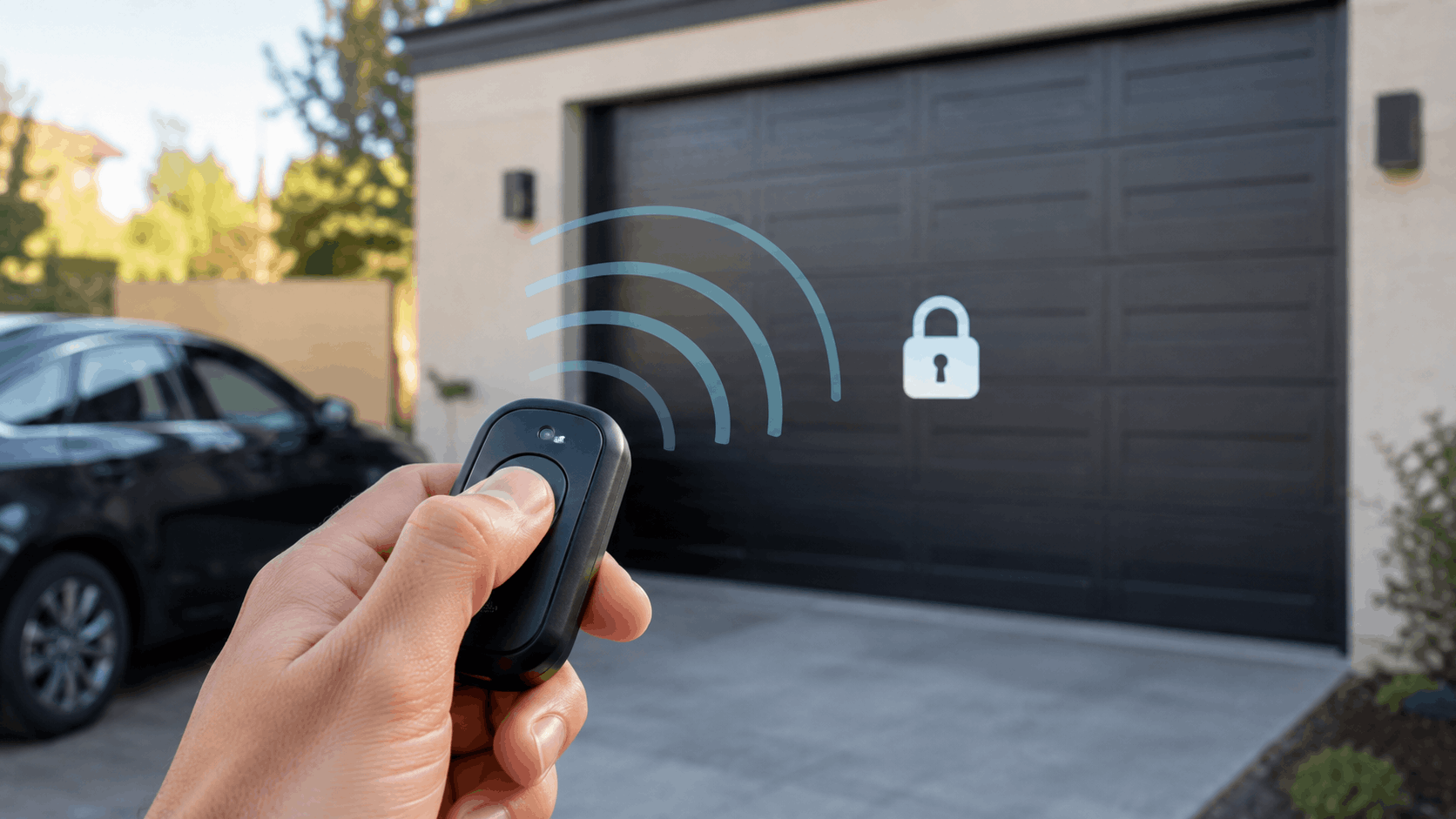
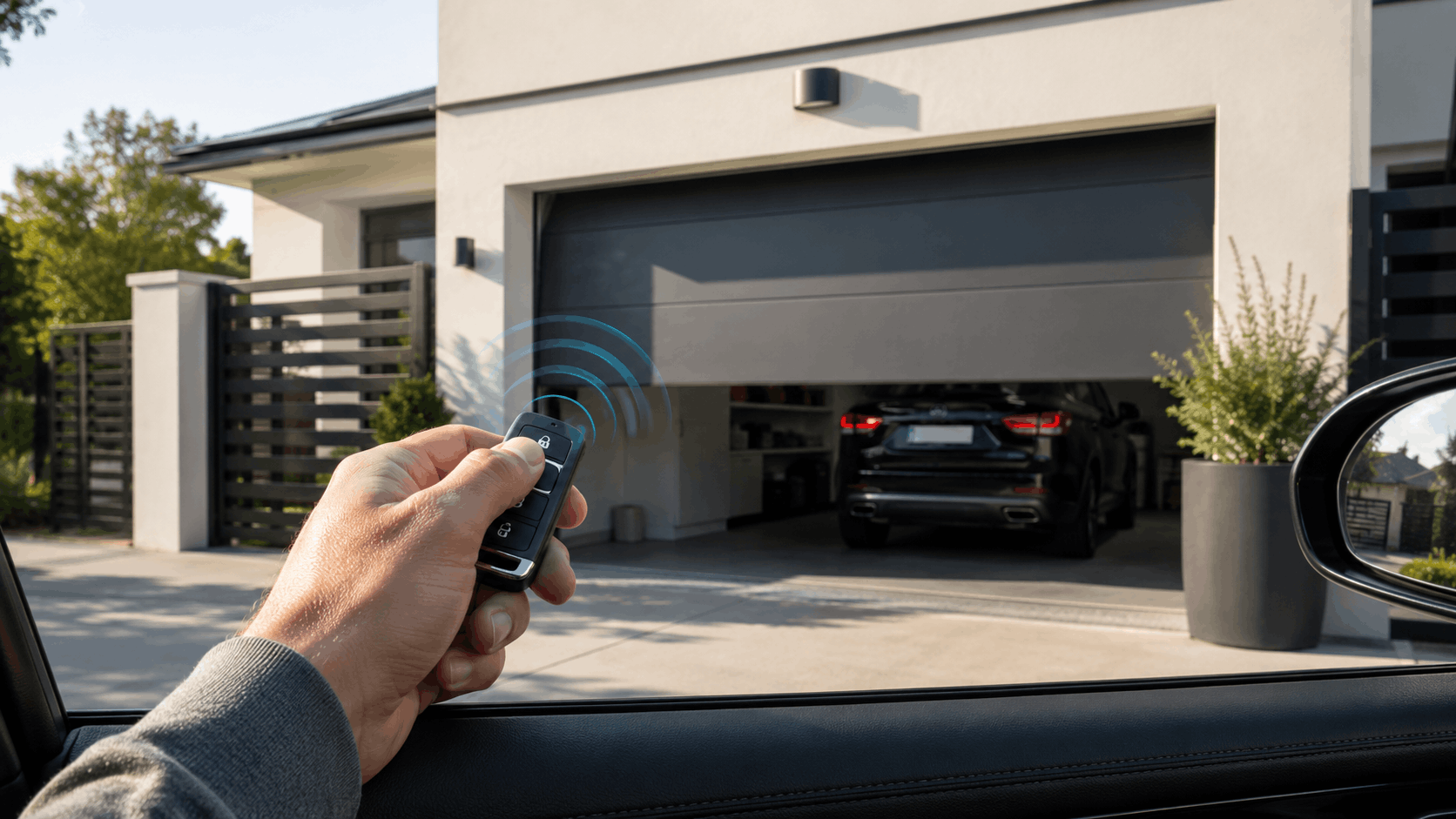
Rolling code is the security feature that keeps a stranger from recording your remote signal and using it later. Every time you press the button, the opener and remote agree on a brand new code. The old one is thrown away for good.
Here is why that matters for garage door security in Irvine homes. A garage is often the least protected door into a house, yet it connects to the kitchen, laundry room, or hallway. If someone can fake your remote signal, they skip the locks entirely.
- The remote sends a fresh code with every press, never the same one twice.
- The opener rejects any code it has already seen.
- The whole exchange happens in a fraction of a second, so you never notice it.
- A recorded remote signal becomes useless the moment you press the button again.
The Simple Idea Behind a Changing Code
Think of a changing code like a bank that hands you a new PIN after every single withdrawal. Even if someone watched you type the last one, it will not work the next time. That is the heart of how rolling code protects a garage.
When you press the remote, it does not just shout "open." It sends a scrambled number that both the remote and the opener already agreed on in advance. The opener checks that number, opens the door, and then both devices quietly move to the next number in their shared list.
Because it is a one-time signal, a thief standing across the street with a recorder captures a code that is already expired. By the time they try to use it, your opener has moved on. The captured signal is a dead end.
This tiny handshake happens every day in thousands of Irvine garages without anyone thinking about it. Homeowners just push the button and drive in. The security works silently in the background, which is exactly how good security should behave.
How It Differs From Old Fixed-Code Openers
Older openers used a fixed code, meaning the exact same signal went out every single time you pressed the button. Many Irvine homes built in the 1980s and 90s still have these units bolted to the ceiling. They were reliable machines, but security was never their strong suit.
A lot of these older openers used a row of tiny dip switches inside the remote. You physically set little levers to a pattern, and that pattern was your code. The trouble was that there were only a few thousand possible combinations, and the code never changed.
That meant two things. First, a neighbor with the same brand could sometimes open your door by accident if their switches matched. Second, and far worse, anyone who captured your signal once could replay it forever.
Rolling code fixed all of that by tossing out the fixed pattern entirely. Instead of one code that lives forever, the system cycles through millions of possible codes and burns each one after use. If your home still runs a dip switch remote, it is worth a serious look at an upgrade.
The Encryption That Locks Out Copycats
The real muscle behind modern openers is encryption. Brands like LiftMaster use a system called Security+ 2.0, which scrambles the remote signal with a math formula that only the paired opener can unlock. It is far more than just a changing number.
With Security+ 2.0, the code is not just rolling, it is encrypted end to end. Even if someone managed to grab the transmission out of the air, they would see a jumble that means nothing without the secret formula shared between your remote and motor unit.
This is what stops the copycat devices sold online. Those gadgets are built to record and replay a signal, which worked great against fixed codes. Against an encrypted rolling code, a replayed signal is rejected instantly.
For a deeper look at how manufacturers approach this, the International Door Association tracks industry security standards. When our team upgrades an opener, we make sure the encryption is active and every remote is paired correctly before we leave.
Get Your Free Quote
Tell us about your garage door and we'll get back to you fast.
Why Fixed-Code Openers Leave Irvine Homes Exposed
Plenty of garages across Irvine still run openers that have no rolling code at all. These older units are dependable enough that homeowners never think to replace them. That loyalty is exactly what makes them a soft target.
A garage break-in often does not involve breaking anything. If the opener uses an old fixed code, a thief can grab the signal from the curb and open the door like they owned the place.
- Fixed-code openers send the same signal every time, making them easy to copy.
- Cheap code grabber devices can record and replay these signals in seconds.
- Many Irvine homes still run openers that are 20 to 30 years old.
- An open garage often gives direct access to the rest of the house.
Code Grabbing and Signal Theft Explained
A code grabber is a small handheld device that listens for garage remote signals. When you press your remote as you pull up, the device records the code out of the air. With a fixed-code opener, that recording is all a thief needs.
Later, they walk up, hit replay, and the door rolls open. Since the fixed code never changes, the replayed signal matches perfectly. This is called a replay attack, and it is the classic weakness of older systems.
These devices are not exotic or expensive. That is what makes the risk real for Irvine neighborhoods where fixed-code openers are still common. A thief does not need to be a hacker, just patient enough to catch one button press.
Rolling code shuts this down completely. Even a perfect recording of your signal is worthless, because the opener will never accept the same code twice. That single difference is the whole reason we push homeowners with old units to consider an opener replacement.
Older Homes Near Turtle Rock and University Park
Some of Irvine's most established neighborhoods have homes dating back to the 1970s and 80s. Areas like Turtle Rock and University Park are full of well-kept properties, but many still have the original garage opener or one from an early replacement decades ago.
When our team gets a call in Turtle Rock, we often find a beige motor unit with a faded label and a remote full of dip switches. The machine still runs, so nobody questioned it. Security was simply never part of the conversation.
The problem is that a 30-year-old opener was built for a different era of theft. Nobody was recording remote signals from the street back then. Today the tools exist, and old fixed-code units are the easiest to beat.
We are not saying every old opener has failed. Many run smoothly for years. But if the garage door is the main entrance the family uses, an old opener with fixed code is a weak spot worth closing.
Why Parked Cars in Woodbridge Make Garages a Target
Woodbridge is known for its lakes, tree-lined streets, and families who park in driveways and along the curb. That is also why a rash of car burglaries there raises the stakes for garage security. A remote left in an unlocked car is an open invitation.
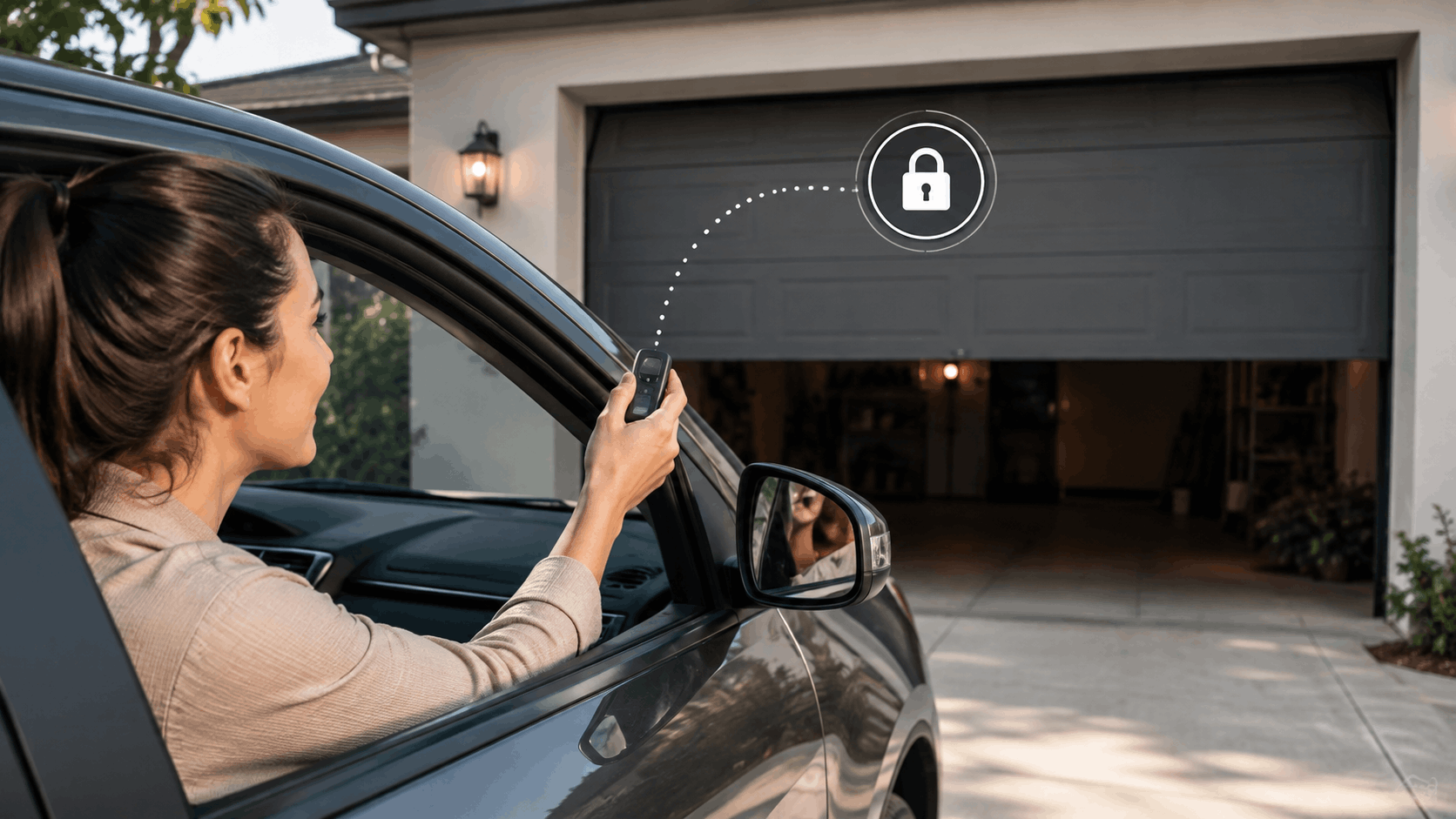
Here is how the two risks combine. A thief pops the car door, finds the garage remote clipped to the visor, and now has a working key to the house. It does not matter how strong the opener is if the remote is sitting in the driveway.
This is why we tell homeowners in Woodbridge to think about the garage and the car together. Rolling code protects against signal theft, but it cannot stop someone who has your actual remote in hand.
The fix is a mix of good hardware and good habits. Rolling code stops the high-tech attack, and simple steps like removing remotes from cars stop the low-tech one. We cover those habits later in this guide.
Need Help in Irvine?
Urgent Garage Doors serves Irvine and all of Orange County.
How Rolling Code Works Step by Step
Under the plastic cover, the rolling code process is a quick back and forth between your remote and the motor unit. Both devices carry a matching list of codes and a counter that keeps them in step. Here is the play by play.
The table below lays out each stage of the exchange so it is easy to follow.
| Step | What Happens | Result |
|---|---|---|
| 1. Button press | Remote generates the next code from its counter | A fresh one-time signal is created |
| 2. Signal sent | Encrypted code broadcasts to the opener | Scrambled data travels through the air |
| 3. Opener checks | Motor unit compares code against its counter | Match confirmed or rejected |
| 4. Door moves | Opener runs the motor if the code is valid | Door opens or closes |
| 5. Both advance | Remote and opener roll to the next code | Old code is retired for good |
The Handshake Between Remote and Opener
The remote handshake is the moment the two devices confirm each other. When you press the button, the remote does not just send a command, it sends proof of identity in the form of the correct next code. The opener will not budge without it.
The motor unit checks that code against what it expects. If the numbers line up, the opener trusts the remote and runs the door. If they do not, nothing happens and the signal is ignored.
This confirmation step is why a random signal or a replayed old code goes nowhere. The opener is not just listening for any garage remote, it is listening for its own paired partner speaking the right code at the right moment.
All of it takes less than a second. From the driver's seat it feels instant, but inside the machine a small security check just passed before the door moved an inch.
The Rolling Counter and Sync Window
Both the remote and the opener keep an internal counter. Each press bumps the counter forward, and the code is generated from that counter value. As long as both sides stay close in count, they stay in sync.
But what if you press the remote a few times while out of range, like fiddling with it in a parking lot? The counter on the remote moves ahead while the opener stays put. To handle this, the opener uses a sync window.
The sync window is a range of upcoming codes the opener will still accept. So if your remote is a few presses ahead, the opener recognizes the code, catches up its own counter, and opens normally. This keeps small mismatches from locking you out.
The window is intentionally limited, though. It accepts the next handful of valid codes, not a code from far in the future or one already used. That balance is what keeps the system both convenient and secure.
What Happens if the Remote Gets Out of Sync
Once in a while a remote drifts too far and falls outside the sync window. This is rare, but it can happen if the button gets pressed many times in a bag or pocket while away from the opener. When it happens, the door simply stops responding.
The fix is quick and does not mean the remote is broken. You reprogram the remote to the opener, which resets both counters to a matching starting point. Most units use a learn button on the motor head for this.
Our team handles this reprogramming during any service visit, and we can also walk homeowners through it over the phone. If a remote is out of sync, it usually takes only a minute or two to bring it back.
If reprogramming does not hold, that can point to a dying remote battery or an aging opener. In that case we look closer, because a repeat sync problem is often a sign of a bigger issue with the unit itself.
Signs Your Irvine Opener Needs an Upgrade
Not sure whether your opener uses rolling code or an outdated system? A few quick checks can tell you. If your unit is old enough, an opener upgrade is one of the better security investments you can make.
Here is how to run a garage security check on your own equipment before you call anyone.
Check the Manufacture Date and Brand
Start with the label on the motor unit. Every opener carries a sticker with the brand, model number, and often a manufacture date. Grab a step stool and a flashlight and read what it says.
Rolling code became standard on most major brands starting around 1996. If your opener was built before that, there is a strong chance it uses a fixed code. Pre-1996 models are the ones we flag first.
The brand matters too. LiftMaster, Chamberlain, and Genie units from the late 1990s onward generally include rolling code, while off-brand or very old units may not. If you cannot read the label, snap a photo and our team can help identify it.
Knowing the manufacture date also tells you where the opener sits in its life span. Most last 15 to 20 years, so an old label often means both a security gap and a machine nearing the end anyway.
The Dip Switch Test on Your Remote
Here is the fastest test of all. Slide open the back of your garage remote where the battery lives. If you see a small row of tiny switches you can flip with a pen tip, you have a fixed-code system.
Those dip switches are the telltale sign of older openers. They set a fixed pattern that never changes, which is exactly the weakness thieves exploit with a code grabber. A rolling code remote has no such switches.
If your remote is smooth inside with just a circuit board and a battery, that is a good sign you already have rolling code. Newer remotes handle everything electronically with no manual switches to set.
This test costs nothing and takes 30 seconds. If you find dip switches, do not panic, but do put an upgrade on your short list. It is the clearest evidence that your garage security is running on outdated technology.
Slow Response or Frequent Reprogramming
Sometimes the opener does not announce its age with a date, but with behavior. A slow response when you press the button, doors that hesitate, or remotes that keep losing their programming all point to an aging opener.
If you find yourself reprogramming remotes over and over, the internal electronics may be wearing out. A healthy rolling code unit holds its sync for years. Constant resets mean something inside is failing.
Other warning signs include grinding sounds, flickering lights on the motor head, or a door that reverses for no reason. These often show up together as a unit gets old. Our opener repair and troubleshooting service can pin down the cause.
When we see multiple symptoms stacking up on a 15-plus year old opener, we are honest with homeowners. Sometimes a repair makes sense, and sometimes replacing the unit gives better security and reliability for the money.
Upgrading to a Rolling Code Opener in Irvine
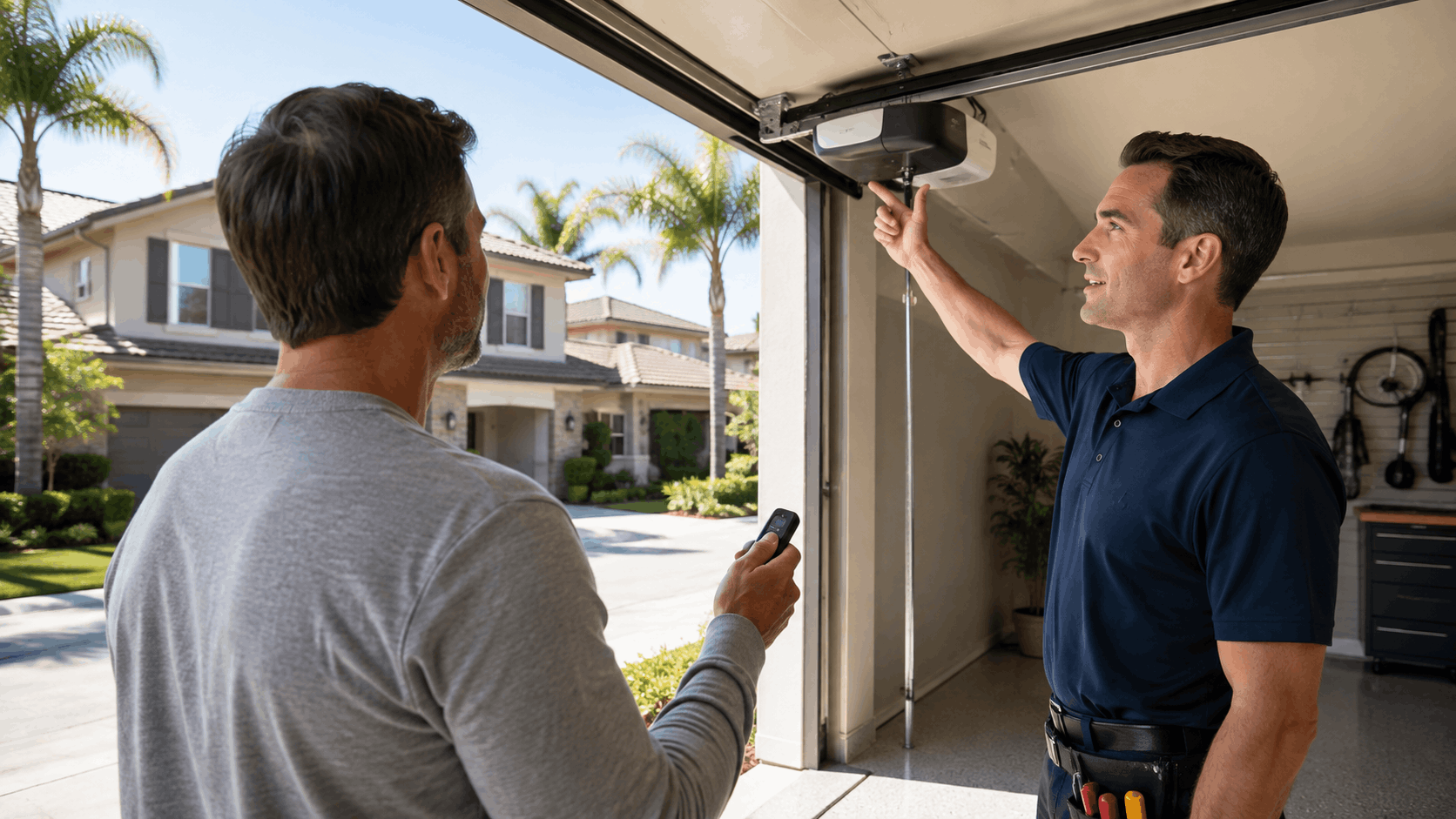
Replacing an old opener is a straightforward job for our team, and it usually makes a garage far more secure the same day. A modern rolling code unit brings encryption, quieter operation, and often smart features the old machine never had.
Here is what an opener replacement typically involves and what your options look like.
- We remove the old motor unit and mount the new one on the existing rails when possible.
- We install and pair all remotes, keypads, and any in-car buttons.
- We test the safety sensors and door balance before finishing.
- We walk you through the new features so nothing feels unfamiliar.
Popular Rolling Code Brands We Install
Our team installs the brands homeowners already trust. LiftMaster is a favorite for its Security+ 2.0 encryption and strong dealer support. Its units are quiet, reliable, and packed with security features.
Chamberlain shares much of the same technology and tends to be a good value for homeowners who want solid rolling code protection without extra frills. Both brands hold up well in Irvine's mild climate and see years of daily use.
Genie is another dependable choice, with its own Intellicode rolling code system that changes the code with every use. Whichever brand fits your home and budget, all three deliver true rolling code security that leaves fixed-code openers in the dust.
During a garage door install or opener swap, we help you pick based on your door weight, how quiet you want it, and whether you want smart controls. There is no single right answer, only the right fit for your home.
Wi-Fi and Smartphone Control Options
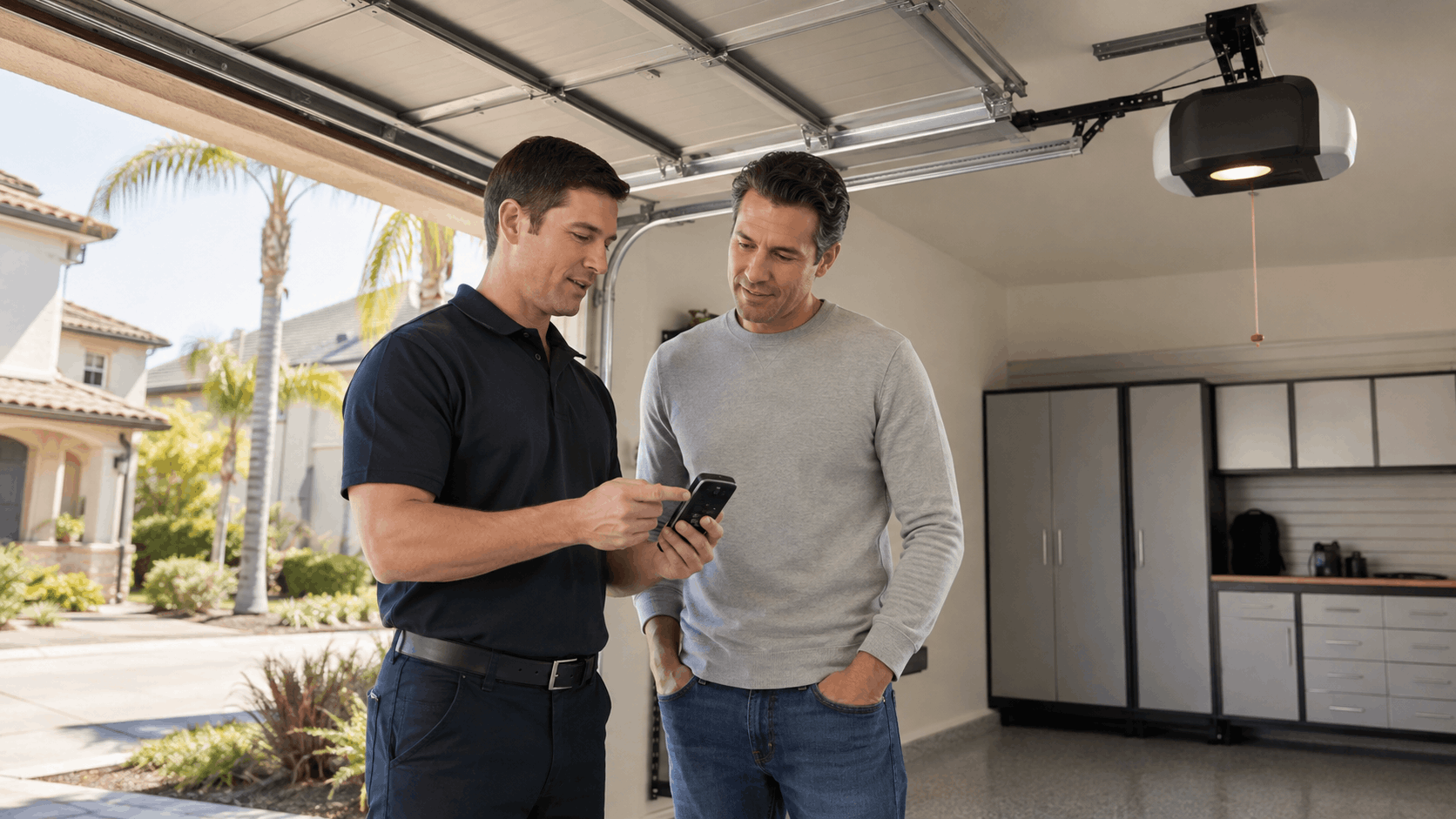
Newer rolling code openers add app control on top of the security. LiftMaster and Chamberlain use the myQ app, which lets you open, close, and check your garage from your phone anywhere you have a signal.
For Irvine homeowners who commute up the 405 or travel often, this is a genuine upgrade. You get an alert if the door is left open, and you can shut it from your desk or the airport. No more wondering whether you closed it.
A smart opener also lets you grant access remotely. If a family member or a delivery is coming, you can open the door for them once and watch it close again, all from the app. Our smart Wi-Fi opener and myQ setup service gets this configured and tested.
The security piece stays intact through all of it. App control rides on top of the same rolling code and encryption, so adding convenience does not weaken the protection underneath.
What to Expect From Our Installation Visit
A standard opener installation usually takes about two to three hours from start to finish. That includes removing the old unit, mounting the new one, wiring the safety sensors, and programming every remote and keypad.
We start by checking your door balance and springs, since a healthy door helps the new opener last. If we spot a spring or cable issue during the visit, we point it out so you can decide how to handle it.
Once the motor is mounted, we handle all the remote programming ourselves. Every remote, the wall button, any wireless keypad, and your car's built-in buttons get synced before we consider the job done.
We finish by running the door through several full cycles and testing the auto-reverse safety feature. Then we hand it over, show you the app if you chose a smart model, and make sure you are comfortable using everything.
Need Help in Irvine?
Urgent Garage Doors serves Irvine and all of Orange County.
Extra Security Steps Beyond Rolling Code
Rolling code handles the signal side of security, but a locked-down garage uses a few more layers. These garage security tips work alongside your opener to close the remaining gaps.
- Use vacation mode to disable remotes while you are away.
- Add a manual lock or slide bolt for long absences.
- Install a keypad with temporary codes for guests and deliveries.
- Keep remotes out of parked cars, especially after recent car burglaries.
Vacation Lock and Lockout Modes
Most modern openers include a vacation mode, sometimes called a lockout. Flip the switch on the wall control panel and every remote is disabled until you turn it back off. Only the wall button inside works.
This is perfect for families heading out of town. Even if a remote goes missing or someone captured a signal, the opener simply ignores all remote presses while lockout is on. The door stays put.
We show homeowners exactly where this switch lives during our visits, because many people own the feature and never knew it was there. It takes one press to activate and adds a real layer of protection at no extra cost.
For extended trips, we sometimes recommend pairing lockout with a physical slide lock or a maintenance upgrade that adds a manual lock. Belt and suspenders, but worth it when the house sits empty for weeks.
Keypads With Rotating Access Codes
A wireless keypad mounted outside the garage lets you get in without a remote at all. Better still, many keypads support temporary codes you can hand out and later delete.
Say a house cleaner comes weekly or a package needs to go inside while you are at work. You set a temporary code, share it, and remove it whenever you like. The main code stays private the whole time.
These keypads use the same rolling code security as your remotes, so a captured keypad signal is just as useless to a thief. Our keypad and remote programming service sets these up and shows you how to manage the codes.
For families in Irvine's busier neighborhoods, a keypad also means the kids can get in after school without carrying a remote. It is convenient and secure at the same time, which is a rare combination.
Never Leave a Remote Clipped in the Car
Here is the habit that undoes the most break-ins. A remote clipped to the visor is a gift to anyone who gets into your car. All the rolling code in the world cannot help once a thief holds your actual remote.
Given the car burglary patterns we hear about in Woodbridge and other Irvine areas, we tell homeowners to bring the remote inside or switch to a small key fob you carry on your keyring. That way the opener control travels with you, not with the car.
Another option is your car's built-in HomeLink buttons, which store the rolling code but require the vehicle to be running or unlocked to use. Even then, always lock the car in the driveway.
Small habits like these cost nothing and stop the most common garage entry cold. Pair them with rolling code and a keypad, and your garage becomes a much harder target than the one next door.
Rolling Code and Irvine HOA and Building Rules
Irvine is full of planned communities, and that means HOA rules and city codes can shape your opener choices. The motor unit itself is usually hidden, but a few standards still apply.
Here is what homeowners should know about community rules, safety codes, and permits before an upgrade.
Community Standards in Planned Neighborhoods
Neighborhoods like Great Park and Portola Springs have active homeowner associations with rules on how homes look from the street. Those rules almost always focus on the garage door itself, its color, panel style, and finish, rather than the opener inside.
The opener is mounted on the ceiling out of public view, so HOAs rarely have anything to say about which rolling code model you pick. Where they do weigh in is if you replace the whole door, since that changes the home's appearance.
If you live in Portola Springs or another newer community, it is smart to skim your HOA guidelines before a full door replacement. For a simple opener swap, you are almost always clear to proceed.
Our team has worked across many of Irvine's planned communities, so we can flag when something might need HOA sign-off. When in doubt, a quick email to your association saves hassle later.
Safety Sensor and UL Code Requirements
Since 1993, federal rules require garage door openers to have safety features that reverse the door if something is in the way. This is covered by the UL 325 standard, and every new opener we install meets it.
That means photo-eye safety sensors near the floor on both sides of the door. If the beam is broken while the door is closing, the door stops and reverses. It protects kids, pets, and cars from a closing door.
Rolling code models comply with these standards out of the box. During installation we align and test the sensors, since misaligned sensors are one of the most common reasons a door refuses to close. Our safety sensor alignment repair handles that when needed.
You can read more about these federal safety requirements through the U.S. Consumer Product Safety Commission. The takeaway is that a modern opener is both more secure and safer than the decades-old unit it replaces.
Permits and When They Apply
For a straight opener replacement, the City of Irvine building department usually does not require a permit. You are swapping one motor for another on existing hardware, which counts as routine maintenance.
Permits tend to come into play with larger work, like adding a new garage structure, changing the door opening size, or electrical work that adds new circuits. Those projects touch on building and electrical codes that the city reviews.
If your upgrade involves running a new outlet for the opener or altering the framing, that is when it is worth a call to the Irvine building department. Better to confirm than to redo work later.
Our team can advise on whether a given job is likely to need a permit based on years of local work. For most homeowners upgrading to rolling code, the answer is a simple, permit-free install.
Why Irvine Homeowners Call Our Team
There are plenty of options for garage work, but local service makes a real difference on rolling code upgrades and repairs. Our team knows Irvine's neighborhoods, its older homes, and the specific openers that keep showing up here.
- Fast response from Northwood to Quail Hill and everywhere between.
- Honest advice on whether to repair or replace.
- Every remote, keypad, and car button programmed before we go.
- Familiarity with local HOA and building expectations.
Fast Response Across Every Irvine Neighborhood
When a garage door fails, you do not want to wait days. Our team covers all of Irvine, from Northwood in the north to Quail Hill near the 405, and reaches most homes quickly thanks to easy access off the 5 and 405.
We have driven these streets for years, so we know the quickest routes to Woodbridge, Turtle Rock, University Park, and the newer communities out toward Great Park. That local knowledge shaves time off every call.
For urgent problems like a door stuck open overnight, our emergency garage door repair gets someone out fast so your home is not left exposed. A security upgrade does no good if the door will not close at all.
Being local also means we are around for follow-up. If a remote needs a resync a month later, we are a short drive away, not routing through some distant call center.
Honest Advice on Repair Versus Replace
Not every opener problem needs a new unit. Sometimes a remote just needs reprogramming, a sensor needs alignment, or a battery needs replacing. We tell homeowners when the cheap fix will do.
Other times, an aging fixed-code opener with worn electronics is worth replacing for both security and reliability. We lay out the honest quote either way, with the tradeoffs spelled out so you can decide.
Our goal is a customer who calls us again and refers a neighbor, not a quick upsell. That means recommending a repair when a repair makes sense, even if a replacement would earn more that day.
When we do recommend a swap, we explain exactly why, whether it is the fixed code security gap, repeated failures, or a unit simply at the end of its life. You get the full picture before spending a dollar.
Programming Every Remote Before We Leave
A common complaint we hear about other companies is a new opener installed but only one remote programmed. We do not leave a job like that. Before we go, every remote is synced.
That includes the handheld remotes, the wall console, any wireless keypad, and the HomeLink buttons built into your vehicles. If you have three cars, all three get their buttons paired to the new opener.
We also do a final round of keypad programming and confirm the temporary code feature works if your keypad supports it. Then we run the door through full cycles to be sure everything responds cleanly.
By the time we pull out of the driveway, you can open your garage from every device you own. No loose ends, no callback needed for a remote we forgot. That is the finish our team stands behind.
Need Help in Irvine?
Urgent Garage Doors serves Irvine and all of Orange County.
Final Thoughts
Rolling code technology has quietly become the strongest defense a garage has against signal theft. By sending a fresh, encrypted code with every press, it makes the old code grabber trick worthless and closes a door thieves used to walk right through.
If your Irvine home still runs a fixed-code opener from the 1990s, an upgrade is one of the simpler security wins available. Pair it with vacation lockout, a keypad, and the habit of keeping remotes out of your car, and your garage becomes a hard target.
Our team is ready to check your current opener, tell you honestly whether it needs upgrading, and handle the install from start to finish. Call Urgent Garage Doors or reach out to our team to set up a consultation and secure your garage today.
Frequently Asked Questions
What is rolling code technology?
Rolling code is a security feature where your garage remote and opener agree on a brand new code every time you press the button. The old code is thrown out and never accepted again. This means a thief cannot record your signal and replay it later, since the recorded code has already expired. It is the standard on modern openers and a major step up from older fixed-code systems.
How do I know if my Irvine garage opener already has rolling code?
Check three things. First, read the label on the motor unit for the manufacture date, since most brands added rolling code around 1996. Second, note the brand, as LiftMaster, Chamberlain, and Genie units from the late 1990s onward usually include it. Third, open your remote and look for tiny dip switches. If you see switches, you have a fixed-code system that should be upgraded.
Can a thief still copy my rolling code remote?
A thief can record the signal, but it will not work. Because the code changes with every press and is encrypted, a replayed signal is rejected by the opener instantly. The captured code has already expired by the time they try to use it. This is exactly why rolling code and encryption like Security+ 2.0 stop the code grabber devices that easily defeat older fixed-code openers.
How much does a rolling code opener upgrade cost in Irvine?
Most homeowners spend somewhere between 350 and 650 dollars for a quality rolling code opener with professional installation, depending on the brand and features. Smart Wi-Fi models with app control sit at the higher end. That price usually covers the unit, mounting, safety sensor setup, and programming all your remotes. Our team gives an honest quote up front so there are no surprises.
How long does it take to install a new opener?
A standard opener install takes about two to three hours. That includes removing the old unit, mounting the new motor, wiring and aligning the safety sensors, and programming every remote and keypad. We also run the door through several full cycles and test the auto-reverse feature before finishing. If your springs or cables need attention, that can add some time, and we will let you know first.
Why is my rolling code remote suddenly not working?
The two most common causes are a dead battery or a remote that has fallen out of sync. Try a fresh battery first, since that solves many cases. If the remote still will not work, it may have drifted outside the sync window from being pressed while out of range. Reprogramming the remote to the opener resets both counters and usually fixes it in a minute or two.
Do smart openers with apps use rolling code?
Yes. Nearly every modern Wi-Fi opener combines rolling code and encryption with app control. The app control simply rides on top of the same secure signal system, so adding smartphone features does not weaken your protection. Brands like LiftMaster and Chamberlain use the myQ app alongside their Security+ 2.0 encryption. You get remote access and alerts while keeping the strong rolling code security underneath.
Will my Irvine HOA allow a new opener?
Almost always, yes. The opener is mounted on the ceiling inside the garage, hidden from view, so HOAs in communities like Great Park and Portola Springs rarely have any rules about it. HOA guidelines usually focus on the garage door's appearance from the street. If you are replacing the entire door too, check your association rules on color and style first.
Can I keep my old remotes after upgrading?
Sometimes, but not always. Old remotes only work if they share the same rolling code technology and frequency as your new opener, which is uncommon when upgrading from a much older unit. In most cases you will pair new remotes designed for the new opener. Our team includes and programs the remotes during installation, so you leave the day with working controls for every device.
Is rolling code worth it for an older Irvine home?
For homes with decades-old fixed-code openers, it is one of the best security upgrades available. Those older units send the same signal every time, making them easy targets for code grabbers, especially in neighborhoods that have seen car burglaries. Upgrading closes that gap, often adds smart features and quieter operation, and replaces a unit that is likely near the end of its life anyway.
Frequently Asked Questions
- What is rolling code technology?
- Rolling code is a security feature where your garage remote and opener agree on a brand new code every time you press the button. The old code is thrown out and never accepted again. This means a thief cannot record your signal and replay it later, since the recorded code has already expired. It is the standard on modern openers and a major step up from older fixed-code systems.
- How do I know if my Irvine garage opener already has rolling code?
- Check three things. First, read the label on the motor unit for the manufacture date, since most brands added rolling code around 1996. Second, note the brand, as LiftMaster, Chamberlain, and Genie units from the late 1990s onward usually include it. Third, open your remote and look for tiny dip switches. If you see switches, you have a fixed-code system that should be upgraded.
- Can a thief still copy my rolling code remote?
- A thief can record the signal, but it will not work. Because the code changes with every press and is encrypted, a replayed signal is rejected by the opener instantly. The captured code has already expired by the time they try to use it. This is exactly why rolling code and encryption like Security+ 2.0 stop the code grabber devices that easily defeat older fixed-code openers.
- How much does a rolling code opener upgrade cost in Irvine?
- Most homeowners spend somewhere between 350 and 650 dollars for a quality rolling code opener with professional installation, depending on the brand and features. Smart Wi-Fi models with app control sit at the higher end. That price usually covers the unit, mounting, safety sensor setup, and programming all your remotes. Our team gives an honest quote up front so there are no surprises.
- How long does it take to install a new opener?
- A standard opener install takes about two to three hours. That includes removing the old unit, mounting the new motor, wiring and aligning the safety sensors, and programming every remote and keypad. We also run the door through several full cycles and test the auto-reverse feature before finishing. If your springs or cables need attention, that can add some time, and we will let you know first.
- Why is my rolling code remote suddenly not working?
- The two most common causes are a dead battery or a remote that has fallen out of sync. Try a fresh battery first, since that solves many cases. If the remote still will not work, it may have drifted outside the sync window from being pressed while out of range. Reprogramming the remote to the opener resets both counters and usually fixes it in a minute or two.
- Do smart openers with apps use rolling code?
- Yes. Nearly every modern Wi-Fi opener combines rolling code and encryption with app control. The app control simply rides on top of the same secure signal system, so adding smartphone features does not weaken your protection. Brands like LiftMaster and Chamberlain use the myQ app alongside their Security+ 2.0 encryption. You get remote access and alerts while keeping the strong rolling code security underneath.
- Will my Irvine HOA allow a new opener?
- Almost always, yes. The opener is mounted on the ceiling inside the garage, hidden from view, so HOAs in communities like Great Park and Portola Springs rarely have any rules about it. HOA guidelines usually focus on the garage door's appearance from the street. If you are replacing the entire door too, check your association rules on color and style first.
- Can I keep my old remotes after upgrading?
- Sometimes, but not always. Old remotes only work if they share the same rolling code technology and frequency as your new opener, which is uncommon when upgrading from a much older unit. In most cases you will pair new remotes designed for the new opener. Our team includes and programs the remotes during installation, so you leave the day with working controls for every device.
- Is rolling code worth it for an older Irvine home?
- For homes with decades-old fixed-code openers, it is one of the best security upgrades available. Those older units send the same signal every time, making them easy targets for code grabbers, especially in neighborhoods that have seen car burglaries. Upgrading closes that gap, often adds smart features and quieter operation, and replaces a unit that is likely near the end of its life anyway.
U
Licensed garage door repair professionals serving Irvine and Orange County.
Licensed in California · License #1055150
Why trust Urgent Garage Doors?
Founded in 2017, Urgent Garage Doors is a licensed and insured garage door services serving Irvine and Orange County. All content is reviewed by our licensed technicians.

Need Help in Irvine?
Urgent Garage Doors serves Irvine and all of Orange County.
Related Articles
Cost Guides
Cheapest Garage Door Repair OC vs Best Value: Why the Lowest Quote Costs More
Why the cheapest garage door repair in Orange County often costs more. Learn how low quotes hide fees, use weak parts, and how to find real best value in Irvine.
Tips & Advice
Emergency Garage Door Repair in Irvine Villages: Gate Codes, Association Quiet Hours, and Our Protocol
How Urgent Garage Doors handles emergency garage door repair in Irvine's gated villages, from gate codes and guard lists to HOA quiet hours and our step-by-step repair protocol.
Safety & Prevention
Smart Opener Security: How Hackers Replay 315MHz vs Rolling Code Signals
Learn how hackers replay 315MHz fixed code garage signals, why rolling code stops them, and how Irvine homeowners can protect their garage today.