Weatherseal Retrofit for OC Garages: Stopping Daylight, Dust, Rodents, and Water Intrusion
Key Takeaways
- Daylight glowing under a closed garage door is the clearest sign your seals have worn out and are letting in dust, water, and pests.
- A weatherseal retrofit adds or replaces bottom, side, top, threshold, and panel seals without swapping the whole door, saving OC homeowners money.
- Orange County sun, Santa Ana winds, winter runoff, and sloped driveways in areas like Turtle Rock and Quail Hill wear seals out sooner than average.
- Threshold seals mount to the floor and are the best fix for cracked, uneven, or sloped slabs and heavy storm runoff.
- Basic bottom seals run about $120 to $250, while full double-door retrofits with a threshold land between $400 and $750.
- Seals last 3 to 10 years in OC depending on sun exposure, and yearly cleaning plus silicone lubricant extends their life.
- Most OC homes need only new seals, not a full door replacement, unless the panels are rusted, bent, or structurally damaged.
- Urgent Garage Doors serves Woodbridge, Northwood, Turtle Rock, Quail Hill, and nearby OC communities with fast, honest seal work.
In This Article
A homeowner in Woodbridge called us last spring with a problem we hear all the time. She noticed a thin line of daylight glowing under her garage door every afternoon, and her workbench tools had picked up a fine layer of gritty dust. She swept the floor twice a week, but the grit kept coming back. That daylight line was the clue that told us her seals had worn out.
When light sneaks under a garage door, so does everything else. Dust rides in on the breeze, water follows a sloped driveway right to the threshold, and rodents treat those gaps like an open front door. For older Orange County homes, this is one of the more common problems we fix, and the solution rarely requires a brand new door.
What a Weatherseal Retrofit Actually Does?
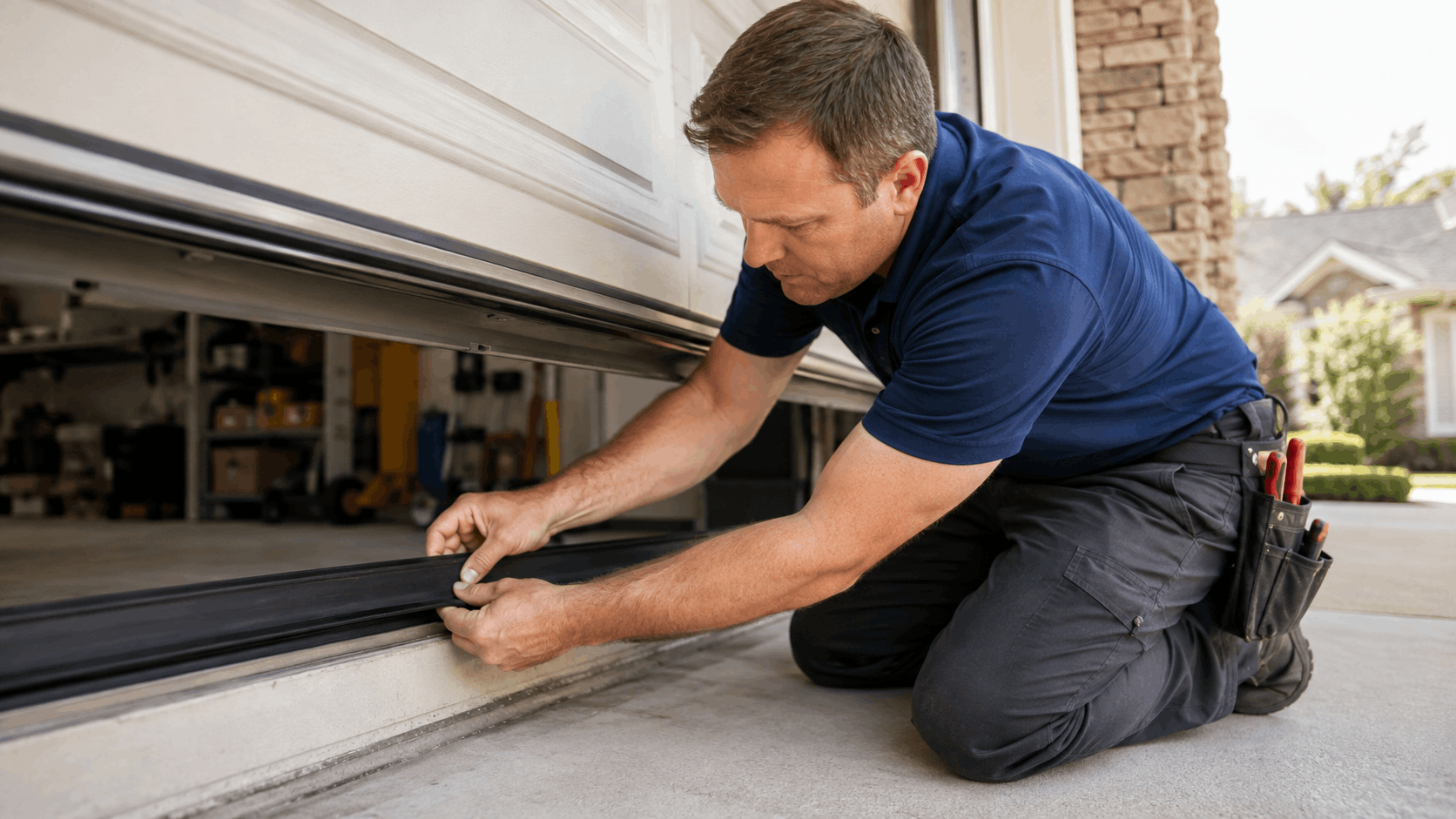
A weatherseal retrofit means adding or replacing the rubber and vinyl barriers around your garage door without swapping the whole door. The goal is simple: close every gap where light, air, water, and pests get through. On most Irvine homes, the old seals have dried out, cracked, or fallen off entirely.
A proper weatherseal retrofit touches four spots on a typical sectional door. Here is where the work happens:
- Bottom of the door - where the door meets the concrete slab
- Both side jambs - the vertical frame the door closes against
- The top header - across the top edge of the door
- Between panels - the horizontal joints on sectional doors
Older OC garages often need this because the original garage door seal was builder-grade and never rated for two decades of sun and heat. Fresh weatherstripping restores the tight barrier the door had when it was new. It is one of the cheapest upgrades that makes a garage noticeably cleaner and drier.
The Four Enemies: Light, Dust, Pests, and Water
Homeowners almost always describe the same four problems, and they usually start with daylight. When you can see a bright line under a closed door, you have daylight gaps that let outside conditions inside. That glow means the bottom seal has flattened, torn, or gone missing entirely.
Dust is the second complaint, and it is the sneakiest. Fine dust intrusion comes through side gaps and panel joints as air moves in and out of the garage. Over weeks, that grit coats tools, cars, and anything stored on open shelves, which is exactly what our Woodbridge customer kept sweeping up.
The third enemy is pests, and gaps as small as a half inch invite them in. Rodent entry happens most often at the bottom corners where the seal has pulled away from the floor. Water rounds out the list, sliding under worn bottom seals during winter storms and pooling on the garage floor.
New Seals vs. Full Door Replacement
The best news for most homeowners is that a seal upgrade costs a fraction of a new door. A retrofit reuses your existing door and hardware while replacing only the worn rubber and vinyl. If your door panels are straight and the tracks work, you rarely need more than fresh seals.
The retrofit vs replacement decision comes down to the door itself. A door with rusted panels, bent sections, or structural damage may be worth replacing, and we handle that too through our garage door installation service. But a solid door with bad seals just needs a seal upgrade.
We tell Irvine homeowners the honest answer during the inspection. If a $200 to $400 seal job solves the problem, we are not going to push a full replacement. Our dedicated weatherseal and insulation retrofit is built exactly for this situation.
Signs an OC Garage Needs a Seal Upgrade
The clearest sign is light under garage door panels when everything is closed. Stand inside your dark garage during the day and look at the bottom edge and the sides. Any glowing line means outside air, dust, and water have a path in.
Gritty floors are the next clue, especially if you clean regularly and the dust keeps returning. A layer of fine sand near the door edges usually points to worn seals along the bottom or jambs. You might also notice more road noise or a garage that heats up more than it used to.
Look in the corners for droppings, chewed cardboard, or nesting material, which signal rodents are already getting through. Water stains fanning out from the door or a musty smell after rain are also red flags. Any two of these together mean it is time for a seal upgrade.
Get Your Free Quote
Tell us about your garage door and we'll get back to you within 30 to 60 minutes.
Why Orange County Garages Are Especially Vulnerable
Our seals face a rough combination here that inland and colder regions do not deal with. The Orange County climate pairs intense year-round sun with dry heat, then throws heavy winter rain and seasonal winds into the mix. That cycle is hard on rubber and vinyl.
On top of the weather, many Irvine tracts were built in the 1970s through the 1990s, so their original seals are long past their useful life. Add sloped driveways, green belts, and coastal conditions near the western edge of the county, and you get garage door gaps that widen every year. Here is how each local factor plays out.
Sun, Heat, and Cracked Rubber in Older Neighborhoods
Sunlight is the number one killer of garage seals in this area. Direct UV damage breaks down the flexible compounds in rubber, turning a soft, springy seal into a hard, brittle strip. Once that happens, the seal cannot press tightly against the floor anymore.
We see this constantly in older neighborhoods near Northwood and along El Camino Real, where many garages face south or west. By the time a seal is fifteen years old in Northwood, it often shows deep cracks and crumbles when you touch it. That is classic dry rot seals failure.
South-facing doors take the worst of it because they bake in afternoon sun for hours. If your garage door heats up like an oven by 3 p.m., your seals are aging sooner than average. Homeowners in these tracts usually get shorter seal lifespans and need earlier replacements.
Santa Ana Winds and Blowing Dust
Every fall and winter, the Santa Ana winds push dry air and dust across the county. Those winds drive fine particles through even small gaps, which is why inland Irvine homes report so much grit inside their garages. The pressure difference literally forces dust past worn seals.
Homeowners in areas like Portola Springs and other newer eastern tracts tell us the same thing after a windy week. Their cars and stored boxes get coated even with the door fully closed. That is dust intrusion working through side and bottom gaps.
Blowing debris like leaves and small twigs also collects at the base of the door during wind events. When that debris sits under a worn seal, it holds the seal open even wider. Tight weatherstripping is the only thing that keeps the fine stuff outside where it belongs.
Rainy Season Runoff and Sloped Driveways
Winter storms in OC are short but intense, and they expose every weak seal fast. Water intrusion is the complaint we get most after the first big rain of the season. A single storm can push an inch of water across a garage floor if the bottom seal has failed.
Many homes near Turtle Rock and Quail Hill sit on hillsides with a sloped driveway that runs straight toward the garage. Gravity pulls that runoff right to the door, so the seal is the last line of defense. Homeowners in Turtle Rock often need a threshold seal because of this exact grade problem.
During the rainy season, even a small gap becomes a channel for water. Once water gets in, it can rust the bottom track, ruin stored items, and leave stains on the slab. A good bottom seal plus a threshold barrier stops the flow before it starts.
Rodents and Pests Looking for Shelter
When it gets cold or wet, rats and mice hunt for a warm, dry place, and garages are prime targets. Rodent entry happens through gaps most people never notice, since a mouse can fit through a half inch opening. The corners of the bottom seal are their favorite way in.
Homes backing up to green belts, parks, and older tracts see the most activity. Irvine has a lot of landscaped edges, so pest prevention matters more here than in many places. We regularly find gnaw marks on old rubber seals where rodents chewed a bigger entrance.
Tight seals are a real deterrent because they remove the easy access points. Closing those garage gaps forces pests to look elsewhere for shelter. It will not solve a full-blown infestation on its own, but it takes away the open door.
Need Help in Irvine?
Urgent Garage Doors serves Irvine and all of Orange County.
Types of Weatherseals Used in a Retrofit
Not all seals are the same, and each one does a specific job on the door. Knowing the vocabulary helps you understand what your quote covers. A full retrofit usually combines a bottom seal, a threshold seal when needed, side weatherstripping, and sometimes a brush seal.
The right mix depends on your door and floor condition. Here is a breakdown of the main types and where each one goes.
Bottom Seals and Astragal Strips
The bottom seal is the flexible strip along the very bottom edge of the door. It compresses against the concrete when the door closes, blocking light, water, and pests. This is the seal that wears out first because it takes the most abuse.
The astragal is another name for that bottom rubber, and it comes in several profiles. A T-style seal slides into a metal retainer with two T-shaped channels and works great on most modern aluminum retainers. Older doors sometimes use a bead-style or P-bulb seal instead.
Choosing the right profile matters because the wrong one leaves gaps or falls out. We carry multiple profiles so we can match your exact retainer on the first visit. A quality bottom seal is the single biggest upgrade for stopping daylight and water.
Threshold Seals for Uneven Floors
A threshold seal mounts to the garage floor rather than the door. It creates a raised rubber ridge that the door closes against, forming a dam that blocks water and debris. This is the fix for slabs that are cracked, worn, or sloped.
The garage floor seal approach works especially well when the concrete is no longer flat. Many older Irvine garages have settled slabs with low spots that a bottom seal alone cannot cover. The threshold fills that gap by rising above the uneven surface.
For homes on sloped driveways, a threshold acts as a real water barrier during storms. It stops runoff from sliding under the door even when the grade sends water straight at the garage. We often pair a threshold with a fresh bottom seal for double protection.
Side and Top Weatherstripping
The sides and top of the door need their own seals, called jamb seal strips. These are usually vinyl-flap or foam-backed weatherstripping nailed or screwed to the frame. They press against the door face to close the vertical and top gaps.
Side seals are what stop the daylight you see glowing along the edges of a closed door. They also block the windblown dust that Santa Ana conditions push through. Without them, air moves freely around the door even if the bottom is sealed tight.
A brush seal is an alternative made of dense bristles, common on commercial and some residential doors. Brush seals handle side gaps well and flex around minor door warps. We pick vinyl or brush depending on your door style and how much movement the gap has.
Panel Gaskets and Section Joints
Sectional doors have horizontal joints between each panel, and those joints can leak too. A panel gasket is a rubber seal that fits along these section joint lines to close the gap. Newer doors have these built in, but they degrade over time.
On older sectional doors, worn panel gaskets create thin light lines across the middle of the door. They also allow an air leak that lets heat and dust pass through the horizontal seams. You might not notice them until the bottom and sides are already sealed.
Replacing or adding panel seals finishes the job on a full retrofit. It matters most on insulated doors where you want to hold temperature. For a complete fix, we check every joint, not just the obvious bottom edge.
How Our Team Diagnoses Seal Problems
A good repair starts with a careful inspection, not a guess. On every Irvine service call, our team runs the same checks so nothing gets missed. A proper garage door inspection tells us exactly which seals need work and why they failed.
Our seal diagnosis covers the door, the floor, and any damage from water or pests. Here is what we do during an Irvine service visit:
- Run a daylight test with the door closed
- Measure gap sizes at the bottom and both sides
- Check the slab for flatness and cracks
- Confirm the door sits level in the opening
- Look for rodent damage, water stains, and rust
This full picture lets us recommend the right seals instead of a one-size-fits-all fix.
The Daylight Test and Gap Measurement
The daylight test is the fastest way to find leaks. We close the door and step inside a darkened garage to spot every glowing line. Bright spots at the corners or across the bottom show us exactly where air and water get through.
Next comes gap measurement using feeler gauges and a tape measure. We measure the gap at the bottom center, both bottom corners, and up each side. A gap over a quarter inch usually means the current seal cannot compress enough to close it.
Corner gaps get special attention because that is where rodents and water enter most. A door can look sealed in the middle but have half-inch openings at the corners. Measuring both spots tells us whether a standard seal will work or if we need a custom profile.
Checking the Slab and Door Alignment
A perfect seal on a bad floor still leaks, so we inspect the floor slab next. We use a level and a straightedge to find low spots, cracks, and slope. On older tracts, settled concrete is common and often the real reason water gets in.
We also check door alignment to see if the door sits square in the opening. A door that hangs low on one side leaves a wedge-shaped gap no seal can close. Misalignment usually points to a spring or track issue that needs attention first.
If we find the door is off, we address it through our door balancing and tension adjustment service. Getting the door level makes the new seal work the way it should. There is no point installing fresh rubber under a crooked door.
Looking for Rodent and Water Damage
We inspect the bottom track and lower panels for rodent damage like gnaw marks and nesting. Rodents often chew old seals and leave droppings in the corners, which confirms they have been getting in. Finding this early helps homeowners take action before it spreads.
Then we check for water stains on the slab and lower door edge. Fan-shaped stains that spread inward tell us water has been running under the door during rain. Discoloration on stored boxes near the door is another giveaway.
Finally we look for rust along the bottom track, rollers, and hardware. Standing water rusts steel components and can lead to bigger repairs down the road. Catching rust early means we can seal the leak and save the hardware before it corrodes through.
The Retrofit Installation Process Step by Step
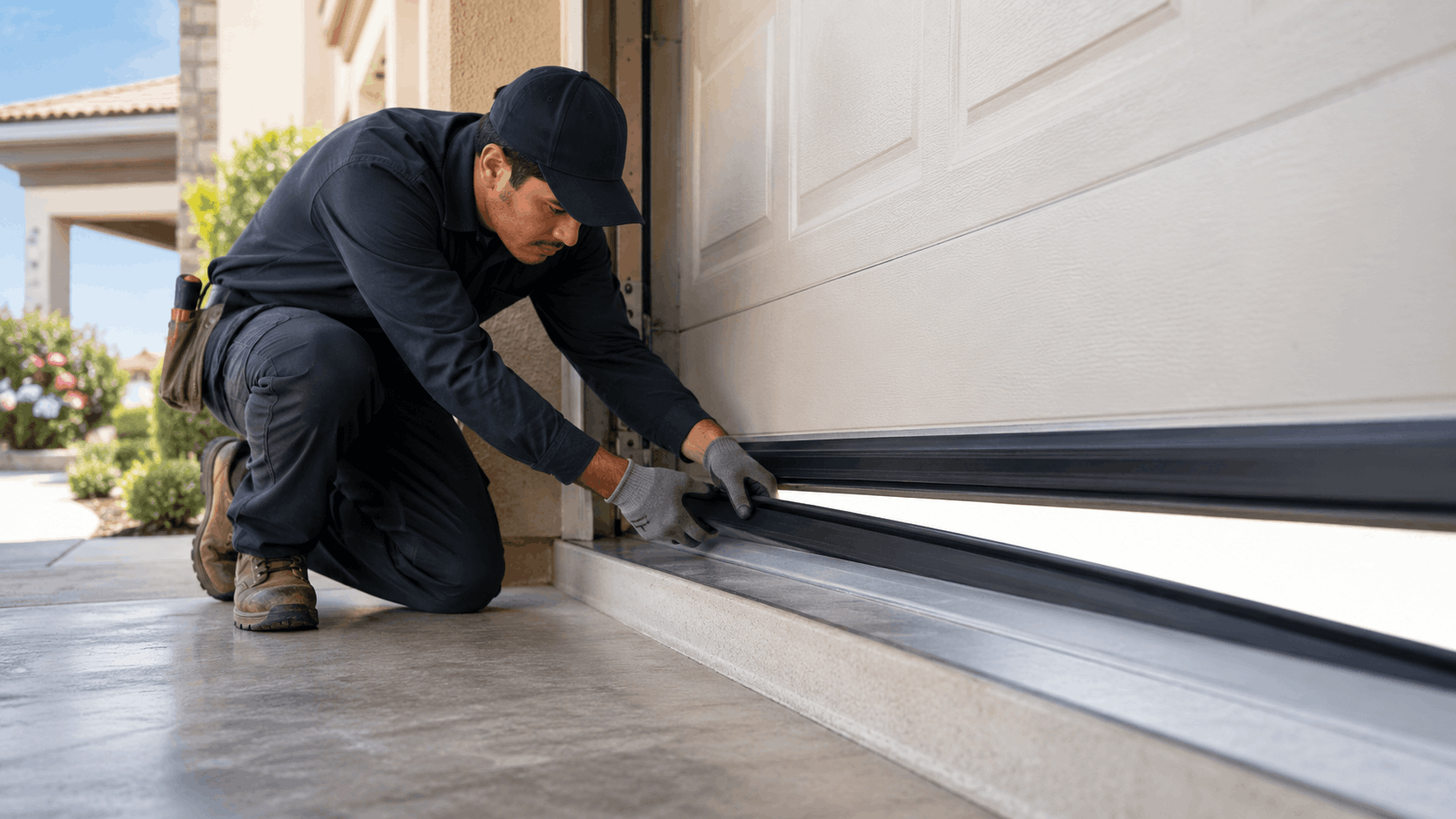
Homeowners like knowing what happens during the job, so here is the full picture. Our seal installation follows the same order every time for clean, lasting results. The whole retrofit process is straightforward and usually done in a single visit.
Most of this work falls under general garage door repair and takes only a few hours. Here is how each step goes.
Removing Old, Cracked Seals
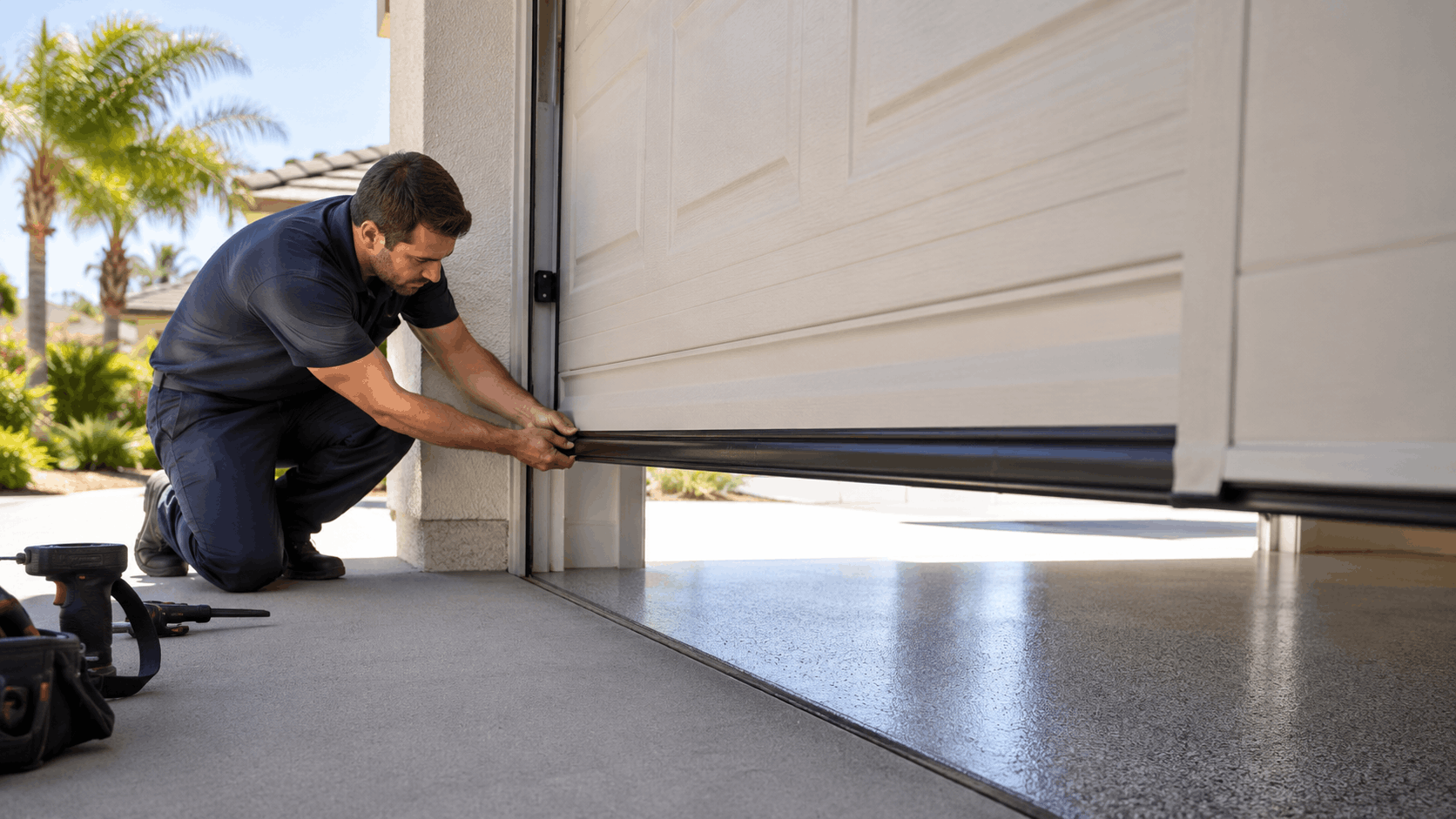
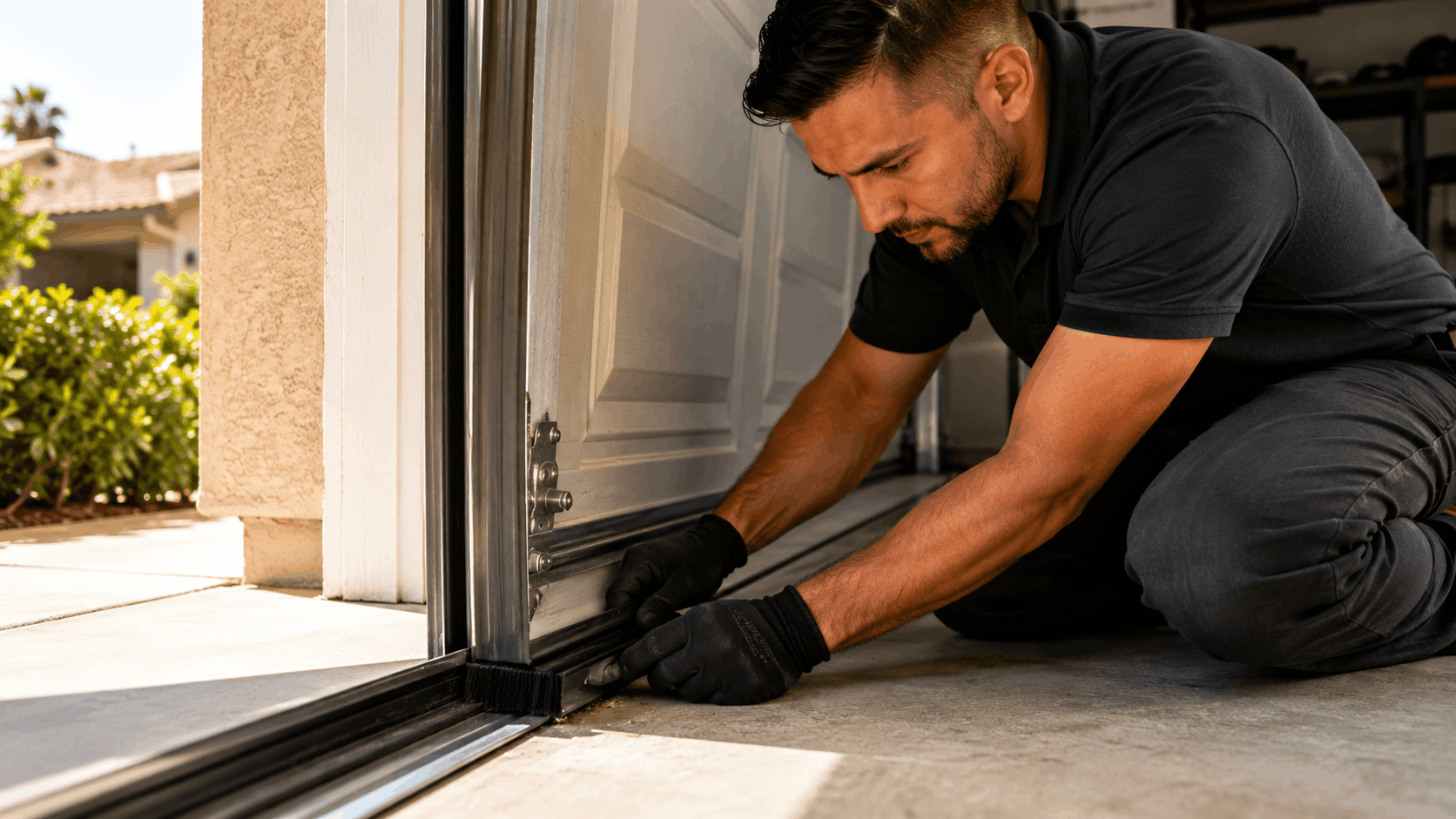
The first step is old seal removal, and it can be messy on brittle rubber. We slide the dried-out bottom seal out of its retainer, and on badly cracked ones, it often crumbles as it comes free. Side and top strips get unscrewed or pried off the frame.
Sometimes the old retainer itself is bent or corroded and needs replacing too. We check the aluminum channel for damage while the seal is out. A clean, straight retainer is what holds the new seal firmly in place.
Then comes track cleaning, where we clear out packed dirt, leaves, and old adhesive. The bottom track and retainer channel have to be clean for the new seal to seat properly. Skipping this step is why some DIY seals pop out within weeks.
Fitting and Cutting New Weatherseal
Every door is a slightly different width, so we measure before we cut. A proper custom fit seal is cut a little long and trimmed to leave the right overlap at the corners. Cutting too short leaves gaps that defeat the whole purpose.
For the bottom seal, we thread the new T-style or bead profile into the retainer, which slides in like a track. Lubricating the channel with a bit of soapy water makes the seal glide in smoothly. This is the core of a good weatherseal install.
Side and top strips get positioned so they press lightly against the closed door face. Too tight and the door strains; too loose and light gets through. We adjust the position until the compression is just right along the entire edge.
Sealing the Corners and Testing
Corner sealing is where experience matters most. The bottom corners are where the bottom seal meets the side seals, and it is the hardest spot to close. We shape and overlap the material so there is no daylight or pest opening at those junctions.
On thresholds, we set the corners into a bead of sealant so water cannot sneak around the ends. This detail is what separates a seal that lasts from one that leaks in the first storm. It takes patience but makes all the difference.
Then we run a final test by closing the door and repeating the daylight check. We look for any remaining light, run a hose test on threshold jobs, and confirm the door still opens and closes smoothly. Only when every gap is closed do we call the job done.
How Long the Job Takes
Most homeowners want to know the installation time before they book. A single-door bottom seal replacement usually takes 45 minutes to an hour. Adding side and top weatherstripping brings a single door to about 1.5 to 2 hours.
A full retrofit on a double door, including a threshold seal, runs about 2 to 3 hours. If we find alignment or track issues that need fixing first, that adds time. We give an honest estimate before starting so there are no surprises.
Because the work is contained, a single service call handles most retrofits start to finish. You do not need to clear out the garage or take the day off. We work around your cars and get you sealed up quickly.
Need Help in Irvine?
Urgent Garage Doors serves Irvine and all of Orange County.
Cost, Lifespan, and What Affects the Price
Homeowners deserve straight numbers, so here are honest ranges. Weatherseal cost depends on which seals you need and your door size. The garage seal price for a simple bottom seal is very different from a full retrofit with a threshold.
Below is a quick reference table, followed by what changes the price and how long seals last. Keep in mind that seal lifespan in OC sun runs shorter than the national average.
| Type of Work | Typical Price Range (OC) | Expected Lifespan |
|---|---|---|
| Bottom seal replacement (single door) | $120 - $250 | 3 - 7 years |
| Bottom seal (double door) | $180 - $350 | 3 - 7 years |
| Side and top weatherstripping | $100 - $250 | 5 - 8 years |
| Threshold seal (floor-mounted) | $150 - $350 | 7 - 12 years |
| Full retrofit (all seals, double door) | $400 - $750 | varies by component |
Typical Price Ranges for OC Homes
For a basic bottom seal on a single door, most Irvine homeowners pay between $120 and $250. That seal cost range covers the material and professional installation with proper corner work. A double door adds material, so it runs a bit higher.
Threshold seals cost more because they attach to the floor and use more sealant. Expect $150 to $350 depending on the door width and slab condition. The added cost is worth it for homes with water problems.
A complete retrofit price that includes bottom, side, top, and threshold seals on a double door usually lands between $400 and $750. That covers every gap in one visit. It is still far below the cost of a new door, which starts in the low thousands.
What Drives the Price Up or Down
Several price factors move the number. Door size is the biggest one, since a wide double door needs more seal material than a single. Two-car and three-car garages naturally cost more to seal fully.
Floor condition matters too, because a cracked or sloped slab often needs a threshold seal to work right. Seal material also affects price, as premium UV-rated rubber costs more than builder-grade but lasts longer here. For OC sun, the upgrade usually pays off.
The number of doors is the last factor. Sealing two or three doors in one visit lowers the per-door cost since we are already on site. We give a combined quote when homeowners want multiple doors done together.
How Long New Seals Last in OC Weather
In this climate, seal lifespan depends heavily on sun exposure. A shaded, north-facing door might get 7 to 10 years from a quality seal. A south or west-facing door in a sunny tract may need replacement in 3 to 5 years.
Threshold seals last longer because they sit on the floor away from direct UV. Many hold up 7 to 12 years with basic care. Bottom seals on the door face the harshest conditions and wear out first.
Simple maintenance extends every seal. Keeping rubber clean and lubricated slows the drying and cracking that OC sun causes. A yearly check can add a year or two to any seal, which is why our preventive maintenance plan pays for itself.
Keeping Seals Working Between Service Visits
New seals last longer with a little care, and the tasks are easy. Good seal maintenance takes a few minutes a few times a year. Regular garage door care is the cheapest way to protect your investment against OC weather.
Here is what we tell homeowners to do between visits.
Cleaning and Lubricating Seals
Dust and grit grind against rubber and speed up wear, so seal cleaning matters. Wipe the bottom and side seals with a damp cloth every couple of months. This removes the abrasive grit that Santa Ana winds leave behind.
After cleaning, apply a silicone lubricant to keep the rubber soft and flexible. Silicone is the right choice because petroleum products break rubber down over time. A light coat two or three times a year makes a real difference.
Flexible rubber seals better and resists cracking in the sun. Dry, stiff rubber cannot compress against the floor, which is how gaps start. This one habit adds the most life to any seal in our climate.
Prepping Before the Rainy Season
Fall is the time for rainy season prep in Orange County. Before the first storm, run the daylight test and check that your bottom seal still compresses fully. Catching a worn seal in October beats mopping the floor in January.
Also check your drainage outside the door. Clear leaves and debris from the driveway apron and any drain channels near the garage. A blocked drain on a sloped driveway sends water straight at the door.
For homes in Quail Hill, Turtle Rock, and other hillside tracts, this prep is especially worth it. The grade there works against you every storm. A quick fall check keeps winter runoff outside where it belongs.
Spotting Early Wear Before It Spreads
Catching problems early keeps small fixes from becoming big ones. Watch for early wear like small cracks, curling edges, or a seal that no longer springs back. These are the first signs a seal is on its way out.
Do a quick seal inspection every few months and after any windstorm. New daylight where there was none before means the seal has shifted or torn. The corners deserve the closest look since they fail first.
If you spot chew marks or fresh droppings, act fast before rodents widen the opening. A small repair now is cheaper than a full replacement plus pest cleanup later. When you notice these signs, a quick service call handles it.
Need Help in Irvine?
Urgent Garage Doors serves Irvine and all of Orange County.
Why Irvine Homeowners Call Urgent Garage Doors
We live and work in this area, so we know how OC conditions wear on garages. Our Irvine garage door service is built around fast, honest work and the right materials for the local climate. When homeowners search for local garage repair, they want someone who shows up and fixes it right.
Here is what sets our team at Urgent Garage Doors apart:
- We serve Irvine and the surrounding OC communities
- We offer same-day and fast response scheduling
- We choose seal materials rated for OC sun, heat, and rain
- We give honest recommendations, not upsells
- We test every job before we leave
Serving Irvine and Nearby OC Communities
Our team covers all the major Irvine neighborhoods, from Woodbridge to the Great Park villages. We regularly seal garages in Woodbridge, Northwood, Turtle Rock, Quail Hill, and Portola Springs. Each tract has its own quirks, and we know them well.
Our service area also reaches nearby cities across Orange County. We work in Newport Beach, Costa Mesa, Lake Forest, and beyond. Coastal homes deal with salt air, while inland homes fight dust and sun.
Because we drive these streets every week, we already know the common issues by neighborhood. Hillside homes need thresholds, older tracts need full retrofits, and windy areas need tight side seals. That local knowledge saves time on every visit.
Same-Day and Fast Response Visits
Water and pest problems cannot always wait, which is why we offer same-day service when the schedule allows. If a storm just flooded your garage or you found droppings in the corner, we move fast. A worn seal during rain season is worth a quick fix.
Our fast response covers urgent situations across the county. For true emergencies, our same-day garage door repair gets a tech to your door quickly. We know a leaking or open garage is stressful.
Booking is simple, and we give an honest arrival window. We call ahead so you are not stuck waiting all day. Quick scheduling means your problem gets solved before the next storm or before pests settle in.
Materials Chosen for OC Conditions
Not all seal material holds up here, so we choose products built for our climate. Durable seals made from UV-rated rubber and vinyl resist the sun that destroys cheap builder-grade strips. That choice is why our seals last longer in sunny tracts.
We pick climate-rated materials based on where your home sits. Coastal homes get seals that resist salt and moisture, while inland homes get rubber that stands up to heat and dust. One material does not fit every OC garage.
The right material paired with proper installation is what makes a retrofit worth it. We would rather install a seal that lasts five years than a cheap one that fails in eighteen months. That approach saves homeowners money over time.
Final Thoughts
A weatherseal retrofit is one of the smartest, lowest-cost upgrades an OC homeowner can make. It stops the daylight, dust, rodents, and water that sneak through worn gaps, and it does so without replacing the whole door. For most Irvine homes, fresh seals solve the problem for a few hundred dollars.
The keys are catching worn seals early, choosing materials rated for our sun and rain, and sealing the corners right. Whether you are in Woodbridge, Turtle Rock, or a newer Great Park village, the right seals keep your garage cleaner, drier, and pest-free. If you see daylight under your door, that is your signal to act.
Our team at Urgent Garage Doors is ready to inspect your seals and give you an honest recommendation. Contact us or call to book a consultation, and we will help you stop the intrusion before the next storm rolls in.
Frequently Asked Questions
- How do I stop daylight from coming under my garage door?
- A new bottom seal is the fix for daylight under the door. That glowing line means your current seal has flattened, cracked, or fallen out and no longer presses against the floor. Installing a fresh T-style or bead bottom seal closes the gap. If the floor is uneven, adding a threshold seal blocks any remaining light and stops water and pests along with it.
- Can a weatherseal really keep rats and mice out?
- Yes, tight seals block the small gaps rodents use to get in. Mice can squeeze through a half-inch opening, and the bottom corners of a worn seal are their favorite entry. Fresh, well-fitted seals with sealed corners remove that easy access. Very large holes or chewed panels may need extra repair beyond the seal, but closing the door gaps is the first and most effective step.
- How much does a garage weatherseal retrofit cost in OC?
- A basic bottom seal runs about $120 to $250 for a single door, while a full retrofit with side, top, and threshold seals on a double door lands between $400 and $750. Door size and floor condition are the biggest factors. A cracked or sloped slab often needs a threshold seal, which adds cost. We give an honest quote after inspecting your door.
- Why does water still get in after it rains?
- Water usually gets in because of a worn bottom seal, an uneven floor, or a missing threshold. Once the bottom rubber hardens and cracks, it cannot form a tight barrier against the slab. Homes on sloped driveways near Turtle Rock and Quail Hill face extra runoff. A fresh bottom seal plus a floor-mounted threshold seal creates a dam that keeps storm water out.
- How long does a seal retrofit take to install?
- A single-door bottom seal takes about 45 minutes to an hour. Adding side and top weatherstripping brings a single door to roughly 1.5 to 2 hours. A full double-door retrofit with a threshold seal usually runs 2 to 3 hours. If we find alignment or track issues that need fixing first, that adds some time, but most jobs finish in one visit.
- Do I need a new garage door or just new seals?
- Most OC homes only need new seals, not a new door. If your door panels are straight and the tracks work fine, worn seals are almost always the real problem. A retrofit costs a fraction of a replacement. We only recommend a new door when the panels are rusted, bent, or structurally damaged, and we tell you honestly during the inspection.
- How often should garage seals be replaced in Irvine?
- It depends on sun exposure. A shaded, north-facing door may get 7 to 10 years from quality seals, while a south or west-facing door in a sunny tract might need replacement in 3 to 5 years. UV from the OC sun dries and cracks rubber sooner than in cooler climates. Yearly cleaning and silicone lubricant help extend the life of any seal.
- What is a threshold seal and do I need one?
- A threshold seal is a rubber barrier mounted to the garage floor rather than the door. It forms a raised ridge the door closes against, creating a dam for water and debris. You need one if your slab is cracked, uneven, or sloped, or if you get heavy runoff during storms. It works especially well on hillside homes where a bottom seal alone cannot keep water out.
- Can I install a weatherseal myself?
- Some seals are DIY-friendly, like sliding a new T-style bottom seal into a clean retainer. Side weatherstripping is also manageable for handy homeowners. The tricky parts are the corners and threshold seals, where poor fitting leaves gaps that let light, water, and pests back in. Those spots need proper measuring and sealing, so many homeowners call a pro to get lasting results.
- Does Urgent Garage Doors serve my Irvine neighborhood?
- Yes, we cover all of Irvine including Woodbridge, Northwood, Turtle Rock, Quail Hill, Portola Springs, and the Great Park villages. We also serve nearby OC communities like Newport Beach, Costa Mesa, and Lake Forest. To book a seal inspection or retrofit, just reach out to our team and we will schedule a fast visit. For more on our coverage, see our Irvine service page . For homeowners who want to understand the building side of weather protection, the U.S. Department of Energy weatherstripping guide explains how sealing gaps saves energy. The CDC rodent prevention resource covers how sealing openings keeps pests out. For local storm timing, the National Weather Service San Diego office tracks Southern California rain and Santa Ana wind events.
Licensed garage door repair professionals serving Irvine and Orange County.
Licensed in California · License #1055150
Why trust Urgent Garage Doors?
Founded in 2017, Urgent Garage Doors is a licensed and insured garage door services serving Irvine and Orange County. All content is reviewed by our licensed technicians.

Need Help in Irvine?
Urgent Garage Doors serves Irvine and all of Orange County.
Related Articles
How Dana Point Salt Air Destroys Garage Door Hardware and How to Prevent It
Dana Point salt air wears down garage door springs, cables, and hinges more than most homeowners realize. Learn how to prevent costly corrosion damage with practical tips.
How to Extend Garage Door Spring Life in Orange County Heat
Learn how Orange County heat wears down garage door springs and get practical tips to extend their life, from lubrication and cooling to when to repair or replace.
Foothill Ranch Lake Forest Garage Door Service: Tract Home Service Plans
How garage door service plans work for identical-build tract homes in Foothill Ranch and Lake Forest, from matched maintenance to HOA-compliant repairs and local response.