Coto de Caza HOA Garage Door Approval: Custom Estate Standards
Key Takeaways
- Nearly all exterior garage door changes in Coto de Caza require Architectural Review Committee approval before installation begins.
- Estate standards favor carriage or traditional styles, earth-tone stains, and premium wood, composite, or wood-look steel materials.
- Master HOA CC&Rs plus sub-association rules in enclaves like Los Ranchos Estates can both apply to the same door.
- The approval process typically takes 30 to 45 days, and complete paperwork with specs and color samples avoids delays.
- Inland heat, canyon winds, and wildfire zone exposure make insulated composite or steel doors a smart climate choice.
- Estate door prices range from about $2,500 for steel to $15,000-plus for custom real wood, with oversized doors adding 20 to 40 percent.
- Skipping approval can lead to violation notices, correction deadlines, and fines that grow over time.
- Urgent Garage Doors serves Coto de Caza from Irvine, supplying HOA spec sheets and installing compliant estate doors.
In This Article
A homeowner off Coto de Caza Drive replaced a tired old garage door last spring with a sleek modern design she loved. Two weeks later, a violation notice showed up in her mailbox. The style did not match the estate standards her community requires, and now she had to fix it fast.
This happens more often than people expect in Coto de Caza. The community holds strict rules on how homes look from the street, and garage doors are one of the biggest visual features on an estate lot. Skip the approval step, and a beautiful new door can turn into a costly redo.
How Garage Door Rules Work Inside Coto de Caza?
Coto de Caza is not a typical suburb. It is a large, gated community with private roads, custom lots, and a governing structure that keeps every home looking cohesive.
Two main bodies shape what homeowners can and cannot do to the outside of their houses. The first is the Coto de Caza Community Services District, which handles shared infrastructure and community services. The second is the master HOA, which sets and enforces the architectural guidelines for homes off streets like Coto de Caza Drive and Vista Del Verde.
- The master Coto de Caza HOA controls exterior appearance across the whole community
- The Community Services District manages roads, parks, and shared amenities inside the gated community
- Architectural guidelines cover paint, roofing, landscaping, and garage doors
- Every exterior change needs review before work starts, not after
Because Coto de Caza is a gated community with a shared identity, the rules are stricter than most Orange County neighborhoods. That is by design, and it protects home values across the board.
The Architectural Review Committee and What It Controls
The Architectural Review Committee, often called the ARC, is the group that signs off on exterior changes. Any time a homeowner wants to alter how their property looks from the street, the ARC weighs in first. That includes repainting, adding hardscape, changing rooflines, and yes, swapping a garage door.
Garage doors fall squarely under the ARC's authority because they are a large, visible part of the front elevation. On a custom estate, the garage often takes up a big chunk of the facade. A door that clashes with the home or the surrounding street breaks the visual flow the committee works to protect.
The ARC reviews an exterior modification against the community's written standards. They look at material, color, style, hardware, and how the door fits the home's overall design. If a submission checks every box, approval moves quickly. If something is off, the committee sends it back with notes.
Our team has seen plenty of homeowners assume a door swap is too small to matter. It is not. Even a like-for-like replacement usually needs a green light before the old door comes down.
Master HOA Rules vs. Sub-Association Rules
Coto de Caza has layered rules, and this trips up a lot of residents. At the top sits the master association, which sets baseline standards for the entire community. Below that, smaller enclaves like Los Ranchos Estates and Weatherly may carry their own sub-association rules with extra requirements.
The master HOA CC&Rs, short for Covenants, Conditions, and Restrictions, are the legal backbone. They spell out what every homeowner agreed to when they bought in. A sub-association can add stricter details on top, but it cannot loosen the master rules.
So a homeowner in Los Ranchos Estates might face two sets of standards for the same garage door. The master rules on style and color apply, plus any sub-association tweaks on materials or finishes. Reading both documents before ordering a door saves a lot of grief later.
When we help residents plan a project, we always ask which enclave they live in. Knowing whether a home falls under a sub-association changes how we prep the paperwork and which models we recommend.
Why Custom Estates Face Stricter Standards
Homes along San Juan and the upper stretches of Coto de Caza Drive sit on larger lots with custom architecture. These are not tract homes with a handful of repeated floor plans. Each estate has its own look, and the HOA holds these properties to higher custom estate standards.
The reason comes down to design consistency across a premium community. A big estate with a mismatched or builder-grade door stands out in a bad way. The committee wants garage doors that read as part of a thoughtfully designed home, not an afterthought.
Larger homes also mean larger doors, sometimes double-wide or oversized. A door that size dominates the front of the house, so its design carries more weight. The bigger the visual footprint, the more scrutiny it gets during review.
Homeowners moving from a standard neighborhood are often surprised by how detailed the estate rules are. Our crews work these streets regularly, so we know what the ARC expects on custom properties versus smaller lots.
Get Your Free Quote
Tell us about your garage door and we'll get back to you within 30 to 60 minutes.
Estate Garage Door Design Standards Homeowners Must Meet
Once a homeowner understands who approves doors, the next question is what actually passes. The garage door design standards for estate properties focus on three things: look, material, and color.
The goal is a door that blends with the home and the natural surroundings near places like Thomas F. Riley Wilderness Park. Loud colors, cheap finishes, and off-style designs get flagged fast.
- Doors should match the home's architecture, not fight it
- Estate materials must look premium and hold up to inland heat
- Colors stay within earth-tone and natural stain palettes
- HOA approved doors usually lean carriage or traditional in style
Meeting these standards up front is the fastest path to approval. Below is how each requirement breaks down.
Approved Materials: Wood, Steel, and Composite
The ARC accepts several materials as long as the finished look fits estate standards. A real wood garage door offers the richest appearance and a natural grain that suits custom homes. The tradeoff is upkeep, since real wood needs refinishing over time, especially under Coto de Caza's strong sun.
A composite door mimics wood grain closely while resisting warping, cracking, and fading. For many estate owners, composite hits the sweet spot between the look they want and the durability inland Orange County demands. These doors handle heat and dry canyon air far better than solid wood.
An insulated steel door with a wood-look overlay is another approved route. Steel gives strength and low maintenance, and modern finishes can pass for real timber from the street. Our team often points homeowners toward an insulated steel garage door when they want the estate look without the upkeep of wood.
Whatever the material, the ARC cares about how it reads on the home. We help match the right build to both the design rules and the local climate.
Color and Finish Requirements
Coto de Caza sits against open canyon land, and the community wants homes to echo that natural setting. Approved colors run toward earth tones, warm browns, muted tans, and deep natural wood shades. Bright or high-contrast colors rarely make it through review.
A stain finish is often preferred over solid paint on estate doors because it shows wood grain and reads as premium. Rich walnut, mahogany, and medium oak stains are common picks that match the community's look near the wilderness park. These finishes tie the garage into the home's trim and front door.
Color approval is a step homeowners cannot skip. Even a subtle shade the committee has not signed off on can trigger a rejection. Submitting an actual color or stain sample with the application removes the guesswork.
We keep sample chips on hand and can show homeowners how a given stain will look on their specific door. Getting the color right the first time avoids a second round of review.
Style, Windows, and Hardware Details
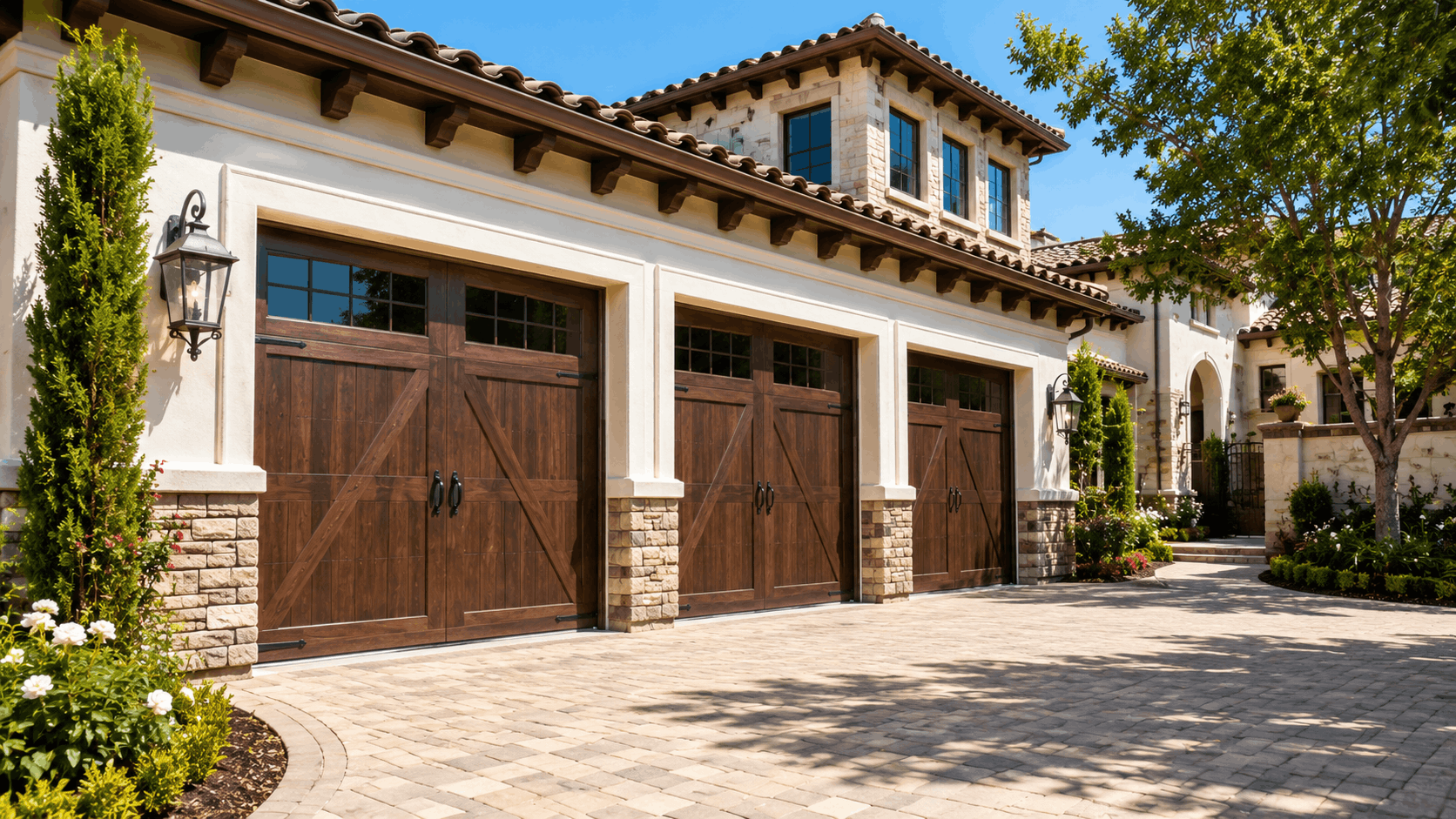
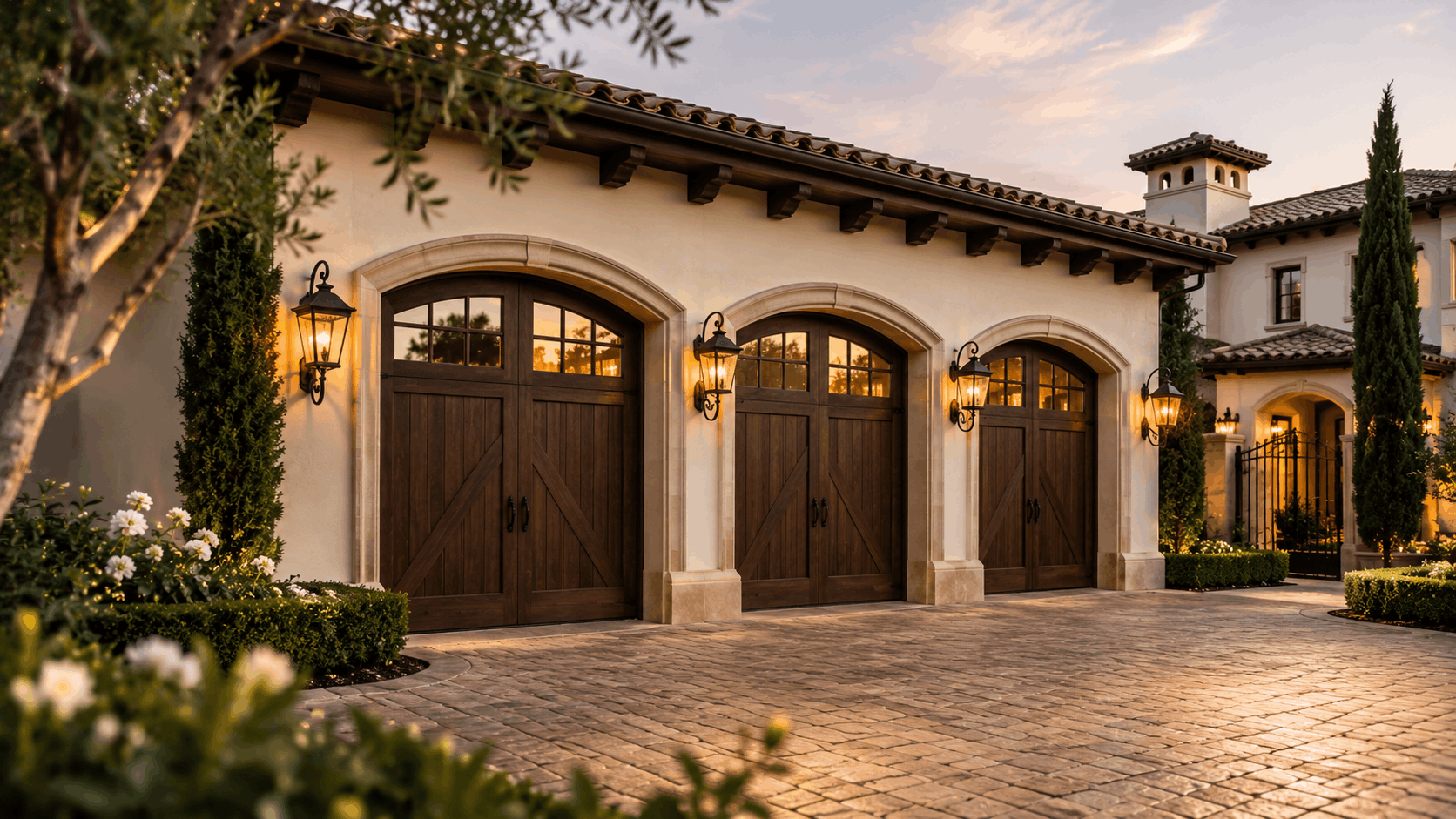
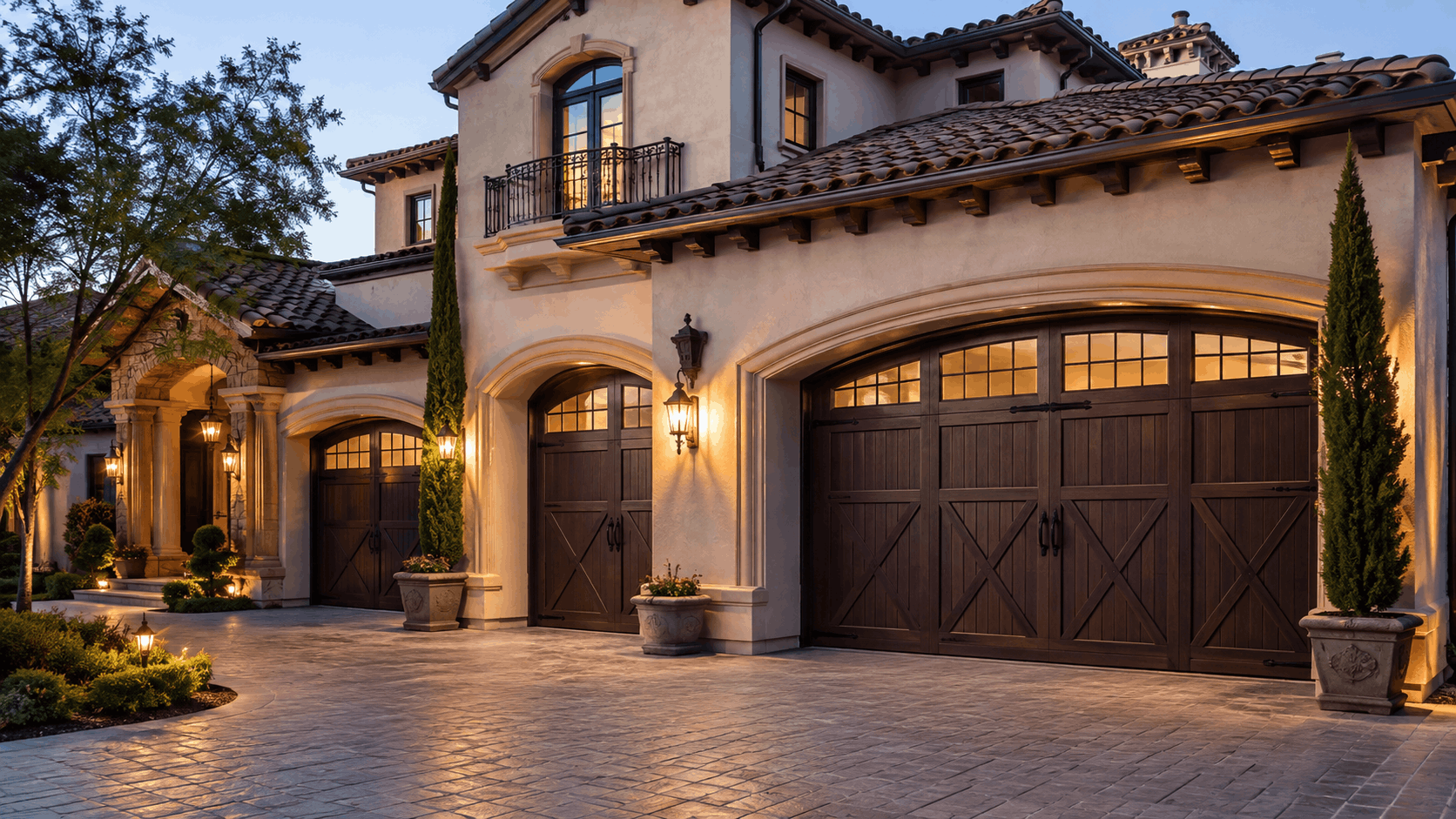
Style is where a lot of estate doors either pass or fail. Carriage style designs dominate approvals in Coto de Caza because they suit the traditional and Mediterranean homes across the community. These doors mimic old swing-open carriage house doors while operating on modern rollers.
Decorative hardware finishes the look. Wrought-iron handles, hinges, and clavos add authenticity that the ARC likes to see on carriage doors. The hardware should match the home's other fixtures, like lighting and the front entry.
Window design matters too. Window placement, shape, and grid patterns need to align with the home's existing windows. A row of arched or square glass panels near the top of the door is common, but the style has to fit the architecture rather than stand apart from it.
For homeowners who want a distinct look, our carriage house garage door options cover a wide range of approved styles. We also handle full custom garage door design and install for estates that need something specific.
Matching Doors to Home Architecture
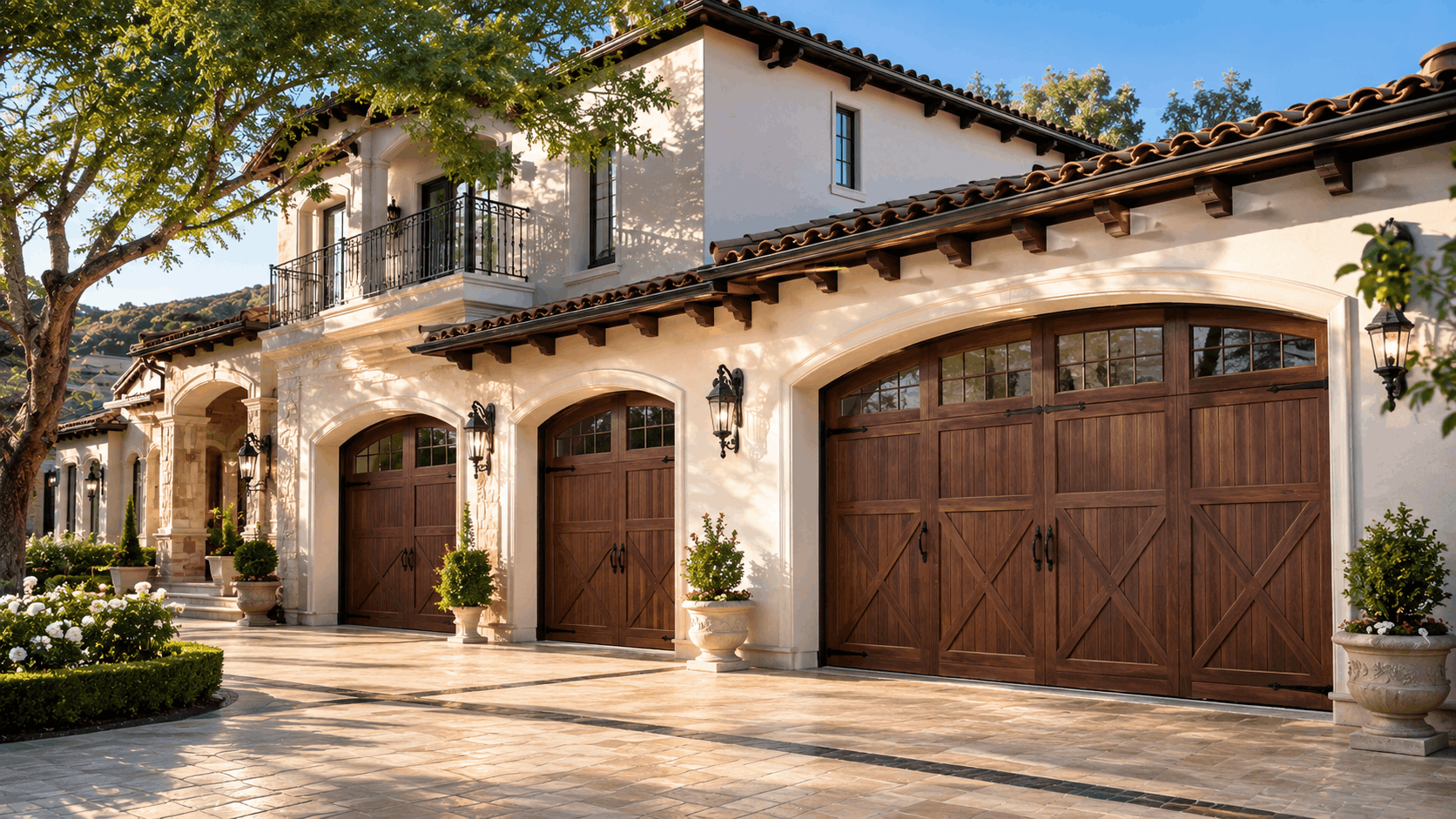
Coto de Caza is full of Tuscan, Spanish, and Mediterranean style homes, and each style points to a certain door. A Mediterranean style estate calls for warm wood tones, arched details, and iron hardware that echo the home's stucco and tile roof. A modern glass door would look out of place and likely get rejected.
Spanish architecture leans toward heavy timber looks, deep stains, and rustic hardware. The door should feel like it belongs to the same era and tradition as the rest of the house. Matching design across the facade is what the committee rewards.
Even homes with a cleaner transitional look still favor traditional or carriage doors over sharp modern designs. The community's overall identity leans classic, and doors that respect that identity clear review sooner. Fighting the architecture almost always slows things down.
Our crews have installed doors on nearly every home style in the community. We can look at a home and know within minutes which approved designs will complement it and which the ARC is likely to flag.
Need Help in Irvine?
Urgent Garage Doors serves Irvine and all of Orange County.
The HOA Approval Process Step by Step
The HOA approval process is straightforward once a homeowner knows the steps. The main rule is simple: get approval before installation begins, never after.
An application, sometimes called a modification request, goes to the HOA management office for the ARC to review. Skipping this step is the number one cause of violation notices in Coto de Caza.
| Step | What Happens | Typical Timeframe |
|---|---|---|
| 1. Gather documents | Collect product specs, color samples, and current door photos | 1 to 2 weeks |
| 2. Submit to ARC | File the modification request with HOA management | 1 day |
| 3. Committee review | ARC evaluates against estate standards | 30 to 45 days |
| 4. Approval or notes | Approval to proceed, or requested changes | Included above |
| 5. Installation | Door installed after written approval | 1 day |
Gathering Documents and Product Specs
A strong application starts with complete documents. The ARC wants to see exactly what the finished door will look like, so product specs and cut sheets from the manufacturer are the first item. These show the model, dimensions, materials, and construction.
Color samples come next. A physical stain or paint chip helps the committee judge the finish against community standards. Digital renderings help, but real samples carry more weight.
Photos of the current door round out the package. They give the committee a before-and-after picture and show how the new door improves the home. Clear front-elevation shots work best.
Our team supplies the application documents most homeowners are missing, including manufacturer cut sheets and finish samples. Having the full packet ready is what keeps the review on schedule.
Submitting to the Architectural Review Committee
The ARC submission goes to the Coto de Caza HOA management office, either by mail, email, or the community portal, depending on current process. The modification form is the official document that starts the clock. Every field needs to be filled out completely.
Incomplete forms are a common reason projects stall before they even reach review. A missing signature, a blank material field, or absent specs sends the whole packet back. Double-checking the form before submission saves weeks.
Homeowners should keep a copy of everything they submit. If a question comes up later, having the full record on hand settles it quickly. We recommend saving both the form and the attachments together.
We often help residents assemble and review the submission before it goes in. A second set of eyes catches small gaps that would otherwise trigger a resubmission.
Typical Approval Timelines
The approval timeline in Coto de Caza usually runs 30 to 45 days from a complete submission. The review period depends on when the ARC meets and how full their agenda is. Committees often meet monthly, so timing the submission matters.
Submitting right after a committee meeting can mean waiting nearly a full cycle for the next one. Filing a week or two ahead of a scheduled meeting is the smarter play. The management office can usually share the meeting calendar.
Complete, clean applications move fastest. Anything the committee has to question adds another round and pushes the timeline out. Doing it right the first time is the surest way to hit the shorter end of that window.
We build these timelines into project planning so homeowners are not left guessing. Knowing the door is ordered and the paperwork is in lets us schedule installation the moment approval lands.
Common Reasons Applications Get Rejected
Most rejections trace back to a handful of issues. Mismatched colors top the list, especially finishes that stray from the approved earth-tone range. A stain that looks fine on a phone screen can read wrong in person.
Wrong window styles are another frequent flag. A grid pattern or glass shape that clashes with the home's existing windows breaks the design consistency the ARC protects. Windows have to fit the architecture.
Missing paperwork stalls more applications than any single design issue. A skipped spec sheet or absent color sample forces the committee to pause and request more. A non-compliant door design, one that ignores the carriage or traditional look, gets sent back outright.
Because we know these rejection reasons cold, we steer homeowners away from them from the start. Picking an approved model and submitting complete documents removes almost every common stumbling block.
How Urgent Garage Doors Helps Coto de Caza Residents Stay Compliant
We are based in Irvine and work throughout south Orange County, including the estates of Coto de Caza. Our role goes beyond hanging a door. We help homeowners get through the HOA process from design selection to final install.
An HOA compliant install is only as good as the planning behind it. As a local Irvine garage door company, we treat the approval step as part of the job, not an afterthought.
- We recommend doors that already meet estate standards
- We provide the spec sheets and samples the ARC requires
- We handle garage door installation once approval comes through
- We serve Coto de Caza directly from our Irvine base with quick scheduling
The result is fewer rejections, quicker approvals, and a door that stays in good standing.
Helping Homeowners Pick Approved Models
The easiest way to speed up approval is to start with a door the ARC already accepts. We keep a working knowledge of approved models and styles that fit Coto de Caza's estate standards. That saves homeowners from falling in love with a design that will never pass.
Door selection starts with the home's architecture and the community rules. We look at the style, the existing colors, and the enclave the home sits in. From there we narrow the choices to doors that fit both the house and the guidelines.
This upfront filtering matters because a rejected application can add a month or more to the project. Picking from approved models on the first try keeps the timeline tight. It also spares homeowners the cost of ordering the wrong door.
Our full range of garage door installation options includes plenty of estate-appropriate designs. We walk each homeowner through the ones most likely to clear review.
Providing Spec Sheets for HOA Submissions
The ARC runs on documentation, and gaps in paperwork stall projects. We supply the spec sheets, cut sheets, and product details the committee needs with every application. This is the part homeowners most often struggle to gather on their own.
Each submission packet includes manufacturer documentation showing material, dimensions, and construction. We pair that with the finish samples and any renderings that help the committee picture the result. A complete packet leaves the ARC nothing to question on the basics.
Good documentation does more than satisfy the form. It shows the committee the homeowner has done the work and chosen a door that fits. That builds confidence and helps review move along.
We have prepped these packets for enough Coto de Caza homes to know exactly what management wants to see. Handing over a clean, complete submission is one of the biggest favors we do for our clients.
Serving the Drive From Irvine to Coto de Caza
The trip from our Irvine base to Coto de Caza is a straight shot. Our crews take the 133 down and cut over on Santa Margarita Parkway to reach the community gates. It is a route we run often, so we know the drive and the neighborhoods inside.
That proximity means we can offer same-week scheduling for estate clients once a door is approved. Homeowners in nearby Lake Forest and along the south county corridor get the same quick turnaround. Being local keeps response times short.
The Irvine to Coto de Caza run is part of our regular service area, not a special trip we charge extra for. We treat estate clients the same way we treat our home base in Irvine. Fast, reliable, and familiar with the local rules.
Whether a home sits near The Village or up in Los Ranchos Estates, we know how to get there and what the community expects. That local knowledge shows up in every install.
Need Help in Irvine?
Urgent Garage Doors serves Irvine and all of Orange County.
Choosing a Garage Door Built for Coto de Caza's Climate
Getting HOA approval is only part of the battle. The door also has to survive Coto de Caza's climate, which is harsher than the coastal parts of Orange County.
Inland heat, dry canyon winds, and long hours of direct sun all wear on a garage door. Climate durability should factor into material and finish choices from the start.
Heat and Sun Fade on Wood Doors
West-facing homes near the golf course catch brutal afternoon sun. That sun exposure fades stains and dries out solid wood over time. A rich walnut finish can look washed out within a few years without regular care.
Sun fade is not just cosmetic. Fading can drift a door out of its approved color range and put a homeowner back on the ARC's radar. Keeping the finish looking as approved is part of staying compliant.
Heat also causes wood warping. As solid wood dries and expands through hot spells, panels can bow or crack. Warped panels affect how the door seals and operates, not just how it looks.
For homes with heavy sun, we often steer owners toward composite or steel with a wood-look finish. These hold their color and shape far better than solid timber in the inland heat.
Insulation for Attached Garages
Most estates in Coto de Caza have attached garages, and an insulated door makes a real difference. An insulated door slows heat transfer, keeping the garage and adjacent rooms cooler through summer. That matters when garage temps can climb well past comfortable.
R-value is the number to watch. A higher R-value means better insulation and less heat creeping into the space. For attached estate garages, a door with a solid R-value is worth the modest extra cost.
Insulation also helps with noise and adds structural rigidity to the door. A denser, insulated door tends to operate more quietly and resist dents. Those are welcome benefits on a premium home.
Our weatherseal and insulation retrofit service can upgrade an existing door or we can build insulation into a new install. Either way, we match the R-value to how the garage is used.
Dust, Wind, and Wildfire Zone Considerations
Coto de Caza borders open canyon land, which brings dust and dry wind right up to the garage. Good weatherstripping keeps that grit and air out. Worn seals let dust settle across the garage and into stored items.
Wind driven through the canyons puts extra stress on seals and hardware. Dust seals along the bottom and sides of the door take the brunt of it. Checking and replacing these seals keeps the door tight against the elements.
Living in a wildfire zone adds another layer to material choices. Non-combustible materials like steel resist ignition better than solid wood, which matters near open land. Ember-resistant seals and gaps also help protect the garage during fire season.
We factor all of this into recommendations for canyon-adjacent homes. The right seals and materials keep the door working and add a measure of protection where it counts.
Costs to Expect for Estate Garage Door Projects
Estate doors cost more than standard suburban doors, and the price reflects size, materials, and custom features. Knowing the ranges up front helps homeowners budget realistically.
The figures below cover garage door cost ranges for estate door pricing plus installation in Coto de Caza. Actual numbers vary with door size and finish choices.
| Door Type | Estimated Price Range (Installed) | Notes |
|---|---|---|
| Insulated steel (wood-look) | $2,500 - $5,500 | Low maintenance, strong value |
| Composite (wood-look) | $4,000 - $8,500 | Wood look, better durability |
| Real wood | $6,000 - $15,000+ | Premium look, higher upkeep |
| Custom features add-on | $500 - $3,000+ | Windows, hardware, custom stain |
| Oversized / double door | Add 20% - 40% | Wider and taller openings |
Price Ranges by Material Type
Material is the biggest driver of cost. Steel sits at the lower end, with an estate-size insulated steel door typically running from the mid-thousands. The material cost is low and the durability is high, making it a smart pick for many homeowners.
Composite lands in the middle. It costs more than steel but delivers a convincing wood look with far less upkeep. For estates that want the timber appearance without the maintenance, composite earns its price.
Real wood carries the highest wood door price. A custom solid wood door for an estate can run well into five figures, especially with premium species and finishes. The look is unmatched, but so is the ongoing care it demands.
We help homeowners weigh these ranges against how long they plan to stay and how much upkeep they want. The right choice balances budget, look, and climate.
Cost of Custom Features and Hardware
Base door prices climb once custom features enter the picture. Windows add cost, and decorative or insulated glass adds more. The style and number of window sections both affect the total.
Decorative hardware is another add-on. Wrought-iron handles, hinges, and clavos give a carriage door its authentic look, and quality hardware carries a hardware cost worth planning for. On estate doors, this detail matters to the ARC, so it is rarely optional.
Custom stains and multi-step finishes also raise the price. A hand-applied stain that matches the home's trim costs more than a standard factory color. That finish is often what earns approval, so it is money well spent.
When we quote a project, we itemize these custom features so homeowners see where the dollars go. There are no surprises when the final invoice arrives.
Budgeting for Double and Oversized Doors
Estate homes often have wider or taller openings than standard houses. A double garage door or an oversized single door needs more material, heavier hardware, and stronger springs. All of that raises the price.
As a rough guide, oversized and double doors add 20 to 40 percent over a standard-size door in the same material. The exact bump depends on how far the opening exceeds standard dimensions. Very tall RV-height openings sit at the top of that range.
Larger doors also put more demand on the opener and spring system. Matching the right torsion spring setup to a heavy estate door keeps it balanced and safe. Skimping on hardware for a big door leads to problems down the line.
We size every component to the actual door so it operates smoothly for years. On oversized estate doors, that engineering is part of what the price covers.
Need Help in Irvine?
Urgent Garage Doors serves Irvine and all of Orange County.
Avoiding HOA Violations and Fines
The whole point of the approval process is to avoid a violation. Skipping it can turn a nice new door into a source of fines and forced changes.
Understanding how violations work, and how to fix a non-compliant door, keeps homeowners in the clear. Here is what to expect if things go sideways.
What a Violation Notice Means
A violation notice is the HOA's formal way of saying a change does not meet standards. It usually arrives by mail and describes the problem, whether that is an unapproved door, wrong color, or off-style design. The notice is a warning that action is required.
Most notices include a correction deadline. Homeowners get a set window, often 30 days or so, to bring the door into compliance or submit for approval. Missing that deadline can escalate the matter.
Ignoring a notice leads to fines that add up over time. In serious cases, the HOA can pursue further action to enforce compliance. Responding quickly is always the better path.
If a homeowner gets a notice, we can assess the door and lay out the fastest route to compliance. Acting before the deadline usually prevents any fines from starting.
Fixing a Door That Was Already Installed
A door that is already up is not always a total loss. The fix depends on why it failed. If the issue is only the finish, refinishing to an approved stain may solve it without replacing the door.
Sometimes the door itself is fine but was never submitted. In that case, applying for retroactive approval can work, especially if the door happens to meet standards. Submitting complete documentation gives the committee what it needs to approve after the fact.
When the style or design clearly clashes with estate standards, replacement is the honest answer. A door that ignores the carriage or traditional look will not pass on paperwork alone. Swapping it for an approved model settles the matter for good.
We help homeowners figure out which path fits their situation. Whether it is a refinish, a resubmission, or a full swap, we handle the work and the documents.
How to Stay in Good Standing Long Term
Staying in good standing takes a little upkeep after approval. Keeping the finish maintained prevents fade from pulling the color out of the approved range. A refresh every few years keeps the door looking as the committee signed off on.
Keeping maintenance records helps too. Saving the approval letter, the spec sheets, and any finish details creates a paper trail. If a question ever comes up, the homeowner has proof the door was approved.
Routine care also keeps the door working, not just looking right. A door that operates smoothly and seals well is less likely to draw any attention. Our preventive maintenance plan keeps estate doors in top shape year after year.
A well-kept door protects both compliance and home value. Small, regular attention beats scrambling after a violation notice every time.
Final Thoughts
Replacing a garage door in Coto de Caza is not as simple as picking a look and hiring a crew. The community's estate standards, the ARC review, and the layered HOA rules all shape what a homeowner can install. Doing it right means getting approval before the old door comes down.
The homeowner from the start of this article eventually got a compliant carriage door approved and installed. The redo cost her time and money she could have avoided with the right guidance up front. That is exactly the mistake our team helps residents skip.
From picking an approved model to preparing the ARC packet to the final install, we handle estate garage door projects across Coto de Caza. Reach out to Urgent Garage Doors for a consultation, and let our Irvine-based team get a compliant door on your estate the first time.
Frequently Asked Questions
- Do I need HOA approval to replace my garage door in Coto de Caza?
- Yes. Almost every exterior change in Coto de Caza, including a garage door replacement, needs Architectural Review Committee approval before work starts. This applies even to like-for-like swaps in many cases. Installing a door without approval risks a violation notice and possible fines. Submitting a complete application first is always the safe route, and our team can help prepare the paperwork.
- How long does the HOA approval process take?
- The approval timeline usually runs 30 to 45 days from a complete submission. The main factor is the ARC meeting schedule, since committees often meet monthly. Filing a week or two before a scheduled meeting speeds things up, while submitting right after a meeting adds delay. A clean application with all specs and samples included moves through the review period fastest.
- What garage door colors are allowed on estate homes?
- Estate homes favor earth tones and natural wood shades. Approved options include warm browns, muted tans, and rich stains like walnut, mahogany, and medium oak. A stain finish is often preferred over solid paint because it shows wood grain. Bright or high-contrast colors rarely pass. Submitting an actual color or stain sample with the application removes guesswork and helps color approval go smoothly.
- Can I install a modern-style garage door on my estate?
- Most Coto de Caza estates favor carriage or traditional styles that match the community's Mediterranean and Spanish architecture. Sharp modern designs, like flat panels or wide glass, usually get flagged during review. The ARC protects design consistency across the community. If a homeowner wants a cleaner look, a transitional carriage door is a better bet than a fully modern design and stands a far greater chance of approval.
- What happens if I install a door without approval?
- Installing without approval often leads to a violation notice from the HOA. The notice describes the problem and sets a correction deadline, usually around 30 days. Missing that deadline can bring fines that grow over time. In some cases the homeowner must replace or refinish the door to comply. Getting approval first is far cheaper and easier than fixing a non-compliant door later.
- Does Urgent Garage Doors provide the paperwork my HOA needs?
- Yes. We supply the spec sheets, manufacturer cut sheets, and product details the ARC requires with each application. We also provide finish samples so the committee can judge the color against community standards. Gathering this documentation is where many homeowners get stuck. We prepare a complete submission packet so the review has everything it needs to move forward without delay.
- How much does an estate garage door cost in Coto de Caza?
- Prices vary by material and features. An insulated steel wood-look door typically runs $2,500 to $5,500 installed. Composite doors run $4,000 to $8,500, and real wood can reach $15,000 or more. Custom windows, decorative hardware, and stains add cost, and oversized or double doors add 20 to 40 percent. We itemize every quote so homeowners see exactly where the budget goes.
- Are wood garage doors a good choice for the local climate?
- Real wood offers the richest look but struggles with inland heat and canyon sun. Afternoon sun fades stains and can warp solid wood over time, which also risks drifting out of the approved color range. Composite and wood-look steel hold color and shape far better while still meeting estate standards. For heavy-sun homes near the golf course, we often recommend those alternatives.
- Do you serve Coto de Caza from Irvine?
- Yes. We are based in Irvine and serve Coto de Caza regularly. Our crews take the 133 and cut over on Santa Margarita Parkway to reach the community. Coto de Caza is part of our standard service area, so estate clients get the same quick, reliable scheduling as our Irvine home base. We know the neighborhoods inside the gates and the rules that apply there.
- Can you help fix a garage door that got a violation notice?
- Absolutely. We assess the door and lay out the fastest path to compliance before the correction deadline. Depending on the issue, that may mean refinishing to an approved stain, submitting for retroactive approval, or replacing a door that clashes with estate standards. We handle both the work and the documentation, so a violation notice gets resolved with as little stress as possible.
Licensed garage door repair professionals serving Irvine and Orange County.
Licensed in California · License #1055150
Why trust Urgent Garage Doors?
Founded in 2017, Urgent Garage Doors is a licensed and insured garage door services serving Irvine and Orange County. All content is reviewed by our licensed technicians.

Need Help in Irvine?
Urgent Garage Doors serves Irvine and all of Orange County.
Related Articles
Coto de Caza Garage Door Repair: Custom Estate Doors and Emergency Service
Skilled garage door repair for Coto de Caza estates - custom wood door restoration, emergency service through the gate, spring and opener replacement, and local maintenance.
Custom Doors for Coto de Caza and Villa Park Estates: Oversized Openings and Design Review
A local guide to custom garage doors for Coto de Caza and Villa Park estates, covering oversized openings, HOA design review, materials, climate, and cost.
Irvine Master Plan Garage Door Standards: What's Required for Approval
A local guide to Irvine master plan garage door standards, covering HOA approval, approved materials, colors, permits, and how rules differ across villages.