Cost Guides
What Opener Installation Costs in Orange County - Unit, Labor, Rails, and Haul-Away Itemized
Key Takeaways
- A fair opener quote splits into four parts: the unit, labor, rail hardware, and haul-away, so homeowners can compare shops honestly.
- Most full installs in Orange County run $400 to $750 all in, with older garages and heavy doors pushing costs higher.
- Belt drive openers cost more but run far quieter, making them worth it for homes with bedrooms above the garage.
- California code under SB-969 requires battery backup on new openers, adding about $50 to $100 to the unit price.
- Most opener swaps need a new rail because rails rarely match across brands, though some can be reused after inspection.
- Haul-away covers legal disposal of the old motor and rail as e-waste and metal recycling, and homeowners can skip it by self-hauling.
- Local factors like HOA noise rules, coastal salt air, and older garage wiring all change the final quote across the county.
- Always request a written itemized estimate and verify the contractor's license to avoid padded or unlicensed bids.
In This Article
The garage in a Woodbridge home off Barranca Parkway had run the same opener for almost twenty years. One morning it groaned, jerked halfway up, and quit for good. The homeowner stood in the driveway with a car trapped inside and a workday slipping away, wondering what a replacement would actually cost.
That is a call our Irvine team takes most weeks. And the first question is almost always the same: how much, and what am I really paying for? A good answer is not a single number. It is a breakdown of four separate parts that every honest quote should show.
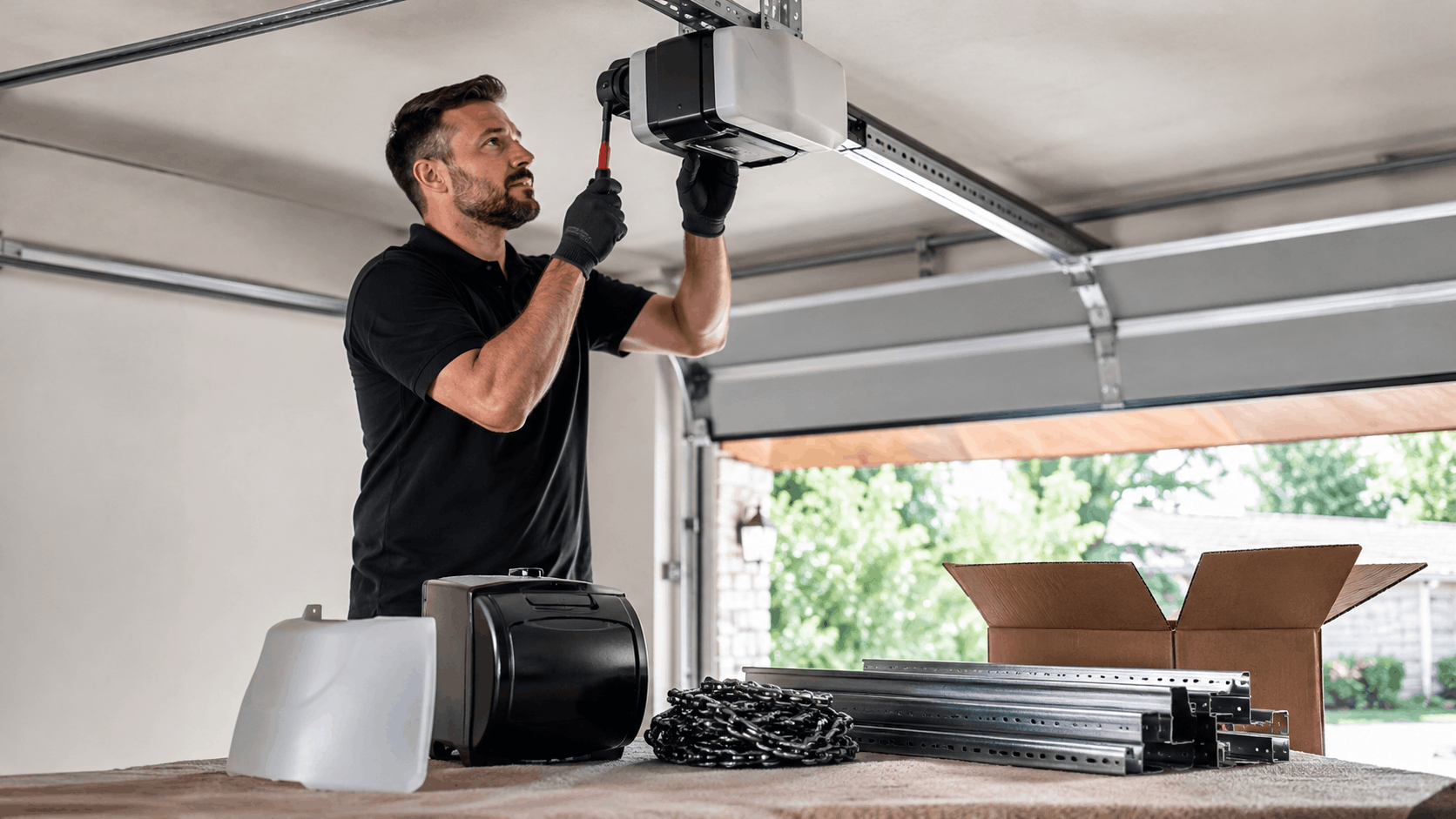
The Four Parts of an Opener Installation Bill
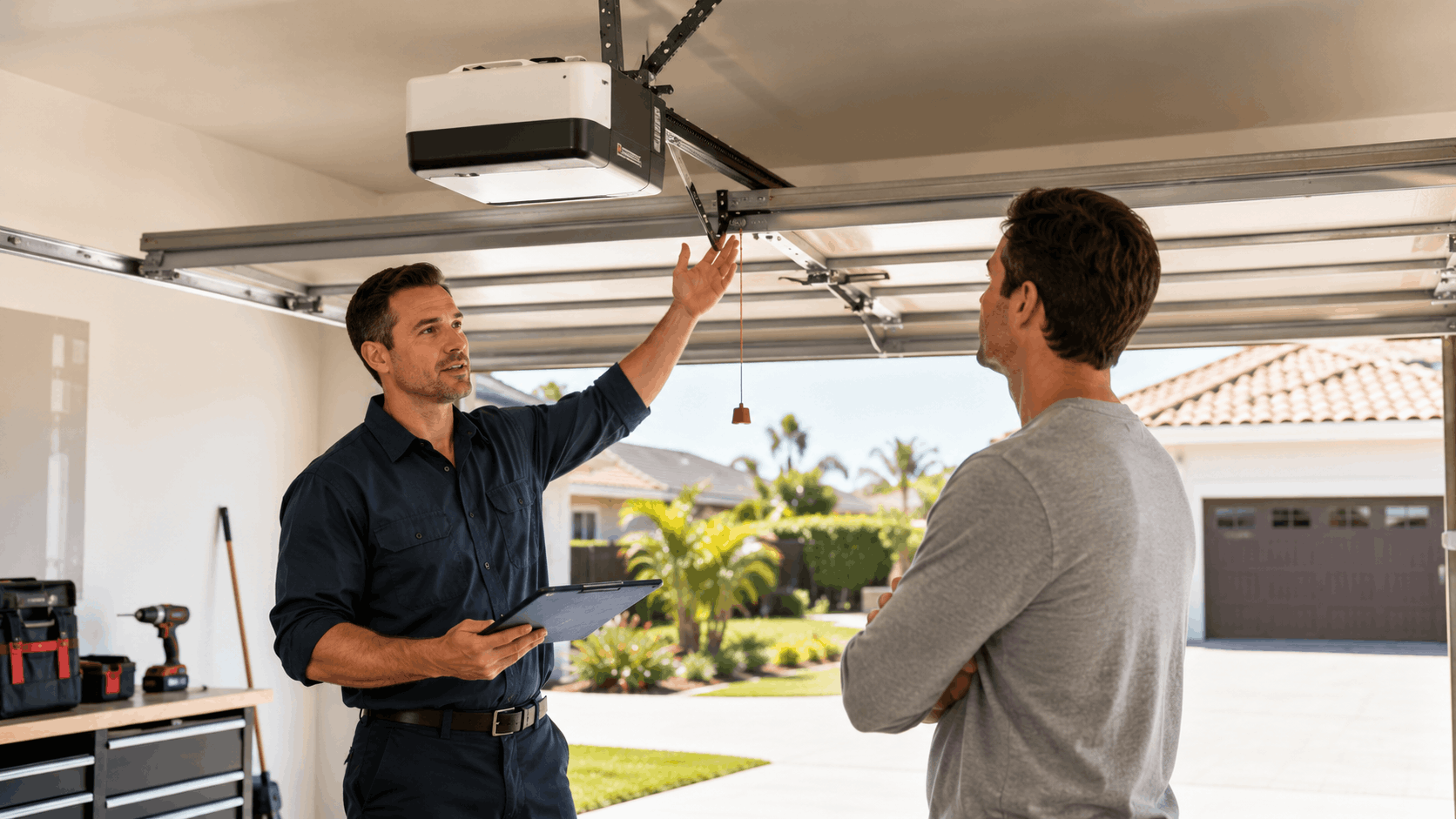
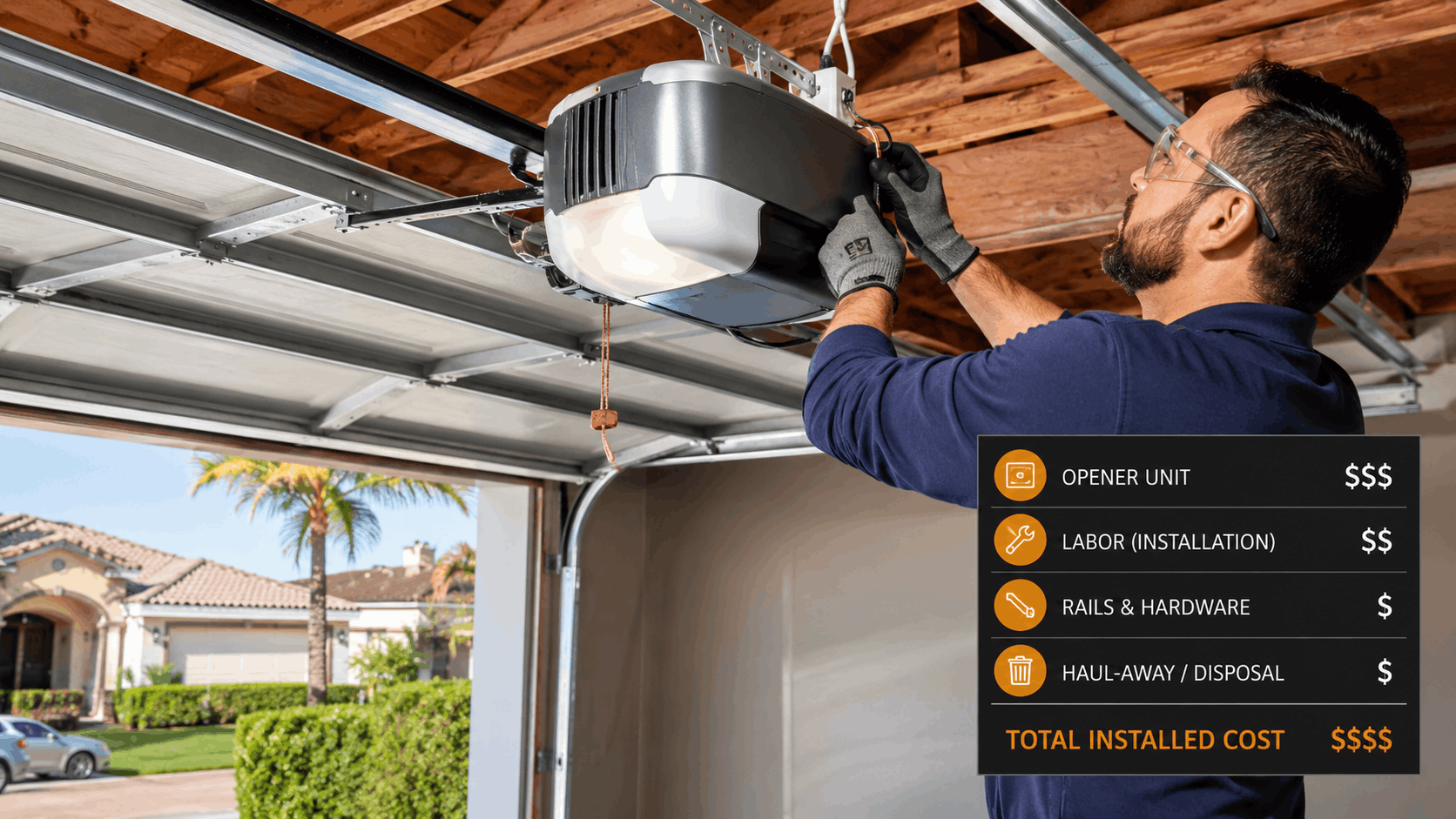
A fair opener installation cost breaks into four clear pieces. When a shop hides them inside one number, the homeowner loses the ability to compare bids honestly. When they are listed separately, comparison shopping becomes simple.
Every quote our team writes in Orange County splits the job the same way:
- The opener unit - the motor, logic board, remotes, and wall control
- Labor - the time to remove the old system and install the new one
- Rail hardware - the track the trolley rides on, plus brackets and struts
- Haul-away - removal and disposal of the old motor and rail
That itemized quote structure is the backbone of the rest of this guide. Read each part and a confusing bill turns into a checklist a homeowner can actually verify.
Why a Lump-Sum Price Hides Real Costs
A single flat rate feels easy. One number, no math, sign here. The problem is that easy number can hide a lot.
When a shop quotes $650 flat with no breakdown, there is no way to tell if the opener costs $180 or $320. There is no way to know if labor is two hours or four. The markup lives inside the blur, and that is exactly where hidden fees like to sit.
We have seen homeowners in Costa Mesa and Santa Ana pay top dollar for a builder-grade chain drive because the flat rate never named the unit. A lump-sum price protects the installer, not the customer. A line-by-line estimate does the reverse.
The fix is simple. Ask any installer to separate the four parts before signing. If they will not, that answer tells a homeowner most of what they need to know.
What a Line-by-Line Estimate Looks Like
An itemized estimate reads like a grocery receipt. Each part gets its own line, its own price, and its own quantity where it makes sense. Nothing hides.
A typical invoice from our Irvine crew might list a belt drive opener at $260, labor at $180, a new rail set at $70, and haul-away at $35. Add tax and the total is right there, with every dollar accounted for. A homeowner can then call another shop and compare the same four lines.
That format also makes warranty claims cleaner later. If the motor fails, the invoice already names the exact unit and its coverage. There is no arguing over what was installed.
A written breakdown is not a courtesy. It is the record that protects the homeowner long after the truck leaves the driveway.
Typical Total Range for Orange County Homes
For most homes from Irvine to Santa Ana, a full opener install lands between $400 and $750 all in. That price range covers a solid mid-grade unit, standard labor, new rails, and disposal.
Simple single-door swaps with an existing ceiling outlet sit at the low end. A quiet belt drive with battery backup, or a heavy double door needing more horsepower, pushes the total cost toward the top.
Older garages near Old Towne Orange or Tustin sometimes run higher because they need an outlet added or a door reinforced. A brand-new install in a garage that never had an opener can climb past $800 once wiring is included.
Those numbers give a realistic frame. Any bid far below the range usually cuts a corner somewhere, and the next sections show where.
Get Your Free Quote
Tell us about your garage door and we'll get back to you fast.
The Opener Unit: What Drives the Price
The garage door opener unit is the single biggest variable on most quotes. Two openers can look alike on the box and cost a hundred dollars apart. The difference lives in the drive style, the power, and the features.
Here is what changes the unit price:
- Drive type - chain, belt, or screw
- Horsepower - matched to door weight
- Smart features - Wi-Fi, app control, battery backup
- Warranty length - motor coverage from one year to lifetime
Picking the right unit is about the door, not the flashiest label. A heavy carriage door and a light aluminum door have very different needs.
Chain, Belt, and Screw Drive Cost Differences
Chain drive openers are the workhorse and the budget choice. They pull the trolley with a metal chain, which is durable but noisy. A basic chain drive unit runs roughly $150 to $220.
A belt drive uses a rubber-reinforced belt instead of a chain. It costs more, usually $230 to $340 for the unit, but it runs far quieter. For homes with bedrooms over the garage, common in Woodbridge and Turtle Rock, a quiet opener is worth every dollar.
Screw drive openers sit in the middle on both price and noise. They use a threaded steel rod and fewer moving parts, which some homeowners like for low maintenance. They can be sensitive to temperature swings, though that matters less in Orange County's mild climate.
Our team most often recommends a belt drive for occupied second-story homes and a chain drive for detached or shop garages. The right pick depends on where the person sleeps relative to that motor.
Horsepower and Door Weight Matter
Horsepower is not about speed. It is about lifting force matched to the weight of the door. Undersize the motor and it burns out early.
A standard single steel door does fine on a 1/2 horsepower unit. A double door, or the heavy solid-wood doors on many older Tustin homes, needs 3/4 or even 1 horsepower to lift smoothly. That step up adds $40 to $90 to the unit cost.
Weight also shortens the life of an underpowered opener. We have replaced motors in Orange homes that failed in five years simply because the door was too heavy for the unit. Spending a little more upfront often saves a full replacement later.
Before choosing power, the door should be balanced correctly. A door that is out of balance strains any motor, which is why our crew checks door balancing and tension before quoting an opener.
Smart and Wi-Fi Openers
A smart opener adds Wi-Fi and app control so a homeowner can open, close, and check the door from a phone. These models run $50 to $120 more than a basic unit. Many pair with systems like MyQ for remote access and alerts.
Battery backup is the feature we push hardest right now. California code under SB-969 requires backup batteries on garage door openers so a door still opens during a power outage. That matters in a state with rolling blackouts and fire-season shutoffs.
You can read the actual requirement on the California legislative site. Skipping the backup on a new install is not only unsafe, it can put the job out of code.
For homeowners who want app control done right, our smart Wi-Fi opener and MyQ setup handles the pairing and testing so the phone actually connects the first time.
Warranty and Brand Value
Warranty length tracks closely with price and quality. A bargain opener might carry a one-year motor warranty. A premium belt drive can come with a lifetime motor and ten-year parts warranty.
For a busy family cycling the door six or eight times a day, the longer warranty is real money saved. A motor that dies in year three under a one-year warranty means paying twice. A lifetime motor covers the part for as long as the family owns the home.
Brand matters here too. Established opener brands stock parts widely, so a repair years later is quick rather than a hunt for a discontinued board. We stick to brands with local parts availability across Orange County for exactly that reason.
The lowest sticker price rarely wins over ten years. A slightly higher unit cost with strong warranty backing almost always costs less in the long run.
Need Help in Irvine?
Urgent Garage Doors serves Irvine and all of Orange County.
Labor Costs and What the Install Really Takes
Labor is the second line item, and it is where padding often hides. A fair labor charge reflects the actual hours the job takes, not a random round number. Knowing the real timeframes helps a homeowner judge a quote.
Most reputable shops in the area price labor one of two ways: a flat install fee or an hourly rate. Here is how those typically shake out locally.
| Job Type | Typical Time | Typical Labor Cost |
|---|---|---|
| Standard opener swap | 2 to 3 hours | $120 to $200 |
| New install (no existing opener) | 3 to 5 hours | $200 to $350 |
| Adding a ceiling outlet | 1 to 2 extra hours | $100 to $250 |
| Rail replacement only | 1 hour | $60 to $100 |
Those figures assume a licensed local crew. Travel time and job difficulty move them, as the sections below explain.
Standard Swap vs. New Install
An opener replacement is the fast case. The wiring, outlet, and mounting points already exist, so the crew removes the old unit and hangs the new one in the same spot. That is the two-to-three-hour job most Irvine homeowners book.
A new install is a bigger project. When a garage never had an opener, the crew must add a ceiling outlet, mount the motor, run the rail, wire the wall button, and install safety sensors from scratch. That is why a new install costs more in both time and parts.
Detached garages add another layer. Older detached structures near Old Towne Orange sometimes lack any ceiling power at all, which means an electrician before the opener even goes up. We flag that on the quote so there is no surprise mid-job.
Knowing which case applies helps a homeowner read the labor line. A swap priced like a new install is a red flag worth questioning.
How Long a Typical Install Takes
A standard opener swap takes our crew two to four hours from arrival to final test. That includes removing the old motor, hanging the new one, running the rail, mounting sensors, and programming remotes and the keypad.
Several things stretch that timeline. A rusted-in old unit, a door that needs rebalancing first, or a missing outlet can each add an hour. A double garage with two openers naturally takes longer than a single.
We schedule same-day service across most of Orange County when parts are in stock. A morning call from Lake Forest or Costa Mesa often gets a working door by afternoon. For urgent lockouts, our same-day garage door repair keeps a car from being trapped overnight.
Realistic time estimates protect everyone. A shop that promises a 45-minute install is either rushing safety steps or has not seen the actual garage yet.
Extra Labor for Wiring and Outlets
Many garages built before the 1990s have no ceiling outlet near the door. This is common in older Orange and Costa Mesa homes, where the original garage was never wired for an opener. Adding that outlet is extra labor.
Running a dedicated ceiling outlet from the panel adds $100 to $250 depending on the run length and whether the wall is finished. In some cases licensed electrical work is required, which we coordinate so the job stays to code.
Using an extension cord instead is not a shortcut, it is a fire hazard and a code violation. We will not wire an opener that way, and no homeowner should accept it. A proper outlet is part of a safe install.
When the quote includes an electrical line, it usually means the garage genuinely needs it. That is honest itemizing, not padding.
Why Local Techs Charge Fairly
Travel time is baked into every service call. A crew driving an hour each way has to charge for that windshield time somewhere. Our base in Irvine sits central to the county, which keeps drives short.
From Irvine, a local technician reaches Woodbridge, Turtle Rock, Tustin, Costa Mesa, and Newport Beach in minutes rather than across a distant county line. Shorter drives mean we can keep labor rates reasonable and still show up on time.
That local footprint also means we know the neighborhoods. We know which streets near Woodbridge have detached garages and which older tracts tend to need outlet work. That knowledge speeds up every quote and every install.
A fair labor charge comes from efficiency, not corner-cutting. Being close is one of the biggest reasons our numbers stay honest.
Rails and Hardware: The Part People Forget
The rail is the track the trolley slides along to pull the door up. It rarely gets mentioned in casual conversation, yet it shows up on nearly every install quote. Homeowners are often surprised to see it as a separate line.
Rails, brackets, struts, and sensors are the hardware that make the motor actually move the door. Skipping or mismatching them causes noise, wear, and early failure. Getting the rail right is part of a clean install.
One-Piece vs. Sectional Rails
Rails come in two main styles. A one-piece rail is a single solid track, which is the sturdiest option and the quietest under load. It runs slightly more, roughly $60 to $90 for the set.
A sectional rail ships in two or three pieces that join with connectors. It costs a little less and packs smaller, which is why many boxed openers include one. The joints can develop a small rattle over years of use.
For a belt drive in a home with rooms above the garage, we lean toward a one-piece rail to keep noise down. For a detached shop garage, a sectional rail is perfectly fine and saves a few dollars. The choice follows the same logic as the drive type.
Neither rail is wrong. The point is knowing which one the quote includes so the price makes sense.
When Old Rails Can Be Reused
Homeowners often ask if the old rail can stay to save money. Sometimes yes, more often no. Rail compatibility comes down to brand and mounting style.
Rails from a different brand almost never match a new motor head. The trolley, chain sprocket, and mounting bolts are all designed as a matched set. Forcing an old rail onto a new unit causes binding and voids the warranty.
Even a same-brand rail may be too worn to reuse. Bent sections, stripped connectors, or a stretched chain track all mean a fresh rail is the safer call. Our crew inspects the old rail before deciding, rather than assuming.
In practice, most opener swaps get a new rail because the units come as a package. Reusing a rail is the exception, not the rule, and any quote should say clearly which one applies.
Reinforcement Brackets and Safety Sensors
Small hardware pieces round out the install. A reinforcement bracket, or strut, stiffens the top door panel so the opener does not flex or crack it during lift. On lighter doors this is a must, and it adds a modest amount to the bill.
Photo-eye safety sensors are non-negotiable. Federal law has required them on all residential openers since 1993, and they stop the door if something crosses the beam. New sensors usually come with the unit, but mounting and aligning them is part of the labor.
Sensors that drift out of alignment are one of the most common opener complaints we see. If a door reverses for no reason, misaligned sensors are usually the cause, which our safety sensor alignment service corrects fast.
These small parts protect people and the door itself. A quote that skips them entirely is cutting a corner that matters.
Haul-Away and Disposal Fees Explained
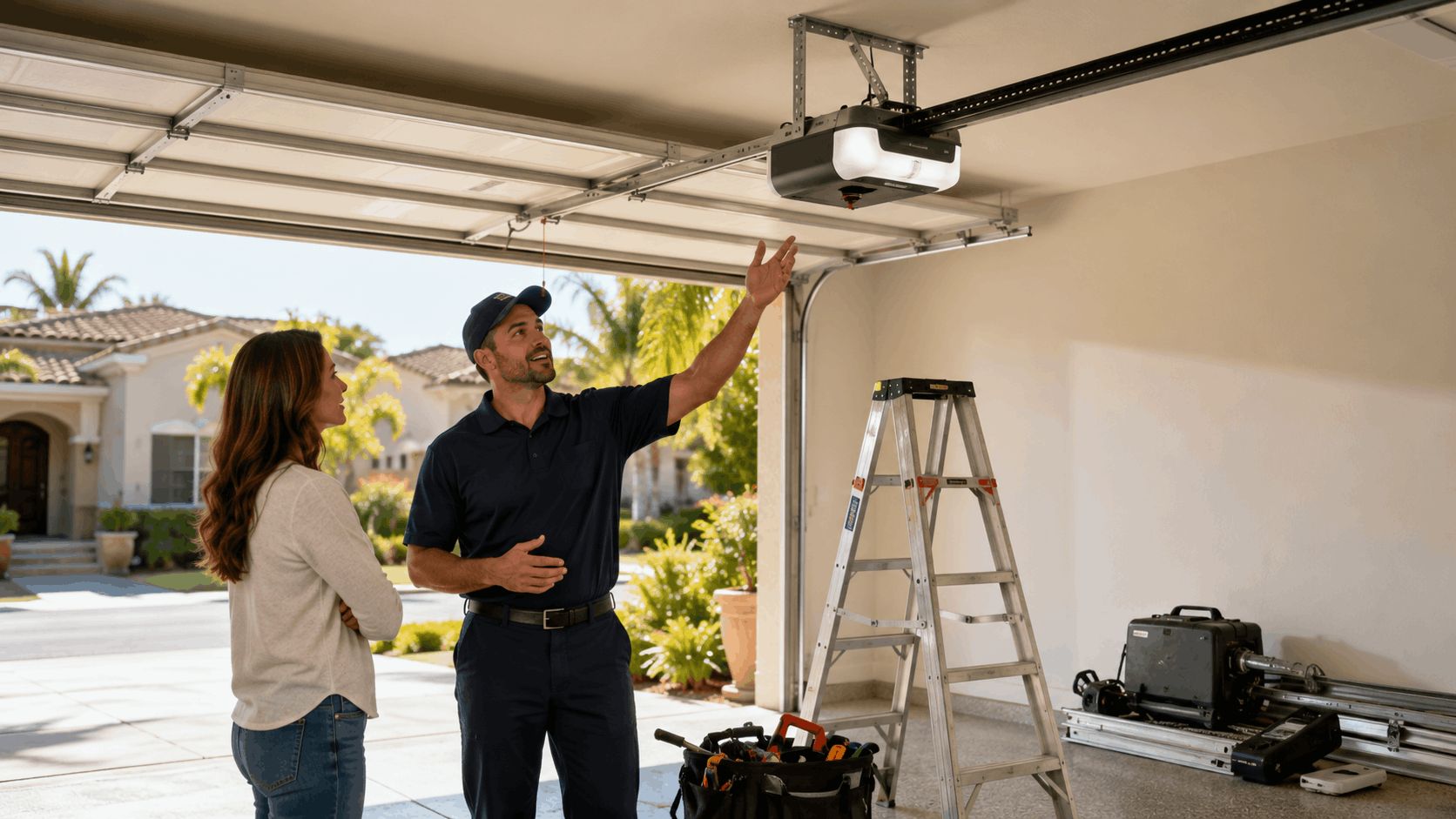
The fourth line is haul-away. It covers hauling off the old motor, rail, and packaging so the homeowner is not left with a pile of metal and cardboard. It is small, usually $25 to $50, but it deserves its own line.
Some shops bury this in labor, others charge nothing and dump the old unit in the customer's trash bin. Neither is ideal. A named haul-away fee means the removal is handled properly and legally.
What Haul-Away Includes
Haul-away covers everything the old system leaves behind. That means the old motor head, the full rail and trolley, mounting brackets, and any old sensors or wiring removed during the swap.
It also covers the packaging from the new unit. A new opener arrives in a large box with foam, plastic, and cardboard that fills a bin fast. Our crew carries it all out rather than leaving it on the garage floor.
For a homeowner in a busy Turtle Rock household, that clean exit matters. The garage is usable the moment we leave, with no stray parts to trip over. That is what the fee buys.
A clear haul-away line tells a homeowner exactly what removal is included. No vague promises, just a listed service.
Orange County Recycling Rules
The fee has a real purpose beyond convenience. An old opener contains a motor, circuit board, and metal that cannot go in regular trash under California rules. The board counts as e-waste.
Orange County runs designated e-waste and metal recycling drop-off points, and haulers must follow those rules. The steel rail goes to metal recycling, while the electronics go to a certified e-waste handler. Details are posted through CalRecycle.
When a shop charges a haul-away fee, part of it covers proper disposal. Dumping a motor board in the trash risks fines and is genuinely bad for the environment. The fee keeps the job legal and clean.
Knowing the rule helps a homeowner see the fee as fair rather than filler. It reflects an actual cost the installer absorbs.
When You Can Skip the Fee
The haul-away line is one place a homeowner can trim cost. If someone wants to keep the old motor for parts or a workshop project, the crew simply leaves it. That drops the fee entirely.
Self-hauling is another option. A homeowner willing to drive the old rail to a metal recycler and the motor to an e-waste site can skip the charge. For a handy person, DIY disposal saves a small but real amount.
We always offer the choice rather than assuming. Some customers want the parts gone that day, others prefer the savings. Both are fine with us.
The point is transparency. A homeowner should always know they can opt out of haul-away, and a good installer will say so upfront.
Need Help in Irvine?
Urgent Garage Doors serves Irvine and all of Orange County.
Local Factors That Change Your Quote in Orange County
Two identical doors can carry different quotes depending on where they sit. Neighborhood rules, home age, and coastal air all shape opener installation cost across the county. These local factors are real, and a good installer accounts for them.
Working across Orange County every day means we see these patterns constantly. Here is how location changes a quote.
HOA Requirements in Communities Like Woodbridge and Turtle Rock
Many Irvine communities have active HOAs with rules that touch garage work. Woodbridge and Turtle Rock both have associations that can restrict exterior changes and work hours. That shapes both the opener choice and the schedule.
Noise rules are the most common issue. An HOA may effectively require a quiet belt drive rather than a loud chain drive in attached-home neighborhoods. That nudges the unit price up, but it keeps the homeowner in good standing.
Work-hour limits also matter. Some associations restrict contractor work to weekday daytime hours, which affects when we can schedule an install. We plan around those windows for our Turtle Rock customers so the job never triggers a violation.
Checking HOA rules before booking saves headaches. We ask about them upfront when a home sits in a managed community.
Older Garages Near Old Towne Orange and Santa Ana
Historic and older neighborhoods bring their own quirks. Homes near Old Towne Orange and parts of Santa Ana often predate modern garage wiring. Those garages frequently need an outlet added before an opener can go up.
Older doors also tend to be heavier solid wood, which needs more horsepower and sometimes reinforcement before an opener is safe. A door that has sagged over decades may need balancing or panel work first. Each of those adds to the total.
We treat these homes with care. Many are older or historic, so the mounting and wiring have to respect the existing structure. Our Santa Ana visits often start with a full inspection before any opener talk.
An older garage does not mean an unfair price. It means an honest one that reflects the real work the space needs.
Coastal Air and Rust in Newport and Huntington Beach
Salt air is hard on garage hardware. Homes near the coast in Newport Beach and Huntington Beach see faster rust on rails, springs, and brackets than inland homes do. That changes which parts we recommend.
For coastal installs we favor corrosion-resistant hardware and galvanized or coated components. They cost a bit more, but they hold up against the ocean air that eats standard steel. Skipping that step means replacing rusted parts years early.
The pattern is clear along the water. A home on the Balboa Peninsula needs different hardware than one in inland Orange. We match the parts to the environment.
Coastal homeowners get the most value from corrosion-resistant choices. The small upcharge pays for itself in a few salty seasons.
Permit and Electrical Considerations
Most straight opener swaps do not need a permit. Replacing a motor on an existing circuit is routine work. The picture changes when new electrical is involved.
Adding a dedicated circuit or a new ceiling outlet can require a permit and licensed electrical work through the local building department. Irvine and other county cities have their own requirements, and pulling the right permit keeps the work legal and insurable.
We coordinate permits and licensed electrical partners when a job needs them. That adds cost and a little time, but it protects the homeowner if they ever sell or file an insurance claim.
A quote that ignores required permits is not saving money, it is creating a future problem. Honest itemizing includes these costs when they apply.
How to Read a Quote and Avoid Overpaying
Once a homeowner understands the four parts, comparing quotes gets easy. The goal is fair pricing, not just the lowest number. A few questions and a written breakdown separate honest bids from padded ones.
Here is a practical way to compare bids and spot red flags before signing anything.
Questions to Ask Before You Sign
Start with the labor rate. Ask whether labor is flat or hourly, and how many hours the shop expects. A clear answer signals a crew that has done this many times.
Ask about the warranty next. Find out the motor warranty length, the parts coverage, and whether the labor is warrantied too. A shop confident in its work stands behind the install, not just the box.
Then ask the sneaky one: are rails and sensors included? Some cheap bids quote only the unit and add rails later. A straight yes or no here tells a homeowner a lot about the shop.
Finally, ask about haul-away and any electrical work. Knowing those upfront prevents surprise charges on the final invoice.
Red Flags in Cheap Bids
A price far below the local range is a warning, not a win. It usually means a corner is being cut somewhere the homeowner will pay for later. Trust the pattern.
Watch for these red flags. No contractor license, cash-only pricing, no written estimate, and vague line items are all signs to walk away. A licensed installer carries insurance and stands behind the work.
California licenses are verifiable in seconds. A homeowner can check any contractor on the Contractors State License Board site before hiring. If the number does not check out, the bid does not matter.
Cheap and unlicensed often turns expensive fast. A botched install, a voided warranty, or a code violation costs far more than the savings.
Getting a Written Itemized Estimate
The single best protection is a written itemized estimate. It puts the unit, labor, rails, and haul-away in black and white before any work starts. Nothing gets added quietly later.
Our Irvine team provides a written breakdown on every visit. The homeowner sees each of the four parts, the total, and the warranty terms before approving the job. There are no mystery charges when the crew is done.
A written estimate also makes comparison shopping honest. Two written breakdowns side by side show exactly where one bid is higher and why. That is how a homeowner buys with confidence.
For a full quote on a new opener, our garage door opener installation service lays out every line before we lift a wrench.
Need Help in Irvine?
Urgent Garage Doors serves Irvine and all of Orange County.
Final Thoughts
A fair opener quote in Orange County always shows its work. The unit, labor, rails, and haul-away each get a line, and each one has a reason behind its number. When those four parts are clear, a homeowner can compare shops honestly and pay only for what the job truly needs.
That Woodbridge homeowner with the dead opener ended up with a quiet belt drive, a new rail, battery backup to meet code, and a written breakdown of every dollar. The car was free by early afternoon.
If an old opener is groaning or already quit, our Irvine team is ready across Orange County with same-day service and an honest itemized quote. Call Urgent Garage Doors or contact us for a straightforward estimate before you sign anywhere else.
Frequently Asked Questions
How much does a garage door opener installation cost in Orange County?
Most full installs run between $400 and $750 all in, covering a mid-grade unit, labor, new rails, and haul-away. Simple single-door swaps with an existing outlet sit at the low end. Heavy double doors, quiet belt drives with battery backup, or garages needing an added outlet push toward the top. Older homes near Old Towne Orange can run higher when electrical work is required.
Is the opener unit or the labor the bigger cost?
On a standard swap, the unit and labor are usually close, with each running roughly $150 to $300. The unit becomes the bigger cost when a homeowner chooses a quiet belt drive with smart features and battery backup. Labor becomes larger on a new install that needs wiring, an added ceiling outlet, or extra reinforcement. A written breakdown shows the exact split for any given job.
Do I always need new rails when I replace an opener?
Not always, but usually. Rails from a different brand almost never match a new motor head, since the trolley and mounting are a matched set. Even a same-brand rail may be too worn or bent to reuse safely. Most opener swaps include a new rail because the units ship as a package. Our crew inspects the old rail before deciding rather than assuming either way.
What does the haul-away fee cover?
Haul-away covers removal of the old motor head, the full rail and trolley, mounting brackets, old sensors, and the packaging from the new unit. The fee typically runs $25 to $50. Part of it covers proper disposal, since the motor board counts as e-waste and the steel goes to metal recycling under California rules. Homeowners can skip the fee by keeping the old unit or self-hauling it.
How long does a standard opener install take?
A standard opener swap takes our crew two to four hours from arrival to final test. That includes removing the old motor, hanging the new one, running the rail, mounting and aligning sensors, and programming remotes. A rusted old unit, a door that needs rebalancing first, or a missing outlet can each add an hour. Double garages with two openers naturally take longer than a single door.
Do I need a permit to install an opener in Irvine?
Most straight opener swaps do not need a permit, since replacing a motor on an existing circuit is routine work. A permit and licensed electrical work may apply when a new dedicated circuit or ceiling outlet is added. Requirements vary by city through the local building department. We coordinate permits and licensed electrical partners whenever a job needs them so the work stays legal and insurable.
Are belt drive openers worth the extra money?
For homes with bedrooms or living space above the garage, yes. A belt drive costs $50 to $120 more than a chain drive but runs far quieter, which matters in attached homes across Woodbridge and Turtle Rock. Chain drives are perfectly fine for detached or shop garages where noise is not a concern. The right choice depends on where people sleep relative to the motor.
Does a battery backup opener cost more?
Yes, a battery backup model adds roughly $50 to $100 to the unit cost. California code under SB-969 requires backup batteries on new garage door openers so a door still opens during a power outage. With rolling blackouts and fire-season shutoffs in the state, the backup is a genuine safety feature, not just an upsell. We include a code-compliant backup on every new install.
Can you install a smart Wi-Fi opener on my older garage?
In most cases, yes. A smart Wi-Fi opener installs on nearly any door regardless of the garage's age. The main consideration in older garages near Old Towne Orange or Santa Ana is power, since many lack a modern ceiling outlet. If an outlet is missing, we add one as part of the job so the opener runs safely and connects to Wi-Fi reliably.
Do you offer same-day opener installation across Orange County?
Yes, we schedule same-day service across most of Orange County when parts are in stock. Our Irvine base sits central to the county, so a morning call from Lake Forest, Costa Mesa, Newport Beach, or Tustin often gets a working door by afternoon. Short drive times keep labor rates reasonable and let us arrive on time. Call early in the day for the best same-day availability.
Frequently Asked Questions
- How much does a garage door opener installation cost in Orange County?
- Most full installs run between $400 and $750 all in, covering a mid-grade unit, labor, new rails, and haul-away. Simple single-door swaps with an existing outlet sit at the low end. Heavy double doors, quiet belt drives with battery backup, or garages needing an added outlet push toward the top. Older homes near Old Towne Orange can run higher when electrical work is required.
- Is the opener unit or the labor the bigger cost?
- On a standard swap, the unit and labor are usually close, with each running roughly $150 to $300. The unit becomes the bigger cost when a homeowner chooses a quiet belt drive with smart features and battery backup. Labor becomes larger on a new install that needs wiring, an added ceiling outlet, or extra reinforcement. A written breakdown shows the exact split for any given job.
- Do I always need new rails when I replace an opener?
- Not always, but usually. Rails from a different brand almost never match a new motor head, since the trolley and mounting are a matched set. Even a same-brand rail may be too worn or bent to reuse safely. Most opener swaps include a new rail because the units ship as a package. Our crew inspects the old rail before deciding rather than assuming either way.
- What does the haul-away fee cover?
- Haul-away covers removal of the old motor head, the full rail and trolley, mounting brackets, old sensors, and the packaging from the new unit. The fee typically runs $25 to $50. Part of it covers proper disposal, since the motor board counts as e-waste and the steel goes to metal recycling under California rules. Homeowners can skip the fee by keeping the old unit or self-hauling it.
- How long does a standard opener install take?
- A standard opener swap takes our crew two to four hours from arrival to final test. That includes removing the old motor, hanging the new one, running the rail, mounting and aligning sensors, and programming remotes. A rusted old unit, a door that needs rebalancing first, or a missing outlet can each add an hour. Double garages with two openers naturally take longer than a single door.
- Do I need a permit to install an opener in Irvine?
- Most straight opener swaps do not need a permit, since replacing a motor on an existing circuit is routine work. A permit and licensed electrical work may apply when a new dedicated circuit or ceiling outlet is added. Requirements vary by city through the local building department. We coordinate permits and licensed electrical partners whenever a job needs them so the work stays legal and insurable.
- Are belt drive openers worth the extra money?
- For homes with bedrooms or living space above the garage, yes. A belt drive costs $50 to $120 more than a chain drive but runs far quieter, which matters in attached homes across Woodbridge and Turtle Rock. Chain drives are perfectly fine for detached or shop garages where noise is not a concern. The right choice depends on where people sleep relative to the motor.
- Does a battery backup opener cost more?
- Yes, a battery backup model adds roughly $50 to $100 to the unit cost. California code under SB-969 requires backup batteries on new garage door openers so a door still opens during a power outage. With rolling blackouts and fire-season shutoffs in the state, the backup is a genuine safety feature, not just an upsell. We include a code-compliant backup on every new install.
- Can you install a smart Wi-Fi opener on my older garage?
- In most cases, yes. A smart Wi-Fi opener installs on nearly any door regardless of the garage's age. The main consideration in older garages near Old Towne Orange or Santa Ana is power, since many lack a modern ceiling outlet. If an outlet is missing, we add one as part of the job so the opener runs safely and connects to Wi-Fi reliably.
- Do you offer same-day opener installation across Orange County?
- Yes, we schedule same-day service across most of Orange County when parts are in stock. Our Irvine base sits central to the county, so a morning call from Lake Forest, Costa Mesa, Newport Beach, or Tustin often gets a working door by afternoon. Short drive times keep labor rates reasonable and let us arrive on time. Call early in the day for the best same-day availability.
U
Licensed garage door repair professionals serving Irvine and Orange County.
Licensed in California · License #1055150
Why trust Urgent Garage Doors?
Founded in 2017, Urgent Garage Doors is a licensed and insured garage door services serving Irvine and Orange County. All content is reviewed by our licensed technicians.

Need Help in Irvine?
Urgent Garage Doors serves Irvine and all of Orange County.
Related Articles
Cost Guides
How Much Does a Garage Door Cost in Orange County (By Material)
See 2026 garage door costs in Orange County broken down by material - steel, wood, aluminum, fiberglass, and vinyl - with local pricing factors, style tips, and installation details.
Cost Guides
Garage Door Panel Replacement vs Full Door Replacement in Orange County
Should you replace one damaged garage door panel or the entire door? This guide covers costs, timelines, HOA rules, and local Orange County factors to help you decide.
Cost Guides
Garage Door Sensor Repair Cost Orange County: Photo Eye Replacement Pricing
Real garage door sensor repair costs in Orange County, plus photo eye replacement pricing, warning signs, DIY checks, and how to pick an honest Irvine repair team.