Moving Into an OC Home: Resetting Every Garage Code and Remote on Day One
Key Takeaways
- Reset every garage code and remote on move-in day, since old remotes and codes keep working until you clear them.
- Identify your opener brand first, as LiftMaster, Chamberlain, Genie, and older Craftsman units reset in slightly different ways.
- A full learn-button memory wipe is the only step that erases remotes the previous owner kept; adding a new remote does not remove old ones.
- Change the outside keypad PIN and pick a code that avoids birthdays, house numbers, and simple patterns.
- Check beyond the garage: rekey the interior door, reissue HOA gate clickers, and secure the emergency release cord.
- Watch for local move-in issues like coastal rust near Newport Coast, sun-faded safety sensors, and dead remote batteries.
- Most resets are DIY, but worn openers, dead logic boards, and fixed-code units are a good reason to call a pro.
- Urgent Garage Doors offers same-day move-in resets and safety checks across Irvine and nearby Orange County cities.
In This Article
The moving truck just pulled away from a quiet cul-de-sac in Woodbridge. Boxes cover the living room floor, the kids are picking bedrooms, and someone finally found the coffee maker. In the middle of all that chaos, one thought stops a new homeowner cold: the family that lived here before still has the garage remote clipped to their old car visor.
That single realization is the reason we wrote this guide. When people buy a home in Orange County, they change the locks on the front door almost out of habit. The garage often gets forgotten, even though it is the door most families actually walk through every day.

Why Day One Is the Right Time to Reset Everything?
The moment new owners get the keys, a hidden security gap opens up. Every remote and code that worked yesterday still works today, and none of it is under the new owner's control yet.
Good garage security starts on move-in day, not weeks later once the boxes are unpacked. Waiting even a few days leaves the home open to anyone who kept a working remote from the old crowd. Real access control means the new owner is the only person who can open that door.
We have driven every village in Irvine, from Northwood to Turtle Rock, and the pattern is always the same. Families spend hours setting up Wi-Fi and cable, then leave the garage exactly how the sellers left it. That is the one gap worth closing first.
Who Might Still Have a Working Remote
Think about how many hands touch a home before it sells. The former owners almost always kept a spare remote or two, and many honestly forget they ever had them. Old remotes end up in junk drawers, glove boxes, and moving boxes that never got unpacked.
Then there are the people the sellers trusted along the way. Contractors, painters, and handymen often got a keypad code so they could come and go during a remodel. That code rarely gets changed once the work wraps up.
House cleaners, dog walkers, and even friendly neighbors sometimes had keypad access to help out. Real estate agents also use lockboxes and shared codes during showings. Any one of these people could still walk up and open the garage today.
None of this means anyone has bad intentions. It simply means the new owner has no idea how many working remotes and codes are floating around out there. Clearing everything is the only way to know for sure.
The Garage as the Real Front Door in OC Homes
Ask most families in Woodbridge or Northwood how they enter their house, and the answer is the garage. They pull in, hit the button, and walk straight into the kitchen. The formal front door mostly gets used by guests and delivery drivers.
That habit makes the garage the true main entry point for home access. If someone can open the garage, they are usually one unlocked interior door away from being inside the house. The stakes are higher than a lot of people realize.
Homes in Turtle Rock and University Park were built around this exact flow, with attached garages that lead right into living space. Garage entry is convenient, but that convenience cuts both ways. Whoever controls the opener controls the easiest way in.
This is why we tell every new client to treat the garage like the front door it really is. Securing it on day one protects the whole home, not just the parking spot.
What Sellers Often Forget to Hand Over
The seller handoff at closing covers a lot of paperwork, but garage details slip through the cracks constantly. Buyers get a stack of manuals and a promise that the remotes are somewhere in a drawer. Often one or two remotes are simply missing.
Keypad codes are even worse. Many sellers do not remember the code they set years ago, so it never gets written down or shared. That old code stays active and unknown, which is the worst combination.
Some openers also have hidden vacation lock settings or extra remotes paired long ago. These never make it into any remote transfer conversation because nobody thinks about them. The new owner inherits a system with unknown history.
We have opened plenty of garages in Irvine where the current owner had no idea a third remote was still paired. A full reset erases all of that mystery in a few minutes.
Get Your Free Quote
Tell us about your garage door and we'll get back to you within 30 to 60 minutes.
Finding Out What Garage Opener You Actually Have
Before touching any buttons, it helps to know exactly what garage opener brand is hanging from the ceiling. Different systems reset in different ways, and guessing wastes time. A quick look at the motor unit tells most of the story.
The three names we see most in local homes are LiftMaster, Chamberlain, and Genie. Knowing which one you have points you to the right reset steps. It also tells you whether the unit is worth keeping or due for an upgrade.
If reading model numbers and comparing brands feels like too much on a busy move-in day, our team handles keypad and remote programming across every Irvine village. Still, most owners can figure this part out on their own.
Reading the Model Number on the Motor Unit
The motor unit is the boxy part bolted to the garage ceiling. Somewhere on it, usually on the side or back panel, there is a printed label. That label lists the model number, serial number, and often a manufacture date.
Grab a step stool and a flashlight, since garage ceilings are dim. Take a clear photo of the label with a phone so the tiny text is easy to read later. The model number is the string of letters and numbers you want.
The manufacture date matters more than people think. An opener built in 1998 works very differently from one built in 2020. That date helps you know whether you are dealing with old fixed-code tech or a modern rolling code system.
If the label is faded or missing, the brand logo on the front cover is the next clue. Between the logo and any visible model markings, most owners can narrow things down fast.
Common Brands in Irvine Homes
Across Irvine builds, LiftMaster and Chamberlain openers show up more than any other. They are actually made by the same parent company, so their reset steps are nearly identical. If you see either name, the process later in this guide will match.
Genie is the next common brand we run into, especially in mid-2000s homes. Genie units use a slightly different button sequence, which trips people up if they assume all openers work alike. We cover that difference below.
In homes built in the 1990s near University Park and older parts of El Camino Real, we still find Sears Craftsman units. Many of these were actually built by the same makers as LiftMaster. They are reliable but often overdue for replacement.
Knowing your brand also helps when buying a replacement remote. A universal remote can work across brands, but a brand-matched remote pairs more easily and rarely has hiccups.
Older Homes vs. Newer Villages
The single biggest difference between openers is fixed code versus rolling code. Older units use a fixed code that never changes, which makes them easier for outsiders to copy. Homes near University Park and other 1990s neighborhoods often still run these.
Newer communities like Portola Springs and the Great Park villages use rolling code systems. A rolling code changes with every single press, so a captured signal is useless the next time. This is a real security upgrade.
If a home has a fixed-code opener, resetting the remotes still helps, but the underlying system stays weaker. In those cases, we often suggest a modern opener during the move-in visit. The security jump is worth it.
You can usually tell rolling code from the age and model. Units from the last decade almost always use it, while anything from the 1990s likely does not. The Cybersecurity and Infrastructure Security Agency has long flagged fixed-code wireless devices as easier targets.
Need Help in Irvine?
Urgent Garage Doors serves Irvine and all of Orange County.
Resetting the Keypad Code on the Outside of the Garage
The wireless keypad mounted next to the garage door is often the easiest reset and the one people skip. A keypad code reset takes about two minutes once you know the steps. Yet an old PIN code left active is a wide-open door.
Most keypads are battery powered, though some older ones are wired into the wall. Either type can be reprogrammed with a new code. The trick is matching the steps to your specific brand.
Changing the code cuts off anyone who ever learned the old one, including contractors and past house sitters. It is the fastest security win on move-in day. Do this before you even finish unloading the truck.
Step-by-Step for LiftMaster and Chamberlain Keypads
For LiftMaster and Chamberlain keypads, start at the motor unit on the ceiling. Find the learn button, which is a small colored square usually near the antenna wire. Press and release it, and a small LED will light up.
Within about 30 seconds, walk to the keypad and enter your new PIN. Then press the enter or the up-and-down arrow button, depending on the model. The opener light or a click confirms the new code took.
Some newer models let you set the code entirely at the keypad without touching the motor unit. In that case, you enter a master code first, then follow the prompts. The keypad manual, or a quick search of your model number, spells out which method your unit uses.
Test the new PIN right away by closing the door and entering the code from outside. If the door responds, the reset worked. If not, repeat the learn button step and try again slowly.
How to Handle Genie and Older Keypads
Genie keypads follow a different reset sequence than LiftMaster. On many Genie units, you enter the existing PIN, then press a specific program button to set a new one. If you do not know the old PIN, you clear it from the motor unit instead.
The Genie learn or program button is often behind a light cover or panel on the motor. Press it, wait for the indicator, then enter your fresh code at the keypad. Genie also tends to use a longer setup routine, so patience helps.
For very old keypads with no visible instructions and no manual, the safest move is a full reset from the opener. Clearing the opener memory wipes the keypad code along with the remotes. Then you reprogram the keypad from scratch.
If a keypad is cracked, sun-baked, or unresponsive after all this, it may simply be worn out. Replacement keypads are inexpensive and pair quickly with the same steps.
Picking a Code That Is Hard to Guess
A secure code should not be anything a stranger could guess by looking at the house. Skip the street address, the house number, and any number painted on the curb. Those are the first things someone would try.
Birthdays are another weak choice, since dates are easy to find and often shared online. The same goes for simple patterns like 1234 or 1111. A random four to six digit code offers far more PIN strength.
Longer is better when the keypad allows it. A six-digit code is dramatically harder to guess than four digits. Write it somewhere private inside the house rather than trusting memory alone during a hectic week.
Get in the habit of rotating the code once or twice a year. It takes two minutes and keeps the code fresh if you ever share it with a service person. That small routine keeps garage security strong long after move-in day.
Clearing All Old Remotes From the Opener Memory
This is the step that actually locks out the previous owner. To clear opener memory means wiping every remote the unit remembers, all at once. After this, no old remote will open the door no matter who holds it.
The learn button does all the heavy lifting here. A short press pairs a new remote, but a long hold erases everything. That difference is where most people get confused.
We treat this as the most important task in any move-in reset. Everything else adds protection, but this is the step that erases remotes you cannot see or account for.
The Difference Between Erasing and Reprogramming
Many new owners assume that programming their own remote automatically kicks out the old ones. It does not. Adding a remote just tells the opener to also accept that new signal, while every previous remote keeps working.
Reprogramming is additive, but a memory wipe is subtractive. To truly remove the seller's remotes, the whole memory has to be cleared first. Only then do you pair back the remotes you control.
Picture the opener memory like a guest list. Pairing a new remote adds one name, but it never crosses off the old ones. A full wipe tears up the entire list so you can start clean.
This is why we always do the memory wipe before pairing anything. Skip it, and those forgotten seller remotes stay on the list forever.
How to Perform a Full Memory Reset
Find the learn button on the motor unit again. Instead of a quick press, hold it down until the LED indicator light turns off. That usually takes about six to ten seconds, though timing varies by brand.
When the light goes dark, the memory is cleared. On LiftMaster and Chamberlain, a colored LED near the button shuts off to confirm it. On Genie, a different indicator behaves the same way after the learn button hold.
At this exact moment, every remote and keypad code is wiped, including your own. That is expected and fine. You will pair back the ones you want in the next section.
If you are unsure whether the reset worked, the missing LED and a dead old remote are your two proof points. When in doubt, our opener and smart access team can confirm it on a same-day visit.
Confirming Old Remotes No Longer Work
Testing is how you prove the reset actually happened. Take any remote you did not just reprogram and press its button near the door. If the memory wipe worked, nothing will move.
If you have an old seller remote in hand, this is the best test of all. A dead press means that remote is now useless to whoever might have a matching one. That is exactly the outcome you want.
Do the same check with the outside keypad using the old code, if you knew it. It should also fail after a full memory reset. Only your new code and paired remotes should work.
Run this remote testing step every time you finish a reset. It turns a hopeful assumption into confirmed proof that the door is under your control alone.
Programming Your Own Remotes and Car Buttons
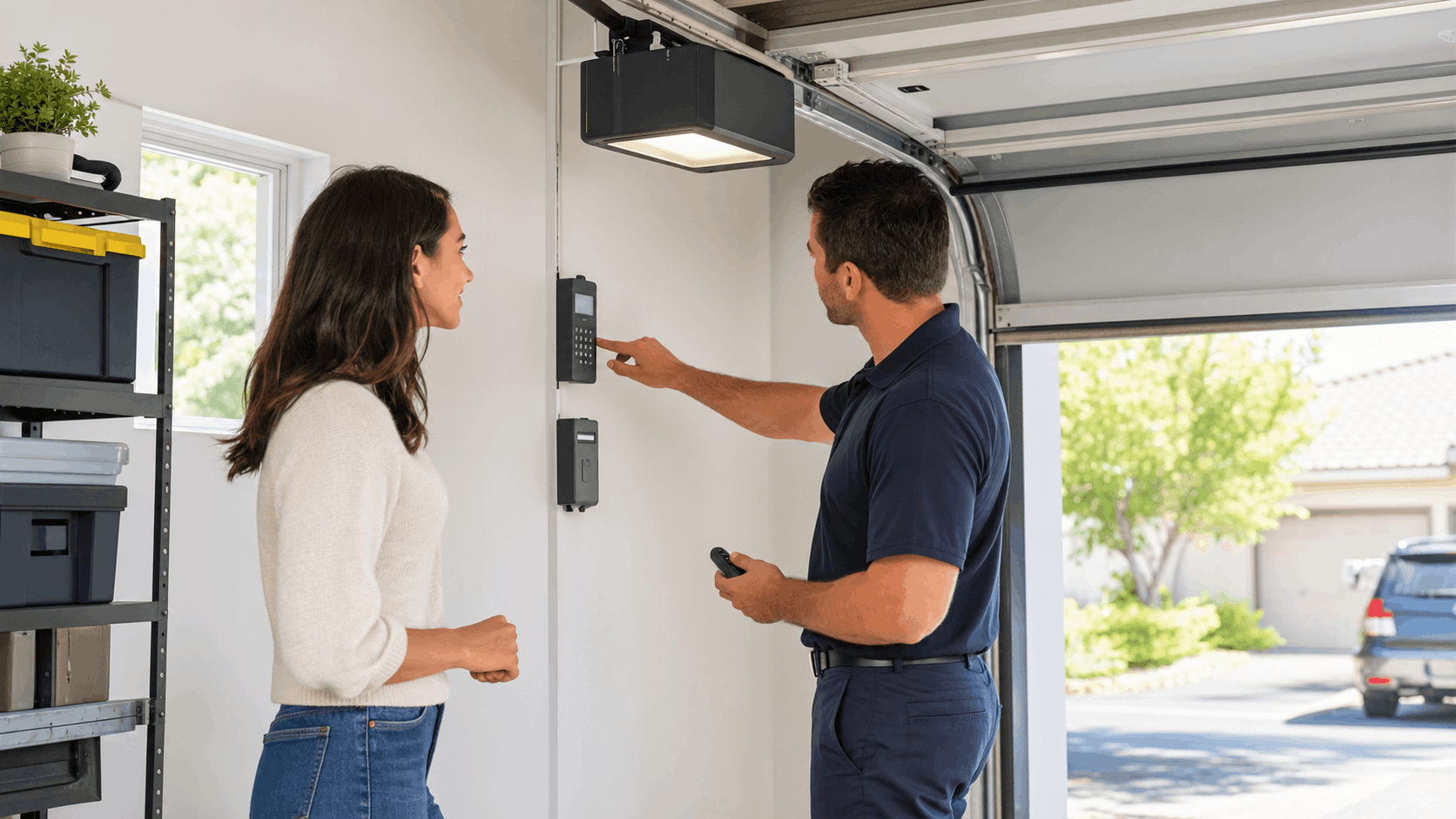
With the memory cleared, it is time to add back only what you actually use. That means your handheld remotes, your car buttons, and any app control. Nothing the seller owned comes back into the picture.
The process to program a remote is quick once the memory is fresh. Each device gets paired one at a time with a short learn button press. Ten minutes usually covers a whole household.
Adding devices in a controlled way keeps the list clean. You know exactly what can open the door because you paired every single one yourself.
Pairing Handheld and Visor Remotes
Start with your physical remotes, whether they are handheld clickers or a visor remote clipped in the car. Press and release the learn button on the motor unit. The LED will light up to show it is listening.
Within 30 seconds, press the button on the remote you want to pair. The opener light will flash or you will hear a click confirming the pairing. Test the remote by opening and closing the door once.
Repeat this for each remote in the house. Every device needs its own learn button press, so do not try to pair two at once. Work through them one by one for clean results.
Label your remotes if you have several, so family members know which is which. A small piece of tape with a name saves confusion during the busy first weeks.
Setting Up HomeLink in the Car
Many cars driving around Irvine have built-in garage buttons on the mirror or overhead console. This system is called HomeLink, and it replaces the clip-on visor remote. Programming it takes a few extra steps but no special tools.
Start by clearing any old HomeLink settings the seller of your car may have left, then begin fresh. Hold the HomeLink button until it flashes, then hold a working remote up to it to teach the signal. Finally, press the learn button on the motor unit to finish the in-car programming.
Rolling code openers need one more step at the motor unit, which is why the third press matters. Skip it and the button will seem paired but will not open the door. This is a common HomeLink snag we see.
Every car brand words the steps a little differently, so the owner's manual is worth a glance. Once set, the button opens the door the moment you turn into the driveway.
Connecting Smartphone and App Control
Modern openers often connect to a phone app like myQ for remote control from anywhere. If the home has a smart opener, check whether it is still linked to the previous owner's account. This step gets missed constantly.
Log into the app and look for any existing account tied to the device. The old owner may still be able to open the door from their phone across town if they were never removed. That is a serious gap.
A factory reset of the smart module unlinks old accounts, then you create your own. Our smart Wi-Fi opener and myQ setup service handles this for owners who want it done right the first time. It is worth confirming rather than assuming.
Once your account is the only one linked, you get alerts when the door opens and close-it-from-anywhere control. Just treat the app login like any other password and keep it private.
Need Help in Irvine?
Urgent Garage Doors serves Irvine and all of Orange County.
Checking the Rest of Your Home Entry Points on Move-In Day
The garage is the biggest reset, but a real home security checklist covers more than one door. Several connected entry points share the same risk on move-in day. A few quick checks close the remaining gaps.
Think of move-in security as a loop that has to be fully closed. A reset garage does little good if the door beside it stays unlocked. Walk the whole path a stranger might take.
These extra checks take another 20 minutes but round out the whole picture. They matter just as much in a Turtle Ridge estate as a Woodbridge townhome.
The Interior Garage-to-House Door
The door between the garage and the house is a favorite weak spot. Many families leave it unlocked out of habit, since the garage feels secure. But if the garage is breached, that door is the last line of defense.
Check whether this door even has a working deadbolt. Older Irvine homes sometimes have only a flimsy handle lock here. Upgrading to a solid deadbolt is cheap and worthwhile.
Just as important, get this lock rekeyed or replaced on move-in day. The seller and anyone they trusted may hold a key to this exact door. Rekeying makes those old keys useless.
Build the habit of locking this interior door at night even after securing the garage. Two locked doors are far better than one, and the routine costs nothing.
HOA Gate Clickers and Community Access
Gated communities across Orange County add another layer of remotes to manage. Neighborhoods like Turtle Ridge and Quail Hill use community gates with their own clickers. These are separate from the garage opener entirely.
The HOA gate remote is controlled by the association, not the garage system. That means the previous owner's gate clicker keeps working until the HOA deactivates it. You have to contact the HOA office directly.
Call or visit the association to reissue gate remotes in your name and cancel the old ones. Most OC HOAs charge a small fee per clicker and require proof you own the home. Bring your closing paperwork to speed it up.
Do not overlook pedestrian gate codes and pool fobs either. Community access often includes several small devices, and each one is another way in for someone who never returned theirs.
Manual Lock and Emergency Release Cord
Every garage door has a red emergency release cord hanging from the center track. It disconnects the door from the opener so you can lift it by hand during a power outage. It is handy, but it can also be a vulnerability.
Intruders sometimes fish for that cord through the top of the door to trip the release. A simple zip tie or a release lock shield can block that trick without stopping proper emergency use. We install these during many move-in visits.
The manual lock, if the door has one, is a slide bolt on the side track. Engaging it when you travel keeps the door from being forced open even if the opener is bypassed. It is old-school but effective.
Take a minute to find both the release cord and any manual lock so you know how they work. Understanding these parts helps you use them safely rather than fear them. The Consumer Reports home safety guides echo the value of securing these overlooked spots.
When to Reset It Yourself vs. Call an Irvine Pro
Most move-in resets are do-it-yourself jobs, but some situations call for a pro. Knowing the line between the two saves time and frustration. It also keeps you from wrestling with an opener that needs real repair.
A clear DIY reset covers codes, remotes, and app accounts. Anything involving the opener's mechanical guts or aging electronics is where garage door service in Irvine earns its keep. The table below sorts it out.
| Task | DIY Friendly | Call a Pro |
|---|---|---|
| Change keypad PIN code | Yes | Only if keypad is broken |
| Clear opener memory | Yes | If learn button missing |
| Pair new remotes and HomeLink | Yes | If pairing keeps failing |
| Remove old myQ account | Usually | If account is locked |
| Replace worn opener | No | Yes |
| Fix dead logic board | No | Yes |
| Rekey interior door | Sometimes | For solid deadbolts |
Jobs Most Homeowners Can Do Alone
The simple resets need no tools beyond a step stool and a flashlight. Changing the keypad code, clearing opener memory, and pairing your own remotes all fall here. These DIY garage tasks take under an hour total.
The steps are the same across most homes, so once you do one you understand the pattern. Press the learn button, wait for the LED, and add or clear as needed. There is no wiring or heavy lifting involved.
Removing an old app account is usually a phone job you can handle from the couch. As long as you can log in and find the device settings, a factory unlink is straightforward. Most owners finish a full simple reset in one sitting.
If any step stalls, take a photo of your opener model and search the exact steps. Nine times out of ten the answer is a small brand-specific difference you can fix yourself.
Signs the Opener Itself Needs Attention
Sometimes a reset reveals a bigger problem. If the opener grinds, hesitates, or refuses to hold a pairing, the unit itself may be failing. A worn opener will not get better on its own.
A dead logic board is a common culprit in older units. When the learn button does nothing and the LED never lights, the board may be shot. That calls for an opener upgrade rather than more reset attempts.
Fixed-code openers from the 1990s are prime upgrade candidates during move-in. They are less secure and harder to find remotes for. Swapping to a rolling code unit solves both problems at once, and our opener repair and troubleshooting team can advise on the call.
If the opener struggles to move the door at all, the springs or cables may share the blame. That is a good moment to have the whole system checked rather than just the electronics.
How Our Team Handles Move-In Resets
At Urgent Garage Doors, move-in resets are one of the more common calls we get. We serve neighborhoods across Irvine and nearby OC cities with same-day service. A technician can often be out the same afternoon you call.
A typical visit covers the full reset plus a safety and function check of the whole door. We clear the memory, set your new code, pair your remotes, and confirm the old ones are dead. Then we look over springs, sensors, and hardware while we are there.
For families new to the area, we also explain how the opener works and answer questions on the spot. Many owners like knowing everything is handled correctly on a busy day. Our same-day repair service means you are not waiting a week.
Whether the home is in Woodbridge, Turtle Rock, or one of the Great Park villages, the reset process is the same steady routine for us. We have done it on hundreds of local homes.
Need Help in Irvine?
Urgent Garage Doors serves Irvine and all of Orange County.
Common Move-In Garage Problems We See Across Orange County
After years of move-in visits, our team notices clear patterns in local garage door problems. Many tie directly to the age of the home and the coastal climate. New owners inherit these issues without realizing it.
These problems show up across Orange County homes, from inland Irvine to the coast. Knowing them helps a new owner spot trouble early. A move-in reset is the perfect moment to catch them.
Below are the three move-in issues we run into most. Each has a simple fix when caught early and a bigger repair when ignored.
Coastal Air and Rusted Hardware
Salty coastal air is hard on metal garage parts. Homes closer to Newport Coast and the beach cities take the worst of it. Springs, tracks, and rollers rust more there than in inland Irvine.
Rusted springs are the most concerning, since a failing spring can drop a heavy door. We often find corrosion on move-in inspections near the coast. Catching it early avoids a sudden break later.
Salt also creeps into cables and hinges, stiffening the whole system. A door that squeals or moves unevenly often has rust to blame. Our spring and cable repair team handles these coastal cases regularly.
If a home sits within a few miles of the water, a hardware check on move-in day is smart. Replacing a rusted spring on your schedule beats an emergency call weeks later.
Sun-Faded Sensors and Loose Wiring
Strong Orange County sun does its own kind of damage. The heat and glare can knock safety sensors out of alignment over time. Those are the small units near the bottom of the door track.
When sensors drift out of line, the door refuses to close or reverses on its own. Vacant homes that sat empty before a sale often have this exact issue. A quick realignment usually fixes it.
Years of heat also dry out and crack wiring in older Irvine builds. Brittle wires cause intermittent faults that are maddening to diagnose. Our safety sensor alignment service covers both the sensors and the wiring behind them.
Test the safety sensors on move-in day by waving something in the beam as the door closes. If it does not reverse, the system needs attention before anyone parks under it.
Dead Remote Batteries and Weak Signals
Homes that sat vacant during escrow often have dead remote batteries. The remotes seem broken when they simply need a fresh coin cell. Swap the battery before assuming a remote is bad.
Weak signal range is another quiet issue. If a remote only works from a few feet away, the opener antenna or the remote itself may be struggling. This shows up more in larger homes and long driveways.
After any reset, test each remote from where you normally use it. Press from the end of the driveway to check real-world signal range. A remote that only works up close needs a look.
Fresh batteries and a clear antenna solve most range complaints. If the problem lingers after that, the opener may need service to boost or repair the receiver.

Final Thoughts
Resetting every garage code and remote on day one is the smartest security move a new OC homeowner can make. It closes the gap left by unknown remotes, forgotten codes, and old app accounts. A clean opener memory means the home is finally under your control alone.
The core steps are simple: identify the opener, change the keypad code, wipe the memory, pair your own remotes, and check the other entry points. Most owners can handle this in under an hour. When the opener itself needs help, that is where a local pro steps in.
If you just moved into a home anywhere in Irvine or nearby Orange County, our team is ready to help. Call Urgent Garage Doors or reach out through our contact page for a same-day move-in reset and safety check. Start your first day in the new home knowing the garage is truly yours.
Frequently Asked Questions
- Can the previous owner still open my garage after I move in?
- Yes. Any remote or keypad code the previous owner kept will keep working until you clear the opener's memory. Programming your own remote does not remove theirs, since new devices are added alongside the old ones. The only sure fix is a full memory wipe using the learn button, followed by changing the outside keypad code. Do both on day one to lock everyone else out.
- How do I clear all remotes from my garage opener?
- Find the learn button on the motor unit hanging from the ceiling. Press and hold it until the LED indicator light goes off, usually about six to ten seconds. That single action erases every paired remote and keypad code at once, including your own. Timing and button color vary by brand, so LiftMaster, Chamberlain, and Genie each look slightly different. After the wipe, pair back only the remotes you control.
- How long does it take to reset every code and remote?
- For a typical Orange County home, plan on about 20 to 45 minutes. Clearing the memory and setting a new keypad code takes only a few minutes each. Pairing remotes, programming a car HomeLink button, and cleaning up an app account fill the rest of the time. Larger homes with several remotes and a community gate remote sit at the higher end of that range.
- What if I do not have any remotes at all?
- You can still secure the garage and add access. New remotes are easy to buy, and universal remotes work with most major brands including LiftMaster, Chamberlain, and Genie. First clear the opener memory so no old devices remain, then pair your new remote using the learn button. The outside keypad also gives you keyless entry, so a fresh code alone can get you in until remotes arrive.
- How do I find the learn button on my opener?
- Look at the motor unit bolted to the garage ceiling. The learn button is a small colored square, often near where the hanging antenna wire connects. On many models an LED light sits right beside it. You may need to lift a light cover or small panel to reach it. Bring a flashlight, since garage ceilings are dim, and snap a photo of your model number while you are up there.
- Should I change the keypad code even if I do not use it?
- Yes, absolutely. An active old keypad code is a working way into your home whether you use the keypad or not. Contractors, house cleaners, or the former owner may still know that code. Changing it takes about two minutes with the learn button and a new PIN. If you never plan to use the keypad, you can even clear it entirely during a full memory reset.
- How do I remove an old owner from the myQ app?
- Open the myQ app and check the device settings for any linked accounts. If the previous owner is still connected, they may control the door remotely. The cleanest fix is a factory reset of the smart module or Wi-Fi unit, which unlinks all old accounts. Then create your own account and add the opener fresh. If the account appears locked, our team can help complete the unlink.
- Does my HOA control the community gate remote too?
- Yes. In gated Orange County communities like Turtle Ridge and Quail Hill, the community gate is managed by the homeowners association, not your garage opener. The previous owner's gate clicker keeps working until the HOA deactivates it. Contact the HOA office to reissue gate remotes in your name and cancel the old ones. Bring your closing paperwork, and expect a small fee per clicker or fob.
- How much does a professional garage reset cost in Irvine?
- A basic move-in reset typically runs in a modest service-call range, depending on how many remotes and accounts are involved. If the opener is old, has a dead logic board, or needs a rolling code upgrade, the total rises with parts and labor. A quick call gives you a clear estimate. We always confirm pricing before any work so there are no surprises.
- Can Urgent Garage Doors do a same-day move-in reset?
- Yes. Urgent Garage Doors offers same-day service across Irvine and nearby Orange County cities. A technician can usually reach your new home the same day you call, clear the opener memory, set a new code, pair your remotes, and confirm the old ones no longer work. We also check springs, sensors, and hardware while on site so your first day starts with a fully secure, working garage.
Licensed garage door repair professionals serving Irvine and Orange County.
Licensed in California · License #1055150
Why trust Urgent Garage Doors?
Founded in 2017, Urgent Garage Doors is a licensed and insured garage door services serving Irvine and Orange County. All content is reviewed by our licensed technicians.

Need Help in Irvine?
Urgent Garage Doors serves Irvine and all of Orange County.
Related Articles
Keypad and Remote Programming: Rolling Codes, Lost Remotes, and Locking Out Old Ones After a Move
A local Irvine guide to keypad and remote programming, rolling codes, replacing lost remotes, and locking out old openers after moving into a new home.
Pedestrian Pass Doors Built Into Garage Doors: When a Door-Within-a-Door Makes Sense
A local guide to pedestrian pass doors built into garage doors in Irvine: how they work, when a door-within-a-door makes sense, costs, safety, and HOA rules.
How Rolling Code Technology Keeps Your Irvine Garage More Secure
Learn how rolling code technology stops thieves from copying your garage remote, why older fixed-code openers leave Irvine homes exposed, and when to upgrade.