Tips & Advice
Wind-Rated Glass and Impact Options for Coastal OC Installs
Key Takeaways
- Coastal OC homes near Newport Coast, Corona del Mar, and the Balboa Peninsula face wind and salt that standard doors cannot handle.
- Design pressure (DP) ratings measure how much wind force a door can take; coastal homes usually need DP 30 to 40 or higher.
- Laminated impact glass stays intact when struck, while tempered glass shatters into an open hole during a wind event.
- Salt air rusts springs, tracks, and fasteners years early, so galvanized, stainless, and powder-coated parts are worth the cost near the water.
- Coastal cities like Newport Beach and Laguna Beach may require wind-rated doors and permits, and HOAs often set style rules.
- Match the door to the home's distance from the ocean, from full impact glass on beachfront lots to standard doors in inland Irvine.
- Professional installation protects the wind rating and warranty, and a monthly salt rinse plus seasonal inspection extends door life.
In This Article
Picture a homeowner in Corona del Mar standing in the driveway on a windy afternoon. The garage door window has a faint cloud between the panes, and the salt-heavy breeze off the water never seems to let up. That homeowner is not imagining things - coastal air and gusty wind put real stress on garage doors near the ocean.
We field calls like this every week from Newport Coast to the streets that run off Pacific Coast Highway. People want to know if their door can take a strong wind event, whether their glass will hold up, and how to fight the rust that keeps creeping onto their hardware. These are fair questions, and the answers are not always obvious from a showroom brochure.
Why Coastal Orange County Homes Need Wind-Rated Garage Doors
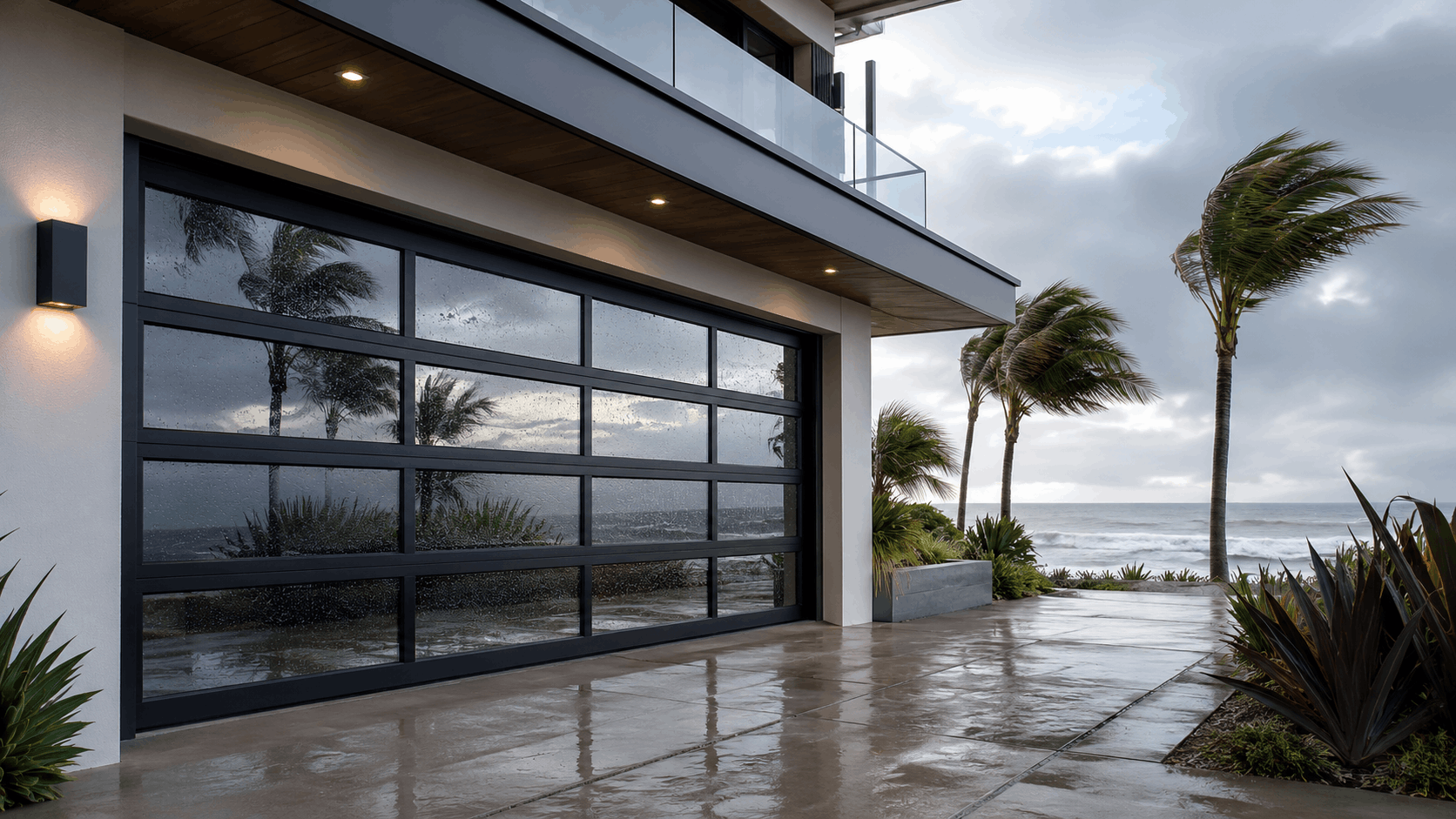
A garage door is one of the largest moving surfaces on any house. On a coastal lot, that big flat panel acts like a sail every time the wind picks up. A wind-rated garage door is built and tested to resist that force without bowing, popping loose, or losing its glass.
Homes in coastal Orange County face wind loads that inland houses rarely deal with. The combination of steady ocean pressure and sudden gusts is what separates a beach-adjacent install from a standard suburban one. Here is why standard doors often fall short near the water:
- They flex under sustained wind pressure that inland doors never see
- Their windows are not rated to survive flying debris during a storm
- Their hardware corrodes faster in salt air, weakening the whole system
- They can pull out of the track during a strong Santa Ana event
When a door is properly rated and anchored, it stays put and keeps the rest of the home protected. That matters more the closer a house sits to the shoreline.
How Ocean Wind and Santa Ana Gusts Stress Garage Doors
Onshore ocean wind tends to be steady. It pushes against a door for hours at a time, and that constant wind pressure slowly works fasteners loose and bows thin panels. A door might look fine day to day, then reveal a gap or a wobble after a long stretch of breezy weather.
Santa Ana winds are a different animal. They blow the opposite direction, from the inland deserts toward the coast, and they arrive in sharp, fast bursts. Those gusts can spike hard enough to slam a door against its stops or yank it in the opposite direction within the same minute.
Both patterns test the same weak points, just in different ways. Ocean wind finds the slow failures, while Santa Ana winds find the sudden ones. A door built for coastal service needs to handle both positive and negative pressure, meaning wind that pushes in and wind that pulls out.
We often see the worst damage after the first big Santa Ana event of the fall. Homeowners who made it through a whole summer of ocean breeze suddenly need a same-day fix. That is the moment a proper wind rating earns its cost.
Neighborhoods Most Exposed to Coastal Wind
Not every OC home faces the same exposure. Properties in Newport Coast sit on higher ground with wide-open ocean views, which also means they catch wind with nothing to slow it down. Those hillside lots see some of the strongest gusts in the county.
Corona del Mar and the bluffs above the beach get a steady, salt-heavy wind that coats hardware and glass. Homes right along Pacific Coast Highway take direct exposure from both traffic-level gusts and open ocean air. Crystal Cove properties, tucked between the hills and the water, deal with a mix of both.
Down on the sand, the Balboa Peninsula in Newport Beach is about as exposed as it gets. Wind, salt, and blowing sand all hit those doors at once. Even the more sheltered Big Canyon area of Newport Beach gets enough salt drift to matter over time.
Knowing the block a home sits on tells us a lot before we ever pull up. A first-row beach house and a home three streets inland need very different doors, even in the same zip code.
What Happens When a Door Is Not Wind-Rated
Panel failure is the most common problem we see. A thin, non-rated panel bows inward under wind pressure until it creases or cracks. Once a panel is bent, it never seals right again, and the door starts letting in air, water, and more salt.
Blown-out windows are the scary one. A standard tempered window can shatter when struck by debris or when a panel flexes hard enough. That leaves a wide-open hole in the home and a driveway full of broken glass.
Track separation is the failure that strands a car in the garage. Strong gusts can lift or twist a door until the rollers jump the track. At that point the door is stuck, and it usually needs a professional off-track garage door repair before it moves again.
Each of these garage door damage modes gets worse near the water because salt has already weakened the parts. A wind event just finds the corroded fastener that was going to give out anyway.
Get Your Free Quote
Tell us about your garage door and we'll get back to you fast.
What is Wind Ratings and Design Pressure?
Wind ratings sound technical, but the idea is simple. A wind rating tells you how much force a door can take before it fails a test. The higher the rating, the stronger the wind the door can stand up to.
The number behind that rating is called design pressure, or DP rating. It measures force per square foot, both pushing on the door and pulling on it. Here is a rough guide to how those numbers line up with wind speed:
| DP Rating | Approx. Wind Speed | Typical Use |
|---|---|---|
| DP 15-20 | Up to ~95 mph | Standard inland homes |
| DP 25-30 | ~100-115 mph | Suburban with some exposure |
| DP 35-40 | ~120-135 mph | Coastal and hillside homes |
| DP 45+ | 140 mph and up | First-row beachfront |
These ranges are general. The right number for a specific home depends on its location, height, and how much open ground faces the wind.
What Design Pressure (DP) Numbers Actually Mean
Design pressure comes in two flavors: positive and negative. Positive pressure is wind pushing against the face of the door. Negative pressure is wind pulling the door away from the opening, like suction on the back side.
A door has to resist both. That is why a rating is often shown as a pair, such as +30 and -35. The negative number is sometimes larger because suction can be the more damaging force during a gust.
Those pressure figures translate into a wind speed rating in miles per hour. A door rated for higher pressure can face faster wind before anything bends or breaks. When we spec a coastal door, we look at both numbers, not just the headline wind speed.
For most OC coastal homes, we aim for a door that clears the local wind speed target with a little room to spare. That margin covers the wear that salt air adds over the years.
Wind Load Ratings for Southern California Coastal Zones
Southern California does not get hurricanes, so our wind load rating targets are lower than Florida or the Gulf Coast. Still, coastal wind zones here call for stronger doors than inland tracts. Open bluffs and beachfront lots push those numbers up.
A typical coastal OC home does well with a door in the DP 30 to 40 range. Hillside homes in Newport Coast that catch unobstructed wind often need the higher end of that. First-row beach houses can justify going even stronger.
Inland Irvine tells a different story. A home in Woodbridge or Turtle Rock sits behind hills and buildings that break the wind long before it arrives. Those doors rarely need coastal-grade ratings, which keeps the cost down.
The distance from the water is the biggest factor. A few miles inland changes both the wind load and the salt exposure dramatically.
Reading a Manufacturer Wind-Rating Label
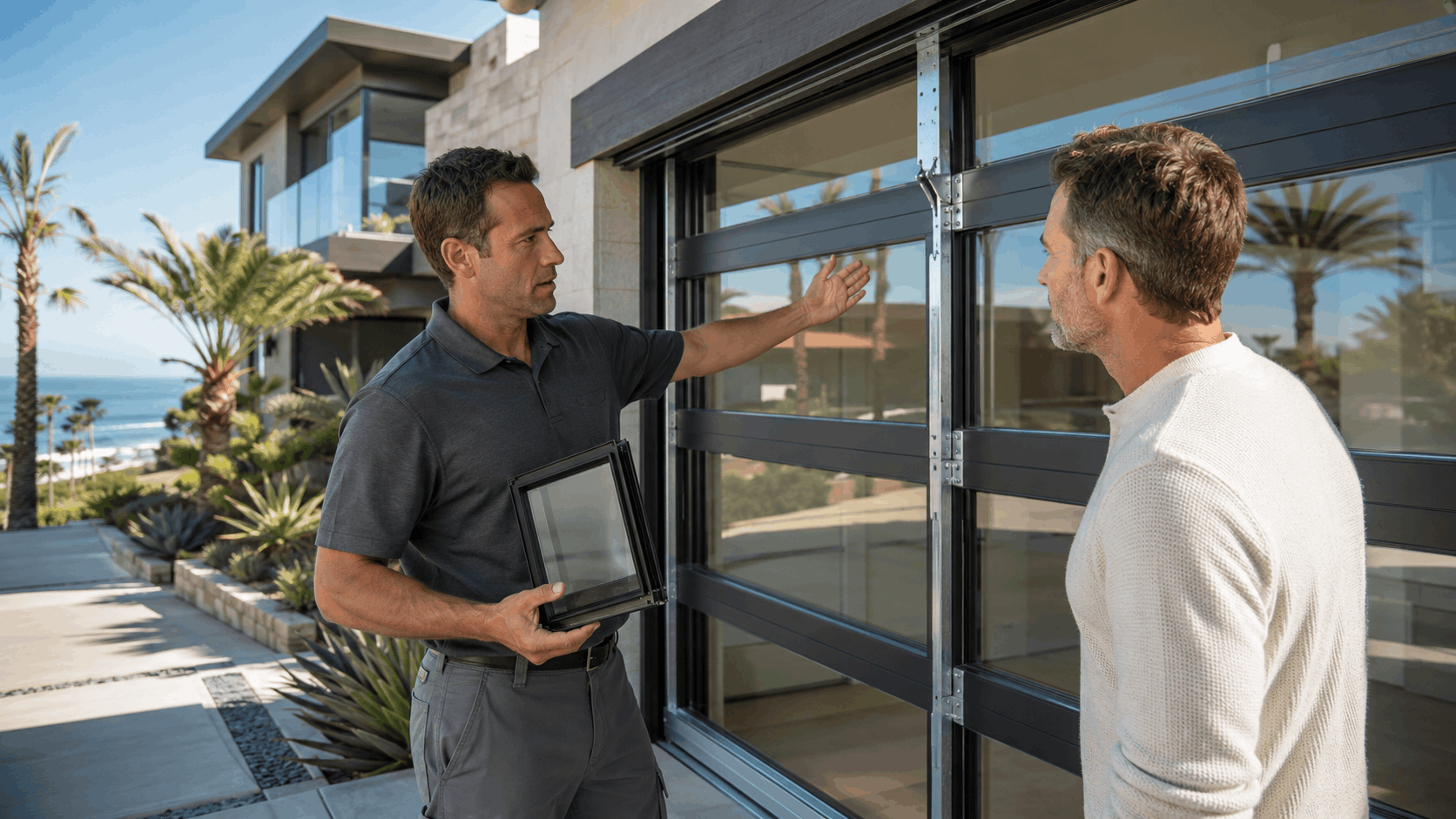
Every rated door carries a wind-rating label, usually a sticker on the inside of a panel or the back of the track bracket. It lists the manufacturer specs, the model, and the design pressure the door was tested to. This is the proof a building inspector wants to see.
The label often shows a code tied to a testing standard. Look for the DP numbers, positive and negative, along with the wind speed the door meets. If you cannot find or read the sticker, the model number lets us pull the spec sheet from the maker.
We always verify the label matches the door that was actually installed. Sometimes a home has a rated door but the wrong hardware, which quietly voids the rating. Checking the sticker against the parts on the wall catches that.
If a home has no label at all, the door was likely never rated. For a coastal property, that is a good reason to plan a garage door installation with proper documentation from the start.
Need Help in Irvine?
Urgent Garage Doors serves Irvine and all of Orange County.
Impact-Resistant Glass Options for Garage Doors
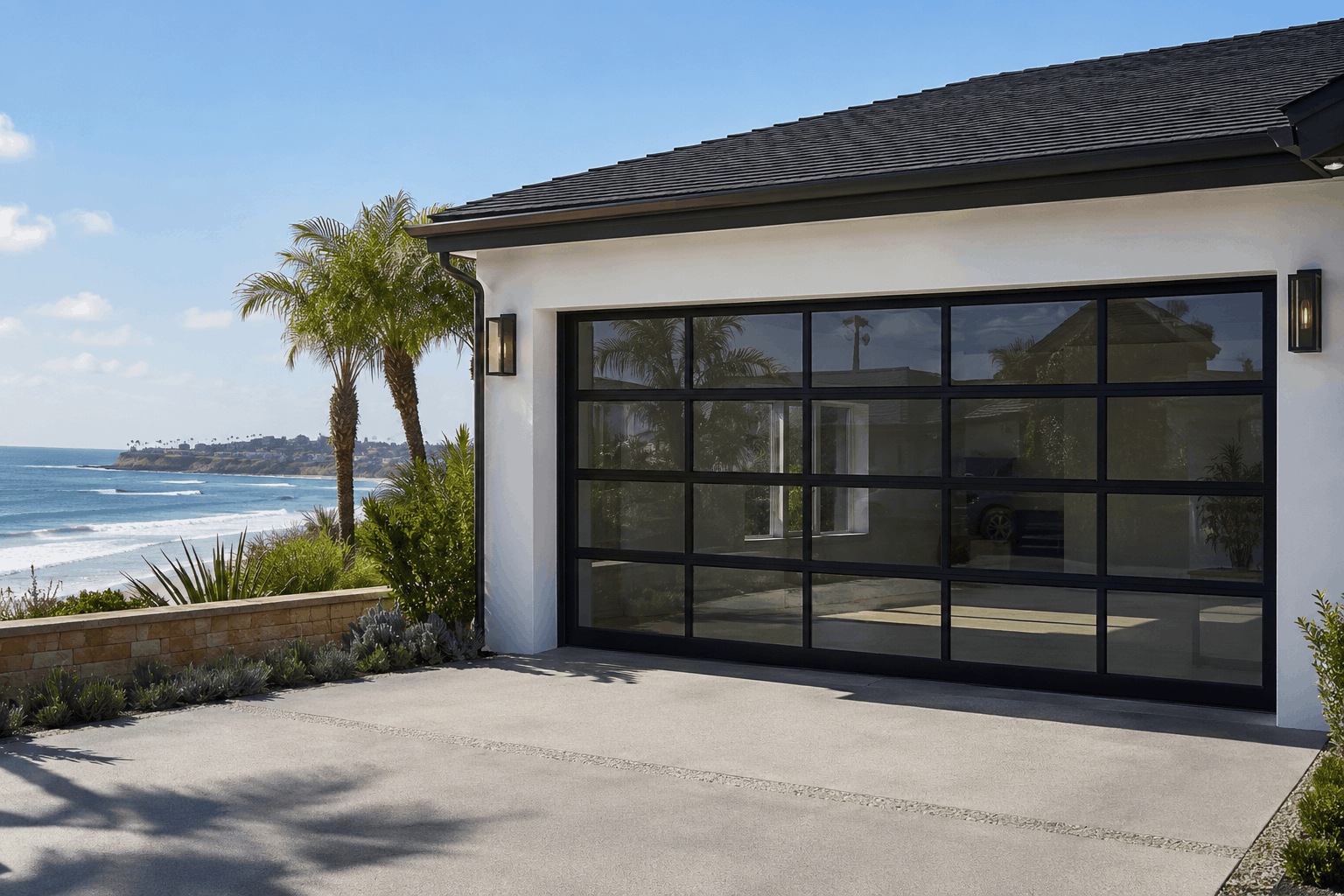
Glass makes a garage door look great, and coastal homeowners love the natural light. The trade-off is that glass is the weakest point in a wind event. Choosing the right impact-resistant glass keeps the style without the risk.
There are several types of garage door windows to pick from, and each handles impact and salt air differently. The best choice depends on how exposed the home is and how much the homeowner wants to spend.
Laminated Impact Glass vs Standard Tempered Glass
Tempered glass is the standard in most doors. It is stronger than plain glass, and when it does break, it shatters into small blunt pieces instead of sharp shards. That makes it safer for people, but it still leaves an open hole in the door.
Laminated glass works differently. It bonds two panes together with a tough plastic layer in the middle. When something hits it, the glass may crack, but the pieces stick to that inner layer instead of falling out.
For a coastal home, that difference matters during a gusty debris event. A cracked laminated panel still blocks wind, water, and blowing sand until it can be replaced. A shattered tempered panel does not.
Laminated impact glass costs more up front. On an exposed lot, though, it often pays for itself the first time flying debris would have taken out a standard window.
Acrylic and Polycarbonate Alternatives
Not every homeowner wants glass at all. Acrylic panels and polycarbonate are two lighter alternatives that resist shattering. Polycarbonate in particular is the material used in bulletproof windows, so it takes a serious hit before it fails.
These options weigh less than laminated glass, which reduces strain on the door springs and opener. That can be a plus on a large multi-panel door. They also handle blowing sand and small debris well.
The downside is looks and wear. Acrylic can scratch and cloud over time, and cheaper polycarbonate may yellow in years of direct sun. Good coatings help, but they add to the price.
We usually suggest these for homeowners worried mostly about impact and weight rather than a premium glass look. For a beach cottage that takes hard wind, they can be a smart middle ground.
Insulated Impact Glass for Salt-Air Durability
Insulated glass uses two panes with a sealed air gap between them. This double-pane setup slows heat transfer, which helps a garage that shares a wall with living space. It also cuts down on the condensation that coastal humidity creates.
When you combine insulated construction with laminated impact panes, you get glass that resists both temperature swings and hard hits. That pairing suits coastal homes where the marine layer rolls in cool and mornings turn warm fast.
The sealed gap is the part to watch near the water. If the seal fails, moisture gets between the panes and fogs the glass. Quality units use better seals rated for humid, salty conditions.
A well-made insulated impact unit balances comfort, durability, and looks. It costs the most of the glass options, but on a home that faces the ocean it holds up longer than the cheaper choices.
Frame and Seal Materials That Resist Corrosion
The glass is only half the story. The frame that holds it and the seals around it face the same salt air, and cheap versions fail first. Corrosion-resistant frames make a real difference in how long a window lasts.
Aluminum frames with a marine-grade finish hold up well against salt. Vinyl frames avoid rust entirely, though they need to be UV stable so the sun does not break them down. Steel frames need a strong coating or they will streak rust in a season.
Seals matter just as much. Good weatherstripping and gaskets keep salt moisture out of the frame and off the glass edges. A weatherseal and insulation retrofit can upgrade tired seals on an existing door.
When we spec windows for a coastal job, we treat the frame and seal choice with the same care as the glass. In salt air, a great pane in a bad frame still fails early.
How Salt Air Affects Glass and Hardware Near the Coast
Salt air is the quiet enemy of every coastal garage door. It settles on metal, mixes with the marine layer moisture, and speeds up rust far faster than inland air. Our crews see the results on almost every service call near the water.
Fighting salt air corrosion is less about one big fix and more about the right materials and steady upkeep. Here are the trouble spots we run into most on coastal garage door work:
- Springs and cables that rust and lose strength years early
- Tracks and rollers that pit and drag until the door binds
- Fasteners and hinges that seize or snap from hidden rust
- Window seals that cloud and fog from trapped moisture
- Painted panels that bubble and streak where salt collects
None of this happens overnight, but it happens far quicker than most homeowners expect. The good news is the right parts and routine care slow it way down.
Corrosion on Springs, Tracks, and Fasteners
Springs take the hardest beating. A torsion spring is under constant tension, and salt air attacks the coiled steel where it flexes most. Spring corrosion can drop the life of a standard spring by years compared to an inland home.
We see this all the time on the peninsula and in South Laguna. A spring that might last ten years inland gives out in five or six near the sand. When it goes, the door usually will not open, and it becomes a same-day call for torsion spring replacement.
Tracks and rollers suffer too. Salt pits the steel track, and rusty rollers start to drag and squeal. Left alone, that binding pulls the door out of alignment and stresses every other part.
Fastener and hardware rust is the sneaky one. Bolts and hinges rust from the inside out, so they look fine until they snap. Using coated or stainless hardware from the start prevents most of these surprises.
Clouding and Seal Failure in Glass Panels
Foggy glass is one of the first complaints coastal homeowners bring up. That cloud between the panes means the window seal has failed and moisture got inside. Once that happens, the fog does not wipe away because it is sealed in.
Coastal moisture drives seal failure faster than inland air. The daily marine layer, the salt, and the temperature swings all work at the seal edges. A seal that might last well inland gives up sooner by the water.
Beyond looks, a failed seal lets the insulating value drop and invites more corrosion around the frame. The trapped moisture can also stain the glass over time. It rarely fixes itself.
When one window fogs, others on the same door often follow within a year or two. We usually check the whole set so a homeowner is not paying for repeat visits.
Coatings and Finishes That Last Near the Water
The right finish is the best defense against salt. Galvanized steel has a zinc layer that shields the metal underneath, and it holds up far better than bare steel. It is a solid baseline for coastal hardware.
Stainless hardware is the step up. Stainless springs, bolts, and rollers resist rust for years even in heavy salt exposure. They cost more, but on a first-row home the longer life is worth it.
Powder coating protects the door itself. A quality powder-coated finish seals the panel against salt and moisture far better than standard paint. It resists chips and bubbling, which keeps the door looking good and rust-free.
We match the finish to how close the home sits to the ocean. A house on the sand gets stainless and marine coatings, while a home several blocks inland can do fine with galvanized parts and a good powder-coated door.
Building Codes and Permits for Coastal OC Installs
Coastal garage door work in Orange County comes with a paperwork layer that inland jobs may skip. The building code sets the wind and safety standards, and many coastal cities enforce them closely. Knowing what to expect saves time and avoids failed inspections.
A garage door permit is often required for a full replacement, especially where wind ratings are enforced. Each city runs its own building department, and rules vary from one coastal town to the next.
Wind and Impact Code Requirements in Coastal Cities
Cities along the water tend to hold new doors to specific wind standards. Newport Beach code, for example, expects doors on exposed lots to meet a design pressure suited to their location. An inspector may ask to see the wind-rating label to confirm it.
Laguna Beach has similar wind code requirements, shaped by its hillside and bluff-top lots. Homes on steep coastal grades catch more wind, and the code reflects that. Impact glass is sometimes recommended even where it is not strictly required.
These rules exist because a failed door on the coast can cause real damage to a home during a storm. Meeting the code is not just red tape - it is the difference between a door that holds and one that folds.
We keep current on what each coastal city expects so a homeowner does not get surprised at inspection. Speccing the right door up front means the job passes the first time.
Working With Local Building Departments
The permit process usually starts with an application that lists the door model and its ratings. The building department reviews it, and once the door is installed, an inspector checks the work against the approved plan. It sounds involved, but it moves quickly when the paperwork is right.
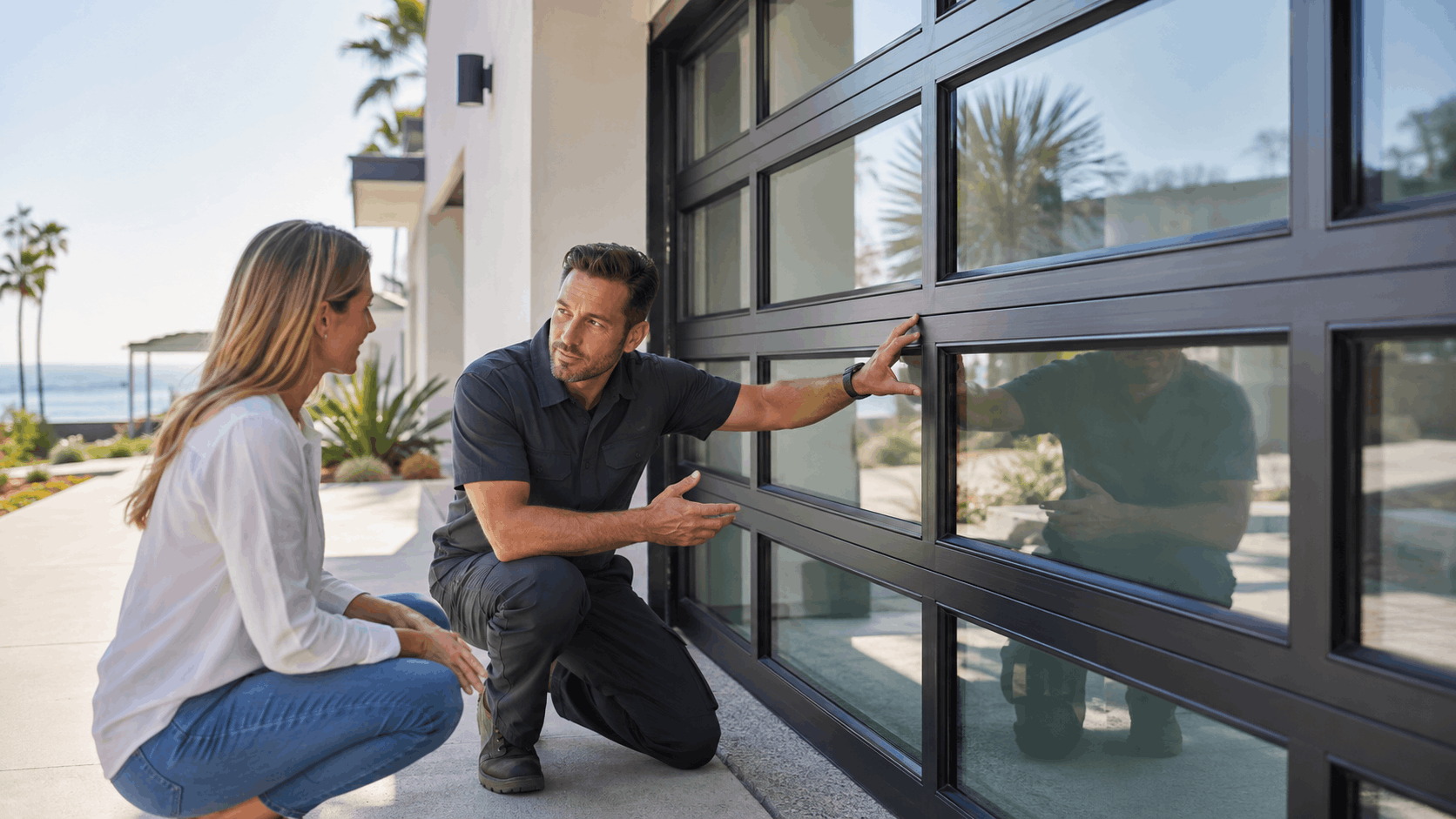
Our team handles this part for coastal jobs. We pull the permit, provide the manufacturer documentation, and schedule the inspection so the homeowner does not have to chase city offices. That keeps the timeline predictable.
Inspectors mainly want to confirm the door matches its rating and that it is anchored correctly. A clean install with the label visible and the hardware to spec passes without drama. Problems come from missing paperwork or hardware that does not match the rating.
For homeowners who want to know the exact steps for their city, our team can walk through the process before any work begins. Knowing the plan removes most of the stress.
HOA Rules in Coastal Communities
Many coastal communities add an HOA layer on top of city code. Newport Coast HOA rules, for instance, often govern door color, window style, and overall look to keep the neighborhood consistent. Crystal Cove has its own design standards as well.
These HOA rules can limit which glass patterns or panel styles are allowed. A homeowner might want a full-view modern glass door, only to find the community requires a carriage-house look. Checking the guidelines first avoids a costly redo.
The tricky part is balancing HOA style rules with coastal wind protection. The good news is that most manufacturers offer rated doors in a range of approved looks. You rarely have to choose between compliance and safety.
We help homeowners find a door that satisfies both the HOA and the wind rating their lot needs. Bringing the design board and the spec sheet together early keeps the whole project smooth.
Need Help in Irvine?
Urgent Garage Doors serves Irvine and all of Orange County.
Choosing the Right Door for Your Home's Location
The best garage door selection depends heavily on where a home sits relative to the water. A beachfront house and a home a mile inland have very different needs. Matching the door to the location gets the right protection without overspending.
Think of it as zones, from the sand outward. As the distance from the ocean grows, the wind and salt exposure drop, and the door choices open up. Here is how we guide homeowners by zone.
Beachfront and First-Row Homes
Homes right on the water need the strongest setup. A beachfront home takes direct wind, blowing sand, and heavy salt every single day. For these lots we recommend the highest wind rating available plus full laminated impact glass.
The hardware matters just as much here. Stainless springs, cables, and fasteners resist the constant salt, and marine-grade coatings protect the panels. Cutting corners on a first-row home means paying for repairs far sooner.
These properties often sit in areas with the strictest code and HOA rules too. Going with a properly rated, well-documented door keeps both the city and the community satisfied. It also protects a very expensive home.
The up-front cost is higher, but so is the exposure. A high wind rating and impact glass are the reasonable choice when the ocean is the front yard.
Homes a Few Blocks Inland
Move a few blocks back and the picture eases. A home in Corona del Mar Village still gets plenty of salt air, but buildings and trees break up the direct wind. This moderate wind exposure allows a balanced door choice.
A mid-range wind rating, roughly DP 30, usually covers these homes well. Impact glass is still worth considering for the salt-air durability, even if the wind risk is lower. Galvanized or coated hardware handles the salt without the full stainless cost.
These homeowners get to focus a bit more on style. With less extreme wind pressure, a wider range of glass patterns and panel designs stays practical. The door can look great and still stand up to coastal air.
We help these owners find the sweet spot between protection and budget. A few blocks of buffer changes the math in a helpful way.
Inland Irvine vs Coastal Comparison
Inland Irvine neighborhoods are a different world from the coast. A home in Woodbridge or Turtle Rock sits well back from the ocean, shielded by hills and miles of development. Salt air barely reaches these areas, and the wind loads are modest.
For these homes, a standard rated door with a good insulated steel garage door is often plenty. There is no need to pay for marine coatings or the highest wind ratings. The budget can go toward insulation, style, or a smart opener instead.
The contrast shows how much location drives the decision. The same family could need a very different door depending on whether they live near the water or up in the Irvine hills. Neither is wrong - they just face different conditions.
Because our crews work both the coast and inland Irvine, we can spell out exactly what a specific address needs. That local knowledge saves homeowners from over-buying or under-protecting.
Balancing Cost, Style, and Protection
Every homeowner weighs three things: garage door cost, curb appeal, and wind protection. The trick is finding the point where all three meet for a given home. Spending more on protection makes sense the closer a house sits to the ocean.
Curb appeal drives a lot of coastal buyers toward glass and modern looks. The good news is that impact glass and rated doors now come in plenty of attractive styles. You do not have to trade beauty for strength anymore.
Budget is real, though, and not every home needs the top tier. A home a mile inland can spend less on wind rating and put that money into a better opener or finish. A beachfront home should invest in protection first.
Our approach is to lay out the options clearly so the homeowner decides with full information. We would rather explain the trade-offs than push the most expensive door. The right balance is different for every address.
Installation, Maintenance, and Longevity Tips
A great door only performs if it is installed right and cared for over time. Near the coast, both matter more than usual. Good garage door installation and steady maintenance are what turn a rated door into a door that actually lasts.
Coastal upkeep is simpler than most homeowners expect. A few habits, done on a schedule, prevent most of the expensive failures we get called for. Here is how to protect the investment.
Why Professional Install Matters for Wind Ratings
A wind rating only counts if the door is anchored the way the maker requires. A door bolted to weak framing or with the wrong fasteners loses its rating, no matter what the sticker says. Improper install is one of the most common reasons a rated door still fails.
Professional installation follows the manufacturer's anchoring pattern exactly. Our crews use the specified brackets, fasteners, and reinforcement so the rating holds up in a real wind event. We also make sure the tracks and springs match the door's rating.
This is also what protects the wind rating warranty. Most makers require documented, correct installation for the warranty to apply. A DIY or shortcut job can void that coverage right when a homeowner needs it.
On the coast, correct anchoring is the difference between a door that stays put and one that peels off during a Santa Ana. It is not a place to save money on labor.
Seasonal Maintenance for Salt-Air Homes
Salt-air homes benefit from a simple rinse-and-inspect routine. A fresh-water rinse of the door and hardware washes off the salt before it can settle and corrode. Doing this monthly makes a big difference on exposed lots.
Time the deeper checks to OC weather patterns. Before the fall Santa Ana season, inspect the springs, cables, rollers, and fasteners for rust or wear. After a big wind event, look for any loose hardware or shifted tracks.
Lubricate the moving parts a few times a year with a proper garage door lubricant, not a general spray. This keeps the rollers and hinges moving smoothly and helps them shed moisture. A quiet, smooth door is usually a healthy one.
For homeowners who would rather not track all this, our preventive maintenance plan handles the seasonal salt rinse and inspection on schedule. Catching small issues early keeps them from becoming emergency calls.
When to Repair vs Replace Coastal Glass
Foggy or cracked glass raises the repair-or-replace question. If just one or two windows have fogged and the door itself is solid, a glass swap is usually the smart, lower-cost fix. We can replace the affected panels and reseal them.
A cracked pane on an otherwise good door is the same story - swap the glass and move on. There is no need to replace a whole door for a single window issue. A panel or glass replacement often solves it in one visit.
Full door replacement makes sense when the problems stack up. If the panels are bowed, the hardware is heavily rusted, and several windows have failed, patching piece by piece costs more over time. At that point a new rated door is the better value.
We give homeowners an honest read on which way to go. If a repair buys years of good service, we say so. If the door is past saving, we explain why a replacement pays off in the long run.
Need Help in Irvine?
Urgent Garage Doors serves Irvine and all of Orange County.
Final Thoughts
Coastal Orange County homes face wind and salt that inland houses never deal with. A wind-rated door with the right impact glass and corrosion-resistant hardware stands up to both. Matching that door to how close a home sits to the water is what gets the protection right without overspending.
Our team works these coastal streets every week, from the Balboa Peninsula to Corona del Mar and up into Newport Coast. We know the codes, the HOA rules, and the salt-air problems firsthand. That local experience helps homeowners make a confident choice.
If a coastal garage door is on the horizon, or an old one is showing rust and fog, reach out to us for a consultation. Call Urgent Garage Doors or contact our team to talk through the right wind rating, glass, and finish for a specific address. We are happy to help protect the home against whatever the coast sends.
Frequently Asked Questions
What does a wind-rated garage door mean?
A wind-rated garage door has been tested to hold up against a set wind pressure without bowing, breaking, or pulling out of its track. The rating is shown as a design pressure number, both for wind pushing in and pulling out. The higher the number, the stronger the wind the door can take. On the coast, that rating is what keeps a door in place during a Santa Ana event.
Is impact glass required for coastal Orange County homes?
It depends on the city and the HOA. Some coastal towns like Newport Beach and Laguna Beach enforce wind standards that push homeowners toward stronger glass, and certain HOAs weigh in on window style. Even where it is not strictly required, impact glass is a smart choice on exposed lots. It resists flying debris and holds together instead of shattering into an open hole.
How much do wind-rated garage doors cost near the coast?
Coastal wind-rated doors generally run higher than standard doors because of the stronger panels, impact glass, and corrosion-resistant hardware. Expect a meaningful step up over a basic inland door, with the exact number driven by size, wind rating, glass type, and finish. First-row beach homes with full impact glass and stainless hardware sit at the top of the range. We provide a clear quote once we see the home and its exposure.
Does salt air really damage garage doors that fast?
Yes, faster than most homeowners expect. Standard springs and hardware that might last a decade inland can rust out in five to six years right on the sand. Salt settles on the metal, mixes with the marine layer moisture, and speeds up corrosion daily. Coated, galvanized, or stainless parts hold up far longer, which is why we spec them for beach-adjacent homes.
What is the difference between laminated and tempered glass?
Tempered glass is strong but shatters into small blunt pieces when it breaks, leaving an open gap in the door. Laminated glass bonds two panes around a tough inner layer, so it may crack but stays in place. During a wind or debris event, laminated glass keeps blocking wind, water, and sand until it can be replaced. That makes laminated the safer pick for exposed coastal homes.
Do I need a permit to replace a garage door in Newport Beach?
Most full door replacements in Newport Beach require a permit, especially where wind ratings are enforced. The building department reviews the door model and its ratings, then inspects the finished install. Our team pulls the permit, supplies the manufacturer documentation, and schedules the inspection for the homeowner. That keeps the job compliant and avoids surprises at inspection time.
Can I add impact glass to my existing garage door?
Sometimes. If the existing door is structurally sound and the frames can accept impact panes, a retrofit can work. But if the door itself is not wind-rated, adding stronger glass to a weak panel does not give full protection. In that case a full door swap makes more sense. We inspect the door and tell homeowners honestly which path fits their situation.
How long does a coastal garage door install take?
A standard coastal replacement usually takes most of a day once the door arrives, from removing the old unit to finishing the new install and testing it. The measurement visit and the permit process happen before install day. Custom doors or special glass orders add lead time for the door to be built. We give a realistic timeline up front so homeowners can plan around it.
How often should coastal homeowners maintain their doors?
The closer to the water, the more often. First-row and beach-adjacent homes do well with a monthly fresh-water rinse and a full inspection twice a year, timed around the Santa Ana season. Homes a few blocks inland can stretch the deeper checks to once or twice a year. Regular lubrication of the moving parts helps everywhere near the coast.
Does Urgent Garage Doors service homes outside Irvine?
Yes. While we are based in Irvine, our crews cover coastal Orange County including Newport Beach, Corona del Mar, Laguna Beach, and the surrounding communities. We handle installs, repairs, and maintenance across these areas and know the local codes and salt-air challenges well. Reach out with an address and we will confirm coverage and set up a visit.
Frequently Asked Questions
- What does a wind-rated garage door mean?
- A wind-rated garage door has been tested to hold up against a set wind pressure without bowing, breaking, or pulling out of its track. The rating is shown as a design pressure number, both for wind pushing in and pulling out. The higher the number, the stronger the wind the door can take. On the coast, that rating is what keeps a door in place during a Santa Ana event.
- Is impact glass required for coastal Orange County homes?
- It depends on the city and the HOA. Some coastal towns like Newport Beach and Laguna Beach enforce wind standards that push homeowners toward stronger glass, and certain HOAs weigh in on window style. Even where it is not strictly required, impact glass is a smart choice on exposed lots. It resists flying debris and holds together instead of shattering into an open hole.
- How much do wind-rated garage doors cost near the coast?
- Coastal wind-rated doors generally run higher than standard doors because of the stronger panels, impact glass, and corrosion-resistant hardware. Expect a meaningful step up over a basic inland door, with the exact number driven by size, wind rating, glass type, and finish. First-row beach homes with full impact glass and stainless hardware sit at the top of the range. We provide a clear quote once we see the home and its exposure.
- Does salt air really damage garage doors that fast?
- Yes, faster than most homeowners expect. Standard springs and hardware that might last a decade inland can rust out in five to six years right on the sand. Salt settles on the metal, mixes with the marine layer moisture, and speeds up corrosion daily. Coated, galvanized, or stainless parts hold up far longer, which is why we spec them for beach-adjacent homes.
- What is the difference between laminated and tempered glass?
- Tempered glass is strong but shatters into small blunt pieces when it breaks, leaving an open gap in the door. Laminated glass bonds two panes around a tough inner layer, so it may crack but stays in place. During a wind or debris event, laminated glass keeps blocking wind, water, and sand until it can be replaced. That makes laminated the safer pick for exposed coastal homes.
- Do I need a permit to replace a garage door in Newport Beach?
- Most full door replacements in Newport Beach require a permit, especially where wind ratings are enforced. The building department reviews the door model and its ratings, then inspects the finished install. Our team pulls the permit, supplies the manufacturer documentation, and schedules the inspection for the homeowner. That keeps the job compliant and avoids surprises at inspection time.
- Can I add impact glass to my existing garage door?
- Sometimes. If the existing door is structurally sound and the frames can accept impact panes, a retrofit can work. But if the door itself is not wind-rated, adding stronger glass to a weak panel does not give full protection. In that case a full door swap makes more sense. We inspect the door and tell homeowners honestly which path fits their situation.
- How long does a coastal garage door install take?
- A standard coastal replacement usually takes most of a day once the door arrives, from removing the old unit to finishing the new install and testing it. The measurement visit and the permit process happen before install day. Custom doors or special glass orders add lead time for the door to be built. We give a realistic timeline up front so homeowners can plan around it.
- How often should coastal homeowners maintain their doors?
- The closer to the water, the more often. First-row and beach-adjacent homes do well with a monthly fresh-water rinse and a full inspection twice a year, timed around the Santa Ana season. Homes a few blocks inland can stretch the deeper checks to once or twice a year. Regular lubrication of the moving parts helps everywhere near the coast.
- Does Urgent Garage Doors service homes outside Irvine?
- Yes. While we are based in Irvine, our crews cover coastal Orange County including Newport Beach, Corona del Mar, Laguna Beach, and the surrounding communities. We handle installs, repairs, and maintenance across these areas and know the local codes and salt-air challenges well. Reach out with an address and we will confirm coverage and set up a visit.
U
Licensed garage door repair professionals serving Irvine and Orange County.
Licensed in California · License #1055150
Why trust Urgent Garage Doors?
Founded in 2017, Urgent Garage Doors is a licensed and insured garage door services serving Irvine and Orange County. All content is reviewed by our licensed technicians.

Need Help in Irvine?
Urgent Garage Doors serves Irvine and all of Orange County.
Related Articles

Tips & Advice
Best Garage Door Brands for Coastal Orange County
Discover the best garage door brands for coastal Orange County homes that resist salt air corrosion, handle marine layer moisture, and maintain performance despite coastal winds.
Tips & Advice
California Wind Load Ratings for Garage Doors: Coastal vs Inland Requirements
Coastal and inland California garage doors face very different wind load ratings. Learn what PSF ratings mean, how code applies, and how to pick the right rated door.

Tips & Advice
Glass Garage Door Glazing Options: Frosted, Tinted, and Mirrored Privacy Choices for OC Streets
Compare frosted, tinted, and mirrored glass garage door glazing for OC homes - privacy, heat control, cost, and HOA rules explained by Irvine's local experts.